urmadmin, Author at Unstoppable Recording Machine - Page 27 of 45

Learn From The Legends – Volume 5: Jacquire King

Introduction To The Series:

Learning How To Learn is one of the most crucial steps you can take towards becoming great at pretty much anything – And what better place to learn than from the minds of people who have actually been doing the job successfully for years?

In this ongoing series of Blogs, we’ll explore the valuable words of wisdom bestowed upon us by some of the most sought after names in the recording studio business, and discover how you can apply this advice to your own situation.

This week, we’re examining one of Nashville’s finest music men: Jacquire King

NOTE: If you’re hoping to find some “secret mix settings” or “magic formulas” in this article then you might as well leave now… I can guarantee you that the real secrets behind each of these engineers’ success are their ears and personal tastes.

Remember:

Following the practical “workflow and decision-making” advice these guys have to offer from years of experience in the business is far more valuable than trying to copy the settings they’ve used for specific songs!

VOLUME 5: Jacquire King

1 JACQUIRE KING

Who Is Jacquire King?

Jacquire King is a Nashville-based, Multi-Grammy-Award-Winning Engineer & Producer responsible for some of the most commercially successful rock albums of the 2000s.

Some of the select artists he’s worked with include:

Kings Of Leon

James Bay

You Me At Six

Norah Jones

Mutemath

Billy Talent

Modest Mouse

AND MANY MORE…

Now that you know exactly who you’re dealing with, let’s cut straight to the chase…

Here Are 5 Pieces Of Incredible Audio Advice From Jacquire King:
1 – Simplify The Mixing Process From The Get-Go

2 Simplify The Mix

I try and record a finished sound as much as possible. When I listen to the tracks I want to be able to just push the faders up and make a balance and for it to sound like a record. I just want to hear it close (to the final sound), so that the mixing stage is just about accentuating things. It’s important to make the decisions along the way and not to wait til the end to properly EQ and Compress things, because if you haven’t been listening to the elements treated that way as you accumulate more parts, then you’re not going to have the sonic space to make everything fit.” – Jacquire King

Record As If The Mixing Process Doesn’t Exist!
  • One of the biggest changes between when I first started working in audio and present-day is the way I weigh the importance of recording vs. mixing.
  • Earlier on in my career, I’d idolise the mixing process and approach everything with an “I can probably fix it in the mix” attitude. The problem is, my lack of experience at the time meant that I didn’t really know how to go about “fixing” my recordings, which resulted in some pretty drastic (and stupid) mixing decisions…
  • The fact that I was constantly over-doing things and ending up with really unnatural sounding results meant that I was never happy with my sounds, and in return, never willing to release any of the music I’d produced.
  • Over the course of the next few years, I started to notice a pattern in a lot the professional mixing tutorials and articles I studied: More often than not, the raw sounds they had to work with were already incredible, and they weren’t going anywhere near the amount of subtractive EQ which I’d been using…
  • The biggest difference between between my raw material and theirs? They were getting each instrument right at the source and making tonal decisions early on based on the way they intended the end product to sound.
  • Coming to this realisation led to a gradual shift in the way I prioritised each step of the production process.
  • Through choosing to focus my efforts towards learning how to capture “close-to-finished” recordings and reducing the amount of after-the-fact processing I was applying, I was able to obtain sounds that I was much happier with.

Conclusion: You can’t record something that sounds nothing like your references or the sounds in your head and expect to magically transform it during the mixing stage. Always try to record with the intention of the raw sounds making the final cut. I guarantee that you’ll have a lot less to worry about later on.

NOTE: Want to learn how to record like a real pro? Check out Eyal Levi’s “Metal Recording Bootcamp” on CreativeLive.

2 – Can You Mix Your Own Music?

3 Mix Your Own Music

It can be very difficult to mix your own stuff because you’ve spent so much time with it. It definitely feels easier to mix somebody else’s material because you don’t really have the same relationship with the music.”

You definitely have to guard against overdoing it during the mix process or thinking that mixing always has to be a big elaborate thing. Sometimes it’s very simple and you just need to change the balance a bit, add a little bit of compression and tweak the EQ and it’s done… One thing that helps is to keep rough mixes and reference them while you’re mixing to make sure you’re doing the right thing.” – Jacquire King

Mixing Your Own Stuff: DIY or Outsource?
  • It’s often said that you shouldn’t mix your own material due to the lack of perspective that tends to come alongside spending long periods of time working on one thing. Although there is definite validity in this viewpoint… There are also a huge number of benefits to personally finalising your music.
  • Learning how to mix early on in your career as a musician means that you can work on improving your studio skills and musical skills hand-in-hand as you progress.
  • Take a guy like Nolly from Periphery for instance; the fact that he’s able to play, record and mix his own material to very high standards gives him the ability to pursue his creative goals to their maximum potential.

NOTE: I’d highly recommend going back and watching Nolly’s NailTheMix content for a prime example of somebody mixing themselves to great effect:

https://urm.academy/nolly-periphery-dials-bass-tone/

  • Another primary benefit of DIY is the fact that paying other people to record and mix for you can really add up in the long run. I can’t tell you how awesome it is to have all the resources at your disposal to be able to work on music whenever you want without time restraints or budget limits!
  • Now that I’ve expressed a few of my overall views on DIY mixing: The main point Jacquire is making in his quote is the fact that just because the mixing process exists as a separate entity to recording doesn’t mean that it has to be a drastic and elaborate process.

Conclusion: If you’ve already been recording each instrument with particular goals in mind, and you’re content with the way something is sounding, you don’t have to apply a huge amount of processing to it just for the sake of having a defined “mixing stage”.

3 – Get Your Mixing Priorities Straight

4 Mixing Priorities

If I just start with all the instruments and leave the vocals till last, I might end up trying to get too much participation or energy out of something like the guitars. Not that they aren’t important, but I might make them too loud, too big or too wide in the stereo field and take up too much of the center. Remember that the vocal is the thing that’s in the middle and it’s really important, so you need it in there in order to understand how to use the other instruments and how to EQ. Not only is a voice difficult to record and capture, but you’ve got to make sure you’re not using up frequencies in a mix where you need to make the voice sit.” – Jacquire King

Structure Your Mixing Workflow!
  • The order in which you decide to mix each instrument can make a significant difference towards the quality of the final mix you produce.
  • In most genres of music, the vocal is the center of attention and has the most impact on the success or failure of a track. If you’re focusing on building a “huge” instrumental mix for too long while neglecting the vocals until the very end of the process… How can you expect to make them fit comfortably?
  • You don’t necessarily have to start out by mixing the vocals first, but adding them into the picture as soon as you’ve got a basic instrumental backbone going and processing everything in context will go a long way towards keeping them at the forefront of your decision making (and your final mix).

NOTE: Want some in-depth tips on treating Vocals in a mix? Check out my “Mixing Secrets Volume 1: Vocals” URM Article from a few months back.

Conclusion: Mixing is called “Mix-ing” for a reason! There’s no point in working on individual elements in isolation as the only thing that matters is how they interact with the other elements. Make sure you’re prioritising the right elements of the track and not spending too much time working on miniscule details that most people won’t even notice…

4 – Distortion Is Your Friend

5 Distortion

There’s good distortion and there’s bad distortion. I love distortion on pretty much everything to some degree. We’re able to record so clean now with going to digital and you just get back the sound that you put in. With analog, we were recording to the format and optimizing our input accordingly knowing that it would change a little. For example: Motown probably benefitted from the fact that some of the gear was mismatched, but they made it work and it resulted in a unique palette of harmonics.” Jacquire King

Digital Is Clean… Dirty It Up A Bit!
  • People often talk about the sonic differences between analog gear and modern digital technology and how “ye old vintage equipment” had a certain “magic” that is hard to find in the world of recording nowadays.
  • The truth is… Most of the “magic” that these old timers are reminiscing about was owed to the subtle distortion or “saturation” characteristics introduced into the signals via tubes and reels of tape.
  • The use of some tasteful harmonic colouration to fatten or liven up certain “lifeless” elements within a mix is one of the most effective methods to forging impactful mixes along the lines of Jacquire.
  • An important thing to remember is that you don’t have to add much for it to add up to a significant improvement in the way things sit and feel!
  • Often mixing this type of effect in under the original signal in parallel is the best way to maintain the original transient detail of the raw signal while simultaneously blending in some solid “thickness”.

NOTE: Check out my “Making Digital Sound Analog” URM Article for more info on the differences between Analog and Digital, as well as some useful tips on achieving “Analog-esque” results in-the-box.

5 – Conclusion: The Role Of A Producer

6 Producer's Role

The way I approach making records is that I treat each one differently. I’m very collaborative and feel like a co-creator, I’m not here to make my record, I’m here to make the band’s record. You need to let them be themselves and just try to help them see how to do it at their best by just being a voice of reason or even devil’s advocate sometimes. Basically, just placing them in an environment where there’s an opportunity to make a great record.” – Jacquire King

It’s Not Your Record, Swallow Your Ego!
  • As a producer, it’s often difficult to draw the line between helping an artist or band make a record that represents them accurately, and simply taking over.
  • Producing with the expectation that everybody will “realise your creative genius” in mind probably isn’t the right way to go about the process, and believe it or not, people can usually sense if your interactions with them are genuine or not. (And if you truly have their best interests in mind...)
  • Instead, try to approach each project with the intention of accentuating and capturing the positive attributes of the people you’re working with while helping them fulfil their creative visions to the fullest.

NOTE: For more tips on interacting with musicians as a producer for better results, check out my5 Recording Tips URM series.


CONCLUSION:

Remember: It’s awesome when your contributions are appreciated, but it’s not a given. My advice is to simply do the best job you can possibly do on a situation-by-situation basis and not to let your personal agendas get in the way of relationships.

Happy customers that feel valued will spread the word and likely want to continue working with you!

Final Words:

This concludes “Learn From The Legends – Volume 5: Jacquire King. I hope that this article has given you some new ideas to try out during your next project. Be sure to comment below if any of this information has helped you out, or if you have any questions.

Stay tuned for more production/mixing related articles in the not-so-distant future!


Read Learn From The Legends – Volume 1: Chris Lord-Alge here!

Read Learn From The Legends – Volume 2: Randy Staub here!

Read Learn From The Legends – Volume 3: Andy Wallace here!

Read Learn From The Legends – Volume 4: Andrew Scheps here!

Want mix tips from URM Academy? Read them here!

Nail The MixNail The Mix is our online mixing school that gives you REAL multi-tracks from REAL bands, plus a mixing class from the producer who recorded it. Past guests include Periphery, Chelsea Grin, Machine Head and State Champs. Join now for instant access!

7 Questions With Graham Cochrane

Graham Cochrane is a freelance recording and mix engineer living in Tampa, Florida and founder of TheRecordingRevolution.com. As a lifelong singer/songwriter and musician, his passion for recording and mixing has grown from the bedroom studio, to university (where he studied audio production), to multi-million dollar studios, to fortune 500 software companies, and all the while freelancing for artists and bands worldwide.

1 Graham

If you can give one piece of advice for upcoming engineers what would it be?

As it relates to getting good at your craft? I would say just do as much work as you possibly can. Be someone who finishes projects, not tries to perfect them. Perfect is the enemy of finishing, and finishing is where the learning is. Anyone with a musical ear can get good at this art form – it just takes time.

As it relates to working in this industry? I would say the secret is to be a servant. Try and serve as many people as you possible can. Serve your clients (even free ones). Serve your other staff in the studio. Serve the labels. Serve anyone you work with. And by serve, I mean add value to their lives. Make things all about them and what you can do for them. Don’t focus on what THEY can do for YOU.

You’ll be amazed how much people seem to want to work with and refer others to people who are value adders, not takers.

What would you say is the one thing that has motivated you to keep going in your career?

The amount of people that continue to email me to say my content has helped them in a major way. Without that, I start to wonder if I’m even having an impact in this space.

Amps or sims?

Amps – unless it’s an Eleven Rack 🙂

2 Graham guitar

What is the most important lesson you’ve learned in your career?

At one point I realized I needed to stop comparing myself (and my career path, my work, my skills, etc) to other people. It was never productive or encouraging. Instead I try and focus on the way I “see” the audio world and add as much value as I can in my own way.

What are your top five go to gear choices?
  • Avid Pro Tools
  • Waves SSL Bundle
  • Slate Virtual Buss Compressors
  • Slate Virtual Console
  • Izotope Ozone

3 Graham console

If you could change anything about the world what would it be?

Oh man. Big question. If I had the power I would eliminate all disease, crime, and poverty. In all seriousness.

I live in a privileged country where I never worry about running out of food, water, or shelter. I’ve been blessed education, health, and relative safety my whole life. Just because of where I was born. And yet, none of us had any control over our place (or time) of birth.

We support a lot of organizations that are battling poverty around the world, as well as giving generously to those in need right here in my own city. Every little bit helps, of course, but there’s so much more to do.

4 Graham

What record still mystifies you and why?

If I had to chose an all time favorite record, one that still to this day draws me in and blows my mind it would be Soundgarden’s Superunknown. From the songwriting, to the performances, to the recording/mixing, even to the song order and album flow I am totally immersed in a sea of sound for the entire length of the album. It’s a defining record in my life (was back then and still is today).


For more awesome tips on becoming a better producer, head on over to the URM Academy blog and subscribe to our podcast.

Listen to episode 18 of the URM Podcast with Graham Cochrane HERE

Nail The MixNail The Mix is our online mixing school that gives you REAL multi-tracks from REAL bands, plus a mixing class from the producer who recorded it. Past guests include Periphery, Chelsea Grin, Machine Head and State Champs. Join now for instant access!

MIKE KALAJIAN: Hybrid Mastering, Streaming Loudness, Acoustic Treatment

Mastering engineer Mike Kalajian has put the final touch on records for bands like Saosin, Against The Current, and Moving Mountains. His journey in audio started back in junior high, where he and a friend built a basement studio and charged classmates $20 a song to record on a cassette four-track, giving him a deep appreciation for the entire record-making process.

In This Episode

Mike Kalajian drops by to get into the weeds on the art and science of mastering. He shares why his background as a producer and mixer helps him respect the work that goes into a track and make the right calls for the song. The conversation covers his hybrid workflow, balancing the magic of analog gear with the precision of plugins, and the crucial role of experimentation in finding your unique sound. For those of us mastering our own stuff, Mike offers some killer advice, emphasizing that a well-treated room and solid monitoring will get you further than any expensive plugin. He also breaks down the challenges of navigating the loudness standards for streaming platforms like Spotify and YouTube, and shares his approach to getting a master dialed in from the first listen.

Products Mentioned

Timestamps

  • [1:27] Starting a studio in junior high with a cassette four-track
  • [5:03] How producing and mixing informs his mastering perspective
  • [6:53] Mike’s hybrid approach: Using both analog gear and plugins
  • [8:55] The importance of experimentation and A/B testing your gear
  • [13:31] Why your room and monitoring are the biggest bang-for-your-buck upgrades
  • [15:16] Using the “mirror trick” to find first reflection points
  • [17:01] The often-ignored but critical acoustic treatment “cloud” above your mix position
  • [18:29] Finding a great deal on high-end used speakers (B&W Nautilus 802s)
  • [21:09] The most songs he’s ever mastered in a single day
  • [23:26] The problem with inconsistent loudness standards across streaming platforms
  • [26:45] Why your mix might sound different on YouTube (and how video editors play a role)
  • [30:40] His favorite piece of gear: The Hendy Amps Michelangelo EQ
  • [33:36] His philosophy for gain staging his analog chain
  • [35:24] Why you can’t overlook clean power for your studio
  • [38:11] The best time to EQ a track is right after you hear it for the first time
  • [41:27] Mike’s step-by-step mastering process: Broad strokes first, then problem-solving
  • [44:18] Is the art of mastering dying? Why it’s more important than ever for home recordings

Live And Learn: Audio Lessons From Everyday Life – Part 2

Introduction To The Series:

Tired of endless tutorial videos and thick books on mixing? Take a break and live a bit!

*SHH, JOEL WANASEK WILL HEAR YOU!!!*

All “#Smalltime” jokes aside – Believe it or not, staring at a computer screen or sitting in front of a mixing console in the studio for weeks-on-end without seeing any sunlight isn’t the only way to improve your productions…

Often, simply going about your everyday tasks while focusing on a certain goal you have in mind is enough to cause breakthroughs and improvements! Sound a bit crazy? Read on to find out exactly what I mean…

Here are 3 tips which might have a positive effect on your musical output and help expand your studio business in the process:

1 – Hot or Not? (Understand And Utilise Current Trends)

1 Hot or Not

Mainstream” is a term which people within the rock/metal communities tend to use as a derogatory slur more often than not, and given the fact that a huge percentage of the tracks you hear on the radio nowadays are basically recycled iterations of what seems like an “annually-standardised formula”, this is often a fairly accurate assessment…

Pride vs. Progress:

As dire as it may seem, the reality of the situation is that people within the “mainstream” are making money… While a lot of the musicians you consider to be “real” are probably struggling to make ends meet.

Now don’t get me wrong! I’m not saying that you should throw your morals and personal tastes to the wind and “sell out” completely… I’m simply saying that there’s definite value in understanding why a particular musical trend is popular in order to try and extract certain elements of said phenomenon and appropriate them into your own productions!

My Advice? Rather than conforming to a stereotypical “real musician’s” mindset of mocking or being jealous of those who have achieved any level of mainstream coverage, why not take a few cues from their process in order to improve on your own chances of success?!?

This being said – Here are a few audio lessons that can be learned from analysing “The Mainstream”:

NOTE: These points are more “suggestions based on my own interactions with mainstream media” rather than “definitive advice”. The severity at which you decide to apply the following information in your own situation is entirely up to you…

#1 Video Killed The Radio Star:

  • Unfortunately, we live in a time of short attention spans and constant sensual bombardment via the media. As a result, simply posting a link to some standalone audio often isn’t enough to spark a potential fan’s interest…
  • As can be gathered from taking a quick look at the artists and bands which are at the top of the charts, Image is an extremely important factor towards attracting a fan-base.

Fact: It’s much more likely that people will be drawn to click on your content if there’s some sort of visual appeal to help grab their attention.

  • I’m not necessarily just talking about “image” in a physical appearance context, but rather in the context of having an image element (a video) for people to look at while consuming your music.
  • A quick improvement? Something as simple as attaching a lyric video, a live playthrough, or an animated album art background will go a long way towards getting more people to click on your content!

NOTE: Carefully selecting the thumbnails and titles you select for your releases is another great way of securing a higher number of views/listens etc. I’m not suggesting/condoning the use of clickbait by any means… I’m just pointing out the importance of selecting your visual components strategically in order to assure maximum marketing potential. Remember: It’s not clickbait if your image is relevant and the content is actually decent and worth people’s time!

#2 Accessibility Is An Advantage:

  • Wondering why your obscure “avant garde blackened trve kvlt metal” band isn’t getting anywhere fast? Probably because you’re catering to a niche audience which consists of around 5 people…
  • Not that there’s anything wrong with playing the music that you like… It’s just that you can’t expect many people to be on the same page as you if the page you’re operating within isn’t even in the same book!
  • Being able to cater to a wide range of audiences simultaneously via covering multiple musical bases is one of the best ways of reaching a larger number of people.

NOTE: This is partly why “genre-mashing”, ex: ‘metal covers of pop songs and pop covers of metal songs’ etc. are such a huge thing on YouTube and social media.

  • A few successful examples which come to mind from the history of heavy music are: Metallica doing ballads, Aerosmith collaborating with Hip-Hop group Run DMC, and Korn doing a Dubstep album with Skrillex.
  • Whether you were personally a fan of them or not, each of these endeavours resulted in said bands widening their potential audience and growing in popularity as a result.
  • This same cross-breeding of genres can be observed in how electronic dance music has become an integral part of pop production, effectively helping merge their respective audiences into a sort of “mega-audience”. This at least partially accounts for the huge amounts of streams and views generated by modern mainstream music.

Conclusion: You don’t have to go as far as making an album you don’t like, but it might be worth looking into some new ways of injecting a bit of popular appeal into your productions if you actually want people to listen…

2 – Go To Gigs

2 Go to Gigs

Even though it may seem like an integral part of a musician’s lifestyle to some, the concept of attending live music events isn’t always high-up on everyone’s list…

Here are some of the audio-related benefits of taking part in the world of live music:

  • Networking: Small local gigs are a great place to network with potential clients and start building a studio presence within your area, as the bands which are performing at said events are often fairly new to the music business or yet to record anything of studio quality.
  • Why not introduce yourself and make your services known to them? It’s not unheard of for connections formed through these interactions to turn into long-lasting band/studio relationships which span the course of multiple albums.
  • Making a good impression on each of the people you meet will also go a long way towards generating further opportunities via any unexpected word-of-mouth advertising they might do for you.

NOTE: Approaching people with the goal of converting them into potential customers in mind isn’t always the best way to go… The truth is, a more genuine approach of simply taking an interest in people’s lives and being a cool person to hang out with will often lead to a similar outcome!

  • Inspiration: There’s nothing quite like going to see a great gig to inspire you musically and refresh your drive to achieve goals.
  • A primary example of a metal gig which really inspired me was Periphery. Witnessing how each member of the band worked together to form a tight rhythmic unit of crushing progressive metal really opened my eyes to some of my own shortcomings as a musician. I went home that night with a more grounded view of my own abilities and a renewed sense of drive to reach that level musicianship.
  • Another example on the other end of the musical spectrum was going to see Ellie Goulding. The obvious amount of detail that went into the visuals and choreography for the show was simply mind-blowing and at a whole new level to that which I’d been to previously (Of course, it also helped that she was a pitch perfect, brilliant performer throughout the duration of the entire show…) My point is: It made me realise the extent of the effect which having a high-standard visual element to accompany the audio can have on the final experience of attending a gig.

NOTE: Engineering at live gigs is another great way to hone your audio skills while also covering pretty much all of the above. Check out Dave Whelan’s You Should Be Doing Live Sound URM Blog series for some great advice and information on the benefits of live sound engineering.

3 – Learn To Take Breaks

3 Take A Break

A common re-occurring problem involved in a time-consuming and often tedious career such as audio engineering is mental (and physical) burnout.

It’s fairly easy to get stuck in a technical or creative rut when you’re repeating the same process every day or practicing the same things for countless hours without any noticeable improvements.

Here’s a simple piece of advice that has worked for me too many times for it to be a fluke: Learn to take breaks and give yourself time to rest!

  • As counter-intuitive as it may seem, taking a step back from the goals you’re working towards and re-evaluating is often a better solution than wearing yourself down further and eventually driving yourself to insanity!
  • I can tell you from multiple past experiences that taking some time off, or at the very least, focusing your attention towards something else for a short period of time can often lead to important breakthroughs when said work is returned to.
  • Taking a break from audio doesn’t necessarily mean doing nothing… There are always other musical areas that you can improve in which will have a direct impact on your ability to mix or produce.

NOTE: Check out my URM Article from the beginning of the year titled 5 New Year’s Resolutions For The Studio for a few ideas on this subject.

CONCLUSION:

To sum up the main points I’m trying to convey in this article in a few simple sentences:

1 – You can either choose to hide away in your “bubble of musical superiority” and avoid everything which is connected to popular music culture. OR… You can study the mainstream and use it as a learning tool to better your own productions!

2 – Going to live events is great in general… But it’s also a great way of establishing relationships and raising your overall musical standards!

3 – Working yourself too hard can be just as harmful as not working enough.

FINAL WORDS:

This concludes “Live And Learn: Audio Lessons From Everyday Life – Part 2.I hope that this article has given you some new ideas to try out during your next project. Be sure to comment below if any of this information has helped you out, or if you have any questions.

Stay tuned for more production/mixing related articles in the not-so-distant future!


Read Live And Learn: Audio Lessons From Everyday Life – Part 1 here!

Want mix tips from URM Academy? Read them here!

Nail The MixNail The Mix is our online mixing school that gives you REAL multi-tracks from REAL bands, plus a mixing class from the producer who recorded it. Past guests include Periphery, Chelsea Grin, Machine Head and State Champs. Join now for instant access!

Learn From The Legends – Volume 4: Andrew Scheps

Introduction To The Series:

Learning How To Learn is one of the most crucial steps you can take towards becoming great at pretty much anything – And what better place to learn than from the minds of people who have actually been doing the job successfully for years?

In this ongoing series of Blogs, we’ll explore the valuable words of wisdom bestowed upon us by some of the most sought after names in the recording studio business, and discover how you can apply this advice to your own situation.

This week, we’re delving into the wonderful world of chart-topping, genre-skipping, loudness-crushing “Beard Wizard”: Andrew Scheps

NOTE: If you’re hoping to find some “secret mix settings” or “magic formulas” in this article then you might as well leave now… I can guarantee you that the real secrets behind each of these engineers’ success are their ears and personal tastes.

Remember:

Following the practical “workflow and decision-making” advice these guys have to offer from years of experience in the business is far more valuable than trying to copy the settings they’ve used for specific songs!

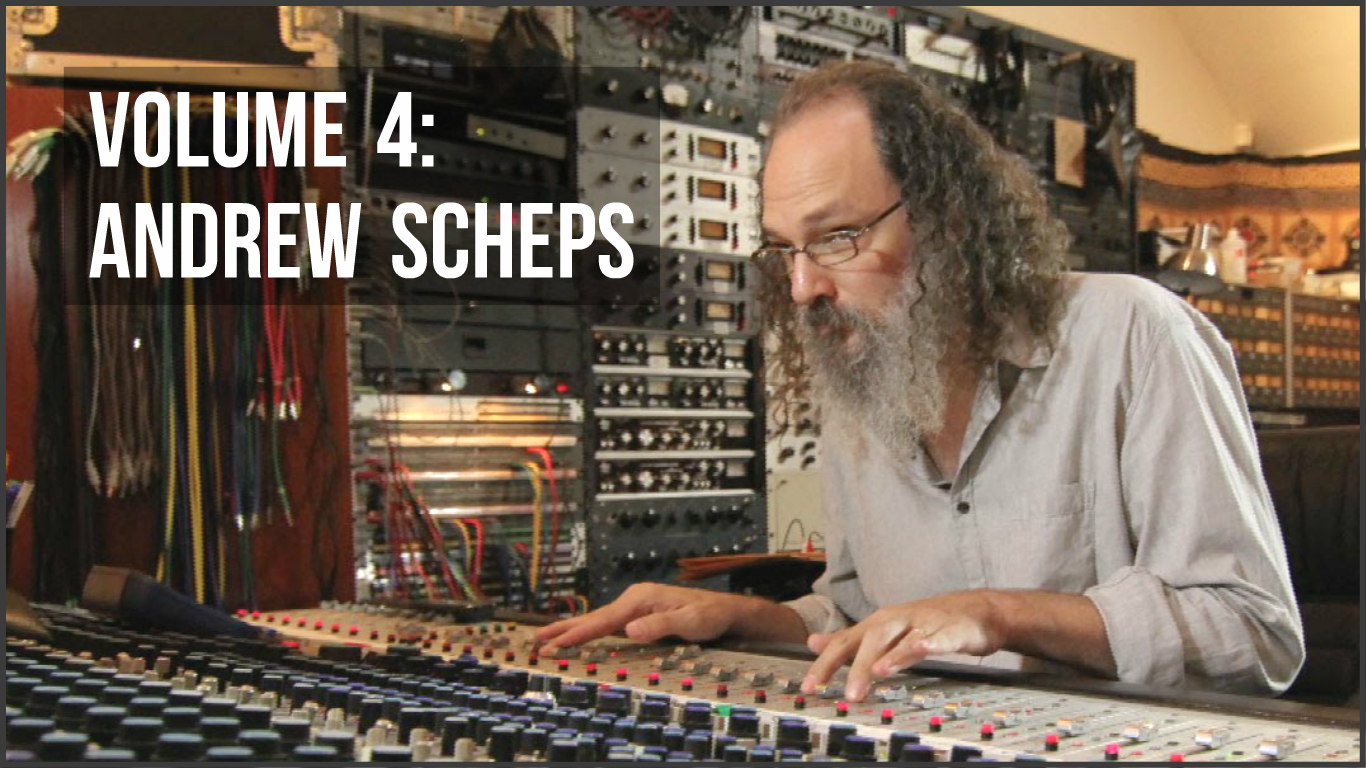
VOLUME 4: Andrew Scheps
1 Vol 4 - Andrew Scheps

Who Is Andrew Scheps?

Andrew Scheps is a Multiple-Grammy-Award-Winning Engineer & Producer who’s worked with some of the biggest names in pretty much every genre imaginable.

Some of the select artists he’s worked with include:

Black Sabbath

Red Hot Chili Peppers

Adele

Audioslave

Green Day

Jay-Z

Metallica

Lana Del Rey

AND MANY MORE…

Now that you know exactly who you’re dealing with, let’s cut straight to the chase…

Here Are 5 Pieces Of Incredible Audio Advice From Andrew Scheps:
1 – Analog vs. In The Box
2 Analog vs Digital

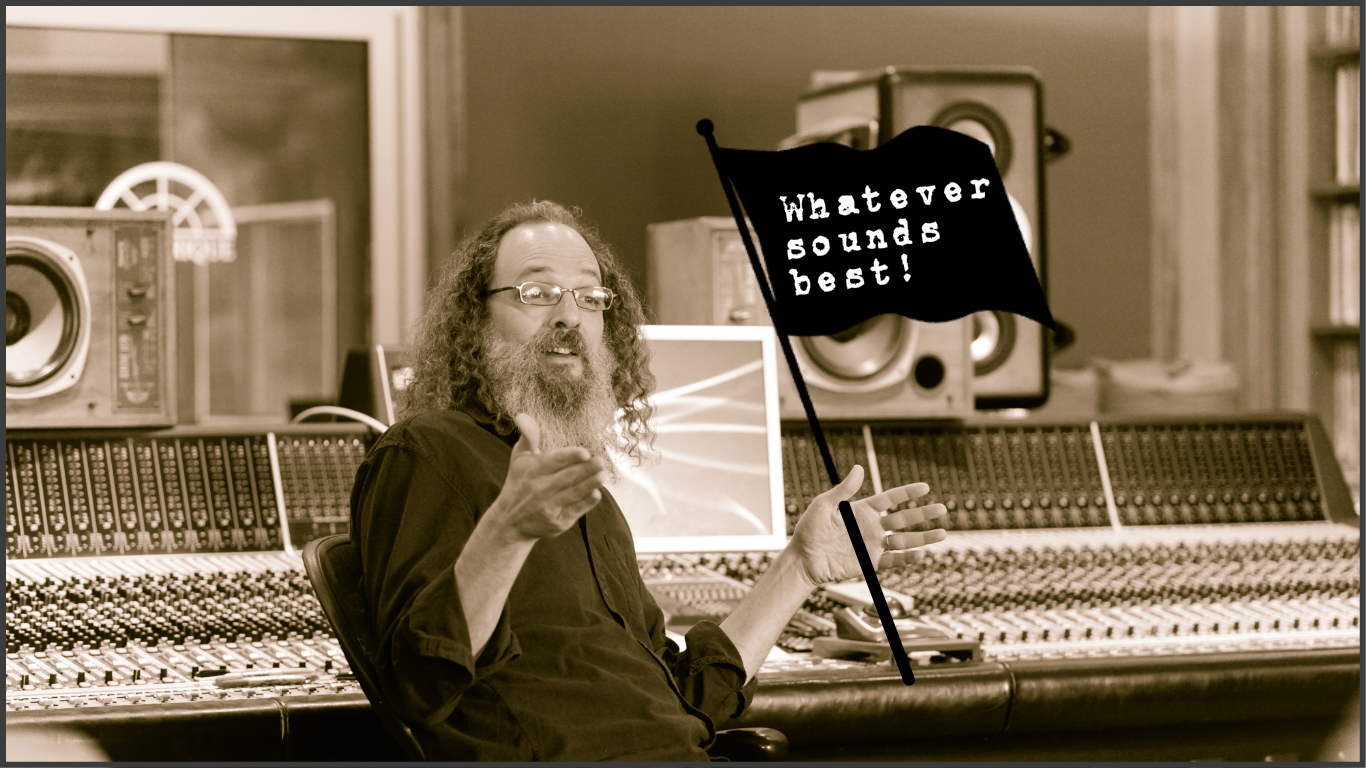
I am painfully aware of my legacy of quotes referring to mixing using analog equipment. That is how I mixed for years, I was an evangelist for it; as much for the ergonomic, visceral workflow as the sonics. Now I mix in the box. It’s a completely different way of working. I still love mixing and try and make every mix I do super exciting and musical.”

I wouldn’t be doing it if it weren’t that for me, at this moment, my mixes sound better… When I started to send the mixes to the clients and all I got back were normal mix notes, I knew that this would work.” – Andrew Scheps

Here are a few reasons why arguing over which workflow is “Better” is a HUGE waste of time:
  • By simply listening through Andrew’s incredible back-catalog and comparing some of his earlier “Analog-Mixed” work to his later “ITB-Mixed” work, it’s easy to determine that regardless of the tools which were used, he’s able to produce incredible sounding results!
  • Are there a few undisputable pros and cons involved in each workflow? Of course there are… But given the fact that there are so many people who are able to pull-off incredible feats of engineering on either medium, why not just do whatever suits YOU best and stop obsessing about what others are doing?!?
  • A far superior approach to having a – in my opinion disadvantaged “one or the other” attitude, would be to simply mix and match the positive elements of each work format and combine them into a “hybrid” workflow that meets all of your specific needs while also allowing for the best sonic results.
  • At the end of the day, it’s crucial to remember that the artists who choose to work with you are typically doing so based solely on the quality of what they’ve heard in your work, not the gear you have at your disposal. Even more importantly: %90 of the average listener’s who will be listening to your end-product won’t care either way as long as long as it sounds killer!

NOTE: Check out my Making Digital Sound Analog URM Blog from a few months back for further insight into the “Analog vs. Digital” Argument, as well as some useful tips on making the most of an ITB mixing setup.

2 – Keeping Things Fresh
3 Keeping Things Fresh

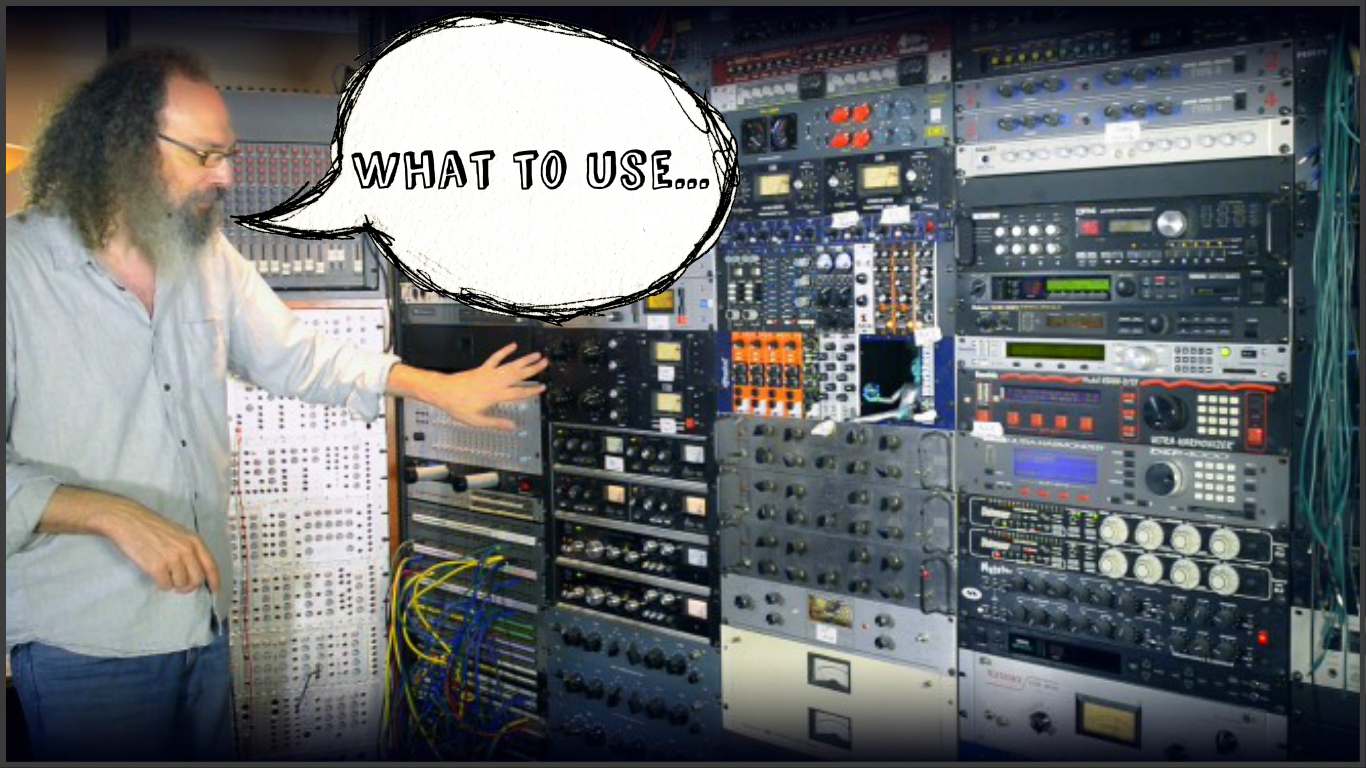
I’m a big fan of having lots of choices. I don’t like to do the same thing all the time. The way that I set up my mixes, all of my compression is parallel and I’m never directly compressing anything which means all of my compression can be brought in from a template. I have way more compressors set up on a session than I’d ever use so I can just mix and match and try things quickly.”

On the consoles too, all of my compression is in parallel. It allows me to have different chains on busses and sends, so that I can just hit a button and be like “No, don’t like that *pushes another button* oh, that’s awesome!”. I don’t even necessarily know which one it is that I’ve chosen, but it’s great and inspiring and helps me move on.” Andrew Scheps

Take some chances, get inspired, forget about “The Formula”:
  • A common misconception about a lot of successful engineers is that they use the same exact “secret” methods and signal chains across every single mix they ever do. If you’re the kind of person who spends hours upon hours trawling through interviews and forum posts searching for these “secrets” then I’m sorry to break it you, but… THEY DON’T EXIST!
  • The fact that Andrew sets up his workflow in a way that allows for – and encourages – spontaneous experimentation means that he’s never having to conform to a single “route”. Instead, he’s basing all of his decisions on what’s most appropriate for the sound he’s working on at any given moment, and simply doing whatever inspires him the most.
  • Although it’s great to develop a list of various “holy-grail” signal chains and settings which you can reach for whenever a song calls for a certain sound, limiting yourself to a standardised “mixing formula” can potentially lead to an eventual loss of inspiration in your everyday mixing process.
  • Do you think groundbreaking bands like The Beatles, Def Leppard or Metallica would have been half as successful or influential if they weren’t willing to experiment with sounds in the studio and take some risks in pursuit of their goals? MaybeBut I’m sure glad they were!

NOTE: On a side note, check out my Mixing Secrets – Volume 1: Vocals URM Article from a while back for some great tips & tricks on using parallel compression, as well as some great info on Andrew’s mixing process.

3 – It’s About The Ear, Not The Gear!
4 Golden Ears

If you just want to mix, buying gear is a waste of money. I think you’re really setting yourself up to have excuses for why it’s not going well because you don’t own all the gear. I had all the gear, and I still hated most of the stuff I did!”

It’s about the ability to make the tools do what I want coming out of the speakers, not just the ability to use the tools, which is exactly the mistake a lot of young engineers tend to make.” – Andrew Scheps

Technical knowledge is important, but not a substitute for experience:
  • A common mistake which people new to the mixing-game tend to make is over-emphasising the importance of the tools they are using.
  • Yes, the quality of the gear and plugins you own IS IMPORTANT, and knowing how to operate those tools to their full potential WILL most definitely help you to get better results out of them. However, the brutal reality when it comes to actually working in the music business, is that nowadays, knowing how to use the gear is more of a prerequisite than an advantage!
  • When it comes to choosing which pieces of gear to use while mixing: I can’t tell you how many times I’ve bought an expensive piece of gear or new “ultimate” plugin, only to achieve the exact same quality of mixes, and in certain cases, impact them negatively due to overdoing things…
  • The solution? Learn to make things sound great with the basic tools you have on-hand. More often than not, the built-in plugins which come pre-loaded in you DAW are more than capable of producing pro-quality results.
  • In our current age of “in-the-box affordability”, not having the money to buy the latest and greatest in audio tech is no longer a valid excuse, so stop blaming the gear and focus on improving your ears!

NOTE: Check out my URM Blog titled Buy Smart! – A Guide To Buying Gear for some important advice on spending studio funds wisely and making the most of your resources.

4 – The Importance of Artistic Integrity
5 Integrity

I think it’s really important in production to realise the two sides of the decision making process: You wanna make something that will sell enough so that everybody involved can make a next record – but at the same time… You need to be true to your own vision artistically. I think that paying any attention to what YOU THINK will sell – in my experience – is a complete waste of time…

It would be amazing if I could say “Hey, let’s make this one song a huge hit and make the other songs really artistic!” but you can’t do that, nobody can do that… In terms of making something an actual hit that connects with millions of people and is massive all of a sudden, there’s no way to know! And if you think you know, you’re just being arrogant.”

I wanna make sure that we’re making the best record that we can make, period. That way, at the end of the process there are no regrets, and there’s nobody who can come back and say “Well it wasn’t a success because we compromised on our songwriting to make it more poppy” or whatever… If the band has decided that they want to be more commercial, and that’s their vision, then that’s the vision that we will follow all the way through, but you can’t do it thinking “if we’ll do that we’ll make a lot of money”. You have to do it because that’s the record you want to make, and you have to buy into it artistically %100.”

To me the only thing that’s guaranteed to fail is something that doesn’t feel authentic, or something where the listener doesn’t feel like the artist actually means it – Whereas the things that connect the strongest between artist and listener are the things that have artistic integrity. They have to believe it in the moment, and then the listeners will believe it too.” Andrew Scheps

If you wholeheartedly believe in what you’re doing, chances are others will too…
  • Quite honestly, there isn’t much more I can add to the amazing pieces of advice Andrew has thrown our way with the quotes above…
  • If anything, I’d say that it’s extremely important not to get boxed in by limitations based on personal taste or “musical identity”. A few examples which instantly come to mind are: “Samples and Synths have no place in real music” or “trying to make music accessible to the mainstream is selling out”.
  • Having a set of ideals and standards is important. But if you’re trying to force these ideals down people’s throats, you’re bound to alienate a few people and even cost yourself potential customers in some cases.
  • Keeping an open mind in these situations, as well as having the ability to accurately accommodate for any artistic vision your clients may throw your way is hugely important, and will go a long way towards towards making yourself more employable.

NOTE: Want more tips on this subject? Check out last week’s URM Blog Live and Learn – Audio Lessons From Everyday Life

5 – CONCLUSION – Determining When A Mix Is “Done”
6 Mix Done

As I work on a mix, the one thing I want is for it to hit me emotionally. Until it’s doing that, I’m not done. I also build up a mental to-do list, whether it’s building vocal effects in the chorus, making sure the downbeat of the bridge is a big deal, or doing some panning moves – until I’ve ticked off everything on that list, I’m obviously not done… But really, I just want to hit play at the beginning of the song and be engrossed all the way to the end and think it’s awesome and want to hear it again. If I get to that point, then I’m done.”

There’s no “amount of time” it should take to mix a song. If it’s a simple, or even complicated song that’s really well arranged & produced, and after an hour and a half of mixing you can’t find anything else that’s left to do then fine, just leave it… Listen to it the next day, see if you still feel that way, and print it! Don’t set parameters before you start about anything and don’t presuppose anything. Keep making it sound like what’s in your head until you eventually get it there and you stop.” – Andrew Scheps

Some people just don’t know when to stop…
  • The more I study the industry greats who are churning out incredible mixes on a daily basis (such as Andrew Scheps), the more I realise this all-important fact: More often than not, they aren’t necessarily focusing on technical perfection, but rather creating a combination of sounds which help convey the emotional content and intended vision at the core of the track as accurately as possible.
  • The truth is, there will always be certain things which can be done to slightly enhance the technical aspect of a mix. The problem comes when you’re continuously chasing for miniscule improvements to the point of jading your perspective of the actual impact you’re having on the final product.
  • In my experience, there’s a certain “golden timeframe” in which you can finish a mix and still maintain a realistic “listener’s viewpoint” towards how it sounds and makes you feel. This is also the most important period in which It’s entirely possible to make and fulfill %95 of the crucial mix-related decisions that really matter!
  • If – as Andrew stated above – you’re able to get to a point where you’re happy with a mix within a few hours of said timeframe, then it’s important to weigh up how beneficial it actually is to spend countless more hours agonising over that last %5 which %99 of listener’s won’t even notice, as you may also end-up risking the loss of that initial perspective entirely…
My final piece of advice on this topic:

As is the case with a lot of things in engineering, being able to judge the quality of a mix on more than just a technical level takes a lot of time and experience. The only way to reach that point? Mix often and learn to finish things – No matter how bad the results may be when you’re starting out!

As you begin to build a repertoire of mixes, gain feedback from your clients/peers, and learn from your mistakes with each one you complete, your ability to judge what’s most important towards producing good mix will improve, and in return, allow you to finish things within the “golden timeframe”.

Final Words:

This concludes “Learn From The Legends – Volume 4: Andrew Scheps.” I hope that this article has given you some new ideas to try out during your next project. Be sure to comment below if any of this information has helped you out, or if you have any questions.

Stay tuned for more production/mixing related articles in the not-so-distant future!


Read Learn From The Legends – Volume 1: Chris Lord-Alge here!

Read Learn From The Legends – Volume 2: Randy Staub here!

Read Learn From The Legends – Volume 3: Andy Wallace here!

Want mix tips from URM Academy? Read them here!

Nail The MixNail The Mix is our online mixing school that gives you REAL multi-tracks from REAL bands, plus a mixing class from the producer who recorded it. Past guests include Periphery, Chelsea Grin, Machine Head and State Champs.  Join now for instant access!