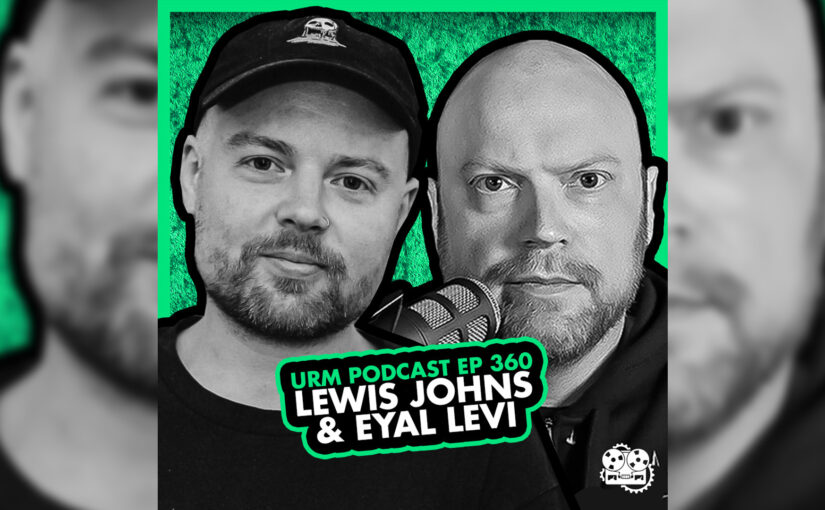
Lewis Johns is a UK-based producer, mixer, and mastering engineer known for his work with bands like Loath and Palm Reader. In 2017, his production on the Employed to Serve album The Warmth of a Dying Son was awarded Kerrang!’s Album of the Year, and he was nominated for a Heavy Music Award in 2019. Beyond the studio, Lewis has also released several popular IR and drum sample packs for producers.
In This Episode
Lewis Johns joins the podcast for a super real-talk session about what it actually takes to build a career in production. He and Eyal get into the classic dilemma of grinding non-stop in your early days versus setting healthy boundaries once you’re established. They discuss why being a jack-of-all-trades—musician, editor, engineer—is pretty much non-negotiable for the modern producer, and how knowing your way around a drum kit or a piano is less about chops and more about communicating your vision. They also break down the myth of the overnight success, touching on why awards don’t really move the needle, how imposter syndrome never fully goes away, and why the most rewarding path is often growing alongside a band over multiple albums. This is a great one for anyone trying to navigate the long game of being a pro.
Timestamps
- [3:15] Building in buffer time to your schedule to avoid burnout
- [5:07] When to be selective about projects vs. taking on “bread and butter” stuff
- [7:41] The importance of saying “yes” to everything early on to learn different genres
- [9:38] Why the “work-life balance” rules of established producers don’t apply when you’re starting out
- [11:24] Proving you’re hungry is the only way to get more responsibility as an intern
- [15:23] Why you need to know how to do everything (like editing), even if you plan to hire an assistant later
- [19:44] The lost art of tuning drums and why it’s crucial for engineers to learn
- [24:38] How playing multiple instruments helps you communicate with artists
- [26:59] Can you be a great producer without being a musician? (Discussing Colin Richardson & TLA)
- [28:23] How the definition of “producer” has changed from the old-school “director” role
- [30:27] Is Steve Albini *really* just an engineer?
- [32:33] Why Kurt Ballou’s records have a signature sound despite his hands-off approach
- [37:05] You don’t “try” to develop your own sound; it happens naturally
- [39:05] Why recording yourself is one of the most important things you can do to get better
- [44:27] Lewis’s journey from assisting to working three jobs to going full-time
- [47:08] Strategically doing cheaper records for bands you believe in
- [55:10] Do awards actually change anything for your career? (Spoiler: No)
- [55:47] Dealing with imposter syndrome, even after you’re successful
- [1:02:17] The power of growing with a band over multiple albums (like with Employed to Serve)
- [1:07:21] Why you shouldn’t get bummed out when a band decides to work with someone else