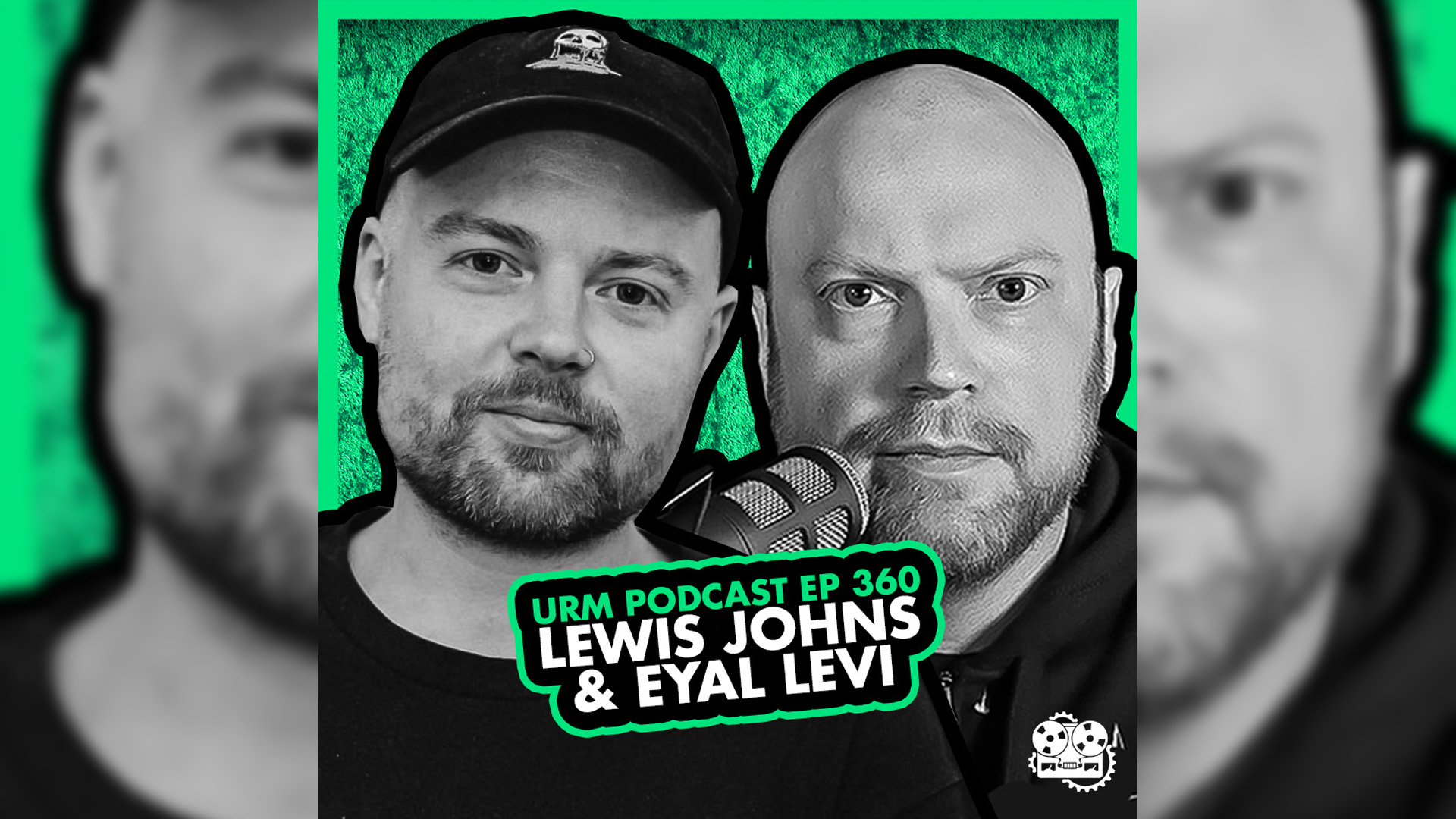
LEWIS JOHNS: The producer grind, imposter syndrome, and why awards don’t matter
Finn McKenty
Lewis Johns is a UK-based producer, mixer, and mastering engineer known for his work with bands like Loath and Palm Reader. In 2017, his production on the Employed to Serve album The Warmth of a Dying Son was awarded Kerrang!’s Album of the Year, and he was nominated for a Heavy Music Award in 2019. Beyond the studio, Lewis has also released several popular IR and drum sample packs for producers.
In This Episode
Lewis Johns joins the podcast for a super real-talk session about what it actually takes to build a career in production. He and Eyal get into the classic dilemma of grinding non-stop in your early days versus setting healthy boundaries once you’re established. They discuss why being a jack-of-all-trades—musician, editor, engineer—is pretty much non-negotiable for the modern producer, and how knowing your way around a drum kit or a piano is less about chops and more about communicating your vision. They also break down the myth of the overnight success, touching on why awards don’t really move the needle, how imposter syndrome never fully goes away, and why the most rewarding path is often growing alongside a band over multiple albums. This is a great one for anyone trying to navigate the long game of being a pro.
Timestamps
- [3:15] Building in buffer time to your schedule to avoid burnout
- [5:07] When to be selective about projects vs. taking on “bread and butter” stuff
- [7:41] The importance of saying “yes” to everything early on to learn different genres
- [9:38] Why the “work-life balance” rules of established producers don’t apply when you’re starting out
- [11:24] Proving you’re hungry is the only way to get more responsibility as an intern
- [15:23] Why you need to know how to do everything (like editing), even if you plan to hire an assistant later
- [19:44] The lost art of tuning drums and why it’s crucial for engineers to learn
- [24:38] How playing multiple instruments helps you communicate with artists
- [26:59] Can you be a great producer without being a musician? (Discussing Colin Richardson & TLA)
- [28:23] How the definition of “producer” has changed from the old-school “director” role
- [30:27] Is Steve Albini *really* just an engineer?
- [32:33] Why Kurt Ballou’s records have a signature sound despite his hands-off approach
- [37:05] You don’t “try” to develop your own sound; it happens naturally
- [39:05] Why recording yourself is one of the most important things you can do to get better
- [44:27] Lewis’s journey from assisting to working three jobs to going full-time
- [47:08] Strategically doing cheaper records for bands you believe in
- [55:10] Do awards actually change anything for your career? (Spoiler: No)
- [55:47] Dealing with imposter syndrome, even after you’re successful
- [1:02:17] The power of growing with a band over multiple albums (like with Employed to Serve)
- [1:07:21] Why you shouldn’t get bummed out when a band decides to work with someone else
Transcript
Speaker 1 (00:00:00):
Welcome to the Unstoppable Recording Machine Podcast, and now your host, Eyal Levi. Welcome to the URM podcast. Thank you so much for being here. It's crazy to think that we are now on our seventh year. Don't ask me how that all just flew by, but it did. Man, time moves fast and it's only because of you, the listeners, if you'd like us to stick around another seven years and there's a few simple things you can do that would really, really help us out, I would endlessly appreciate if you would, number one, share our episodes with your friends. Number two, post our episodes on your Facebook and Instagram and tag me at al Levi URM audio and at URM Academy and of course our guest. And number three, leave us reviews and five star reviews wherever you can. We especially love iTunes reviews. Once again, thank you for all the years and years of loyalty.
(00:01:01):
I just want you to know that we will never charge you for this podcast, and I will always work as hard as possible to improve the episodes in every single way. All we ask in return is a share a post and tag us. Oh, and one last thing. Do you have a question you would like me to answer on an episode? I don't mean for a guest. I mean for me, it can be about anything. Email it to [email protected]. That's EYAL at m dot A-C-D-E-M-Y. There's no.com on that. It's exactly the way I spelled it and use the subject line. Answer me Eyal. Alright, let's get on with it. Hello everybody. Welcome to the URM podcast. My guest today is Lewis Johns, who is a producer, mixer, mastering engineer out of the uk who has worked with bands such as Loath, Palm Reader, many others. In 2017, he produced the Warmth of a Dying Son by Employee to Serve and got awarded Kang's album of the year for that. He was also nominated for a heavy music award in 2019. He's got several IR packs as well as drum sample packs and is all in all fucking awesome. Let's get into this. Lewis Johns, welcome to the URM podcast. Thanks
Speaker 2 (00:02:23):
For having me. Indeed, it's
Speaker 1 (00:02:24):
A pleasure. Thank you for dealing with my crazy scheduling issues, so appreciate it.
Speaker 2 (00:02:31):
That's okay. You're basically the busiest man in the world anyway, aren't you?
Speaker 1 (00:02:35):
I won't go that far, but my schedule just gets more and more and more insane, and the challenge of how to organize my time and delegate it properly and stay efficient just compounds. It gets crazier and crazier as I go. But I mean, I'm sure you know how that is.
Speaker 2 (00:02:55):
Yes. Yeah, it can be pretty crazy sometimes, but you seem to handle it well, so you're doing good.
Speaker 1 (00:03:01):
I do my best. But what about you? How do you make sure that you stay on top of everything studio wise? I know that you also make products, you have workshops. How do you stay on top of everything?
Speaker 2 (00:03:15):
To be honest, I try and give myself a good amount of time off in between those things, so if anything does run over or if I need some extra time or something, then I've got a bit of a backup plan. A lot of the time I'm mixing now, so I'm fairly flexible anyway. But yeah, it's just keeping to schedule as much as possible. I think that sometimes creatives aren't very good at that, and I do try to do that as much as possible when I can.
Speaker 1 (00:03:41):
I think building the buffer is really wise. I used to run into problems and I know that a lot of people run into problems by saying yes to too many projects and overestimating how much they can get done in a short period of time. There's four projects, we'll just get this one done in these five days and then it can go onto that one and it'll be great. They don't take into consideration how long things actually take and the wild card variable of something going wrong. I feel like any project that you take add 30% to your estimate.
Speaker 2 (00:04:20):
Yeah, absolutely. And I think you've got to be honest with yourself as well when you're getting bookings in, and we all know that people try and skimp on budget a lot of the time and stuff. You've just got to be honest with yourself and think, if this is going to take longer than I think it's going to take, then maybe it's not for me.
Speaker 1 (00:04:37):
Yeah, if it doesn't meet your needs, I guess.
Speaker 2 (00:04:40):
Yeah, exactly. Or if you think it's going to be something that you are going to be really working your ass off to get it in on the deadline. It's knowing when to step away from projects like that. I think
Speaker 1 (00:04:50):
I feel though, at some point in your career, in the earlier stages especially, I think you kind of have to just be cool with projects like that because otherwise you're not going to get more projects if you don't just make the ones that you do have work, however possible. Yeah,
Speaker 2 (00:05:07):
Absolutely. And I think that you can be kind of a little bit selective in that kind of process as well. Read the room a little bit if you think that a band are going to blow up or you think that they're going to have a bit of profile, maybe spend a little bit longer on it than you normally would and then the sort of more bread and butter stuff, then maybe try and get out a little bit quicker. But yeah, it's definitely project to project, isn't it?
Speaker 1 (00:05:32):
Yeah. I think though that with an established career and age and I guess wisdom, it's a lot easier to know how long something should take. It's also, I think, a good policy to just save your energy and when it does happen that you're on a super important, I mean they're all important, but let's just say on a priority project and the deadline is insane and you have to get it done in time that you can still dip into the energy reserves and do what you have to do to get it done. But if that's not the norm, then you're not going to burn out. If you have to do that once a year on a project or twice a year on a project, that's not such a big deal. If that's happening on every single project, well, that's a different story. That's bad planning,
Speaker 2 (00:06:22):
And I think we can all say at some point we've probably burned out. There was a couple of years ago where I was just taking on everything and not giving myself any buffer or any time off or anything like that, and the burnout is real. It makes your work not as good for it, and it affects your personal life, everything like that. So yeah, I think it's important
Speaker 1 (00:06:44):
The saying yes to everything. It's a tough one because if you go from I guess a condition of not having stable work to suddenly having a lot of work, it's very, very hard to say no to things because you don't want to go back to having no work. There's this fear associated with it, I think.
Speaker 2 (00:07:04):
Yeah, definitely. I think anyone that's self-employed probably like that to an extent. I guess it just comes with getting a bit older and knowing that I think once you've been there and you've kind of experienced it, it's much easier to be like, oh, is this actually, is this going to affect me negatively? So yeah, I definitely think that comes with age and experience as well. The more you do it, the more you sort of know.
Speaker 1 (00:07:29):
But do you think that when you're starting and you don't have an established name, you don't have a track record or a solid income from it, that you should pretty much say yes to everything
Speaker 2 (00:07:41):
To an extent. Obviously, if it's absolutely killing you then, but we've all been there. We've all been in studios coming up where you are doing as much as you possibly can in the day and then in the evenings or whatever you are trying to do your own stuff. So that I think is quite an important part of growing. But yeah, I think that also as well, when you say yes to everything, you sort of learn to record and mix everything as well. You're not limiting yourself to one particular genre or one particular sound or something. So I think that's really, really good for someone's growth, especially as a producer or a mixer, figuring out what is maybe take on something that's completely different. If you're not in the metal world or something, maybe this folk band or something like that is going to help you further on down the line with something else. So yeah, that stage, I think it is pretty important to take on a lot of different kind of projects, but obviously when you get a bit older, it's a little bit more difficult to do it all. So I do get it.
Speaker 1 (00:08:43):
Yeah, take advantage of youth. It's the same thing as when getting good at an instrument. In those early years, you should be practicing eight hours a day. That is when you should do it, especially if you're in high school. I mean before you're in the real world. Those years should be spent with just crazy work doing every single thing that you can to get better because as you get older, you're not going to be able to put that kind of energy into it, and I feel like that kind of energy is required to get really, really good at this type of thing. Production, music, whatever, any sort of creative field that requires a high degree of technical competency, you have to put the time in, and as you get older, it gets harder and harder to put the time into improving and other things happen like life happens, relationships start to matter more.
(00:09:38):
Things like that, that also take time start to matter a lot more and you have to balance it. But I have this theory because a lot of the people, almost all the people that we have on this podcast or riff hard or on nail the mix, everybody is super established. Every once in a while I'll bring people who are at the very early stages of their career onto your own podcast, people who are in their first few years of being pro or almost pro, but who are definitely on their way, but by and large it's people who have been doing this for a very long time, and so by and large, they all have set schedules, hours that they work until rules about how long they'll spend in the studio, and those are all great, but one thing that I really hope that people who are listening who are at the early stages of their career take from that is that that's an ideal to strive towards.
(00:10:34):
That's a good goal, to get to a point of your career where you can say, I take weekends off. You can say, I'm done at 6:00 PM or 8:00 PM or whatever it is. I have set working hours and then I have my life. That's a great place to get to, but if you impose that sort of schedule in the early days when you're trying to intern or assist or first start working with bands, that's almost a recipe for failure and a recipe for not getting as good as the people who will do the 36 hour long sessions and who will happily get broken up with their girlfriends or boyfriends in order to do this thing and who will fail in school in order to practice guitar the full eight to 10 hours a day.
Speaker 2 (00:11:22):
Absolutely, yeah.
Speaker 1 (00:11:22):
You're going to be up against those people.
Speaker 2 (00:11:24):
Yeah. Again, there's so many hungry people out there that want it as well, so if you start saying to notice stuff early on in your career, the person next to you is going to go and get it, and it's always going to be there for someone else to have. So yeah, you do have to be really hungry for it early on, and that's sometimes we get interns come through the ranch and it's one thing you have to say to 'em like, look, if you want it, if you really, really want it, you have to be here after hours and you have to be doing the extra little bits and bobs to show us that you really, really want it. Because once you start showing me that you really, really want to do something, I'm going to buy proxy, start giving you more stuff to do because I'm going to trust you more to do it and you can see that you really, really want it. So I want them to then succeed.
Speaker 1 (00:12:07):
It's an organic thing.
(00:12:09):
Whenever I have gone further with someone who came in at that entry level, and there's been a few over the course of my career who have come in at the entry level and who then went on to have careers and that I chose to invest time and effort and trust into, but I didn't have to tell them to work hard or I didn't have to tell them to not give excuses and just get shit done and to go the extra mile and to try to make my life easier and to just be obsessed with getting better. They were just like that. That's just who they were. What I've noticed is that there's some people who are, like you said, some people are just hungry. There are a lot of hungry people out there. It's not even really a choice for those people. They just want it so bad that they will make it their priority.
Speaker 2 (00:13:04):
Exactly. The thing is, it's something that we all love as well. That's the other side of it. So if you can end up doing a job that you love, it's suddenly not really a job anymore, is it? You're doing one of your biggest passions as your hobby or whatever is your job. So I think a lot of the people that are really successful, that's why they started it. They didn't start it because it's like, oh, well, I just want to get, this sounds like a cool job. It's like, no, we really fucking love records and we really love music and we are all nerds and we love that kind of shit. So yeah, definitely turning a hobby into a job.
Speaker 1 (00:13:42):
It's pretty cool. I just did a q and a on my Instagram just to ask one of those, ask me anything posts and stories and somebody said something, I'm paraphrasing, something along the lines of how do I make editing less draining? I know I have to do it, but basically it sucks my answer and my thoughts were, well get better at it. If you get better at it, you're going to get faster at it and also get a little fucking perspective. If you're early in your career and the stuff you have to do is draining you well, maybe it's the wrong career, and then also maybe you're not appreciating how cool it is to get the chance to do audio for work. I mean, you could be in a war right now. You could be delivering pizza, you could be working in a coal mine, it could be a barista. There's all kinds of jobs that are far shittier than getting to edit drums for records.
Speaker 2 (00:14:43):
Yeah, absolutely. You should love that shit early on as well. Find different ways to edit. Suddenly finding like, oh, if I do these shortcuts, whatever, it can be much, much quicker. Like you were saying, just the more you do it, the better you'll get at it,
Speaker 1 (00:14:57):
And if you're better at it, since you'll be faster at it, it'll take less time, it'll be less draining.
Speaker 2 (00:15:03):
Absolutely.
Speaker 1 (00:15:03):
Yeah. I really do think actually that while it's not about technicality, music's not about technicality, it's about conveying emotions. The technicality side of things is what allows you to have the freedom to not get drained and to be creative.
Speaker 2 (00:15:23):
Yeah, sure.
Speaker 1 (00:15:24):
Yeah. I think the more master you have over that stuff, the more you don't have to think about it, the more energy you have for the things that really are a lot of fun.
Speaker 2 (00:15:32):
Definitely. Definitely. And if you learn all of those little things as well when you're early on in your career later on, okay, fine. You might later on have an assistant that does that stuff, but you still really, really need to know how to do it in order to know if it's done correctly or I think it all just makes you a better engineer at the end of the day.
Speaker 1 (00:15:52):
Yeah, totally.
Speaker 2 (00:15:53):
You can't really be picky with that stuff early on. You just need to learn every single aspect of it. What's going to make you a better person, a better engineer.
Speaker 1 (00:16:01):
Yeah, I totally agree. I think that the idea of having an assistant or someone that you outsource edits to that just like the set schedule thing is a great goal to strive towards in the future, but in order to get there and to really make it work, you need to know what you're doing with the editing because an editor isn't going to just magically edit things the way they need to be for you. Every great editor, I know there's some people I know who that's like 80% of their audio income is editing for really great producers, and what's great about these editor types, John Douglas for instance, is they edit differently for different producers based on what that producer wants for that project, and they're able to alter their style to fit that person's needs. Now that producer who's hiring someone like John Douglas only knows to ask for things a certain way because they know what they're doing.
(00:17:08):
Otherwise they could be sending a record that needs a loose feel, but just needs some comps or a few manual edits as opposed to a hundred percent grid. But if the producer doesn't know that, doesn't understand how that works, they're not going to give the proper instructions to the person that they're outsourcing it to, and then they're going to have to rely on the person that they outsource to understand the vision for the project. Now, in some cases, it might work out fine, like a person like John Douglas is a good producer, is a good musician, does understand music and has enough experience to where even with no direction, he'd probably do a really good job, but that's a crapshoot. As a producer, your vision and the way you want things should be defined in my opinion, and how are you going to have a team that helps you without you understanding what you need out of that team?
Speaker 2 (00:18:10):
Definitely, and especially like you mentioned when it comes to doing slip edits or something, if you get a producer that wants a bit more of the feel, knowing how to do that is so important and the amount of times I've had people, I've sat 'em down and gone, okay, this is what I want. I don't want it a hundred percent gridded. I want it a bit more slip edited, and they go, oh, why don't you just want it quantized as well? Well, music doesn't always have to be quantized to a grid, and it's knowing kind of when to do that, and again, reading the room as well, knowing what your audience is, knowing who you're working for, all of that stuff. Yeah, you've got to know how to do all of it, I think.
Speaker 1 (00:18:51):
Yeah, absolutely. You should want to. Also, it's a lot like the restaurant owner who started as a waiter and a busboy and was also a host for a while and has worked in every aspect of the restaurant industry before becoming a good restaurant owner. That's kind of how I see it to be a great producer. I'm not saying that you have to be the best editor on earth or the best pro tools operator on earth or the best technical engineer or the best at harmonic analysis, but you really should know how to do all those different things. You should know how to edit drums properly. You should know how Patch Bay work. You should just know this shit. You should know this shit even if you're going to have people working with you.
Speaker 2 (00:19:44):
Yeah, I think the thing is, it's lost a lot of the time now, especially with a lot of modern productions, because anyone can buy a laptop and get logic, and especially with stuff like drums, a lot of people, they miss that early on of stuff like tuning a drum kit for instance. I'm still amazed at how many engineers just do not know how to tune drums. It's like I was sitting there with drums from a very early on, very early on in my career just like being like, okay, so if I do this, maybe it can do this, and just trying to understand all of it because you never know. Later on, if I get a drum tech on something, I can sort of say to them like, okay, I want you to tune the rack Tom to a G, and I want you to tune the Flo Tom to a c or something, and just understanding every single aspect of it I think is so, so important. Yeah,
Speaker 1 (00:20:35):
Totally. So one thing that I have definitely talked about a lot is how incredible it is when you have a great drum tech on a session, it makes your life so much easier because you don't waste your ears hitting things. You can stay in the control room and actually hear things the way they're coming through the microphones while an expert is tuning the drums. However, just like what we're saying with the editor scenario, if you don't know how to explain the vision of what the drum should sound like and don't know how that works, then your drum tech is going to have to be the one who defines that and could be good, could be bad, but it could be good, but have nothing to do with the vision for the record too.
Speaker 2 (00:21:25):
Yeah,
Speaker 1 (00:21:26):
It could be a really well tuned drum set that isn't the sound you're going for.
Speaker 2 (00:21:30):
Exactly. Yeah, exactly. If you want to go for a big explosive room sound and some of they're tuning the snare right down low, that kind of thing. Yeah, you're right. Yeah,
Speaker 1 (00:21:39):
And I've definitely worked with incredible drum techs and seen incredible drum techs work, but part of, at least on records I've made, part of why I have had great luck with drum techs is because I did spend six months taking drum lessons and learning how to tune. I'm not very good at it, but I'm good enough to get by and good enough to understand how it works and to be able to communicate that, and then you get an expert in there who their whole world revolves around drums and making drums sound good, then that's great, but otherwise it's up to their taste. And a good, for instance is a drum tech that I talk about a lot, a dude named Matt Brown who's just a drum genius, best drum tech I've ever encountered anywhere, but he's not a metal guy. I mean, it's not like he's ignorant to metal, but he's not a metal guy.
(00:22:37):
He's not. He's a classic rock kind of guy, more so than anything, or one of those professional drummer types who could do drum lessons all day one day, then go pick up a gig with a wedding band the next day and then play a sold out show for an arena band the next day, and then go engineer drums on a huge classic rock record the next week. One of those dudes who just is great, but not a metal guy. So if he was to come into some death metal session was working on, like say, we have Alex Inger in the studio and I need things tuned for two 80 BPM type material, and he gives me this classic rock sound because that's what he personally prefers. That's what he wants drums to sound like. That's not going to work. So I need to be able to tell him exactly what we're going for.
Speaker 2 (00:23:33):
Yeah, sure.
Speaker 1 (00:23:34):
Then trust that with his expertise, he'll be able to interpret that and deliver.
Speaker 2 (00:23:38):
But going back as well to what you were saying about you getting drum lessons, I mean, stuff like that is so important because getting drum lessons suddenly knowing how to hit a drum properly as well, that's such a big thing. Being able to explain to a drummer when they're not rim shotting a backbeat or something like that. Okay, well maybe if you play a bit more like this or you raise your seat a little bit or tilt this in a certain way, it makes for a better end result if you understand every single aspect of it.
Speaker 1 (00:24:09):
Absolutely, and even if you don't record drummers and all you do is program drums, just even if it still helps to have learned drums because then at least your parts will be more realistic
Speaker 2 (00:24:22):
And you can understand, feel and all the other stuff as well. Yeah,
Speaker 1 (00:24:24):
Yeah, exactly. So how many instruments do you play, and I don't mean are you a virtuoso or pro level app, but just how many instruments do you have some basic ability with?
Speaker 2 (00:24:38):
So my main instrument's guitar and I can play a bit of drums as well, so I think I'm okay at drums, actually, a bit of piano, and I've had quite a musical family growing up, so my mom was a singing teacher. My dad's a really fucking good guitarist, much, much better than me actually. So yeah, I've always kind of been around it. I think it really, really helps. Even stuff like piano for instance, I end up recording a lot of piano with people like rela to Massi for instance. Just understanding a little bit more about certain ways it's supposed to be played and certain sounds and stuff. I think it does really, really help.
Speaker 1 (00:25:20):
So drums, guitar, piano, and I'm guessing some voice.
Speaker 2 (00:25:24):
Yeah, a little bit. Again, I'd say guitar is my main thing. The rest of it I can just kind of get by.
Speaker 1 (00:25:32):
I mean, that's enough in my opinion as a producer, that's enough just to be able to get by so that you can communicate with people.
Speaker 2 (00:25:38):
Yeah,
Speaker 1 (00:25:39):
I took voice lessons too for dude, I'm so terrible at singing and I hate it and it's embarrassing and never want to do it in public ever or in private even like God singing is just, I would rather have the most embarrassing thing imaginable happen than have to sing.
Speaker 2 (00:26:00):
Oh, no way. I'm sure you're not that bad.
Speaker 1 (00:26:02):
Yeah, dude, I fucking hate it. But I still took voice lessons for six months or a year just so that I would understand more about how it works and so that I could help write better vocal lines with vocalists.
Speaker 2 (00:26:16):
Yeah, absolutely. Absolutely. Being able to sit there, even if, because we've all done it the amount of times we're sitting there in a studio in a control room going like, okay, sing this harmony or do this thing, and just understanding how to layer that kind of stuff. Even if you can't sing very well, the fact that you've gone there and done lessons and you sort of know what to aim for, I think that's still cool, and I think that people should still try and get to know everything they're doing. Again, it just goes back to this whole, it does make you a better engineer if you understand a little bit of everything that you are recording.
Speaker 1 (00:26:48):
Yeah. There are engineers that are not musicians, but I feel like that's more an old school thing. Colin Richardson, for instance, is not a musician, which blows my mind. That
Speaker 2 (00:26:59):
Blows my mind.
Speaker 1 (00:27:00):
Absolutely blows my mind. TLA also is not a musician, blows my mind. The way TLA explained it, and I get it, is that he says he has an advantage, well, first of all, he's more of a mixer than a producer by his own words, but he says that he has the benefit of approaching it like an audience member, like a music fan, and so he's able to not worry about the bullshit musicians think about and just make music sound the way he would want it to sound as a fan, and I guess that works for him. But he's also freakishly talented and just gifted, really, really gifted anyone. Any pro is gifted to some degree, but then you have your outliers like TLA. But I think for most producers, not being a musician is a huge setback.
Speaker 2 (00:27:52):
Absolutely. Yeah. I mean, like you said, the whole engineer thing back in the day, not having to know as much about what they're recording because the budgets were there for an engineer, like an assistant producer, there's suddenly five people in the studio that are doing different jobs, whereas now obviously budgets are much less, and it's more about if you are doing a record, you're usually engineering and producing it and all the rest of it.
Speaker 1 (00:28:23):
The definition of being a producer has changed, whereas in the older days, the producer role was more like an executive producer, more like a movie director where
(00:28:38):
The movie director has the vision for the project, but the director is working on budgets. They're getting a director of photography who the director of photography is actually the person who's setting up the shots for the most part. They have people who do the lighting, then the script writers, then actors, they have to coordinate all that stuff and they have all the best people in the world on a Martin Scorsese or Chris Nolan movie where they're working with a-listers, a-list actors, and then the best crews and the director's job is to make sure that that's all working properly and together to fulfill this vision. And I do think that the older school definition of a music producer is more like that, more like the Rick Rubin, Howard Benson style, which works great if you have the right team that can work great, and if you can get to that point, that's great, but the modern version doesn't really allow for that. I mean, you could get to that point also nice goal, but in real life coming up producer has to assume many different roles, and it's almost, in my opinion, not really optional. I would say that it's borderline required and not because I say so, but just because I know so many producers that are doing great who can do it all. I'm just thinking if that's your competition, you better get serious.
Speaker 2 (00:30:13):
Yeah, right. Yeah.
Speaker 1 (00:30:14):
If someone like Zach Sini is the competition, well, that kid can do a whole lot of stuff, and I think that that's kind of the modern template for a successful producer is being able to do it all.
Speaker 2 (00:30:27):
Absolutely. I always find it quite interesting whenever I read about Steve Albini and he always talks about how he's just an engineer, he doesn't produce anything, and he just sits there and hits record.
Speaker 1 (00:30:39):
So I had him on the podcast and I respect his point of view, and I would say this to him, but I don't agree that he's just an engineer. I think that he's a total producer, but it's his style of production is less about him and way more about, I guess the artist. It's kind of like, here's an equivalent in my opinion. Some band's image is no image. I remember people used to say that ETH didn't have an image, but they do have an image, their image, well, now they've gone very deep into the 1970s thing, but earlier on they weren't quite so led Zeppelin looking, but the image was still no image. That was the image that was the brand was we don't dress up. And I feel like with the Albini style of production, his style of production is still production.
Speaker 2 (00:31:33):
I mean, you still listen to it and go, that's an Albini record.
Speaker 1 (00:31:36):
Exactly.
Speaker 2 (00:31:36):
Yeah. He's obviously just doing it in a different way. He, it's still going through his ears and his filter.
Speaker 1 (00:31:42):
He's still making decisions. So it's an interesting one because I don't see him as just an engineer, even if he sees himself as one, what do you think?
Speaker 2 (00:31:51):
No, I totally agree with you. Yeah, I mean, I was literally talking about this the other week to someone, he says that he is just an engineer and he doesn't produce anything, and I've known a couple of people that have gone recorded with him, and they do say he's very hands off, but then it's his decision to maybe set up a drum kit in a certain studio and put certain mics up. It's different, and he's still engineering, but he's still engineering because he wants to get to a certain point at the end of it. All of his decisions are because he likes things to sound that kind of way. If he didn't like things to sound that way, then he would put drums in a really dry space and all the rest of it. So yeah, I totally agree.
Speaker 1 (00:32:33):
Yeah, it's like the OU thing too. I think OU also is from that school of, I guess more from the Albani school. Kurt does his own thing and he's very, very humble about it, but you can spot a Kurt Baloo record.
Speaker 2 (00:32:51):
Absolutely.
Speaker 1 (00:32:51):
It's got a totally defined identifiable sound, inescapable, a Kurt Balu record when you're hearing Kurt Blue record and bands go to him because of what he brings to the table. So the thing is, he's selective about the bands he works with, so he's not going to work with a band that doesn't have a certain aesthetic that he feels is right for what he does. So even that, even being just the act of being selective about who you work with is part of being a producer, in my opinion.
Speaker 2 (00:33:22):
Yeah, definitely. And a lot of people say about Kurt Blue and Steve Albini and stuff like, well, it's the studio and part's a big sound of it. Well, yeah, sure. But I mean, if you or me were to go to God city to do a record, it would sound totally different. So it is not, I mean, yes, a room can sound a certain way, but it's still going through whoever's ears are doing that particular project.
Speaker 1 (00:33:44):
Yeah, exactly. That's why whenever I'm talking to someone about doing Nail the Mix and they're worried about sharing the way they mix with people, it is usually with the older guys, but my answer is always, dude, you're not sharing your brain with them or your ears, so no matter what, you could give them your session and it still won't sound like you.
Speaker 2 (00:34:10):
Exactly.
Speaker 1 (00:34:11):
They could copy every single thing you do, screenshot everything, make presets out of everything, and then it's still not going to sound like you because they don't hear things the way you do. They're not going to be able to take something from scratch and make the 10,000 decisions that get you to that point.
Speaker 2 (00:34:28):
Yeah, exactly. If
Speaker 1 (00:34:30):
They get good, they're going to make their own 10,000 decisions and get them to their own point, but you're never actually going to be able to give away the true differentiator, which is your own skills, your own ears, your own brain.
Speaker 2 (00:34:41):
Yeah, I think that's exactly it, isn't it? Everyone is so different. We've all gone through different experiences in life that have led us to this point that we're at now, and all of those, I don't care what you say, all of it makes us the way we are. So if I'm doing a record with a certain band, it's going to sound totally different to if someone else is doing it. It's all those little very microscopic decisions that you make on something that hopefully creates your sound.
Speaker 1 (00:35:08):
Yeah, exactly. Hey, everybody, if you're enjoying this podcast, then you should know that it's brought to you by URM Academy, URM Academy's mission is to create the next generation of audio professionals by giving them the inspiration and information to hone their craft and build a career doing what they love. You've probably heard me talk about Nail the Mix before, and if you're a member, you already know how amazing it is. The beginning of the month, nail the mix members, get the raw multi-tracks to a new song by artists like Lamb of God, angels and Airwaves, knock Loose OPEC shuga, bring Me the Horizon, Gaira asking Alexandria Machine Head and Papa Roach among many, many others over 60 at this point. Then at the end of the month, the producer who mixed it comes on and does a live streaming walkthrough of exactly how they mix the song on the album and takes your questions live on air.
(00:36:01):
And these are guys like TLA Will Putney, Jens Borin, Dan Lancaster to I Matson, Andrew Wade, and many, many more. You'll also get access to Mix Lab, which is our collection of dozens of bite-sized mixing tutorials that cover all the basics as well as Portfolio Builder, which is a library of pro quality multi-tracks cleared for use in your portfolio. So your career will never again be held back by the quality of your source material, and for those of you who really want to step up their game, we have another membership tier called URM Enhance, which includes everything I already told you about, and access to our massive library of fast tracks, which are deep, super detailed courses on intermediate and advanced topics like gain, staging, mastering, low end and so forth. It's over 500 hours of content and man, let me tell you, this stuff is just insanely detailed and enhanced.
(00:36:55):
Members also get access to one-on-ones, which are basically office hour sessions with us and Mix Rescue, which is where we open up one of your mixes and fix it up and talk you through exactly what we're doing at every step. So if any of that sounds interesting to you, if you're ready to level up your mixing skills in your audio career, head over to URM Academy to find out more. It's funny whenever people bring up, how do you develop your own sound? My thoughts are always, you don't worry about it. You are going to develop your own sound by the act of getting better and doing work, you are already unique. So if you have the capability of having an identifiable sound, if that's in you, if you're one of those people who are going to go on to have their thing where they're recognizable, well, that's in your personality already. That's already there. You just have to develop the skills to be able to make that reality, but you're not going to have to try to be yourself. You already are yourself.
Speaker 2 (00:38:05):
Absolutely. And that's again, just going back to making sure that you learn absolutely everything you possibly can, knowing all of the things. I mean, if you learn absolutely everything, then you're going to have so much at your disposal when you're doing records later on, it's going to make you sound who you are.
Speaker 1 (00:38:24):
So how did you learn?
Speaker 2 (00:38:25):
So actually, my dad was an engineer back in the day, so when I was old enough, which was probably about 13, he had a tape machine and a little console and stuff, and I loft and he would just teach me how to do it, and eventually I just started recording myself and yeah, went from there. Really. Then when I was old enough, I started recording bands from my school just in our house, in our family house, and I just learned from doing it basically just fucking up a lot. I think learning to record yourself is also really important, especially with guitarists.
Speaker 1 (00:39:05):
Oh, yes. I mean, what an amazing way to get better at guitar. Oh,
Speaker 2 (00:39:09):
Yeah. But
Speaker 1 (00:39:09):
Yeah, if you're able to record yourself, you have a client to practice on 24 7,
Speaker 2 (00:39:16):
Yeah, it's so important. I mean, it's just little things like, okay, if I play a bit harder this, it gets this kind of sound, or if I use even down to stuff, I would be there trying different leads or whatever going, maybe this lead sounds different or something. I think knowing all of that, knowing how to record yourself and knowing what can get the best result for you, when you then go to work with another band, it's like, oh, okay, well, I know that if they're not quite hitting hard enough or something, I can tell 'em, dig in a little bit harder on this point, or something like that. Yeah, super important to record yourself, I think.
Speaker 1 (00:39:51):
Yeah, it's one of those things that if someone isn't doing that in this day and age, they are hampering their progress. Even as an instrumentalist, forget being an engineer. Even if you're just a guitar player who only wants to play guitar, get better guitar, you should still learn to record yourself because that's the only way, literally the only way that you're going to actually know what you sound like and how good you are or aren't, because there's no way for you to know that while you're actually playing, and there's no way for you to know that based on what other people tell you because they lie or they can't hear. Right. They don't know what they're listening to. A lot of the time, you can't accurately judge because while you're playing well, your focus is going in multiple different directions. You're focused on what your physical body is doing, you're focused on the actual music that you're playing, and then it's vibrating through your body. You might be hearing it a combination in the room of the acoustic sound versus what's coming through speakers. There's all kinds of shit going on while you're actually playing. That distracts you from being able to hear it accurately. So if you record yourself, you can then listen back and know the truth. It's the only way. No other way.
Speaker 2 (00:41:09):
Yeah, I mean, again, going back to a lot of people still don't do that. They do that because a lot, while some engineers or some assistants or whatever, they come in, they're not very musical, and I think that's when then maybe they don't quite have the edge over someone else that has already been there and done that and sat in their bedroom recording themselves in logic or pro tools or whatever for hours on end trying to get better.
Speaker 1 (00:41:30):
Yeah, totally. When you started recording yourself, when you started learning at that young age, what was the goal? Was it to become a musician, become a guitar player in a band, or was it to become a producer?
Speaker 2 (00:41:45):
Yeah. Okay. When I was much younger, it was always to just be in a band. I've always played in bands ever since I was probably about 13, I've joined my first band. So yeah, it was back in the day, it was very much, I want to be in a band that is touring and does really well, but actually the more I started recording myself, the more I was like, actually, I really enjoy just this part of it. And then again, the next couple of years after recording a couple of just mates school bands and stuff like that, I was very much like, okay, this is what I want to do now. This is my passion. And I still on and off played in bands as well over the next couple of years. But yeah, I've known from quite an early age that this is what I wanted to do and I've just worked my ass off to actually make it happen so I can work at it full time.
Speaker 1 (00:42:35):
I think it's just worth noting. I just ask because I feel like the modern producer, I know that I feel like 90% or more of URM listeners and subscribers and producers I know start as musicians. That's the goal. I think that they start as musicians, but record themselves because they want to record their own music, and then one thing leads to another, and then they are professional producers. Yeah,
Speaker 2 (00:43:02):
Yeah, for sure. It's
Speaker 1 (00:43:04):
Like the path to becoming a producer has changed, though. I do think that the intern to Assistant Pipeline still kind of exists, but how it starts is what's changed. The bedroom guitar player who records him or herself now being the starting point is the difference. I think it's weird for an intern to come in and be non-musical strange.
Speaker 2 (00:43:32):
Yeah. I would say probably most people that come to the studio that intern can play something. Yeah, I would say most people that come in are usually musicians, and actually you do notice it. If someone comes in, they're maybe not a musician. It does take them a little bit longer to, they may be really technical and very, very good at signal flow and all the other stuff like that, but just learning stuff, feel, you can't really teach it. I think you've just got to practice it and play a lot of music to get that really. Yeah. I've definitely had a couple of people that have struggled, not been musicians.
Speaker 1 (00:44:13):
So at what point did things become, I would say pro for you when it came to recording? How long did it take from when you started recording to where you would say that it was actually your job?
Speaker 2 (00:44:27):
I mean it still quite a long time. So I started obviously when I was quite young, and then eventually when I went to college or whatever, and then I went to a place called SAE in London, which is School of Audio Engineering, and then after that, basically that was in London. Then I moved back to Southampton a couple of years later, and I just started, I made friends with Neil, the studio owner down here, and eventually I was like, look, can I sit in on some stuff? Do whatever you want. Basically, I'll just be on hand for whatever you need. And at that point, I actually had two other jobs as well, so I started assisting on some stuff, and then I was also doing my own projects as and when I could get them in, and then I worked as a guitar teacher for a little bit, and I worked, worked behind the bar at a music venue as well.
(00:45:27):
So it was eventually when I start getting more and more work, then I quit one of the jobs, I think I quit maybe the bar first. Then I quit the guitar teaching eventually, and then eventually made it a full-time thing. So I'd say it's been full-time for me probably about 10 years now, something like that. Yeah, nine, 10 years. But it was definitely a struggle. Like you said, you have to be really hungry. So I was really fucking hungry when I was doing it. When I first started, I was in the studio. Sometimes I would finish work, go to the studio for 8:00 PM leave at 6:00 AM, that kind of stuff.
Speaker 1 (00:46:06):
I think that what you just said though is really wise. Lots of people ask, how do I go pro or should I just quit my job? Or at what point do I know that it's time? The way that you did it is to me the most logical thing, unless some huge opportunity just presents itself. You can go be an intern for Will Putney or something, then drop everything and go do that. If you don't have that kind of opportunity and you want to do this, but you have this problem and the problem of having to survive in the meantime, well, you're going to have to have a job or two jobs. And the trick, in my opinion, is to grow the studio business gradually and organically until it makes sense to drop the other jobs. Does that mean drop them as quickly as you can? But just dropping everything to jump into recording full time before you're able to actually record full time is kind of stupid.
Speaker 2 (00:47:08):
The thing is, back then as well, I was taking pretty much anything I could, but also I was focusing my efforts on certain things that I wanted to do more of. So certain bands that I thought, oh, this band has a lot of potential, I would get in touch with them and say, Hey, let's do something much cheaper and I'll spend a bit more time on it and make a really, really fucking good record because I had faith that that might do something. And eventually one or two of those records, it kind of paid off for me and I wasn't really posting about the stuff that I wasn't as passionate about. I was mainly focusing my efforts on certain types of bands, and that's eventually when I started getting more and more of the kind of hardcore and metal stuff.
Speaker 1 (00:47:52):
And that's what you wanted?
Speaker 2 (00:47:54):
Yeah, that's what I wanted. So when I first started doing it, I was definitely more interested in recording hardcore bands and the Kurt Blue type of production of very organic and that kind of thing. Obviously a taste changed over however many years, but that's what I kind of focus my efforts on. But at the same time, I'm still recording stuff that didn't sound anything like that,
Speaker 1 (00:48:19):
But I do think it's important to specialize, but it's weird. You have to know where to draw the line and also have to understand where you're just limiting yourself from progressing. I remember really early on, one of the first things I did really early on when starting my studio was, this will give you an idea of how old it was. I put a classified ad out and said three songs free every song after that a hundred dollars a song.
Speaker 2 (00:48:48):
Oh, wow.
Speaker 1 (00:48:49):
And got quite a few people hitting me up to do just three songs, of course. And I was happy to do that because I needed practice and I wanted to have people coming through, but the first person to take me up on more songs did 10 songs, and it was country, and I fucking hate country so much. I hate it. It's torture for me. But I was more than happy to work on it, and I'm glad I did. I'm really, really glad I did. It was a great learning experience, but I don't think that it was stupid to take on that record or any of those records in any of those genres. Even though what I wanted to do was metal. As I got more experience and got better at metal, then I was able to do a better job for metal bands and get more metal bands in the door.
(00:49:41):
But before that, I had zero experience. And why would the metal bands come to me with zero experience? You had to build your reputation little by little, and the only way to do that is by doing work, and you're not going to be able to convince the bands of the caliber that will help build your reputation, even on a local level. You're not going to be able to convince them to come to you until you have some bit of a body of work behind you. Bands will take a chance on you once they feel like there's a reason to take a chance on you, but if you have nothing to your name, why would they do that? So you have to figure out how to get people to agree to work with you. And yeah, what I did was just by offering shit for free.
Speaker 2 (00:50:30):
Were you contacting bands that you liked as well, that you thought you could bring something
Speaker 1 (00:50:34):
Eventually?
Speaker 2 (00:50:35):
Yeah,
Speaker 1 (00:50:36):
Eventually, yes. But I didn't want to get myself into a situation I couldn't handle at first. So I didn't want to contact bands that I really liked before. I knew that I could do the job. So that's why I put out the ad and just, I figured the bands that would respond to that weren't going to be the highest quality projects and they weren't.
Speaker 2 (00:50:59):
So
Speaker 1 (00:51:00):
The types of people who go for that aren't appropriate for the person who's putting out the a hundred dollars song, three songs, free offer.
Speaker 2 (00:51:10):
I think that's a really interesting way to look at it as well. Not jumping into anything that you couldn't really do it justice straight away I think is quite a good thing. Definitely there's been records even I did six years ago that I was like, well, I'm not the engineer I am today, six years ago, and I wish I could have done that now, and maybe I should have not done that at that time. So yeah, I think it is definitely just getting back in the day when you started getting whatever you could, and then when you were eventually to that point where you are like, oh, maybe I can bring something to the table to one of these other bands I like then start contacting them.
Speaker 1 (00:51:52):
And I totally believe in the concept of getting thrown in the deep end and seeing if you sink or swim, but you have to be ready for that point in time. You have to at least know how to swim. You can't just jump into the deep end and hope that you can swim. You should know how to swim at least a little bit. And I've definitely thrown myself in the deep end on lots of things, and I think that there's some opportunities that come up in life where if you don't just throw yourself in the deep end and get in over your head, you're not going to progress. But at the very beginning, at the very beginning, you can really hurt yourself by overpromising and underdelivering or saying that you can do stuff that you can't really do.
Speaker 2 (00:52:38):
Yeah, definitely. Definitely. And I think throwing yourself into the deep end on some of the bigger records as well, or more established bands even looking back, definitely, I've had that in the past where I've worked with a band that maybe I wasn't really ready to do it, but I'm glad I did do it because now looking back on those records, I can go, well, I would approach that differently now. So if I got another band later on that I really loved, I would do it in a different way, or my approach to it would be slightly different, I think.
Speaker 1 (00:53:11):
Yeah. Here's an example of something that I think would be good. Say that you get the opportunity to be a Will Putney intern and he uses logic. He needs you to know how to use logic, but you don't use logic and the gig is in a week. If you want this position, you have to be in New Jersey one week from today. Dunno how to use logic. Well, I would say that if you already have been recording for a while and you are good at a DW, like Cubase or Pro Tools, whatever, take the gig and just don't sleep for a week and learn fucking logic. Throw yourself in the deep end and go for it. That to me is an acceptable time. That's the kind of situation where you should throw yourself in the deep end, see if you will sink or swim, see how good you are. Are you able to just learn that quickly enough, transfer your skills over and handle that pressure. That's great. It's very different than having not really even recorded a record before, really know what you're doing at all and trying to get a band that has recorded before to work with you.
Speaker 2 (00:54:22):
Yeah, totally.
Speaker 1 (00:54:23):
Yeah. So I think that what you're talking about with throwing yourself in the deep end with bigger bands, I'm sure you didn't do it out of nowhere.
Speaker 2 (00:54:30):
No, and that's the thing, the band obviously liked what you were doing at that point anyway, to do that. So I think it's just anything, the more you do something, the more you get experience. And I think, again, I'm not the engineer. I was like six years ago, now I'm a different person. I see. Do records differently, see things differently. But yeah, it's all a learning experience, isn't it? Yeah.
Speaker 1 (00:54:55):
Just out of curiosity, you started getting awards around 2017, 2018, which I know is something that a lot of producers aspire to. Just out of curiosity, did that change anything for you career wise?
Speaker 2 (00:55:10):
No, not at all.
Speaker 1 (00:55:11):
I didn't think so. That's what I thought you were going to say.
Speaker 2 (00:55:15):
No. Yeah, not at all. Especially because a lot of that, I guess it's like when you're doing records all the time and your head's down all the time, you don't really pay attention to that stuff anyway, I think. But no, I wouldn't say it really changed anything. It's nice to be recognized for stuff for sure, but we've all, I mean, I think a lot of engineers still have imposter syndrome that have been doing it for like 20, 30 years, and I think there's definitely an element of that with me sometimes where I'm like, am I all right? Am I doing this all right?
Speaker 1 (00:55:47):
Yeah. Someone I know told me something funny. He said that the curse of older millennials and Gen Xers is everyone has ridiculous amounts of imposter syndrome. And then the problem with the Gen Z, the younger generations is the opposite, is the overconfidence like confidence that's not backed up by anything. The exact polar opposite. They're both bad. Imposter syndrome is terrible. I have it. And being overconfident falsely confident or confident for no reason, that's also terrible.
Speaker 2 (00:56:28):
Yeah, yeah, for sure.
Speaker 1 (00:56:30):
It was kind of funny when he explained that to me. I noticed that that's actually very accurate. But the imposter syndrome thing, I mean, did the awards help? They haven't helped me with it.
Speaker 2 (00:56:44):
No, absolutely not. You still go into every record thinking, oh God, am I going to do a good job? Or why have I been contacted to do this? That's the thing that goes through my head all the time. Whereas I should give myself credit sometimes, but it definitely, it happens to all of us. I think
Speaker 1 (00:57:01):
The thing with awards is I know that, yeah, it is nice to be recognized, but I really do think that one thing that is important for people to understand is that music career is built off of a bunch of different things happening over a long period of time and a momentum that's created by all those things, all those projects, all those relationships. One award or one band is not going to make the difference. I mean, if the band is Metallica, that might make a difference,
Speaker 2 (00:57:34):
But
Speaker 1 (00:57:34):
It's generally not going to be one thing, one inflection point that changes everything. That's generally not how it works.
Speaker 2 (00:57:45):
No, not at all. It's always just, I think with anything like that, it's just little things that one year you could be nominated for some stuff. Oh, that's cool. The next year suddenly a band that you quite gets in contact with you and the next year, I dunno, it is all quite organic usually, isn't it? It's not really one thing that suddenly happens and then suddenly your CLA.
Speaker 1 (00:58:08):
No, you just keep working.
Speaker 2 (00:58:09):
Yeah, exactly. You just keep going.
Speaker 1 (00:58:10):
Yeah, I think that that is, it is just, you have to commit yourself to just working forever, basically. Just working forever and not getting,
Speaker 2 (00:58:21):
It sounds morbid when you say it like that.
Speaker 1 (00:58:24):
I know, but it's the truth. But with that kind of the stock market, I guess with the idea that shouldn't think about it in terms of the ups and downs that happen in the short term because it's not about that. You just think about putting in money for the long term and just putting in the money regardless of what's going on. If it's down, if it's up, whatever, just keep putting it in. With the music career, it's kind of similar. It's like shouldn't get too excited about the good stuff, shouldn't get too depressed about a project going wrong, just keep focused on getting better and making more. I think that that's what I mean, that's what's really, really important because one project is not going to make or break you if a project goes bad, you get fired or whatever. It really doesn't have to be the end of the world. It doesn't have to even exist past that project not working out.
Speaker 2 (00:59:20):
Yeah, yeah, you're right.
Speaker 1 (00:59:21):
I mean, you could turn it into something that you could make it something bigger, but you don't have to.
Speaker 2 (00:59:27):
No, not at all. I think, like you said, just keep working, keep making relationships with people. Don't be a dickhead is the other thing as well. Because in the music industry, if you are a dickhead, it does get around.
Speaker 1 (00:59:40):
I think that in the music industry, that was acceptable for a long time. There was a time period where being a tyrant was okay, producers could be tyrants, managers could be tyrants, and it was fine. I don't think that people put up with that shit now.
Speaker 2 (00:59:57):
No, not at all.
Speaker 1 (00:59:58):
Yeah, it definitely gets around. There aren't the budgets to justify that kind of behavior.
Speaker 2 (01:00:04):
Yeah, yeah, for sure.
Speaker 1 (01:00:05):
So at what point do you feel like you started to get more bands or I guess bands that are out there in the world? Was it a gradual thing or did you do one project that did well and then you started to get more bands of that style around? When did that start to happen?
Speaker 2 (01:00:30):
It was definitely gradual, I think. But there was, I remember quite early on, I worked with a band called Bastions who in the UK were sort of on the underground scene, were quite up and coming, and I ended up doing their first album basically. And I think that's, that's when I could see it started to, I started to get more bands like that and I just kind of focused my efforts on doing that kind of stuff and then eventually is sort of built up and built up and built up. So yeah, I reckon, well, I did that record. Maybe I say it's about 10 years ago or something. Now that was quite a long time ago. That was definitely a turning point. But there's always, I think turning points in your career isn't there. You can look back on stuff and go like, oh, well six years ago I did this thing and two years ago I did this. But it's always gradual. I don't think you ever don't do one record and then suddenly you've got bring me knocking at your door. You have to work on it.
Speaker 1 (01:01:35):
Yeah. I think of things like Andrew Wade and a Data Remember, or Joey Sturgess and Attack Attacker, devil Wears Prada or Jason Sko and Trivium or Andy Snoop and Kill Switching Gauge. These producers careers definitely took a turn because of these bands and a lot of great stuff happened for them afterwards, but it's not like they weren't already doing stuff before that or during that they were already working and then they happened to team up with a band that then exploded. But you can't count on that happening.
Speaker 2 (01:02:17):
Yeah. I actually think a lot of the time as well is having a relationship with a band. There's been a couple of bands that I've worked with that I'm on their fourth record with now and say for instance, a band called Employed to Serve. I've done all of their albums and when I first started recording them, it was pretty early on. I was pretty fresh, and now they are on Spine Farm and they're doing really well and they're playing Download and they're playing Hellfest and all this other stuff. And that's definitely been a relationship that we've both built on together. They haven't been a band that's suddenly just gone, oh, we're on a major label now. They've worked on it and they've tore their asses off and they've kind of just carried me through with it as well. So I think
Speaker 1 (01:03:04):
You've both developed your careers in parallel.
Speaker 2 (01:03:07):
Yes. Yeah, and I think that's important as well. I think I'm sort of quite lucky that I've had a band that come back to me for four records. I think that's cool. Not everyone can do that, but it's definitely helped my career along and working with a band like that as well. Once you're on their fourth record, I think that you can produce a much better record with someone than someone's first record, because at that point you know them very well. You know how to read a room and stuff like that. I think it can make for a much, much better result. So yeah, there's been a couple of bands like that that I've had three or four records with that have definitely, you've seen them grow and grow and grow throughout the career, and maybe they seem the same on my end.
Speaker 1 (01:03:54):
I actually think that that's the trick to getting successful bands to come back, especially if you're the producer who worked with them when they were not a successful band yet. Lots of bands work with who's convenient early or who they can afford, or maybe not their top choice, but their top choice for what's realistic at that point in time. So that's oftentimes how these relationships start when both the producer and the band aren't big yet. But then you see some of these relationships where the band goes back over and over and over and over, like a Jamie King and Between The Buried and Me or Andrew Wade and a Day To Remember,
(01:04:40):
And eventually it is just natural that they won't do every record together forever till the end of time, but 3, 4, 5 records and that's a lot. And I think that the reason that happens, the trick, not a trick, but the defining factor from what I've noticed is that since the band is getting bigger, they do have the option to go to other people. They have bigger budgets, they have more choices, that's for sure. But they are going back to the person that they started with and why is that? And I think that it's because that person isn't at the same place that they were at either. They have continued to get better, they have continued to improve, and they have continued to grow in their careers. And so it's a natural thing that they have basically evolved together. I feel like if the producer had gone in a completely different direction or had not grown their skills and career well then maybe the band wouldn't be going back. But if they already have a great relationship and they're both pushing, pushing, pushing, then that makes sense because then they're still on the same page.
Speaker 2 (01:05:54):
I think a lot of the time as well, when you've built up a career with a band over a couple of records or three or four records, it's sort of at which point the producer is kind of helping the band define their sound in some ways. I always listen to go back to listen to Old Dire Escape plan records, for instance with Steve Evers. I love hearing the progression of Steve Evers back in the day to what he became, and now he's this amazing incredible engineer. But I think that was a big part of their sound, is having someone like Steve working with them on going through all of those records. I think in a band, I know their last record, they did some stuff slightly differently, but for me it's a huge part of how dire escape plan sounded like later on in their career.
Speaker 1 (01:06:44):
Yeah, totally. That is a great example. But Steve kept on pushing himself just like they did. So it was a really good relationship. I think that you need to be on the artist's wavelength wherever it is that they're going. You need to be there in order for the chemistry to remain intact. So with Dillinger, they're going all kinds of weird places, but in all kinds of awesome places. But Steve was matching that growth and that expansion of skills and scope of work to where it still made sense for them to go back.
Speaker 2 (01:07:20):
Yeah, yeah, definitely.
Speaker 1 (01:07:21):
Yeah, it's a cool thing. I think though that producers shouldn't get too bummed though when a band goes to somebody else. I mean, I understand that it's always a bummer, but they shouldn't take it personally because there's no rule that says that they have to come back. And also, if you put yourself in the artist's shoes, sometimes you want to go to someone else, not because there's anything wrong with the person you worked with before. There's several great producers out there and you want as an artist to just work with this other one too, just for whatever reason. Not because you don't want to work with the one you worked with before, but just because you also want to work with this person and you have the opportunity to,
Speaker 2 (01:08:07):
I mean, that's the beautiful thing about art, isn't it? You don't have to do the same thing twice. You can do something completely different on your next record. And I think actually that should be encouraged as well a lot of the time for bands to find their feet a little bit and see what actually works for them and give it a go. Because if they don't do that, then you're just going to knock out, well, not all the time, but a lot of the time you're just going to knock out the same records every time. So I think it's cool. And I think that you do see it every now and then, a band does a very curve ball thing. Look at Loath, for instance, obviously did that record and then the latest two songs or the latest song they released is very much low and splat, very EV style. And that's cool. And do you know what, even if people don't like it, who gives a fuck? At least you've tried it, at least you've done it. If you decide you don't like it, go back. Do something else.
Speaker 1 (01:09:05):
Exactly. I mean, if you're not taking risks, what are you doing? Yeah,
Speaker 2 (01:09:08):
Exactly. Just playing it safe.
Speaker 1 (01:09:10):
Yeah, and I think even the bands that get accused of making the same record over and over like Slayer or something, or Cannibal Corpse, or if you actually listen to those records, they're not making the same records over and over. For instance, Slayer just saying them because they were always accused of that. If you actually listen to their records, you'll notice that they all incorporate different things. They all have their signature sound, but they're always doing new things. Every record has some element in it that the previous one didn't have. And so I think even with an artist that's sticking to their brand and their brand is to not deviate too much, they're still adding to it like the successful ones, they're still pushing it further. Always you to can't just make the same thing over and over again.
Speaker 2 (01:10:02):
No, no, you can't. The thing is, a lot of the time it's going to change naturally anyway, because even as engineers, for instance, where a lot of us are at now, it wasn't the same 10 years ago, and it's exactly the same with bands. Someone might be in a completely different place than they were when they made their last record, and that's totally fine. That's what music's about. You just do you and if it works, it works.
Speaker 1 (01:10:24):
Yeah. That's why when fans wish that a band was more like they were, it kind of shows that they're not seeing them as humans. They're seeing them as their deities or archetypes or some weird thing that isn't a person. They don't understand that that record that you love or those records that you love were done. At a certain point in time when that band or that artist was feeling a certain way was at a certain point in their lives, was at a certain point in their skills, was a certain point in their artistic journey, was at a certain point in their relationship with the producer. All these things came together to create that, and you can't recreate that because it was a moment in time and the moment is gone.
Speaker 2 (01:11:15):
The moment's gone. Exactly.
Speaker 1 (01:11:17):
So they could make other things in the future that are great too, but they will be different because it's a different moment in time. The chemicals, the recipe is going to be different. There's no way. There's no way to make it the same.
Speaker 2 (01:11:32):
Yeah, yeah, for sure.
Speaker 1 (01:11:33):
If you love something by an artist, even if you only love one record, you should be thankful that that record exists and not hate on them because you don't like what came after.
Speaker 2 (01:11:43):
Well, it's also if the band made that your favorite record three times, then suddenly is it going to be a special to you anymore? Probably not.
Speaker 1 (01:11:52):
Probably not exactly. Probably not. Anyways, Lewis, I think this is a good place to end the episode. I want to thank you very much for taking the time to hang out and for being flexible with my schedule. It's been awesome talking to you.
Speaker 2 (01:12:07):
It's all good, man. Yeah, good to finally talk to you.
Speaker 1 (01:12:10):
Yeah, absolutely man. Thank you so much.
Speaker 2 (01:12:13):
No worries, dude.
Speaker 1 (01:12:14):
Alright then another URM podcast episode in the bag. Please remember to share our episodes with your friends as well as post some of your Facebook and Instagram or any social media you use. Please tag me at Al Levi m audio at M Academy and of course tag our guest as well. I mean, they really do appreciate it. In addition, do you have any questions for me about anything? Email them to [email protected] Eyal at urm dot aca y and use the subject line, answer me a. All right, then. Till next time, happy mixing. You've been listening to the Unstoppable Recording Machine Podcast. To ask us questions, make suggestions and interact, visit URM Academy and press the podcast link today.

