Finn McKenty, Author at Unstoppable Recording Machine - Page 8 of 51

TAYLOR YOUNG: Capturing raw energy, massive guitar tones, and when to send a band home

Taylor Young is a producer, mixer, and musician based out of The Pit Recording Studio in California. He’s a key player in the extreme music scene, known for his drumming in the powerviolence band Nails and his role in Twitching Tongues. As a producer, he’s known for bringing a raw, aggressive, and authentic energy to his recordings, having worked with bands like Suicide Silence and Regional Justice Center.

In This Episode

Taylor Young gets real about what it takes to capture raw, intense performances without sounding unfinished. He talks about his high-speed workflow, like tracking full albums in just five days, and why committing to sounds early—even printing reverb on drum rooms during tracking—is crucial. Taylor shares how learning from Kurt Ballou taught him the deep technical precision required to achieve that “raw” sound, emphasizing that it’s anything but casual. He also covers his approach to massive guitar tones, from creating an “ignorant blend” of four different amps to knowing when a simple one-amp setup is the right call. For anyone navigating the line between authentic energy and sonic chaos, Taylor provides a masterclass on trusting your instincts, managing band performance issues in the studio (including when to send them home), and why the player’s hands will always matter more than the gear.

Products Mentioned

Timestamps

  • [4:15] Recording a full album in five days
  • [6:48] Using a Bricasti reverb and committing to room sounds during tracking
  • [8:55] Why you have to “do it wrong a bunch of times” to learn
  • [14:52] How recording with Kurt Ballou made him a more technical engineer
  • [15:25] The misconception that “raw” production isn’t technical
  • [18:10] How his bands’ recordings organically brought him studio clients
  • [28:28] Taylor’s go-to Marshall JMP and blending up to four amps
  • [30:34] Crafting an “ignorant blend” of amps for the Regional Justice Center record
  • [32:37] Spending eight hours on a complex amp blend, only to end up with one amp
  • [34:10] A great producer knows when to get the fuck out of the way
  • [35:48] You’re not creating a tone with mics; you’re capturing it
  • [36:05] Is tone more in the gear or the player’s hands?
  • [38:44] The time he sent a band home after they drove 20 hours
  • [42:13] How sending a different band home led to them getting better and crushing it
  • [43:29] The concept behind his new dual overdrive/fuzz pedal
  • [44:23] Using a switch to change the pedal order in the signal chain
  • [45:23] Why your amp should be on a low-gain setting when using his pedal
  • [47:27] Do we really need another SSL channel strip or Tube Screamer plugin?
  • [49:04] Preferring plugins that are designed to be plugins, not hardware emulations
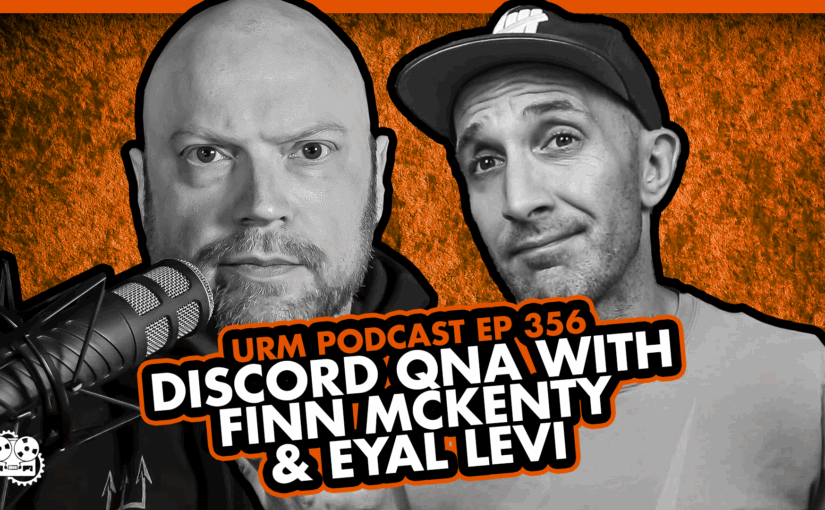
EYAL LEVI & FINN MCKENTY: Getting Clients, Networking Without Being Sleazy, Modern Band Strategies

This episode features URM founders Eyal Levi and Finn McKenty. Before launching URM Academy, the duo pioneered live-streamed music production education as the driving force behind the audio channel at Creative Live. Eyal is also a producer (The Black Dahlia Murder, August Burns Red) and founding member of the band Dååth. Finn is the host of the popular YouTube channel and podcast, The Punk Rock MBA, and serves as URM’s director of operations and marketing.

In This Episode

Hosts Eyal Levi and Finn McKenty kick things off by recounting how they pioneered the world of online metal production education before jumping into a live Q&A with the URM Discord community. This one is packed with candid, actionable advice for anyone trying to build a career in music. They tackle the essential-but-often-overlooked topic of generating work, explaining why getting clients should come before obsessing over perfecting your craft in a vacuum. They also break down modern strategies for new bands, the key to being “unique” without reinventing the wheel, and how to approach networking without feeling like a sleazy opportunist. Other topics include their thoughts on NFTs in the music industry, effective goal-setting, and the single most important lesson they learned from their time at Creative Live: the power of persuasion and being the “master of the moment.”

Timestamps

  • [3:32] The origins of their pioneering work in live-streamed production education
  • [5:50] Why you need to learn metal production from people who actually make metal records
  • [9:27] The biggest mistake aspiring producers make: not focusing on generating work
  • [12:52] The importance of being “top of mind” for potential clients
  • [15:42] Why artists are in the entertainment industry, not just the music industry
  • [17:30] Why would someone even choose to listen to your band in the first place?
  • [19:37] Eyal’s old-school strategy for getting his band signed
  • [22:53] How to figure out the modern path for getting your music discovered
  • [28:10] The concept of “classic with a twist” and why you don’t need to reinvent music
  • [32:38] Why inspiration comes from action (and why your first 49 attempts might suck)
  • [35:09] Paul McCartney’s advice on getting your first 100 bad songs out of the way
  • [37:37] Finn’s take on NFTs in the music industry
  • [42:09] How to network without feeling sleazy or transactional
  • [46:20] The difference between “targeted” and “open-ended” networking
  • [49:32] How to plan for your next goal without getting lost in the details
  • [51:53] Using the “cone of uncertainty” to balance long-term and short-term goals
  • [58:41] The biggest lesson from Creative Live: the power of persuasion and leadership
  • [59:43] The Ross Robinson effect: becoming a “master of the moment” in the studio

MISHA MANSOOR & MARK HOLCOMB: Subverting Black Metal, The Riff Graveyard, Creative Burnout

Misha Mansoor and Mark Holcomb are the guitarists behind the influential progressive metal band Periphery. Known for their intricate rhythms, complex arrangements, and forward-thinking production, they’ve been at the forefront of the modern metal scene for over a decade. In addition to their work with Periphery, they collaborate on a side project called Haunted Shores, which explores their shared love for darker, more extreme forms of metal.

In This Episode

Misha and Mark hang out to chat about their side project, Haunted Shores, and how it serves as a vehicle for their shared love of black metal. They get into the production philosophy behind the project, which involves subverting black metal tropes by giving the dark, tremolo-picked riffs a modern, powerful, and intentionally tight production. They discuss the unique challenge of “unlearning” their ultra-precise Periphery habits to capture a more organic, human feel without sacrificing clarity or impact. The conversation also explores their creative process, including raiding the “riff graveyard” for old, forgotten ideas and the puzzle-solving satisfaction of transforming a “riff salad” into a killer song. Things get real as they open up about the brutal reality of creative burnout from juggling multiple projects, the double-edged sword of a relentless work ethic, and why sometimes the fear of not trying is way scarier than the fear of failure.

Timestamps

  • [2:01] Misha and Mark’s side project, Haunted Shores, and its black metal influence
  • [3:50] Why they prefer well-produced black metal over lo-fi recordings
  • [5:20] How they programmed the drums to sound intentionally “messy”
  • [10:02] The challenge of getting into poorly produced, avant-garde black metal
  • [17:22] What Misha finds appealing about the black metal aesthetic
  • [20:55] Subverting black metal tropes by applying high production standards
  • [22:12] The challenge of unlearning ultra-tight recording habits from Periphery
  • [24:20] Retaining “character” and a live feel vs. making everything sterile
  • [28:12] Drawing the line when sloppiness starts to obscure the musical idea
  • [32:19] Using creative boundaries to define your sound
  • [34:25] Reworking a 7-year-old song from a “riff salad” into a cohesive track
  • [37:53] Raiding the “riff graveyard” of old demos for new material
  • [41:53] How small changes can transform a song from “useless” to “sick”
  • [53:29] Why they don’t listen to their own music after it’s released
  • [57:18] Juggling five different writing projects at once
  • [1:01:34] Dealing with creative burnout and learning to say no
  • [1:13:23] Why young producers should probably say “yes” to everything
  • [1:17:27] The danger of mistaking productivity for progress
  • [1:22:23] Why you have to be naive to start a band
  • [1:25:35] Why a project falling on its face isn’t that bad

MIKE MOWERY: Building Ice Nine Kills, The Entrepreneurial Grind, and Letting Go of Your Ego

Mike Mowery is an artist manager best known for his long-term development of the horror-themed metalcore band Ice Nine Kills. After years as a tour manager, he founded his own management company, Outer Loop, before eventually joining the team at the larger 10th Street Entertainment. He’s a veteran of the scene who has navigated the industry’s ups and downs for decades, building a reputation for his dedication and strategic thinking.

In This Episode

Mike Mowery, manager for the massively successful Ice Nine Kills, drops by for a candid chat about the real-world grind of building a career in music. He gets into why an entrepreneurial mindset is crucial for navigating unexpected industry shifts and breaks down the manager-artist dynamic, emphasizing that the best managers help foster an artist’s vision, not invent it. Using his long journey with INK frontman Spencer Charnis as a case study, Mike discusses the qualities that signal true potential—like relentless drive, humility, and a willingness to do the work. The conversation also dives deep into the mental game, exploring how to handle inevitable failures, the importance of enjoying the process, and finding your core motivation to push through the hard times. Mike shares his personal story of transitioning from running his own company to joining a larger firm, providing a powerful lesson on how letting go of ego can unlock the next level of success. For any producer trying to build a sustainable business, this episode is a masterclass in the mindset, strategy, and resilience required to survive and thrive in a chaotic industry.

Timestamps

  • [0:03:14] Why entrepreneurs adapted more easily to the pandemic
  • [0:07:30] The sacrifices required to build a new business venture
  • [0:10:51] Overcoming failure and making mistakes as an artist manager
  • [0:15:46] A manager’s job is to create a “container” for the artist’s vision, not invent it
  • [0:19:02] The long, slow development of Ice Nine Kills
  • [0:20:32] What Mike saw in Spencer Charnis that made him stick with the band
  • [0:24:35] The concept of investing in founders (artists), not just companies (bands)
  • [0:26:05] The complex role of loyalty in the music industry
  • [0:30:22] The “trading up” dilemma: When should a band switch producers or managers?
  • [0:33:31] Why artists often don’t get as many chances to fail and recover
  • [0:40:03] Learning to enjoy the process and understanding that suffering is optional
  • [0:43:16] How surviving enough career “storms” gives you valuable perspective
  • [0:47:11] Can you learn mindfulness and perspective when you’re still in your twenties?
  • [0:52:50] The importance of identifying what your core personal driver is
  • [0:55:40] How to avoid “productivity theater”
  • [0:58:34] The liberating feeling of joining a larger company vs. running your own
  • [1:02:11] Letting go of your ego to level up your career
  • [1:05:57] The “entrepreneur’s curse” of wanting to pursue every idea at once
  • [1:09:04] The risk vs. reward of focusing all your energy on one thing

RANDY SLAUGH: Creating Your Own Opportunities, Scaling Your Business, and Overcoming Imposter Syndrome

Randy Slaugh is a producer and composer who got his start by creating opportunities for himself, leading to collaborations with bands like Architects, Sleeping with Sirens, Periphery, Tesseract, and Devin Townsend. His work isn’t confined to the metal world; he’s also a prolific composer for television, with credits on shows for Netflix, CBS, NBC, and Hulu, as well as for video games and major ad campaigns.

In This Episode

Randy Slaugh joins the podcast to talk about the real-world hustle of building a sustainable career in music production. He kicks things off by sharing the awesome story of how he landed his first major gig with Periphery by simply reaching out and offering to record real strings for them—a classic case of “say yes, then figure it out.” Randy discusses the importance of playing the long game, developing a diverse skill set for genres you might not even listen to, and knowing when to turn down a gig that isn’t the right fit. He also gets into the nitty-gritty of the business side, from establishing a solid work-life balance to hiring assistants so you can scale up. For anyone dealing with imposter syndrome or the sting of a project falling through, Randy offers some killer advice on how to stay resilient and remember that at the end of the day, the song always comes first.

Timestamps

  • [2:19] Did you always want to be a composer?
  • [3:20] Getting started with recording gear and playing in a hardcore band
  • [4:13] How a simple DM to Misha of Periphery launched his career
  • [5:39] Creating your own opportunities: “Say yes, then figure out how to do it later”
  • [7:43] Knowing your limitations and when to refer work to others
  • [9:43] The importance of having your hand in a lot of different pots (artists, TV, corporate gigs)
  • [11:09] Getting your head around an unfamiliar genre (like “hick-hop”)
  • [15:46] The three criteria for taking on a project
  • [18:27] Why music is a “get rich slow scheme” and the importance of playing the long game
  • [20:21] How to do effective outreach without spamming potential clients
  • [25:02] Establishing work-life boundaries by treating music like a day job
  • [27:39] Hiring assistants to handle busy work and scale up your business
  • [32:25] The myth of the “one-man show” and why high-level pros work with a team
  • [39:42] How to deal with projects that don’t work out
  • [43:58] The song comes first: Why you can’t get an ego about your parts getting cut or mixed low
  • [48:16] Dealing with imposter syndrome
  • [50:23] You never know what project is going to blow up (the viral TikTok Mulan cover)
  • [52:38] Why you should treat every client and project with the same respect
  • [54:25] Finding the balance between being a specialist and a generalist