Finn McKenty, Author at Unstoppable Recording Machine - Page 7 of 51

JESSE RAY ERNSTER: Mixing for Kanye West, bringing a metal edge to pop, and why audio pros need a Roth IRA

Jesse Ray Ernster is a Grammy Award-winning mixer who has carved out a serious niche in the pop, hip-hop, and R&B worlds. While he’s a metalhead at heart and a longtime member of the URM community, his discography includes major artists like Kanye West, Doja Cat, and Tyga. He brings a rock and metal sensibility to his work, focusing on impactful, aggressive sounds that translate surprisingly well across genres.

In This Episode

Jesse Ray Ernster joins the podcast to talk about navigating the high-stakes world of major-label pop and hip-hop. He gets into the key differences between mixing for pop and metal, explaining why pop productions often arrive nearly finished and why your job as a mixer is sometimes just to “get out of the way.” Jesse shares some killer career advice, breaking down the exact moment he took a massive risk to get a gig with Kanye West and how that one decision changed his entire trajectory. We also get into some real talk about the stuff that actually moves the needle: the pitfalls of gear obsession, the critical importance of acoustic treatment (specifically managing resonance time), and why every single audio pro should set up a retirement account today. This is a super insightful look at career-building, networking, and the financial discipline required to make it long-term.

Products Mentioned

Timestamps

  • [00:02:54] Crossover skills between metal and pop mixing
  • [00:03:34] Why “zero to hero” mixing is more common in rock and metal
  • [00:07:23] What pop producers actually expect from a mixer
  • [00:09:55] Knowing when a producer’s “wrong” decision is actually the right vibe
  • [00:11:31] Learning the hard way not to do too much on a mix
  • [00:14:33] Deciphering vague client notes like “make the vocal thicker”
  • [00:17:29] How a chance encounter with Kanye West defined his niche
  • [00:20:43] Being honest with yourself about wanting plaques and Grammys
  • [00:24:44] The difference between goal setting and relentless execution
  • [00:27:33] The risk and reward of pivoting his career from tracking to mixing
  • [00:29:06] Why audio pros need to start a Roth IRA right now
  • [00:33:48] Why business and finance content is a hard sell for musicians
  • [00:41:01] Why buying new gear rarely improves your mixes
  • [00:44:35] Why room resonance time is more important than a flat frequency response
  • [00:47:38] The three most important things to invest in for your studio
  • [00:54:00] The full story of how he cornered Kanye West to get a gig
  • [00:58:05] “Happy from the nose down, cool from the nose up”: How to approach high-level artists
  • [01:02:27] The importance of having a transparent feedback system with your team
  • [01:07:42] How to handle difficult clients and endless revision requests
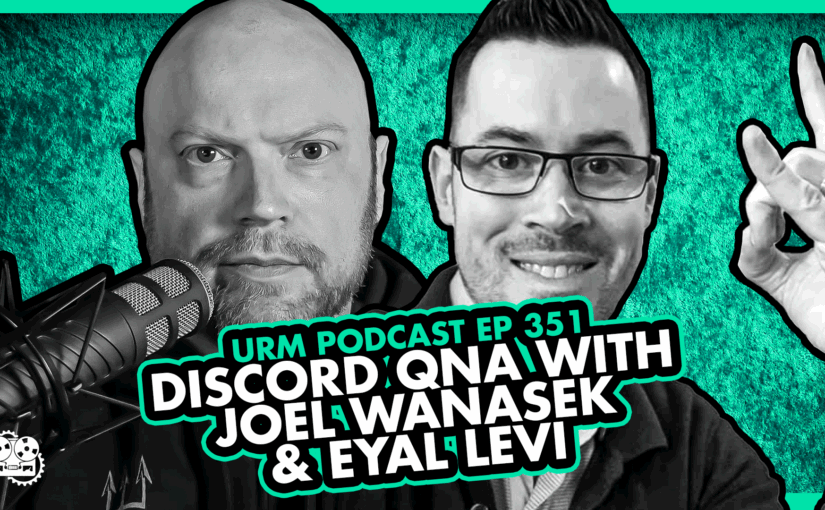
JOEL WANASEK: Firing Your Band, Creative Marketing, and How to Get Signed

Producer, mixer, and songwriter Joel Wanasek is known for bringing punch and clarity to dense, modern metal productions. He’s manned the console for a diverse range of heavy artists including Machine Head, Monuments, Blessthefall, and Attila. As a co-founder of URM Academy and a frequent instructor, he’s also dedicated to sharing his deep knowledge of the craft with the next generation of producers.

In This Episode

In this Discord Q&A, Joel Wanasek and Eyal Levi tackle a bunch of real-world scenarios that every producer runs into. They get into the mental game of working on music you don’t personally like and how to find a way to get invested and do your best work regardless. Joel breaks down the clever, story-driven marketing he used to create buzz for a project from scratch, offering a solid lesson in modern band branding. The guys also share their unfiltered advice on navigating tricky situations, from Eyal’s story of firing his entire band to chase a bigger vision, to whether you should take on a ghostwriting gig for no credit. They also cover the value of labels in 2022, why you shouldn’t charge your own band for production, and the most effective (and least annoying) ways to get on a label’s radar. It’s a killer session packed with practical career advice.

Timestamps

  • [3:12] Working in genres you don’t enjoy
  • [5:20] How Joel learned to “get” dubstep and other genres he initially hated
  • [8:28] Why you have to become a fan of what you’re working on
  • [12:16] The marketing strategy behind Joel’s project FVKINRÖK!!
  • [13:49] Using storytelling to market a band
  • [16:34] Why you need to pick an identity and brand for your band
  • [18:19] Eyal’s story of firing his entire band to pursue a record deal
  • [23:32] The difference between a band with one main writer vs. a collaborative group
  • [25:17] Don’t fucking settle on your band’s lineup
  • [28:22] Should you ghostwrite for no credit?
  • [32:28] Why you can’t be afraid to get screwed over in your career
  • [34:13] The value a record label brings to an artist
  • [36:43] How a label is like a venture capitalist for a band
  • [38:26] Should you charge your own band for production work?
  • [43:24] The process of how a band gets a manager and then gets signed
  • [45:36] Why you shouldn’t cold-submit to labels: “If you matter, they’ll find you”
  • [50:02] How to build rapport with potential remote clients
  • [53:44] A warning against poaching clients from other producers
  • [56:05] Giving legal advice to new bands (and why you shouldn’t)
  • [58:25] The importance of coaching bands on performance

MICK GORDON: Conceptual Production, Mixing for Games, and Sound Design Secrets

Mick Gordon is a composer and producer best known for his intense, industrial-tinged scores for video games like the Doom franchise, as well as his production and songwriting work with bands like Monuments and Bring Me The Horizon.

In This Episode

Mick Gordon joins Eyal for a wide-ranging Discord Q&A, offering a ton of actionable advice for the modern producer. He digs into his philosophy of using a core concept—like “insomnia led by guilt”—to guide every production decision, turning an abstract idea into a practical roadmap. Mick shares his approach for getting into the game industry today, the importance of developing a unique voice, and how he uses gameplay footage to determine a track’s tempo and key. He also breaks down the technical challenges of mixing for a chaotic environment like a video game, explaining his “priority system” for managing loudness and clashing sounds. Throughout the session, Mick drops tons of workflow gold, from his experimental approach to sound design to the specific techniques he borrows from EDM to add clarity to low-tuned guitar riffs. This one is packed with creative strategies you can apply to your own work right away.

Products Mentioned

Timestamps

  • [3:22] Thinking about music in conceptual ways
  • [5:36] Using concepts like “insomnia led by guilt” to guide production
  • [6:37] The practical benefits of establishing a core concept early on
  • [9:30] How to separate your ego from a project (by transferring it to the song)
  • [12:31] Advice for getting into the video game music industry today
  • [16:14] The importance of building a shared creative language with collaborators
  • [17:41] Letting gameplay footage dictate a track’s tempo and key
  • [21:11] How Mick developed his signature sound through his mentors
  • [27:03] Practical steps for avoiding being pigeonholed by your success
  • [30:56] The different mindset for writing non-linear game music vs. linear band music
  • [33:37] How the collaboration with Bring Me The Horizon started during lockdown
  • [37:05] Oliver Sykes’s conceptual “design document” approach to songwriting
  • [39:14] Dealing with loudness and sonic clashes in a dense game mix
  • [40:10] Using a “priority system” to decide what the player needs to hear
  • [42:38] Why music for games needs short, transient sounds to cut through the noise
  • [45:00] Overcoming the feeling of being overwhelmed by sound design
  • [51:10] The right (and wrong) way to fuse electronic music and metal
  • [53:49] Borrowing an EDM technique: automating EQ on each note of a low guitar riff

DAVID LEVY: Composing for Doom, The Composer’s Grind, and Overcoming Self-Doubt

David Levy is a composer, audio engineer, and sound designer known for bringing intense, atmospheric soundscapes to video games and animation. He’s a key collaborator with Rooster Teeth, having scored shows like Gen:Lock and Red vs. Blue. Most notably in the metal world, he co-composed the music for the Doom Eternal: The Ancient Gods DLC, stepping into a high-pressure role to expand on the game’s iconic sound.

In This Episode

David Levy gets real about the mental grind of being a full-time composer. He talks about the intense pressure of projects like Doom, the strategies he uses to manage stress and burnout (like forcing himself to work out), and why “writer’s block” just isn’t an option when deadlines are looming. He offers a transparent look at his solo creative process, from dealing with the self-doubt that comes from following an act like Mick Gordon to his method of mixing as he writes to avoid getting numb to a track. David also breaks down the technical challenge of writing modular music where sections have to be interchangeable, and shares his “record everything” approach to capturing those initial moments of inspiration. For anyone navigating the chaotic intersection of art and deadlines, this is a super relatable discussion about mindset, workflow, and pushing through the tough spots to get the job done.

Products Mentioned

Timestamps

  • [1:59] Strategies for dealing with the stress of game composition
  • [5:22] Working 16-hour days and hitting total mental and physical burnout
  • [8:20] How pushing through your breaking point can lead to a breakthrough
  • [9:00] Why writer’s block isn’t a real option on professional projects
  • [12:13] The anxiety of creating in a vacuum without collaborators
  • [14:13] How being a perfectionist can make you trash your own best ideas
  • [17:10] Finalizing the mix as you go to combat ear fatigue
  • [21:43] The psychological weight of following up Mick Gordon’s work on Doom
  • [24:17] Breaking down a monumental task into small, manageable chunks
  • [25:39] The unique challenge of writing modular, interchangeable music
  • [30:27] “I hate everything I’ve ever put out”: The artist’s disease of self-criticism
  • [32:43] Focusing on tiny flaws that no one else will ever hear
  • [41:35] His “record everything” method for capturing spontaneous moments of inspiration
  • [46:27] How to stop getting lost in the technical side of mixing when you should be writing
  • [53:44] Being a “studio guitarist” vs. a live player
  • [58:00] Why your practice routine should be based on the project you’re currently working on
  • [1:03:29] How he built his career from scratch with no contacts
  • [1:07:06] “Don’t give up, because you never know when something will click.”

FRANCESCO FERRINI: Mixing Orchestra and Metal, Production Secrets, and The Truth About Guitar Tones

Francesco Ferrini is the pianist, composer, and orchestral mastermind behind the Italian symphonic death metal band Fleshgod Apocalypse. Beyond his work with his own band, he is a highly sought-after orchestrator for a wide range of metal artists, having contributed his arrangements to albums by Dimmu Borgir, Epica, DragonForce, and many others.

In This Episode

Francesco Ferrini of Fleshgod Apocalypse stops by for a killer conversation about the art of blending a full orchestra with extreme metal. He gets into the fundamental sonic conflict between the two worlds: the massive dynamic range of an orchestra versus the compressed, wall-of-sound nature of a metal band. Francesco explains why some instruments, like low brass, can cut through and complement heavy guitars, while others, like double basses, are destined to get lost in the mud. He discusses the critical role of the producer, shouting out masters like Jens Bogren and Jacob Hansen, and explains why you can’t just slap a huge orchestra on top of a Lamb of God-style guitar tone and expect it to work. He also shares some of his own production tricks, like using multi-band compression and limiting on the orchestral bus during the writing phase to help it stand up to the band. This is a must-listen for anyone looking to incorporate authentic, powerful symphonic elements into their productions without sacrificing the impact of the metal.

Timestamps

  • [6:37] The core sonic challenge: a dynamic orchestra vs. a compressed metal band
  • [9:14] Why you’ll almost never hear a double bass in a symphonic metal mix
  • [10:00] Using low brass to accent and reinforce chugging guitar riffs
  • [11:22] The similar “aggression” of a brass section and distorted guitars
  • [16:32] Writing orchestral parts while knowing they might get buried in the final mix
  • [17:40] Why there’s a shortage of producers who can properly mix symphonic metal
  • [20:37] Comparing the different mixing approaches of Jens Bogren and Jacob Hansen
  • [24:17] The risk of a “cinematic” orchestra ending up as just “keyboards in the background”
  • [27:18] Why you can’t have a crushing modern guitar tone *and* a huge orchestra
  • [28:24] How Jens Bogren carved out space for the orchestra on Fleshgod’s “King”
  • [33:49] Using compression and limiting on the orchestral bus during pre-production
  • [37:41] How a soloed orchestral bus can sound completely squashed to make it work in a dense mix
  • [40:32] Analyzing the simple, supportive guitar parts on Dimmu Borgir’s “Death Cult Armageddon”
  • [48:28] How Fleshgod Apocalypse translates their massive sound to a live setting
  • [53:25] The importance of the upright piano shell to the band’s visual aesthetic
  • [1:01:25] How perfectly-in-tune samples immediately expose out-of-tune guitars
  • [1:10:11] Advice for beginners: Transcribe and recreate the orchestrations you love
  • [1:12:54] How to keep yourself from overdoing it with arrangements
  • [1:15:40] Is music theory an absolute necessity for composing?