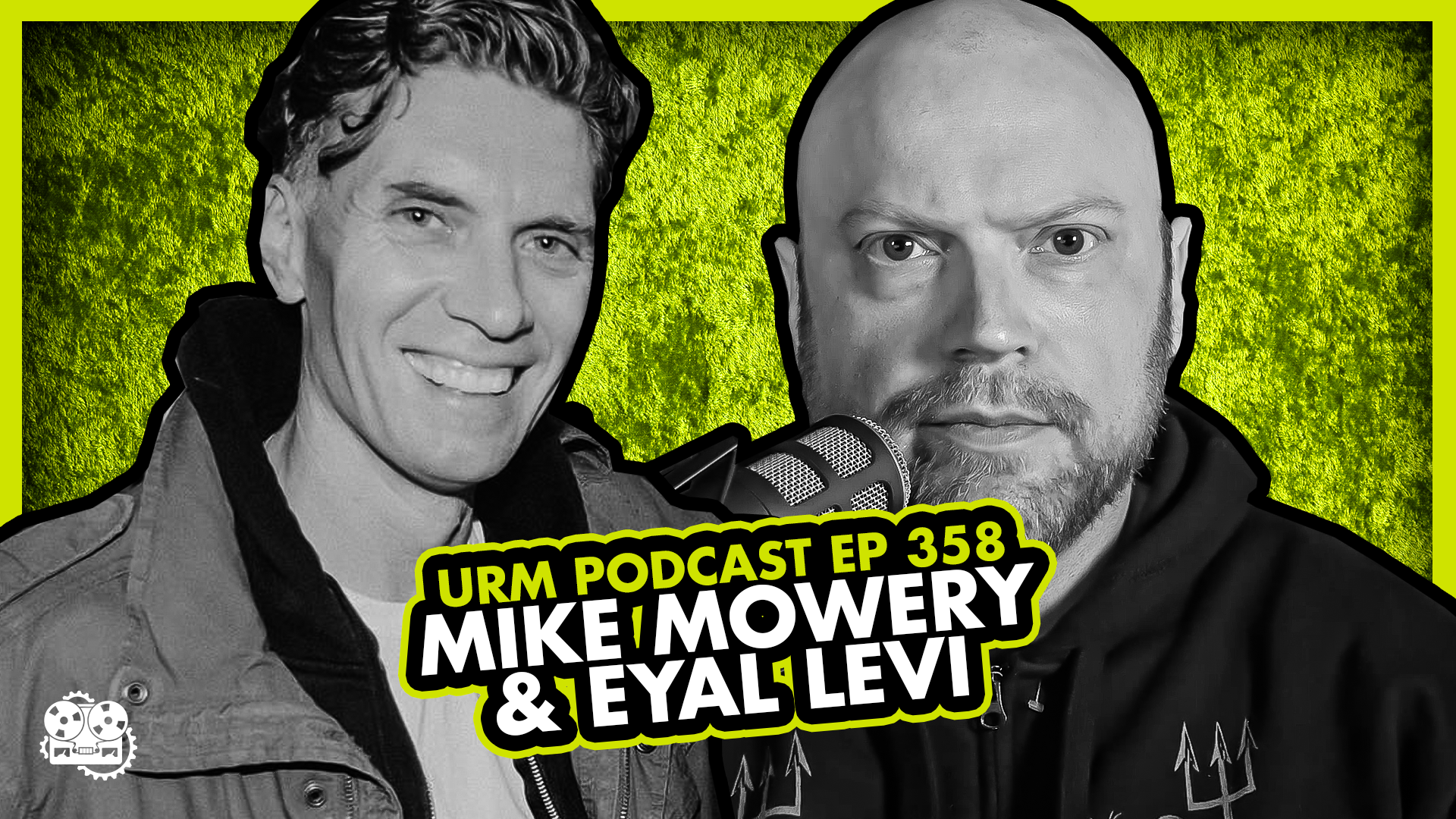
MIKE MOWERY: Building Ice Nine Kills, The Entrepreneurial Grind, and Letting Go of Your Ego
Finn McKenty
Mike Mowery is an artist manager best known for his long-term development of the horror-themed metalcore band Ice Nine Kills. After years as a tour manager, he founded his own management company, Outer Loop, before eventually joining the team at the larger 10th Street Entertainment. He’s a veteran of the scene who has navigated the industry’s ups and downs for decades, building a reputation for his dedication and strategic thinking.
In This Episode
Mike Mowery, manager for the massively successful Ice Nine Kills, drops by for a candid chat about the real-world grind of building a career in music. He gets into why an entrepreneurial mindset is crucial for navigating unexpected industry shifts and breaks down the manager-artist dynamic, emphasizing that the best managers help foster an artist’s vision, not invent it. Using his long journey with INK frontman Spencer Charnis as a case study, Mike discusses the qualities that signal true potential—like relentless drive, humility, and a willingness to do the work. The conversation also dives deep into the mental game, exploring how to handle inevitable failures, the importance of enjoying the process, and finding your core motivation to push through the hard times. Mike shares his personal story of transitioning from running his own company to joining a larger firm, providing a powerful lesson on how letting go of ego can unlock the next level of success. For any producer trying to build a sustainable business, this episode is a masterclass in the mindset, strategy, and resilience required to survive and thrive in a chaotic industry.
Timestamps
- [0:03:14] Why entrepreneurs adapted more easily to the pandemic
- [0:07:30] The sacrifices required to build a new business venture
- [0:10:51] Overcoming failure and making mistakes as an artist manager
- [0:15:46] A manager’s job is to create a “container” for the artist’s vision, not invent it
- [0:19:02] The long, slow development of Ice Nine Kills
- [0:20:32] What Mike saw in Spencer Charnis that made him stick with the band
- [0:24:35] The concept of investing in founders (artists), not just companies (bands)
- [0:26:05] The complex role of loyalty in the music industry
- [0:30:22] The “trading up” dilemma: When should a band switch producers or managers?
- [0:33:31] Why artists often don’t get as many chances to fail and recover
- [0:40:03] Learning to enjoy the process and understanding that suffering is optional
- [0:43:16] How surviving enough career “storms” gives you valuable perspective
- [0:47:11] Can you learn mindfulness and perspective when you’re still in your twenties?
- [0:52:50] The importance of identifying what your core personal driver is
- [0:55:40] How to avoid “productivity theater”
- [0:58:34] The liberating feeling of joining a larger company vs. running your own
- [1:02:11] Letting go of your ego to level up your career
- [1:05:57] The “entrepreneur’s curse” of wanting to pursue every idea at once
- [1:09:04] The risk vs. reward of focusing all your energy on one thing
Transcript
Speaker 1 (00:00:00):
Welcome to the Unstoppable Recording Machine Podcast, and now your host, Eyal Levi. Welcome to the URM podcast. Thank you so much for being here. It's crazy to think that we are now on our seventh year. Don't ask me how that all just flew by, but it did. Man, time moves fast and it's only because of you, the listeners, if you'd like us to stick around another seven years and there's a few simple things you can do that would really, really help us out, I would endlessly appreciate if you would, number one, share our episodes with your friends. Number two, post our episodes on your Facebook and Instagram and tag me at al Levi URM audio and at URM Academy and of course our guest. And number three, leave us reviews and five star reviews wherever you can. We especially love iTunes reviews. Once again, thank you for all the years and years of loyalty.
(00:01:01):
I just want you to know that we will never charge you for this podcast, and I will always work as hard as possible to improve the episodes in every single way. All we ask in return is a share a post and tag us. Oh, and one last thing. Do you have a question you would like me to answer on an episode? I don't mean for a guest. I mean for me, it can be about anything. Email it to [email protected]. That's EYAL at m dot A-C-D-E-M-Y. There's no.com on that. It's exactly the way I spelled it. And use the subject line. Answer me Eyal. Alright, let's get on with it. Hello everybody. Welcome to the URM Podcast. My guest today is Mike Mowery, manager of Ice nine Kills and longtime friend of URM. Here goes, Mike Mowery. Welcome back to the URM Podcast. Thank you. It's been a minute.
Speaker 2 (00:01:55):
It has. I can't even tell you when the last one was, but over three years ago.
Speaker 1 (00:01:59):
Yeah, I feel like I saw you once in between at the summit, which also feels like a long ass time ago. Yeah,
Speaker 2 (00:02:07):
Maybe twice. I think we saw each other in Orlando at a summit and then Vegas.
Speaker 1 (00:02:11):
Yeah, right before the world ended. Exactly. Or at least changed. Doesn't
Speaker 2 (00:02:16):
Seem like it ended for you. Doesn't feel like it ended for me. I feel lucky in that regard.
Speaker 1 (00:02:22):
I mean, you've stayed busy the whole time.
Speaker 2 (00:02:24):
Incredibly busy.
Speaker 1 (00:02:25):
Yeah, that's what I'm saying. Do you feel like you're busier now than before?
Speaker 2 (00:02:30):
Not necessarily busier, just focused on different things, but still very busy.
Speaker 1 (00:02:37):
Did it take you a moment to adjust to what the fuck is going on? Or was it smooth?
Speaker 2 (00:02:43):
Not really. It was cool. Here we are. Let's look at what we can do and let's just get started.
Speaker 1 (00:02:50):
Sam, I feel like I didn't have to work hard to adopt that mentality, man. I know several people who when presented with that massive change didn't freak out. They were just like, okay, this is the situation now. We'll deal with it. We deal with any other situation.
Speaker 2 (00:03:09):
Are many of those people entrepreneurs or entrepreneurial?
Speaker 1 (00:03:13):
Yes. Yeah.
Speaker 2 (00:03:14):
I would fare to take a guess with no expert opinion other than my own, that many of us who are entrepreneurial and have had to be nimble and quick and adaptable for as many years as we have, this was another thing that we could adapt to and very lucky to be able to adapt. It's not to say that just because we're entrepreneurial, we created the conditions to allow us to adapt as smoothly as maybe we did. I know plenty of entrepreneurial people who it was a bigger lift because fortunately our businesses are probably similar yet a little different. The beauty of managing artists is artists have an online business and they've got a physical business. And so we were able just because the online component already existed, it wasn't as big of a lift to go and have to try to create that or imagine, oh my god, odd. Everything stopped. Some of it stopped, and in fact, at the time it was the most significant portion of revenue generating business stopped. But that gave us the opportunity to go in and really look at some of these things that maybe, I don't know if they get ignored, but weren't
Speaker 1 (00:04:36):
Asked under serviced,
Speaker 2 (00:04:37):
Maybe as prioritized. Yeah.
Speaker 1 (00:04:41):
What I think is key about what you're saying is that that part of the business already existed, and I definitely think that anytime that people prevail over a shitty situation, there's part of it, preparation, part of it, luck that they prepared. I was thinking the whole time, man, we are fortunate that we got into the streaming game when we did, because by the time this all happened, we were so entrenched that it was just more of what we already did, and then all we had to do was kind of realign our priorities a little bit and just turn up the volume on things we were already doing. I felt like for people who had, I don't want to say not prioritize, but for people who had ignored the online component completely, I feel like for them it was a lot tougher. That's just the bad luck that they didn't focus on it earlier because these are not stupid people. They're not untalented people, they're not people that aren't capable of things. They just didn't make the decision prior to shit going down to really get good at the online thing. And that's just kind of luck of the draw. You can't predict the future.
Speaker 2 (00:05:59):
Well said. One of the most interesting things, so prior to artist management, I was a tour manager and developed a good network of other very talented and competent tour managers. And when I decided to transition out of that to management, so many of them kind of came to me and said, how did you do it? Essentially we were making good money, tour managing, we're out there and really when you're a good tour manager, there's not a lot else you can focus your time on, or at least back in the early to mid two thousands. So it took a sacrifice in order to be able to transition, and I think that's some of what you're alluding to. In that case, previously it wasn't really, there was no luck factor involved as you've indicated. There wasn't a pandemic, there wasn't some change beyond our means, but I think of my friends and who are either tour managers still or crew people who, why would they have focused? There's no online component to focus on. So again, you mentioned luck. Yeah, we're fortunate people that our businesses actually had a preexisting reason to have an online component to it, and when the proverbial shit hit the fan, and we were faced with no ability to focus on anything other than the digital world that we were able to do. So
Speaker 1 (00:07:30):
Yeah, I mean that honestly is that sacrifice element is one of the reasons that I have encouraged producers who have seen what we've done and been like, I'm going to start my own URM. It's like you share about that. You want to stop producing bands. What you're going to have to do, you're going to have to sacrifice that. If you actually want to do what we're doing, you may as well just work with us because we're already doing it. Then you're not going to have to quit producing because I feel like to do anything worthwhile, you kind of have to give other things up. There's just not enough energy or time in the day. So I do think that it's interesting that you bring up sacrificing the tour management to establish the artist management side of things
Speaker 2 (00:08:20):
And a testament to you guys for what you've created and what you had to sacrifice in order to do it. I think my experience is, and I'm curious, it sounds like you probably hear more frequently than not, why would I join you when I can do this? Because it not so much anymore, but in the beginning, of course,
Speaker 1 (00:08:40):
At the beginning, in the first half, I'd say the first few years we heard it more often, we don't really hear it so much now.
Speaker 2 (00:08:47):
Yeah, which makes sense. You guys have just continued to grow and dominate and prove frankly, your worth. I'm sure there was a tipping point, right?
Speaker 1 (00:08:56):
Yeah. There has been, I think in the past two years, especially
Speaker 3 (00:09:01):
Oddly enough timed right with the pandemic,
Speaker 1 (00:09:04):
No, sorry, it was in 2019 when it really started, the momentum started to shift and then 2020 just kind just solidified everything. But also I think enough time has elapsed where people have tried to do these sorts of things and have realized that they're going to have to make some tough decisions, like not book more people at their studios, or if they're artists that want to start an online or something like that, they might need to deprioritize their band, which is not that big of a deal when touring's not happening. But the rest of the time it's a huge deal, which is why most of the artists run guitar sites tend to fail, is because they're not actually willing to stop prioritizing the thing that they're famous for. And I don't blame them whatsoever. Why would you? It's a small industry. People talk to each other and I think enough people have tried doing it and reported shitty results to their friends that you don't hear it too much anymore. But that brings up what I'm wondering is artist management is a tough fucking business. Most people fail at it too. So most people fail at things is not unique to what we're doing. It's a, most artist, managers A, are completely incompetent, B are idiots, C are irrelevant, D, all of the above. And then there's some good ones like yourself and a few others who I consider to be the good guys. But how did you overcome that huge negative association with just succeeding at it in the first place?
Speaker 2 (00:10:51):
Well, let there be no mistake. I've failed. I've failed miserably and continue to fail regularly. Thankfully, where I'm at now, there's probably more protection. So the failure doesn't remove me from the job or remove me from the business, but surely I make mistakes all the time and have made mistakes. When I was last on here, I was running my own company. I no longer do that. I've chosen to go work somewhere else and chose is even a interesting word. Maybe I was forced into doing it. How I've overcome it is probably some obstinance, some just stuff that I don't know, just keep going and sometimes not in a healthy way. I think there's a specific set of skills that each inherent successful artist manager, we can define success in some capacity, but people that are, I guess making a living doing it that they probably have in common,
Speaker 1 (00:11:50):
Say making a living, doing it with artists that are relevant in the time period that they're working with them in. To me, that's kind of, I don't know. Do you define it differently?
Speaker 2 (00:12:00):
I dunno if I've really thought about it. One of the most challenging things as an artist manager is helping artists define their goals. And I've worked with artists where it's been like, okay, what I'm hearing you say is you want to be X, you want to be on some level or you want to be doing a certain thing and your behaviors aren't necessarily leading to that,
(00:12:19):
So where's the difference in between? And even more importantly, an artist who says, actually, I don't want to do what most people think of as success. I had one artist in particular, I don't work with them any longer, but I've worked with them for a long time and one of my best friends and I had to say at some point, why are we doing this? And his answer was, any and every day that I get on stage and play guitar, I'm happy. Right. And every day that he can do that was a success. Whether he was making money or not wasn't as big of a factor in success. Right.
Speaker 1 (00:12:54):
I'm jealous.
Speaker 2 (00:12:56):
Jealous that that's his perspective.
Speaker 1 (00:12:58):
Yeah, I wish I had that perspective in regards to guitar or
Speaker 2 (00:13:03):
In regards to what you're doing now.
Speaker 1 (00:13:04):
Yeah, it would've made my life in the band all those years ago, far less torturous if I didn't give a shit about the money side of things.
Speaker 2 (00:13:13):
Of course. I mean, and you wouldn't be where you are today. You wouldn't have had that torturous experience to reflect on. Very true. So getting back to success of an artist manager, I don't really know. I mean, I think success has to be some component of income unless you've got no need to cover any expenses and therefore you could do this without earning any income and being able to guide artists, being able to help artists achieve what they want to achieve. I think the thing that threw me off was relevant within the time period because what's to say that some manager who's handling a bunch of heritage acts makes them unsuccessful just because the artists aren't relevant in the time period?
Speaker 1 (00:14:05):
I guess it's how you define relevant to me, that's still relevant.
Speaker 2 (00:14:08):
Okay, so relevant financially is what I'm imagining.
Speaker 1 (00:14:11):
Yeah, like a functioning business. Those heritage acts are relevant to their audience and their audience is real and their audience cares. It might not be the viral sensation of the moment, but it's relevant as fuck to the people that are working for it and who consume it. So to me, that's relevant. Relevant to me means making it work as in people are surviving off of it.
Speaker 2 (00:14:37):
Got it. And it's all good. I think we could discuss any of this into the depths of having most listeners turn the podcast off or at least skip ahead the beauty of podcast players. But ultimately I think the question was what's gotten me through maybe the hard times? I wish I know. I just think I've got a drive and I truly believe that I'm capable of guiding artists and I've got a desire to do it, but that's what I've done each and every day. I've shown up to the best of my ability trying to help my artists and sometimes to great degrees of success, sometimes to know success at all and all levels in between. But for me, it stems from a place of wanting to help people.
Speaker 1 (00:15:27):
Okay. So you're saying that the job is to help guide them. How much vision or self-direction do you expect out of them? Or maybe not expect out of them, but have you noticed in common between the ones who tend to do the best out there in the world?
Speaker 2 (00:15:46):
It's a great question because part of our job is to help bring the vision out or at least create the container for the vision to be worked on, manipulated and refined. And I'd say the ones that have the vision or have worked to get the vision are ultimately the ones that have the success. I've never had long-term success with an artist where I had a vision for them and I have had visions for artists, but in that discrepancy is where ultimately the relationships fell apart.
Speaker 1 (00:16:23):
That makes a lot of sense. And that echoes something I've thought for a while. When you hear unsigned bands, especially saying, we want to hire a manager, we want to hire a publicist, et cetera, et cetera. My thoughts are always to do what? The publicist isn't going to invent your story for you. They're just going to take a story that already exists and help distribute it to outlets that give a shit. But if you don't already have this story and vision, good luck with that. And I think same with a manager, you can't expect them to invent it for you in the best situations. They're going to, like you said, help create the container for which that vision is contained or the vehicle for that vision to move. I don't think expecting a manager to have that vision for the artist is a weird expectation.
Speaker 2 (00:17:15):
Well, I don't know if weird is the right word that I would use. It's that it's probably an unrealistic expectation. Okay, fair enough. Unrealistic. Well, it's just one that comes from lack of experience. You're so fortunate. I'm so fortunate, we now have so much experience that we're able to frame this discussion from a place that doesn't make sense. But if I'm a young artist and I'm viewing what's happening on the outside, I don't know how to get to the inside. Now I can listen to podcasts and read interviews or whatever, but if I'm just comparing outsides, right? Well, yeah. It seems as if successful bands work with successful managers. So if I want to be a successful band, I should work with a successful manager. What's missing there is, okay, when did that relationship start? How much of it was the band? How much of it was the manager?
(00:18:07):
I agree. I mean, if the artist is bringing nothing to the table, the chances of any team member manufacturing success is slim to none, probably none. And if they're bringing something to the table, well, depends on who the manager and or other team member is, right? Some people myself, most of my career has been doing artist development, so I would like to think that I've got a pretty good track record and ability to meet artists that might be in these places that you're describing, where they want somebody that can help them guide or create that container to allow them to find their vision. Obviously Spencer comes to mind. That would make sense. Spencer Charnis, the lead singer of Ice Nine Kills.
Speaker 1 (00:18:59):
I mean, that dude is pure vision.
Speaker 2 (00:19:02):
Well go watch Finn Mckenty's video about the rare history or whatever of Ice Night Kills. And he talks about how the manager, who was me at the time, people were saying, well, what earth is he wasting his time for? And it's, I would say part of that is at the time Spencer didn't have the vision that he has now. So going back, it would hope to be an emphasis that I, with many other people involved, many of the people at my old company, many of the people at the present company that I work for have given him the container to hone that vision. But in no way did we create the vision for him.
Speaker 1 (00:19:41):
No, but you helped him foster it for sure.
Speaker 2 (00:19:43):
In certain ways. We kept him alive long enough for it to be able to come to the surface.
Speaker 1 (00:19:49):
So how did you know, I mean I guess none of us are psychic. What is it about him that made you think I should stick this through? I remember when Einstein Kills were that first of five band.
Speaker 3 (00:20:03):
How about first of 10,
Speaker 1 (00:20:04):
All-Star
Speaker 3 (00:20:04):
Store
Speaker 1 (00:20:05):
First of 10 for a long time, for really, really long time. I remember back when you first had me do a podcast with them back in 2015. They were in that first of five, first of 10 slot and you were a hundred percent behind them. So just curious, what is it that gets you to ignore the world and stick to what you know to be true? Well,
Speaker 2 (00:20:32):
If there's any artists out there now who are going to be really successful in six years, right? You said 2015, and here we are at the end was of 2021. So if there's any artists who are going to be really successful in six years, please call me because I'd like to start working with you. And really, I'd love to tell you all that I knew. I didn't know shit. I still don't know shit. What I knew was I liked Spencer and he had a thirst and a hunger and in ability, he always kept things in perspective, always understood where he was, always had enough humility to not presume that he should be somewhere that he wasn't. An ability to create an environment that was easy and fun to work in, frankly. And that's where we still are today. There's just eons level more of success.
Speaker 1 (00:21:26):
So in some ways, just making the best out of the situation no matter what the situation, I guess making the best out of the level he was at.
Speaker 2 (00:21:36):
He's rare because not only is he immensely talented, but he also is immensely driven in the right ways. He's not just driven creatively, he's driven in ways that help his business when maybe the creativity hasn't quite caught on yet.
(00:21:56):
So to get more specific with examples, he's a guy who still to this day asking questions, giving his input, and trying to help us, give us the best amount of tools and resources, you name it, to help expand the footprint of his band. There's never a like, Hey dude, can you get out of bed so we can do this thing that just doesn't exist? There's never a day we get along because he and I are both very driven. I'm up early, I don't care what time of day you get up, just when you get up, are you ready to go to work? And he has always been ready to go to work and thankfully, I don't even know exactly how he's done it, but he was able to find ways to not have the distractions that pull many people away from their dream. So at the age in his mid twenties, he wasn't working 40 hours a week driving Uber or whatever it is that people do in between jobs. He was working on his band, and that's a really hard place to get to because people have to survive. He's a hustler. He found ways to survive and was entrepreneurial in his clothing line and whatever else. I don't even know. And it's really none of my business how he did it, but he did it.
Speaker 1 (00:23:16):
That's what matters in the end.
Speaker 2 (00:23:18):
And look, he could have done all those things and we could be sitting here talking about how it didn't work true. The only reason we're talking about it that it worked is because it worked. I mean, but if you really go back to it, I mean, I've learned so much again by failure, but I had this great intern once who he attended Berkeley College of Music for their music business program, and he introduced me to this book called Good to Great by Jim Collins.
Speaker 1 (00:23:44):
I've heard of it.
Speaker 2 (00:23:44):
Jim Collins book is about good to great. And the way that good organizations go to become great organizations is the people. And what I can tell you is I've always thought Spencer was a good person, and I don't necessarily mean, I just mean he had a great work ethic. Again, he had enough humility and enough respect and enough drive, this perfect combination that that's what I believed in. I never knew Ice nine Kills would become the kings of Horror Corps. What I knew is that Spencer, if all other things aligned would become, and he is a great person, and that would be recognized and realized by more and more people, and that's really how it's gone.
Speaker 1 (00:24:27):
That makes sense. I mean, you hear a lot about investors investing in founders, not companies. Same idea. I think.
Speaker 2 (00:24:35):
Absolutely. And if only it was that easy, right? Sometimes you've got a diamond in the rough, you've got a good semi-decent person, and again, you provide a container for 'em and you hopefully bring them to greatness. But again, they've got to have talent. I mean, Spencer's just an immensely talented person. I would kill to have an ounce of the creativity and musical ability that he has. It's beautiful to be a participant in.
Speaker 1 (00:25:08):
It's pretty stellar. And I'm also really impressed by the group of people that he's surrounded by musician wise, are some very badass motherfuckers.
Speaker 2 (00:25:18):
I mean that world better than me. I mean, talent attracts talent and there's success that's happening. So it's no surprise that other talented people would like to find that and be a part of that success. But again, I'll give Spencer a lot of credit. I mean, he's such a loyal person. Part of I think what's attributed to his success is he hasn't just jumped ship every time a passing ship presents itself. I mean, we've stood by one another through thick and thin, and it's made me a better person. And I have to imagine it's made him a better person and it's helped his career hopefully more than it's hurt. We'll never know. Could he have jumped to a larger organization five years ago and had twice the success he's having now or had the success he's having now twice as fast? We'll never know. It's part of the beauty of this.
Speaker 1 (00:26:05):
Yeah. What role do you think loyalty plays in the music industry? I'm wondering, because you keep hearing, I mean, we all know that there's a lot of backstabbing in the industry, but then again, you also hear about these relationships that just people are loyal to each other and it works. I believe in the loyalty thing very, very strongly. But I've seen people who don't believe in it do very well. Also,
Speaker 2 (00:26:30):
I don't really know the answer to that, right? I can only speak from experience and what I can say is part of the conscious choice for me to pack up my bags at outer Loop and move to a larger management company. I'm now at 10th Street Entertainment was because I felt Spencer deserved more. And maybe in the past I could have done that with other artists, and I didn't necessarily think that they needed more. And so I'm not sure he would be having the exact same level of success had I stayed on my own. Again, we'll never know. True. But I do know that the resources that this larger company that's managed larger acts, that has larger relationships, has ultimately benefited both of us, right? Myself as an artist manager, him as the front man of an amazing band. So back to loyalty, I think had, there comes a time in any organization where we are able to pinpoint potential deficiencies, and there comes an analysis of, okay, how do we fill that void? Do we level up or do we stay with where we are and figure out the best way to improve that? Or in this case that I described, do we get the best of both worlds? Spencer was able to remain loyal to me, and we were both able to level up in terms of our relationship with a larger management company.
Speaker 1 (00:28:05):
I think part of that is also because you understood what he needed and helped facilitate that without being a roadblock to it, which oftentimes, I think that when people get traded up, they are acting as a roadblock for the other party's eventual goals, or at least they're being seen as a roadblock. Whether or not they're actually a roadblock is up to interpretation. I think sometimes they, sometimes they aren't. But what matters is perception in the end is if you're seen as a roadblock, you may as well be a roadblock. I think that understanding that that might be in the future and navigating it is key.
Speaker 2 (00:28:47):
We have no way to know. What if he'd have gone to this company without me? Would he have spent a little time trying to figure out who was going to help him with X, who was going to help him with Y, who was going to help him with Z? Could it have not been as beneficial as it's been? What I like to believe is he and I have that relationship. It's sort of a baby of mine because I've been with it for so long that I just have this attachment and want it to succeed, and I'm able to still provide that comfortability with them and guidance with them inside of the confines of a larger structure. And I think sometimes what happens is, yeah, artists, whomever, any professional goes to a larger organization for something that they think is going to be beneficial, and what they lose is kind of that human touch or the person that's as connected to it. You hear about that all the time. I'm sure there's some study out there that covers some of this,
Speaker 1 (00:29:46):
And sometimes it's a good decision and sometimes it's not
Speaker 2 (00:29:48):
Right. And there's just so many factors we can't determine which is the thing that made things succeed
Speaker 1 (00:29:54):
And
Speaker 2 (00:29:54):
Which is the one that made them fail. All we can do is all I can do is look at my own experience. And there's been plenty of times when maybe I could have or should have taken other artists and gone to other companies prior to this. Who knows. There's just no way to know.
Speaker 1 (00:30:12):
There's no way to know. But you can look at this and say, this worked,
Speaker 2 (00:30:15):
And I can look at other situations and say it didn't work. So a lot of looking,
Speaker 1 (00:30:22):
This happens to producers too. Bands will work with a producer up to a certain point and start to experience greater success or be poised for greater success and have to make the decision of sticking with or trading up and trading up. And sometimes it's the best move they ever will make, and sometimes it's the dumbest move they ever will make. And there's so many factors also that play into it. It's so hard to tell, so hard to know. Also, you hear about bands that find a way to keep the producer that they came up with involved as much as they can and then still maybe get the bigger name mixer or the better mixer or whatnot.
Speaker 2 (00:31:08):
Well, I think it goes back to what we chatted about earlier, which is kind of what's the intention? Is the intention that I'm going to jump to larger name in whatever capacity it be in this case producer, and that person's going to automatically level me up without me having to do anything differently, which that's probably where most of the failures occur. Where the successes occur is the artist is still working and meeting that larger producer with more experience, whatever it may be, and where they meet is where the greatness is achieved. And if someone who's been there for the ride is also on that same trajectory, right? They're wanting to learn, they're willing to learn and allow the larger producer, manager, whatever it is we're talking about, to play the role that they've been hired for, probably a better recipe for success.
Speaker 1 (00:31:58):
I've seen that work many times. Also, one of the things that you hear about a band does stick with the same producer from the beginning till eight albums in or something, is the producer is typically just as committed to growth as the artist is. They grow in parallel, both career wise and artistically, so it makes sense to keep on working together. It's not like there's this imbalance where the artist has outgrown the producer, but they're staying with him or her because they feel bad or something. It's typically that the producer has matched their growth, so it makes perfect sense to stay.
Speaker 2 (00:32:34):
Yeah, definitely. And so, I mean, a lot of the decisions that we are talking about are really hard decisions to make.
(00:32:42):
And speaking from my own experience when I'm in my twenties, I'm making decisions much more from an emotional, maybe irrational place than a thought out, weighed out, discussed with others, pros and cons, types of decisions. And I think that's where so many mistakes are made. But again, the beauty of both of us being able to sit here and talk to each other years later is we made those decisions and learned from them. The hard part for artists is you just don't get as many chances, right? I mean, if you're an artist that's built yourself to selling 500 tickets and you're trying to make the jump to 1500 tickets and you think, oh, I need to do X, Y, or Z, and you take that leap and you fail, it can be really hard to recover from that. And it can be even harder to go back and build from zero to 500.
(00:33:31):
And so that's where we've been lucky. We were both in bands. I had a career as a tour manager. We've been able to find our way, and thankfully many talented band members find their way in other places in the business if the band doesn't quote make it. But that's sort of, it's so funny. Here we are. What are we, I dunno how deep we are in the conversation, but I'm not even sure exactly what we're talking about, right? It doesn't matter. I mean, not necessarily other than I want the ratings on your podcast, so you'll invite me back. I'm kidding. But what I always aim to do, and I've loved what you guys have done over the years and am so grateful to have been a participant, because at our core, I think we align in similar places where we want to help people avoid some of the pitfalls and roadblocks that we inevitably had to go to because at the time we were coming up, there wasn't as much access to information, right?
Speaker 1 (00:34:26):
Or close to zero.
Speaker 2 (00:34:27):
I'm trying to put points on these conversations and saying, oh, well, who is my target listener? What is the ultimate question that, what's the topic of conversation here that I'm trying to hone in on as we discuss these things?
Speaker 1 (00:34:44):
Hey, everybody, if you're enjoying this podcast and you should know that it's brought to you by URM Academy, URM Academy's mission is to create the next generation of audio professionals by giving them the inspiration and information to hone their craft and build a career doing what they love. You've probably heard me talk about Nail the Mix before, and if you're a member, you already know how amazing it is. The beginning of the month, nail the mix members, get the raw multi-tracks to a new song by artists like Lama, God Angels and Airwaves. Knock loose OPEC shuga, bring me the Horizon. Gaira asking Alexandria Machine Head and Papa Roach among many, many others over 60 at this point. Then at the end of the month, the producer who mixed it comes on and does a live streaming walkthrough of exactly how they mix the song on the album and takes your questions live on air.
(00:35:36):
And these are guys like TLA, will Putney, Jenz Boren, Dan Lancaster to Madson, Andrew Wade, and many, many more. You'll also get access to Mix Lab, which is our collection of dozens of bite-sized mixing tutorials that cover all the basics as well as Portfolio Builder, which is a library of pro quality multi-tracks cleared for use in your portfolio. So your career will never again be held back by the quality of your source material. And for those of you who really want to step up their game, we have another membership tier called URM Enhanced, which includes everything I already told you about, and access to our massive library of fast tracks, which are deep, super detailed courses on intermediate and advanced topics like game staging, mastering low end and so forth. It's over 500 hours of content. And man, let me tell you, this stuff is just insanely detailed.
(00:36:30):
Enhanced members also get access to one-on-ones, which are basically office hour sessions with us and Mix Rescue, which is where we open up one of your mixes and fix it up and talk you through exactly what we're doing at every step. So if any of that sounds interesting to you, if you're ready to level up your mixing skills in your audio career, head over to URM Academy to find out more. One thing I've noticed about the audience of this podcast just from the feedback, is we offer several different types of information. So there's super structured versions of it and also less structured. And to me, a podcast is best when it's less structured and more a conversation between two people who are kind of just dancing around a topic or a field of expertise. Just because I feel like if you really want to learn a topic hardcore, you shouldn't be listening to podcasts. You should take a course, study it for real.
Speaker 2 (00:37:36):
Well, it's not that you shouldn't be listening to them, you just shouldn't only be listening to them.
Speaker 1 (00:37:40):
No, no, no. Fair enough. Shouldn't only be listening to them, but I see podcasts as edutainment basically.
Speaker 3 (00:37:46):
I like that. Is that your own term or does that exist?
Speaker 1 (00:37:49):
Yeah, I made it up. Yeah, there's an educational component to it, but not really it's part entertaining.
Speaker 3 (00:37:54):
Well, then we better get to entertaining, bro.
Speaker 1 (00:37:58):
I'm entertained from what I gather from the listeners, people like to hear the perspective of people who have done it and exactly what those people who have done it feel works and doesn't work. And I feel like our less structured episodes do better because tend to be able to get to deeper topics that wouldn't show up on an outline. Yeah,
Speaker 2 (00:38:20):
I appreciate that. And the beautiful thing is how many podcasts have you done? You've done well over a thousand, I guess,
Speaker 1 (00:38:27):
Some high number,
Speaker 2 (00:38:29):
Which
Speaker 1 (00:38:29):
Is impressive. Thanks. I can't believe I'm still doing it. Honestly, I almost stopped a few times.
Speaker 2 (00:38:34):
I mean, I think that goes back to kind of what separates you potentially from others, right? I mean, that's where the rubber meets the road. If I stopped managing every time, it was hard. We wouldn't be having this conversation.
Speaker 1 (00:38:49):
No. And I know that it's gotten hard for you several times really hard. Yeah, I know. So I think that that just in and of itself, if anyone listening is under the illusion that it somehow gets easier or that the challenges go away or anything like that, it's not that way. It's always going to be tough. And so I think that if there's anything where people can take the experience of people who have been in it for a while and apply it to being at the very beginning of your career, my thoughts are adjust to and accept the fact that how hard it is now, how hard it feels like it is now is how hard it's always going to feel like it is. No matter how much attention or money or any of those external variables are going around, it's always going to feel this difficult because you're always going to be at the limit of your capabilities. So even if you have way greater capabilities, if you're trying hard, you're going to be at the edge of those. And so it's going to feel just as hard always. And so the sooner, the earlier in your career that you just accept that it's a shit show the entire time, I think the better off you're going to be in my opinion.
Speaker 2 (00:40:03):
Coupled with, if I might add something you said earlier when we were talking about my dear friend who loves playing guitar, and that's where his happy spot is. And you said, I wish somebody would've told me that. And I would say Everything you said is true. And what I've really had to learn in the past few years is to enjoy the circumstances, whether or not they're great or whether or not they're shitty, right? Just understand that it's all part of the process and not suffer, which I think is the word I heard you use, and one that I'm well familiar with. What I've learned is suffering's optional, right?
Speaker 1 (00:40:41):
Yes.
Speaker 2 (00:40:42):
And that's really something that I'm sure if somebody would've told me when I was in my twenties, I'd have thought they were stupid.
Speaker 1 (00:40:48):
You don't understand.
Speaker 2 (00:40:49):
Exactly. Right. And again, that's part of what's gotten me here and what's gotten you where you are, and who knows where we would or wouldn't be if we had that presented to us in a way that we were willing to digest it years and years ago. But that's neither here nor there. I think the points that everything you said I think is fantastic. What I would've loved to have been able to do was enjoy more of what I did throughout the first 10 to 15 years of my artist management career.
Speaker 1 (00:41:21):
When I think back, I'm like, how would that have even been possible? But I agree, I think back and I'm like, man, so many awesome things happened and I was miserable the entire time. But then again, that kept me pushing to try to improve the situation. But when I think back and I'm like, man, I wish I had enjoyed it more. I do wish I had enjoyed it more, but at the same time, like I said, I'm wondering how, I still don't totally understand. How do you enjoy yourself more now?
Speaker 2 (00:41:48):
Absolutely.
Speaker 1 (00:41:49):
How
Speaker 2 (00:41:50):
Shift in perspective, framing everything from a place of I get to do this as opposed to I have to do this. Showing up with the idea that I'm here to help my clients and serve my clients as opposed to helping serve myself so many other ways of just, it's taken so much work to get here because I'm standing in front of a pane of glass, and in the past it was smothered with feces, you know what I mean? And somebody came along with some heavy duty Windex and some massive towels and said, scrub, keep scrubbing, keep scrubbing, keep scrubbing every day. Scrub, scrub, scrub. I know it still smells like shit in here. I know it still looks like shit in here. Oh, there it is. Can you see that ray of light coming through? Can you see that other ray of light and sticking at it? And now I've got a clean window. It happens to be that I'm having the most success I feel like I've ever truly had with a client, or at least the one that I've developed. And I'm also, so part of me could assume, well, because you're having more success, that's why you're enjoying it more. But that's not true. There's still low lows in what we do as well as high highs. I just have worked, been given the gift of being able to weather the storm and view things from a different angle.
Speaker 1 (00:43:16):
Do you think part of it is that once you have been in enough storms and have survived enough of them, it just makes you realize that shit's not as big of a deal as it seems like when it's going down?
Speaker 2 (00:43:32):
That's absolutely part of it. It's also like, okay, well let's prepare for the storm. Let's do some maintenance or improvement to the surrounding grounds or whatever it may be in order to when the storm comes. Yeah, not only is it not as big a deal, but none of the things that are affected by the proverbial storm are actually detrimental because we've done the preparation.
Speaker 1 (00:44:00):
I can give you a few examples. Back in the day, if a tour were to fall through or skip forward a little bit later, if a band were to cancel a studio booking, skip forward a little bit more and in the early days and nail the mix, if it seemed like there was drama with the booking or something, it would take a much greater toll. The further back you go, the greater the toll. Now, it's not like I want things to not work or anything like that. Of course, I care when things don't work, but since I've had so many things not work out, and then everything's okay in the end, always figure out a way out of it that when things get shitty or tough, I have this backlog of experience, been in this situation before, been in situations like this before. It always ended up okay, always figured out a way. And so that gives me, I guess I call it evidence. It gives me evidence that it's going to be fine. So it's not just an emotional thing where I tell myself it's going to be okay and wish myself into feeling better. It's like I look at history and I feel like I have sufficient data to tell me that it's pretty much going to be okay as long as I deal with it proactively.
Speaker 2 (00:45:21):
And add to that, I mean it beautifully presented and very well said. What I would say is, it's okay now. Even when the fucking storm is coming, it's actually okay. And so part of what I hear you describe that I can relate to is intellectually all the concepts make sense, but I've got to emotionally experience it. And so in the past, just like you're saying, a tour falls apart, A band fires me, an employee leaves. Even if intellectually I could think it was going to be okay, right? My experience of it, I hadn't had enough of that physical experience of it, of being okay in the moment. So now I like to believe, and hopefully no major shit storms happen anytime soon. But going back to, okay, COVID happens, right? Okay, here we are. Everything's okay. This is unlike anything we've faced. We've never had to face this.
(00:46:22):
It's not, again, touring, canceled a client, bailing being fired, you name it. This is a, it's all of the tours being canceled, pandemic. I think part of what has allowed us to have success during this time is I didn't have to spend a lot of time freaking out. I don't spend a lot of time freaking out. It doesn't mean that I'm not Superman. You're not Superman. It's not to say that things don't come up. I just have a toolkit that allows me to believe that yeah, everything's okay. So from that place, when we go and get to work, we're in a pretty good spot as opposed to if I had to do a whole lot of mental gymnastics to even get myself to be willing to go to work,
Speaker 1 (00:47:05):
I wonder what you can do when you're in your twenties to get there sooner to get to that place mentally.
Speaker 2 (00:47:11):
We're in a place where mindfulness and things like this are prioritized much more than they were when we were in our twenties. It doesn't mean it's there for everyone, and it doesn't mean that everyone's going to willingly accept it. I mean, I'm sure in fact, I was presented with many different opportunities to look at the world differently. Some of them I grasped onto wonderfully. In my twenties, I was in a place, I was a punk hardcore world where sexism and homophobia and all vegetarianism, all these concepts made sense to me. But some of this other stuff just I wasn't interested and willing to digest it. So part of it has to be whether or not we're ready. What is that old adage? When the student's ready, the teacher appears, the teacher for this kind of stuff is always there. So if you are in your twenties and you're hearing this and you're curious, there are tools out there, and I think we're both relating to each other, aol, that we had this sort of outlook now that we did back then. What might our lives look like? I've heard you say, well, maybe I wouldn't have been as driven. I was driven by failure. I was driven by this.
Speaker 1 (00:48:26):
Yeah, maybe shit would've been way better too.
Speaker 2 (00:48:30):
Exactly right. Maybe the suffering that we went through that has made us who we are. Right? It's what I'm sure for you, and I know for me makes it so sweet right now, what makes the success sweet right now is, again, we've had success in the past. Maybe it hasn't been as great for either of us, or maybe it has, but the experience of the success wasn't as peaceful and as joyful for me.
Speaker 1 (00:48:54):
No,
Speaker 2 (00:48:54):
Same. I've been in sold out rooms, artists headlining second stage of Coachella, and me sitting there thinking whatever I was thinking, but not being in the, I'd love to go back there and do that over again knowing that I can't. So this is a chance to just do it differently, which is pretty fricking awesome.
Speaker 1 (00:49:15):
I think back to Oz Fest and it being one of the coolest things to ever happen and not really appreciating it while it was happening, anything like that, that my band did Japan or mini tour with Slayer, any of that stuff, I know for a fact that I didn't appreciate it while it was going on, and I probably would at least a little bit more now.
Speaker 2 (00:49:39):
Yeah, I mean, part of it goes back to, again, their perspective and perception, but part of it goes back to when you described that. I've got the pizza analogy, which is artists where you were, no matter how big the restaurant you were in, somebody came and gave you a pizza and said, split this up. And in some cases it was just a slice and you got five guys that are there, and one dude wants the pineapple and the other wants the pepperoni and whatever it may be. I know some people don't even pineapple on their pizza, and I don't have a stance that is a
Speaker 1 (00:50:11):
Whole debate
Speaker 2 (00:50:12):
Exactly. But okay, what if you got a pizza? All right, everybody gets a slice or two. What happens when you each get your own pizza? Life starts to get way better. What happens when you each have your own table at the restaurant and you're inviting your friends to get their own pizzas? Life gets way, way better. What happens when you've got your own restaurant? Go on and on and on. And so part of it, I agree with you, one of the things that made it so hard to enjoy, and it's not to say that I couldn't enjoy it, was fuck, just trying to figure out who's going to get which part of the slice is an exhausting endeavor.
Speaker 1 (00:50:48):
It is a very exhausting endeavor. I mean, I do think that shit will put hair on your chest, though. I do think it's really important,
Speaker 2 (00:50:56):
Biologically speaking. I'm sure it has something more to do with genetics, but hey all Levi,
Speaker 1 (00:51:01):
I mean, the hair on my head is probably gone because of it though. So there's a trade off
Speaker 2 (00:51:08):
Part of us. We have to believe that survivor syndrome or whatever, I don't know, is what has allowed us to get to where we are. I don't know if that's necessarily true, meaning just I may have grown hair on my chest regardless, and I may have enjoyed watching it come in as opposed to pulling the hair out from my head as the hair on my chest is coming in. Again, none of this, we're not going to solve this. There's people far more qualified to do it, and I don't even know.
Speaker 1 (00:51:38):
People don't know
Speaker 2 (00:51:39):
Exactly. I mean, that's the point. Nobody knows. All we can do is have our own experiences and share our own experiences, and now we're talking about our experiences.
Speaker 1 (00:51:51):
Well, look, so the thing for me that has kept me going through the whole thing, and so I'm curious, you said that it was for you. Is this, you're coming from a place of wanting to help people grow things, guide people, guide artists, kind of like this overarching theme or trajectory to it all, which has kind of almost been like a North star. And for me, it's been this desire to build things. So with the band, for instance, I wanted to get signed to Roadrunner no matter what style of metal we played, I didn't want to sign. I love all the metal labels, but I wanted Roadrunner out the gate. I had goals for Audio Hammer that were unrealistic for audio hammer. Shit didn't work out. I wanted to make URM huge. I've always had lofty ass goals and wanted to build things that didn't previously exist.
(00:52:50):
And that has been something that has kept me going through anything that has come up. And so I think that kind of moral of the story of this conversation is I do think that it is important for people to try to identify what that is in themselves. It's going to be unique to you. Not everyone is going to have this desire to build things. Some people, like you said, your friend, the thing that guides them is being on stage playing guitar. The most important thing isn't what that actually is, that you're aware of what it is, and you let that guide you. So I've become way more aware of this need to build recently, but I've always been kind of aware of it. The stuff that has caused me lots of pain has always been shit that's gotten in the way of me being able to build things, people getting in the way or things not panning out in a way that would unlock certain resources that would allow things to keep building or working really hard on a certain path and realizing that it's a dead end and I'm not going to be able to build more in that direction.
(00:53:56):
But it was always that, and I've always been somewhat aware of it, and I think that that's what I hope people get out of this is at least some sort of a curiosity about what it is that drives them and connecting with that. If you connect with that, that's the thing that'll keep you going through the bullshit. A lot of bullshit. Yeah,
Speaker 2 (00:54:16):
I mean, that's wonderfully said and beautiful perspective on yourself. I think that's miraculous that we have that. I mean, fundamentally, we all have, I mean, there's basic human needs and then there's wants and desires, and then there's tools and strategies to meet those, right? And so I think that's really what I'm hearing you say is cool. You were able to figure out what your wants and desires are that's above your fundamental human needs, but you've been able to put your eyes on those and then yeah, you've really been able to see from experience like, oh, okay, I tried this tool or this strategy and it didn't work, or this person that I thought might help me in doing that didn't work. This person did. And you're in this really amazing place where you've got the clarity on where you want to go and what makes not even where you want to go so much as what you like to do and how you like to do it, which is what lets it go, right?
Speaker 1 (00:55:15):
Absolutely.
Speaker 2 (00:55:17):
So I love the way you describe it because fundamentally it's a little opposite to the way that I was trained. The way I was educated is identify a goal and then get there at all costs. And really what's better is identifying what you like to do or good at doing, or whatever it may be, and then see where that goes.
Speaker 1 (00:55:40):
Well, that's how I was trained as well, and I realized, so I'm very much into setting goals and going for them, but setting goals in a way that is harmonious with your bigger picture, like your conscious bigger picture. Because I have noticed that a lot of people set arbitrary goals and they do what I call it productivity theater. They are tricking themselves into thinking that they're moving the ball forward. They're tricking themselves into thinking that they're doing something good and they're shutting that voice off in their head that's telling them to try harder or whatever, because they are presenting themselves with evidence of, look, I've been productive today. I cleared my inbox, or I practiced scales for two hours, or whatever it is. There is any number of things that we can trick ourselves into believing that we're being productive. But I feel like unless we're actually serving the bigger picture, I dunno, it can be an exercise in productivity theater. So
Speaker 2 (00:56:41):
I love that term, and I've suffered from that so much myself.
Speaker 1 (00:56:45):
We all,
Speaker 2 (00:56:45):
And challenging parts with talented musicians, talented producers, talented podcasters, talented. Anybody, especially from a young age is there's something, and I've suffered from this myself, is like, oh, because I'm good at something else, therefore I'm probably good at everything. Why do I need you to educate me how to do X, y, or Z? Or why do I need to get any additional help in these other areas? I should just be good at it because I've been good at things. I can look back as a kid and realize I was very talented. I had great hand-eye coordination. I've played sports and then got into skateboarding and all of that stuff. And so in some ways it was like, cool, these things just kind of naturally came to me. Whether that's true or not, I don't know. I just did it a lot, right? As a kid, I was fortunate enough that I was able to go outside and play a lot, and the kids around me, that's what they did.
(00:57:33):
And for whatever reason, yeah, I was good at that. So then later in life in some of this stuff, it was like, oh, well, I should just be able to grow a business. I got no fucking clue how to grow a business. I should just be able to manage a band because, well, I've led in the past, I've led on teams, but it gives me no real skillset to fucking actually guide anyone. Thankfully, I've been able to do it through the process of doing it, and in some ways, thank you to any band that's ever allowed me to manage them because they've been a participant in my education, my experiential education on how to do what I do.
Speaker 1 (00:58:16):
So I want to hear a little bit about what the big difference is for you running outer loop versus being a part of 10th Street. What kind of mental shift did you have to undergo and how is it different for you?
Speaker 2 (00:58:34):
The immediate answer that comes to mind is it's incredibly liberating
Speaker 1 (00:58:39):
Because you don't have to do as much bullshit.
Speaker 2 (00:58:41):
I dunno if bullshit, I just don't have as much responsibility because when I was part of and running a company, I not only had to manage artists, but I also had to try to manage a company so I no longer have to try to manage a company. That's fantastic. I also no longer have to try to manage as many artists. Well, I don't even know if I have to try. I just don't manage as many artists. 10 Street's a beautiful place for a guy like me because I've got a fantastic boss who gives me a ton of freedom, hopefully because he sees that I am competent and know what I'm doing, and then what happens is we've got other people there that help build on what I'm already doing. So if ICE Nine Kills was that outer loop and I had team members there, don't get me wrong, we had very helpful people, but it's like I was at the top and everyone else was kind of being pulled up and that's not putting anyone down in any way. That's just the way the structure was. It's like now I'm at the bottom or in the middle and I've got all these people above that are trying to say, Hey, what can I do to help you do this? What can I do to help you do this? What can I do to help you do that? And they've just got relationships and experience that dwarfs anything that I ever did on my own.
Speaker 1 (00:59:55):
That's cool though. I don't know. For me, when I've been able to get into situations that have helped me level up, when I went to Florida for instance, I had definitely produced bands on my own before that for 10 years before that, nothing of note, but I still did it, still paid for an apartment with it, but that was a whole level beyond what I had ever done on my own and it unlocked so much. So I feel like what you're saying is not exactly the same. You're way further along in your management career than I was as a producer when I went to Florida, but similar sort of thing, stepping into a situation that just, there's more
Speaker 2 (01:00:35):
Definitely. I mean it's like it couldn't be scripted any better now. It doesn't mean that this is the be all end all perfect fit. Who knows, right? Again, just as we go back, there could be something else out there. Who the hell knows. I don't really even care to entertain that right now because we are in this really great place and the beauty is Ice Nine Kills is at a level that the people at 10th Street who have experience in relationships and vision for artists like this, they're able to be of use. When I first came over, I had other artists that I brought with me and it was really clear to me that 10th Street really wasn't going to be able to do anything with them. It's not because people at 10th Street are ineffective, it's because they play on a different level. Nothing that I'm saying first and foremost, lemme make it clear, none of these opinions are to do anything on behalf of 10th Street.
(01:01:26):
They're solely my own. I don't run the company, I don't own the company. I don't need to or want to at this moment. I think the biggest thing that probably held me back in the past is I kind of wanted to be in the spotlight. I liked being the guy that ran my own company. I liked being a known person and whether that was good or not doesn't really matter. Part of this process has been to just be a worker among workers and allow me to come in and see where I and Ice Nine Kills can fit into this infrastructure and allow these people to give suggestions and take their suggestions as opposed to me thinking that I know more than them.
Speaker 1 (01:02:11):
I think it's really cool, man, that you're able to do that. A lot of people will be as far in to their career as you and not be willing to accept a situation like that. Let their ego get in the way of it to their own detriment.
Speaker 2 (01:02:30):
I see it in bands all the time. Bring in a guy who's great at drums and you've got somebody who's had a track record for success and has brought in a great drummer because the old one decided grad school was a better place to be and the person comes in and wants to overplay everything and because they are incredibly talented and it gets in the way we see it all levels of the business. I feel very fortunate that I've been willing to do this and it takes a lot of work. It does take a lot of work in order for me to do it, to transition from a power seeking attention hungry guy to being able to come in and play a role. Ultimately believing and seeing that that's what serves the client best. And so if I go back and we talk about what you recap for us moments ago, that's what I like to do. That's what I want to do. If that's actually what I want to do and that's what's able to be done, I'm in harmony.
Speaker 1 (01:03:33):
Yeah, totally. That's why it's so important to be aware of that, in my opinion. Be aware of what your bigger picture is. It'll guide you into making intelligent decisions that aren't ego driven or maybe they're ego driven, but delayed onset ego gratification.
Speaker 2 (01:03:50):
There you go. Sounds like you're talking about workouts, the late onset muscle soreness.
Speaker 1 (01:03:56):
Well, if you're serving the bigger picture, you are fulfilling your ego's desires. You're just waiting, the fulfillment's going to come. It's just going to take a little bit longer. And I think that that's a smart thing to do. Often, for instance, band members who are willing to sacrifice a part, they wrote because it doesn't fit a song, they're attaching their ego to the success of the song, not to the success of that one part that they wrote, which I think ultimately if the song does well, their ego is going to be way more gratified than if the song didn't do as well, but they kept their part in it.
Speaker 2 (01:04:31):
But the hardest part is when you truly believe the song is better because your part is in it.
Speaker 1 (01:04:35):
I know,
Speaker 2 (01:04:36):
And that's where being able to listen and take direction and certain things come into play, and that's only, again, goes back to experience. The only reason I'm able to do it now is because I've had so much experience of doing it the other way and me truly believing the other way didn't really work. So many people told me, why do you manage so many bands? You're insane to try to run a company and manage bands. And then I tried to form like 73 other companies because yeah, I'm a guy with great ideas.
Speaker 1 (01:05:03):
He had 14 at one point.
Speaker 2 (01:05:05):
I think it was more like five, but it may have even been more. But yeah, I mean look, I
Speaker 1 (01:05:08):
Like it's 14 in my mind.
Speaker 2 (01:05:10):
I mean it felt like 14, right? I mean it's like juggling plates and eventually they're going to crash and it's hard because one of my best friends in the world called me the other day, he's got a successful company. He goes, yeah, we were looking into expanding and I guess this podcast thing that you were trying to tell me about five years ago is really a big deal now. And I'm like, yeah, I like to think that I have an ability to view things and see where the need is. I do think that that's one of the strengths that I have, and now I just try to bring it to my artist and focus there and understand that if I do this and serve the artist again, it goes back to that's going to fulfill me. What's going to fulfill me is to actually help the artist.
Speaker 1 (01:05:57):
Yep. You're describing also what I consider to be the entrepreneur's curse, which is kind of like just you have so many things you could do. Why not just do them all, which is a mistake? I see people make this mistake a lot, and I actually think that it's one of the reasons that URM has done well is because I did not do side hustles. I tried one at one point, the beard oil thing, but that was, I only was spending one hour a week on that. Since the inception of URMI quit everything. I could have made more money for sure if I had side hustles going, but I firmly, firmly believe that that energy I could have put into making an extra thousand or 3000 or five there here and there a month and make some more thousands a year or something, that energy put into the thing that's actually working will make way more than that. So I just always thought focus on the thing. Focus on the thing, focus on the thing. And then every time that I'd start to be like, I should have a side hustle. I could do this too. I could do this thing too. Just like, no, just shut the fuck up. Take that energy that you would've put into that, sink it back into URM.
Speaker 2 (01:07:14):
Yeah, and that's fantastic perspective and evidently it's worked for you. I think part of it, I would suffice a guess knowing how focused you had to be as a youngster doing what you did. You understand when I focus on something, I'm going to become great at it, whereas opposed to me who's a little bit more of a generalist, I'm actually pretty good at a lot of things and not great at one thing, which is actually what makes me a pretty good manager is I've got to be good at a lot of things and be able to see all of them and then put the experts who can be focused in play. I come from the DIY hardcore scene where we could do whatever the hell we wanted, and that's sort of how I lived my life until I joined 10th Street. I could form a company and I never thought to ask why was because I was passionate about it.
(01:08:09):
I thought it was cool, but it wasn't like, well, why hasn't anyone else done this? Or What's your exit strategy? My thought was, my exit strategy is I'm going to do this because I'm passionate about it, because I'm passionate about it and because I'm talented, I'm going to do it well, and once it does well, then it's going to fucking exit itself and I'll be showered in millions or whatever it was, attention, whatever. But ultimately that wasn't what was going to work well for me, and I think I have a little bit of a lack and fear mentality that if I go all in on one thing, what happens if it disappears? Right? That's sort of in the school of management. I came up with many of us at that time, we collected bands because, well, what if one of 'em goes away and then inevitably they went away, right?
Speaker 1 (01:09:02):
Yeah,
Speaker 2 (01:09:03):
We had too many of 'em.
Speaker 1 (01:09:04):
That's a really good question and that's scary about the whole thing, but I mean that's like the risk reward idea. The greater the risk, the greater the reward. By focusing on the one thing, you are cutting yourself off from a safety net. You're cutting yourself off from these other sources of income. It's a tough decision to make, but I mean you're seeing now how good it can be when you focus really hard on the thing that's working. It really does pay off, in my opinion, to you only have X amount of energy, so X amount of time. What if all of that went into the thing that was working? What could you do? I mean, I think you're seeing that now.
Speaker 2 (01:09:48):
I would agree. I think because I am able to give Einstein kills as much attention as I do, and I do manage another artist and I am part of a larger company and I'm still a participant in a podcast network, but it definitely gets the bulk of my attention and because of that and because Spencer also focuses the bulk of his attention there and because we've surrounded ourselves with fucking amazing team of people, we're able to implement what we like to implement and then go beyond as opposed to so many times previously it was really hard to implement what I wanted to do. I could see where it should happen and how it should happen, but we were limited by talent or we were limited by funds or whatever it may be, and maybe those are all just great healthy excuses, but I could see like, damn, we are just not going to get there because there is something fundamentally standing in the way of getting there, which was typically talent.
Speaker 1 (01:10:58):
Yeah, talent resources, those are all real things. I just think I see lots of people trying to do a million things like you see musicians trying to be producers, trying to be great guitar players, be great songwriters, have a plan B, all this stuff. I remember very clearly the other guitar player in my band who's one of the best guitar players on Earth, and that was his goal always back when we were active Pro Tools and home recording was starting to become a thing. I was already doing it, but it was starting to become one of those things where there's the beginning of one person in every band having a Pro Tools rig. I remember asking him, why don't you get an inbox and start recording yourself? And he's like, because that's going to take away from Guitar The End. I don't want to deviate at all from this thing, which I think worked really, really well. But I think this is a good place to end the episode. I want to thank you for taking the time to hang out and for having the patience for dealing with my changing schedule.
Speaker 2 (01:12:02):
You're the man. I am grateful that you even invited me back and that you think anytime that there's an audience for this, I've been so impressed by you and your partners and all the things you guys have accomplished and also your profound changes that you've gone through in your own life. It's fucking cool to watch and cool. Appreciate it. To be a participant in some capacity,
Speaker 1 (01:12:25):
And likewise, it's been fucking awesome to see you thrive. I've seen you thrive. I've seen you go through hard times and I've seen you thrive again, which is awesome.
Speaker 2 (01:12:34):
Yeah, man.
Speaker 1 (01:12:35):
Alright then another URM podcast episode in the bag. Please remember to share our episodes with your friends as well as post some of your Facebook and Instagram or any social media you use. Please tag me at Al Levi m audio at URM Academy and of course tag our guests as well. I mean, they really do appreciate it. In addition, do you have any questions for me about anything? Email them to me at Al m Academy. That's EYAL at M dot aca, DEMY and use the subject line answer me Eyal. Alright then. Till next time, happy mixing. You've been listening to the Unstoppable Recording Machine Podcast. To ask us questions, make suggestions and interact, visit URM Academy and press the podcast link today.

