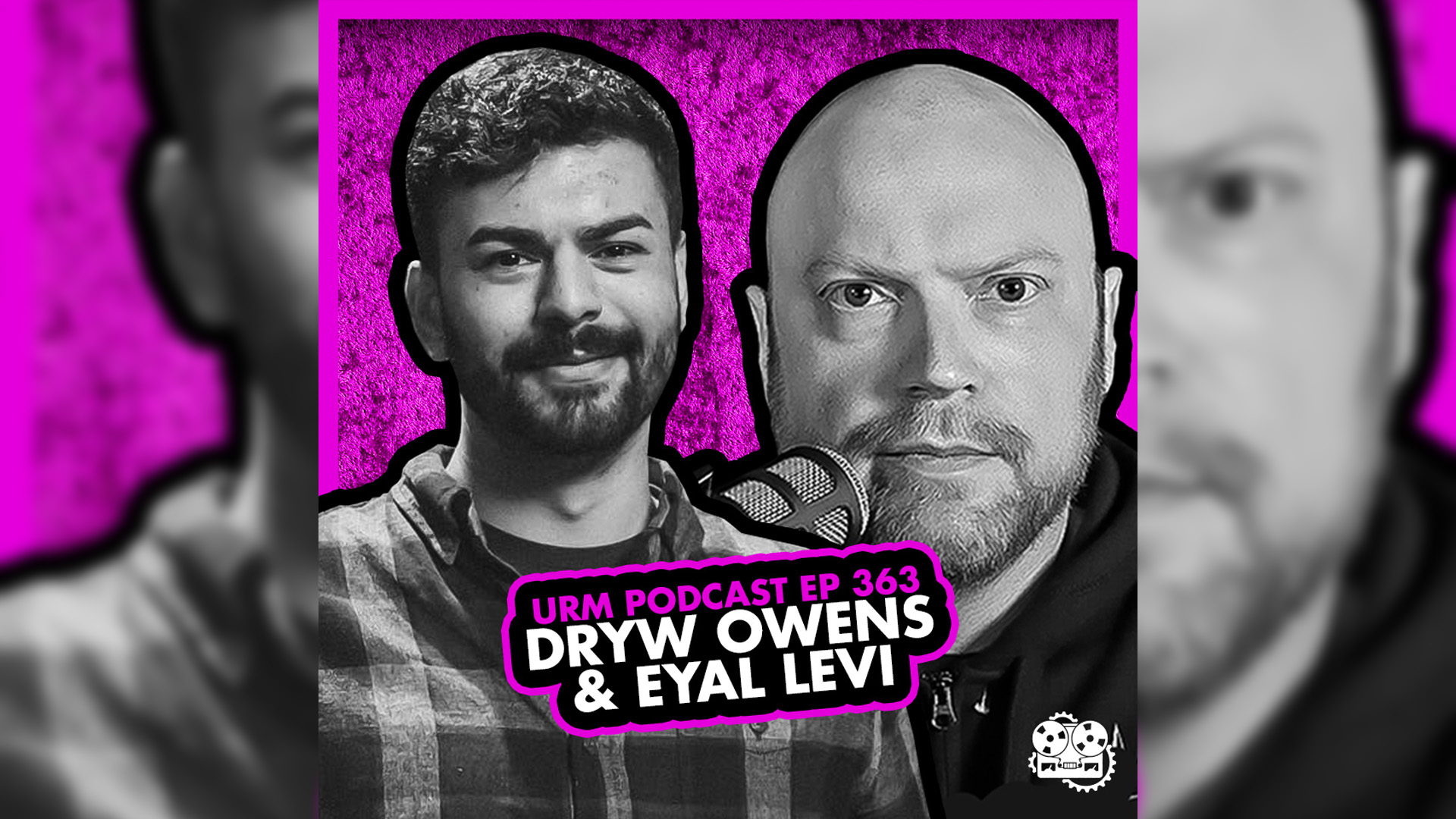
DRYW OWENS: Collaborating with artists, why band democracy fails, and authentic self-promotion
Finn McKenty
Dryw Owens is the owner of Little Russia Recordings in Sacramento and is known for his work with bands such as Dance Gavin Dance, Hail the Sun, and A Lot Like Birds. He approaches every project with the mindset of a collaborator, aiming to get on the artist’s wavelength and help them achieve their highest art.
In This Episode
Dryw Owens joins the podcast for a chill but super insightful conversation about his philosophy as a collaborator. He kicks things off by explaining why getting on an artist’s wavelength is the most critical part of his process, framing production as the art of translating a band’s vision into the “language of pathos.” Dryw gets real about the crucial business and interpersonal side of the job, stressing the importance of carefully choosing which artists to partner with and learning to spot a “broken decision-making mechanism” within a band. He and Eyal break down the pitfalls of band democracy and why it often leads to weak compromises instead of the strongest creative choices. If you cringe at the idea of self-promotion, you’ll appreciate Dryw’s take on being a “reluctant entrepreneur” and why investing in your community and simply doing great work is a more authentic and effective path than trying to be a social media influencer. The chat also dives into the pressures of modern release cycles, why chasing originality is a flawed goal, and how he finally conquered Gear Acquisition Syndrome (GAS) to focus on the tools that truly matter.
Products Mentioned
Timestamps
- [2:15] Why Dryw considers himself a collaborator first and foremost
- [3:59] Viewing the technical side of production as a tool to serve the creative
- [6:14] The real-world process of getting on an artist’s wavelength
- [9:49] What happens when a good producer and a good band just don’t have chemistry
- [12:43] The importance of actively searching for the right artists to work with
- [15:28] Seeing artists for who they are, not just what you want them to be
- [18:03] The romantic but flawed idea of keeping a band lineup together at all costs
- [20:39] Identifying the “broken decision-making mechanism” in dysfunctional bands
- [22:36] Why a true democracy can be the downfall of a band
- [26:45] The pressure of short release cycles and the quantity vs. quality debate
- [34:42] Overcoming the “cringe” of self-promotion and personal branding
- [38:11] Do you need to be a social media influencer to be a successful producer?
- [42:28] What helps bands stand out in a saturated music landscape
- [44:59] Why chasing originality for its own sake is the wrong move
- [48:23] Conquering Gear Acquisition Syndrome (GAS)
- [51:48] Why the listening chain (monitors, room) is the “holy grail” of studio equipment
- [54:34] Tracking creative ideas and theories in a note-taking system to foster improvement
- [59:14] Why the answer to almost every audio question is “it depends”
Transcript
Speaker 1 (00:00:00):
Welcome to the Unstoppable Recording Machine Podcast, and now your host, Eyal Levi. Welcome to the URM podcast. Thank you so much for being here. It's crazy to think that we are now on our seventh year. Don't ask me how that all just flew by, but it did. Man, time moves fast and it's only because of you, the listeners, if you'd like us to stick around another seven years and there's a few simple things you can do that would really, really help us out, I would endlessly appreciate if you would, number one, share our episodes with your friends. Number two, post our episodes on your Facebook and Instagram, and tag me at al Levi URM audio and at URM Academy, and of course our guest. And number three, leave us reviews and five star reviews wherever you can. We especially love iTunes reviews. Once again, thank you for all the years and years of loyalty.
(00:01:01):
I just want you to know that we will never charge you for this podcast, and I will always work as hard as possible to improve the episodes in every single way. All we ask in return is a share a post and tag us. Oh, and one last thing. Do you have a question you would like me to answer on an episode? I don't mean for a guest. I mean for me, it can be about anything. Email it to [email protected]. That's EYAL at m dot A-C-D-E-M-Y. There's no.com on that. It's exactly the way I spelled it. And use the subject line. Answer me, Eyal. Alright, let's get on with it. Hello everybody. Welcome to the URM podcast. My guest is Dryw Owens, who's the owner of Little Russia Recordings in Sacramento, and he's known for his work with bands such as Dance, Gavin Dance, hail the Sun, a lot of birds and many, many more. I've actually been trying to get him on the podcast for quite a while, so I'm stoked we were able to do this. Here goes Dryw Owens. Welcome to the URM Podcast. Thank
Speaker 2 (00:02:06):
You very much for having me.
Speaker 1 (00:02:07):
It's a pleasure. So what do you consider yourself? A musician or a producer?
Speaker 2 (00:02:13):
Yes.
Speaker 1 (00:02:13):
Yeah, okay. That's what I thought.
Speaker 2 (00:02:15):
Among other things, I guess the thing I consider myself most is probably a collaborator, and I think that's probably how I would prefer people that work with me in any capacity. Kind of think of the relationship that we have,
Speaker 1 (00:02:31):
Whether that collaboration means on guitar or something, or it means producing them or helping them write songs or whatever it means it's a collaborative role.
Speaker 2 (00:02:42):
Totally. So in any capacity, and that can be all the way to co-writing or mixing or even mastering, I definitely try to treat each part of the process of making a record as sort of a creative conversation that I'm having with whoever is choosing to work with me on their music. So I've spent a lot of time trying to get on the artist's wavelength and figure out how I can contribute to what they're doing in the most meaningful way that helps them sort of achieve their highest art.
Speaker 1 (00:03:16):
I think getting on an artist's wavelength is probably the most important thing you can possibly do. It's a lot more important than the technical side of it. Now, I guess let me just say that I think that with the technical side of it, it's just if you're working with good bands,
Speaker 2 (00:03:32):
It's
Speaker 1 (00:03:32):
Just assumed that stuff. If you don't know that stuff, you're not even going to be in the conversation. So that stuff aside, everyone should learn the technical stuff and just be able to do it. But that aside, seriously, in my opinion, the most important thing is understanding the artist's wavelength, getting on their wavelength and being able to basically be a vessel by which their art is committed to a quote tape.
Speaker 2 (00:03:59):
Right? Yeah. That's how I view, and I also, I think try to look at it as how can I kind of help you on your artistic journey and how can we help each other become better artists? Because I take a lot of influence and I take a lot of my own method from the people that I work with. I've spent my career in audio trying to make myself sort of an endlessly adaptable person and worker in terms of the way I work technically and creatively so that I can really try to realize the vision of whoever I'm working with. And like you said, the technical, I think it's easy to get bogged down in the technical when you're creating, and everybody kind of has to make their own way to get around that. But ultimately, the way that I view it at this point is that the technical and mastery of the technical exists so that you can serve the creative. If you had to split those two apart and all the stuff that I do with daws and miking technique and knowing the ins and outs of equipment and what to do with it and the physics and all that, it's all to kind of serve the music and make me feel something from the music, make the artist feel something. It's translating all of that into the language of emotion, and that's really what music is for me. It's the language of pathos.
Speaker 1 (00:05:29):
Well, yeah, I mean, the technical stuff is just in some ways the language you use to be able to operate the machinery that allows you to translate the art,
Speaker 2 (00:05:38):
Right? That's the point. And it's easy to get distracted from that. I think I, I've spent long periods of time where I've kind of tried to do everything correctly and create something that's really balanced and Hi-Fi,
Speaker 1 (00:05:54):
But what does that mean correctly?
Speaker 2 (00:05:57):
I think that some people will hear a sound and think like it's clear and correct, but going one step beyond that and actually trying to figure out how to make it produce emotion or make it sound inspiring, make you want to move, that's really the trick for me and at this stage that is really what I go for. So
Speaker 1 (00:06:14):
When you're talking about getting in the artist's headspace, could you talk a little bit about what that actually means? I feel like a lot of people will say that they have people skills or that they're good at establishing rapport, but it's kind of vague. It's kind of vague. I mean, I think I know what you mean, but I'd like to talk about what it actually means in real life when you are in the room with a bunch of complete strangers and you need them to be comfortable with you quickly or else work's not going to happen, or at least it's not going to be as good as it could be. How does that work? What do you do? You said you work hard at it.
Speaker 2 (00:06:53):
Yeah, yeah, absolutely. I think for me, the place that it has to start is it has to start with a very genuine interest, the artist's music and what we're going to do together. So this is part of my personality, but it's also part of just how I work, is I really enjoy knowing the people that I work with, and I try to build trust on several different levels. I am looking for people to work with that I think are going to be a good hang, honestly, somebody whose music I can genuinely back and I can feel enthusiastic about the sounds that they want to make and also the trajectory of their career. So I kind of look for degrees of alignment and then I talk to people a lot. The communication aspect of it is crucial to me. I always want to check in and make sure that the direction that we're moving in is something that aligns with artists' goals, and I really try to take a deep dive, especially if for all parts of the project, but I would say definitely the production, the writing, the tracking, all that sort of side of it is by far the most immersive for me, and so I'm going to enter their world as far as listening to their influences, trying to understand their musical history, what they've grown up listening to.
(00:08:15):
So it really is, I'm trying to develop sort of a composite picture of the person that I'm working with and then strategize and try to figure out how I can be that person's partner in what they're coming to me to work on. It
Speaker 1 (00:08:32):
Makes sense.
Speaker 2 (00:08:33):
Yeah, that's most of what I can think of, and yeah, it's me just being enthusiastic. It's hard to not like somebody or write somebody off that is really taking a genuine interest in what is probably, if not the biggest part of your life, one of the biggest parts of your life, your art and your self-expression.
Speaker 1 (00:08:52):
Yeah, I agree. That's actually a complaint that lots of artists have about certain producers is they feel like a lot of producers they've worked with, I mean, they give a shit about making a cool record, but they don't really give a shit about translating the artist's vision or they're just phoning it in or they don't really feel listened to. You hear this a lot from artists.
Speaker 2 (00:09:18):
Yeah, I've heard stuff to that effect as well. Definitely more than once, and I can't say what exactly is going wrong there on the hypothetical producer side, but I really try to put sort of people and their vision before any kind of process that I've developed.
Speaker 1 (00:09:40):
It's not necessarily the engineer's fault or the artist's fault because you hear this about really great producers sometimes too,
Speaker 2 (00:09:48):
So
Speaker 1 (00:09:49):
Just you don't just hear it about the losers and the assholes or people that suck. You hear this about some great producers too who give a shit, and so I think that lots of times when you hear about those stories, it's a matter of people just not being compatible, just not having good chemistry. There's
Speaker 2 (00:10:06):
Definitely that. Yeah,
Speaker 1 (00:10:07):
That I think that that's a big part of it. If you have a really good artist and a really good producer, but it's just not working out for whatever reason, there's something about their chemistry or their working style, like their ideals, something is just off. I think it's really important to identify when that happens. I'm sure that's happened to you before that you've got in the room with a band that it's a cool band, but it's just not right.
Speaker 2 (00:10:32):
Yeah, I definitely can pick up on that sometimes. On a personal level, how do you get around it at the end of the day when you have a situation where maybe you're not clicking on some level? It's a pretty rare situation, I would say, where I can't figure out what's in the other person's head most of the time. If something's not clicking, it could probably be on a more interpersonal level, and sometimes it's not that I'm a hard person to get along with or somebody else, the artist is hard to get along with, although, hey, that happens sometimes
Speaker 1 (00:11:06):
The way that you're hard to get along with, along with the way that they're hard to get along with creates a brew. But it's weird. Even if you can get along with 99%, I'm not saying you specifically just like a universal, you, even if you can get along with 99% of the people you ever come into contact with, there's always going to be a small percentage of people that also maybe get along with 99% of the people they ever come into contact with.
Speaker 2 (00:11:31):
Right. It's that cocktail.
Speaker 1 (00:11:33):
Yeah, exactly. There's something about them plus you that gets weird. Yeah,
Speaker 2 (00:11:39):
I think I've experienced that before and I've overcome that before I think, or the artist and I have overcome it
Speaker 1 (00:11:45):
With work, right?
Speaker 2 (00:11:46):
Yeah. I think, like I had said earlier, it's hard to write somebody off that is taking a really genuine interest and a passion for your artistic self-expression. That person is definitely your ally in the process. So I haven't met anybody personally that has shut me down or anything. We always do end up getting work done. A lot of it too. I think I've had the good fortune through my career to make a lot of really great friends, and I really do tend to get along with people that I work with and maintain relationships with them.
Speaker 1 (00:12:27):
This reminds me of conversation I was having with Howard Benson, actually, if anyone doesn't know, they should know that he has a ridiculous, ridiculous, insane amount of big records that he's produced.
Speaker 2 (00:12:40):
I grew up listening to Howard Benson Productions. Absolutely.
Speaker 1 (00:12:43):
It's fucking crazy. But he was saying that, and much like you said that you're looking for people that you're going to connect with, he is looking for a very specific thing. He's saying. He thinks that producers who want to go somewhere need to look for the artists that are going to take them to the next level. They need to be looking for those people specifically, whether it means the people that you connect with artistically or the people that you connect with interpersonally in a way that will allow you to do your best work. You need to be actively searching, in my opinion, for those people, whatever that criteria is for you. So if the criteria is you want to make hits, you need to actively be searching for artists that would fit that criteria. If what you want to do is make really, really cool art with really cool people, you need to be very deliberate about looking for those people, recognizing those people, and then trying to make it work with those people. And I feel like if you do that, you're deliberate about it and you really, really give a shit yourself in situations where it's natural for you to give a shit, then it's a lot easier to honestly give a shit.
Speaker 2 (00:13:49):
Totally. That can be a kind of genius of itself is knowing the people that you think are destined to do something really special. And I've had friends like that in my life. I definitely do look for, I had mentioned earlier the trajectory of the artist, and that's important to me. I want to make sure that the people that I work with are really trying to do the damn thing and not trying to release their product, their music in a way that doesn't get it the most attention or that doesn't reflect all the work that we've put into it. It is an insane amount of work. I take every project that I do really, really personally, and so I've had a few situations where I've seen releases not go great, and a lot of that was due to a poor strategy. So I do ask people that I work with from the get to let me know what their plan is, what's the long-term and how are you going to ensure that you get to make another record and that you get to hit the road or whatever it is you're trying to do. That's definitely important. Like I said, one of the many skills I think you have to develop that is sort of outside the thing you do, which is for me, just generally kind of collaborating with people and making music, producing, mixing, mastering. One of the things that you have to be good at that is unrelated to the job is sort of deciding what your community around you is going to look like and what your network is going to be, who are the artists that you're working with? I think that's huge. Absolutely.
Speaker 1 (00:15:28):
I think that that also is very, very true. Whether you are a person in a band or you're starting a business or whatever it is, there's this thing that, and I've been guilty of this, of seeing people for what you want them to be versus what they actually are. When you're trying to analyze an artist's trajectory for figuring out, does it make sense for me to put my time and effort and blood, sweat and tears into this project? It's very important to have a clear head and learn how to understand who and what they are regardless of what they say, because people don't really see themselves very, very clearly. Very few people have a super keen self-awareness or they have some self-awareness, but they don't see themselves the way that they truly are. It's really, really easy to, if you like somebody, especially to I guess imbue them with these qualities that are wishful thinking.
(00:16:26):
So I think it's important to figure out how to actually make a very educated, I guess, a calculated risk assessment on the people you're going to work with, because at least for me, doing that or not doing that has been the difference between most of the projects that I've worked on, either succeeding or failing. I mean, sometimes it's been my fault too in terms of me just being the wrong person for the job, but I mean, I take responsibility for stuff that hasn't worked out, even if it was the other person, just because it was my fault for even agreeing to team up with them in the first place. But all the best things that have ever happened in my life have been as a result of getting with the right people, partnering up with the right people, collaborating with the right people, and all the worst things have always been the opposite of that, where I knew something was up but I didn't listen to that voice, or I just didn't do my due diligence or something like that.
Speaker 2 (00:17:27):
And it comes out at some point.
Speaker 1 (00:17:28):
It does.
Speaker 2 (00:17:29):
It blows up in your face. Yeah, I've had that happen. Your perspective is definitely ringing true. In my experience, a lot of the reasons that my career has done what it has done is because of some of the friends I've had and some of the people that I've worked with, and that's been how I've survived. So that totally rings true.
Speaker 1 (00:17:50):
People in bands take note and listen to that. It doesn't matter how good of a friend your singer is, if your singer sucks, your singer sucks.
Speaker 2 (00:17:58):
That is true, man. That's a tough one.
Speaker 1 (00:18:01):
I know. That's why I said it,
Speaker 2 (00:18:03):
Right? Yeah. And I feel that because I was in a band a while ago, a serious band that was also trying to do the damn thing, and I had this romantic sort of idea that it was always going to be the lineup that we had, even when there were times in our history that it perhaps should not have been, in hindsight, we should have sought out somebody else as far as somebody who's playing a role in our band and we didn't because yeah, I'm externally processing that right now. Yeah.
Speaker 1 (00:18:38):
That's like the story of so many bands that almost went somewhere or never went anywhere, or even bands who did get somewhere but had a ton of potential but just couldn't break through. What's funny is there's a lot of bands out there who are really good, who will get to a certain level and just cannot penetrate the next level, and it's not because of the quality of their music. I mean, sometimes it is, but oftentimes it's not. If you compare them side by side with bands that are next level from them in terms of success,
Speaker 2 (00:19:12):
Oh yeah,
Speaker 1 (00:19:12):
They'll be just as good.
Speaker 2 (00:19:14):
I'm thinking of a handful of artists in my head right now. Definitely see what you're saying.
Speaker 1 (00:19:18):
Exactly. So you start wondering what's the issue? There's this myth, I think it's kind of a myth. I mean, there's some truth to it, but a lot of people will say that great artists get overlooked, and the industry is super unfair to lots of artists. And while there is some truth to that, what I have noticed is that these bands I'm talking about right now without fail, anytime that there's a band that cannot seem to break through, there is some sort of interpersonal issue in the lineup that makes them completely dysfunctional. There's some member that they will not kick out that they should have kicked out. That just creates a toxic environment where they don't want to do the work required or somebody who pisses off the business people and then they don't get the opportunities they need, or they all have drug habits that prevent them from just being proactive about their careers. There's always something without fail, there's always something. The amount of people who actually get screwed and all the cards are just bad. They get dealt horrible decks. That's so rare. Actually.
Speaker 2 (00:20:20):
That's interesting. I mean, I can tell you right off the bat, I mean, you have a few years on me as far as watching, and I've been around for a bit now,
Speaker 1 (00:20:30):
As in I'm older than you.
Speaker 2 (00:20:31):
Sure. Yeah. This is nothing bad about that. I'm older than a lot of people too.
Speaker 1 (00:20:37):
Yeah, it means I haven't died,
Speaker 2 (00:20:39):
Right? Well, yeah. I'm 35 and 42. I've been doing this since I was in my early twenties, and so you definitely take note of the trends that you see and what I've seen agrees with what you're saying. That's kind of something that I look for in artists as well. When you talk about something sort of internally being wrong, I guess my term for it that I think of in my head is like, is there a broken decision making mechanism in this band? How are they making decisions? And it can be really hard to find actually a band if it's a democracy kind of situation, or an artist just vaguely that has a really functional, methodical and working method of making decisions. And I read somewhere, I can't remember who said it, I probably would catch a little bit of flack for saying this, but democracy sounds bad, can be a truth.
(00:21:41):
When you have too many cooks in the kitchen, it can really slow down and sort of stymie the decision-making process. And one example I can think of for that is artists when they are getting ready to choose the first single off an album, if they're doing an album, and what I tend to see a lot of is different people in the band will pick a different song for different reasons, but they might all disagree. So what they end up doing a lot of times, not always, but a lot of times is they'll end up picking sort of a second place or a third place that just really isn't the best single in any way, but it's a compromise. And that I think is an example of some maybe not great decision making that can actually hamper the progress of the band. I don't know if you've noticed that
Speaker 1 (00:22:36):
So fucking absolutely. I feel like when I made my band a democracy, that's when things started to go really wrong. And it's weird to say it, but there needs to be someone who just says how things are going to go. That doesn't mean ignores everyone else. That doesn't mean that other people shouldn't have their role
(00:22:57):
And own their role, but there needs to be someone who says, we are doing this and everyone's on board unless it's really stupid. Otherwise, you get people who aren't great thinkers on a certain topic. Maybe they're not good at strategy, maybe they're not good at logistics and planning. You get people whose expertise isn't in a certain area, having an equal voice with people who are really great at something, and that really, really gets in the way. So one thing I've noticed with the Riff Hardd podcast is so we talk to people from bands that are super successful
Speaker 2 (00:23:32):
And
Speaker 1 (00:23:32):
Who have been around forever. We generally don't talk to too many baby bands though every once in a while we do, but we have spoken to some true veterans, and the thing that they all have in common, every single one without fail is every one of these bands has a system for making decisions and communicating where everybody knows their role, everybody is down with the process and it works and it doesn't work by accident. They have come to this agreement. So whether it means we all have a meeting on Mondays where we get on the same page about everything and we have the managers the deal breaker, or it means I make the business decisions, but I make sure that everyone's at least on board, but that's my role. And then this other person in the band, that person's the audio engineer in the band, this other person in the band does all the visuals and however it works, every band is different. The thing that they all have in common, the successful ones, the ones who last sometimes that's not, sometimes the successful ones are not the ones who last. So to me, both those conditions both be successful and last, their decision making process and their communication process has to be bulletproof, basically.
Speaker 2 (00:24:48):
Yeah, there's got to be some sense of a singularity of vision. And I think that also informs the artist's brand and the members of the band, if it's a group, need to rally behind that. And I said, democracy sounds bad, quoted the unknown quote there, but I also have seen democracies that work very well. I think it's rare for me from where I'm sitting, but it doesn't necessarily have to look like one person is clearly driving the ship. But like you said, the decision-making mechanism has to be there, and it has to be pretty efficient because a lot of times too, when you get into a decision making paralysis due to a broken decision-making mechanism in an artist or in a band, you just don't do anything. You can just let opportunities pass you by. And I've seen that happen too, where people can't make decisions fast enough and they miss a good moment
Speaker 1 (00:25:51):
Or take the wrong opportunities. I've seen situations and experienced situations where there's two opportunities. One of 'em is the better long play opportunity, but worse in terms of the short term benefits, whereas option B is shitty for the long play, but slightly better in the short term with a democracy if people aren't all on the same page, if four people are leaning towards short-term benefits and then one person has a long-term vision, you're going to go with the short-term benefits and make stupid fucking moves. Now, I have seen democracies that work, but I guess it comes down to what I said is that every band that is successful and last does have a system that works, whether it's a benign dictatorship or democracy, whatever it is, they have something that works for their situation and for their collective personality.
Speaker 2 (00:26:45):
Yeah, totally. And yeah, with the whole long game versus short-term thing, it seems like that could really change depending on what they're talking about. And there's definitely, I really feel for artists that feel, especially where recording is concerned to kind of get things out quicker. I mean, it feels like there is just not as much time for artists to put off making a second record or a third record. The release cycle and people's attention spans are pretty short, generally speaking. And so it kind of creates, I think, an unrealistic pressure on artists to just churn out content, content, content. And I think the trade off, this might be a tangent, but I think the trade off of that is that you end up adopting sort of a quantity over quality mindset, which there's some debate on whether that's a good strategy for outlets like social media. But yeah, I just think that the current climate and culture has sort of made short-term benefits, something that a lot of people will go for over playing the long game, which I think is sort of biting time and putting out quality content. That's a hard mindset for a lot of people to adapt nowadays.
Speaker 1 (00:28:06):
I think it's a hard mindset for people in general, but it's an important one. It's a really important one
Speaker 2 (00:28:11):
Of making sure to play the long game. Yeah,
Speaker 1 (00:28:13):
A hundred percent. You have to play the long game. You need to play both in terms that your short game needs to be good enough to be able to keep you afloat, right? So
Speaker 2 (00:28:24):
Yeah, that's the trick, right?
Speaker 1 (00:28:25):
Yeah. You can't be taking losses indefinitely in the name of some dream, some ideal or something that will never happen if you can't get there because there's no money or it takes too long and people need to move on with their lives or something. There's
Speaker 2 (00:28:44):
Right, it's got to be viable. Yeah.
Speaker 1 (00:28:46):
Yeah, exactly. So I mean, there has to be a balance. I'm not saying ignore the short game, but what you do with the short game has to be part of how you get to your long game goals. So basically there's got to be a path to get there built off of short-term tactics and strategies, and without it sending you in the proper direction, I think that's where people get fucked up and not really going in any particular direction other than more, more, more, more and more with the content that's not that great. Usually sometimes it works, but not usually from what I've noticed,
Speaker 2 (00:29:22):
It's such a case by case thing, thinking about, okay, what decisions am I making to help myself versus long-term? And yeah, I'm definitely more of kind of a long game thinker myself, so I do tend to kind of gravitate towards play the long game. But yeah, there's definitely, you have to be intentional about your decision making to make sure that the steps that you're taking make it viable in the present and the future.
Speaker 1 (00:29:50):
Hey, everybody, if you're enjoying this podcast, then you should know that it's brought to you by URM Academy, URM Academy's mission is to create the next generation of audio professionals by giving them the inspiration and information to hone their craft and build a career doing what they love. You've probably heard me talk about Nail the Mix before, and if you're a member, you already know how amazing it is. The beginning of the month, nail the mix members, get the raw multitracks to a new song by artists like Lama, God Angels and Airwaves, knock loose OPEC shuga, bring Me the Horizon. Gaira asking Alexandria Machine Head and Papa Roach among many, many others over 60 at this point. Then at the end of the month, the producer who mixed it comes on and does a live streaming walkthrough of exactly how they mix the song on the album and takes your questions live on air.
(00:30:41):
And these are guys like TLA Will Putney, Jens Borin, Dan Lancaster, to I Mattson, AnDryw Wade, and many, many more. You'll also get access to Mix Lab, which is our collection of dozens of bite-sized mixing tutorials that cover all the basics as well as Portfolio Builder, which is a library of pro quality multi-tracks cleared for use in your portfolio. So your career will never again be held back by the quality of your source material. And for those of you who really want to step up their game, we have another membership tier called URM Enhance, which includes everything I already told you about, and access to our massive library of fast tracks, which are deep, super detailed courses on intermediate and advanced topics like gain, staging, mastering, low end and so forth. It's over 500 hours of content. And man, let me tell you, this stuff is just insanely detailed and enhanced.
(00:31:36):
Members also get access to one-on-ones, which are basically office hour sessions with us and Mix Rescue, which is where we open up one of your mixes and fix it up and talk you through exactly what we're doing at every step. So if any of that sounds interesting to you, if you're ready to level up your mixing skills in your audio career, head over to M Academy to find out more, something you said about artists not having as much time for their second records, for instance, I feel like that's always been true even before social media, because even when you had your traditional album release cycle where there was no social media, so it was all about radio or MTV or whatnot still. So a band would be expected to tour for a year and a half and then write for three months, get in the studio and repeat. And so even in those days, they weren't given the time, which is why the sophomore slump is a thing,
Speaker 2 (00:32:32):
Right? Yeah, I see what you're talking about there. And I did definitely follow some bands growing up that have a not great story about their second record, especially if maybe they would sign to a major or something and the policy would be like, okay, you got a tour for this long and then you're going to lock yourself up for six to eight weeks and write a record in that time, and those are the parameters you have to work with. So yeah, there's definitely some of that. I think what I'm sort of noticing, and there was a time you could get to, and this was sort of in, maybe this kind of still exists, but where you could, if you were widely followed enough, you could wait a few years between records, and I think it was unusual to see a lot of artists that had been established waiting maybe three years in between records. And
Speaker 1 (00:33:26):
If you're good enough,
Speaker 2 (00:33:27):
Yeah, if you're creating a real artistic statement that has your blood, sweat, and tears and has been inspired by all the things that you've experienced in life, it takes time to develop that art. From what I see from where I'm sitting, I've seen a lot of artists that are putting out records with a gap of a year or maybe just a little bit more than that. God,
Speaker 1 (00:33:51):
That's quick.
Speaker 2 (00:33:52):
Yeah. I mean, I'm not going to say that's wrong. I mean, if that is the pace at which you create, and I know some very prolific people that can create at that pace, then that's great. I think for somebody like me, I do need to take time to gather inspiration and to put a degree of thoughtfulness into what I'm doing when I write music. And I think it's harder to do that if you don't have some time. And it might be that people are making music in the same way that they have been, and the landscape of who's putting out material quickly and who's not has sort of shifted because a lot of things have changed in the last 20, 30 years. But yeah, that's just my observation.
Speaker 1 (00:34:42):
You mentioned in the pre-interview that the idea of marketing your own personal brand is one of the things that you dislike the most out of all this. However,
(00:34:54):
It is an essential component to creating a studio business or anything really. And I think a lot of the listeners who are in the early phases of creating their recording quote personas or brands or studios are in the same boat. I think producers, mixers, engineers, they just kind of are repulsed by the idea in general. You have a few outliers like CLA or partner Joey Sturgis who are cool with it, but by and large they're not. Can you talk a little bit about how you overcame the cringe of pimping yourself out and maybe some of the strategies that helped you along the way?
Speaker 2 (00:35:32):
Oh, geez. I mean, I totally haven't overcome that.
Speaker 1 (00:35:35):
Well, I mean maybe you haven't overcome the fact that you don't like it, but you've overcome it to the point where you're able to move forward.
Speaker 2 (00:35:45):
Yeah. I would say a lot of the way that people promote themselves nowadays is social media, just for personal reasons. I try to really limit my engagement with social media. I think it's a great thing for a lot of people. For me, I find that it kind of distracts me from the work. It can be a place where you gather inspiration. I haven't found it to be that really for me, I've gotten to points where I've sort of had checking up on all my posts and whatnot, interfere with the task at hand or what I was doing. So for a while now I've kind of put that aside, but I do have to jump on and try to say something meaningful or
Speaker 1 (00:36:27):
Have some presence.
Speaker 2 (00:36:28):
Mostly what I do is I'm just trying to support the people that I work with and just try to support their music and show my love through engagement, stuff like that. I don't know that I'm ever going to be a audio social media influencer or anything like that,
Speaker 1 (00:36:49):
Which is okay,
Speaker 2 (00:36:50):
As long as I'm able to keep making music and feel like I'm contributing meaningfully to the art that people are creating, and I feel like I'm helping them make breakthroughs, and I'm growing and making breakthroughs myself with what I'm doing and finding inspiring sounds. I'm happy. I'm super grateful and fortunate that I haven't really been at a point yet. I think that I really have to buckle down and say, okay, I've got to do the self-promotion. I've always kind of just, I've really tried to dive into the work and focus on the music, and that's a cliche, but I think it's been true in my life where I used to admire people that would say, let the music speak for itself. And I don't think that's a great strategy nowadays, to be honest. I am not sure that's enough as far as where the promotion of music goes. But for me, myself and what I do as a collaborator, I'm kind of happy to just keep investing in the people around me and grow my network that way. I think that can be sort of a form of promotion in itself is having a good community, having friends, and just trying to invest in those around you. That's the strategy that I've taken. I want to live in a world where that works, so hopefully it does.
Speaker 1 (00:38:11):
So here's the thing. I think that most producers who are listening to this who think that they need to do the social media influencer thing or get into Facebook advertisement or take marketing courses, they're wrong. They don't, people like Joey or CLA are total outliers. Most producers don't really do more than just post about what they are working on. If a release comes out, they'll at least make sure that they are taking credit for what they've worked on through their social media.
Speaker 2 (00:38:45):
Yeah, that's important.
Speaker 1 (00:38:47):
That's very important. But that's about as much as you really need to do. If you are doing what you said, which is properly investing in the relationships that you have and really helping bands move forward, you don't really need to worry about promotion so much. I actually don't know any successful producers who have gotten any work off of advertisement or anything like that. And then the social media stuff for Joey and CLA, that's not the stuff that made them successful producers. That's the stuff that helped them sell products,
Speaker 2 (00:39:23):
Right? It was the music that they worked on and the traction that got and their solid work that helped bring that music to the next level. And promotion, or no promotion, definitely some degree of promotion, I think. But I think there are a lot of ways that one can find success or a fulfilling career in this field. I think everybody's path is going to look a little bit different. So I've kind of had to find a way to exist in this world that works for me and that harnesses some of the strengths that I have, and it's going to look totally different for somebody else. I think that I've seen people, I can't say how much work they've really been able to get, but they have super impressive followings on their social media pages. I'm thinking of mostly Instagram, and if you're doing a studio thing and it's not so much about the music that you're doing, just showing all your room and your gear and all the cool stuff, there are definitely people that would want to put that to good use, and I think you can book your place out doing stuff like that.
(00:40:34):
So it's just kind of a matter, I think, of what angle you want to take.
Speaker 1 (00:40:38):
Yeah, absolutely. But it's definitely not required or even that helpful, I think, to go nuts with that stuff. If what you want to do is be a producer, songwriter, engineer mixer, I guess I'm speaking to a lot of people who get way too wrapped up with business courses or marketing courses. That shit really doesn't matter that much.
Speaker 2 (00:41:01):
Yeah, I've never done anything like that, and I may not be the best person to coach anybody on this kind of stuff. I consider myself a very unlikely and reluctant entrepreneur. I had to become an entrepreneur because I knew that this road was the one that I wanted to take, and so I had to figure out a way to make it work. But yeah, I have never gotten into studying business or marketing. I know people that have, and I've benefited from some of that knowledge. I think it's hard. I've always felt a tension between applying some of that to what I do and maintaining the artistic integrity of it. I think that those two forces don't have to be, but they can be in conflict with one another.
Speaker 1 (00:41:47):
I agree. I think focusing on helping artists fulfill their visions and get to the next level is the most important thing by far, or helping other producers get there with their artists, whatever it is, is helping people get to the next level with what it is that they're working on. That's kind of the be all end all, in my opinion. That
Speaker 2 (00:42:07):
Is personally my philosophy and that's how I grow and get better at this job myself, is trying to take people to the next level, but also doing it as a student, maintaining the posture of a student and always be prepared to learn from the people that you're working with. That's crucial for me.
Speaker 1 (00:42:28):
So just out of curiosity, we were talking about quantity earlier, quantity of music getting released and how that is the strategy for lots of artists and knowing that that's what you're dealing with a lot of the time and understanding that for the listener there's more options than ever. There's just so much music for them to choose from. What are some of the things that you've noticed that helps certain bands stand out?
Speaker 2 (00:42:57):
That's a good question. I guess I'm not so concerned about standing out per se unless I think that somebody's music is in danger of being highly derivative of something else. Just definitely something that has been heard before. I don't think originality is actually the end all be all. I think that's a relatively new idea that has come about really in the last century or two. According to my research back in the day, if you wanted to be considered a good artist, sort of the mentality would be that you're good enough to create in the tradition of the masters. So if that's somebody's mindset, and I think that that mindset can be prevalent in some kinds of music, it can be very genre dependent, then create in the tradition that you want to create. I think it's good to try to add something to it. But really at the end of the day, I think my philosophy is tried to make sure that what you're creating is something that you would listen to and that you enjoy, and that reflects your artistic intention.
(00:44:08):
And that may not be very helpful for somebody that is approaching music with the mindset of, I want to succeed financially. I want to just make a living doing music, period. That may not be helpful for them. But I guess the angle that I take with music is not necessarily that I do it or that somebody else should do it to make a living, but that they're doing it as an expression, like the highest and best expression of themselves. And that hopefully when somebody else hears that and sort of everybody's music is just a repackaging of influences, hopefully when they put that music out, it'll make somebody else feel the way that they felt when they heard what inspired them. Does that make sense?
Speaker 1 (00:44:59):
Absolutely. I actually agree with you completely. I think that originality is, it's just kind of a weird goal because your personality is your personality and the types of ideas that you have. If you think differently than most people, that's just going to come through. So in my opinion, the pursuit should be to make stuff that's as good as possible, write the best songs possible, get the best recording possible by however you define it, get as good as you can at guitar by how you define it, because your style and the originality, well, that's in your personality. That's just going to come through. And if you have a super unique personality and you write the best songs possible, well, they're going to be really unique, awesome songs. But even if your personality is only 2% different than your average personality, if you write the best songs possible, there's still room for you at the table. So I feel like trying for originality is the wrong move. You are who you are, you're going, you will create things that are who you are whether you try to or not. So instead of trying to make things different for sake of just being different, whatever that means, try to make them awesome. That's my thoughts too.
Speaker 2 (00:46:14):
Totally. And I think that that can sort of lead to a more organic form of trying to arrive at some form of originality, which is, as you keep creating, every album or song that you make is going to be sort of a snapshot of you and your influences and how you were thinking at a certain time. And you're going to start to arrive, I think, at some more originality when you listen back to the things that you've done realize the things that you did well, and some of the things that you can improve on, and next time you want to get a certain sound or do a certain thing in your songwriting, you're going to think, well, maybe I've already done that before and I want to try to, for the sake of fulfilling myself and my creative drive, I want to figure out another way to do this thing that maybe I did on the last record, but in a different way and better. And once you start putting those parameters on your songwriting or production or mixing or whatever and pushing forward and trying to improve that, I think you can really arrive at some organic creativity and originality there.
Speaker 1 (00:47:21):
Yeah, I completely agree with you a hundred percent, but still, it's through the process of just trying to improve.
Speaker 2 (00:47:29):
If I have an obsession in life, that's it. Always trying to improve every part of what I do, and it's led to some creative decisions, some originality, I hope.
Speaker 1 (00:47:39):
Yeah, I mean, I feel like I said, I feel like with the originality thing, it's just going to come through if that's who you are.
Speaker 2 (00:47:47):
Yeah. Your identity is going to be novel. It's going to be different from other people's, and hopefully you figure out a way to distill that in a way that's provocative and stands out. Yeah, I guess just the sort of summary of that is I like to try to approach originality in hopefully a more organic, authentic way rather than making originality itself the end goal
Speaker 1 (00:48:13):
On a different topic. The gear element to many people starting out is super daunting and intoxicating.
Speaker 2 (00:48:21):
Oh, yes.
Speaker 1 (00:48:23):
Have you been able to conquer gas or at least reduce the importance of gear down to the idea of having what you need in order to do the work you need to do, but not get carried away with just distractions, I guess?
Speaker 2 (00:48:37):
Yes. At this point in my life, I probably have the least gas that I've ever had. That doesn't mean that I don't have my eye on a few things that I'd like to try and experiment with.
Speaker 1 (00:48:49):
I mean, that's just natural. What I mean by gas is just people distracting themselves from getting better by doing too much purchasing or researching of gear. Oh,
Speaker 2 (00:48:58):
That's totally possible.
Speaker 1 (00:48:59):
As opposed to just wanting new tools and trying new tools, it's different.
Speaker 2 (00:49:04):
Yeah, there have been, I think a few times where the gear has sort of gotten in the way for me. I'm at a point now where I think I've gone through enough rabbit holes, and I'll still go down more in the future, but I've built up a repertoire here of equipment that I really like and that have an identity and a sound. But really the purpose is of all the gear is to be able to make happen. Any sound or idea that my mind can conceive of that can be an incredibly difficult process as I think anybody who's tried to create music knows that when you conceive of a sound, making that a reality can be difficult. And so I've had to put a tremendous amount of time into trying to find pieces of equipment, whether they be plugins or hardware or whatever, or instruments that can get sounds that I tend to conceive of and that the people that I work with desire, I find this topic very interesting. And sometimes I think it can definitely be tiring because people definitely can, I think, swing to either extreme of gear doesn't matter at all, which I don't think is true.
Speaker 1 (00:50:18):
Well, that's just bullshit. It does matter. Of course, it matters. It doesn't matter as much as what you're doing with it, of course. So if you're doing something great, you can do something great on shitty gear or on less than ideal gear, and you can do really shitty things on amazing gear. But I mean to think that gear doesn't matter, that if you're doing something amazing and then doing it through the right amazing gear to think that that's not going to help is just ignorant.
Speaker 2 (00:50:46):
Yeah, I totally agree. There are certain machines that do a sound and they do a thing that I like. I personally don't know how to get that sound using an alternative approach, but that's not always true. Sometimes you can get creative and you can sort of replicate something that a processor does by other means. But yeah, I think if you're an engineer, it's kind of hard not to go down the gear rabbit hole to some degree because part of becoming an engineer and a mixer in particular, I think is sort of understanding the colors that are out there at your disposal. Music is highly subjective, and the colors and the whatever, that's an abstract term, the sounds that you are going to value and want to use are going to be different from somebody. So if that leads you to need some really expensive stuff, then great. And if you don't need that, great, too great,
Speaker 1 (00:51:46):
Better for your pocketbook.
Speaker 2 (00:51:48):
I guess I'm kind of agnostic about it because when it comes down to it, I'm just trying to create a palette of colors that are really useful to me and that I can help other people with, and it's going to look different for me and my community than it will for somebody else in theirs. But the gear man, it's so much fun. I have the good fortune to have a lot of great pieces here as I look around and they all do a cool thing, and I'm more stoked than ever about the plugins that I have at my disposal, especially some of the ones that have been coming out lately. I'd get totally jazzed on that stuff. Sometimes having a new plugin in the morning to put through the paces is great. And then yes, it can also be distracting as far as gear. I'm thinking of a few engineers I know that have switched monitors really rapidly, and for me, the listen chain in the studio is sort of the holy grail of equipment. For me. That's sort of the portal through which I access the world of audio. It's how I experience everything that in my room. So when I see people changing monitors out like crazy and trying to get work done, I mean, I personally don't understand how somebody could do that.
Speaker 1 (00:53:08):
I've seen it too. It's almost obsessive they can't control themselves or something.
Speaker 2 (00:53:13):
Yeah, there's some fomo there too. Yeah, I definitely think about my listen situation. I love it. Personally, I have some amons and a dual sub set that I've been mixing on that for quite a while now. But yeah, I'll do something like there was a period of time where I was kind of adjusting to my new room, and I had to get the timing calibration right between my subs and my near fields here, and just the amount of change that introduced along with orienting my speakers a little bit differently and moving them away from the wall a little bit or moving them towards the wall. I mean, those are profound differences to my ears, and they really affect how I perceive and do work. And to have that ground under me be shifting on a consistent basis, I couldn't imagine that. And like I said, hey, it works for some people. That would not work for me. And to me, that seems like maybe that's an unproductive level of auditioning. It's like with gear, I got to make sure that I don't get myself into too many pieces of gear at once. I've got to kind of time how I bring new stuff and retire old stuff from my rotation out of my toolbox
Speaker 1 (00:54:33):
As needed. I guess
Speaker 2 (00:54:34):
Just kind of based on wherever my inspiration is leading, and I'm constantly working on theoretical models in my brain, and also that I take notes on, I use an iCloud notes system pretty religiously to try to track my thoughts on just sort of the theory of what I'm doing. It probably sounds kind of weird.
Speaker 1 (00:54:56):
It makes sense, but
Speaker 2 (00:54:57):
Yeah. Yeah, just different. If I want to try a concept or something like that, I'll be listening to music when I'm not working and try to figure out how did somebody get that sound that they got and what does that sound like? And if I try to just listen and kind of figure it out, I'll come up with some strategy that I'll write down and try to employ. Usually it involves all the normal tools of EQ and compression reverb or whatever, but maybe routed unconventionally. I've actually got that page page up. Some of it is just trying to make different presets for myself to do different things really, even though I'm very much try to approach music conceptually and emotionally, I am definitely a tweak head when it comes to getting into processors, diving in. I'm a menu diver, and I'm always trying to optimize things to work for me. So yeah, the gear is all part of that, I guess is what I'm trying to say. It's a rabbit hole. It's a tangent. It's a very strange relationship that I think us engineers sort of have with the equipment and how we sort of use them all.
Speaker 1 (00:56:13):
Yeah, absolutely. I actually think that that's really cool to track that stuff, the way that you're tracking it. I actually think that more people should do that because that way they're going to have a written record.
Speaker 2 (00:56:25):
Oh, it's changed my life.
Speaker 1 (00:56:27):
Yeah, because there's so many times where you'll do something cool on a record two years later for whatever reason, you open up that session and you realize you don't do that thing anymore for whatever reason. Oh,
Speaker 2 (00:56:39):
Yeah. Oh, that changes every record for me. Yeah, I go through lots of different iterations of sort of a template that I have that I've been developing for years, years and years, and I'm constantly changing it. And then when I go back and I have to do an old recall or something to stem out, I'm always finding like, oh, shoot, that's not compatible with this new system that I have. And there are times where it can actually create a little more work for me, but I've got to commit to moving forward and trying to perfect the craft as perfect or whatever as it can be. So that's a price I'm willing to pay. And yeah, it does lead to some awesome stuff. And also when you get your ideas out on paper and you look at it back, you're going to know pretty quickly if your logic is flawed in certain situations, ultimately you're going to hear it, right? You're going to try it and you're going to hear, does it sound good or does it not sound good? Somebody might disagree with me on this, but I think that for me, when I've mixed things, the things that work in theory tend to actually work in reality, like a good deal of the time for me. And if it doesn't, then it's normally that there's some part of the theory of what I'm doing that I haven't considered all the way through,
Speaker 1 (00:58:00):
And it just takes you tweaking it. But I am wondering how often is the theory way off? Way off, not even in the same ballpark.
Speaker 2 (00:58:08):
Yeah. For me, I have not found that there have been major discrepancies, but I did not adopt this system of how I work now. I guess let's just say. It took me a very long time to develop. So I think I do have some degree of intuition about things that are probably going to work, or by work I just mean achieve the desired sound or things that are not going to work. So it's rare that there's a major surprise, and hopefully if it is, it's a happy accident. But yeah, I mean, if something doesn't work, I'll normally just sort of delete it from my notes and move on and try something else, and I'm looking at it right now. There are tons of things that, methods that I've sort of outlined am looking at things that I have here. Even one vocal chain that I had come up with that I was really feeling great about it, and actually just the other day I totally threw it out the window. So it's just amazing how there can be things that work for some scenarios and things that just, there's nothing that I have found that works reliably every time, really.
Speaker 1 (00:59:14):
I feel like that's the answer to almost all audio questions is the real answer is it depends for everything.
Speaker 2 (00:59:21):
Oh, yeah. I feel like I've had to give a lot of people a lot of very unsatisfying answers because yeah, it totally depends. Everything is completely contextual and also completely subjective. So yeah, the best thing that I've done in sort of my theory and my methodology is to just kind of create some general observations that I can follow and to keep my process endlessly adaptable. That is sort of the key is whatever I do in my template or with my gear, I have to create a situation that offers ultimate flexibility to be adapted to the task and the person that I'm dealing with.
Speaker 1 (01:00:04):
That's a great way to approach it, in my opinion. Well, Dryw, I think this is a good place to end the episode. I want to thank you for taking the time to hang out. It's been a pleasure talking to you, and I'm glad that we were finally able to do this.
Speaker 2 (01:00:17):
Yeah, likewise. Hey, thanks for listening and for asking great questions and for talking to me. And I had meant to tell you, I was looking through your discography and I saw that you were a part of August Burns Red.
Speaker 1 (01:00:30):
I assisted Jason Soff on Leveler.
Speaker 2 (01:00:33):
Oh, okay. Well, that was a cool record, man. And August Springs Red was definitely an important band to my group growing up.
Speaker 1 (01:00:39):
Jason gets all the credit for that. He did a phenomenal job producing them. I just helped him, but it was cool to be a part of it. I mean, Matt is such a sick drummer. Holy shit. Yeah, so it was really cool. That was one of the first projects I got to work on when I moved to Florida. But yeah, Jason is a great producer.
Speaker 2 (01:01:00):
Awesome. Yeah, I don't think I'm totally familiar with Jason. I have to admit that I'm sort of one degree removed from a lot of hard music nowadays, but I came up with it just sort of the solid state tooth and nail scene back in the day. It's a big part of my life, but I've definitely saw some stuff in your discography that you've worked with that was really awesome stuff that I heard when I was a little bit younger. Demon hunter, Chelsea grin. So yeah, awesome stuff. And yeah, thanks for chatting.
Speaker 1 (01:01:33):
Well, thank you. Alright, then another URM podcast episode in the bag. Please remember to share our episodes with your friends as well as post some of your Facebook and Instagram or any social media you use. Please tag me at a Levi URM audio at URM Academy, and of course, tag our guests as well. I mean, they really do appreciate it. In addition, do you have any questions for me about anything? Email them to [email protected]. That's EYAL at M acm y and use the subject line Answer me Ale. All right, then. Till next time, happy mixing. You've been listening to the Unstoppable Recording Machine Podcast. To ask us questions, make suggestions and interact, visit URM Academy and press the podcast link today.

