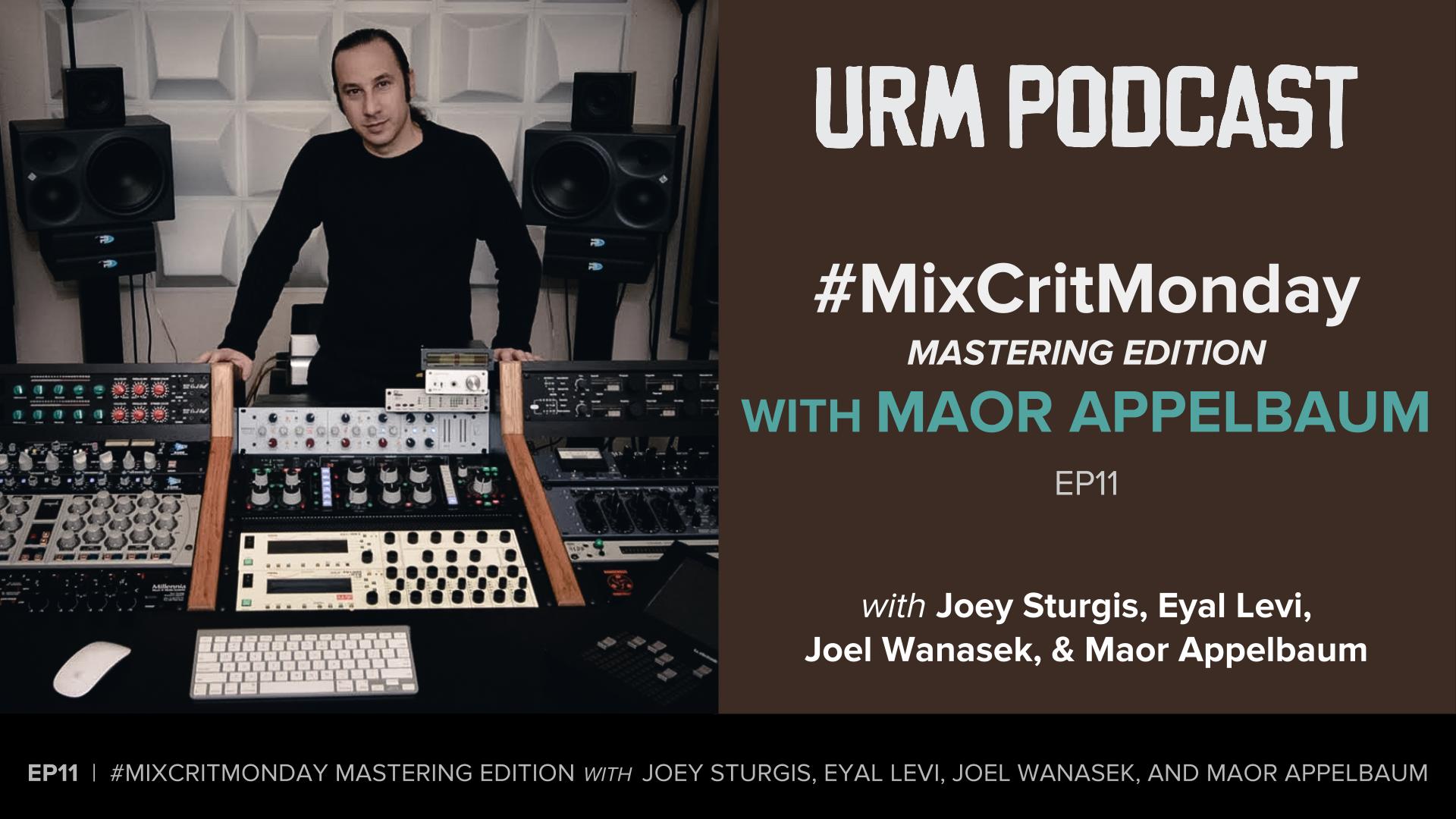
Maor Appelbaum is a mastering engineer known for his work across an incredibly diverse range of genres. His credits include major artists like Faith No More, Yes, Dokken, and Halford, as well as the cinematic rock band Starset. He’s handled everything from prog-rock and pop to R&B and death metal, famously mastering a prog-rock concept album for William Shatner that featured players like Steve Vai and Al Di Meola.
In This Episode
Mastering engineer Maor Appelbaum joins the guys for a special #MasteringCritMonday to break down three subscriber masters. This is a super practical look at identifying and fixing common issues at the final stage of production. Maor offers his unique perspective on problems like harsh high-end, explaining how he uses different converters—not just EQ—to tame sizzle without losing depth and ambience. The crew digs into diagnosing a floppy or overpowering low end, pinpointing specific frequencies that cause muddiness, and discussing how to handle triggered kicks that feel disconnected from the mix. They also get into workflow topics like prepping masters for vinyl, knowing when to call a mix engineer for revisions, and what a mastering engineer actually wants in a delivery. It’s a killer deep dive into the technical and philosophical approach of a pro mastering engineer.
Products Mentioned
Timestamps
- [2:19] Maor’s philosophy on gear: flow with what the recording needs
- [3:42] The right way to prep a master for vinyl (hint: let the cutting engineer do it)
- [5:22] Maor discusses his proprietary mastering process for overly slammed mixes
- [9:17] Critiquing the first master: harsh top end and boxy mids
- [11:51] A unique approach to taming harsh high-end without sacrificing depth
- [13:20] Using different converters to shape tone instead of just using EQ
- [16:19] How to tighten the low end of triggered kicks that feel delayed or sustained
- [17:58] The difference between loudness that has energy and loudness that feels “tamed”
- [19:48] The biggest challenge in mastering: making a track loud without it becoming fatiguing
- [20:42] The story behind the controversial Dååth master that was intentionally dynamic
- [24:15] Why bass can take over a mix during mastering and how to handle it
- [27:28] Pinpointing the low-mid frequencies (around 180 Hz) that make a mix feel muddy
- [29:22] How often a mastering engineer has to ask for mix revisions
- [34:11] What mastering engineers *actually* want from a mix delivery (instrument up/down versions?)
- [39:09] Diagnosing issues in a hip-hop master: painful treble and uncontrolled sub-bass
- [40:23] Using a low-pass filter around 40Hz to clean up a muddy sub
- [44:11] The story of mastering William Shatner’s prog-rock album
- [48:11] What causes that “pointy,” cheap-sounding EQ character on vocals?
- [50:47] Joking about the classic “smiley face” EQ curve