Eyal Levi, Author at Unstoppable Recording Machine - Page 30 of 33

JOSH NEWELL: Engineering for Linkin Park, Andy Wallace’s mixing secrets, and why pop is harder than metal

Josh Newell is an engineer and Pro Tools wizard who came up through the traditional studio system, interning at major LA studios like NRG. His big break came from being the reliable runner for Linkin Park, a gig that evolved into him becoming their go-to editor and additional engineer for multiple albums. He’s also worked on major pop records with artists like Avril Lavigne (produced by Nickelback’s Chad Kroeger) and has engineered for technically demanding metal bands like Cynic and Intronaut.

In This Episode

Josh Newell joins the guys to share his unique story of climbing the ladder in the old-school LA studio world. He breaks down how simply being reliable and not messing up a food order led to a career with Linkin Park, and gets into the insane level of organization required to track a band that books three studios at once. Josh shares some killer stories from the trenches, including what it was like to watch the legendary Andy Wallace mix a record—spoiler: it’s all about subtle fader rides and having incredible ears, not a rack of secret-weapon gear. He also offers a reality check on major label pop production, detailing the year-and-a-half-long sessions, endless songwriting, and meticulous vocal editing that went into an Avril Lavigne album. This episode is a deep dive into the mindset, work ethic, and production differences between the worlds of stadium rock, pop, and technical metal.

Products Mentioned

Timestamps

  • [13:29] Josh Newell’s traditional path into the industry: school and interning
  • [16:40] The story of how not messing up Linkin Park’s food orders led to a career
  • [20:29] Why established producers are always looking for reliable people to help them
  • [23:17] How Linkin Park organizes recording sessions across multiple studios
  • [24:49] The old-school method: using binders to document every guitar tone and setting
  • [28:50] What it was like working with iconic mixer Andy Wallace
  • [30:38] Andy Wallace’s simple gear setup and “in the board” mixing style
  • [32:22] The secret to Andy Wallace’s mixes: tons of micro fader rides
  • [35:26] Working with Chad Kroeger (Nickelback) on an Avril Lavigne record
  • [37:27] Why even the biggest artists use outside producers for perspective
  • [38:45] Producer Jon Brion’s incredible ears: identifying a specific tweeter model by sound from 7 years ago
  • [44:33] The reality of pop production: why it’s often harder than metal
  • [45:10] The long timelines and high song counts of a major label pop record
  • [52:12] The meticulous process of pop vocals and building parts from individual takes
  • [53:29] The constant search for a “gimmick” in pop production
  • [1:00:56] Approaching Cynic’s drum recording like a jazz record with no click track
  • [1:02:11] Intronaut’s plan to record their next album live in just a few days
  • [1:06:45] The painstaking process of “Frankensteining” a vocal performance
  • [1:10:26] The power of artist psychology: building a fake stage in the studio for a singer
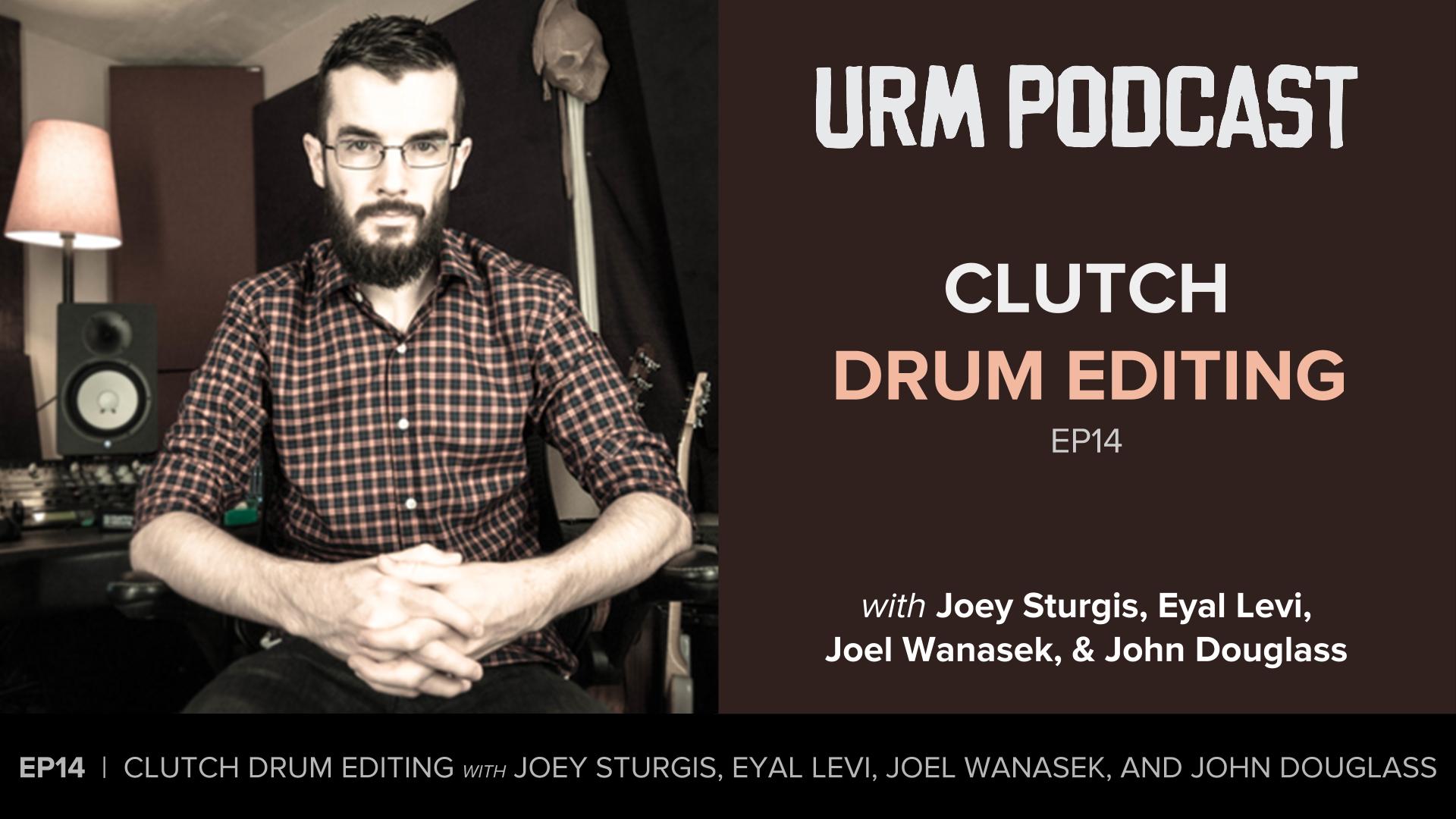
John Douglass: Mastering Drum Editing, Getting Hired by Producers, and Lightning-Fast Workflows

John Douglass is a versatile engineer, mixer, and producer who has built a solid career in both the metal and commercial music worlds. He’s been the go-to editor for numerous Audiohammer releases and has worked on records for bands like Job For A Cowboy, The Contortionist, Battlecross, and Cryptopsy. Beyond metal, John engineers at a major commercial studio in Atlanta, lending his skills to sessions with artists like Katy Perry, Nelly, and Rick Ross.

In This Episode

Engineer and editor John Douglass joins the podcast for a serious nerd-out on the art of drum editing. He explains how his computer science background gives him a unique, logic-based advantage when tackling complex editing tasks and shares how becoming a “ninja” editor is one of the best ways to get hired by top-tier producers. The guys get into the nitty-gritty of different workflows, comparing the strengths of Pro Tools and Cubase for drum editing, and John details how he uses macro tools like Quick Keys to build a lightning-fast, customized system. They also dig into the great debate of quantizing vs. feel, discussing why modern metal often demands grid-perfect timing and when it’s better to let a great performance breathe. From salvaging poorly recorded tracks to time-aligning mics and triggering samples, this episode is packed with pro tips for anyone looking to level up their editing game.

Products Mentioned

Timestamps

  • [08:05] The philosophy behind quantizing drums in heavy music
  • [15:08] Why John went to school for Computer Science instead of audio engineering
  • [16:54] How a computer science background provides a logical edge in editing
  • [20:22] Why being a great editor is the #1 way to get hired by a bigger producer
  • [24:46] Using macros and custom key commands (Quick Keys) to speed up workflow
  • [26:25] Examples of custom macros for deleting fades and naming tracks
  • [31:30] Comparing drum editing techniques in Pro Tools (Beat Detective) vs. Cubase (slip editing)
  • [37:12] The common pitfalls and limitations of drum editing in Logic Pro
  • [40:40] John’s process for salvaging a poorly recorded drum performance
  • [45:19] Best practices during tracking to make editing easier later on
  • [49:54] Pro tips for setting crossfade lengths on different instruments
  • [54:42] Using Massey DRT to trigger MIDI and how to align it perfectly
  • [55:52] The technical advantage of Cubase’s inter-sample accuracy vs. Pro Tools
  • [58:06] The debate: should you time-align room and overhead mics?
  • [01:07:01] Why modern metal drums are so often heavily grid-edited
  • [01:12:32] Real-world advice on how to get hired as an assistant or editor
  • [01:25:07] Debunking the “crap in, crap out” mantra in a professional context
  • [01:28:10] Knowing when it’s faster to edit than to get another performance

Finn McKenty: Giving Away Your Secrets, Mastering the Fundamentals, and Effective Marketing

Finn McKenty is a marketing executive and creative who runs the audio channel at Creative Live, where he works with a huge range of top-tier producers. Before that, he honed his marketing chops for major brands like PNG and Hollister. Many in the metal scene also know him by his satirical writing alter-ego, Sergeant D, a staple on sites like MetalSucks.net. He brings a unique perspective that combines a deep understanding of the music production world with a sharp mind for marketing and brand building.

In This Episode

Finn McKenty stops by to drop some serious knowledge on what it takes to build a career in today’s crowded production landscape. Having worked with a who’s who of modern producers at Creative Live, Finn shares his biggest takeaway: there are no magic bullets or secret plugins, just a relentless pursuit of perfection and a mastery of the fundamentals. The guys get into the crucial topic of developing a unique point of view, exploring how life experience and listening to music outside your comfort zone are what truly shape your creative voice. They also tackle the business side of things, offering practical advice on how to market yourself effectively without coming off like a desperate spammer. Finn breaks down why giving away your “secrets” actually makes you more valuable and offers a no-BS take on how to actually win at Facebook marketing by understanding what the platform is really looking for.

Products Mentioned

Timestamps

  • [9:24] Finn’s work with the Decibel electronic music festival
  • [11:53] The importance of credibility and being part of a music community
  • [13:13] The crossover between metal/hardcore and electronic music
  • [15:46] The biggest lesson from working with top-tier producers: there are no secrets
  • [17:38] The real difference between pros and amateurs is mastering the fundamentals
  • [21:30] Objective vs. subjective: Your vision is subjective, but the path to get there can be objective
  • [25:42] The core songwriting principle of “tension and release”
  • [26:45] Avoiding “riff salad” in metal songwriting
  • [31:31] Why classic metal bands are so good (it’s songwriting, not just riffs)
  • [33:46] Why listening to other genres makes you a better creator
  • [36:57] Standing out in today’s oversaturated production market
  • [39:49] Having a unique point of view (e.g., Joey Sturgis vs. Kurt Ballou)
  • [42:51] How to develop your point of view (hint: it’s not just about sitting in the studio)
  • [50:13] A look back at the unique and polarizing first Attack Attack! album
  • [58:03] Why most producers are reluctant to promote themselves (and why they shouldn’t be)
  • [59:31] The importance of your online “calling card” (aka your website/discography)
  • [1:00:52] Why giving away your “secrets” actually increases your value
  • [1:05:31] How to actually succeed with Facebook marketing
  • [1:08:22] Product-market fit: Is it possible that your band/mixes just… suck?

JOEY STURGIS: Mastering Philosophy, Fixing Harsh Mixes, The Limiting vs. Clipping Debate

As a producer, mixer, and mastering engineer, Joey Sturgis was instrumental in shaping the sound of 2000s and 2010s metalcore, working with scene-defining artists like The Devil Wears Prada, Asking Alexandria, Of Mice & Men, and We Came As Romans. He is also the founder of Joey Sturgis Tones, a company that develops popular audio plugins tailored for heavy music production.

In This Episode

Joey Sturgis joins fellow hosts Eyal Levi and Joel Wanasek for a tips and tricks episode focused entirely on the art of mastering. He breaks down his in-the-box workflow, explaining why recallability is king in the modern era. Joey gets into the weeds on his philosophy, separating the core “90%” of mastering (mix bus compression and EQ) from the subtle “5-10%” details like saturation and harmonic excitement. He offers some killer, practical advice on when to use linear phase EQ for broad, tasteful adjustments versus a standard EQ for surgical problem-solving—like taming the dreaded 4kHz harshness that plagues so many amateur mixes. He also covers his strategies for using multi-band compression to fix common issues, the great limiting vs. clipping debate, and what to do when a client sends you a mix that’s already slammed into a brick wall. It’s a deep dive into the technical and creative decisions that take a mix from good to great.

Products Mentioned

Timestamps

  • [1:45] Why Joey prefers mastering in the box
  • [2:38] The importance of recallability in mastering
  • [4:15] Using frequency-adding plugins like MaxxBass
  • [4:52] Defining the “5-10%” of mastering (saturation, spatial treatment)
  • [6:01] The “90%” of mastering: Mix bus compression and EQ
  • [6:36] When to use linear phase EQ vs. normal EQ
  • [7:41] Using standard parametric EQ for surgical strikes
  • [8:15] Why the 4kHz range is a common problem in modern mixes
  • [9:30] Fixing a loose mix with linear phase multi-band compression
  • [10:48] The limiting vs. clipping debate in the final stage
  • [12:20] How clipping drums in stages eliminates the need to clip the master bus
  • [13:37] Common problems in mixes: de-essing and harsh cymbals
  • [15:56] Knowing when to tell a client to remix a track
  • [17:54] A simple, practical approach to M/S processing
  • [19:04] Have we finally reached the end of the loudness war?
  • [21:50] The fundamental purpose of mastering: making music consumable
  • [25:35] How to handle a mix that’s already slammed with limiting
  • [27:22] The importance of communication between mixer and mastering engineer
  • [28:38] What is the “Mastered for iTunes” program?
  • [31:23] Why you should provide high-resolution files to future-proof a release

BOB KATZ: The New Loudness War, Automated Mastering, and Why You Only Need One Pair of Monitors

Bob Katz is a highly respected mastering engineer and the author of the industry-standard book “Mastering Audio: The Art and the Science.” Known for his advocacy of dynamic, high-fidelity sound, he is the creator of the K-System metering protocol, designed to help engineers avoid the pitfalls of the loudness war. His work spans numerous genres, with a focus on creating masters that translate beautifully across all playback systems.

In This Episode

Mastering engineer Bob Katz joins the podcast for a wide-ranging discussion on the state of modern audio. The conversation kicks off with the decline in sonic standards, even on major label releases, and the challenges posed by inexperienced artists making critical mix decisions. Bob makes a strong case for investing in a single, highly accurate monitoring system and treating your room, arguing that it’s the only way to make decisions you can truly trust. He then breaks down the current state of the loudness war, explaining how streaming services like YouTube and Apple Music use LUFS normalization. You’ll learn why their different target levels create a new set of problems and why “dynamic is the new loud.” The guys also get into advanced mastering techniques, including when it’s appropriate to ask for stems, the subtle art of MS processing, and why automated services like LANDR will never replace a real engineer.

Products Mentioned

Timestamps

  • [3:53] Why even top-charting albums can have major sonic flaws
  • [9:42] The “NS-10 Phenomenon” and how it led to bass-heavy mixes
  • [11:36] Speaker recommendations for a neutral, trustworthy mixing environment
  • [13:20] The minimum budget for a pro monitoring setup that translates
  • [15:31] Bob’s argument against using multiple sets of reference monitors
  • [20:08] What makes a mastering engineer great? Translation.
  • [23:27] Why Joey mixes hard rock on small monitors with no subwoofer
  • [26:15] Bob predicts how a $6,000 monitor upgrade would improve Joey’s workflow
  • [35:27] When is it appropriate to ask a client for stems?
  • [36:29] The challenges of mastering modern metal with ultra-low drop tunings
  • [40:52] The thought process behind a heavy-handed vs. a light-touch approach
  • [42:46] If you always EQ the same frequencies, your monitors are probably lying to you
  • [44:27] The relationship between distortion, saturation, and compression
  • [46:38] The current state of the loudness war and LUFS normalization
  • [48:20] Why YouTube’s -13 LUFS target level is creating a new loudness war
  • [54:41] What does the “Mastered for iTunes” certification actually mean?
  • [1:05:51] Bob’s unfiltered opinion on automated mastering services like LANDR
  • [1:12:16] Using MS processing to enhance a weak kick, snare, or vocal in a stereo mix