Eyal Levi, Author at Unstoppable Recording Machine - Page 29 of 33

5 Reasons You Suck As A Producer

5 Reasons You Suck As A Producer – By Joey Sturgis

Have you ever stopped and wondered why getting clients is so hard? What about getting bands to keep working with you for consecutive albums, or even consecutive songs? Unfortunately, the root of your problems might be you…  Luckily, it’s not too late to fix that.

Stop shooting yourself in the foot! Here we go:

1. You Complain About Your Clients

This should seem simple to most of us, and it’s summed up best with the saying, “You don’t bite the hand that feeds.” Simply put – quit bitching about the artist and refocus on the art.

As a producer, you’re paid to do a job. Whether that income is upfront payment from an artist or a royalties cut on the backend, your livelihood comes from your ability to curate your clients’ music. They don’t need to be your friend, and there’s certainly plenty of competition out there for the role of producer these days.

(RELATED – Kurt Ballou (Converge, Champion, Have Heart) does a great job explaining how he treat his clients right and keeps them coming back.)

Have you ever worked a shitty job in retail or food service? Well as much as you probably don’t want to hear it – some of those skills should be applied to your role as producer.

The music industry is just as much as a service industry as any other. Your ability to provide good customer service and get the end result right for your client directly translates to how successful you will be.

2. You’re Inconsistent

I’m not talking about the quality of the songs you’re recording… I’m talking about YOU.

You need to develop good habits in your production. Turning things in late, putting off projects, and not showing up on time shows a lack of respect for your artist’s time & work.

How likely would you be to continue working with someone who you can’t rely on?

On a personal level, you should strive to make deadlines and stick to them. Timeliness forms successful habits. Before you know it, you’ll find your workflow benefiting from this behavior too. Instead of living in a world of “what if’s” you’ll be able to commit to a decision with rock solid consistency.

Being consistent will make or break your career in this industry.

(RELATED – Check out our podcast with Josh Newell (Linkin Park, Cynic, Celine Dion), whose admirable work ethic in the LA production scene has allowed him to work with heavy hitters in both metal & pop.)

3. Your Communication Sucks

This doesn’t have anything to do with scheduling your appointments or ignoring text/phone calls. Your communication in the studio has to be crystal clear if you’re planning on succeeding.

Think about what musicians are telling you. Ask for clarification when an artist has a concern. Too often, you’re brushing off their input since you’re supposed to be the expert in the room, but you should be trying to get to the root of the problem.

You need to read between the lines.

Your artists may not know the technical terms that you do, and at times they may not know what they even want. It’s your job to become a musical translator, just like we covered in Episode 2 of the URM Podcast.

The simplest issue for this is when a singer lacks confidence in their vocal ability. They may tell you their voice is too soft or they just can’t nail a verse down. Instead of writing them off as an idiot and tracking again and again until you get something mediocre “that will work”, seek alternate solutions.

It may be something as simple as muting some instrumentation so the vocalist can hear themselves in the mix better. Maybe they’re feeling uncomfortable with a dry vocal and just need a bit of reverb added on.

Learn the psychology behind common concerns in the studio, and translate them into a solution.

4. You Don’t Have a Vision

Stop spending so much time on a single piece of the puzzle. Too often, you can’t see the forest for the trees… and it’s killing your productivity. If you spend too much time working on an element, regardless of if it’s cleaning noise out of tracks, tuning a vocal, or dialing in a tone too long, you’re going to hate your work.

Instead, take a step back to examine the entire project, and how what you’re working on fits into it. You don’t need to ignore that piece altogether, but it does help to ask yourself, “Do I really need to commit all of this effort?”

If the answer is no, get it to an acceptable point and center your energy around something that’s going to make or break the song. By working with the big picture in mind, you’re able to create something cohesive and meaningful without overanalyzing or wasting your time.

(RELATED – Finn McKenty does an excellent job explaining how to find your vision in his post, “Want a career in music? You need a point of view.”)

5. You Try to Do Everything Yourself

Slow down, Superman.

Early on in your career, it’s common to try and do it all yourself. Who needs sleep when you’ve got so much great music to work on? The problem is you burn out. You realize that you can’t do it all. You don’t have to… There’s a reason the big guys all have assistants – there’s not enough time in the day.

As much as you love your work, there are other hobbies and people you should spend time with. You might be great at everything you do from drum editing to tuning vocals and dialing in the perfect guitar tone, but you should learn when to let some of that go.

You need to develop trust with those around you, and the easiest way to do that is to remember that you’re all sharing the same goal – to make great music. Find the things in projects that you don’t like doing, and find someone to do it better.

There are guys out there that build their careers off of working on the parts you don’t want to. Just look at John Douglass, who went from bedroom producing to working with the biggest artists in pop and metal by becoming an expert at drum editing.

He found his niche, have you found yours?

Delegating your work is a freeing experience. It not only gives you more time to focus on what you love, but it also keeps your mind sharp and creative.

Putting This All Into Practice

While you may not be affected by all 5 of the above, there isn’t a producer on the planet that couldn’t improve on at least one. Sure, it can feel overwhelming. But you’re off to the right start by taking an honest look at your faults and working toward a solution.

Take a quick look over the list again and choose whichever one you feel applies to you the most. If you feel pretty confident in your skills already & are seeing a steady workload, maybe it’s time to find someone to help (see #5).  

The point is – we can all stand to improve somewhere & we’re here to help you any way we can.


For more awesome tips on becoming a better producer, head on over to the URM Academy blog and subscribe to our podcast.

Nail The MixNail The Mix is our online mixing school that gives you REAL multi-tracks from REAL bands, plus a mixing class from the producer who recorded it. Past guests include Periphery, Chelsea Grin, Machine Head and State Champs. Join now for instant access!

KURT BALLOU: Capturing Real Performances, Committing to Sounds, The Problem with Re-amping

As the guitarist and a founding member of the influential metalcore band Converge, Kurt Ballou has a unique perspective on heavy music. From his GodCity Studio in Salem, Massachusetts, he’s produced and engineered a massive catalog of groundbreaking and sonically distinct records. His work spans genres and includes seminal albums for bands like High on Fire, Torche, Nails, and Four Year Strong. Kurt is known for an organic, performance-focused approach that emphasizes raw energy and capturing a band’s unique character, often favoring analog gear and committing to sounds early in the process.

In This Episode

Kurt Ballou joins the podcast to get real about his production philosophy, which was forged in the DIY hardcore scene and refined over decades of making records. He breaks down why he believes in capturing real performances, committing to sounds on the way in, and the importance of player interaction with their amp—and why he’s still skeptical about re-amping. Kurt gets into the nitty-gritty of guitar prep, explaining why a proper setup is non-negotiable for a great recording. He also shares his approach to blending amps, using surgical EQ to tame fizz without losing presence, and the crucial psychology behind earning a band’s trust to get the best possible take. This is a deep dive into an old-school mindset that’s more relevant than ever in the modern metal landscape.

Products Mentioned

Timestamps

  • [9:02] Kurt’s DIY origins with his band Converge
  • [12:38] His philosophy: if the artist can’t play it, you shouldn’t be recording it (with nuance)
  • [14:14] The benefits (and curses) of learning to record on tape and four-tracks
  • [15:31] The importance of committing to sounds and avoiding “analysis paralysis”
  • [17:29] Why he generally dislikes re-amping and prioritizes player/amp interaction
  • [26:24] How the DIY ethic has shifted from analog tape to digital tools and virtual instruments
  • [33:06] Recording High on Fire live in the room with tons of bleed
  • [34:43] The unique challenge of double-tracking Matt Pike’s insane vibrato
  • [40:30] How to approach a band’s tone when you don’t agree with it
  • [47:09] The psychology of production: pulling ideas from shy band members
  • [48:33] Why building trust is the key to getting a great performance
  • [50:09] The danger of producers getting involved too late in the songwriting process
  • [53:59] Kurt’s approach to surgical EQ on guitars (and notching out sizzle)
  • [57:29] Using panning and effects to create space between vocals and guitars
  • [1:00:48] Kurt’s pre-recording checklist for guitars
  • [1:02:06] The critical importance of a proper guitar setup (intonation, nut height, etc.)
  • [1:16:17] Kurt’s philosophy and techniques for blending multiple amps
  • [1:26:24] The most important thing that improved his guitar mixing over time

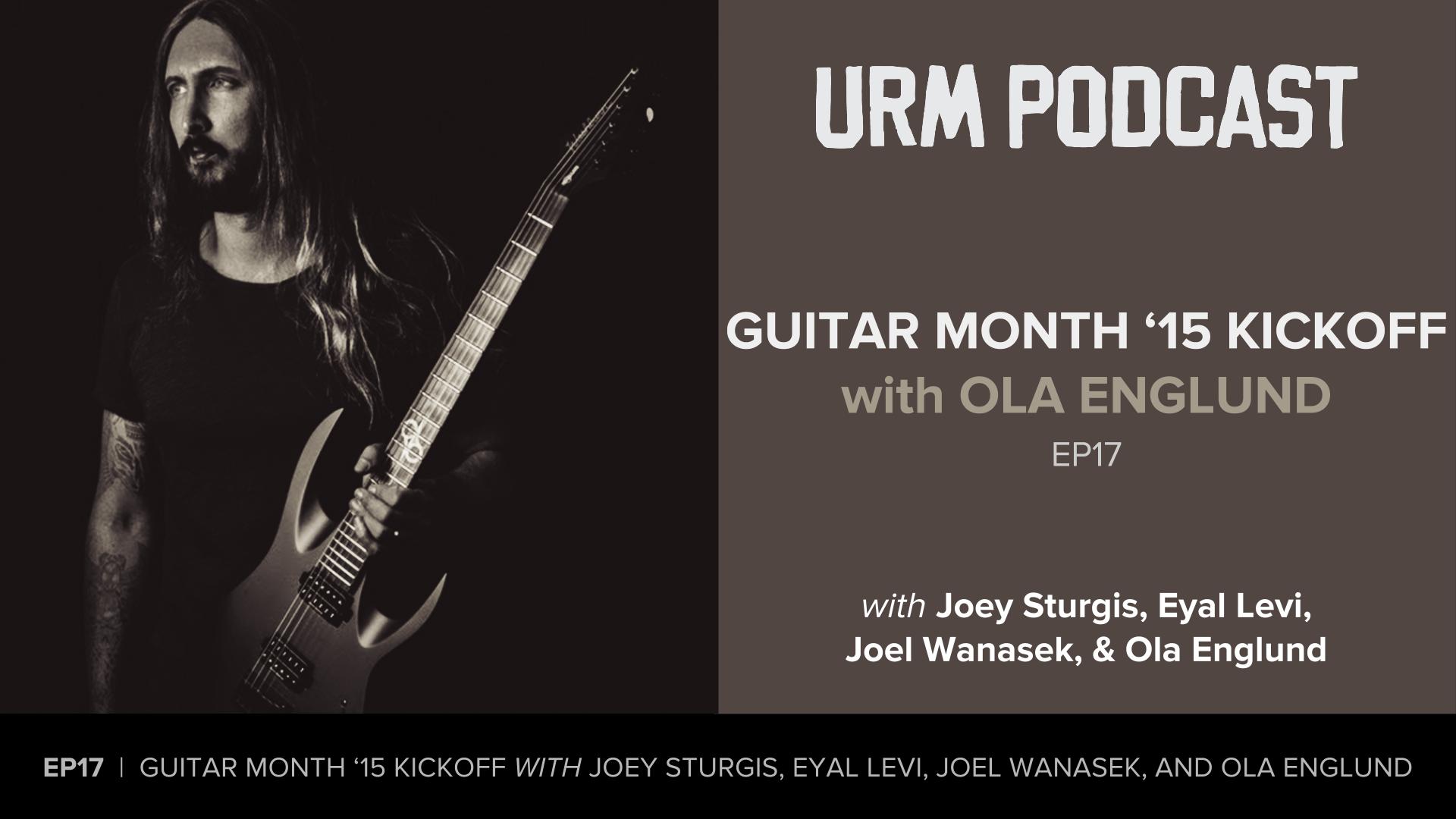
OLA ENGLUND: The Secret to Sweden’s Metal Scene, Using Cheap Guitars, and Simple Home Recording

Ola Englund is a Swedish guitarist, producer, and a prominent figure in the online gear community. He’s widely known for his influential YouTube channel, where he demos high-gain amps and guitars with a signature playing style. As a musician, he’s played rhythm guitar for the death metal band Six Feet Under and is a member of the iconic melodic death metal group The Haunted. He also fronts his own project, Feared.

In This Episode

Ola Englund hangs out to chat about his journey from accountant to one of the most respected guitarists and gear gurus in metal. He shares his take on why Sweden produces so many killer musicians (spoiler: it involves long winters and government support) and gets real about balancing a family life with a demanding creative career. Ola breaks down his no-nonsense approach to gear, explaining why feel is more important than price and why he uses affordable guitars on tour. He discusses his simple but effective home recording setup, his one-mic technique for capturing massive guitar tones, and where amp sims fit into his workflow. It’s a deep dive into the practical mindset of a pro who built a career on passion, consistency, and the fundamental truth that killer tone starts in your hands, not your wallet.

Products Mentioned

Timestamps

  • [3:32] Why are Swedish musicians so good?
  • [4:15] The long winters and government subsidies that fuel the Swedish music scene
  • [13:40] How Ola balances family life with his many music projects
  • [15:06] The origin story of his YouTube channel: passion, borrowed amps, and an accounting day job
  • [18:40] How he taught himself video production through trial and error
  • [20:34] How his YouTube videos led to gigs with Six Feet Under and The Haunted
  • [21:53] What he looks for in a quality guitar (it’s all about the initial feel)
  • [24:35] Why he plays cheaper guitars on tour
  • [27:22] Dealing with the “curse” of having a signature sound
  • [30:16] The experiment with Keith Merrow that proved tone is in the hands
  • [33:56] Ola’s non-ritualistic approach to recording guitar at home
  • [42:20] His process for learning a new band’s material (listen first, play later)
  • [47:44] A breakdown of his home recording rig
  • [48:36] Why he switched from Genelec to Behringer monitors
  • [51:07] Ola’s simple, one-mic approach to miking guitar cabs
  • [57:50] Real amps vs. amp sims: where each fits in his workflow
  • [1:05:20] The key pieces of his re-amping setup: Apogee and the Torpedo Reload
  • [1:08:18] Why he’s a big fan of Logic’s stock plugins
  • [1:11:28] The importance of video content for standing out in an oversaturated market

Band Practice Is Toxic To Creativity

Band Practice Is Toxic To Creativity – By Jesse Cannon

One of the most common creative tools for the novice leader of a creative team is the brainstorming session, which is structured nearly identical to most musician’s band practice. The idea being if everyone sits around and spitballs ideas, some greater good will come of it and the creative decision at hand will be solved by the group, since after all a few heads are better than one. Right?

The concept of brainstorming was invented by Alex Osborn of famous ad firm BBDOHe’s thought to be one of the inspirations for the character Don Draper on Mad Men. He popularized the idea of brainstorming in a series of business books he wrote through the 50s. While you could point to years of creativity that occurred that followed his book’s lead as evidence of how great this idea works, the first rule he outlines for brainstorming seems to have been lost on nearly every one of the hundreds of bands I have ever attended a session of. This rule was that you aren’t allowed to criticize the ideas of others in the group.

Disobeying that rule has led to the toxic environments of latent resentment present in nearly every band I know that’s made more than one record. Osborn said that if the members of group feared negative feedback and ridicule the sessions would fail. Anyone who has been to a band practice knows members are commonly reduced to having “stupid ideas” or even worse “ideas that never work” etc. While I do believe jibing and friendly teasing to be key to a great environment, when it comes to discounting creative instincts, a boundary needs to be created in order to make better art. But this balance is delicate, so delicate that Osborn called it a delicate flower, whereas most bands treat their creative brainstorming session like a food fight.

While many musicians have a short temper for trying many ideas, Osborn found the best results came from allowing people to think of the absurd and not being afraid to share the dumbest or most adventurous ideas. Quantity should come first and then through evaluation quality will come as a result.

Most successful creators have come to learn there’s no shame in throwing out a bad idea, it’s part of the process. An environment is established where it is known people will have bad ideas and that’s the only way to get to the good ideas. You come to learn that, unless you have a few bad ideas, you can’t be sure that your final idea is the best one.

Dissent and discussion are helpful and every study on the subject shows that dissent can help come up with better answers, so hating that your bassist doesn’t always love your ideas can be the reason you make good songs. But that’s not to be mistaken with just saying “no” makes better products. Figuring out how to augment the good and identifying it is just as important as saying no. The balance lies in experimenting but in the end trusting your gut to make sure you made the right decision, even if your original idea is what you stick with, it has at least been thoroughly vetted.

Even if your band practice is a positive environment that would make the happiest of hippie kindergarten teacher give you a gold star, band practice is still not the optimal place for creativity to occur. Keith Sawyer a psychologist at Washington University, talks about decades of studies that show brainstorming results in a worse creative result. Instead the best creative outcomes come when the individuals work alone and later pool their ideas. This is why over the years a common trend in the great acts are a single songwriter writing the skeleton of a song on their own and then bringing it to the group to vet, dissect and ultimately bring to greater good.

While I know most of our favorite songs were birthed in band practice sessions, this doesn’t mean we can’t reach greater heights by learning from this concept. People will always defend the status quo, but learning to not have a demeaning creative environment and that it is good to take your creative contributions out of the practice room to develop can most likely help many musicians get to a much better creative place.


Jesse Cannon is a Brooklyn based record producer, mixer and mastering engineer. He is co-founder of Noise Creators a service that connects musicians to the best producers in music today. He is the author of Get More Fans: The DIY Guide To The New Music Business and the upcoming Processing Creativity.

Click here and listen to Jesse’s guest URM Podcast episode where we discuss strategies upcoming audio engineers can use to promote themselves, and lots of juicy mastering tips.

Nail The MixNail The Mix is our online mixing school that gives you REAL multi-tracks from REAL bands, plus a mixing class from the producer who recorded it. Past guests include Periphery, Chelsea Grin, Machine Head and State Champs. Join now for instant access!

JOEY STURGIS, JOEL WANASEK, & EYAL LEVI: Heavy Drum Mixing, The Molting Technique, and Taming Cymbals

This episode features URM founders and hosts Joey Sturgis (The Devil Wears Prada, Asking Alexandria), Joel Wanasek (Machine Head, Blessthefall), and Eyal Levi (The Black Dahlia Murder, August Burns Red). As pioneers of the modern metal sound and the minds behind URM Academy and Nail The Mix, they’ve collectively shaped the sound of countless influential records and have dedicated their careers to educating the next generation of metal producers.

In This Episode

Joey Sturgis, Joel Wanasek, and Eyal Levi get into the weeds on one of the most challenging parts of any heavy mix: the drums. They kick things off by discussing why drums are so tough to get right, from the fatiguing nature of high-frequency content to the difficulty of balancing low-end punch when the rest of the mix comes in. The guys share some killer, practical techniques for creating space and impact, like how to manage the critical relationship between the kick and bass using side-chain compression and automated EQ. They also detail the “molting” technique—creating duplicate tracks with different processing for different sections of a song—to ensure your drum sound works everywhere from slow breakdowns to insane blast beats. You’ll hear their thoughts on compression (including why they often skip parallel compression), how to get toms to cut through without adding a wash of cymbal bleed, and a clever trick for using a limiter to tame snare hits in the overheads. This is a super-focused session on the nitty-gritty of crafting a powerful, modern drum mix.

Products Mentioned

Timestamps

  • [1:43] Why mixing drums is more fatiguing than other instruments
  • [4:22] The “sneezing sack of cardboard” problem with snare drums
  • [6:05] Why the kick drum can single-handedly make or break a mix
  • [6:35] A drum sound comes from many sources, not just the close mics
  • [8:20] A 300-millisecond rule for cleaning up tom bleed
  • [9:31] Using multi-band side-chain compression to carve space for the kick drum
  • [11:00] Automating a high-pass filter on kicks for faster parts
  • [12:01] “Molting”: Using duplicate tracks with different processing for different sections
  • [15:12] Creating alternate drum mixes for blast beats vs. breakdowns
  • [16:53] Why 50-60% of your snare sound should come from overheads and rooms
  • [18:30] An EQ automation trick to get tom attack without cymbal bleed
  • [21:24] The hosts’ candid thoughts on parallel drum compression
  • [24:55] Snare compression settings: Using low ratios with high input gain
  • [26:04] The power of staged compression vs. smashing a single compressor
  • [29:17] Using a clipper plugin on toms for aggression and punch
  • [33:11] The “piano key” approach to EQing toms for maximum clarity
  • [37:38] A step-by-step process for bringing room mics into the mix
  • [40:05] Identifying the three main problem frequency areas in cymbals
  • [41:30] The “snare destroyer” trick: Using a limiter *before* a compressor on overheads