Make Your Recording 50% Better With These 5 Tips (Part 2)
Read Part 1 Here
There are so many different elements that go into making a good recording that we can often forget the importance of getting the fundamental basics right. Here are 5 important back-to-basic things to think about or reconsider before you dive head-first into your next recording session.
Tip #1: Tone Not Working? Move the Microphone / Change the IR!
You’ve spent years obsessing over the “magic” guitar EQ settings of metal production legends such as Andy Sneap, Colin Richardson, Kevin Churko and Joey Sturgis.
If only you could “Get your hands on their secrets…”
Well, I’m sorry to be the one break it to you but…
I’d be willing to bet that the EQ settings these guys use in the mix actually play a pretty insignificant role in the overall tone-shaping picture and that the real secret behind their tones lie in various key decisions they make during the recording stage.
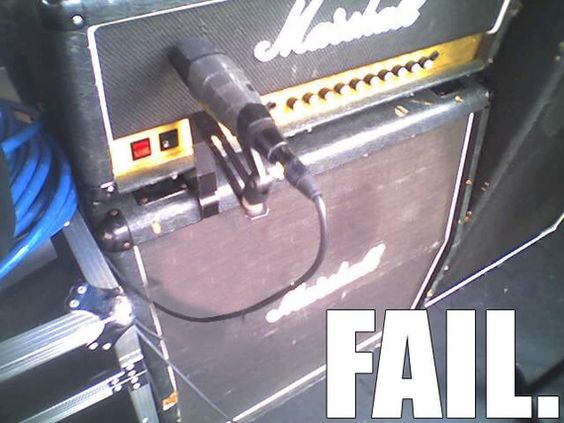
One of the main contributors towards capturing a great guitar tone that’s %90 of the way there from the get go is good microphone placement. But don’t just take my word for it:
Here are some quotes from the pros on the importance of getting the mic’ing right at the source during recording:
COLIN RICHARDSON (Interview On Recording Rise to Remain) – “We messed about for a day finding the right mic positions and I was determined not to use any EQ – we use the tone controls on the amp.”
http://www.musicradar.com/news/guitars/interview-metal-production-guru-colin-richardson-400260
KEVIN CHURKO (On Recording Guitars For Ozzy Osbourne ) – “There’s probably less of a secret than what people think… Those records were recorded with an sm57 through a Neve preamp, I don’t even think I was tweaking the EQ! You just have to move the mic until it sounds right.”
Multi Juno Award-winning producer/engineer Kevin Churko is at the top of his ‘rock/metal’ genre. His career kicked started with Ozzy Osbourne’s Black Rain album, and more recently he’s been producing bands like Papa Roach, Five Finger Death Punch and In This Moment.
ANDY SNEAP (On Mic Placement) – “Kids on the forums now are like “It’s gotta be this piece of kit”, well actually if you move the mic slightly you might get a little bit more of what you’re after!”
Rock producer and mix legend Andy Sneap talks on camera with George Shilling at Andy’s private studio in Derbyshire, UK. Visit http://www.RecordProduction.com for 500 more producer and studio features.
Feel inspired to up your guitar recording game after reading these quotes? I’ll probably do a full-blown written guitar recording guide at some point in the near future, but for the meantime, check out these killer video examples and guides for tips on how get the most out of your speaker cabinets:
1- Glenn Fricker – How To Record Heavy Guitar & Dynamount Examples:
Want to learn how to mic up your amp and get a heavy tone? Start here! Gear used in this video: Peavey 6505: https://imp.i114863.net/6rY0E Shure SM57: https://imp.i114863.net/jkzY5 Mesa Rectifier Cabinet: https://imp.i114863.net/KnMrv (Sweetwater Links) Shure SM 57: http://bit.ly/2AxLpXF Peavey 6505 (successor to the 5150) http://bit.ly/2nLu7wZ Harley Benton 4X12: http://bit.ly/2BWrtK6 More recording tutorials!
Get the Dynamount here! https://www.thomann.de/intl/ca/dynamount_x1_r.htm?offid=1&affid=200 In today’s episode on Spectre Sound Studios I’ll be taking a close look at the Dynamout robotic mic stand! Subscribe for more! http://bit.ly/1SfU1m4 My unit, the X1-R retails for $749 US at vintageking.com. Prices range from $299-749 depending on the model.
Part FOUR of the “How to Record Heavy Guitar” series! Taking a look at the finer points of Mic Placement & just how critical it is to achieving a great guitar sound! Check below for the gear I discussed in today’s episode. Subscribe for more!
2 – Ross Hogarth & Royer Microphones – Recording Electric Guitar:
Grammy Award winning Producer/Engineer Ross Hogarth explains how to record electric guitar. He explains in detail his critical microphone positioning technique when using a Royer R-121 and Shure SM57 on a guitar cab. He includes how to avoid phasing and where to place the microphone in relationship to the cone.
3 – metalrecording.com – Mic Placement for Metal Guitar
No Description
Tip #2: Mixing Isn’t Maths – Change It Up A Bit
It’s fairly easy to get caught in a “Formulaic Rut” of using the exact same piece of gear for a particular task on every project.
One of the main reasons behind this issue?
Often people will see their favorite engineers using specific plugins for specific tasks and instantly go and purchase them, expecting that these plugins are be-all-end-all key that’s been preventing them from unlocking the same results. The truth is, the engineer probably isn’t too fussed about which plugin he used, and would be able to dial in that sound using pretty much anything…
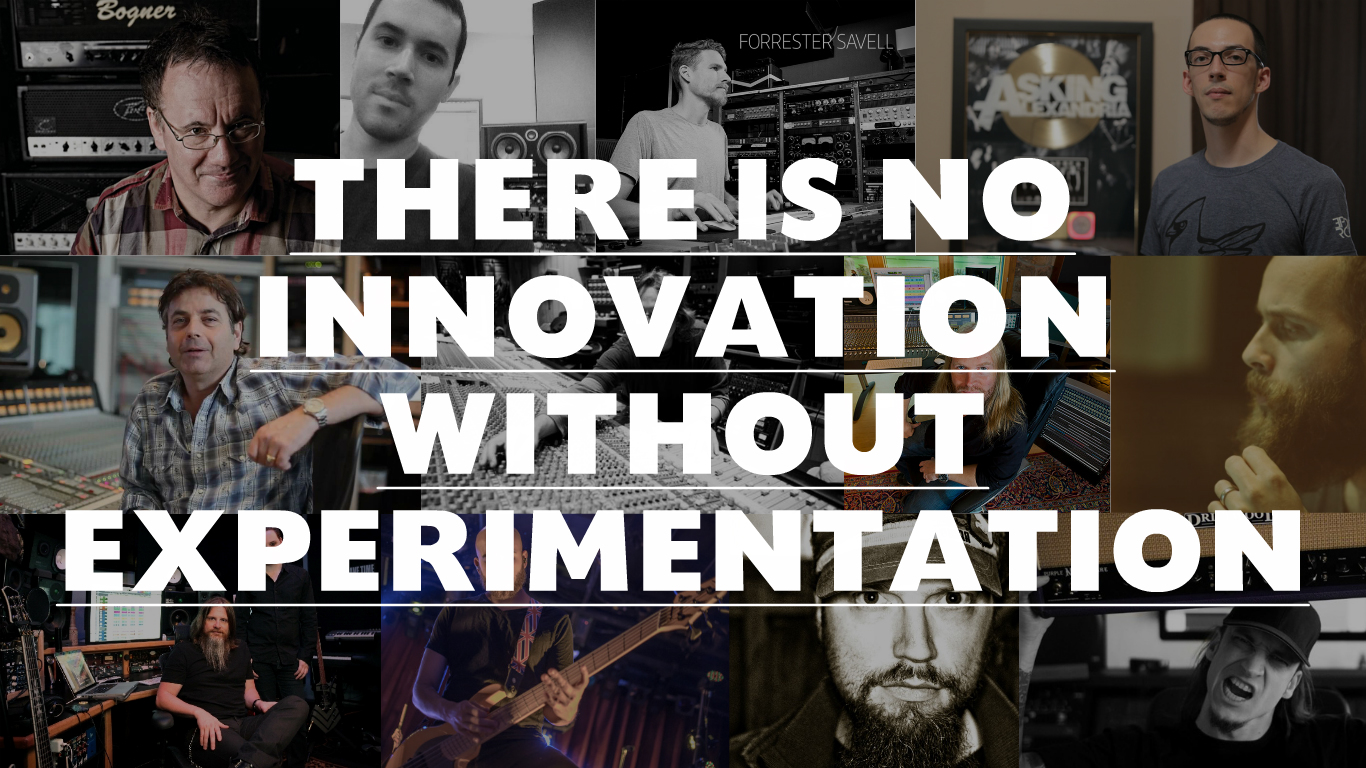
If you want definitive proof of this, then look no further than the two latest Nail The Mix sessions. Both Nolly and Kyle Black managed to achieve killer mixes in these sessions while experimenting heavily and using several plugins they were unfamiliar with throughout the process – https://nailthemix.com/
Watching these guys skillfully inject an element of their own unique musical tastes into their mixes, while also confidently following their gut instincts in every decision really goes to show how mixing is all about talent, not gear.
“It’s the ear that makes the engineer, not the gear.”
Tip #3: Stuck For Musical Ideas? Try Some Creative Effects…
As much as certain musical ideas can call for a specific sound, it can also work the other way around.
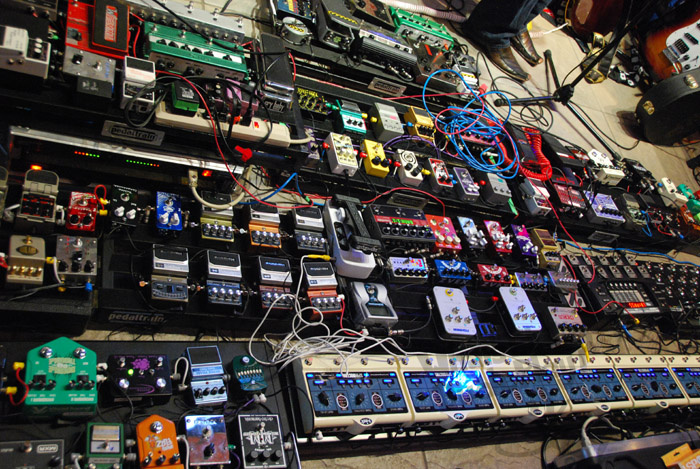
A lot of the iconic, effect-based riffs we’ve grown up listening to on our favorite albums were actually a result of the guitarists getting inspired to play a certain way as a reaction the FX pedals or specific tones they were messing around with.
Check out the examples below, would these riffs have been as successful without their signature effects?
1 – Van Halen – Unchained:
From their 1981 album, “Fair Warning”.
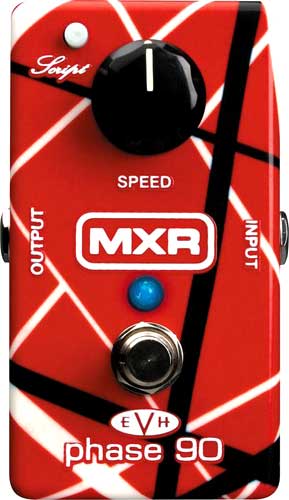
Eddie used an MXR Phase90 and EVH117 Flanger heavily on a lot of Van Halen’s biggest hits.
Eddie Van Halen on the “Unchained” Guitar Flange Effect – “It was a great sound, and it worked. There wasn’t any rocket science to it. Even the Flanger on “Unchained” was totally by accident!”
Eddie Van Halen Guitar World Interview:
http://www.guitarworld.com/eddie-van-halen-how-he-created-his-signature-sound-using-mxrs-phase-90-and-flanger-pedals
2 – The Police – Message in a Bottle:
The Official Music Video for Message In A Bottle. Taken from The Police – Reggatta de Blanc.
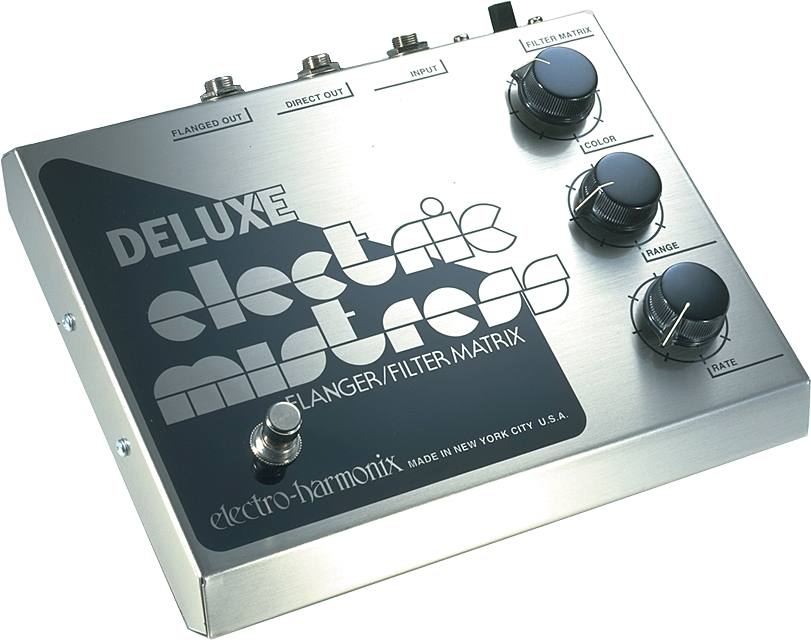
Andy Summers was known for using an Electro Harmonix Electric Mistress Flanger heavily on several Police hits such as “Message in a Bottle”, “Walking on The Moon” and “De Do Do Do”.
Andy Summers Gear Interview:
Andy talking about his use of guitar FX with Jools Holland around the 3:40 mark:
Andy demos his recording rig during the GHOST IN THE MACHINE sessions.
3 – U2 – Where The Streets Have No Name:
Listen to or buy U2’s new song https://u2.lnk.to/AtomicCity REMASTERED IN HD! UP TO 4K!! The official music video for Where The Streets Have No Name by U2.
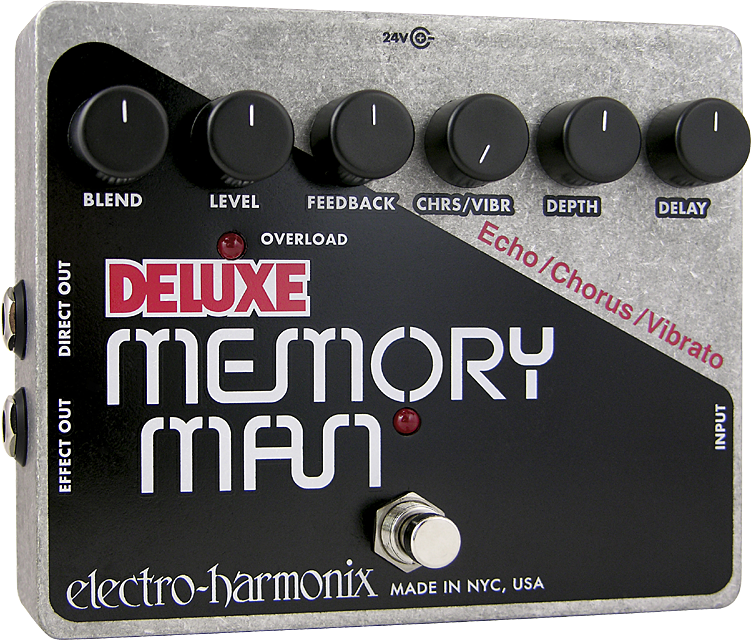
Probably the most iconic and recognizable uses of a guitar effects pedal, The Edge was known for using an Electro Harmonix Memory Boy Echo heavily on dozens of hugely successful U2 hits throughout the 80s.
The Edge on the Electro Harmonix Memory Man Echo Pedal: “Weirdly enough, if I’m having trouble with a guitar part—not the playing of it but the writing— I’ll mess around with echo and other effects, just turn everything up and make it as crazy as can be, and it winds up taking me somewhere. I’ve found so many guitar parts from echo. It’s limitless.”
The Edge Guitar World Interview:
http://www.guitarworld.com/edge-u2-interview-memory-man?page=1
Using Effects Conclusion:
These are just a few obvious examples off the top of my head, but you get the idea – Why not try a new and interesting effect the next time you sit down to write? You never know what you might come up with…
Tip #4: Back to The Heart of The Matter – Get Re-Inspired

Feel like you’re simply “going through the motions” in your day-to-day music-making life? Might be time to take a step back and try to re-ignite the flame that got you into music in the first place…
Here are a few things you can try towards getting those creative juices flowing again:
1 – Listen to Your Favorite Albums: A love of listening to great music, it’s the main (and most important) reason we do this job in the first place. The problem is, in such a busy and technical profession it’s something that’s often all too easy to forget…
If you feel like this is the case, listening back to the songs which gave birth to your musical passion is a great way of reconnecting with your original love of music.
In my case, listening back to songs off of my all time favorites such as Def Leppard’s “Hysteria”, Alice in Chains’ “Dirt”, Gojira’s “L’Enfant Sauvage” and In Flames “Clayman” always seem to send shivers down my spine and pump me up for my next musical endeavor.
2 – Watch “Making Of” Album Documentaries: Similar to listening to great music, watching your favorite bands craft and record inspired performances is an amazing insta-inspiration source.
Here are a few of my personal favorites for you to check out:
- 30 Seconds To Mars – Artifact
- Dave Grohl – Sound City
- BBC Classic Albums – Def Leppard, Fleetwood Mac, Black Sabbath etc.
3 – Take A Break: Believe it or not, taking a short (or Long…) break from something you do day in, day out can really do wonders towards freshening up your outlook and ideas on the subject.
As a drummer I find that I’ll go through “stagnant” periods every now and then, in which I feel “uninspired” and “bored”. Funnily enough, by the end of a week away from the kit I’m usually itching to get back to it with a renewed sense of passion and drive, usually resulting in noticeable breakthrough improvements soon after.
4 – Learn / Try Something New: Let’s face it, sticking to a single genre of music – whether it be listening to music or producing said genre – can get tiring fast.
Personally, I’ll admit that I was pretty arrogant and narrow-minded when it came to my taste music throughout my early teens. Unless it included blazing guitars, big drums and “real” musicianship, I wasn’t interested…
After a certain point I realized that I wasn’t discovering as many new bands as I’d like and “running out” of classic rock and metal to listen to. It was at this point that I decided to give electronic music a chance.
Discovering EDM was one of the key moments which helped unlock a whole new world of musical experimentation and creative expression in my writing and playing. Most importantly though, It sparked my initial interest in production and mixing.
IT WORKED FOR ME, IT CAN WORK FOR YOU TOO!
Tip #5: Know When To Scrap it
It’s not uncommon to desperately try and make a song or part work when in reality, it’s just not very good…
In this case it’s often a better option to try and come up with something else, rather than spending hours upon frustrating hours trying to beat it into submission. That’s not to say the part is unusable though, as it may still serve a purpose in a separate piece of music somewhere down the line and therefore might be worth keeping.
How can I tell if I’m heading in the wrong direction?
Unfortunately there aren’t really any sure-fire ways of knowing when to let something go and when to persevere, as this ability can only really be obtained through years of experience and trial/error.
My main point is, it’s worth considering these things if you ever feel like something is really getting in the way of your progress.
You never know, something far better might be hiding just around the corner…
FINAL WORDS:
This concludes Part 2 of “5 Tips & Tricks to Try Out in Your Next Recording Session”. I hope that this article has given you some new ideas to try out during your next project. Be sure to let me know in the comment section below if any of this information has helped you out, or if you have any further questions regarding anything I’ve talked about here.
Read Part 1 Here
Want mix tips from URM Academy? Read them here!
 Nail The Mix is our online mixing school that gives you REAL multi-tracks from REAL bands, plus a mixing class from the producer who recorded it. Past guests include Periphery, Chelsea Grin, Machine Head and State Champs. Join now for instant access!