urmadmin, Author at Unstoppable Recording Machine - Page 33 of 45

JOEY STURGIS: Mixing in Solo vs. Context, Building a Fanbase, Overcoming Burnout

As a key architect of the 2000s metalcore sound, producer Joey Sturgis has helmed genre-defining albums for bands like The Devil Wears Prada, Asking Alexandria, Of Mice & Men, and We Came As Romans. Through his work and his company Joey Sturgis Tones, he has become a leading voice in modern metal production, known for his polished, impactful, and forward-thinking mixes.

In This Episode

In this special Q&A episode, Joey Sturgis fields questions directly from the URM community, diving into a mix of technical, business, and mindset topics. He kicks things off with a detailed breakdown of when and why to use mono versus stereo busses, explaining how your source tracks and panning goals should dictate your routing choices. From there, he gives a dose of real-world advice to an international band trying to get noticed, stressing the importance of a compelling story and building a fan base before ever worrying about record labels. Joey also tackles the classic debate of mixing in solo versus in context, sharing his philosophy on using solo mode as a diagnostic tool while making the final, often more extreme, decisions with the full track playing. He wraps up with some killer advice on overcoming burnout and discusses why obsessing over room correction software can be a bigger roadblock than the room itself.

Products Mentioned

Timestamps

  • [1:22] When to use a stereo bus vs. a mono bus for guitars and bass
  • [3:14] The difference between inner-bus and post-bus panning
  • [4:13] Why you have to manually choose a mono or stereo bus
  • [5:07] Using plugins like a widener to turn a mono source into a stereo one
  • [6:20] How a new band from Spain can build a worldwide fanbase
  • [7:22] Why relocating to the US is often necessary for global success
  • [8:35] The importance of having a compelling story to tell
  • [9:44] A case study in band storytelling: Conquer Divide
  • [10:40] Why you should focus on building a business, not chasing labels
  • [11:30] The dangers of getting tricked by how things sound in solo
  • [12:28] The pizza analogy for mixing in context
  • [14:36] Using exaggerated EQ boosts to find the right frequency
  • [15:32] Why context demands more extreme EQ than you’d use in solo
  • [17:00] How to deal with “all is lost” moments and burnout
  • [18:00] Focusing on serving the artist’s vision to find purpose
  • [19:13] Why being trustworthy is the key to longevity in the industry
  • [20:30] Joey’s opinion on room correction software
  • [22:12] The danger of letting gear become a roadblock to your progress
  • [23:21] Adopting the “Minimal Viable Product” approach to your studio setup

Eyal Levi & Joel Wanasek: Brutally honest feedback, fixing common mix mistakes, and mastering the fundamentals

URM founders Eyal Levi (Dååth, The Black Dahlia Murder, August Burns Red) and Joel Wanasek (Machine Head, Monuments, Attila) team up for this special Mix Crit Monday episode. With decades of combined experience producing, mixing, and mastering some of modern metal’s biggest names, they bring a no-nonsense, real-world perspective to the art of the mix. This episode puts their critical ears to the test as they offer direct, unfiltered feedback to the URM community.

In This Episode

Eyal and Joel dive into a batch of user mixes for A Day To Remember’s “Right Back At It Again,” from the Nail The Mix session with producer Andrew Wade. Before getting into the tracks, they discuss the importance of seeking brutally honest feedback and break down the often-subjective process of choosing the monthly Nail The Mix “Top 20.” The guys then provide in-depth critiques of three different mixes, pointing out common but critical errors like improper genre feel, kick and bass frequency clashes, unbalanced levels, and mixes that just don’t “gel.” The overarching theme is a powerful reminder for producers at any level: master the fundamentals of balance. They argue that a simple, well-balanced mix with just faders and basic EQ will always beat a technically complex mix that neglects the basics. It’s all about getting back to what really matters—a mix that feels like a cohesive song.

Products Mentioned

Timestamps

  • [3:23] Why producers need friends who will give them brutally honest feedback
  • [6:49] The challenge of picking the Nail The Mix Top 20
  • [10:03] Setting your standards high by comparing your work to the pros
  • [11:53] Reframing failure: Ask what was wrong with your mix, not what was right about others
  • [12:49] The secret “Mix Illuminati” conspiracy (joking)
  • [13:53] Mix Crit #1: Felipe White
  • [17:33] Feedback on Mix #1: Wrong kick for the genre, guitars too clean
  • [19:45] Feedback on Mix #1: The mystery of the panned snare drum
  • [22:08] The concept of “gelling” and why this mix feels disconnected
  • [25:41] Mix Crit #2: Jay Lehi
  • [29:31] Feedback on Mix #2: The kick and bass “pissing contest”
  • [32:20] Why this song’s natural snare needs a sample
  • [34:08] The rare problem of guitars that are both harsh and muddy
  • [38:24] The biggest issue with the mix: The fader balance is “horrible”
  • [41:04] Mix Crit #3: Michael Ska
  • [45:23] Feedback on Mix #3: Vocals are great, but the bass is way too loud
  • [48:01] A case study on how adding a subwoofer transformed a student’s low-end mixing
  • [49:28] Can a poor low-end monitoring environment cause you to overcompensate with harsh high-end?
  • [55:17] Final takeaway: Master the fundamentals of balance before using fancy techniques
  • [56:05] How simplifying his process was the biggest breakthrough in Joel’s mixing career

Fixing The Low End In Your Studio Without Knowing Acoustics

Fixing The Low End In Your Studio Without Knowing Acoustics | By Jesco Lohan | 

I’ve realized that a lot of you guys are having trouble with the bass in your studios, making mixing the low end feel like a guessing game sometimes.

Believe me, I’ve been there.

One time in particular is burned into my memory. I tried to show off this sick tune I was working on to my friends a few years back. I had slaved away on it for hours! This was gonna KILL. I just knew it.

So we’re sitting there, listening to some DJ mix, when I decide the moment is right. I start the track, the intro passes, into the first break, as it builds up to the drop I’m thinking “I can’t wait to see the look on their faces!!”

Oh glory to the kick ass producer of this sickest of all drops!!

And then…

Nada. Silch. Nothing.

No bass at all…

What the hell???

It PALED in comparison to the DJ mix we were listening to before!! But how could that be..? It completely wrecked my speakers when I was listening to it back home!!

WTF?

Of course, no glory…

Damn.

That experience started me on a journey that hasn’t ended to this day…

The hunt for the perfect bass.


Now, many years later, with hundreds of mixes under my belt, regularly hitting the Top10 charts, tracks that generate millions of plays for my clients, designing sound systems for one of Berlin’s most prestigious clubs, studying book after book after book, and many, many home studios measured, designed and treated, I finally have a method that I know I can trust.

A system that allows me to get the bass right from the start, that I never have to second guess.

I understand the underlying principles, that repeat themselves every time, no matter what room I work with, it doesn’t matter what shape or size.

But what’s most important is how it made me feel about my work.

No more insecurities about thinking I got it right, only to find out on my kitchen stereo that the kick is super boomy, or the bass suddenly disappears.

No more going back to the studio and making tweaks that ‘should’ fix the problem but I can’t actually hear the change while I’m making it.

No more awkward conversations with my clients about if I deliberately made the mix so light in the low end.

Whenever I go in the studio, I know I can mix the low end without having to think about it. It WILL translate. To hit that perfect sweet spot between punch and body while making my mixes sound loud, open and detailed.
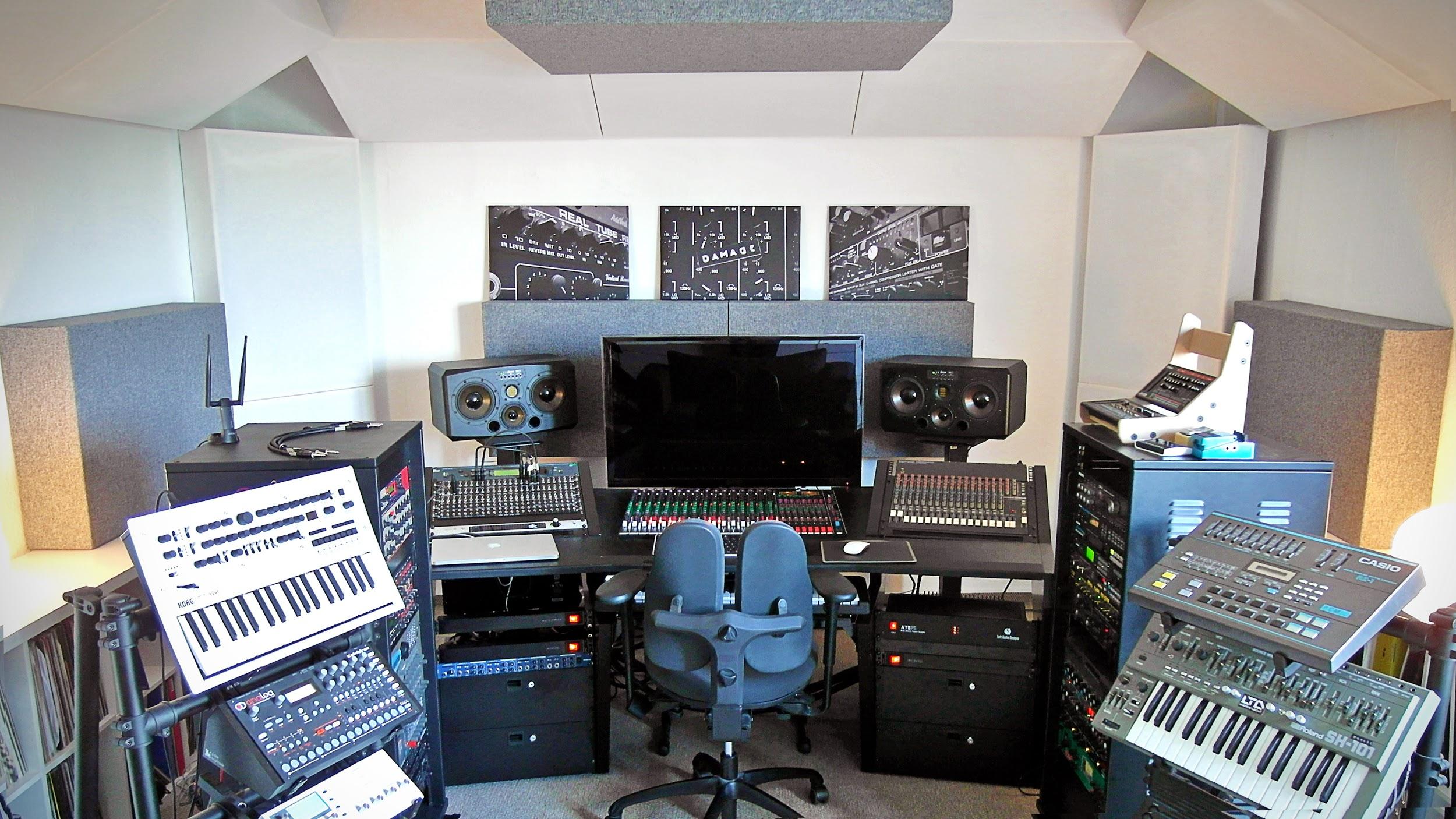
Studio Image 1You can get that too!


It all starts with hearing the low end properly. To find that spot in your room where the low end comes together in just the right way to tell you what you need to know.

The sonic balance that allows you to intuitively make the right decisions.

It’s sort of like building the foundation of a house. Build it right, and your house will stand strong in wind and rain for years to come. But build it wrong, and you’ll constantly be fixing cracks, holes and dampness with expensive repairs.

It’s the room acoustics equivalent of “get it right at the source”.


So I thought I’d share this little trick I’ve developed over the years, treating rooms in various shapes and sizes.

It’s what I always do first thing when treating a studio, and always creates a big „woah“ response from my clients.

All it takes is your ears and about an hour of your time.

It’ll work in both treated and untreated rooms, although if you have bass traps, it’s best to have those installed already.

I call it the Bass Hunter Technique.

Here we go:

Pick three songs that you know in and out, in different keys, covering the entire low end spectrum.

Put one (!) of your speakers in the corner of your room on the floor close to where your setup will hopefully end up. Set all the EQ settings on the speaker to flat. Disconnect the other speaker.

Play through the songs multiple times, switching between them. Set the volume at a comfortable level so you can hear the low end properly.

The idea is to find the spot in the room that has the best compromise in the low end between all the songs.

1 – Sit in your chair. It helps if it has wheels. Make sure your head is at the same height you typically work at.

2 – Move to the longest center axis of your room so you are half way between the left and right walls.

3 – Now roll slowly along this axis all the way from one end of the room to the other. Close your eyes and pay attention to the low end only. The mids and highs won’t sound great, but that doesn’t matter at this point.
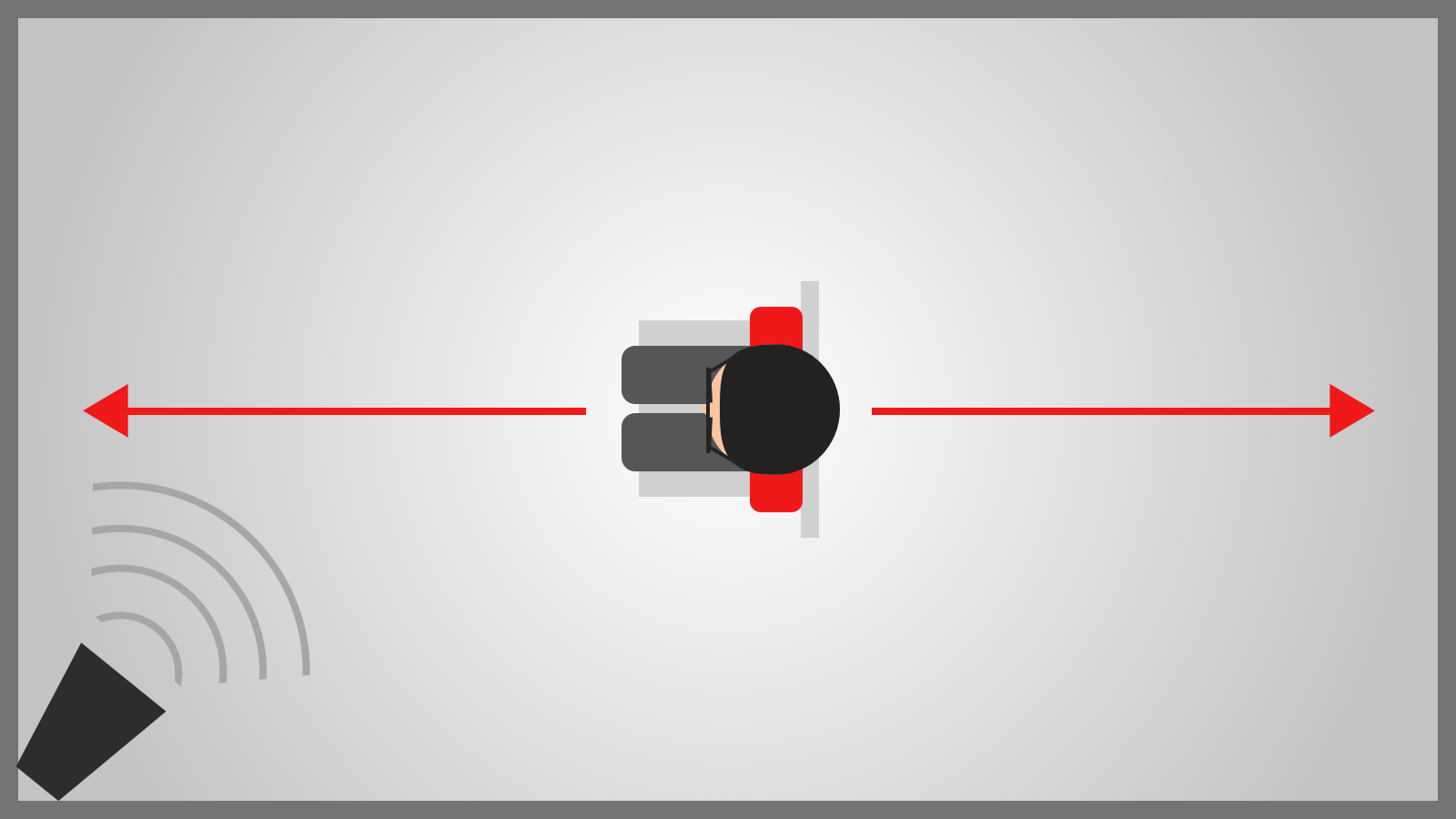
Listening Diagram 2Get rolling


4 – Listen to the balance between the kick and the bass while you are moving, pay attention to how it changes.

– Where in the room is bass missing? Where is there too much? Is it too punchy? Or too subby?

– Really take your time with this, it’s where the meat of the matter lies. Experiment, dig deep. Try and get as detailed an understanding of the low end as possible.

– Move right up to the walls with your face, that’s what over-pronounced sub sounds like! Now, as you move back into the room, where do you still hear that sub, but the punch comes back in?

5 – For each track, make a mental note of where the low end sounds the best to you. Be accurate, half a foot or 10 cm can make a huge difference!

6 – Once you’ve identified the ideal spot, mark it on the floor with tape. This is the position where your head will end up as you work.

7 – Now do the standard equilateral speaker placement around this spot. Basically you want to build your entire setup around this position. I’ll go through the details of stereo optimization in the near future, but for now there’s a great article on SoundOnSound (LINK: http://www.soundonsound.com/sound-advice/q-where-should-put-my-monitors) that will get you 80% there.


A few notes to be aware of:
  • It is very possible that you’ll end up with a spot very close to the wall, especially in small rooms. This is perfectly normal. It might also be somewhere completely different than you expected, or just a foot from where you’ve been sitting so far.
Well, now you know.
😃
If that’s what it takes, make it happen!
  • If you can’t find a spot that sounds particularly great on your chosen axis, pick another and try again. Is your room is simply too irregularly shaped? Start experimenting by moving off the center axis. You’ll compromise left to right symmetry, but that is easier to fix than an unbalanced low end.


  • In any case, I can assure you, there will be a spot in your room that offers a good compromise between all the songs.


  • The reason this procedure works so well is that you are effectively optimizing your position within the standing wave pattern of your particular room. Not the theoretical one predicted by simple geometry, but the actual physical manifestation. Including all the quirks that tend to mess up predictions. Windows, crooked walls, materials etc. It also takes into account your personal taste, so it’s sort of like EQing your speakers at the same time.
Double whammy!


Placing the speaker in the corner during the procedure has the effect of exciting all the standing waves maximally. It’s like a worst case scenario. Or best case, depending on who you ask. 😋

More importantly it will ensure that you don’t end up placing your sweet spot in a massive cancellation hole of one of the standing waves.

Of course ultimately the speaker won’t remain in the corner and won’t end up exciting all the room’s modes maximally. The interaction between the two speakers also has a dampening effect on certain modes. But neither of these are as consequential as is getting the full effect of sitting in a cancellation node.

Basically a mode that isn’t excited can neither have a strong additive peak nor a strong cancellation null and so its effect will be benign at best.

There are other factors that will mess with your low end, like reflection induced comb filtering (sometimes called SBIR, floor bounce, etc). But these are better addressed by means of careful absorption and subwoofers.

Little known fact: This actually becomes easier to do the closer your speakers are to a wall, since the effect moves up in frequency. So there’s actually a benefit to setting up closer to a wall!

But ultimately, if you don’t get the position of your sweet spot right from the start within the standing wave pattern of your room, you’re going to have a hard time fixing your low end with acoustic treatment.

It’s the foundation on which you build your low end response. It’s where the big wins are.


Ever heard of the Carl Tatz phantom focus system? (LINK: http://www.carltatzdesign.com/phantomFocus-system.html) He implements the same idea, just with a ton of technology behind it.

You may actually find that you don’t need all that much bass trapping once you’re sitting in the right spot. Our brains are remarkably good at adapting to a certain frequency response.

Once it’s in the ball park, your brain will do the rest.


So the next time the low end in your mix is once again going haywire, maybe what you should be asking yourself is this:

Am I really sitting in the best possible spot in my room?

It may be that you are literally only a few inches away from success.


Jesco Lohan is currently building a website to teach music professionals how to get reliable sound in their home studios, and the psychoacoustic workflow tricks to confidently get quality results every time.

Sign up to stay informed here: http://jescolohan.com/signup 
Jesco 3


Nail The MixNail The Mix is our online mixing school that gives you REAL multi-tracks from REAL bands, plus a mixing class from the producer who recorded it. Past guests include Periphery, Chelsea Grin, Machine Head and State Champs. Join now for instant access!


JOEL WANASEK: Producer Burnout, Songwriting Psychology, and Analog Summing

Producer, mixer, and URM Academy co-founder Joel Wanasek is known for his work with bands like Blessthefall, Attila, and Machine Head, as well as indie rock act Vinyl Theatre, whose record he discusses in this episode. As a key mentor in the URM community, he has a ton of experience not only in the studio but also in navigating the business and personal challenges that come with a career in audio.

In This Episode

It’s another round of “Dear Joel,” where URM’s own Dark Lord of No Small Time answers your burning questions. Joel kicks things off with some real talk on producer burnout, offering solid strategies for rekindling your passion for music when the grind gets overwhelming. He then dives into the tricky art of co-writing with bands, sharing psychological tactics for getting your ideas heard without stepping on toes. The episode also covers career advice for aspiring producers, a deep dive into Joel’s low-end philosophy using his mix for Vinyl Theatre as an example, and his definitive take on the analog vs. digital summing debate. Whether you’re struggling with setting goals, need to improve your networking skills, or just want to geek out on gear, Joel drops a ton of practical knowledge and a healthy dose of perspective to keep you moving forward in your career.

Products Mentioned

Timestamps

  • [1:12] How to rekindle your passion for music when you’re burned out
  • [2:03] The importance of taking short walks to clear your head
  • [4:18] Using classic records from your childhood to reconnect with music
  • [6:20] How to turn off your “producer brain” and just enjoy listening
  • [8:26] Approaching songwriting with bands who are resistant to feedback
  • [10:28] The difference between a new producer’s influence and an established pro like Howard Benson
  • [11:42] Figuring out the power dynamics within a band
  • [12:27] How to make the band feel like your idea was their idea
  • [14:25] Career crossroads: Go to college or build a home studio?
  • [17:23] Why you don’t need a huge house to start a recording business
  • [20:13] Joel’s low-end philosophy for the Vinyl Theatre record “Breaking Up My Bones”
  • [22:16] Using hardware like the Shadow Hills comp and Massive Passive during tracking
  • [24:35] Why it’s hard to set specific, long-term goals in a creative field
  • [29:13] A mindset trick: How could you achieve a 5-year goal in 6 months?
  • [30:48] Practical advice for overcoming social anxiety as a studio person
  • [33:58] Using low-stakes social interactions to build confidence
  • [36:43] Understanding body language to improve your social skills
  • [38:59] The benefits of analog summing
  • [41:07] Why you shouldn’t trust the opinion of people whose mixes suck

ANDREW WADE: Building His New Studio, Recording ADTR for $20 a Song, Production Secrets

Producer and engineer Andrew Wade has had a long and fruitful career, but he’s perhaps best known for his work with A Day To Remember. He was there from the very beginning, recording their early demos and debut album, And Their Name Was Treason, in his bedroom. He went on to co-produce their breakout records Homesick and Common Courtesy, helping to shape the sound that made them one of the biggest bands in the scene. He’s also worked with other notable artists like The Ghost Inside, Wage War, and In Fear and Faith.

In This Episode

Andrew Wade is back on the podcast, and this time he’s giving us a full breakdown of the insane, year-long process of building his new studio, The Audio Compound, with Jeremy McKinnon. He gets into the super technical details of the studio’s construction, from the multi-layered soundproof walls with Green Glue and resilient channels to the custom acoustic treatment that makes the rooms sound incredible. Andrew also takes a trip down memory lane, sharing stories about his long history with A Day To Remember, from recording their first demos for $20 a song to developing a deep creative partnership. He also answers a ton of audience questions, dropping knowledge on his vocal chain, the guitar tone on “Right Back At It Again,” his approach to layering harmonies, and why every single part of a song needs to be a banger.

Products Mentioned

Timestamps

  • [5:06] The multi-layer wall construction for soundproofing
  • [7:59] Combining professional acoustic treatment with affordable foam
  • [12:25] The studio’s smart design for patching between any control room and live room
  • [20:14] The early days of recording A Day To Remember for $20 a song
  • [22:27] How he put scummy local studios out of business just by being honest
  • [25:51] Helping a young Jeremy McKinnon find his singing voice and confidence
  • [34:42] Setting achievable goals and the importance of having local heroes
  • [35:36] On knowing from the start he was going to succeed
  • [42:34] Learning from failure: Getting called out by Adam D for messy session files
  • [50:45] His producer role with ADTR evolving from technical help to deep creative collaboration
  • [52:31] Why obsessive attention to detail isn’t “insane”—it’s what it takes to be great
  • [55:57] Vocal tracking chain for Common Courtesy (1176 vs. his new Distressor approach)
  • [59:40] The guitar amp used on “Right Back At It Again”
  • [1:00:32] Creating custom snare samples from Alex Shelnutt’s actual drum kit
  • [1:04:42] Why you should always track with your final guitar tone, not a placeholder
  • [1:08:01] Andrew’s philosophy on layering harmonies and backup vocals
  • [1:12:11] The biggest problem he sees with how bands write songs
  • [1:15:58] The reason the drummer didn’t play the kick drum during tracking