
Introduction To The Series:
Learning How To Learn is one of the most crucial steps you can take towards becoming great at pretty much anything – And what better place to learn than from the minds of people who have actually been doing the job successfully for years?
In this ongoing series of Blogs, we’ll explore the valuable words of wisdom bestowed upon us by some of the most sought after names in the recording studio business, and discover how you can apply this advice to your own situation.
This week, we’re studying the brilliant studio wisdom of legendary 80’s hit-maker Bob Clearmountain.
NOTE: If you’re hoping to find some “secret mix settings” or “magic formulas” in this article then you might as well leave now… I can guarantee you that the real secrets behind each of these engineers’ success are their ears and personal tastes.
Remember:
Following the practical “workflow and decision-making” advice these guys have to offer from years of experience in the business is far more valuable than trying to copy the settings they’ve used for specific songs!
VOLUME 8: Bob Clearmountain

Who Is Bob Clearmountain?
Bob Clearmountain is a multiple Grammy-winning producer/engineer/mixer and the man behind some of the best selling albums in music history.
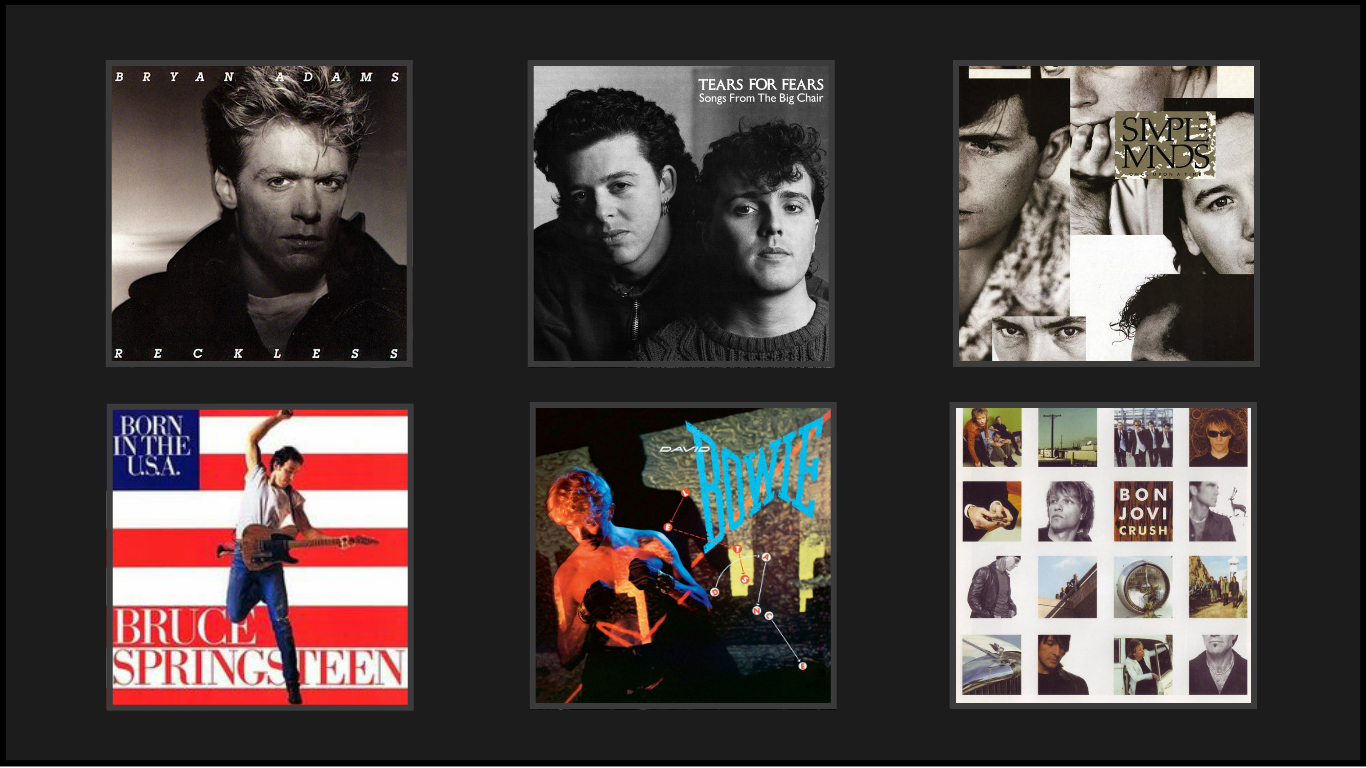
Some of the select artists he’s worked with include:
Tears For Fears
Bruce Springsteen
Bryan Adams
David Bowie
The Rolling Stones
Simple Minds
Chic
Roxy Music
Bon Jovi
AND MANY MORE…
Now that you know exactly who you’re dealing with, let’s cut straight to the chase!
Here Are 4 Pieces Of Incredible Audio Advice From Bob Clearmountain:
1 – Doing More With Less
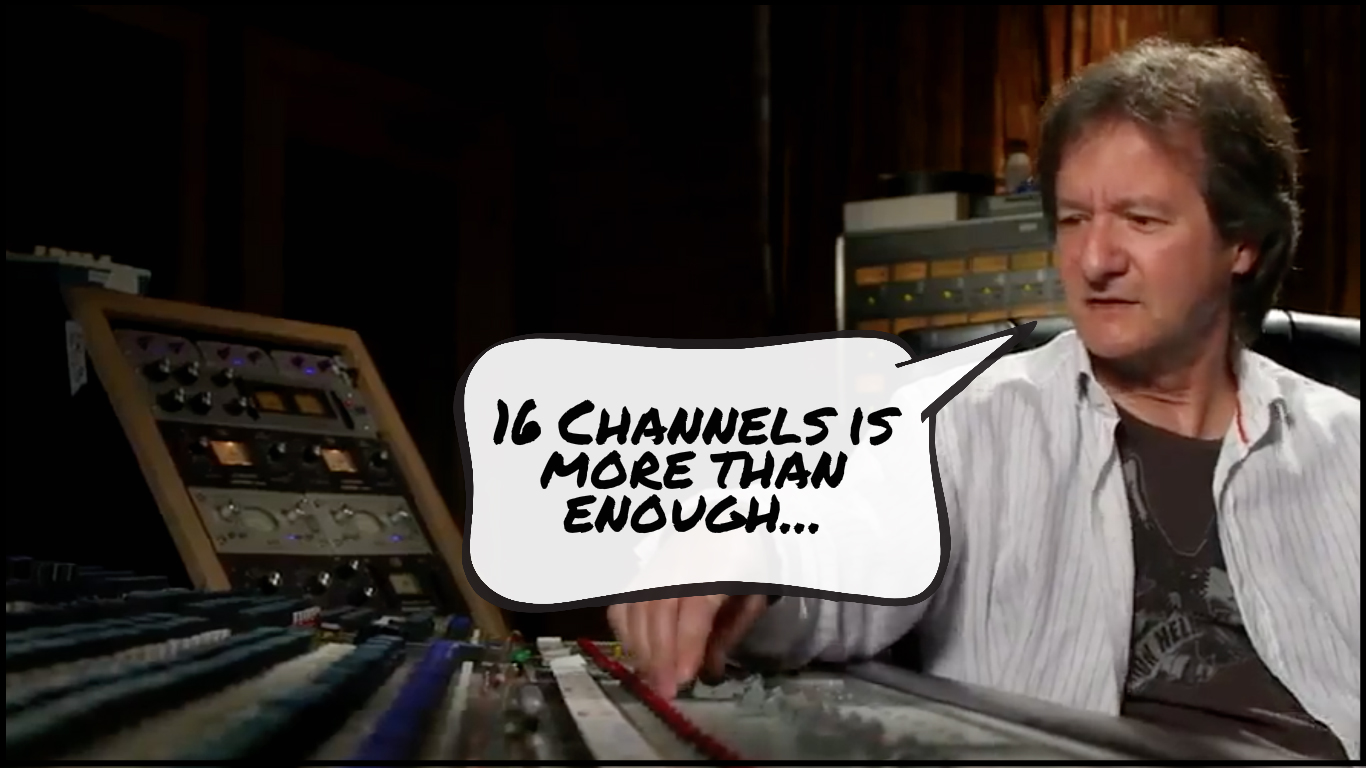
“When I started, we didn’t have plug-ins. If you wanted phasing, you had to figure out how to do it with a tape machine. Or three tape machines. To me, it was a lot more fun. I was lucky that we had to figure out how to create these things for ourselves.”
“I actually feel bad for people these days because they probably don’t really understand what things are. They just click a few things on something that looks like a spaceship on their screen. To me, that’s just boring.”
“I started in ’72, and I remember working on a Stones record. A producer called Glyn Johns stopped by, he was one of the reasons I got into the business – I wanted to be like him. He came in and looked at this SSL (at PowerStation), looked at the 48 channels and said, “what do you need all those channels for? Do you realise what I used to make records on?” And he was right! He’d have maybe eight channels or less to work with, but if you listen to those records now, they’re still unbelievable.” – Bob Clearmountain
Limitations Lead to Innovation:
- Thanks to digital recording technology, it’s now easier than ever to create/re-create incredibly complex effects with minimal real-world effort or actual technical understanding.
- Although the amazing digital processing tools we have access to within our DAW’s nowadays allow for a lot of instant-creativity, the fact that they are basically handed to us on a silver platter means that a lot of engineers are no longer feeling the need to put in the long hours of studying & experimentation necessary to truly understand the gear.
Q – “But surely the whole point of technological advancements are to make our lives easier, right?”
A – True… But, there’s a huge amount to be learned from actually having to problem-solve and figure out how to create certain FX from scratch without having to rely on plugin presets!
“Everything can be traced back to The Beatles”:
- Back in the 60s & 70s, the technological limitations that groundbreaking bands like The Beatles and Pink Floyd faced while trying to fulfil their creative visions led to some serious experimentation in the studio.
- As crazy as being limited to 4-8 track recording may sound today, these limitations were the key driving-force behind a lot of the creativity which is associated with said artists.
- The fact that these guys also had the passion to truly learn, and push the limits of their gear throughout the process of pursuing their sonic goals meant that the final products were that much more meaningful and impactful as a result.
Conclusion: I’m sure that we can all agree on the fact that a lot of the albums that were produced during the period I’ve just talked about above were absolute masterpieces. Given the fact that those guys were able to do so much with so little, what’s your excuse? GET LEARNING!
NOTE: Check out last week’s URM Article “5 Desert Island Plugins – Learn to do More With Less” for further advice on making the most of gear-related limitations.
2 – Mix The Song, Not The Sections
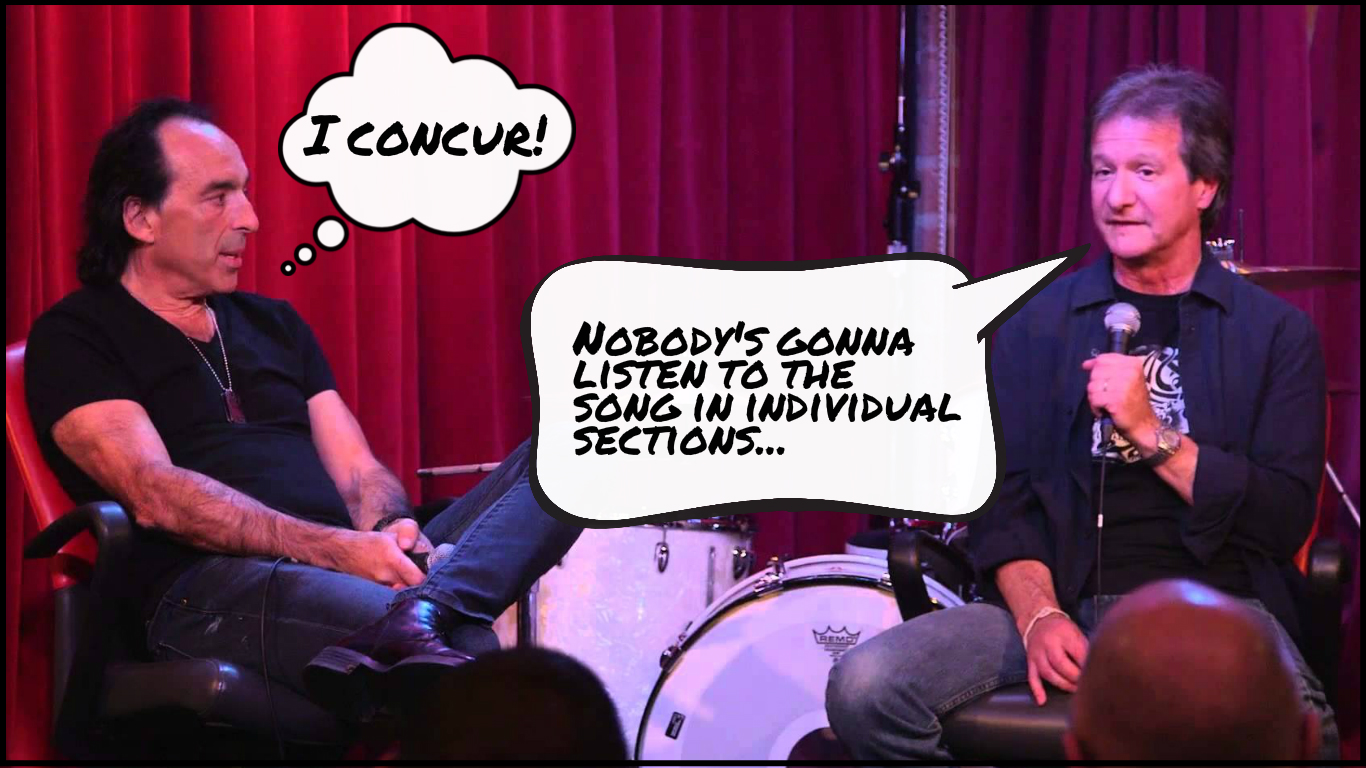
“I mix songs from beginning to end, and not in sections. I’ll develop the mix until it is as good as I can get it without automation. After that I’ll switch the SSL computer on, and usually the first pass into the automation will be doing the vocal, making sure it sits right in the mix. On subsequent passes I will ride things around the vocal, but I don’t bring these in one by one, like some mixers do. My approach is much more random. You might call it stream of consciousness. People often ask me how I do it, but it’s like trying to describe how I walk. I simply adjust what hits me at the time and try to make it sound as good as I can.” – Bob Clearmountain
“A Cohesive Journey”:
- Do you usually listen to your favourite songs section-by-section… Looping the intro 50 times before skipping forward and looping the bridge another 50 times? No? I didn’t think so.
- The truth is, when the average listener decides to listen to a song, 90% of the time they’re simply going to press play and let it run for the duration of the track (unless they get bored and skip it). This being the case, doesn’t it make sense to mix the track while making sure it sounds/feels cohesive from beginning to end, rather than skipping around randomly and trying to make each section sound “perfect” in isolation?
- A major issue that the NailTheMix guys seem to point out fairly often while critiquing mixes on the podcast is simple volume inconsistencies between sections of a song.
- As obvious as it may seem to make sure each section of a track flows into the next flawlessly without any drastic dips or rises in volume, it’s really easy to overlook these issues if you’ve been spending your entire time listening to small chunks of audio without referencing the “overall picture”.
Conclusion: A lot of the miniscule technical details you obsess over as an engineer will probably go completely unnoticed by %90 of your listeners. Why not spend more time on perfecting the stuff that they’ll actually appreciate instead? Like, I don’t know… THE BASIC FLOW OF THE SONG?
3 – Work Fast, Keep The Spark Alive!
“When I get inspired during a mix, it tends to go fast. It becomes, “Oh, I know what to do here. I know what to do with this or that.” Before you know it, you have it together. It takes longer if you’re not inspired and you belabor it.”
“I’ll just push the faders up and, as things hit me, I’ll reach for them. I listen to it as an overall picture. Whatever sticks out as not fitting, I’ll work on to make better. Usually, I do eventually catch the mistakes as well.” – Bob Clearmountain
First impressions are everything:
- I learnt a while ago from personal experience that the longer you spend on a mix, the more likely you are to screw it up.
- It’s amazing how we can spend a huge amount of time on a mix, thinking that we’re making huge improvements left and right, only to play the same song the next morning and end up crying in the corner of the room out of self-doubt.
- The problem is, when you spend prolonged hours listening to the same thing over and over, it’s simply too easy to slip into a mindset of over-thinking every tiny detail and completely losing sight of the initial feelings you felt during your first listen.
Here are a few solutions which I’ve found can really help with keeping a fresh and enthusiastic outlook towards the songs you’re working on:
- On your first listen of the day, after a good night’s rest, listen to the track from start to end without pausing at all. Take note of the major things that jump out to you. These are probably the same things that’ll stick out to your clients and listeners.
- Don’t make important mixing decisions at the end of a 16 hour work day. Your ears are most likely fried, and you’re probably gonna regret making them the next morning.
- Listen to a few reference tracks which you’re certain sound awesome before opening up your session. Starting your mix with a clear idea of what a great pro-mix should sound like will often instantly help reveal some of your own shortcomings.
- Most Important Of All: Try not to think too technically! Rather than always thinking in frequencies and numbers, or in “right or wrong” terms, try interacting with the music in more of an emotional, feel-based manner (the way most of your listeners will). Ex. How does the song feel? Is it aggressive enough? Does it need to feel bigger? Are the vocals intimate enough?…etc.
4 – Overall Conclusion – Perfection Is Subjective!
“For me, the perfect mix is something that everybody involved is very happy with, especially the songwriter and the artist. That’s about as closed to perfect as you can get…” – Bob Clearmountain
Beauty Is In The Eye Of The Beholder:
- This Bob quote is short and sweet… But also extremely relevant when talking about a topic as personal and emotion-fueled as music.
- Ever shown somebody a song which you believe to be an incredible piece of art, full personal meaning… Only for them to react with a “Meh, it’s alright”?
- I know I have… and it’s one of the most frustrating/disappointing feelings in the world, but the truth is, it all comes down to the simple fact that art is subjective, and people interact with it in different ways.
- The same concept applies to mixing. As important as it is for you to be happy with with your mixes/productions… It’s equally (if not more) important that your clients are happy with what they’re receiving.
- At the end of the day, the thing that’ll keep your clients coming back for more – as well as prompting them to spread the good word about your services to others – is their level of satisfaction with the service they’re receiving.
- Although it’s perfectly fine to try and find common-ground between varying personal tastes and musical disputes, it’s crucial to make sure you’re not alienating your customers in doing so too severely.
- Some of the strongest working relationships in the music business are based on basic trust, and the fact that the artist knows that the producer has their best interests in mind with every decision they make. (Bob Clearmountain’s working relationship with Bruce Springsteen is a prime example)
Last But Not Least…
Remember, one of our primary goals as producers/engineers is to help musicians fulfill their creative goals to the fullest. If this means making some personal-taste sacrifices in order to accommodate, so be it!
If you want complete dictatorship over the musical and sonic direction of a track, go and record your own album!
Final Words:
This concludes “Learn From The Legends – Volume 8: Bob Clearmountain.” I hope that this article has given you some new ideas to try out during your next project. Be sure to comment below if any of this information has helped you out, or if you have any questions.
Stay tuned for more production/mixing related articles in the not-so-distant future!
Read Learn From The Legends – Volume 1: Chris Lord-Alge here!
Read Learn From The Legends – Volume 2: Randy Staub here!
Read Learn From The Legends – Volume 3: Andy Wallace here!
Read Learn From The Legends – Volume 4: Andrew Scheps here!
Read Learn From The Legends – Volume 5: Jacquire King here!
Read Learn From The Legends – Volume 6: Joe Barresi here!
Read Learn From The Legends – Volume 7: Andy Sneap here!
Want mix tips from URM Academy? Read them here!
 Nail The Mix is our online mixing school that gives you REAL multi-tracks from REAL bands, plus a mixing class from the producer who recorded it. Past guests include Periphery, Chelsea Grin, Machine Head and State Champs.Join now for instant access!