Kristian Kohle is a German-Swedish producer and musician known for crafting powerful, modern metal productions. From his Kohlekeller Studios, he has worked with a diverse roster of bands including the brutal death metal of Aborted and Benighted, power metal titans Powerwolf, and metalcore acts like Eskimo Callboy. He was nominated for Best Metal Production at the 2009 Danish Metal Awards for his work on The Burning’s album Reawakening.
In This Episode
Producer Kristian Kohle joins the podcast to talk about the art of being a true producer in the world of extreme metal. He explains why even the most brutal bands benefit from creative input and shares his process for gaining a band’s trust to make arrangement suggestions. Using the Benighted album Necro Breed as a killer example, Kristian details his vision for a more disturbing, old-school sound, which involved intentionally dialing in a “shittier,” HM-2-inspired guitar tone that prioritized character over hi-fi perfection. He also gets into his unique drum sampling technique, where he creates custom, multi-velocity sample libraries from the drummer’s actual kit during the session. This allows him to blend samples for punch and consistency without losing the natural feel of the original performance. From the importance of fresh bass strings and quad-tracking guitars to managing creative burnout by maintaining a work-life balance, this episode is packed with practical wisdom for anyone serious about making heavy records.
Having an efficient studio workflow is an extremely important factor when it comes to creating a viable business out of music production.
One of the biggest mistakes engineers tend to make when starting out is having to re-do tasks based on the fact that they screwed them up the first time, or simply didn’t take the necessary precautions to allow for a backup solution.
Thankfully, digital recording technology has produced some amazing tools which allow us to achieve maximum flexibility in the studio without having to start from scratch in order to change the core tonal characteristics of our raw recordings every time we want to change something.
In this ongoing series, I’ll be talking you through the amazing capabilities of 5 pieces of studio gear I rely on heavily in my productions in order to get great results fast.
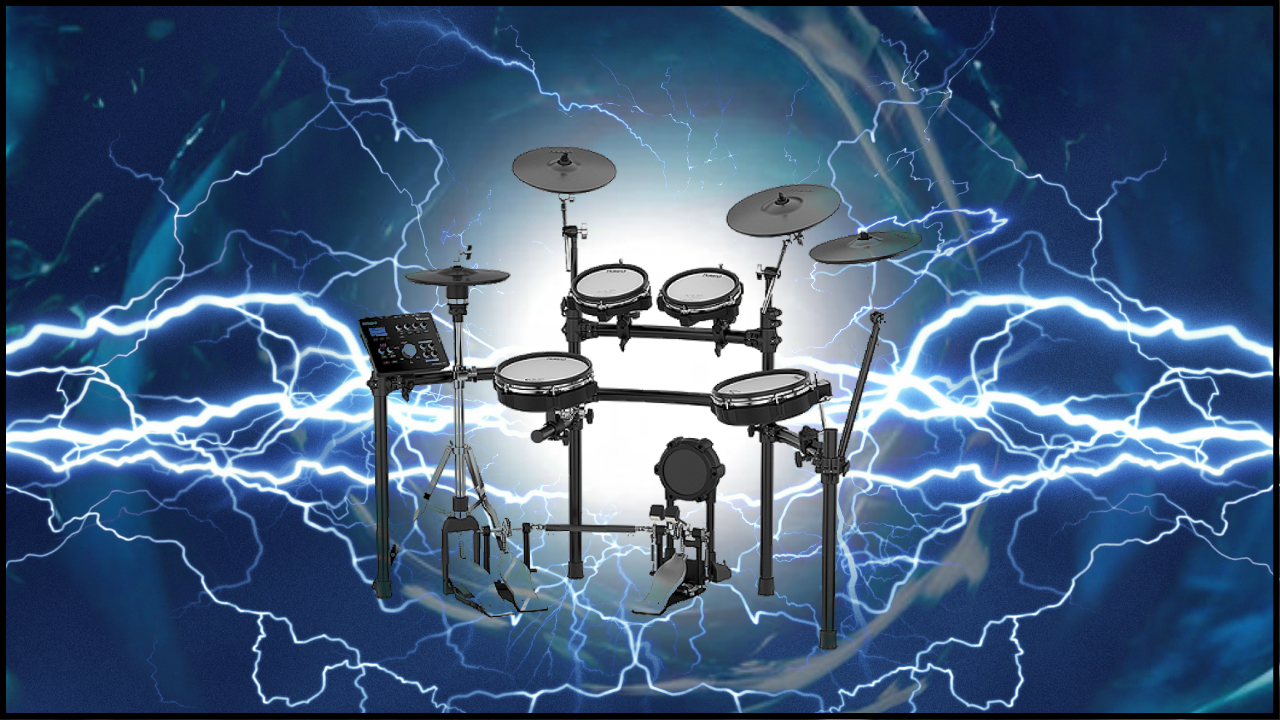
This week, we’re taking a look at the numerous advantages to using E-Kits & Drum Samples in the studio over the more traditional “Acoustic Drums in a room” approach:
Part 1: E-Kits & Drum Samples
E-drums… you’re kidding right?
NOPE! As a drummer myself, I’ve gotta say: E-drums are an incredible tool for drum recording purposes!
Before you start ranting – By no means am I saying that E-drums are better than acoustic drums! I’m simply saying that for my tastes, they allow for a much more flexible and time-efficient drum recording workflow compared to acoustic drums!
This being said, here are a few of my favourite workflow benefits to using E-drums while recording in the studio:
Disclaimer:It’s important to note that not all e-kits are created equally… As somebody who’s owned high-end Roland kits such as the TD30K-SE and TD25-KV, as well as cheaper sub-$1000 “starter kits” in the past, I can tell you that the drumming experience varies greatly depending on the quality of triggering and dynamic realism each kit has to offer.
No microphones required: Before you even think about recording an acoustic kit, you’re gonna need a few thousand $ worth of microphones and preamps to set up in the first place. Not only that, but it can take years to master the art of drum microphone placement in a way that minimises bleed and destructive phase-interactions between mics. With E-drums, you’re simply capturing a midi-performance and triggering pre-recorded drums that have been captured to perfection by seasoned professionals. Just sayin…
The Room Acoustics Are Irrelevant: Fact: You need a good room if you want to capture a great drum sound. In the case of E-drums, you’re simply emulating professionally captured, A-grade recording spaces from across the globe without having to worry about the recording environment screwing up your drum sound.
No Tuning or Drum-Skin Replacement: Much like stringed instruments, drums need to be tuned and maintained regularly in order to produce ideal results. Not only is drum tuning a fairly difficult skill to master, but changing your drum skins on a per-album or ideally per-song basis can cost a real arm and a leg.
I personally know that I’ll never be able to pull-off the kind of drum tones that Nolly (from Periphery) whips up. But… I can trigger his GetGood Drums Sample Pack and gain access to perfectly-tuned drum samples thanks to my E-kit!
NOTE: Check out this amazing video of drummer Navene Koperweis demo-ing Nolly’s “GGD Matt Halpern” sample pack on an E-kit to great effect:
Editing is A Breeze: No beat-detective, no time-stretching, no unfixable drum fills. Need I say more?
E-drums allow you to fix/tweak each individual hit to perfection without having to jump through hoops to cover up mistakes.
Quiet Recording: Drums are loud. Unless you’ve got access to an isolated studio space in the middle of a field… Or have spent ludicrous amounts of time and money on soundproofing a room, odds are you’re only gonna be able to record them for an hour or two each day before having to deal with furious neighbours.
Apart from the dull pitter-patter of sticks hitting rubber/mesh, electronic kits are much quieter than acoustic kits. This means that you can use them to record at pretty much any time of day, for as long as you want!
Tweak The Sound At Any Point: With an acoustic drum kit, you need to spend a huge amount of time hand-picking each drum shell and cymbal according to your tastes/needs before you can even think about recording. Even then, it’s not uncommon to record a whole album, only to realise that you regret half of your cymbal choices half-way into the mixing process
With E-drums, you’re free to change any single piece of the kit, at any point during the production process, with minimal effort or time-wasting repercussions.
NOTE: Check out this awesome Roland TD30 E-drums + Superior Drummer “Progressive Foundry” performance by “Dead Letter Circus” drummer Luke Williams:
No Triggering / Sample Replacement: Due to the fact that there’s no bleed involved with e-drum midi (unless you want there to be), you don’t have to spend forever tweaking your drum triggering software to try and catch every hit while preventing any mis-triggers.
Complete Control Over Your Room & Overhead Tracks: You’re not stuck with a single balance from your stereo mics, you can tweak the individual drum levels for the perfect cymbal/shell balance or get rid of one or the other from these mics entirely! (No more Waves L1 on the overheads to turn down the snare!)
PS. With everything I’ve talked about above, I’m assuming the use of high-quality 3rd party drum sample packs such as Superior Drummer, SSD, GetGood Drums & Drumforge, not the use of the built-in “own-brand” one-shot samples that come pre-loaded on the e-kit modules.
What about the downsides of E-Drums?
Although there are a huge number of benefits to recording with E-drums in the studio, they aren’t without a few slight drawbacks that can initially put people off from using them.
Fortunately, a lot of these “problems” often have some fairly simple solutions:
Most drummers are sceptical of samples: %90 of drummers will respond negatively to the idea of recording on an E-kit based on the fact that they’ve only ever heard/tried the terrible “one-shot” samples built-into the cheap kit at their friend’s house…
The Fix: The truth is, most of the drummers I’ve recorded who had similar mindsets have had their opinions reversed entirely after spending a few minutes on my high-end Roland kit with some A grade sample libraries triggered from a DAW.
E-Drums require a slightly different playing approach: The dynamics settings that feel completely natural to me on my own E-kit might feel strange and uncomfortable to another drummer with less experience of playing on E-kits.
The Fix: It’s often fairly easy to tweak the built-in sensitivity and dynamics settings on a kit’s module to better fit a player’s style and tastes. I personally like to take note of each player’s preferences and create custom “presets” to refer to when recording them.
NOTE: The only other major downside to using E-Kits which I can think of is the fact you’re limited to more traditional drumming styles, aka: You can’t utilise the wooden shells, rims and different zones of each cymbal/drum to produce interesting “unorthodox” sounds in the same way that you could on an acoustic kit. However, given the fact that these are a niche way of using a kit in the first place, the lack of said functionality in most E-drum models is understandable.
OVERALL CONCLUSION:
Much like the “Analog vs. Digital”, “Editing vs. Realism” & “Real amp vs. Simulation” arguments that I’ve previously “debunked” across the course of multiple URM articles, the “Real drums vs. Samples” argument is basically an equally irrelevant waste of time at this point in music history…
The truth is, everybody else is embracing the use of high-quality drum samples in order to get the upper-hand in their productions nowadays, so unless you’re able to produce comparable results with a purely organic drum recording setup, you’re at a definite disadvantage for refusing to utilise them!
Summing Up:
To say the very least, the recording equipment we have at our disposal nowadays is simply astounding when compared to what was available to previous generations of engineers.
This being said: Be thankful for the amazing creative opportunities we’ve been given by the smart people developing incredible tools which make our lives easier.
Stop whining about subtle gear comparisons and simply do whatever it takes to make some cool music
Final Words:
This concludes “5 Pieces Of Gear For Maximum Recording Flexibility – Part 1: E-Kits & Drum Samples.” I hope that this article has given you some new ideas to try out during your next project. Be sure to comment below if any of this information has helped you out, or if you have any questions.
Stay tuned for more production/mixing related articles in the not-so-distant future!
Nail The Mix is our online mixing school that gives you REAL multi-tracks from REAL bands, plus a mixing class from the producer who recorded it. Past guests include Periphery, Chelsea Grin, Machine Head and State Champs. Join now for instant access!
Matthew Weiss is a Grammy-nominated engineer, producer, and educator known for his work in the worlds of hip-hop and pop. He’s worked with artists like Snoop Dogg and Cisco, runs the educational site weisssound.com, and is a key contributor to The Pro Audio Files. He brings a unique perspective to the table, blending high-level technical skill with a deep understanding of rhythm-centric music.
In This Episode
Matthew Weiss drops by to share some wisdom from his career in the trenches of hip-hop and pop production. He gets real about the hustle, explaining why “working on getting work” is a massive part of the job and how he balances major label gigs with passion projects to stay inspired. He also dives into the mindset required to build a real career, emphasizing the need to fully immerse yourself in the scene and learn multiple instruments to better communicate your ideas. For all you tech-heads, he breaks down some of his go-to mix techniques, including his signal chain for massive kick drums, how he adds weight to snares, and his detailed approach to controlling the colossal low-end of EDM and hip-hop tracks. It’s a killer look into a different world of production with tons of crossover concepts that’ll get you thinking about your own workflow.
Beau Burchell is a producer, mixer, and guitarist best known for his work with the influential post-hardcore band Saosin. Operating out of his Los Angeles studio, he has produced and mixed for a wide range of artists including Senses Fail, The Bronx, Hundred Sons, and Middle Class Rut. Known for his meticulous approach to tones and modern production workflows, he brings a ton of real-world experience from both sides of the glass.
In This Episode
In this “Dear Beau” Q&A session, Beau Burchell hangs out and answers a ton of your production questions. He gets into some seriously practical gear and workflow talk, breaking down how he uses the Kahayan amp switcher and his go-to Axe-FX bass preset. Beau shares crucial advice on printing stems—including why you need to commit your two-bus processing—and explains how high-end converters can sometimes mess with your mix translation. He also tells the story of getting the self-titled Saosin record mixed by Chris Lord-Alge and offers a ton of pro tips for real-world scenarios, like recording drums in a crappy room, building a studio from the ground up, and checking your mixes for harshness and phase issues. It’s a super chill but info-packed episode full of actionable advice for dialing in your own process.
Dan Malsch is a producer, mixer, and engineer with a massive collection of gear and the credits to back it up. He’s worked with artists like Framing Hanley, Tantric, Forever the Sickest Kids, and former Misfits vocalist Michael Graves. In 2014, he founded the Sound Mind Academy, where he offers hands-on recording education out of his impressive studio.
In This Episode
Dan Malsch joins the podcast to talk about his insane new 11,000-square-foot studio build and the philosophy behind his recording school. He gets real about why he’s a firm believer in nailing fundamentals and getting things right at the source, arguing that you can make great records without a ton of expensive gear. Dan and the guys discuss why simpler is almost always better in mixing, the art of knowing when to push a performer for the perfect take versus when to rely on studio magic, and how he rediscovered the punch of his SSL console for tracking drums after years of ignoring it. He also shares his go-to gear for vocals and snares, the magic of pushing analog equipment into the red, and offers some solid advice on the intense work ethic required to survive and thrive in the industry. And, of course, they tell the now-legendary story of their love/hate relationship with the Summit compressor.