Finn McKenty, Author at Unstoppable Recording Machine - Page 15 of 51

BRIAN SLAGEL: Fixing Amon Amarth’s Mix, The Secret to Metallica’s Success, Why You Must Be a True Fan

Brian Slagel is the founder and CEO of Metal Blade Records, an institution in heavy music for over 40 years. His ear for talent is undeniable, having played a pivotal role in launching the careers of bands like Metallica, Slayer, and Armored Saint through his early Metal Massacre compilations. The label has since become a home for genre-defining acts across the metal spectrum, including Cannibal Corpse, Amon Amarth, The Black Dahlia Murder, King Diamond, and many more.

In This Episode

In support of his new book, Swing of the Blade, Brian Slagel is back to share more killer stories from his four decades at the helm of Metal Blade. He gets into the absolute necessity of a great mix, recounting the time he put the brakes on an Amon Amarth record until it was remixed to its full potential. Brian also digs into the philosophy behind Amon Amarth’s decision to regularly change producers to stay uncomfortable and creatively sharp. He explains why everyone who succeeds long-term in the metal industry is a genuine fan, what made him take a chance on a wild synthwave band like Igorrr, and the importance of having a solid team around you. For producers, this is a masterclass in the high-level thinking, authenticity, and business savvy that separates a flash in the pan from a lifelong career.

Timestamps

  • [0:05:27] How Brian recalls decades-old stories for his books
  • [0:06:32] The debate over how Metal Blade discovered The Black Dahlia Murder
  • [0:08:12] How Metallica, Mötley Crüe, and Armored Saint were all at the same show before they knew each other
  • [0:11:49] Intervening to get Amon Amarth’s “Fate of Norns” remixed
  • [0:15:52] Why mixing is so uniquely challenging for heavy music
  • [0:18:52] Why Amon Amarth changes producers to stay uncomfortable
  • [0:22:37] The rarity of bands sticking with one producer for their entire career
  • [0:25:38] Why you have to be a true metalhead to have a career in the industry
  • [0:32:27] Pushing boundaries and signing bands like Igorrr
  • [0:44:20] Why the ’90s were arguably the worst time for new metal bands
  • [0:47:04] How the DIY/hardcore ethos of the early 2000s improved the metal scene
  • [0:50:03] The “Ride the Light Bulb” backlash to Metallica’s Ride The Lightning
  • [0:52:32] What makes Metallica so successful (hint: it’s their team)
  • [0:56:18] The real story behind Metallica’s infamous ’90s haircuts
  • [0:58:57] Thoughts on the Pantera reunion controversy
  • [1:02:24] The story of trying to sign Korn in their earliest days
  • [1:05:32] The business lesson from Metallica and The Rolling Stones: one guy in the band has to handle business
  • [1:06:17] Why so many great bands from the ’70s got screwed over by bad deals
DAVID PACKOUZ: The ‘War Dogs’ Story, The Entrepreneurial Mindset, and Bouncing Back from Failure

David Packouz is the CEO of Singular Sound, a company that creates innovative gear for musicians. While he’s now focused on his lifelong passion for music, he’s probably best known for his previous career as an international arms dealer—a wild story that was turned into the movie War Dogs. A singer and guitarist himself, David saw his entrepreneurial ventures as a way to fund his musical ambitions, and he now designs the kinds of products he always wanted as a gigging artist.

In This Episode

David Packouz joins the podcast for a deep dive into the entrepreneurial mindset and the psychological resilience required to succeed in any high-pressure field, including music. He shares how his experiences—from side hustles to arms dealing—shaped his approach to risk, failure, and motivation. Using the development of his first product, the Beat Buddy drum pedal, as an example, David breaks down the realities of bringing an idea to life: finding the right partners, navigating unexpected roadblocks, and knowing when to take a step back to reset. He also gets into the mental game, discussing how to manage overwhelming pressure, avoid burnout, and consciously practice gratitude to enjoy your successes without losing your drive. It’s a killer conversation about building a career, taking calculated risks, and bouncing back from setbacks, with lessons that apply just as much to the studio as they do to any other venture.

Products Mentioned

Timestamps

  • [3:45] David’s musical beginnings and early influences
  • [5:50] How playing music on the beach helped him overcome debilitating stage fright
  • [7:32] The side hustles that eventually led to the “War Dogs” story
  • [9:55] Is motivation something you can create, or is it innate?
  • [11:07] Dealing with the “grind” parts of a business you love (legal, accounting)
  • [14:26] The power of partnering with someone who complements your skills
  • [18:03] The reality of product development: It’s always more complicated than you think
  • [21:21] Hofstadter’s Law: Why tasks always take longer than planned
  • [24:07] Knowing when to quit a project versus when to push through challenges
  • [25:47] The classic mistake of hiring the cheapest engineer for his first product
  • [28:31] Why taking a break from a frustrating project can be the right move
  • [37:05] David’s philosophy on calculating and taking risks
  • [45:47] Bouncing back from major setbacks and the psychology of personal happiness
  • [51:24] The danger of thinking success will last forever
  • [55:31] A conscious technique for enjoying your achievements longer: gratitude practice
  • [1:01:31] Why we immediately move on to the “next thing” after a big win
  • [1:04:10] Acknowledging that progress is a zigzag, not a straight line
  • [1:06:29] Creating systems to get yourself back on track when you’ve veered off
  • [1:19:41] The overlooked power of simple checklists for managing overwhelming pressure

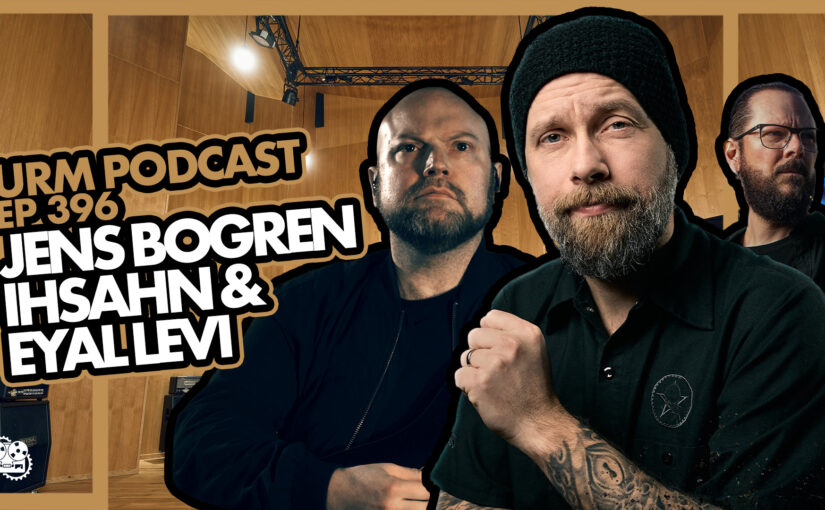
Jens Bogren & Ihsahn: The Psychology of Production, Changing an Artist’s Song, The “Illusion” of Perfection

This episode features producer Jens Bogren and artist Ihsahn. Jens is one of modern metal’s most prolific producers, known for his work with bands like Opeth, Dimmu Borgir, Amon Amarth, Arch Enemy, and Leprous. He is also the founder of the plugin company Bogren Digital. Ihsahn is a founding member of the influential Norwegian black metal band Emperor and has maintained a long and highly respected solo career.

In This Episode

Jens Bogren and Ihsahn drop in for a chat about the making of their massive URM course, “How It’s Done,” where they documented the entire start-to-finish production of an Ihsahn track. They get real about the experience of creating an actual record with cameras rolling, discussing the balance between showing the messy reality of the process—mistakes and all—and preserving the “illusion” of the final product for fans. This leads to a killer conversation about the psychology of production, from navigating artist egos and imposter syndrome to the delicate art of suggesting changes to a song. Ihsahn talks about having a producer alter his arrangements for the first time in his career, while Jens shares his strategies for pushing for what’s best for the song without derailing a session. They also get into some deep-level workflow concepts, like Ihsahn’s method of writing on piano to avoid muscle memory and the importance of committing to sounds early to create a more cohesive record. It’s a candid look into the minds of two masters of the craft, exploring the philosophies that drive their creative decisions.

Products Mentioned

Timestamps

  • [3:45] How having cameras present affects the creative process
  • [9:13] The value of showing mistakes vs. maintaining the “illusion” of a perfect record
  • [15:30] Jens’s philosophy: using modern tools to create the “magic take”
  • [17:36] Dealing with loss of perspective and self-doubt during production
  • [20:55] The reality that high-level bands aren’t always top-tier musicians
  • [22:03] Why a producer must adapt their methods for each artist
  • [25:18] Ihsahn on having a producer change his songs for the first time
  • [28:05] Why Ihsahn is a solo artist: the challenge of deviating from a strong internal vision
  • [33:43] Jens on navigating the “minefield” of suggesting song changes to an artist
  • [39:22] What does the term “producer” really mean today?
  • [44:03] The “sunk cost fallacy” and getting rid of a great part that doesn’t serve the song
  • [48:37] The common mistake young bands make by stuffing too many unrelated riffs in a song
  • [55:10] Ihsahn’s process: Writing music on piano and learning the guitar parts on the spot
  • [1:05:31] Jens on balancing the art of production with running Bogren Digital
  • [1:19:32] Why peer-to-peer education is crucial for the metal genre
  • [1:23:22] How understanding real gear helps you use plugin emulations more effectively
  • [1:31:04] The “courage of commitment” and how limitations can create a more unique record

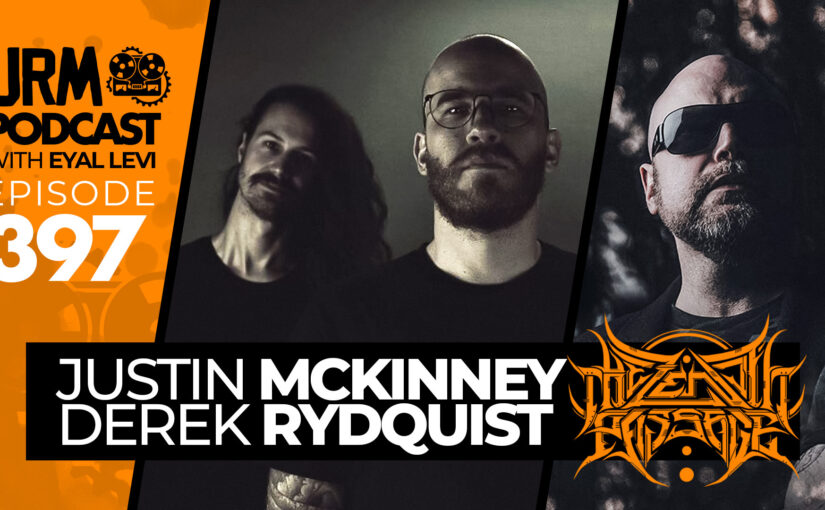
THE ZENITH PASSAGE: Writing song-focused tech death, rhythmic vocal production, constructing the perfect take

Justin McKinney and Derrick Quist are the core of the technical death metal band The Zenith Passage. McKinney, the primary composer and guitarist, has a history in bands like The Faceless and is known for pushing the boundaries of the genre. Quist, the vocalist, also has a background in The Faceless and other projects like John Frum. Their latest album on Metal Blade Records, Däidalos, was mixed and mastered by producer Dave Otero and showcases their intricate, yet song-focused, approach to modern metal.

In This Episode

Justin McKinney and Derrick Quist of The Zenith Passage drop in for a seriously detailed look at how they create their mind-bendingly complex music. They break down their writing philosophy, which is all about serving the song and emotion rather than just being “technical for the sake of it.” They get into the weeds on their vocal production process, treating vocals as a rhythmic instrument and solving the puzzle of fitting intricate lyrical patterns without stepping on key musical phrases. The guys also pull back the curtain on their tracking methods, explaining why this style of music has to be constructed and how they use techniques like crossfaded punch-ins to maintain a human feel. They also discuss arranging synth layers in a dense mix, the collaborative magic of working with producer Dave Otero, and the psychology of staying focused during a difficult performance.

Products Mentioned

Timestamps

  • [6:17] Not writing tech for the sake of being technical
  • [9:34] The vocalist’s role in guiding the listener through the chaos
  • [12:19] Treating vocals as another rhythmic instrument
  • [15:10] The “world’s hardest puzzle” of writing lyrics to complex rhythms
  • [17:32] Making sure vocals don’t cover up cool musical parts
  • [24:24] The reverse process of writing lyrics to fit a finished song
  • [25:44] Their process for giving and receiving feedback
  • [30:23] Why the take you *think* is the best often isn’t
  • [36:27] Why tech death has to be constructed, not played straight through
  • [37:09] Using Guitar Pro as a writing tool to capture complex ideas quickly
  • [43:39] The artistic choice behind constructing a “perfect” performance
  • [46:49] How to punch-in guitars while keeping a human feel
  • [56:07] Fitting synths and orchestral layers into a dense guitar mix
  • [59:15] Intentionally making a mix sound overwhelming and chaotic for artistic effect
  • [1:04:10] The importance of communicating non-traditional arrangement ideas to your mixer
  • [1:08:59] How producer Dave Otero turned their “fantasy” into reality and then took it further
  • [1:17:06] How a great producer can push you to find potential you didn’t know you had
  • [1:25:48] The weirdness of “red light syndrome” when recording
  • [1:31:23] How the band stays focused and avoids intrusive thoughts while performing

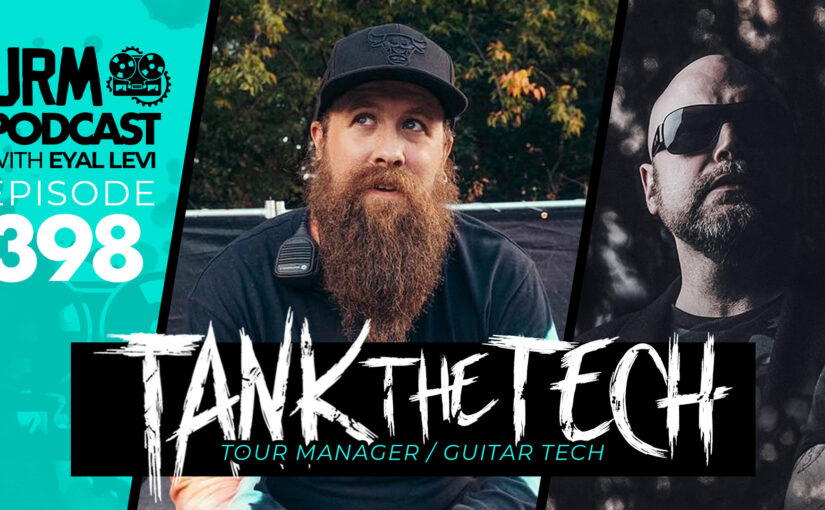
TANK THE TECH: The real cost of touring, surviving road disasters, and career longevity

Tank the Tech is a veteran tour manager, musician, and content creator known for his popular YouTube channel where he pulls back the curtain on the touring industry. With over 15 years on the road, he’s done it all—from guitar, bass, and drum teching to running merchandise and lighting for bands ranging from club acts to stadium headliners across the rock, metal, and country genres. He offers a brutally honest, no-BS perspective on what it really takes to survive and build a career on the road.

In This Episode

Tank the Tech joins the podcast to drop some serious real-world knowledge on the touring side of the music biz. He gets into the nitty-gritty of tour finances, explaining the astronomical cost of buses these days and why “van life” is crucial for building both a bank account and the mental toughness to handle the inevitable chaos of the road. Tank shares some wild stories about on-the-road disasters and how those early struggles prepare you for anything. He and Eyal also have a frank discussion about career longevity, stressing the need for musicians and crew to think beyond their current gig and build a sustainable future. For producers, this is a killer look into the world your clients live in, packed with insights on the financial pressures, logistical nightmares, and unique mindset required to make it on tour.

Timestamps

  • [0:06:52] Why a roadie can speak more freely than a signed artist
  • [0:07:26] Breaking down the real cost of touring and why fans should know
  • [0:09:44] Why bands stick with vans long after they can afford a bus
  • [0:10:51] The insane, post-pandemic increase in bus and bandwagon costs
  • [0:13:28] The unglamorous reality of life on a packed tour bus
  • [0:15:33] Does being on a bus really help a band’s public perception?
  • [0:19:30] How van touring develops the mental fortitude for handling disasters
  • [0:21:08] Why every touring professional should start in a van and trailer
  • [0:22:16] Tank’s van tour disaster story: a broken axle in a blizzard
  • [0:27:41] How money solves problems at higher levels that you have to improvise at lower levels
  • [0:30:50] The rock star who couldn’t handle a van after years on a bus
  • [0:35:15] Why musicians need to think about what comes after the band ends
  • [0:37:05] The pandemic forcing crew members to find new careers
  • [0:45:51] Why Tank enjoys being a crew member more than being in a band
  • [0:48:08] The music industry has thousands of roles beyond just being a rock star
  • [0:54:24] The importance of being versatile and learning multiple crew roles
  • [1:02:36] Why a great crew’s work is often invisible to the audience
  • [1:08:48] Why there’s a massive shortage of qualified tour crew post-pandemic