Finn McKenty, Author at Unstoppable Recording Machine - Page 16 of 51

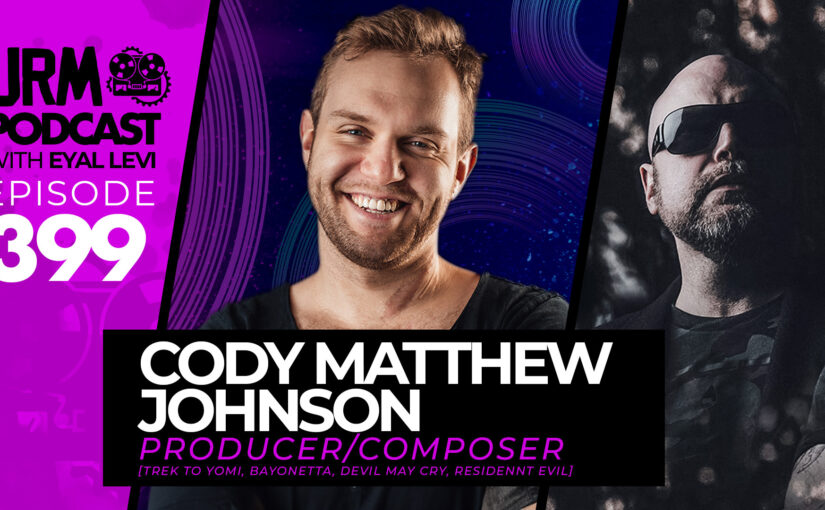
CODY MATTHEW JOHNSON: Pivoting from Metal to Game Music, Surviving Toxic Fandom, and Scoring with Meaning

Cody Matthew Johnson is a composer, producer, and songwriter who has carved out a serious niche in the world of video game music. He’s the founder of Imperial Music Group, a collective that creates audio for massive titles. While he’s now deep in the gaming world, having scored games like Devil May Cry 5 and Trek to Yomi, he got his start as a metalhead trying to make it as a frontman in a band before pivoting into scoring.

In This Episode

Cody Matthew Johnson joins the podcast for a super insightful chat about navigating a non-traditional career path in music. He gets real about the mental hurdles of pivoting from his original dream of fronting a metal band to becoming a go-to composer for video games. Cody breaks down why he thinks so many metalheads end up in game audio, connecting the immersive, complex nature of metal to the needs of interactive storytelling. He shares a wild story about the “soul-crushing” online hate he received from the combined metal and gaming communities for his work on Devil May Cry 5, offering a frank look at dealing with toxic fandom. On the technical side, Cody dives deep into his composing process, explaining how he uses semiotics—the study of signs and symbols—to make sure every single sound has a purpose. This is a great one for anyone interested in applying their production skills outside the typical album cycle or just hearing how to build a unique career from the ground up.

Timestamps

  • [3:46] Pivoting from rock star dreams to game composer
  • [8:15] Why pride and stubbornness can kill a music career
  • [10:51] How to know when to pivot vs. when to keep grinding
  • [16:42] The role of luck vs. preparation in getting opportunities
  • [18:03] The mental toughness required to pivot away from your artistic identity
  • [24:27] Why hating certain types of music can make you a better artist
  • [32:08] Dealing with fan backlash when a band changes its sound
  • [34:08] Cody’s “soul-crushing” experience with toxic gaming and metal communities on Devil May Cry 5
  • [39:40] Dealing with death threats and online harassment as a creator
  • [42:20] Why are there so many metalheads in the video game industry?
  • [46:41] How the immersive nature of metal translates perfectly to game scoring
  • [54:35] Cody’s practical process for translating a complex creative brief into music
  • [57:09] Using semiotics (the study of signs and symbols) to compose with meaning
  • [1:08:16] Why modern game music often avoids catchy melodies
  • [1:12:45] How learning sound design can make you a better band producer
  • [1:23:11] The story of why Cody started his own company, Imperial Music Group
  • [1:29:31] Building a company that provides healthcare and stability for musicians
  • [1:37:28] The pros and cons of being an employee vs. an entrepreneur
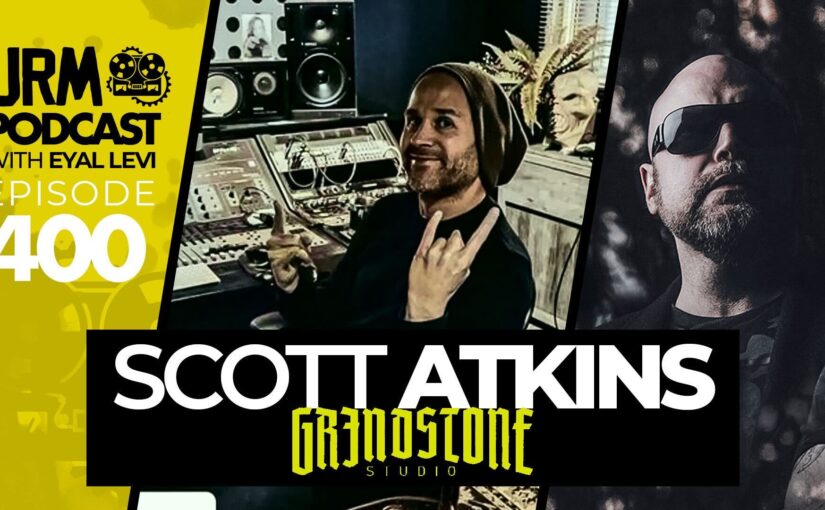
SCOTT ATKINS: Avoiding Burnout, The Psychology of Bands, Capturing a Band’s Identity

Scott Atkins is a UK-based producer and mixer known for his extensive work with iconic bands like Cradle of Filth and modern metal torchbearers Sylosis. With a career built on navigating the complexities of the genre, he has become a go-to name for artists seeking powerful, polished, and authentic-sounding records, including acclaimed solo guitarist Andy James.

In This Episode

Scott Atkins joins the podcast for a seriously insightful chat about the long game of being a metal producer. Forget romanticized, all-night studio sessions; Scott breaks down the real-world necessity of setting boundaries and maintaining a healthy work-life balance to avoid burnout. He dives deep into the psychology of managing bands, from getting ahead of issues with thorough pre-production to being the objective voice that pushes their songwriting to the next level. Scott also discusses the art of capturing a band’s unique identity, especially when they have a long history like Cradle of Filth, and explains why just applying a “good” mix template isn’t enough. It’s a masterclass in the communication, strategy, and mental fortitude required to not just survive, but thrive in a production career.

Timestamps

  • [0:01:40] Why Scott started producing metal out of frustration as a musician
  • [0:04:58] How a bit of encouragement and help from Andy Sneap kickstarted his career
  • [0:06:13] Architecture vs. music production: The safer career bet
  • [0:10:21] How keeping a “Plan B” can be damaging to your career
  • [0:11:19] Recognizing the signs of burnout and the importance of work-life balance
  • [0:16:59] The key to setting healthy working hours without pissing off the band
  • [0:18:30] Why willpower and creativity are finite resources you have to manage
  • [0:20:31] Dealing with the highly-charged personality of a great metal drummer
  • [0:25:31] Getting ahead of problems with thorough pre-production and demo feedback
  • [0:29:58] Acting as a fresh perspective for prolific writers like Josh Middleton of Sylosis
  • [0:35:41] The modern challenge of solo writers versus true band collaboration
  • [0:38:46] Working with a band whose members are spread all over the globe
  • [0:45:19] How a strong relationship with the band’s core keeps the vision consistent
  • [0:52:03] The holy grail of mixing: Making a band sound authentically like themselves
  • [0:54:28] The importance of researching a band’s back catalog
  • [0:57:25] How to find the sonic identity for a brand new band with no history
  • [1:01:54] The undeniable feeling of being in the room with true talent like Andy James
  • [1:07:20] Why you have to be a survivor and keep the faith to get your big break

ZACH JONES: His No-Template Workflow, Beating Creative Burnout, and the Death of the Rock Radio Single

Producer Zach Jones has worked with a diverse roster of artists including Fever 333, Plain White T’s, Chelsea Grin, and Scene Queen. He’s built a reputation for his versatile production style and has become a go-to collaborator for bands across the rock and metal spectrum.

In This Episode

Zach Jones returns to the podcast to chat about his unconventional workflow and the mindset required to stay on top of a rapidly growing career. He gets into why he works on weekends again, how having a kid surprisingly made him *more* productive, and the reason he starts every single session from a blank slate—no templates. Zach breaks down how this approach keeps him creatively engaged, avoids burnout, and prevents him from getting stuck in a formula. He also dives into the bigger picture, discussing the creative stagnation that comes from chasing the “rock radio single” and why being fearless is the only way to truly stand out. From the pressure to play it safe versus the need to innovate to knowing your identity as an artist (even if it’s a “musical Big Mac”), this episode is a deep dive into the philosophy of making records that matter.

Products Mentioned

Timestamps

  • [3:50] Why Zach went back to working on weekends
  • [8:49] How having a kid actually *increased* his productivity
  • [13:35] Zach explains why he doesn’t use templates and starts every session from scratch
  • [18:28] Maintaining consistency on an album without a template
  • [22:41] How avoiding templates helps prevent burnout and keeps work exciting
  • [24:01] The fear of getting too comfortable or stuck in one sound
  • [26:25] The importance of making yourself uncomfortable to break through plateaus
  • [29:52] Dealing with an entire album of songs that have the same structure
  • [32:58] Why your personal taste creates consistency even with different sounds
  • [35:31] The story of Slipknot’s debut album having a demo on it that no one noticed
  • [38:15] A theory on why extreme metal has a commercial ceiling
  • [40:33] Breaking down the modern “rock radio single” formula
  • [47:36] The creative danger of being too afraid to fail or be weird
  • [51:02] The pressure to “play in the box” vs. the need to innovate
  • [53:31] Why fearless bands like Bring Me The Horizon and Sleep Token are winning
  • [55:58] It’s okay to make a “musical Big Mac” if that’s who you are as an artist
  • [59:11] Rapid fire: Favorite compressor
  • [59:16] Rapid fire: Sims or tube amps?
  • [59:23] Rapid fire: Best hardware analog synth
  • [59:49] Rapid fire: The most crushing mix he’s ever heard

DAVID COWELL: Breaking Bands with TikTok, Old-School Artist Development, and Relentless Songwriting

David Cowell is a producer and developer known for his in-depth, old-school approach to making records. He’s the guy behind the recent breakout success of Sleep Theory, who he developed from the ground up, co-writing with the band to find their sound and ultimately helping them land a deal with Epitaph Records and a top-10 active rock hit with their song “Fallout.” He also recently wrapped up tracking a full-length album with The Icarus Plan, applying the same immersive, months-long process to the project.

In This Episode

Producer David Cowell joins the podcast to talk about his immersive, artist-first production philosophy. He dives deep into the case study of Sleep Theory, explaining how he took them from an unknown local act to a signed band with a charting single, all kicked off by one 15-second TikTok clip that went viral overnight. David gets real about the modern necessity for bands to be relentless content creators and how that commitment separates the ones who make it from those who don’t. The conversation zeroes in on what David feels is the most crucial part of the process: songwriting. He shares his belief in constant refinement, rewriting, and rearranging—even if it means completely re-tracking a song that’s 10 BPM too slow—to take a track from good to great. It’s a killer look at the mindset required to not just make records, but to truly develop artists and build careers from the ground up.

Products Mentioned

Timestamps

  • [2:17] Why telling a band to “go independent” can be a double-edged sword
  • [5:00] How David develops indie bands to attract a major label team
  • [6:00] The power of a single viral moment on TikTok
  • [8:00] The story of discovering Sleep Theory and seeing their potential
  • [9:27] The vetting process: looking for that undeniable “X factor” in an artist
  • [11:00] Finding a band’s sound through trial and error (writing 6 songs to find “the one”)
  • [15:00] How one 15-second clip launched Sleep Theory’s career overnight
  • [16:41] The work doesn’t stop after you go viral; you have to keep grinding out content
  • [19:01] Why some talented bands fail: they refuse to engage with social media
  • [23:11] Comparing modern content creation to old-school flyering and handing out CDs
  • [25:18] Why songwriting is more important than the recording, mix, or master
  • [28:18] Capturing a song idea that literally came to him in a dream
  • [31:04] The refinement process: iterating on a song four or five times to find the best version
  • [33:18] Howard Benson’s game-changing move: turning an outro into a hit chorus for In Flames
  • [36:11] The decision to re-record a fully tracked song because the tempo was 10 BPM too slow
  • [40:04] David’s old-school approach: going all-in with one artist for months at a time
  • [43:12] How a producer’s belief can fundamentally build an artist’s confidence
  • [46:49] David’s origin story: from two tape decks to working alongside major producers
  • [53:00] Why success is what happens when opportunity meets preparation

SIMONE PIETROFORTE: Building a Career from a Small Town, Modern Metal Mixing, Handling Rejection

Simone Pietroforte is a rising Italian producer and mixer known for bringing a massive, modern sound to bands like Blood Runs Black, Reflections, and Signs of the Swarm. Hailing from a small town in Southern Italy, he’s a prime example of a self-taught engineer who leveraged online education and the power of the internet to build an international career from the ground up, becoming a go-to name in the modern metalcore and deathcore scene.

In This Episode

Simone Pietroforte joins the podcast to talk about his journey from working with local bands in a small Italian town to mixing major international artists. He shares his philosophy on using those early, often frustrating, local gigs as crucial practice for the big leagues and discusses how the unprofessional chaos of the music industry exists at every level. Simone dives deep into how early online education from guys like Joey Sturgis completely changed his perspective, proving you don’t need a million-dollar studio to make world-class records. He and the guys get into the nitty-gritty of ear training, the process of constant self-improvement, and developing the mental toughness to handle rejection without letting it derail your passion. They also geek out on some modern mix techniques, particularly for controlling low-end, and debate the unwarranted hate for “smart” plugins like Soothe.

Products Mentioned

Timestamps

  • [1:45] How to manage your schedule when your career starts exploding
  • [5:28] Why working with frustrating local bands is the best practice you can get
  • [8:02] The myth that unprofessionalism disappears at higher levels of the industry
  • [11:06] The huge influence of Joey Sturgis’s early Creative Live classes
  • [16:04] The two choices you have if you live in the middle of nowhere and want a career
  • [19:22] Shifting from the “big studio with fancy gear” mindset to an in-the-box approach
  • [22:28] Why ear training is like building a muscle (and why you don’t know what you’re not hearing)
  • [25:02] The change in perception that happens when you start mixing every single day
  • [26:43] Why the skills needed to get to the next level are always changing
  • [31:03] Staying hungry: critiquing your own mixes even when the band and label are happy
  • [34:08] Learning how to deal with rejection and not letting it ruin your career
  • [35:35] How to reframe rejection: you might just not be the right fit for that specific project
  • [41:21] The challenge of getting a huge, controlled low-end in extreme metal
  • [44:43] Debunking the hate for “smart” plugins like Soothe
  • [48:46] Using one-shot samples is like using Soothe: great if you know how to use the tool properly
  • [50:29] Rapid fire: Favorite compressor
  • [51:43] Rapid fire: Best microphone of all time
  • [52:34] The weird but effective technique of blending four Neural DSP amps for Reflections