Finn McKenty, Author at Unstoppable Recording Machine - Page 11 of 51

JESSE ZURETTI: Landing Netflix gigs, playing the long game, and true imposter syndrome

Jesse Zuretti is a musician, songwriter, composer, and sound design specialist. While he’s known for his band Binary Code, he has successfully pivoted his career to the world of composition, landing high-profile work with major clients like Netflix and Marvel. His work spans everything from post-production and trailers to full-on film and TV scoring.

In This Episode

Jesse Zuretti drops by to get real about the long game of building a sustainable career in music. He and Eyal discuss the psychological hurdles of pivoting from a band member to a full-time composer, emphasizing how your identity can be the biggest challenge. Jesse shares the genuine, persistent, and “outcome-less” networking strategies that landed him gigs with Netflix and other major players. They also break down the critical difference between true imposter syndrome (a sign you’re pushing your limits) and simple insecurity (which can be a crutch). For producers, Jesse shares a powerful concept: avoiding the “expiration date” on your records by outsourcing specialized work, like orchestral arrangements, to experts. It’s a deep dive into the mindset, patience, and strategic thinking required to not just survive, but thrive in the modern music industry.

Products Mentioned

Timestamps

  • [3:32] The psychology behind pivoting your career from a band to composing
  • [6:03] The fine line between dogged determination and delusion
  • [8:02] How the pandemic forced many musicians to become entrepreneurs
  • [9:49] Why you sometimes need to leave parts of your past behind to move forward
  • [15:45] The importance of recognizing and following what you’re truly passionate about
  • [25:16] How Jesse uses polite persistence to create opportunities for himself
  • [32:26] “Outcome-oriented” vs. “outcome-less” networking and which one actually works
  • [34:33] Why you shouldn’t just network with your peers (i.e., other composers or producers)
  • [38:31] The value of building a community vs. networking with direct competition
  • [42:58] How a long-game, word-of-mouth approach landed Jesse a deal with Netflix
  • [46:44] The common misconception of “imposter syndrome” and how it differs from insecurity
  • [50:06] The “safety net syndrome”: Why pressure is essential for success
  • [55:49] Knowing when it’s time to let go of control and build a team
  • [1:00:56] Jesse and Randy Slaw’s new production company, Mighty Music Group
  • [1:02:45] What is the “expiration date” of a production, and how do you make timeless records?
  • [1:05:15] Don’t be afraid to ask high-level professionals to work on your project
  • [1:07:09] Getting real about when you should (and shouldn’t) work for free
  • [1:12:52] The moral of the story: Play the long game in your career
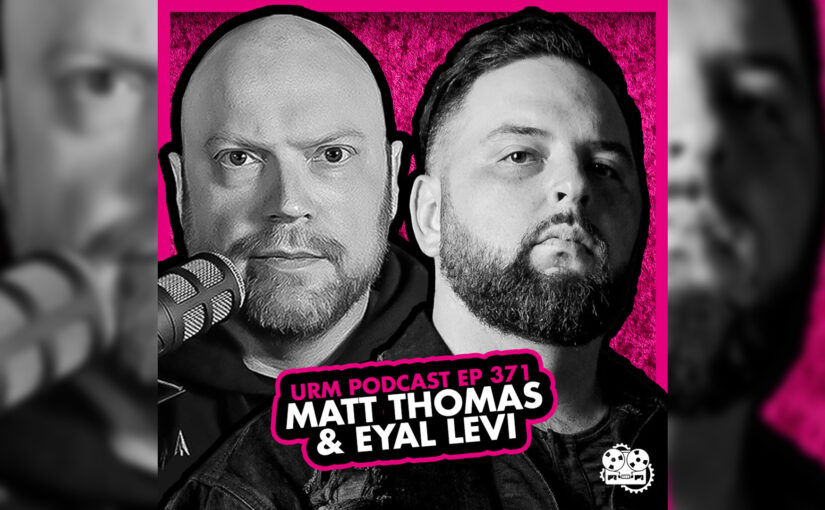
MATT THOMAS: The Producer as Therapist, Building Multiple Revenue Streams, and What Makes a Song

Producer, engineer, and composer Matt Thomas has a diverse background that includes everything from live sound to content creation. He’s brought his production talents to a ton of heavy artists, including Left to Suffer, Darko, Spite, and Kingdom of Giants, building a solid reputation for helping bands craft powerful, modern metal records.

In This Episode

Matt Thomas joins the podcast to talk about the mindset and hustle required to build a career in production today. He shares how transitioning from being a “grumpy sound guy” in the live world to a full-time studio producer gave him a new perspective on dealing with artists. Matt gets real about the producer’s role as a communicator and even a therapist, breaking down how he manages band conflicts and gets everyone aligned on a shared vision. He also pulls back the curtain on the business side of things, explaining the importance of setting up multiple revenue streams through services like SongTrust and SoundExchange to create a sustainable living. This episode is packed with practical advice on everything from knowing when a collection of riffs isn’t actually a “song” yet, to why you need to be competitive first and creative second to really make it.

Products Mentioned

Timestamps

  • [0:02:17] Dealing with the unpredictable nature of working with musicians
  • [0:04:27] How the pandemic helped him transition from live sound to studio work
  • [0:06:06] Realizing he had become the “grumpy sound guy”
  • [0:07:27] The “jack of all trades” mindset and embracing a broad skillset
  • [0:10:21] Why being good at many things makes you a natural producer
  • [0:14:56] The critical importance of having a “vision” for a record
  • [0:20:09] The ultimate artistic direction: “Everything should sound like Blade’s about to walk in the room”
  • [0:22:19] Using communication on day one to manage expectations and avoid revisions
  • [0:25:12] Acting as a therapist for bands and talking members through conflicts
  • [0:31:55] Why you need multiple revenue streams to survive in music
  • [0:37:43] What SongTrust is and how it helps collect international royalties
  • [0:39:16] Debunking the myth that you can’t make money as a musician
  • [0:40:33] Joel Wanasek’s advice: “Be competitive first, then get creative”
  • [0:46:01] The importance of being honest when something isn’t working
  • [0:50:04] The “Is it sick?” test: the only metric that matters for a part
  • [0:55:34] The “leave it ’til you hate it” approach to tracking to maintain momentum
  • [0:58:07] Why you shouldn’t try to play parts outside your current skillset in the studio
  • [1:02:26] The problem with bands showing up with “songs” that have no vocals
  • [1:05:53] What actually defines a song (hint: it’s not just a collection of riffs)
  • [1:11:40] Why a great song is independent of genre and production

ANDREW BAYLIS: Writing Jelly Roll’s #1 Hit, Nashville Collaboration, and Songwriting Secrets

Andrew Baylis is a Nashville-based songwriter, producer, and engineer who has built an impressive career working with artists like Jelly Roll, Sleeping With Sirens, Life on Repeat, and Nine Shrines. His diverse skillset spans multiple genres, but he’s recently made major waves in the rock world, co-writing and producing Jelly Roll’s #1 active rock single, “Dead Man Walking.”

In This Episode

Andrew Baylis offers an inside look at the highly collaborative Nashville songwriting scene and how its principles can elevate modern rock production. He explains why the rock world often resists collaboration and contrasts it with his process of bringing in different top-tier writers to keep creative energy high. Andrew breaks down his workflow for building tracks on the fly in Logic X, creating a musical mood that inspires lyricists and captures ideas before they fade. He also gets into the power of authentic, vulnerable lyrics, drawing a line from bands like Slipknot to his work with Jelly Roll to show why deep, personal themes resonate so strongly with listeners. For any producer looking to improve their songwriting chops and learn the art of diplomatic collaboration, this episode is packed with practical advice on navigating band dynamics, structuring songs for maximum impact, and staying focused on what truly serves the track.

Products Mentioned

Timestamps

  • [3:24] Rock music’s resistance to collaboration
  • [4:23] Why producers in the rock and metal scene often avoid working together
  • [6:18] Andrew’s method for collaborating with Nashville songwriters
  • [7:18] The pipeline from Warped Tour bands to the Nashville country scene
  • [8:33] Keeping creative energy high by bringing in a new writer each day
  • [15:21] Andrew’s primary role in a writing session: creating the musical mood
  • [16:18] Using Logic X to quickly build tracks and capture ideas on the fly
  • [21:48] The importance of having your tools ready at all times to avoid losing an idea
  • [28:09] How Jelly Roll’s authentic, vulnerable lyrics connect with a huge audience
  • [30:53] Why lyrical depth in popular music is cyclical
  • [31:47] The story of watching Jelly Roll’s “Dead Man Walking” climb the rock charts
  • [38:33] A method for structuring lyrics: writing from the chorus backward
  • [40:01] A killer songwriting tip: every line in the verse should make sense when followed by the hook
  • [41:45] The problem with “interchangeable riffs” in modern metal
  • [43:42] Making sure the music always serves the vocals, not the other way around
  • [48:24] How to deal with band members who are overly precious about their few ideas
  • [55:26] The paradox of established artists: choosing a big-name producer vs. a hungry up-and-comer
  • [58:30] How Jelly Roll gave Andrew his big break

Jeff Dunne: Quitting His Day Job, Remote Production, and Creating Impulse Responses

A longtime friend of URM, Jeff Dunne is an audio engineer and mixer known for his powerful, modern metal productions. Throughout his career, he has worked with a growing list of notable artists including Born of Osiris, Chelsea Grin, Make Them Suffer, Alluvial, and Wage War. Jeff is also known for his close partnership with producer Drew Fulk (Wzrd Bld), which included a fan-favorite Nail The Mix session for the band Emmure.

In This Episode

Jeff Dunne returns to the podcast to chat about the major moves—both geographical and professional—he’s made over the last few years. He explains how relocating to Portland improved his mental state and, in turn, his productivity and mix quality. Jeff breaks down the slick remote workflow he and Drew Fulk developed using Dropbox, allowing them to collaborate seamlessly from different locations. He also opens up about the decision to finally quit his day job in software to pursue audio full-time, and why focusing your energy is key. For all the gearheads, he dives deep into his process for creating impulse responses, explaining why they’ve become essential for maintaining consistency in the modern, single-driven release cycle. It’s a great look into the mindset, workflow, and business savvy required to thrive as a modern producer.

Products Mentioned

Timestamps

  • [3:38] How moving to Portland boosted productivity and mix quality
  • [4:15] Why happiness and mental state are more important than gear later in your career
  • [6:21] Jeff’s remote workflow with Drew Fulk using Dropbox
  • [7:44] Tracking directly into a shared Dropbox folder
  • [8:46] The new challenge: Intel vs. Apple M1 chip compatibility in remote sessions
  • [13:10] The key to successful remote production and collaboration
  • [18:59] The decision to quit his day job in software to go full-time in audio
  • [21:29] The “entrepreneur’s curse” and why you can only give 100% of your energy
  • [24:08] Working with longtime friend Wes Hauch on the Alluvial record
  • [30:33] What’s behind the improvement in his mixes’ low end and punch
  • [32:18] You can’t polish a turd: The critical importance of great source tracks
  • [33:42] How do you learn to identify a “good take”?
  • [35:22] Dealing with perfectionist musicians who always want one more take
  • [36:53] The psychology of playback and other strategies for managing artists
  • [39:24] How Jeff uses Trello to manage his entire project pipeline
  • [43:23] When *not* to use a CRM: Why amateur producers waste time on business systems
  • [50:27] How bands *actually* discover and hire producers (it’s not your website)
  • [55:31] The problem with most amp sims and IRs (and how to fix it)
  • [58:28] Using IRs to maintain consistency when bands release singles months before an album

DANIEL BRAUNSTEIN: Reuniting with Volumes, Delusional Optimism, and Training Your Fans

Producer Daniel Braunstein was a founding member of Volumes, pioneering their signature low-tuned, groove-oriented sound before leaving to focus on his production career. He has since worked with prominent artists like Spiritbox, Day Seeker, and Silent Planet. In a full-circle move, he recently reunited with Volumes to co-write and produce their latest material, including their Nail The Mix single, “Bend.”

In This Episode

Daniel Braunstein and Volumes bassist Raad Soudani get into the weeds on the creative process and the mindset required to stay relevant in today’s metal scene. They discuss the current resurgence of heavy music, the surprising parallels between metal and hip-hop, and the importance of having the “delusional optimism” to push through the industry’s challenges. They also unpack the concept of “training your fans” to accept artistic evolution, using Volumes’ own history with clean vocals as a case study. For producers, Dan offers some killer insights into how his experience in the pop and TV sync world taught him to simplify his metal workflow, trust his gut, and erase the line between writing and production. The guys provide a transparent look at their modern, remote collaboration process and the journey of reuniting to honor the band’s legacy while pushing its sound forward.

Products Mentioned

Timestamps

  • [3:13] The resurgence of heavy music in the mainstream
  • [4:39] Does a darker world lead to more aggressive music?
  • [5:51] The deep similarities between hip-hop and metal
  • [9:04] The concept of “training your fans” to accept artistic changes
  • [12:26] How does a band actually train their audience?
  • [15:08] The initial backlash Volumes received for using clean vocals
  • [19:35] Being ahead of the curve with low-tuned guitars and programmed drums
  • [23:16] How using limited gear early on makes you a better producer
  • [26:30] The “delusional optimism” required to survive in the music industry
  • [39:29] Why making music you genuinely love is better than chasing trends
  • [41:30] Why mediocre art that invokes no emotion is the biggest failure
  • [46:13] The evolution of the songwriting process in Volumes
  • [49:52] Volumes’ ultramodern, remote recording process during the pandemic
  • [52:34] Honoring the legacy of late guitarist Diego Farias in the new music
  • [56:51] How producing pop music improved Dan’s metal workflow
  • [59:10] The importance of social skills for a producer
  • [1:03:58] The disappearing line between writing and production
  • [1:11:48] Why band members are always co-producers to some extent
  • [1:13:34] The challenges of producing a two-vocalist band