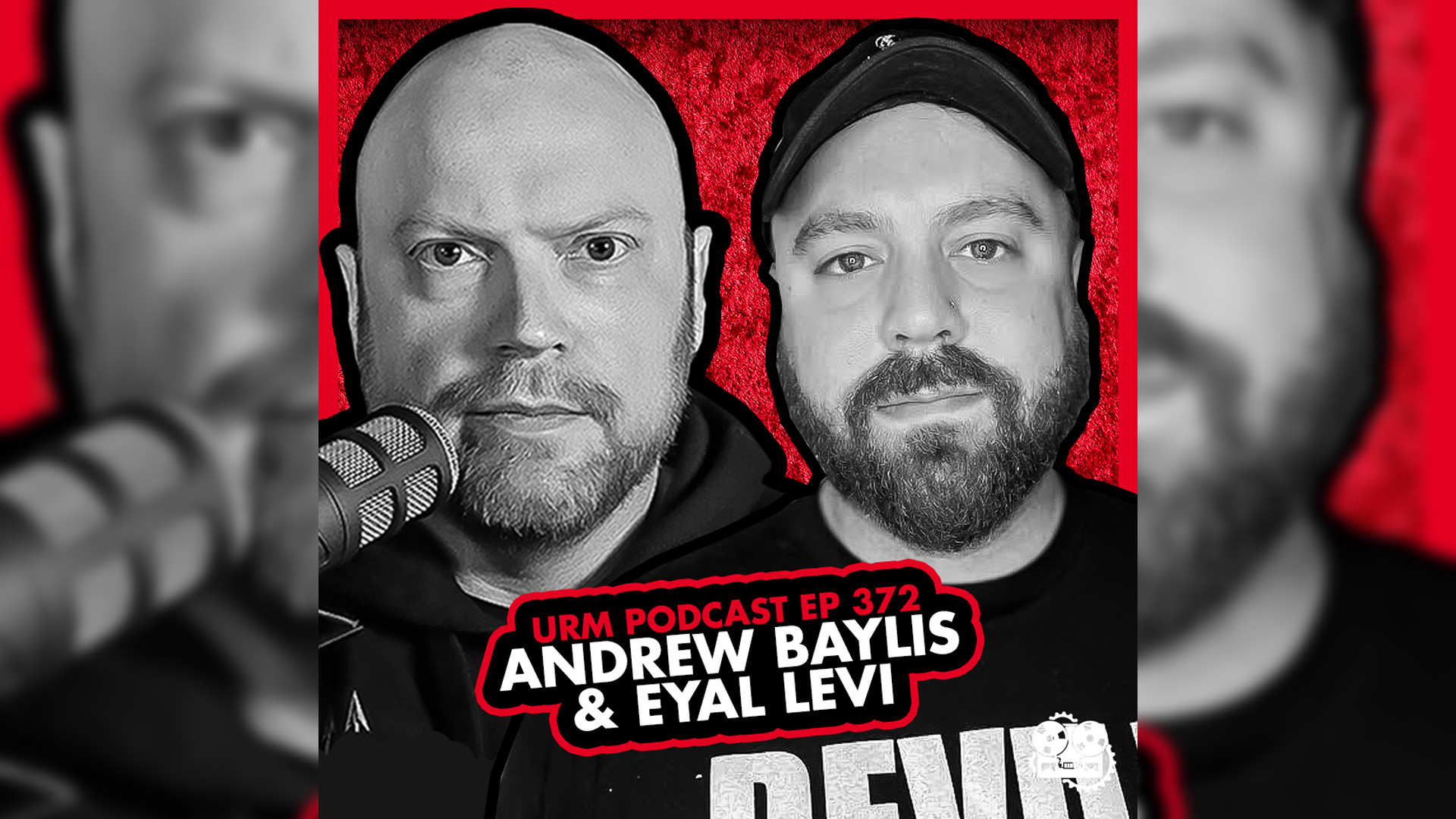
ANDREW BAYLIS: Writing Jelly Roll’s #1 Hit, Nashville Collaboration, and Songwriting Secrets
Finn McKenty
Andrew Baylis is a Nashville-based songwriter, producer, and engineer who has built an impressive career working with artists like Jelly Roll, Sleeping With Sirens, Life on Repeat, and Nine Shrines. His diverse skillset spans multiple genres, but he’s recently made major waves in the rock world, co-writing and producing Jelly Roll’s #1 active rock single, “Dead Man Walking.”
In This Episode
Andrew Baylis offers an inside look at the highly collaborative Nashville songwriting scene and how its principles can elevate modern rock production. He explains why the rock world often resists collaboration and contrasts it with his process of bringing in different top-tier writers to keep creative energy high. Andrew breaks down his workflow for building tracks on the fly in Logic X, creating a musical mood that inspires lyricists and captures ideas before they fade. He also gets into the power of authentic, vulnerable lyrics, drawing a line from bands like Slipknot to his work with Jelly Roll to show why deep, personal themes resonate so strongly with listeners. For any producer looking to improve their songwriting chops and learn the art of diplomatic collaboration, this episode is packed with practical advice on navigating band dynamics, structuring songs for maximum impact, and staying focused on what truly serves the track.
Products Mentioned
Timestamps
- [3:24] Rock music’s resistance to collaboration
- [4:23] Why producers in the rock and metal scene often avoid working together
- [6:18] Andrew’s method for collaborating with Nashville songwriters
- [7:18] The pipeline from Warped Tour bands to the Nashville country scene
- [8:33] Keeping creative energy high by bringing in a new writer each day
- [15:21] Andrew’s primary role in a writing session: creating the musical mood
- [16:18] Using Logic X to quickly build tracks and capture ideas on the fly
- [21:48] The importance of having your tools ready at all times to avoid losing an idea
- [28:09] How Jelly Roll’s authentic, vulnerable lyrics connect with a huge audience
- [30:53] Why lyrical depth in popular music is cyclical
- [31:47] The story of watching Jelly Roll’s “Dead Man Walking” climb the rock charts
- [38:33] A method for structuring lyrics: writing from the chorus backward
- [40:01] A killer songwriting tip: every line in the verse should make sense when followed by the hook
- [41:45] The problem with “interchangeable riffs” in modern metal
- [43:42] Making sure the music always serves the vocals, not the other way around
- [48:24] How to deal with band members who are overly precious about their few ideas
- [55:26] The paradox of established artists: choosing a big-name producer vs. a hungry up-and-comer
- [58:30] How Jelly Roll gave Andrew his big break
Transcript
Speaker 1 (00:00:00):
Welcome to the Unstoppable Recording Machine Podcast. And now your host, Eyal Levi. Welcome to the URM podcast. Thank you so much for being here. It's crazy to think that we are now on our seventh year. Don't ask me how that all just flew by, but it did. Man, time moves fast and it's only because of you, the listeners, if you'd like us to stick around another seven years and there's a few simple things you can do that would really, really help us out, I would endlessly appreciate if you would, number one, share our episodes with your friends. Number two, post our episodes on your Facebook and Instagram and tag me at al Levi URM audio and at URM Academy, and of course our guest. And number three, leave us reviews and five star reviews wherever you can. We especially love iTunes reviews. Once again, thank you for all the years and years of loyalty.
(00:01:01):
I just want you to know that we will never charge you for this podcast, and I will always work as hard as possible to improve the episodes in every single way. All we ask in return is a share a post and tag us. Oh, and one last thing. Do you have a question you would like me to answer on an episode? I don't mean for a guest. I mean for me, it can be about anything. Email it to [email protected]. That's EYAL at m dot A-C-D-E-M-Y. There's no.com on that. It's exactly the way I spelled it. And use the subject line Answer me Eyal. Alright, let's get on with it. Hello everybody. Welcome to the URM Podcast. My guest today is Andrew Baylis, who's a songwriter, producer and engineer based out of Nashville. Throughout his career, Andrew has worked with constantly increasing roster of superb talent, such as Jelly Roll, SLAR, sleeping with Sirens, life on Repeat, nine shrines and a ton more. His recent work with Jelly Roll saw a number one single on the active rock charts with the track Dead Man Walking. I introduce you, Andrew Baylis. Welcome to the URM Podcast.
Speaker 2 (00:02:12):
Hey, thanks for having me, man.
Speaker 1 (00:02:13):
It's a pleasure. I've heard a lot about you recently. I feel like you're in a real good time period for your career these days. I hear your name everywhere right now, so I just want to say congratulations on all that.
Speaker 2 (00:02:30):
Thank you.
Speaker 1 (00:02:31):
But what I hear is I always hear about you in a different kind of context, hear about your writing, I hear about you producing, I just hear about you doing different things. So what I'm wondering is what do you see yourself as?
Speaker 2 (00:02:42):
Mainly I'm a producer and songwriter, but I don't always produce songs I write on, but usually I do, and that's kind of my way of just seeing a song through. If I'm writing on it, I usually produce on it. I want to be the one to finish it. Yep, I mix too, but I've kind of gotten out of that mainly because of time and also I just don't think I'm that good at mixing. But yeah, so I would say mainly producer and songwriter. Do you think
Speaker 1 (00:03:13):
It's really important in this game of music to figure out that you have something to really offer in versus what you might be just okay at? I think people need
Speaker 2 (00:03:24):
To realize what they're actually good at. In rock music especially. There's a lot of egos and a lot of things happen in rock music I don't see anywhere else. And one of 'em is the resistance to collaborate in rock music. I'm sure you've noticed it where
Speaker 1 (00:03:41):
Usually
Speaker 2 (00:03:41):
People want to do it all and it'd be so much better if people would collaborate and if someone's really good at mixing and someone else is really good at producing, then why wouldn't they just work together and each do what they're good at as opposed to one person just trying to do it all. But some people can do it all, so there's no right or wrong answer. But for me, I found that collaborating is what has recently led to the small Taste of success I've found in the last two years.
Speaker 1 (00:04:23):
I think that the reason a lot of people don't collaborate in metal is, well, it's multifaceted. I think that sometimes they're afraid too in terms of budget. They're afraid of splitting the budget up, so there's a little bit of greed and financial fear. I think there's also a little bit of fear of them losing the client to that person. And then I also think that there's a little bit of a control freak factor. There's some people who feel like they need to do every single thing. Personally, I've always done better when collaborating with someone. I've always felt like, and I mean in business or in music or whatever, I'm always better when I'm working with a good partner or partners. So to me it seems like the most obvious thing in the world. But I do know quite a few people who they feel like no one will do this as good as they can, and they're not going to take the time to train someone to do it, and so they'll just do it themselves.
Speaker 2 (00:05:25):
Yeah, you'd be correct. I mean, it's definitely more present in rock music. I kind of honestly don't see it anywhere else because in country music it's about literally how many people can work on one song. It's kind of like someone producing and mixing a country song is almost unheard of in the top level, which is good for everyone because that kind of secures everyone's job. I guess. How does it work
Speaker 1 (00:05:55):
Though when you have that many people in on it? Because from in the rock world, I know, yeah, you're working in the studio with a producer and you're working on this album together and maybe there's a co-writer that comes in to help with some songs. Maybe it gets sent off to a mixer later. But this massive team thing, it's foreign to me. I want to know how it works.
Speaker 2 (00:06:18):
There's definitely better ways to do it, but the way I do it usually is, I guess this is just for goes to rock music, but when I'm working with the rock band, most of the bands I work with are usually one or two people in the band kind of do all the writing, and that's not every band, but for this example, I'm going to use that. It'll be like me and the singer and the guitar player, and I have a lot of people I like to write with here in Nashville, and these people are only songwriters. Some of them produce, but most of 'em just right. And I found these people from stepping into the country music scene here a little bit, but a lot of these country people are just straight from warp tour land. They used to be in pop punk bands. I mean half of the biggest country artists here, they're bands that play behind them are made up from Dan and Shay's band is from Rocket to the Moon and My American Heart.
(00:07:18):
You know what I mean? A lot of those bands people forgot about or that broke up are just here making an awesome living, just playing for country artists. But a lot of these songwriters, same story. They used to be in bands, bands that I've heard of too when I met 'em here. But anyway, what I'll do is if it's me a singer and a guitar player and we're say we're just making a song or we're doing a few songs, well, I'll bring in another writer, say we're doing three songs, so we'll have three days or four days, I'll bring in someone like my friend Michael Whitworth, who's an awesome writer, top line dude. He'll come in with us. So it's four of us and we'll just make a whole song that day. But because I'm also producing it, instead of us making a demo, I'm just actually recording everything for real as we go. Maybe not the vocals, those might be scratch vocals, but we'll just go through it all one day and I'll get most of everything I need. Maybe not all of it, but most of it. Then the next day I'll pick someone different so that a new person has come that day. So the excitement level stays at a high because I keep bringing in new people. Does that make sense?
Speaker 1 (00:08:33):
Yes,
Speaker 2 (00:08:33):
Totally. So we do it again the next day, but because I'm the producer of it and I'm also writing and the band's there, we're still keeping their sound intact. We're just having these people elevate what we're doing and they honestly bring amazing ideas to the table and they're very lyric heavy in Nashville. So that's what I'm trying to change with rock music is stop making songs about nothing, you know what I mean? Which a lot of people tend to do. And then I'll do that the third day and then I have three songs that then the last day I'll have the singer actually record the vocals we need, and I'll keep, I'll do a lot of harmonies in the scratch vocal, just keep, you know what I mean? So then the ideal world is I have say Zach Sini mixing it, or Cody Stewart is also a guy I work with that lives here who mixes well, the stuff hasn't come out yet, but he's been mixing a lot of stuff for me. And I'll have a guy that I prefer Cody or Zach Mix the song, and then usually Mike Collegian masters it. He's great. So that's not totally unheard of to go through that process. Still there most of the way,
Speaker 1 (00:09:59):
I was about to say that's not like committee still the band and the producer are the common thread on day one, day two, day three, you're just bringing in an outside party to help writing on each day, but you've still got the glue, I guess.
Speaker 2 (00:10:15):
And that's my favorite way to do it. But there has been times where I write a song with someone and then they want someone else to produce it, but they want stems. So it ends up being like a co-produced kind of thing that can get a little messy, usually not if I'm the one that starts it, but I've done it before where I get brought in on something to co-produce after it's been started. And maybe my brain doesn't work that way, but I'm like, it kind of throws me off. But I think my favorite way and probably what makes sense to everyone else is to be, if you're a producer and a writer, just seeing it all the way through. But I like co-producing with other people. I just usually like to be the guy to start it and then hand it off and have them do, I just did a song with this kid, his low spirit, that's his artist's name, Josh Landry, and he's an awesome producer and songwriter himself. And to be honest, he doesn't really need me to produce. But we wrote a song together and I started it here and I did my thing to it knowing that I'm going to hand it off to him and he's going to go crazy on it and recut the vocals and do his thing on it. But yeah, so
Speaker 1 (00:11:32):
That's the ideal method I guess.
Speaker 2 (00:11:34):
Yeah. But there's been times where
Speaker 1 (00:11:36):
That doesn't sound like writing by committee. There's this idea out there that in country or pop people write by committee.
Speaker 2 (00:11:43):
What does that mean? Committee?
Speaker 1 (00:11:44):
That's what, I don't think anybody knows what they mean when they say that, but you hear about this a lot when people are talking shit about artists who have other writers or anything, which is stupid to begin with because everyone has always used outside writers in any genre. They make it sound like country music or pop music or some metal bands have a committee of writers like Round Table style or something.
Speaker 2 (00:12:11):
It
Speaker 1 (00:12:11):
Doesn't sound too accurate to me.
Speaker 2 (00:12:13):
So I do work with a lot of country artists. My next song that comes out June 24th is that I actually wrote and produced with Brantley Gilbert and it's like featuring Jelly Roll. And I've been around the country artists long enough to kind of see how they, most of them do things and most of them, they want to write on all the songs and country artists write almost every day, like they're writing every day. But the songs that get cut and make it to the album, there's always this group of people you see all over the album. One of my friends is Jeff War Burton, and I mentioned to Michael Whitworth earlier, but you'll find these guys names pop up a lot with certain artists and it's like obviously whatever these guys do together with this artist keeps working. Those are the songs that keep coming out.
(00:13:01):
They usually do a three or four way and sometimes five way. They also don't go into it that day. Like the artist isn't going in that day thinking they're writing a song for themselves. There's no expectations because they write every day. So obviously the best thing to do is to cut the songs that make sense for their brand as an artist. And then the songs that don't get cut, they're like, man, I love this song, but I would never have a song this rock country pop country. And then people like Jason Odean who mainly just cut songs, I don't think he really writes that much of the songs he puts out, it gets pitched to those people and then they've not wasted just because they didn't put the song on, they didn't waste their time because usually a way bigger artists will take the song and put it out.
Speaker 1 (00:13:51):
Yeah, why trash it.
Speaker 2 (00:13:52):
Yeah, exactly. I feel like in Nashville that's different than in LA is there really is no, well, everyone's just a little bit nicer here to be honest. There's no ego, not the people I write with anyway. There's never been someone holding up the process, not for them. If the song's going, it just keeps going. They might just flip a switch like, okay, this song isn't going to be for me, but we're going to keep going in this direction. I've probably written more songs in the last two years than I've wrote my whole life, to be honest.
Speaker 1 (00:14:21):
So it sounds like it's just a hell of a lot of songwriting. And then where the songs end up is kind of like a decision that's made in real time, almost like writing a song. This might not work for this project, but let's finish it anyways. This is a song worth finishing. And then figure out what it's for after.
Speaker 2 (00:14:40):
And most of these writers, they're assigned to publishing companies and that's their publisher's job is that exact thing to like, Hey, we wrote this song today with so-and-so, but he doesn't think it's for him. Do your thing with it. And then they'll send it around to a bunch of people and all it takes is having the right name on it for someone to actually click it and listen to it. And if I just happen to be on the song, then that's kind of good for me. Yeah, totally. I'm usually writing with people much better than I am, so that's one way I keep getting better is because I keep surrounding myself with people that are way better than I am at it.
Speaker 1 (00:15:18):
What do you consider your role as a songwriter in a team?
Speaker 2 (00:15:21):
So my main role is the music. I can hear a conversation about what they want to make a song about and immediately start creating a mood with music before they even, I can just put headphones on and hear what they're talking about and then spend 20 minutes building a track or a verse and a chorus thing and be like, Hey, what about this? And right then, and that's what gets 'em more inspired and gets more ideas coming out. And I do write melodies and lyrics, but that's more in rock music and country. It's more like music and some melody. But
Speaker 1 (00:15:56):
Take me through this. You hear them talking about what they want it to be about and you're like, I got this. So you put on headphones and you get to work. Do you have pro tools open and virtual instruments? Do you go in another room with a guitar? How do you get from, alright, I heard what they were talking about. I know what to do to the 30 minutes later where you have a verse pre-course in a chorus to show them.
Speaker 2 (00:16:18):
The first answer to that is probably just experience, but I use Logic X, which I think is a lot easier, especially when it comes to making things on the fly for songwriting. Obviously you can get it done in any doll basically, but you use logic,
Speaker 1 (00:16:35):
So that works.
Speaker 2 (00:16:36):
Yeah, usually I'll do electric, so whatever they're on, I'm not bothering 'em at first. Eventually I'm going to start bothering them. They can't just have electric, but I'll make a chord progression either on electric or acoustic or piano or something. And then from that start building it literally as fast as I can. I have samples of slide guitar and all kinds of shit. I can just change the key of real quick. This is more like the demo version. So I'm using things I've used before just because I'm trying to create an atmosphere for the song and obviously someone else will produce it and actually do it over, or if I produce it, I'll redo it, but I'm literally just going as quick as I can to get my idea down so we can start actually writing to it. Or someone might say at first, I really want a song at the Justin Bieber stay tempo. And I'm like, all right, cool. Then I just think about that tempo and start basically just building tracks. And for country, it's more about the dynamics between the verse and the chorus and the playing. I play guitar so lucky for me, I can kind of mimic what I want to do that I see other people do, but I think playing guitar definitely helps making the tracks, especially for country music,
Speaker 1 (00:18:01):
But you're trying to get from point A to point B pretty fast. And is that kind of, because you want to know if the ideas are valid and inspirational to the other people before you've put too much time into it?
Speaker 2 (00:18:14):
Exactly, because a lot of times they'll be like, nah, I don't know. And I'm like, yeah, I don't know either. And I've start all over next. Yep, we're going to spend most of the time on writing the vocals and the structure of it. I'd say for that kind of songwriting, the music's important for sure, but it's more just about the chord progression and obviously some people write without a person like me in the room and they just kind of voice memo it and then they'll have to pay someone later to make a demo to even pitch around. So I find that I can get into a lot more rooms than say someone who, because I just moved here about a year and a half ago and I've found that I can get myself in a lot better situations because I make tracks because we can leave that day with, I can pretty much make a demo and the day of kind of thing Right now I know I'll never have time to come back to it, so I try to finish the songwriting demo that day. So I have everything always set up at all times. The vocal chains always set up. I'll usually use the SM seven B through the Phoenix pre on acoustic, or I might have a different acoustic mic set up that week or I don't know,
Speaker 1 (00:19:26):
Whatever it is. It's always set up. Yeah, yeah, it makes sense.
Speaker 2 (00:19:29):
Which I guess is just two microphones, but
Speaker 1 (00:19:32):
Yeah, so right now I'm writing new material for my band and I travel all the time, and so what I did is I have three identical rigs. I have one for Atlanta, one for my girlfriend's place, and then one for my suitcase, and they're all one-to-one identical so that no matter where I am, those are the three places I'm going to be. I'm either going to be at my place at my girlfriend's place or on the road somewhere. I don't want there to be any confusion or any extra time between when I want to sit down to write and write. So the rigs are identical and it's always the same thing. I don't want to think about that shit. Is
Speaker 2 (00:20:14):
It like an Apollo twin or something or
Speaker 1 (00:20:16):
No, it's this personas Revelator IO 44, which is a super portable one channel interface.
Speaker 2 (00:20:23):
Does the computer power it or does it have its own power supply? No computer powers it. Oh, cool. Yeah, I was looking at something like that to take on the road to, I'll intro you to them if
Speaker 1 (00:20:33):
You want. They're really, really cool. They're very small and they're very roadworthy so far. I put it through a lot of abuse and so far it hasn't broken and I love the fact that it's small and doesn't take up a bunch of space and it has everything I personally need for, I'm not trying to shill right now, I'm just saying with what you said of always having the same setup or pretty much the same setup and always ready to go. I've taken that to the point of the level of anywhere I might be. I have the same setup ready to go for this purpose just because setting up just the time spent, setting up is time that you might not be writing.
Speaker 2 (00:21:10):
Yeah, exactly. And I forget who I was with, I think it was Mitchell Temp. He's a good friend of mine and he's also really popping off right now. I mean, he's been popping off for a minute in country, but he's a pretty successful artist, and I remember one day he was like, I had his cappo or something, and before he left he was like, oh yeah, I need to get that cappo back. And I was like, oh, okay. I'm like, I'm sure you can just buy another one. And he was like, no, it's not about that, man. It's about when I get home tonight, if I have an idea and I need a cappo and I don't have it, I just probably just lost the idea and I was like,
Speaker 1 (00:21:47):
Oh,
Speaker 2 (00:21:48):
That makes total sense now I feel like an asshole.
Speaker 1 (00:21:51):
That's exactly right though. It's like your tools, whatever your tool set is. I think once you know what your tool set is and what your workflow is and what you need, you should have a way to always have that wherever you'll be if writing on the road or say you're a mixer who mixes on the road or whatever, if you're going to be in different locations but still want to do the same thing, it's not very much different than a guitar player on tour who has a guitar tech that sets up their rig for them exactly the same every night and sets up the guitars to the same tuning, same action heights, same everything every night. That's what they need to be able to do their job. And so as writers or whatever, we don't have writer texts, but it is important that I feel like our tools are with us wherever we go for that exact reason that your friend said.
(00:22:46):
That's why I have three of the same. Also with my podcast Seeing Rig, I have three identical podcast rigs as well. I have one here. I have one in the suitcase, and then I have one up in Milwaukee, and then I have a fourth one as a backup. And it's because I don't want my podcasting sound to be different anywhere. I want to sound the same no matter where I am, so I totally understand. What are you at your house right now? Yeah, right now I'm at my place in Atlanta. Hey, everybody. If you're enjoying this podcast, then you should know that it's brought to you by URM Academy, URM Academy's mission is to create the next generation of audio professionals by giving them the inspiration and information to hone their craft and build a career doing what they love. You've probably heard me talk about Nail the Mix before, and if you're a member, you already know how amazing it is.
(00:23:34):
The beginning of the month, nail the mix members, get the raw multitracks to a new song by artists like Lama, God Angels and Airwaves, knock loose OPEC Shuga, bring me the Horizon, go Jira, asking Alexandria Machine Head and Papa Roach among many, many others over 60 at this point. Then at the end of the month, the producer who mixed it comes on and does a live streaming walkthrough of exactly how they mix the song on the album and takes your questions live on air. And these are guys like TLA Will Putney, Jens Borin, Dan Lancaster, toy Mattson, Andrew Wade, and many, many more. You'll also get access to Mix Lab, which is our collection of dozens of bite-sized mixing tutorials that cover all the basics as well as Portfolio Builder, which is a library of pro quality multi-tracks cleared for use in your portfolio. So your career will never again be held back by the quality of your source material.
(00:24:33):
And for those of you who really want to step up their game, we have another membership tier called URM Enhance, which includes everything I already told you about, and access to our massive library of fast tracks, which are deep, super detailed courses on intermediate and advanced topics like gain, staging, mastering low end and so forth. It's over 500 hours of content. And man, let me tell you, this stuff is just insanely detailed. Enhanced members also get access to one-on-ones, which are basically office hour sessions with us and Mix Rescue, which is where we open up one of your mixes and fix it up and talk you through exactly what we're doing at every step. So if any of that sounds interesting to you, if you're ready to level up your mixing skills in your audio career, head over to U Academy to find out more,
Speaker 2 (00:25:22):
What kind of music is your band? We're Extreme
Speaker 1 (00:25:24):
Metal.
Speaker 2 (00:25:25):
What is Extreme Metal? Exactly.
Speaker 1 (00:25:27):
So if you think of metal as a umbrella term that could house anything from Kiss to Metallica to Godsmack to Iron Maiden to Slayer under it, it's such a broad term.
Speaker 2 (00:25:41):
I like Slayer.
Speaker 1 (00:25:42):
Yeah, I mean I like all those bands to some degree. We're just in the more extreme end of things, like faster tempos, more insane arrangements, more screaming, less singing kind of stuff. It's just everything turned up more and darker I think.
Speaker 2 (00:26:00):
Oh, cool. Awesome. It's been so long since I've done music that's just heavy with really no melody or anything, but I think I might do this EP later this summer with a more up and coming super heavy band that my friend, I probably can't say their name, it's not really set in stone yet, but it got brought to me and I was like, that wouldn't make any sense. And I was like, well, honestly, I haven't done it in so long. I probably even full of ideas to just take what they do and try to elevate it to be like, okay, how do you get this band that's playing in front of 400 people a night to get that? They're killing it as an independent heavy band. But we also get, when Slipknot plays a show, thousands of people show up. I'm like, how do you get those people to also like this band without making the band lose the fans they already have? I think I'm just addicted to the challenge.
Speaker 1 (00:26:56):
That is a great challenge. By the way, I do have to say though that just because there's not melody in the vocals, right, doesn't mean there's not room for melody and hooks.
Speaker 2 (00:27:07):
Well, this, I think their thing is more like hate. I don't know this band, but
Speaker 1 (00:27:11):
I'm just saying in general,
Speaker 2 (00:27:13):
You are right. In this particular case, it's just about very, very heavy and it's very angry, and I'm like, no one's going to stop being angry anytime soon. So no, quite the opposite. One thing you can always count on is no one's getting their act together anytime soon and no one's going to stop being angry. So those are two things to write about or you're pretty much always guaranteed a wide audience because those things are never going away. No one's getting sober anytime unless they're already sober. But I'm talking about for certain demographics, people aren't getting sober anytime soon, even if they want to. So it's more like how do I write about things that I can relate to as well as a wide audience? I can relate to being angry. I can relate to the sober thing. Maybe that's, I guess that's more of a jelly rolls demographic.
(00:28:09):
His hardcore fans are really into trying to change their life. And if there was music, I feel like he's definitely helped a lot of people, and I'm like, well, man, if you can make music and help people and be really successful at it, then that must be the best feeling in the world because that's the dream. He's not famous because he's a cock star bragging about how much money he has. He's famous because he writes about these real deep, I mean, he writes for himself. He's getting his own demons out there when he writes, and you'd be surprised how many people feel exactly the same way as you do. And that goes for any artist really. A lot of people are scared to write about, say they have a lot of problems with their family and their mom and dad, and there's a lot of kind of weird fucked up shit going on, and a lot of artists are kind of scared to bring it out. And I'm like, well, how many other people feel the same way? And they're also scared to talk about it. So if you do, you're going to connect with these people, but they're going to really connect to you. You're going to be their favorite artist when you start speaking up for them. Does that make sense?
Speaker 1 (00:29:17):
Yeah. That's why I think that in the heavy music spectrum, it's the bands like Slipknot and Korn, Metallica, Metallica wrote Fade to Black about suicide for instance, and corn and Slipknot have always had their lyrical subject matter be about personal pain, like personal traumas, and when you put that kind of lyrical content with music that's that intense, it's actually congruent. It's congruent to those feelings, and that's why I think it hits so hard for so many people because so many people can relate to wanting to kill themselves or have had some sort of a trauma with a family member or just have had so much anger, they don't know what to do with it, but the music they make fits that feeling, that atmosphere. And I do think that it is so universal that it's far beyond, I guess this idea I had, at least in grade school, that metal was a fringe thing. I realized it's not the same as country in terms of overall market share, but I mean, dude, some metal bands are pretty damn big, and I think that it is because those emotions that they're tapping into are those are universal human emotions straight up. They just are.
Speaker 2 (00:30:39):
Yeah, no, I agree with all of that. Yeah, I mean, they're some of the last heavy rock bands to have those deep lyrics that honestly is just missing now in a lot of new rock music.
Speaker 1 (00:30:53):
Yeah, I wonder why, but I feel like it'll come back and the reason I don't mean the genre will come back. What I mean is I do feel like different levels of depth are cyclical, almost like certain things like this is not lyrics, but at some points guitar solos are cool, at other points, they're not cool, then they're cool again, et cetera, et cetera. I think that there's time periods where more surface level lyrics are more, I guess are easier, more palatable I guess, to the audience. But when the world becomes a harder place and we're in tougher times, which we actually are right now, we're in a pretty dark time period now, is the kind of time period where darkness I think will resonate more in a lyrical, in a lyrical sense.
Speaker 2 (00:31:47):
No, you're right, because I literally watched it happen with, we had this song Dead Man Walking that on the Jelly Roll album I produced, and I literally watched it. He's never been a rock artist before. He was doing a southern hip hop kind of thing, and I literally watched this dude who's never been on the radio before, get put on Rock radio and just go up a number pretty much every week until they got to number one. And I was like, well, I think artists think that what people want to hear is a song about nothing when really they do want to hear a song about something because I just watched a dude who no one in that world had heard of yet just shoot right up to the charts. It took about four months, but he literally was moving a spot a day. You know what I mean?
Speaker 1 (00:32:40):
And
Speaker 2 (00:32:40):
I'm like, well, that proves the point that people do want to hear songs about the more deep stuff that's a little uncomfortable to talk about.
Speaker 1 (00:32:49):
Well, the audience can't know what they want before they've heard it too. That's also part of it is like someone who isn't involved, like say some random person in the middle of Iowa who's a Jelly Roll fan or a Slipknot fan or whatever, they can say that they want another song by one of those artists, but they can't tell you exactly specifically what song the artist should make. It doesn't work that way. It's more like the artist has to create something and it will resonate with them or it won't. I don't think that the audience is really capable of saying, I need you to write a song about this trauma I went through, and then artists writes a song about the trauma they went through and then suddenly that resonates. That just doesn't really work that way.
(00:33:46):
I do think that when an artist does decide to be honest and write about the truth, the truth of how they're feeling about things and whatever truth that is that they're talking about, if it does resonate with people, even if it takes a while, there's plenty of stories where you've heard of things, songs, climbing up the charts little by little by little, by little by little, and then not moving from the charts just because the message, it might not have been a major artist at the time that the song came out, but the message is so universal and so ubiquitous, I guess, that it just has legs and it's not always with dark stuff. If you look at the story of Maroon Five, for instance, with this love, I believe, what album was that on?
Speaker 2 (00:34:40):
You said? In this moment?
Speaker 1 (00:34:41):
No, no, maroon five.
Speaker 2 (00:34:42):
Maroon Five.
Speaker 1 (00:34:43):
Sorry,
Speaker 2 (00:34:44):
My bad.
Speaker 1 (00:34:45):
In this moment though, that's another good example, but I was just saying that it's not all darkness that this works for. I am just trying to look at the song This Love Was that on, was it called Songs about Jane or something? Is that their more rock song? It is more of a rock song. It's from like 2005. It's more like a funky kind of rock song that came out. Okay, release 2002 songs about Jane. I was right. Okay, so released in 2002. I know you'll know the song if you heard it. It's Cute
Speaker 2 (00:35:17):
Love
Speaker 1 (00:35:19):
In It, that one is it
Speaker 2 (00:35:19):
That song? That song? Oh
Speaker 1 (00:35:21):
Yeah, that song. Fucking great song. But the story with that song though is very interesting because it was released in 2002, but that shit didn't become a hit for several years, several, several years. And of them touring in a van and just pushing it and pushing it and pushing it
Speaker 2 (00:35:40):
The long way is always the best way.
Speaker 1 (00:35:42):
Yeah, I guess my point being, it's not just dark music that sometimes takes a while, sometimes this kind of happier stuff. I mean, it still, it's about getting broken up with, so it's sad, but still that story of a majorly huge song not hitting right away happens more often than not. There's plenty of cases of huge songs where it took months or years of the song being out there for the public to come around.
Speaker 2 (00:36:12):
Yeah, no, for sure. Yeah, actually Maroon five has that one song. Payphone too. Yes. I guess it's kind of a sad pop song ish. The lyrics are, but they have a lot of those.
Speaker 1 (00:36:25):
Yeah.
Speaker 2 (00:36:26):
Yeah. I like those super pop songs that technically make you feel good until you read the lyrics and you're like, oh, this is a whole different thing that's going on. And that's what I like about that kind of stuff is when the lyrics don't quite match up with the melody and the mood, which in a way creates its own mood of it. The contrast. Ironic. Yeah,
Speaker 1 (00:36:51):
I really like that kind of thing. I actually think Baron Five are great about that because this love especially, it's got beautiful melodies and it's so catchy and if you see the video, you think it's about this dude and his hot girlfriend and they're great relationship, but really no, it's about him getting his ass dumped and heartbreak and basically not being able to understand why or how that could possibly happen. But I feel like Maroon five are really good at doing that. Most of their songs have a little bit of sadness in them, which I think also is part of what makes 'em so relatable. Most people on earth can't relate to things that are just a hundred percent happy.
Speaker 2 (00:37:36):
Yeah,
Speaker 1 (00:37:37):
I think
Speaker 2 (00:37:37):
No, no, you're right about that. I mean, you kind of have to write about what, and that's more what I mean. I don't know about you, but I feel like I relate more to the depressing.
Speaker 1 (00:37:48):
Yeah, yeah, totally.
Speaker 2 (00:37:49):
Super depressing vibes and lyrics and stuff, just how I kind of grew up thinking I should hate everyone for no reason, which makes no sense, but I was like, yeah, slip knot, mud vein corn. Yeah, I hate everyone. All right, but not really
Speaker 1 (00:38:06):
Well. Yeah, I mean, I've struggled from clinical depression my entire life, so music that kind of speaks to that has always spoken to me, and music that doesn't speak to that, but party music or whatever has always been like, I just don't see, I don't get it, but I know people who do get it. They love to fucking party. So do you get involved with lyrics?
Speaker 2 (00:38:33):
Yeah, I do. I would say most of the time there's someone in the room that's really the leader of the lyrics. That's really, but what I am good at is having an idea. I'm like, what if in the preco you start coming at it from this angle and they'll be, oh, cool. Then they'll just start like thematic angle. Yeah. I guess for an example, I usually write from the chorus backwards so that way I know exactly what we're leading up to, but there's just different ways to lead up to things. You can have a song that's kind of asking yourself why in the verse, why did this happen? Why did that happen? And then the pre chorus says, maybe it's because of this, maybe it's because of that. And the chorus is like, all I know is I don't want it to happen, blah, blah, blah, blah, blah. And you can kind of spin it all around with I stopped asking myself why? Because now I don't know, I'm going off on a tangent here, but maybe that makes a little bit of sense to you. No,
Speaker 1 (00:39:35):
This is just fascinating to me. I love hearing about how people think about their songwriting process and structure it. So it's almost like that particular example is more like every section of the song attacks, I guess, a different question or answer around the thought of this thing happening, whatever that thing is, whether it's a traumatic event or what.
Speaker 2 (00:40:01):
Yeah, and there's a badass songwriter here. His name's Trent Tomlinson. He's like country writer, and he was an artist too. He said something to me the other day that I was like, man, that makes so much sense. How did I not think about it that way? And he said, whatever the hook is, if you can't say the first line of your verse and then say the hook, say your second line of the verse, if you can't say every line of the song and then say the hook after it and have it make sense, then you need to change the line. And I was like, damn, I've never thought about it that way, but that makes total sense. What we're all trying to get is some song that's like this big cohesive picture, and what better way to do that than to make sure every line
Speaker 1 (00:40:49):
The DNA is all there.
Speaker 2 (00:40:51):
Yeah. If every line of that song, you can literally say the hook after it and have it make sense, you probably are on the right track. And I was like, how did I never think of that?
Speaker 1 (00:41:00):
That's great. That's interesting. Since I don't really write lyrics, I write music and I work with people who write the lyrics. I have a similar sort of idea when it comes to the musical side of things. So one of my biggest pet peeves about modern metal records and songs is that very few bands write songs anymore in what we think of as songs with a beginning, middle, and end chorus versus song. A lot of them are just like riff A, riff B, riff C, riff D, riff E, riff A, riff B, riff A, slower riff B, riff A, and just lyrics about whoever the fuck whatever. No beginning, no end. Oh,
Speaker 2 (00:41:42):
The thousand part song.
Speaker 1 (00:41:45):
Yeah. Yeah. I can't stand that. I need songs. And so one of my pet peeves is if you take a modern metal record, I feel like even if there's some similarities in the arrangements like double bass, heavy chugged guitars or whatever, there's some things that are just in metal songs still. You should not be able to cut riff the third riff from Song five on the album and copy paste into copy, paste it over the fifth riff of the first song and have it fit. You shouldn't be able to do that, but you can on so many, and to me, that tells me these are not really songs. These are more just like vomits of riff vomits because a song in my opinion, has to have a unique identity and everything about it has to be unique to that song. You should hear two seconds of it and know what song you're listening to, and it should all work together like that. It's a little different than what you just said about how every line of the verse should be able to connect to the hook, but I feel that same way about the music itself and the riffs. The riffs should only work with that song that they're in. You shouldn't be able to copy paste the chorus riff from Song eight into the bridge of song two and no one know the difference.
Speaker 2 (00:43:11):
Yeah, like interchangeable riffs.
Speaker 1 (00:43:13):
Yeah.
Speaker 2 (00:43:14):
I mean that might come from some guy in the band has a bunch of riffs and they're trying to use 'em all on their album. You know what I mean? Yes.
Speaker 1 (00:43:20):
That's exactly. Just
Speaker 2 (00:43:21):
To make someone just to kind of babysit his ego, probably
Speaker 1 (00:43:25):
That is it. I guess the reason I'm bringing that up is because I feel like that cohesiveness you're talking about in lyrics that you would get by being able to connect the hook to any line in the verse. I feel like you should have that cohesiveness in every aspect. What do you think?
Speaker 2 (00:43:42):
No, 100%. Yeah, that thing about every line coinciding with the hook can also be applied to music. There shouldn't be any guitar thing going on, not, I mean, this is just my opinion, but there shouldn't be any guitar part that's battling the vocals. It should be the literally, that's exactly why when I write a song, we're doing scratch vocals because then I go back and I start changing the music to fit even more with the vocals, even the kick drum on to line up with the vocal pattern. Not obviously not every word, but whatever the kick drum's doing should be helping the vocal, because a lot of times I'll make a drum beat and then I'm like, well, now that we have this melody, I have this fucking random kick just kind of coming in at a weird time when his word lands a beat after it, so I'll just move it. You know what I mean? Yep. If I am doing live drums, which a lot of rock bands I work with, we don't, but some, I'm doing it more and more now, but I do drums at the very end so that way the drummer's literally playing to the song. I think that turns out better than, and especially in rock music, a lot of the drummers just want to just go ape shit the whole time. I'm like, yeah, that's cool. You can do that on your own time, but start
Speaker 1 (00:45:07):
A YouTube channel. If you're a drummer, start a YouTube channel and play crazy shit on your YouTube channel.
Speaker 2 (00:45:13):
Yeah, a lot of them do that now. So I learned this from Dan Corn. I spent like 60 days with him with the last band I was in doing this album, so I literally was getting the recording School of a Lifetime. What he does is he has the drummer do a take of the song, just getting it all out, playing Phils the whole time. He'll be like, just play Phils the entire time basically. And then he'll be like, now I'll play a take where you play No Phils. And then he'll have him play a take where he plays a little bit of fills, but he can use that fucking the drum take of all the fills and kind of pick and choose. If he wants a different fill, he can go to that one. And the drummer also got to get it all out of their system, and I think that might be more the reason he does it.
Speaker 1 (00:46:02):
That makes perfect sense. Getting that stuff out of your system is a really, it's like one of those psychological things where if someone is just putting that all over a song because it's in their system and they can't think straight before doing that, sounds like something Sounds like something else. Got to. Just making me think of something else. It's like get it out of your system so you can think clearly.
Speaker 2 (00:46:29):
Yeah, so Jack, the guitarist for Sleeping With Sirens, I did their album that comes, oh, one song is out now, but the rest of it comes out this summer I did like seven or eight songs on it, then Sini did the rest. Then Sini mixed it, but Jack is one of those people where you give him a guitar and he just starts playing crazy shit, but you kind of just got to let him do that for about 10 or 15 minutes, then be like, alright dude, now let's start recording because otherwise, but I mean I guess I'm a little bit
Speaker 1 (00:47:00):
The same way. Awareness is key. We all have that tendency, especially when we have something new like the guitar player who just got the whammy pedal and is having fun with it. And so somehow that whammy pedal ends up on every song. It is better to just let 'em have their fun and once that fun subsides then actually think about, alright, what are the one or two cool spots on the entire record to use this whammy Pedal? Yeah.
(00:47:30):
But yeah. Also, there's one other thing I've noticed kind of along these lines. I do think it's very important to write a lot and write often, and I thought it was cool that you said that these country artists are writing every day. So one problem that I have found in the rock and metal world is that not everybody writes every single day all the time. So you'll have bands and tell me if you've noticed this with rock or metal bands is you'll have one or two people in the band who do like 80 90% of the writing and always are writing. And so they're used to having their riffs cut. They're used to having entire songs. They've written scrapped, they're used to it. They write so much stuff that maybe 40% of it gets used if that. But then you have other members of the band who don't write very much.
(00:48:24):
They'll write two songs a year or five riffs a year. And so those riffs and those songs are far more precious to them than the other person who writes all the time. Oh yeah. They're all about that and they might not be as good. They don't write as often, but you have to deal with way more psychological finagling to get them to chill out about those songs because less songs equals more precious about the songs. You have dealt with that. Oh yes. How do you deal with that? Well, by your silence, I'm getting ready for the answer,
Speaker 2 (00:49:06):
Asking
Speaker 1 (00:49:06):
For a friend.
Speaker 2 (00:49:07):
In the past there's been situations where I might pull the guy aside in the band that pretty much does everything, but like, Hey man, can I ask you a question? Why are these other guys here? Because so far I've played everything and you're writing me and you are doing everything, and they're just sitting behind me talking really loud, drinking beer.
(00:49:31):
So what I do forget is sometimes those people that chime in with some weird idea out of nowhere can be very helpful. However, I think the situation I'm thinking of was not the case, but another way is if someone's set on what they have and it's just not it, you almost got to take an idea that is it and be like, let me show you why that just let me mess around with this idea and just build it up to the point where they're listening to it and they're like, okay, yeah, you're right. Sometimes you have to finish. If you're doing a whole album and you're just not seeing eye to eye, you kind of have to be like, listen, let's do this idea and let me just do the whole thing and if you guys hate this, then we'll just start recording all the things that you guys want to record. And usually so far it's never been like, yeah, man, nah. We still want to do our idea that we made five years ago. That's never been recorded. No one wants to record it.
Speaker 1 (00:50:30):
A little bit of diplomacy. What I noticed is you're never like, man, your idea sucks. It's probably not a good idea.
Speaker 2 (00:50:38):
I mean, there's just no benefit to that. I know producers that do do that and make people feel like shit, and I find it hilarious. However, I don't like to do it that way because I wouldn't like being talked to that.
Speaker 1 (00:50:52):
Me neither. And here's another thing. You're working with an artist, you're making a record or single whatever, there's going to be a life to that after it comes out where the artist is going to hopefully be supporting it and helping it become successful in the world and then come back to you a few years later for another round. I find that making artists feel like shit in the studio or dropping bombs on their interpersonal workings over sensitive topics like someone's shitty song. You're pushing them one step closer to breaking up or having band issues. And I feel like the last thing we want to do as a producer or hired songwriter or whatever is to cause problems for the band.
Speaker 2 (00:51:42):
Yeah, exactly. You want the song to come out.
Speaker 1 (00:51:46):
Yeah, exactly. You want the song to come out.
Speaker 2 (00:51:48):
Yes.
Speaker 1 (00:51:49):
You want the band to be able to tour and not give up basically.
Speaker 2 (00:51:53):
Yeah, and it's hard because the bands I work with Varsity and Savage Hands who are just now starting to get noticed, it's not all fun and games out there on tour. It's pretty, I've done it. I mean, I did it before. I toured for eight years and played in front of almost no one every night. So I know exactly how they feel and I'm like, Hey man, this is just right now. It's not about showing up to the show and doing what I used to do, being like, oh, there's five people here. This sucks. I hate my life. I'm going to get drunk. Why isn't anyone like my band? We're amazing. Instead being like, whoa, there's five people here that know my band and I'm in Nebraska. It's all about changing your
Speaker 1 (00:52:38):
Yep. Reframing that
Speaker 2 (00:52:39):
Because being negative about it is literally going to help nothing.
Speaker 1 (00:52:43):
Well, the thing is, when you're in that state, right, you're in a vulnerable state where you could look at it as, I'm in Nebraska and there's five people here. What the fuck am I doing with my life?
Speaker 2 (00:52:56):
Versus
Speaker 1 (00:52:56):
That
Speaker 2 (00:52:56):
Was me.
Speaker 1 (00:52:57):
Me too at times versus I'm in Nebraska, how the fuck did people in Nebraska even hear about me? This is awesome. It's only five, but hey, that's awesome that anybody has heard of me in Nebraska. Let's make it to where next time it's 10, et cetera. When you're in that position, you're vulnerable to negativity. And I think that that's when it's especially important to make the decision to reframe how you're going to approach it.
Speaker 2 (00:53:26):
Yeah, exactly. And I try to encourage those artists to think that way by trying to set an example, even though I don't always do the best job of that, but my manager always says, because he manages Jelly Roll too, and he's always like, man, everyone is literally just one song away, which is kind of true because you never know what song is going to be that song. Yeah, you don't. For Jelly Roll, it was that song Save Me, which I met him right after that, and he decided to put out an acoustic song with all singing, which he had never done before, and he recorded it that day. They shot, I think my manager shot the video for it that night and then against everyone's wishes, he put it out the next day and now it's platinum because right place, right time during COVID impulsive decision, just put this song that's barely mixed and mastered out.
(00:54:23):
But it was such a good song that, and he put it out at the right exact time, and that's literally when I say it, sling shotted his career. It sling shotted his career. I mean, it opened up a whole world for him, and it's a world where I can go somewhere and people find out I produce Jelly Roll and all of a sudden I'm important. You know what I mean? When that's never been the case before. I've always felt, I was like, obviously I always thought I'm good at what I do, but I just wasn't. It was like one failed attempt after another of trying to develop bands and do these albums in my little basement, and I might've gotten a song on Octane here and there, but I never really had a big artist give me a chance until I met him because most of the bigger artists don't want to work with you unless you already work with bigger artists, which is Yeah, you got
Speaker 1 (00:55:18):
To have some proof. Yeah, it's a weird way of thinking, but you can understand from their perspective, they're trying to take the risk out of the situation.
Speaker 2 (00:55:26):
I do, but I also see it as man, instead of us going to this guy who's done countless gold records and probably we won't even see the guy the whole time, his assistant will do it all. Maybe we should go with this kid who will spend fucking 15 hours a day on it and
Speaker 1 (00:55:46):
Literally
Speaker 2 (00:55:46):
His life depends on it and we honestly, we could probably pay him way less money and he'll be totally okay with it and we will have someone that's devoted their entire life to it. The biggest thing he's ever done. That should be the way people, I would think that way if I was an artist, but I'm not. So
Speaker 1 (00:56:03):
I understand both sides. I understand why an artist who has a lot to lose, there's a lot riding on this, have families, crew, all these things. To pay a song is important. Real important. Are we going to give a chance to someone that has no real track record? We must really believe in this person if we do. Yeah, exactly. Okay, so if there is someone though that they really do believe in and then they don't go with them because they're scared. That's fucked up. I do think that artists should take a risk on people who are not as far along in their careers. If they really believe in them, if they really believe in them, don't work with people you don't really believe in, but if they really do believe in them, they just haven't had a huge hit yet. But this person will, then you should give them a shot, in my opinion.
Speaker 2 (00:56:58):
Yeah, I mean it comes down to a few different things or I think what I would do as an artist is have the big name dude, do three or four songs and then give someone else a chance to do the rest.
(00:57:12):
And also, it's probably more cost effective that way than just have the same dude mix it all. But I can't control that. But what I can control is now that I'm in a position, I can have people who haven't really, that I think are awesome at what they do and haven't necessarily had a chance yet. And I can be like, Hey, you should mix this. I've actually never heard mixes with really good tracks being sent to you. I'm sure that the mixes, I have heard that sound pretty awesome. Some fucking kid sent you with a focus, right? And an SM seven B and you took straight garbage and turned it into something that sounds pretty good. So imagine what's going to happen when I send you what I did through the assortment of preamps and mics I have and all that stuff. And you'd be surprised what these kids can do. They haven't had the right tools to show what they can do because they're usually just, they're stuck in this lane of only mixing bands that pay $300 a song and they're kind of stuck there. And
Speaker 1 (00:58:20):
So then that brings up a question I have and then going to need to wrap this up after that. But I think this is a good question to end this on, which is who gave you that chance? That
Speaker 2 (00:58:30):
Would be Jelly Roll, for sure.
Speaker 1 (00:58:31):
So Jelly Roll is who gave you that chance?
Speaker 2 (00:58:34):
Yep.
Speaker 1 (00:58:34):
That's really cool. I mean, look, at some point someone's got to give you a chance. I remember Monte Connor, the a and r guy Roadrunner, gave me a chance back by signing my band and that changed my entire life, him giving me that chance. And we didn't have this massive track record or anything, but he went to bat for us and that was a life changer. And I feel like you were just saying with Jelly Roll and stuff, there's your life before and your life after that having happened.
Speaker 2 (00:59:07):
Yeah, exactly. And they're much different. Yeah.
Speaker 1 (00:59:10):
You got to give people a chance when you feel like they're the right person for the chance. I think it's important. I mean, that is how music keeps evolving too, and is by people taking risks on other people.
Speaker 2 (00:59:21):
Yeah. So I mean, the best thing I can do is do the same thing for people.
Speaker 1 (00:59:24):
Yeah, totally. Well, Andrew, I think this is a good place to end the episode. I want to thank you very much for taking the time to hang out. It was a pleasure talking to you and I'd love to do this again sometime. I feel like we could have gone on for like six hours or something.
Speaker 2 (00:59:41):
Oh yeah, I'd love to, man. That sounds awesome. I'll do it anytime you want, man. Just hit me up.
Speaker 1 (00:59:45):
Awesome, man. Yeah, I'd love to talk to you more about songwriting and continue the conversation basically. But thank you, sir.
Speaker 2 (00:59:51):
Awesome. Thanks for having me, dude.
Speaker 1 (00:59:52):
Alright then another URM podcast episode in the bag. Please remember to share our episodes with your friends as well as post them to your Facebook and Instagram or any social media you use. Please tag me at al Levi URM audio at URM Academy, and of course tag our guests as well. I mean, they really do appreciate it. In addition, do you have any questions for me about anything? Email them to [email protected]. That's EYAL at M dot aca MY. And use the subject line answer me Al. Alright then. Till next time, happy mixing. You've been listening to the Unstoppable Recording Machine Podcast. To ask us questions, make suggestions and interact, visit URM Academy and press the podcast link today.

