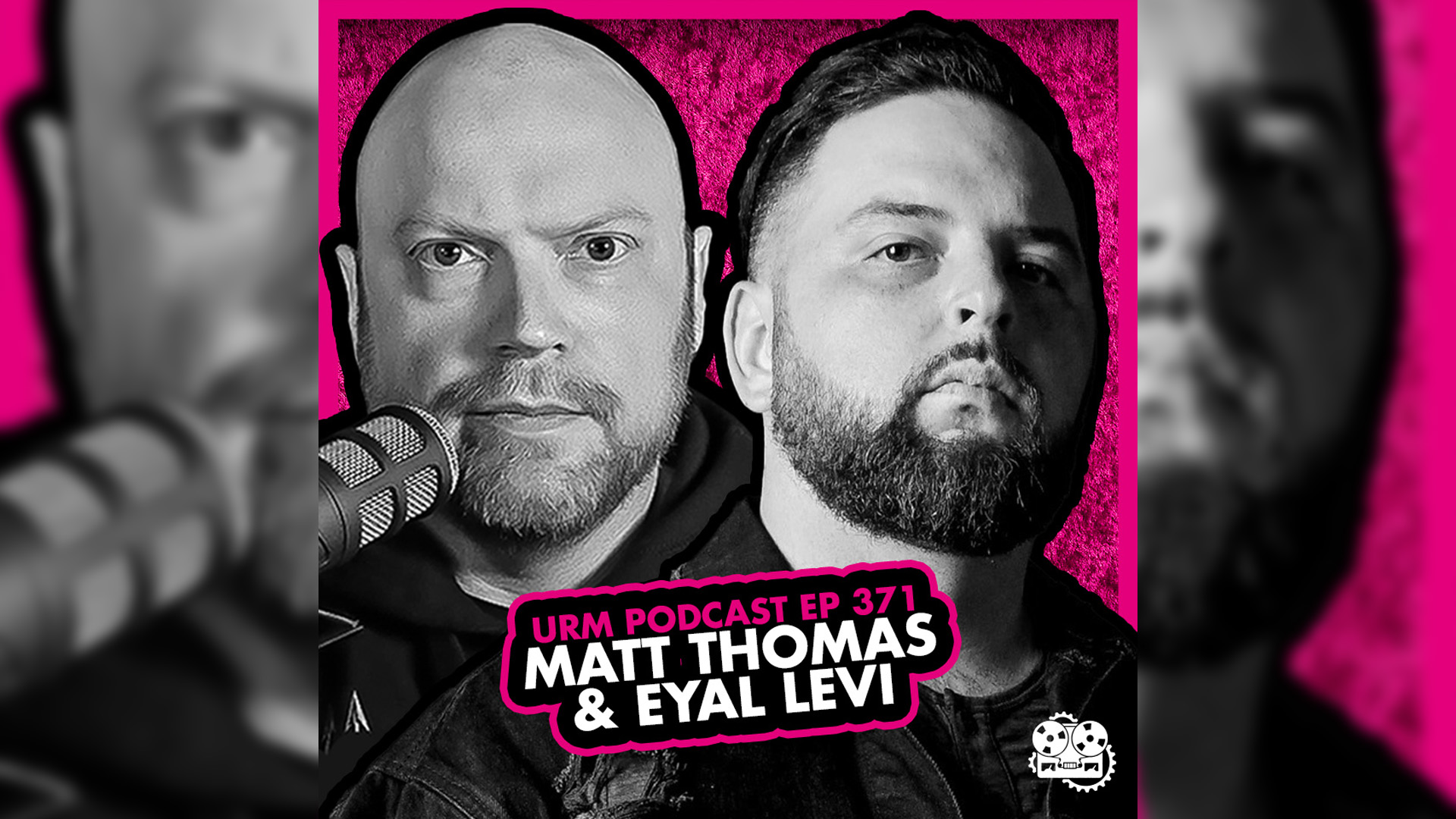
MATT THOMAS: The Producer as Therapist, Building Multiple Revenue Streams, and What Makes a Song
Finn McKenty
Producer, engineer, and composer Matt Thomas has a diverse background that includes everything from live sound to content creation. He’s brought his production talents to a ton of heavy artists, including Left to Suffer, Darko, Spite, and Kingdom of Giants, building a solid reputation for helping bands craft powerful, modern metal records.
In This Episode
Matt Thomas joins the podcast to talk about the mindset and hustle required to build a career in production today. He shares how transitioning from being a “grumpy sound guy” in the live world to a full-time studio producer gave him a new perspective on dealing with artists. Matt gets real about the producer’s role as a communicator and even a therapist, breaking down how he manages band conflicts and gets everyone aligned on a shared vision. He also pulls back the curtain on the business side of things, explaining the importance of setting up multiple revenue streams through services like SongTrust and SoundExchange to create a sustainable living. This episode is packed with practical advice on everything from knowing when a collection of riffs isn’t actually a “song” yet, to why you need to be competitive first and creative second to really make it.
Products Mentioned
Timestamps
- [0:02:17] Dealing with the unpredictable nature of working with musicians
- [0:04:27] How the pandemic helped him transition from live sound to studio work
- [0:06:06] Realizing he had become the “grumpy sound guy”
- [0:07:27] The “jack of all trades” mindset and embracing a broad skillset
- [0:10:21] Why being good at many things makes you a natural producer
- [0:14:56] The critical importance of having a “vision” for a record
- [0:20:09] The ultimate artistic direction: “Everything should sound like Blade’s about to walk in the room”
- [0:22:19] Using communication on day one to manage expectations and avoid revisions
- [0:25:12] Acting as a therapist for bands and talking members through conflicts
- [0:31:55] Why you need multiple revenue streams to survive in music
- [0:37:43] What SongTrust is and how it helps collect international royalties
- [0:39:16] Debunking the myth that you can’t make money as a musician
- [0:40:33] Joel Wanasek’s advice: “Be competitive first, then get creative”
- [0:46:01] The importance of being honest when something isn’t working
- [0:50:04] The “Is it sick?” test: the only metric that matters for a part
- [0:55:34] The “leave it ’til you hate it” approach to tracking to maintain momentum
- [0:58:07] Why you shouldn’t try to play parts outside your current skillset in the studio
- [1:02:26] The problem with bands showing up with “songs” that have no vocals
- [1:05:53] What actually defines a song (hint: it’s not just a collection of riffs)
- [1:11:40] Why a great song is independent of genre and production
Transcript
Speaker 1 (00:00:00):
Welcome to the Unstoppable Recording Machine Podcast, and now your host, Eyal Levi. Welcome to the URM podcast. Thank you so much for being here. It's crazy to think that we are now on our seventh year. Don't ask me how that all just flew by, but it did. Man, time moves fast and it's only because of you, the listeners, if you'd like us to stick around another seven years and there's a few simple things you can do that would really, really help us out, I would endlessly appreciate if you would, number one, share our episodes with your friends. Number two, post our episodes on your Facebook and Instagram and tag me at al Levi URM audio and at URM Academy and of course our guest. And number three, leave us reviews and five star reviews wherever you can. We especially love iTunes reviews. Once again, thank you for all the years and years of loyalty.
(00:01:01):
I just want you to know that we will never charge you for this podcast, and I will always work as hard as possible to improve the episodes in every single way. All we ask in return is a share a post and tag us. Oh, and one last thing. Do you have a question you would like me to answer on an episode? I don't mean for a guest. I mean for me, it can be about anything. Email it to [email protected]. That's EYAL at m dot A-C-D-E-M-Y. There's no.com on that. It's exactly the way I spelled it. And use the subject line. Answer me Eyal. Alright, let's get on with it. Hello everybody. Welcome to the URM Podcast. My guest today is Matt Thomas, who's a producer, engineer, composer, and content creator. He's done it all from front of house to performance to production, working with bands such as Left to Suffer, Darko, kingdom of Giants, and many others. Here goes Matt Thomas, welcome to the URM Podcast.
Speaker 2 (00:02:00):
How's it going?
Speaker 1 (00:02:00):
Good man, and like we were just saying before, the call started, well before the podcast started. Thanks for dealing with my rescheduling.
Speaker 2 (00:02:09):
It's all good, man.
Speaker 1 (00:02:10):
You brought up a really good point. Being able to survive in this game is in big part how you deal with shit like that.
Speaker 2 (00:02:17):
Yeah, the unexpected. You have to expect the unexpected even though you don't know what to expect. So yeah, based on how you deal with that is whether you're going to succeed or not. Yeah.
Speaker 1 (00:02:27):
It's interesting with Riff Hard, for instance, we have a different guitar player every month, and that's something we started doing in the past year, as you know, from dealing with musicians as a producer, musicians and the way that they plan things is not organized at best. No. Yeah, no, definitely not. I may have gotten a little spoiled dealing with producers for URM all these years because for a producer, they live by their calendar musicians not so much. And so we've had guitar players reschedule on us four times, five times, and we're talking about trips. Trips that involve flights, hotels like crew.
Speaker 2 (00:03:10):
Oh man, I didn't know that was involved too.
Speaker 1 (00:03:11):
Oh yeah. We don't really do those remotely. I mean we can sometimes, but in general, the riff hard stuff has to be shot in person.
Speaker 2 (00:03:20):
I got to be transparent. I can't say I've caught up with that program yet.
Speaker 1 (00:03:23):
It's okay. I forgive you. No, thank you. It's just URM for metal guitar, but whenever they reschedule these days of their touring schedule being crazy, are they going to tour? Are they not going to tour? Are they going to tour? Are they not going to tour? They don't know. And so shit is constantly changing. They're always so apologetic and they're afraid that I'm going to get mad. I'm like, no, man, I get it. And then they're surprised. Why would I get mad? I get it.
Speaker 2 (00:03:47):
The joys of not working a nine to five. You have to deal with the blows that come your way because you're working around the clock and everyone else is working around the clock around their unique lifestyles like, oh, I got a side job, but it works from 11:00 AM to 6:00 PM but it's okay. All my clients are on the other side of the globe. It's like everything's so chaotic for everyone now that it's just like you can't get mad. You just got to assume that's their lifestyle. Then if something's really going to bug you, then it's probably not for you.
Speaker 1 (00:04:18):
Yeah, honestly, that's when I realized that maybe being a producer wasn't for me was when I did start getting mad about that stuff.
Speaker 2 (00:04:27):
I want to say I come from a lifestyle background, but in my career of production audio, I started a career in Live Sound and that's where I started making my income and that career turned me into a grumpy sound guy. Everyone knows him. You've seen him? Oh yeah. They're at the local venue or they're on tour. They exist there too, and there's a certain amount of beating you get in that lifestyle. But fortunately I shook that off. How the Pandemic stopped shows I could not have picked a better time to open my first little spot to do my recording. It was like six months before it all happened while she sleeps, was about to load into my venue, and that was the day that all the bands were 180 on the road. It was like a shockwave through the country and every band was like, wait, is this actually happening?
(00:05:14):
And then while she sleeps is in the venue, and what's funny is the band in the venue, they got their contracts, so they're playing that chicken game where who's going to say, we're actually not doing this show. So we're sitting there waiting until it's finally six, seven o'clock, no load in, and finally the band's like, okay, we're gone. And that was it. So I had this place and I was just dabbling into, I just needed a space to hold my gear and my studio equipment and have a place to work, and then I fell as backwards into this Ken and Giants record. And since then it just kind of snowballed and now I have this career. So I'm one of the few who I feel like was kind of blessed by the Pandemic and because I haven't worked a live sound show since then, I am no longer the Grumpy Sound guy and I've fortunately learned how to deal with people and the interesting types of characters that walked through the
Speaker 1 (00:06:01):
Did you realize you were the Grumpy Sound guy while you were the Grumpy Sound guy?
Speaker 2 (00:06:06):
Absolutely, because it was about, I want to say about a year leading up to the showstopping that I actually picked up cannabis and then while on it, everyone around me is just, man, you're so much better to be around when you're high. And I'm like, oh my gosh, I've become the Grumpy Sound guy. The normal me has become grumpy sound guy. So I started having to lean on that just a little bit, but then I was able to making the realization that I was grumpy Sound guy helped me just start working my shit out.
Speaker 1 (00:06:38):
It's easy to get jaded in music and you see it at all levels. Actually, I was just talking about this on a podcast yesterday with some guitar players and we were talking about how you see it in all walks, in all job positions, but especially in crew for some reason people tend to get more jaded more quickly. It happens with band members, it happens with managers, it happens with everybody. But it seems to happen the most with sound people, tour managers, merch, people like Crew. For whatever reason, we've all encountered that and I think we've all felt jaded to some degree at some point in time.
Speaker 2 (00:07:17):
Oh yeah.
Speaker 1 (00:07:18):
But we all also know what it's like to be around that vibe. When you catch yourself doing it, it's important to take a step back and reassess.
Speaker 2 (00:07:27):
I'm one of those guys that whether they say pretty good at everything but not great at one thing, like a Jack of All trades, I'm one of those guys like me. There you go. I can hold my own pretty good on just about anything from music videos to producing videos. I know how to do the YouTube and streaming thing. I know how to put bands together. I know how to be in a band. I as a band has worked with a decent handful of producers, even some prestigious ones, even though it is kind of like being the live sound guy, I've gotten to be a part of almost every tour one day. I feel like that's a very unique perspective. It's like you see the tours where no one cares. You see the tours where everyone's lazy and late. You see the tours where people are divas.
(00:08:10):
Then you see the tours where people are bringing in gear that don't belong in a 200 gap venue. Then you have the people that are very respectable and know what they're dealing with. And granted they're small and few in between or whatnot. But I feel like I've been very fortunate with having so many experiences that not being great at one thing has helped me accommodate so many more people than I've seen others. I'm aware of other producers and I'm very interested not because of gossip reasons, but I'm interested in the negative experiences of other people's times with other producers. I want to try to excel where people didn't really nail it, and it's not because of maybe the producer perspective, it's just I think maybe it was a communication breakdown or something. But I dunno, I like helping lots of different people because I've had the different experiences. I feel like I can empathize with all the different roles. I've been in a band, I've been live sound. I'm doing the producer thing, I've done music videos, I've done all this stuff. But it's an interesting space because you get that imposter syndrome is what I was getting at
Speaker 1 (00:09:11):
That.
Speaker 2 (00:09:11):
Yeah, you get the imposter syndrome. I don't feel like I've nailed green on a single thing. I'm nailing almost. It comes and goes. I'm on an upswing right now.
Speaker 1 (00:09:21):
I've always seen myself as someone who's not great at any one thing to, I think that the important thing is knowing that about yourself and kind of knowing what your role is and how you can help other people. If you're a guitar virtuoso or something, or drum virtuoso or just the best editor on the planet, and that's the thing that you are great at, it's important to know that too, so that that's how you help other people out or that's how you are of value to this earth. But if you're not a virtuoso, but you have a bunch of different skills and a bunch of different experiences and a bunch of different things that you are good at, it is good to know that too. It makes you more useful to be aware of yourself. So I think self-awareness is such an important part of making this shit work. You just see so many delusional people.
Speaker 2 (00:10:15):
Oh yeah,
Speaker 1 (00:10:15):
Got to have self-awareness. Maybe a little bit of self delusion. A little is good, but not too much.
Speaker 2 (00:10:21):
I mean, that's ego, right? That's what that's for. That's feeds confidence. Too much is bad, but the right amount is confidence. And for anyone who else is in the same spot, I mean to have a very practical approach to this, if you're one of these people that's good at everything but not great at one thing, newsflash, you're a producer. That's a producer in the traditionalist world of the form of the word. Not just a music producer, just a producer. Find your niche and squeeze. If you're a movie producer, you're a music producer, you're a concert producer. If you're good at everything, that means you know how to dabble in everything and comprehend and problem solve in everything because you've had so many experiences. So that's always been a big piece of advice because ran into people like this and they don't know, I just don't know what they'll do.
(00:11:08):
I can't make a choice. I'm like, that's because you aren't thinking big enough. You know how to do all these things. You need to be in charge of a project that's a producer, put together something, put together a film, a music video, an album, put a band, put together a band, find the guys and put them together. That's that side of the industry, not of, people talk a lot about the string pulling side. There are people that do that, and there's an art to that without having to be a snake. And that's producers, that's what their job is. I guess in our particular case with URM producers is like the music producer, but even then we know that the hats changed from person to person. You got one guy that's just great at engineering, but maybe not much of a songwriter, another guy who's a fantastic songwriter but hates mixing or something like that. So these are just a unique range of producers that happen to be great at putting songs together, but still have their unique skillset. So I think the producers in general is a very interesting term to me, which is why I like URM because it's a nice concentrated section of the music producer side that I like.
Speaker 1 (00:12:10):
Well, thank you for that. I like how you look at this, by the way. The idea of taking that broad skillset and making things happen in the world, man, it does not need to be snake ish at all. No. You need people to have some sort of a vision for how everything works together and then have the skills to basically mobilize other people to use their skills too. That's a very interesting idea, what you said about when someone doesn't know what to do with all that different stuff, and it's like, well start a band, put together a project. You're absolutely right. I've noticed that when I feel the most on top of shit is when I'm basically assembling pieces on a chessboard.
Speaker 2 (00:12:55):
Yes. The dream team, right?
Speaker 1 (00:12:56):
Yep.
Speaker 2 (00:12:57):
The big project. I love that. I get fueled off that crap when I just see everything happening. Everyone's getting their bit piece out of it, and then you get the big result at the end, and then it's like, I mean, you're a busy guy, but have you seen this new show called the Offer
Speaker 1 (00:13:16):
Yet? No, I haven't even heard of it.
Speaker 2 (00:13:18):
Okay. The offer, it's got a few people you recognize, but I'm not going to name names, but it's on Paramount, but it's a mini series, like 10 episodes about the making of The Godfather.
Speaker 1 (00:13:28):
Oh yeah, I know what you're talking about. Yes.
Speaker 2 (00:13:30):
Okay. Yeah. And the lead guy, I forget the actor's name, but he plays Al Reddy, the producer Al Reddy, he's the main guy, and it shows all the crap that this guy dealt with, including the mob and all the threats, and he just manhandled like king problem solver. And I'm watching that with my wife recently, and I'm just like, I feel like I'm that guy. I also completely empathize with Francis Ford Copa losing his mind, pulling his hair out as the artist. It's not supposed to be lit this way. I'm like, I feel that too though. But the producer guy, it sparks the conversation of the producer situation. And I don't know, even listening to this podcast, I've heard so many producers come on here and you hear about the vastly different kind of lies they live and the duties they create. So the term producers already itself such a loose term.
Speaker 1 (00:14:19):
The definition's always changing, but I like the general idea that it's the person who's overseeing whatever the project is, whether it's a song, a band, a movie, whatever the project is, insert project specifics into the equation, but it's the person that kind of oversees it all and has both the, well, not both, but has the experience, the knowledge and savviness to make it all work. I guess
Speaker 2 (00:14:49):
The problem solver, the glue. Yeah,
Speaker 1 (00:14:51):
But not just as a project or product manager. Also as a creator, it's interesting.
Speaker 2 (00:14:56):
Oh, have to vision. This is the part where I often say, like I say, he gets it, the get it part, this guy gets it, that guy gets it. That guy doesn't get it. We're talking about the vision. It's not the production side and what's happening physically in front of you. It's about the intellectual property that's manifesting in your mind right now. Do you see the end result in your head? Do you hear the end result in your head? If you don't, we need to have a discussion or we need a different arrangement of people here. And it goes for both film and music songs. It's like producer in many modern cases, modern metal especially the producer often has the final vision usually mixed with the guy in the band. There's the one guy that has the vision of what it should be like that guy. And then sometimes they meld, sometimes they don't. That causes the drama. But again, it's the vision part that you have to have. If you don't have it, then just knowing people isn't enough.
Speaker 1 (00:15:56):
Man. I feel like even if you're not the producer role, say you're a solo guitarist, like a solo artist or ever
Speaker 2 (00:16:06):
Like a Vivaldi kind of guy, right? Or a solo guy. Not him specifically, but like that.
Speaker 1 (00:16:09):
Or like a Jason Richardson or something.
Speaker 2 (00:16:11):
Yeah,
Speaker 1 (00:16:12):
A virtuoso musician where you're known for that thing. That's the thing you do. I mean, you can do other things too. Jason's great at orchestrating, he's great at writing, he's great at, he's a super talented individual, but the thing all centers around his ridiculous guitar playing, but he can't go to a producer expecting the producer to give him vision. The reason Jason is where he's at is because he's always had a vision for his playing and for his music. I feel like having vision is really, really, really, really crucial. And if you don't, not that type of person, you need to get with someone who does. You have to.
Speaker 2 (00:16:49):
Exactly. And that's one of those unique combinations where maybe your producer is the one with the vision. I mean, I've been in cases where I've been the one with the vision, and I even approached the band and then I've been the one with the vision because the band approached me. And then I've had bands approach me and say, we want you to produce the record, but what they meant was we want you to record and mix it. Then of course you have the ones we want you to record and mix it and make it sound like this particular band. And those are the ones I usually try to avoid. But yeah, vision,
Speaker 1 (00:17:19):
Yeah, they've been on my mind a lot for bad reasons of what happened recently, but I've just been thinking a lot about Black Dahlia murder and what it was like with them in the studio. I worked on a few of their records kind of in an engineering capacity and stuff, and assistant capacity and got to experience how they worked. And I think part of what always made them so great was they were a band or are a band that always would come into the studio with full vision, only needing someone to make them sound great. And that's great. Somebody has to have it. So yeah, so whether it's the band leader or the producer that's hired or somewhere in the equation, there has to be the person or the team that know exactly what is supposed to happen,
Speaker 2 (00:18:09):
Where we're going,
Speaker 1 (00:18:10):
Yes,
Speaker 2 (00:18:11):
Where the trip stops. We got to know the destination because I've had many bands come in and I didn't learn until well past the starting date that you guys didn't really have a full plan here, did you? And now we're having to go into salvage mode and I'm like, great. Safe mode. So yeah, I think a great example that I've experienced recently is Kingdom of Giants. I'm working on their second record that I've worked with them now is their fifth record. But the second one I've done, and there's one particular guy in the band, everyone contributes, but there's one particular guy that has the vision. And ironically, for the longest time up until recently, he, I don't want to say he contributed the least, but he could help the least. Maybe he had trouble with Click or he didn't know how to do das and stuff like that.
(00:19:05):
He was just a guitar player, but he had the vision and he was so squeezing hard on it. And basically it was like this. He wanted to do what I've taken as like Tron, blade, runner, blade. Anytime you hear the go, go go, just the cool cyber punk music and then all the little arpeggios. And he just wanted, every song should sound like Blades walking in the room and about the murr, everybody. I'm like, I got it, let's do it. And he is. Then the rest of the band was like, because a clean singer, that's where the rest of the ambient vibes come in. But this second record, he came in and he just had the vision and fortunately I worked working with him a second time. I kind of knew more what to expect from. He's the idea man, and I've learned what kind of leeway I have with it. So it's coming together a lot better this time. But man, if he didn't have the vision, this whole project would just be kind of like a shot in the dark. It'd just be like another medical band.
Speaker 1 (00:20:09):
That is a great direction though. Everything should sound like blades, about to walk in the room and Merck, everybody that's that's a great direction.
Speaker 2 (00:20:18):
That's my interpretation at least. It took a couple of conversations.
Speaker 1 (00:20:21):
It doesn't matter if it's said or not, just having the direction of the project be that defined, that you could describe it that easily is really helpful. That's
Speaker 2 (00:20:33):
A really important thing. I mean, let's be honest here. One of the, if not the biggest problem in anything today can probably be traced down to communication. And communication is the key to fixing shared perspectives, like common frame of reference. People don't have a common frame of reference, you got nothing. And what happens when we start making a song or a record, we usually have nothing unless someone has a demo. But half the time, sometimes bands go in the studio and just to write a record. So it's like you really starting from ground zero. So without a frame of reference, you have to learn how to communicate with each other on what you're doing. And part of that learning process, for me, I just did just all nothing but local bands. Some were great, some were not. And just getting my pins earn, earn my keep for dealing with every type of musician you can see.
(00:21:27):
And I've learned to communicate with these people better as musicians and I like having fun. I like being a little loud and belligerent. I'm trying to get people to let their guard down. So that's my personal approach. I need these people let their guard down so I can get them to reveal to me what they want out of the music. Not every time, but half the time I basically turn into a Jack Black in the room, just kind of belligerently obnoxiously loud sometimes, but if it just gets them to loosen up a little bit, then I can get them to talk. Not just, oh, whatever's cool or Do you like this or this? What's my favorite answer? Somewhere in the middle, come on man, talk to me, communicate with me so I can get what you want out of this because or else you're just going to end up with a Matt song.
(00:22:19):
It's like, there you go, it's my song, but it's you. What if that's what they want? If that's what they want, then my job to get them to tell me that. Alright, if that makes any sense. Yes, totally. Day one always is just almost all talking. I will dig and get motivation out of these people and specifically what they want, managed expectations. I need to know what you think I'm about to do and I'm going to correct you if that's wrong or we can adjust accordingly. And it took a long time for me to learn how to get in front of that problem and now everything's become such a breeze. And then when people get concerned about things like revisions and stuff, I'm like, I'm not even tripping. I handled the communication problem way earlier in the process. I got this band to realize they can talk to me each of them individually. Even the ones that hide in the corner. No, we can communicate too. I know how to be loud. I know how to be quiet. What do you want out of this? Let's make you happy. Which is at the end of the day, that's it, right? I get paid to make them happy.
Speaker 1 (00:23:22):
When you're dealing with that aspect of production, the cumulative vision or the shared vision or everybody being happy, I get what you're saying, but I want to dig deeper into this topic because
(00:23:37):
I know that you can't always make everyone happy and in some projects, lots of projects, there's either competing visions or not everybody gets it, or some people are in it for, they're just in it because it's cool to be in a band, but other people are in it because this is their fucking life and not everyone in every band, even big bands, not everyone is a hundred percent always on the exact same page about that or their role in it. So when you get into a situation with a band where there's incongruity, let's call it that, how do you approach that? Do you assess which vision is the best or how do you go about it?
Speaker 2 (00:24:23):
Well, it depends on how it got there, but I would say if it was in person, this happens frequently, that's why I say it, but if it's in the room, honestly, I just stop talking period. And I don't disengage them. I just stop talking to let, it's just like you got to let them get their oxygen out first if it's in the room and in the moment you got to get past that. Beyond that, now we're back at the phone call stage or the next day stage or whatever. We're like, okay, cooler heads might be here today, so how do we solve this problem after cooler heads? So first off, my first part of the answer is cooler heads prevail. If you're in the heat of the moment, get the hell out of there. It's like no matter what, if the producer has to pull a plug on the whole session, and I swear to goodness I've done it, you just have to sometimes like, Nope, nothing good's coming out of this right now.
(00:25:12):
Let's just stop. So now you're past that point, you at least for me, I have to talk to these people one-on-one. I am who, I'm the producer. This is my job. I have to make the glue reconnect. So I have to talk to them, find out what their individual issues are right off the bat just by talking to them. I don't know, like a counselor, basically like a therapist, just asking the right questions to get them to tell me what the problem is. You can find out that maybe the problem isn't as big as it was in the beginning. Maybe this guy's problem was just he didn't like this one little aspect of the bigger problem. Like, oh, that's an easy fix, dude, come on, this is silly. Then you can help disarm those silly arguments. Then if you get to the bigger ones, I ran into these ones, man, there was a band I worked with that came in here, flew across the country to come in here and do a song.
(00:26:09):
Basically going through it. I started realizing there was this kind of existing tension between the two members. I could just tell and they come in here and they have a disagreement on song and I try to explain to them, we got to the point where there were just a flat out disagreement. This guy's trying to write a song about something very special. This guy's trying to, he's mad because he thought the first attempt at writing a song was great and he doesn't want to defend it. He doesn't want to let it go. So I'm like, guys, you have two songs in front of you, and I was so determined to get them to realize how small of a problem this was that I'm like, I will do the second song for free. I said the word free because you guys are getting dumb on this. Just you have a song. We'll get your song done for the special lyrics you want to do, and then we'll make this song that you wrote happen to with a new top line. Unfortunately, after talking to both of them individually and they've vented out to me multiple conversations on the phone, they flew back, the band broke up, the band
Speaker 1 (00:27:10):
Broke up. You got to the heart of the matter basically.
Speaker 2 (00:27:13):
Yes, and this is that final point was that I feel like you just realize these people don't even talk. I explained to both of them after the fact that you guys had an issue that you didn't even first off identify and then talk to the other person about. So when you showed up, you were sitting on thin ice already, man, this was ready to just fall. You unknowingly came to a therapy session. But fortunately they're cool. I'm cool. I help them realize this is just natural, natural. This was to happen. Maybe you two working is just not the right combination. And now they're homies again. This was like a year or two ago, and now they're homies again. They don't have doing a project, but they realize that they just don't mathematically work together as musicians. And fortunately, again, talking, communicating, learning, that these are people, you have to imagine your own stress in life and apply that by every person in the room.
(00:28:07):
They're all going through the same crap. It's like talk to 'em. Maybe they have no one to freaking talk to about their insignificant feeling in the band or something like it's needing out. I can come back to the desk and explain to the band, Hey, this dude just wants to play this thing on the base. That's all he really wants. He just wants to get a couple of these in there. Is that so hard? Again, communicating, but I know the band won't do it. I've been the band. We don't talk not openly. That's kind of the norm for most of these bands and I've dealt with a couple of slightly bigger bands, I want to say big bands, but slightly bigger and it's the same thing. These are just dudes going through the same problems and fortunately through my experiences of meeting so many different types of people, I feel like I can quickly identify their issues. Whether they're all going to talk to me or not about it is up to them. I can only do so much, but I feel like I've been able to handle a lot
Speaker 1 (00:29:04):
Whether or not they decide to talk to you about it and do what they need to do. Having that knowledge allows you to do what you need to do.
Speaker 2 (00:29:13):
I feel like I've kind of hit at least varying degrees of intensities of those situations to where I feel like I could handle pretty much anything point. And then as a producer on the business side, through all these experiences you put in your policies, whether it's something just a simple business deposit policy or if it's a procedural policy, these are your little guardrails, and then if anyone runs into it has a hissy fit and runs away, chances are you just dodge a bullet.
Speaker 1 (00:29:43):
Well, I've noticed that the more a band gets, the less any of this stuff really becomes an issue.
Speaker 2 (00:29:53):
Oh, totally.
Speaker 1 (00:29:54):
Just because it's not that people don't fight or don't have their disagreements or annoy each other or stress out. Everybody does. It's just human. But the more experienced a band is, and the more they have under their belt, just the better they are at dealing with that stuff and figuring it out. That's it. They know what's important. If a band is on their fifth album or something and they've been making a living off of this band for the past three albums, they have a vested interest in this thing not going away. They don't want to go back to the real world. No,
Speaker 2 (00:30:35):
Who wants that?
Speaker 1 (00:30:36):
Seriously? I mean, I've known a few people who have wanted that, but by and large, nobody wants that, and that is way worse than figuring out your shit. So I think when people are faced with, we've got this really good thing going, we should figure this out, versus this thing's not going to continue and I'm going to have to get a job, they figure it out.
Speaker 2 (00:31:00):
Oh no.
Speaker 1 (00:31:00):
Yeah, it is. Oh no. For a lot of people, I think once you have gotten to the point where you're living the dream, I think it's very hard for people to see it as if they're going backwards. I don't consider it going backwards. I don't think there's anything wrong with getting a regular job or anything like that. Nothing wrong with it.
Speaker 2 (00:31:20):
Not necessarily no.
Speaker 1 (00:31:21):
Yeah, no, nothing wrong with it whatsoever. But I think that in the mind of somebody who has devoted their life to something like a band or whatever, it can be a rough thing to give the band up and have to enter the real world. I know
Speaker 2 (00:31:35):
The band's going to make it, man. The band's going to make it. I swear, mom,
Speaker 1 (00:31:39):
Well, what if it does make it and then
Speaker 2 (00:31:41):
It unmake it. Exactly. I've seen people firsthand live that life and then come up and come down or come up and stay up and come up and keep going. All of 'em come up, go down, go back up again.
Speaker 1 (00:31:53):
All possibilities are possible.
Speaker 2 (00:31:55):
I'm glad you touched on that, that making a living side, and I think that's the part that's scary for some people is how do you make a living on this? How do you pay your bills with this? And for me, my mentality is I ain't, it's never going to happen. So I have to continually fight for multiple sources of revenue streams. Small as it is, it all adds up. I'm at a point where fortunately I'm doing okay, okay, I'm not doing amazing, but I'm doing okay and I couldn't say that three years ago. I'm like, that's up as far as I'm concerned.
Speaker 1 (00:32:30):
Overall, I was going to say, you seem like you're doing pretty well these days.
Speaker 2 (00:32:33):
I'm okay. I'm doing okay. I don't know if you see my video here, but I do. I am in what you like to call a dentist office.
Speaker 1 (00:32:42):
It doesn't look like a dentist office to me, but then again, you have the sexy lights on as opposed to the autopsy lights.
Speaker 2 (00:32:48):
Yeah, they are there. They do exist up there. But yeah, I found a commercial suite space and I've turned it into what I deem as a multi production studio. I do mostly records and albums here, but I do other things like video related or other projects, and I run, sometimes I program light shows for people and I'll program them in here. And also, not going to lie, I mean sometimes it's just a getaway.
Speaker 1 (00:33:15):
You know what you're saying though about the multiple revenue streams? I think that unless you're in fucking Slipknot or something, unless you're in that kind of band, that is what you need to do and that's what you've had to do always. I remember when I went to Berkeley and I went to Berkeley in the late nineties, early two thousands, and I took some music business classes and I don't talk very well about my time at Berkeley. There's a reason I dropped out, but some of the music business classes were really good and were taught by people who knew, knew their shit and were like, they came from the industry. There weren't people who just failed the industry. And even back then at the height of the record industry, they were telling us that unless you're in Guns N Roses, you better have five or six revenue streams. And so I've always seen that as what you need to do.
Speaker 2 (00:34:10):
Yeah, you definitely need to both as a producer and as a musician, any of the heads, especially if you're into production and creative, if you're into IP and production, both you got a lot of ground to cover, and most people I meet don't even know half those revenue sources exist. I'm like, bro, just sign up and you got money coming. You know what I'm talking about? BMI? Oh yeah, song Trust, sound exchange, all these, it's not just your CD baby payments, that's like your mechanicals, but you got all your performance royalties out there across the world to collect. I found that out. I felt backwards into that. I don't know. A few years ago I found Song Trusts and I was like, what's this? And then I learned more about it and I'm just like, oh, you mean that's where my money's at? Anywhere else but this country got it. And then I talked to a rep and they're like, yeah, you have two or $3,000 in there. I'm like, what? So the more I learned about the multiple revenue streams, the more I realized there's so many ways to make a living in this. Not just service, but you also have the music itself. You have instruction if you want to learn and if you want to help someone else pass on, there's 8 billion people in the world. Someone needs help, someone needs to learn this.
Speaker 1 (00:35:28):
Hey, everybody, if you're enjoying this podcast, then you should know that it's brought to you by URM Academy, URM Academy's mission is to create the next generation of audio professionals by giving them the inspiration and information to hone their craft and build a career doing what they love. You've probably heard me talk about Nail the Mix before, and if you're a member, you already know how amazing it is. The beginning of the month, nail the mix members, get the raw multitracks to a new song by artists like Lama, God Angels and Airwaves. Knock loose OPEC shuga, bring me the Horizon. Gaira asking Alexandria Machine Head and Papa Roach among many, many others over 60 at this point. Then at the end of the month, the producer who mixed it comes on and does a live streaming walkthrough of exactly how they mix the song on the album and takes your questions live on air.
(00:36:20):
And these are guys like TLA Will Putney, Jens Borin, Dan Lancaster to I Matson, Andrew Wade, and many, many more. You'll also get access to Mix Lab, which is our collection of dozens of bite-sized mixing tutorials that cover all the basics as well as Portfolio Builder, which is a library of pro quality multi-tracks cleared for use in your portfolio. So your career will never again be held back by the quality of your source material. And for those of you who really want to step up their game, we have another membership tier called URM Enhanced, which includes everything I already told you about, and access to our massive library of fast tracks, which are deep, super detailed courses on intermediate and advanced topics like gain, staging, mastering low end and so forth. It's over 500 hours of content. And man, let me tell you, this stuff is just insanely detailed. Enhanced members also get access to one-on-ones, which are basically office hour sessions with us and Mix Rescue, which is where we open up one of your mixes and fix it up and talk you through exactly what we're doing at every step. So if any of that sounds interesting to you, if you're ready to level up your mixing skills in your audio career, head over to URM Academy to find out more what is Song Trust? So I know Sound Exchange and BMI, of course and all that, but look, what's Song Trust?
Speaker 2 (00:37:43):
Song Trust is another performance rights organization that will do all the dirty work for collecting your performance rights royalties from other countries other than the us. They can also operate your BMI if you want. I believe there's other options than Song Trusts, but I just think they're probably the most convenient and the most easy to go to because look, first off 50 plus countries in the world, right? Some of these places you have to have a physical office, you have to have a physical address, you have to be a citizen or whatever. Crazy things that you can't accomplish unless you're doing crazy lead work just to get your couple of pennies. So this company, you sign up and they will receive, of course, they got cut of what, 10, 15% or something like that? I can't remember. I'm not a sponsor, but they will collect their bit and then you get paid from all the other countries that have been streaming on Spotify or radio or wherever else.
(00:38:39):
And so you get that BMI is US only, I forget the guy who said it, but someone said it perfectly. Like the royalty collection system is a government ran system like DMV or something. You go there, but that's just for the US only. Even Canada. I got friends in Canada that listen to music I listen to, but that means I would have to go through Song Trust to get anything else. And like I said, I think Song Trust, if you want it for convenience, they can handle your BMI as well. I think I'm just old school. I like doing BMI by hand, and then I do Song Trust for the rest. And then you got Sound Exchange, which is for non-interactive streaming like Pandora or Sirius Radio.
Speaker 1 (00:39:15):
That one's great.
Speaker 2 (00:39:16):
Yeah, people forget about that one too. I'm like, you got money in there too, by the way. Are you doing a cover? Technically you got a cut in there too. Learn the net. And this kind of goes to a little thing I preached to the younger artists that come here. I'm like, look, I think there's been this misleading thing for a certain, I'm not going to claim when to win, but there's for a long period of time, they had it burned into people's heads. You can't make money in this industry, especially as a musician. And I call bullshit, complete bullshit. They just don't tell you how to do it. You know what I mean? What happens is you mix that with local bands that are creatively blocking themselves because they're trying to write the one song that they've been writing for two years. Meanwhile, pop Roach is dropping two albums in three years or whatever they're doing. It's like, guys, you got to get moving. You got to get content out and then get people streaming and stuff like that. That's just the machine part. I say get in there, learn the machine, get your income streams moving, then get creative. I had a one-on-one with Joel, not like a year ago, and I quote him, be competitive first, then get creative, get in there, get living, and then get creative. I like Joel. Joel's a good guy and kebabs.
Speaker 1 (00:40:33):
So he said, be competitive first then get creative. That sounds like something he would say.
Speaker 2 (00:40:37):
Yeah, and I absolutely agree because if you don't know how to work in this industry, you're just going to be the guy that's doing the job and can only squeeze two or three hours a night and you can't commit to your family that you might have. It's just stress, stress, stress. But if you learn this industry properly, and a lot of this also has to do with putting your pride aside. There's a bigger world than your pride. You know what I mean? Pride is great, but it is a bigger world than that. And the people that have their pride are the people like Slit Knot that make a living off this. They can afford to have their pride involved in this. Other people need to learn because guess what? And we're talking about just heavy bands right now. Heavy bands. There are a million of you. You need to stand out and you need to work harder because everyone else is doing the exact same thing you are. And then newsflash, there's a bigger music industry than that, which is why so many metal guys are going the country.
(00:41:35):
So it's just like have the pride, have the creativity, but learn the industry you're jumping into. You can make a living on it if you learn how it works, and I'm talking about a good living, you can make two or three, four grand a month, and that's a survivable income for someone these days, especially if you're single. There's a few musicians I know I won't name, but they live off of royalties because they've gotten enough size of a catalog that they just have the normal income. I have a CD baby account that accounts for 10 songs that pays seven or $800 a month for 10 songs passively promoting, not promoting anything. It is possible to do that, and it's my unique situation. We had a couple of playlists, but they're not on there anymore. They're just on people's personal playlists. So again, I learned, realized you just got to get it out there and then you keep going. Don't stop. You just got to do the thing, do the song and then finish it and then go to the next thing. Sorry, I'm tangenting a bit because I just get so fired up about productivity. Oh my goodness.
Speaker 1 (00:42:35):
Well, I mean, and that is what it is, is productivity. At the end of the day, all this is doable. If someone executes a lot, that's really what it comes down to is why do you have 10 songs that are sitting there earning $700 a month like passively? Well, because you probably have created way more than 10 songs and found 10 that can do that. People who relentlessly execute on their ideas and put stuff into this world are the ones who are going to reap the rewards of this type of system. That's crucial.
Speaker 2 (00:43:11):
Absolutely. I try to pass on this information as much as I can to the newer or younger musicians, and I've seen it successful. I dropped the information on one person a year and a half ago and recently because BMI just paid out, and he's like, got my check. And I'm like, see, that's what happens when you do the thing. Just do the whole job, make the music, but you got to complete the package. It's like same thing with producers and royalties. If you're going to do the real producing thing and you do the real good job, I think you should fight for those what? 1, 2, 3 points, whatever they give you. Traditionally, if you do songwriting, make sure you've got your credits. Man, that stuff adds up. And again, this is just royalties. If you're an artist, you got merch, you can do educational stuff, and then you got normal service stuff, collaborations and get pieces. The more you do this, it all adds up to a livable income. Once you're floating, now you run a gun, now you find things to squeeze on and just make it snowball. Build bigger teams. Build bigger projects, always shoot higher. I aim too high sometimes
Speaker 1 (00:44:23):
I would rather aim too high and then get knocked down a peg than be realistic. I agree. I think it's way better to aim too high.
Speaker 2 (00:44:31):
I aim high all the time, and it can come a shock to my system. When I get around someone, then I realize that they're just not on that same level. I can get a little frustrated. You see it on my face sometimes. Why aren't you this excited about this, this awesome, this should look awesome. This is sick. And you're like, eh. I'm like, damnit. It's like you got to be fired up about this stuff.
Speaker 1 (00:44:56):
But do you have to try to do that? I don't. That just comes naturally.
Speaker 2 (00:45:01):
Hell no. I don't have to try that. I think my realization, I know this was a weird reference, but my realization came from a video. It was Keanu Reeves getting out of the golf cart on the movie set, and he grabs the first person to sees and he goes, we get to make a movie today because I love that dude's energy. He's just so genuine and just a nice guy, and he appreciates everything he has considering at least publicly known of what he's lost. So I just see that, I'm like, why aren't I more excited about this? And then after a while I learned to really appreciate more. I get to make a metal song today. Who's complaining? I'm at a spot where I get to do this, so I want to keep it. I'm going to grind and I'm going to be happy about this because I don't want to lose this. Hell no. And I'm going to shoot high. And if I can get bigger clients or bigger projects or something under my belt, then fantastic.
Speaker 1 (00:45:53):
I don't want to disagree. I totally actually do agree. The idea of we get to do this is a really great thing to think,
Speaker 2 (00:46:01):
But
Speaker 1 (00:46:01):
At the same time, you know how you were saying at the beginning that you were finding yourself becoming grumpy sound guy. And I do think it's important to also be real, not that being positive is not real, but when something is shitty, to acknowledge it and to just be honest about the fact that it's shitty, I think is important too. I feel like sometimes there's some people you get around who are not cool with that, not cool with anybody voicing a concern or speaking up about something not being cool. And I think in order to keep something going, you have to voice that stuff.
Speaker 2 (00:46:39):
One of my biggest realizations lately was with a band where I found myself at odds with the main musician in the band that I communicated with on a job. It was obvious the frustration was there between us as we would text each other or even in person. And then I think at one point there was just a little catalyst, just a little message. I think it was probably me finally just kind of like, Hey man, WTF, what's going on, dude? And then we finally, the gate opened and then we realized both that we needed to be quickly honest with each, we just needed to brain dump on each other real quick. Dude is incredibly difficult working with you. And he's like, vice versa. And then we got it out. But then we also realized we're both fighting for the same fricking thing. We're both fighting for the best record that we can possibly make. And after we got out of our system, we realized it was silly after the fact, and we were just like, cool, I'm good. I'm good. I'm good. Everything. You know what I mean? Because we finally actually spoke it out and crushed it and we realized there was no animosity. It was just the frustration of certain things, certain communication problems. Once again, talking it out, fix it, who to thunk talking. So many problems come from people just not being honest about what they want out of something.
Speaker 1 (00:48:03):
That's actually great relationship advice too.
Speaker 2 (00:48:06):
Yeah, you're not wrong.
Speaker 1 (00:48:08):
Yeah, a great pro tip for keeping your relationship going.
Speaker 2 (00:48:12):
Absolutely. I'm not some prolific producer that's got these great stories about working with Andy Wallace or some shit, but I've got my own little hole over here in Sacramento and it's working out, and I feel like I've dealt with enough of these situations to where I know enough to where I can at least start passing the information on, even if I don't achieve the accolades that I shoot for. So I at least get my solace in that. I have officially seen musicians I've worked with become better musicians and bands and people because of the influence I've had on them. And I'm like, it may not be the big high level thing that I've dreamed about yet, and I say yet, but I'm at least at a point where if I die tomorrow, I feel like I've done some pretty cool shit.
Speaker 1 (00:48:59):
I feel like no matter what level you're at, and that's all a subjective thing, what is level anyways, but no matter what level you're at, you're always going to feel like there's something else. Even Metallica seem like, and I don't know them, but who hasn't seen a Metallica interview at some point,
Speaker 2 (00:49:19):
I'm a fanboy.
Speaker 1 (00:49:21):
So I feel like even they feel like they have something to prove still,
Speaker 2 (00:49:25):
I think so
Speaker 1 (00:49:26):
There's still something in them that makes them feel like there's some level that they need to reach. And if they feel that, then everybody else on earth is going to feel that there is no level beyond them that exists on this planet.
Speaker 2 (00:49:43):
Not right now.
Speaker 1 (00:49:44):
Not right now.
Speaker 2 (00:49:44):
At least not in that genre at least. You know what I mean? Exactly. Yeah, I agree entirely. There's always another level up. That's my running gun motivation. It's like, yeah, this is cool, but this could be better.
Speaker 1 (00:49:59):
How long do you normally give yourself to feel like something's cool?
Speaker 2 (00:50:04):
I have a funny motivation for when I know to move on, and it comes from working with Darko, with Josh and Tom, specifically Josh or Baby J. Everyone knows him as Baby J, and it's just, is it something that you can look at and go, that's sick. That's it. That's that's all I need. If I can look at something and say, that's sick. I'm a Californian, by the way. If anyone doesn't know this listening, but if I can walk away and say that, then accomplish. You know what I mean? I don't feel like it's possible to get the reaction out of anything. I work, especially something I've built and just, I dunno, have an emotional breakdown, either positive or crying or whatever, but I just need to be able to go like, yes, that's sick right there. I want to show that to somebody.
Speaker 1 (00:50:48):
I feel like that's a prerequisite.
Speaker 2 (00:50:51):
It is. You'd be shocked at how many bands even somewhat bigger move on without accomplishing that.
Speaker 1 (00:50:58):
I've seen it, but the best that I've been around, there are all different types of people who are successful, but the people that I have encountered who are the best, they tend to always have this selfish, I need to think it's sick mentality. And in some ways that is their business mind talking. They figure no one else is going to feel it's sick. If I don't think it's sick. I need to inspire that in myself. And if I am the barometer here, if I feel like this is fucking sick and I want to punch a wall, everybody else is going to also, that's
Speaker 2 (00:51:39):
It. And I deal with a decent amount of heavy music, you know what I mean? Dark is pretty heavy and spite and stuff. And so right in front of me before anyone else does, I have to be the one to be like, is this breakdown a breakdown? Is this smacking as hard as it's supposed to smack? I mean, without having to always dive into comparing to other bands just on its own, that's this smack. That's what these bands are expected to deliver, at least by their markets. So it's a prerequisite that you just have to know that. And then I think that does separate. I see myself as someone that's walking on the line right now. I don't knock it out of the park always.
(00:52:26):
I've had a few decent successes I feel like, and I feel like I can hear something and say, this is fucking sick. I've punched some holes and I've punched some holes in some walls over here, and I've broken a few bones swinging my arms or something to it. But I've also had projects where they didn't, and unfortunately, maybe there were just obstacles that were immovable at the point. But in those moments though, I try to make sure that who I'm working with is also aware of that and also aware of like, look, I feel like we've exhausted this idea, but we know where our issues are. Let's fix this next time. Let's not drag this song out for a year. It's up to you if you want to release it or not. But right now, I think period, we need to walk away from this song.
(00:53:17):
You know what I mean? If it's not sick, and I've done that multiple times, and sometimes we've be able to revisit the song and fix it up other times they just put it out because they were okay it. I'm like, all right, well, their bars may be a little lower, and other guys, they just never retouched the song ever again. I've even done that with Darko. There's songs that have not made the cut because at the end it was just like, I don't know. I'm like, well, that's all I needed to hear. The song's not there yet
Speaker 1 (00:53:43):
With the best songs that I've been involved with. No, I don't know about it
Speaker 2 (00:53:48):
Exactly. No, I don't know. It should be every part, intro, first course, pre-course, post course, blah, blah, blah. Every part should be even on its own and in out of context should be like, that's sick. And if there's an I don't know, then it's like, all right, well, either it's backburnered now or we fix it right now. That's really all you can do. There's a lot talking that we can do about it, but in the moment, those are the actions that you can take. You can either fix it now or you can put it on the back burner. And sometimes we've done an album for with 15 tracks and I think 12 or so we're going to make it on the record. So we knew that there was some slots open for songs that they were just at the bottom of the list of what was really making us excited. So sometimes it's an easy decision if you know need less than that. So it's not that bad. But other times I'm working with maybe a local band or something like that. That's just the one song that they're working on. This is all maybe they can afford at the time. So in their perspective, this is everything. So you got to make it sick. That's the job now, right?
Speaker 1 (00:54:51):
Man, I'm working on new material for my band right now, and it's the first time in a long time
Speaker 2 (00:54:56):
I heard about that. I'm excited for that.
Speaker 1 (00:54:57):
It's coming out pretty cool. But I'm going through the same thing where there's parts in some of the songs where, I don't know, I think it's cool, but I don't know. And then I'm just promising myself if I feel like that, fuck it, I'm killing that part. I'm fixing it. And then without fail, I'll find something where I'm like, fuck yes. And then it's like the missing puzzle piece always. And there's never a question. There's never a doubt was I find that puzzle piece and it exists. I don't even remember what the part I was questioning sounded like it's gone.
Speaker 2 (00:55:34):
Yeah, totally. And I think a lot of that is achieved through a bit of haste. I think of that old green screen video of Shyla Buff doing the Do it. Just do it. I think about that all the time. And so I've seen so many times where a person's sitting down, they're doing the guitar and they're doing guitar tracking, and then you get to that one spot, that one riff that's either not cool enough or you're just not hitting enough, hitting the right way. And then you just do it over and over and over and next thing you know you're 30 minutes in, 45 minutes in, you're an hour into one freaking part of a song. And that's just, that's nightmare fuel, man. That's not where you want to be. So I try to keep the process moving and I like the leave it till you hate it process personally, because if you give these people too much time to think, it's just going to be their own undoing.
Speaker 1 (00:56:31):
Yeah, man. It's interesting though. I agree most of the time
Speaker 2 (00:56:37):
It is different from person to person. I'll admit that it's
Speaker 1 (00:56:39):
More like song to song in that I have been involved with songs where everything was just there, I guess, or came together super fast or songs where it was all there and then someone got neurotic about parts and then actually made it worse. I've definitely seen that. That's more often than not the case. But also I've seen it where there's a part that's just not there yet and you obsess over it for days or weeks or even months and then you figure it out and it's way better.
Speaker 2 (00:57:16):
Oh yeah. But
Speaker 1 (00:57:17):
I do feel like, I don't know what the percentage is, but let's just say 99% of the time I agree with what you're saying.
Speaker 2 (00:57:23):
Okay. Yeah. I just mean the leave it till you hate it. Like, look, we're not going to spend an hour staring at this writ. We have the skillset that you brought to the studio today because I'm very pragmatic that way. I, I'm practical, pragmatic person. I'm kind of Spock in this. I like having fun. I'm emotional, but I'm also very Spock about what we're doing. Look, you have the amount of skill you brought in. You didn't come here to turn into fricking Jason Richardson overnight.
Speaker 1 (00:57:49):
Yeah, you should have started that 10 years ago. Yeah.
Speaker 2 (00:57:52):
You or you should have started at least after your last record, the time between, because I have bands that come in every time and they try to all of a sudden to do this stuff that's outside of their skillset. I'm like, look, I'm not saying you can't do that, but it's not coming out as clean as you think.
Speaker 1 (00:58:06):
Not today.
Speaker 2 (00:58:07):
Not today. Yeah. I don't think you're there yet. And we can do it, but I recommend you don't because you might not like what you hear people say online about it if you're looking. So I could be the one guy that tells you that it sucks or you can have 10,000 people tell you, or 200 or whatever. But if we're in the moment and you don't have the skillset for it, we'll either do the best we can and leave it there or we'll leave it blank. Move on. I'd like to get most of the song done or most of the take done for if we're doing guitars for song one. Alright, I'd like to have most of this done ASAP so we can hear it as a whole. And then really find out what the worst offending problems are in the assembly process. Back in my old days, I would spend hours and I would even get past the course, and then it's like that's that early frustration.
(00:58:53):
So I try my own personal experiences, always keep them moving and then stop and then let them, it's kind of like don't watch the ball in baseball when you hit it. Just freaking run. Just go and then let your base coaches tell you whether you need to stop or go. Don't watch Will the ball win. That's not your job. Your job is to run. So right now I kind of impose, alright, here we go, let's go. And then when it's done, I'll turn around and comfortable be like, cool, here's where we need to go back and fix stuff now that you can hear it as a whole punch stuff in instead of analyzing every single freaking note as you went
Speaker 1 (00:59:30):
Through. That's actually in line also with Joel's speed mixing process. Broad strokes first, just get as far as you can quickly knock out all the low hanging fruit. Just get it done and then you have something to listen to. Then you can refine it.
Speaker 2 (00:59:45):
Get the lines done on your tattoo first, right? Isn't it How it works? Get the lines done first and then fill it in. I have virgin skin. I don't know.
Speaker 1 (00:59:52):
Yeah, me either, but I would hope so.
Speaker 2 (00:59:54):
Yeah. At least on the TV shows I've seen. But yeah, I just want to get them through because I know these guys that come through and they get so hung up on the tracking process. I'm like, dude, you're sucking all the fun out of this and then soon you're about to suck all the progress out of this, so let's just keep moving and then we'll see what problems we really have. When you listen to the song one time, you have to understand these are, I dunno what the number either, but 90% of the people listening to your music or more are not musicians. They are not musicians and they don't care about these finite details. I just be the voice of reason in the back of their head to remind them of this as they go. I'm more than happy to go as far into detail as any musician wants to, but I will always make them understand we're going into that realm that isn't going to change whether you get a Grammy here or not, my friend. This is not that stuff right here, right now. You got a bigger problem and your chorus ain't good, your focals ain't good, or you'll have vocals. Why are we in here doing a song without vocals? So I don't know.
Speaker 1 (01:00:58):
It is interesting though, what details people hyperfocus on, some producer I worked with as an artist, whenever I would hyper obsess on certain details, they would say stuff that's not going to sell you more records. And I'd be like, I know what you're saying. I get what you're saying, but you don't know that. Oh, true. But the general sentiment being like if the song's not great and you're hyper focusing on how much snare wire you're hearing, you've got the wrong priorities.
Speaker 2 (01:01:33):
I have a band I'm working with where I've ran into that before and then after they've learned to be a little more loose on those kind of details about the perfect anything, whether it's a riff or mix or drum fill or whatever, it's like just let it go for a second. Can we just hear the song? And then I was able to point out, see this chorus needs help on the vocal and this needs weird. It's like you copy and paste this, it's weird. It's like you guys got to look at the bigger picture here. We can look at details all day long. That's easy stuff. I mean, hell, I literally named drop URM. I'm like, we have a whole program that teaches you how to look at the details, but what your guys' problem is right now is your overall song. Let's get a good song then we can worry about details.
Speaker 1 (01:02:22):
Details don't even fucking matter if you don't have that.
Speaker 2 (01:02:26):
No, not at all. And being in my position in the recent years, I've worked with a lot of local bands or unsigned regional bands, whatever you want to call it. I have had lots of clients that have come through with material that's like, yeah, we got 10 songs. And I'm like, cool, send me the demos and they send it over and two have half vocals. I'm like, you don't have any songs. In the past. They would come in and I'd be like, I'm in the dumpster already. I would just be screwed from the day we start like, alright, I've started. Now I'm committed to having to help them get their songs done. Now I've catch that way beforehand. I'm like, I need to hear vocals. I need to hear a freaking top line. I don't care if you think it sucks, I need to hear your first attempt at it.
(01:03:11):
If I hear nothing, I can't help. If I hear something, I can at least help you. I can guide you or I can co-write with you, but I need your starting point. First of the song for everything, including vocals and they get, so these more amateur bands, I do work with a lot of 'em. They get so scared to try to commit to anything, and I'm not great with lyrics, but I'm pretty good at melody and cadence for vocals personally as a writer. So I can help them. I say, bring me some lyrics. Just bring me journal, write some journal notes or whatever you're thinking and I'll at least give you some idea. It's basically riff writing. Just write a good freaking vocal riff and then put your lyrics to it in the most crude way. That's like the crude approach if you're working with someone that has nothing.
(01:03:56):
Fortunately, I also have worked with people that know how to spit out lyrics like that and a melody like that, and I know how quickly it can come together and I know how slowly it can come together. Fortunately, knowing that range helps me in front of the slower artists' problems, like not having songs written, not having top lines written and tell them this needs to be accomplished first because I'm kind of that guy. People see, they go to when they drew folks unavailable or too expensive or blah, blah, blah. Any of these guys, I'm like, I'm kind of like that next tier they go to. I'm like, I'm totally cool with that. I'm here to help you and I can even help you prepare for when you do work with people like that too. I know what these guys tend to expect. You can look a lot more professional and prepared if you do what I suggest here with your music. And then what we do here will also come out great. I'd say four out of five times they end up just being repeat clients with me. It works out so well.
Speaker 1 (01:04:52):
It's funny. I get submissions at URM all the time for different things. There's always something that people submit for, whether it's mixed competitions or whatever, there's always something going on. I'm hearing people's songs all the time through these submissions. And it's interesting to me what people pass off as songs. It sounds like a lot of the time their very first scratch ideas before they have anything worked out is in their opinion, a song. I've never understood that. It's like, don't you think repeating the same riff 32 times in a row and then having a second riff that goes 32 times in a row isn't a song.
Speaker 2 (01:05:38):
This is, oh man, you're hitting at home right now. I hope anyone listening at this point understands and agrees with this a song in a traditional sense. Because the traditional definition still apply here.
Speaker 1 (01:05:51):
I'm cool with the traditional definition of a song.
Speaker 2 (01:05:53):
Oh yeah. And I don't have it like a verbatim definition, but for me, a song is something that at its physical core is lyrics with a staff melody to the lyrics or chord notes. That's it. And the rest of it's completely open for interpretation slash production.
Speaker 1 (01:06:13):
There's some variations according to genre, like in metal, it might not be a melody, but there's a riff. There's something there.
Speaker 2 (01:06:22):
Yeah. So for metal, if it was, let's say we're talking about Cowboy Corps or something, that can still be represented on sheet music still, and that's what people don't understand. Music theory is there for a reason. There is an explanation for almost anything musically. Now it's up to the people involved that they want to really involve that or not. But my point being is if you can't look at it on some form of cheap music in your mind or whatever, you'll have to actually print sheet music. But if you can't see that and say, this looks like a song, then it's not a song. Where are your words? Where's any form of structure? It doesn't have to be pop structure. It could be anything. If you just want to go verse verse chorus, verse chorus. I mean, sure, but where's the actual song that you could hand to a musician or a real musician or a composer and they take it and they can interpret it? That's that song by Adele. Hello? Right? Is it just Hello? I think it's what's called
Speaker 1 (01:07:20):
Probably,
Speaker 2 (01:07:20):
Yeah, I know this because I heard multiple interpretations of it. Obviously metal people like making a pop song, metal for Fun. And I heard that one dude, frog Leap Studios, he idolizes a bunch of songs and he did Hello by Adele, and it kind of reminded me of soil, like the band's soil from two thousands and it was really good. And then I just came to realize, oh, the song is really good. It didn't matter what kind of presentation it was, was Pop song with no beats and then a fricking metal song, but it was the same song. And a real good song can be interpreted across any genre. The best songs can be taken across any genre. You can literally turn a melody into scream, just keep the same pitch hell. Actual screamers still have pitch. If you listen carefully, if you really know what they're doing. Not like Sam Carter Architects pitch, but there is still pitch to the Scream. They can go high and low vowels and stuff. So you can even follow a melody if you wanted to, or you can just one note it, but it has to be translatable. But if I can't see your song at its most simplest form, and it's just like you said, 32 wrists and 32 wrists and a solo and a blast beat and no,
Speaker 1 (01:08:33):
I would say one riff 32 times.
Speaker 2 (01:08:35):
Yeah, one riff 32 times and then there's a scream. They wanted to go on a spot or blah.
Speaker 1 (01:08:43):
Hey man, you're getting generous there. I'm lucky with some of these. If they put vocals on them,
Speaker 2 (01:08:49):
I know that's man, and that's where I just have to get in front of it again and just tell 'em, guys, you're not ready. You're not ready to come in here.
Speaker 1 (01:08:56):
For me, a song is what you said, but it is hard to explain, but you need to be able to identify it as this unit, this standalone unit. It's got to beginning a middle and an end. And it's like a self-contained entity almost. And there's no question about what the beginning, middle and end is. There's no question about it concluding or it just being ambiguous. A song is a song and it's a song,
Speaker 2 (01:09:28):
Right? There's purpose.
Speaker 1 (01:09:29):
There's
Speaker 2 (01:09:30):
Purpose to a song. If you're just writing or making a song or I'm using quotations, a song just to be heavy, you're going to be a flash in the pan. Even if you succeeded in creating your project, it's going to come and it's going to go, you're gone in a week until the next Friday releases. If you want anything more than a week's attention, it's got to be a song. And that goes for metal too. All of it can still be translated. And I'm trying to remember who I'm thinking about right now. Traitors is a really big hardcore band. You know what I mean? Not big, but their music is big. That's what I meant to say. Really heavy hardcore band, just very gut guty vocals and listening to their song though, I'm like, I still hear a song though. There's structure to these vocals and these cadences and passages of stances or whatever he's making of vocals, and there's a structure to the song buildups and everything. That's still a freaking song. And if a real musician wanted or two could take those chords and beautify it a bit on a piano, hell Richard Cheese did that. You know what I mean? You remember Richard Cheese, right?
Speaker 1 (01:10:31):
Yes, sir.
Speaker 2 (01:10:32):
Oh, thank goodness. Awesome. Richard Cheese did that. He took heavy songs at the time, new metal and stuff, and turned them into lounge songs because they were still good songs.
Speaker 1 (01:10:42):
You can take any piece of music and reimagine it, whether it's a new arrangement, any million ways that you can take a good piece of music and rethink it. And that's why you'll be in an elevator and you'd be like, why do I recognize that? And then you realize it's like the smooth jazz version. The
Speaker 2 (01:11:07):
Smooth jazz
Speaker 1 (01:11:07):
Of a good song, like a Metallica song or a Beatles song or something. It's like, why is this familiar?
Speaker 2 (01:11:14):
Why is this sax line so familiar? Oh wait, that's careless whisper. Nevermind.
Speaker 1 (01:11:18):
Yeah. Well, yeah, that I do think you're going to have a harder time translating hammer smash face to smooth jazz, but I definitely do think that music is somewhat independent of genre and arrangement. Absolutely. Somewhat though. It's interesting because genre tropes are there for a reason too.
Speaker 2 (01:11:40):
Yes, they are. I agree completely with what you said. I think it really is independent because the production is ran by a person and that person has a preference and a set of skills and tools for doing a certain thing, and that person was approached by a certain band that wanted to do the song. You know what I mean? So it's like you could have a death metal band approach a pop producer, and you're going to get a wildly different result. And not that many people think of those kinds of combinations. But I kind of praised Godsmack for doing something like that is one of the, I want to say the first, but that I could say is one of the first bands that were, I would say an older band, not really old, but just older, and went to a younger producer.
Speaker 1 (01:12:25):
I went to Eric Ron.
Speaker 2 (01:12:26):
Yeah. And I saw that when that was announced, I was all like, yes, that's what I've been waiting for. And sure enough, they made a bunch of bangers. You know what I mean? I'm like, imagine if Metallica went to go with Dan Lancaster, what would happen? And that's that independence between the song and the production genre stuff. It depends on who you go to. A lot of people come to me for heavy stuff because of Darko Spite and Metal Cord, because of Kingdom and Giants. But I can do all kinds of stuff. I like doing pop, I like doing rock. I like doing, I can't say I have a history doing country, but I can appreciate it. I totally understand. Fuck country.
Speaker 1 (01:13:08):
Sorry, I can't stand that shit.
Speaker 2 (01:13:10):
It's all good. I think that ties back to the revenue stream thing. I am trying to keep my options open for income reasons. I don't want, I'm not saying I'm pursuing anything, but if something came my way, I'd be like, at least I know what I've heard. Crappy country. I know what that sounds like. No, you should do what you feel. Oh no. Yeah, I'm just saying I've learned to, even with genres that I don't like because I don't like country. I don't listen to it, but I'm just saying, I feel like I've learned, I forgot who said it, someone, it might've been on one of these podcast episodes, but someone said find something in it to like,
Speaker 1 (01:13:46):
Oh yeah, for sure. Especially if you're working on it. Yeah, you have to.
Speaker 2 (01:13:50):
Oh, totally. Yeah. And I've started doing that with more music these days. Again, I try to put myself in other people's shoes. I have this from my perspective, my stressful life of doing music and all this and metal and stuff like that. And I'm like, man, there's someone doing the exact same thing in every other version of this industry doing the same thing. So I always try to keep in mind what they're doing and the hard work, but at the end of the day, still, it's got to be fucking metal, man. I like the heavy stuff.
Speaker 1 (01:14:17):
I've tried to get away from it and it just doesn't work. And so in the past many years, I've just leaned in. I just accept it and it is what it is and yeah,
Speaker 2 (01:14:28):
It is. It's metal man. Ever since fricking I did Kenman Giants and Darko, I'm like, man, yeah, this is the goods. I like doing this.
Speaker 1 (01:14:36):
Yeah, I love it. I think it's a good place to end the episode, man. I want to thank you for taking the time to hang out. I'm glad we finally got to do this and it's been a pleasure. Yeah,
Speaker 2 (01:14:47):
Man. I apologize if I was a little all over the place. I'm very passionate about the world and the business of this, so sometimes I think about everything at Want, so I apologize if I was a little wild there. No, not at all. It was great. This was awesome, man. I really appreciate it. It's a really big honor to do this with you. It's kind of crazy. Never thought I'd even get to this point, you know what I mean? So it's a big deal for me. So thank you.
Speaker 1 (01:15:10):
Alright, then another URM podcast episode in the bag. Please remember to share our episodes with your friends as well as post some of your Facebook and Instagram or any social media you use. Please tag me at al Levi URM audio at M Academy, and of course tag our guest as well. I mean, they really do appreciate it. In addition, do you have any questions for me about anything? Email them to [email protected]. That's EYAL. At M do acm y and use the subject line Answer Me Ale. Alright then. Till next time, happy mixing. You've been listening to the Unstoppable Recording Machine Podcast. To ask us questions, make suggestions and interact, visit URM Academy and press the podcast link today.

