urmadmin, Author at Unstoppable Recording Machine - Page 38 of 45

DAN TSURIF: Building a music business, when to get a manager, and why you must be great first

Dan Tsurif is the VP of Mercenary Management, where he works with some of the biggest names in heavy music. His roster includes guitar icon Zakk Wylde (and his ventures like Black Label Society and Wylde Audio), as well as extreme metal mainstays Goatwhore. He’s also been instrumental in the careers of bands like Black Veil Brides and In This Moment, making him one of the sharpest business minds in the scene.

In This Episode

Dan Tsurif and Finn McKenty drop in for a no-bullshit discussion on the business realities of being a modern musician or producer. They get into why diversifying your income streams is no longer optional, using Zakk Wylde’s Wylde Audio and Periphery’s GetGood Drums as prime examples of how to leverage your name into a sustainable business. But they also stress the single most important rule: none of the marketing or business savvy matters if you aren’t undeniably awesome at your craft first. Dan also breaks down exactly when a band should (and shouldn’t) look for a manager, the importance of smart partnerships, and why you should focus on making one incredible, high-quality single instead of a mediocre full-length album. This episode is packed with essential, real-world advice for anyone trying to turn their passion for music into a long-term career.

Products Mentioned

Timestamps

  • [0:02:24] Why artists need to diversify their income beyond just music
  • [0:03:20] The harsh reality of signature model royalty deals
  • [0:04:42] When to take a sponsorship vs. starting your own company
  • [0:06:27] The success of Periphery’s side ventures (GetGood Drums, Horizon Devices)
  • [0:08:14] The most important rule: Be undeniably good at your craft first
  • [0:11:49] The power of partnerships and not doing everything yourself
  • [0:14:27] The hidden nightmare of crowdfunding fulfillment
  • [0:16:35] When is the right time for a band to get a manager?
  • [0:19:24] Before asking for anything, ask “What’s in it for them?”
  • [0:22:50] How a band like Goatwhore survives on a killer merch game
  • [0:26:24] Finn McKenty’s three-part formula for taking on a project
  • [0:31:25] The truth about contracts: They don’t stop unethical people
  • [0:37:15] Thinking of a record label like a bank investing in you
  • [0:40:22] Do producers need managers?
  • [0:48:28] Top pitfall for new bands: Worrying about marketing before having a marketable product
  • [0:51:51] The “rockstar factor” and why charisma is crucial
  • [0:58:44] Can you build a fan base online without touring?
  • [1:10:46] “Do newsworthy shit”: A better approach than emailing hundreds of reviewers
  • [1:23:05] The “Leapfrog Technique” for local bands to expand their reach
  • [1:32:40] Why you should release a single before an EP or album

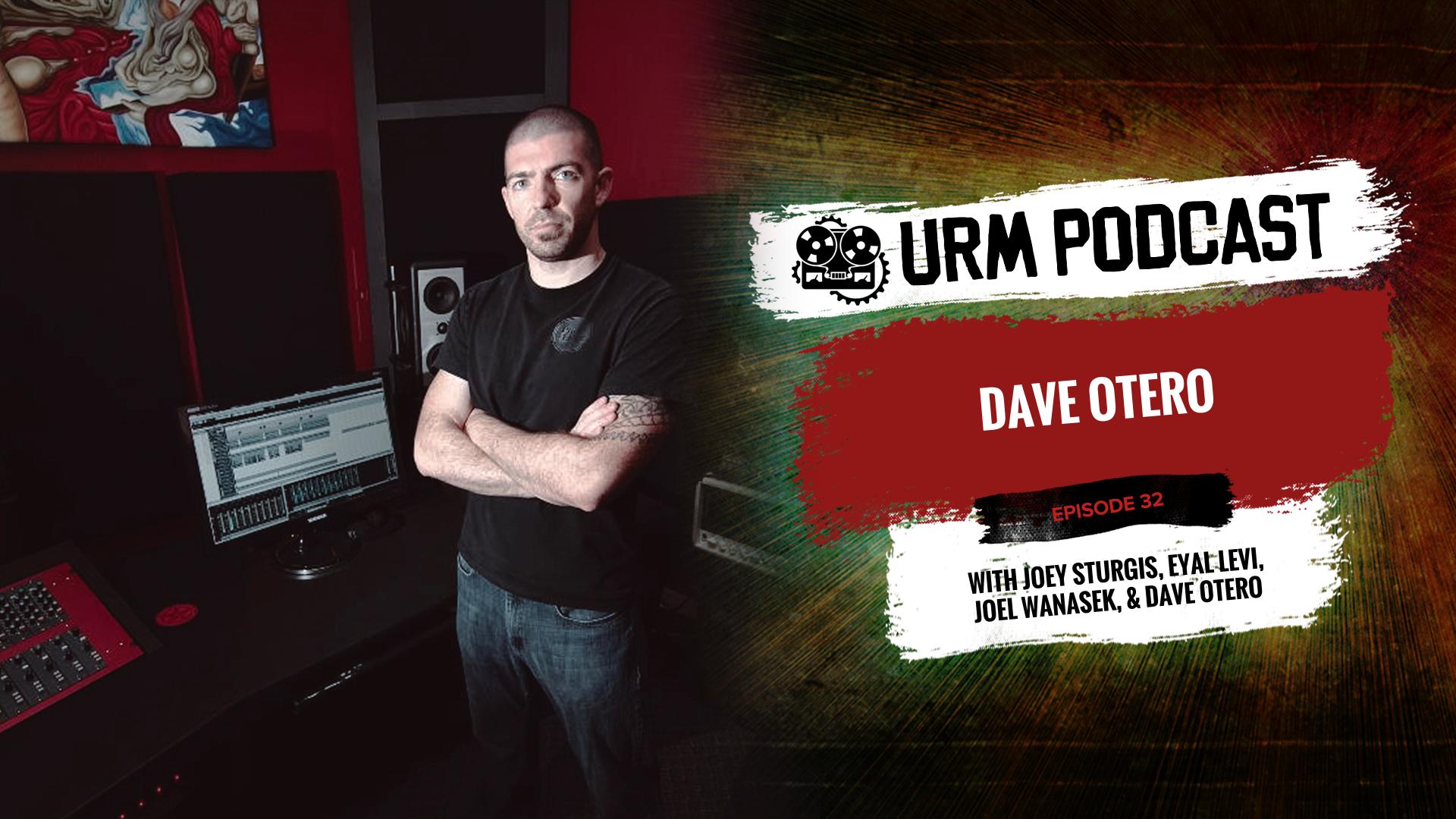
DAVE OTERO: Why The Player is Your Best Gear, Natural Blast Beats, and How a Robbery Improved His Mixes

Dave Otero is a Colorado-based producer and engineer known for his work in the most extreme corners of the metal world. He’s the guy behind seminal records from grindcore pioneers Cephalic Carnage, technical death metal titans Cattle Decapitation, and other heavy hitters like Cobalt and Primitive Man. Getting his start on a four-track in his mom’s basement, Dave built his career from the ground up, becoming the go-to producer in his area for bands who needed clarity and punch without sacrificing raw aggression. He’s also a long-time member of the URM community, having gotten his start on the original Ultimate Metal forums.

In This Episode

Dave Otero hangs out to talk about his journey from being a teenage busboy to a full-time producer with a client list that reads like a who’s who of extreme metal. He gets into why the most important piece of gear is always the musician, breaking down how legendary drummers like John Merryman (Cephalic Carnage) and Dave McGraw (Cattle Decapitation) are the real secret to his drum sounds. Dave shares his philosophy on pre-production, explaining why he avoids over-listening to demos to keep his perspective fresh. He also drops tons of practical knowledge, from his go-to guitar recording chain (SM57 and a Mesa cab) and EQ techniques for taming harshness, to making blast beats sound natural and powerful. Plus, he shares an insane story about his studio getting robbed and how it accidentally led to a massive improvement in his mixes.

Products Mentioned

Timestamps

  • [10:53] From busboy to full-time producer without another job
  • [12:30] Why he decided against going to Full Sail and invested in gear instead
  • [15:24] The early days: Recording Cephalic Carnage in his mom’s basement
  • [16:39] The advantage of being “the only metal guy in town”
  • [20:30] How getting his studio robbed ultimately improved his mixes
  • [21:52] Why he hates Mackie HR824 monitors with a passion
  • [24:50] The secret to the Cephalic Carnage drum sound (spoiler: it’s the drummer)
  • [28:23] Why the best tones come from the player’s body, not just the gear
  • [31:58] The unique rituals of tracking black metal vocals
  • [36:59] Why he purposely avoids listening to demos too much before tracking
  • [39:23] The pre-session conversation every producer needs to have with the drummer
  • [43:09] Getting tight guitar takes: intonation, active string muting, and pick choice
  • [44:42] The art of being a “do it again, Nazi” to get the best performance
  • [48:15] The surprising importance of a perfect pick slide
  • [54:21] His go-to heavy rhythm guitar chain
  • [59:01] A deep dive into surgical EQ on guitars
  • [1:03:19] Making blast beats sound gnarly instead of fake and programmed
  • [1:05:37] How to know when a fast drum take is “good enough” to edit

5 New Year’s Resolutions For The Studio

5 New Year’s Resolutions For The Studio

Studio Resolutions

Mixing is for life, not just for Christmas

As another year draws to a close, the time has come for the annual tradition of setting unrealistic goals that usually end up going unfulfilled.

Don’t get me wrong… It’s great to dream big, but equally important to make sure you can actually achieve your goals in the time frame given!

HERE’S A QUICK LIST OF REALISTIC AUDIO TARGETS TO STRIVE FOR IN 2017

1 – Learn A New Skill

Try Something New

Gain a new skill to open up doors of opportunity and make your services more appealing to potential clients

Nobody likes a one-trick pony, but there’s good news: One of the great things about working in audio is that it’s nearly-impossible to know everything there is to know!

Here are some valuable studio skills which will take you a long way towards becoming a jack-of-all-trades:

  • Discover the world of synthesis: Using preset synth patches is fine, but what if you could build the exact sound you’ve been hearing in your head?!? It’s a wide and wonderful world of opportunities. Who knows, you might end up being pretty good at it…
  • Always worked with drum samples or amp sims?: Why not learn how to mic up a real kit and record a real amp/cab? Or… (on the other side of the coin) Learn about drum replacement, amp simulation, and Impulse Responses. Both of these approaches have their pros and cons, so know how to nail them both!
  • Learn some basic orchestral arrangement skills: Being able to provide additional instrumentation such as string sections and percussion is an extremely valuable asset in the studio. There are hundreds of excellent, reasonably priced sample libraries on offer from companies such as Spitfire, Voice of Gaia, and Native Instruments (and exactly zero reasons not to give them a go!) 

NOTE: These are just a handful of obvious examples. Just make sure that whatever you go for, you stick with it long enough to overcome the learning curve.


2 – Expand Your Target Audience / Client Base

Broaden Your Horizons

If you play it safe in life, you’ve decided that you don’t want to grow anymore

It’s easy to get pigeonholed into a specific type of music in this business. Being able to switch between genres and cater to a wide range of potential customers is key to expanding your skillset and maintaining a steady, reliable income.

Try out these ideas to give your musical palate a good cleansing:

          • Write some music in a genre you haven’t worked in before: This is an excellent way of adding some new licks or rhythmic skills to your vocabulary. The awesome thing is that these new tricks are often transferable, and can result in innovation when applied to different contexts.
          • Study the greats: Learn the characteristic sonic traits that help define specific sounds and study the engineers who are “top-dog” in their respective genres. Trying out the different techniques on offer from this process is a great way of spicing up some otherwise bland mixes.


3 – Get Your Name Out There!
Get Your Name Out There
How are people going choose you if they don’t even know you exist?!?

Feel like your business is going nowhere fast? Might be time to step up your marketing game with some shiny new upgrades.

Here are a few practical marketing steps you can take towards getting more work in 2017:

          • Brand yourself: Think up a simple, clever logo that will catch the eye of potential customers. You don’t necessarily have to create the logo yourself, just make sure it’s memorable and relevant to what you’re all about.
          • Use social media: Create a concise and professional looking Facebook page. It helps paint a clear picture of the service quality you provide, and is a great way to spark an interest in people. It’s not a terribly difficult thing to create, but trust me when I say it’s better to do it early on in order to start building up a following for your studio.
          • Build a website: Although it may not be the best way of gaining new customers, having a professional looking website with clear examples of your work and images of your studio goes a long way towards giving yourself some credibility (make sure to check out Wix.com for an excellent DIY website building solution that won’t break the bank!)

NOTE: A “dumb” and simple-to-use website is worth a lot more to a potential customer than a flashy and complex one. If I can’t find examples of your work within 10 seconds, I most likely won’t be bothered with your website.


4 – Stop Procrastinating

Because of the nature of the job, we often like to really take our time trying to perfect the most tedious and miniscule things in order to satisfy our “engineer ego”

Striving for excellence is great, but if the pursuit of perfection is causing you to spend way too long trying to finish things then it’s time to take a step back and reevaluate… The simple truth is, the biggest impacts we can make on a mix often only take up a tiny fraction of the overall time spent.

Here are a few changes you can make towards getting more work finished from now on:

          • Commit to decisions early on: Giving yourself too many options and leaving all of the tough decision making for “future you” is a sure-fire way to slow-down your productions. Check out last week’s URM Blog by Dave Whalen for some excellent advice on decision making.
          • Simplify the process: Try and streamline your recording and mixing process down to the bare necessities and cut out anything that’s hindering your progress. Learn to limit yourself and focus on the bigger picture.

Question: Do you really need a chain of 15 plugins to mix a cowbell? NO! A single channel strip will do just fine…


5 – CONCLUSION: Learn From 2016

Mistakes

It’s fairly common to look back on previous years and phase out all of the positive things until you only see the mistakes you’ve made. The ironic truth is that mistakes should actually be the single biggest motivator of all!

How so?

If you’ve made a particular mistake that led to problems or someone being disappointed you’ll do whatever it takes to avoid repeating that same mistake.

Having a “learn from your mistakes” attitude is key to a successful career in audio!


Some final questions to think about:

I’ll leave you with a few simple questions about the past year. The answers to these should help decide what your primary audio goals for 2017 should be:

What worked well?

What didn’t work?

What am I good at?

What do I need to improve upon?


HAPPY NEW YEAR!

FINAL WORDS:

This concludes “5 New Year’s Resolutions For The Studio”. I hope that this article has given you some new ideas to try out during your next project. Be sure to comment below if any of this information has helped you out, or if you have any questions.

Stay tuned for “Analysis As A Learning Tool – Part 2” and more production/mixing related articles in the not-so-distant future!


Nail The MixNail The Mix is our online mixing school that gives you REAL multi-tracks from REAL bands, plus a mixing class from the producer who recorded it. Past guests include Periphery, Chelsea Grin, Machine Head and State Champs. Join now for instant access!

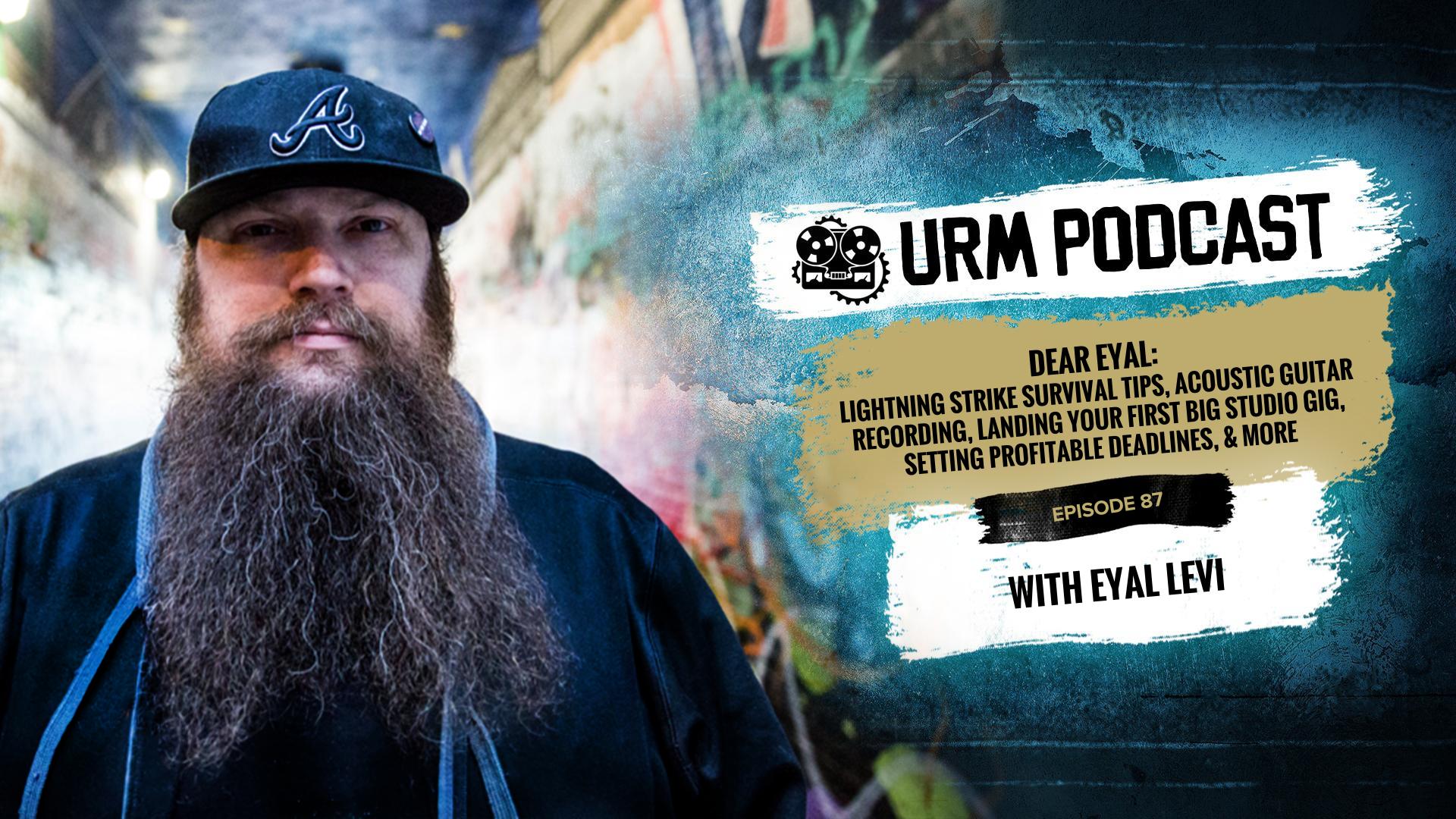
EYAL LEVI: Protecting Your Gear from Lightning, Breaking Into the Music Industry, a Dååth Reunion

Eyal Levi is a producer, musician, and co-founder of URM Academy and Nail the Mix. As the guitarist for the critically-acclaimed metal band Dååth, he toured the world and released several albums before transitioning full-time into the studio world. His production and mixing credits include heavy-hitters like The Black Dahlia Murder, Chelsea Grin, Monuments, and Firewind. On this episode, he steps into the hot seat to answer listener questions.

In This Episode

Eyal Levi takes on a killer batch of listener questions in this “Dear Eyal” Q&A session. He kicks things off with a wild story about his studio getting struck by lightning—twice—and shares some seriously practical advice on how to actually protect your gear from electrical surges (spoiler: it involves more than a simple power strip). From there, he gives a roadmap for young producers trying to break out of the basement and into a pro studio, covering the essential skills (get good at editing!), mindset, and networking strategies you’ll need. He also drops his go-to technique for recording acoustic guitars, addresses the age-old question of a potential Dååth reunion, and breaks down the tricky business of setting realistic deadlines and budgets for mixing projects. It’s a solid hour of real-world wisdom for anyone serious about a career in audio.

Products Mentioned

Timestamps

  • [4:40] Eyal’s story of his studio being struck by lightning—twice
  • [5:48] The importance of automatic cloud backups with Code42
  • [9:00] Why Orlando is the lightning capital of the USA
  • [9:50] Using a lightning tracker app to protect your studio
  • [11:05] Why surge protectors won’t save you from a lightning strike
  • [12:00] Seriously, just unplug your gear during a storm
  • [13:30] The absolute necessity of having insurance for your studio gear
  • [14:15] Building a “mains cutoff” switch for ultimate protection
  • [15:00] Advice for a 19-year-old producer working out of his mom’s basement
  • [19:20] Why being a great editor is the fastest way to get hired in audio
  • [20:45] The importance of not having a problem with authority when interning
  • [23:30] Why you absolutely need a car to be a studio intern
  • [24:25] How to find and approach local studios for work
  • [27:30] Eyal’s process for recording acoustic guitars
  • [28:45] Mic choice and placement for acoustics (KM 84)
  • [29:37] Dealing with excessive pick noise from metal guitarists playing acoustic
  • [31:50] Will there ever be another Dååth record?
  • [35:45] How to determine a fair timeframe for mixing a song or album
  • [37:50] Why taking a week to mix a $200 song is a bad financial move
  • [40:23] Announcing the upcoming URM “speed mixing” course

URM Academy: Decoding Client Feedback, Fixing Muddy Mixes, Taming Problem Vocals

This episode features the core URM Academy team of hosts Joey Sturgis, Joel Wanasek, and Eyal Levi. Sturgis is a producer known for defining the sound of 2010s metalcore with bands like Asking Alexandria and The Devil Wears Prada. Wanasek has worked with artists such as Machine Head and Blessthefall, while Levi is the guitarist and founder of the band Dååth and has produced for bands like The Contortionist.

In This Episode

The guys are back for another round of Mixcritmonday, breaking down two user-submitted tracks with some seriously helpful, no-BS feedback. Before diving into the mixes, they discuss the art of client communication—like figuring out what an artist *really* wants when their reference tracks don’t match their requests, and knowing when you’re not the right person for the job. The first critique tackles a pop-punk track that feels thin and lacks low-end punch, leading to a great discussion on how an untreated room can trick you into scooping out essential frequencies. The second mix, a symphonic metal song, suffers from being both muddy and thin simultaneously. This prompts a deep dive into common arrangement mistakes, like keyboards clashing with guitars in the same octave, and how to deal with challenging vocal performances. It’s a super practical episode on diagnosing and solving the real-world mix problems we all run into.

Products Mentioned

Timestamps

  • [1:19] The benefit of having the producer involved throughout the mix process
  • [2:31] The challenges of long-distance music production
  • [3:57] Why mixing for a new client is harder than mastering for them
  • [5:09] The classic problem: a client thinks they know what they want, but they don’t
  • [6:55] Knowing when to admit you’re not the right mixer for a project
  • [9:10] Translating client feedback: “Blended” drums vs. 100% sample replaced
  • [10:21] Using plugins creatively with an artist to bypass “language barriers”
  • [14:35] Critique #1: A thin mix with an underprocessed snare
  • [16:28] How an improperly treated room can sabotage your low end
  • [17:08] Diagnosing vocal compression and sibilance problems
  • [20:16] A quick trick for de-essing a whole vocal group with a multi-band compressor
  • [21:46] How the wrong microphone choice can create de-essing nightmares
  • [23:08] The old-school pencil trick for taming sibilance during recording
  • [31:25] Critique #2: Diagnosing a mix that sounds both muddy and thin
  • [32:45] A common arrangement mistake: putting keyboards in the wrong octave
  • [35:25] Solutions for tuning vocals with extremely wide vibrato
  • [39:51] Identifying over-compressed guitars with “soupy” low-mids and harsh highs
  • [44:13] The “sixth sense” of a great bass player vs. using sample-based bass
  • [50:33] How to fix underwhelming heavy vocals recorded on a cheap mic
  • [52:28] A cautionary tale about buying cheap microphones