I’m just going to cut right to the point: all the doom-and-gloom stuff you hear about the demise of the music industry is, well, BS. Sure, there are challenges (as there always have been) but the truth is that there has NEVER been a better time to be an independent artist or producer– as long as you embrace the opportunities in front of you.
Which is why we were so stoked to hear from Exit Empire, a Czech band of URM members who embody exactly what I mentioned above. They’re taking advantage of all the amazing resources at their disposal, putting in the work and getting results– not waiting around for some gatekeeper to swoop down from above and give them the (non-existent) keys to the kingdom.
So if you have any ambitions toward making a living from music, use these guys as fuel for inspiration – take full advantage of every resource you have, keep a positive attitude, and watch opportunity come your way!
Tell us about yourselves and your band in a few sentences: where you’re from, how you came together and what your goals are for the band.
No band from the Czech Republic is worldwide famous, especially not a post-hardcore one. Why not? Two years ago we kind of decided to be the first, haha. Talk about ambitions, right? We’re already heading more mainstream direction. We just released our debut album while gaining fans for the past six months just online. We’re working on moving out, getting smaller gigs and we’re trying to book festivals across Europe next summer. Ultimately, we aim to move to Los Angeles and tour the world from there.
Is your band completely self-produced? If so, do you want to work with an outside producer eventually or stay self-produced (and why)?
It is! Literally from our bedrooms. We left colleges the moment we discovered Joey Sturgis’ classes. With tons of other study sources on songwriting, management etc. we realized we can’t wait for the gatekeepers, so we went after our dream – to have a great band. Learning production was simply a necessity, although turned passion. So we definitely crave working with other talented minds and professionals to help us chase the perfect tone.
What advice would you have for other bands who want to self-produce? How do you stay objective about your recordings and resolve disagreements (eg, “turn up the guitars!” “no, turn up the vocals!”)?
Compare your mixes to other songs. Study the production day and night, support and compete with each other in the band. We’re so lucky to be a band of three best friends with a common goal, so swallowing our individual pride doesn’t taste so bitter. Two of us actually founded a studio now, offering mixing and mastering for others and also soundtrack composing! That is so much fun and it enables us to finance our band.
Exit Empire – ‘Shut Up’ from ‘Exit Empire’, released 2017.
What’s the most valuable thing you’ve learned from URM and why?
We could list here a bunch of essential technical details we learned from the URM mentors and this community, but the most valuable thing was this: Mindset. Listening to URM podcast and learning about the background of so many successful people gave us the energy to keep grinding. We even took it a step further and learned to do our own music videos, but without great audio, this band wouldn’t be possible.
For anyone out there who’s heard of URM and Nail The Mix but hasn’t yet joined, what would you say to convince them to join?
If everything stated above hasn’t convinced them already, let’s try this: Download our new album for free at our website by joining our mailing list (http://exitempire.com/download). After two weeks, we will pick one email address by random and pay him or her one Nail The Mix month. Thanks for reading! And remember: No small time!
Nail The Mix is our online mixing school that gives you REAL multi-tracks from REAL bands, plus a mixing class from the producer who recorded it. Past guests include Periphery, Gojira, Meshuggah, Bring Me The Horizon, A Day To Remember and Papa Roach. Join now for instant access!
Dan Korneff is a producer, mixer, and engineer who has worked with bands like Paramore, Breaking Benjamin, Papa Roach, and Candiria. He’s known for his precise and powerful productions and is also the creator of his own boutique analog gear (Classic PCB) and is currently developing his own line of audio software.
In This Episode
Dan Korneff returns to the podcast to chat about his new ventures in DIY audio hardware and software development, and how he balances those pursuits with a full-time record-making schedule. He explains why he’s driven to learn everything from electronics to C++ coding himself and gets deep into his hybrid workflow. He details a recent, game-changing update to his SSL console routing that involves using four separate stereo buses for parallel compression and effects. The conversation also gets into the mental game, covering how to deal with self-doubt and the constant “genius/idiot” cycle that every producer faces. Dan shares his strategies for breaking down complex mix problems, learning to let a project go, and answers listener questions about his famous guitar widening trick, the status of his legendary Paramore *Riot* drum samples, and his go-to book for learning electronics from the ground up.
EQ and Compression may be the more popular topics of mixing discussion, but the truth is, something as comparatively “basic” as the general placement of each instrument within the stereo field can actually have just as much of an impact on the overall quality of a mix!
This being the case, in this week’s URM Blog I’ll be guiding you through 5 of my best tips & tricks for widening tracks and creating better separation between instruments for maximum mix clarity:
1 – The Key To Width: Difference
In order to achieve a wide mix, you first need to understand some of the basic differences between Mono and Stereo.
In the context of mixing:
Mono, is when you have the same signal coming out of both speakers, resulting in a “Phantom Center” appearing in the middle. Changing the L/R balance of said signal in favor of one side or the other results in the signal being Panned in that direction.
Stereo, is when you have a unique signal coming out of each speaker, creating a discernable difference between the directionality of left and right content when combined.
The primary conclusion we can make based on these descriptions? –The more difference there is between the left/right channels, the wider the mix will sound!
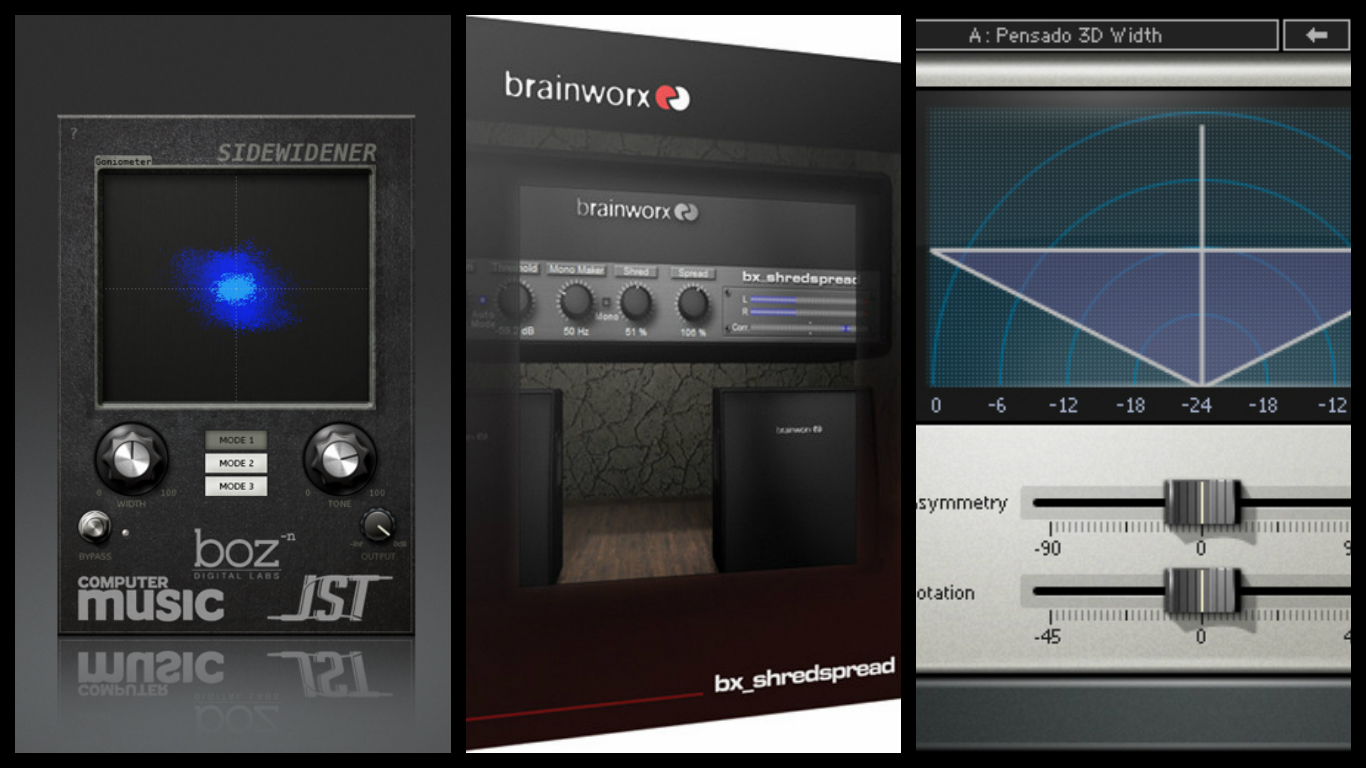
2 – Psycho-Acoustic Stereo Enhancement Plugins:
VIDEO: In the following NailTheMix excerpt, Joey Sturgis explains and demonstrates the stereo enhancement process he used while mastering the song “Restart” by Chunk! No, Captain Chunk!
As Joey masterfully demonstrates in the clip above, the goal with this type of processing isn’t to drastically change things and potentially run the risk of major phasing issues, but rather to super-subtly push a mix slightly further outside of the speakers without screwing everything up!
This type of processing can be extremely harmful when overused, so don’t go adding it to everything in hopes of a wide mix, cause all you’ll end up with is a blurry, undefined mess…
3 – “Faux” Mono-To-Stereo: The Haas Effect
In rock and metal, it’s extremely common to double-track guitars and pan them hard-left and right to get them out the way of the center. But what if the song you’re given to mix only has a single guitar track…?
The biggest problem with having a single guitar as the main instrument in a song is the fact that there are certain unavoidable compromises involved when it comes to panning: If you want the instrument out of the way of the vocals, you have to pan it somewhat to the side, however favoring one side over the other can then result in the mix feeling skewed in one direction…
It’s like there’s no winning!
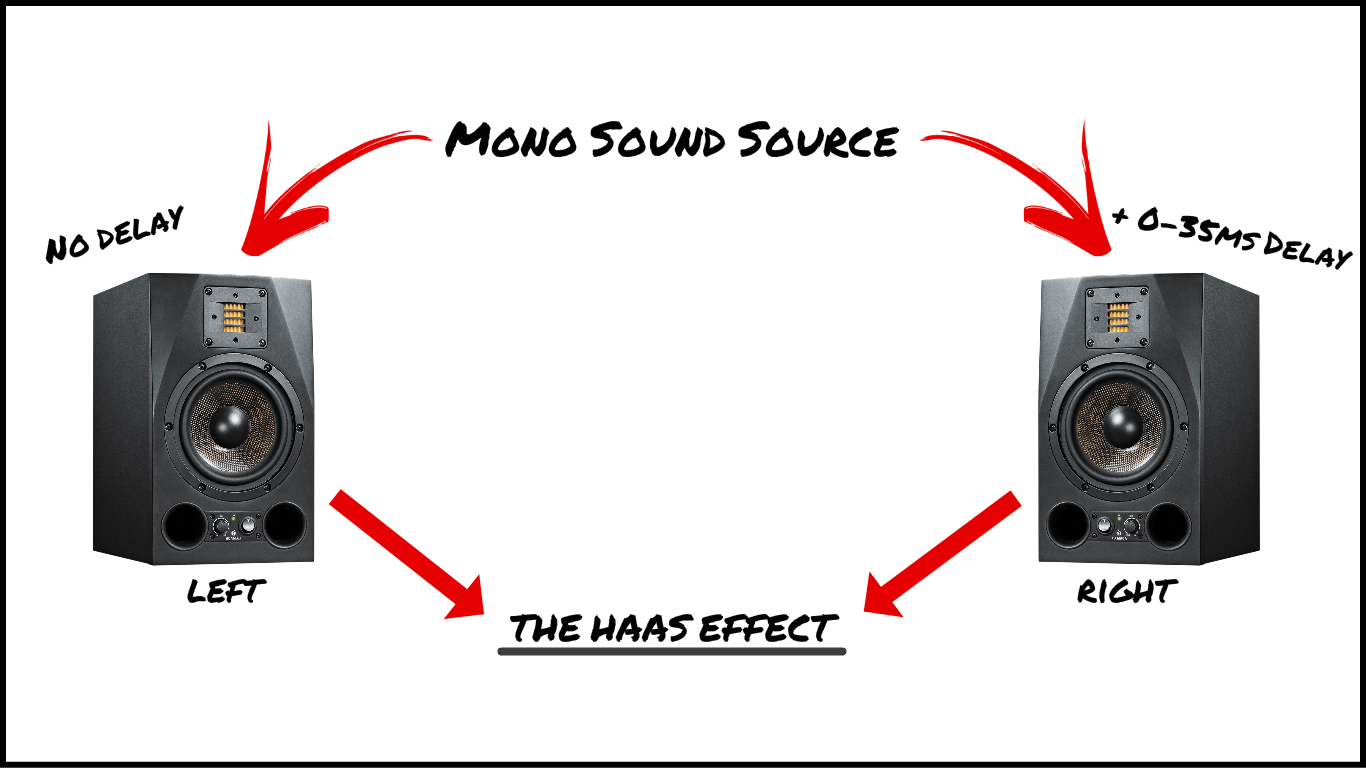
An interesting (albeit imperfect) solution to the problem is to utilise the psychoacoustic phenomenon known as the Haas Effect:
Simply put, the Haas effect is the time delay between when a sound hits each of our ears, in return, allowing them to tell which direction the sound is coming from.
In the context of mixing: If you have a mono sound source going to both the left and right speaker (aka. the phantom center), but delay one of the sides by up to 35ms, the combined L+R result will be a wider, “faux stereo” version of the same sound.
VIDEO:In the following clip, MixNotes’ Jonathan Roye demonstrates the Haas Effect trick on a mono acoustic guitar track to great effect:
DISCLAIMER! – The downside to this technique however, is that it isn’t very mono-compatible, and will usually result in a phasey mess when the two signals are summed & played back through a mono system. This being the case, I’d only recommend using it when you’re mixing exclusively for stereo, or as a last resort when recording a double just isn’t an option. (For whatever reason…)
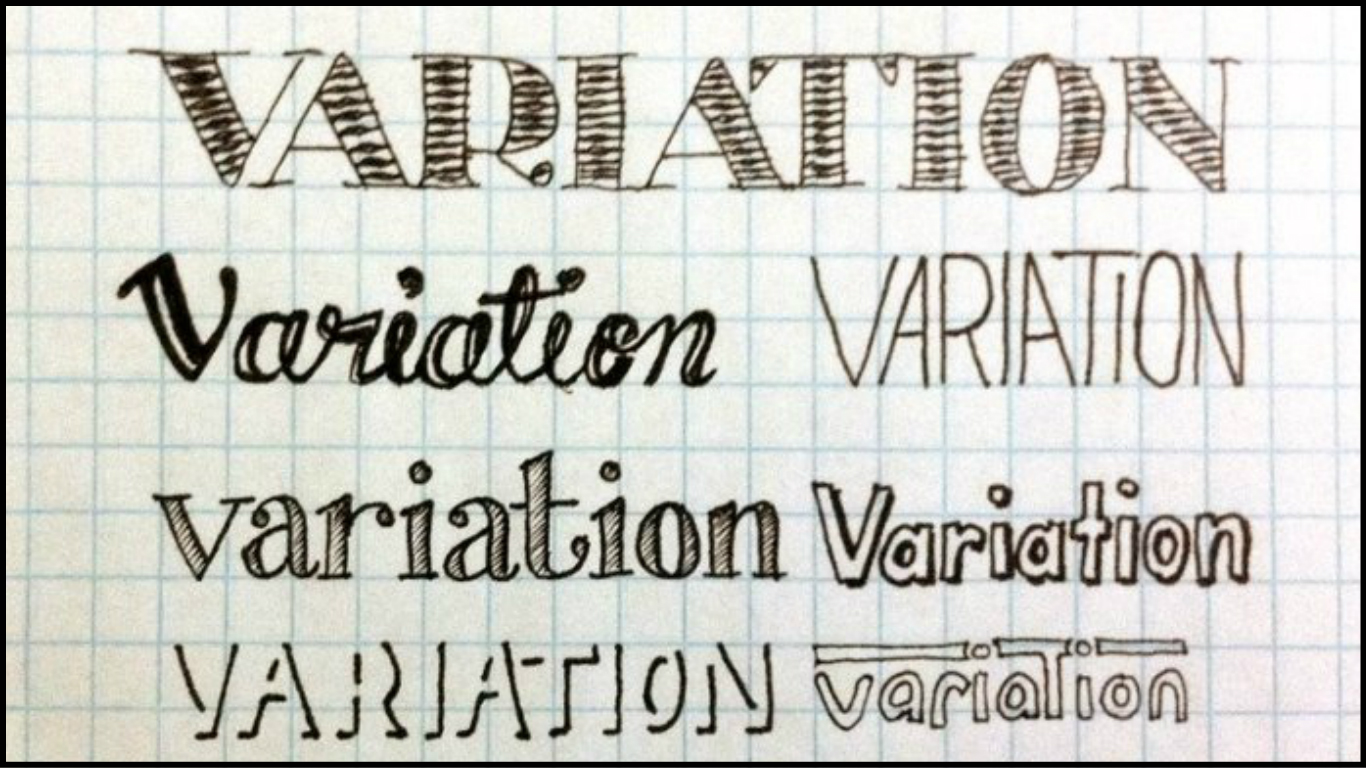
4 – Creating Variation During Recording
The absolute best way of achieving a wide mix is to arrange and record your song with stereo width in mind to begin with.
Some basic examples of this approach in the context of guitars would be:
Using slightly different gear for each guitar part: Although double tracking and hard-panning a riff is already great for getting it out of the center and giving your mix some width, there are a few things you can do to take this process a step further.
Try using different (yet complementary) guitar, amp, cab, microphone – and even guitarist combinations for each of your doubles/quads in order to add a lot more variation between takes and truly separate left from right.
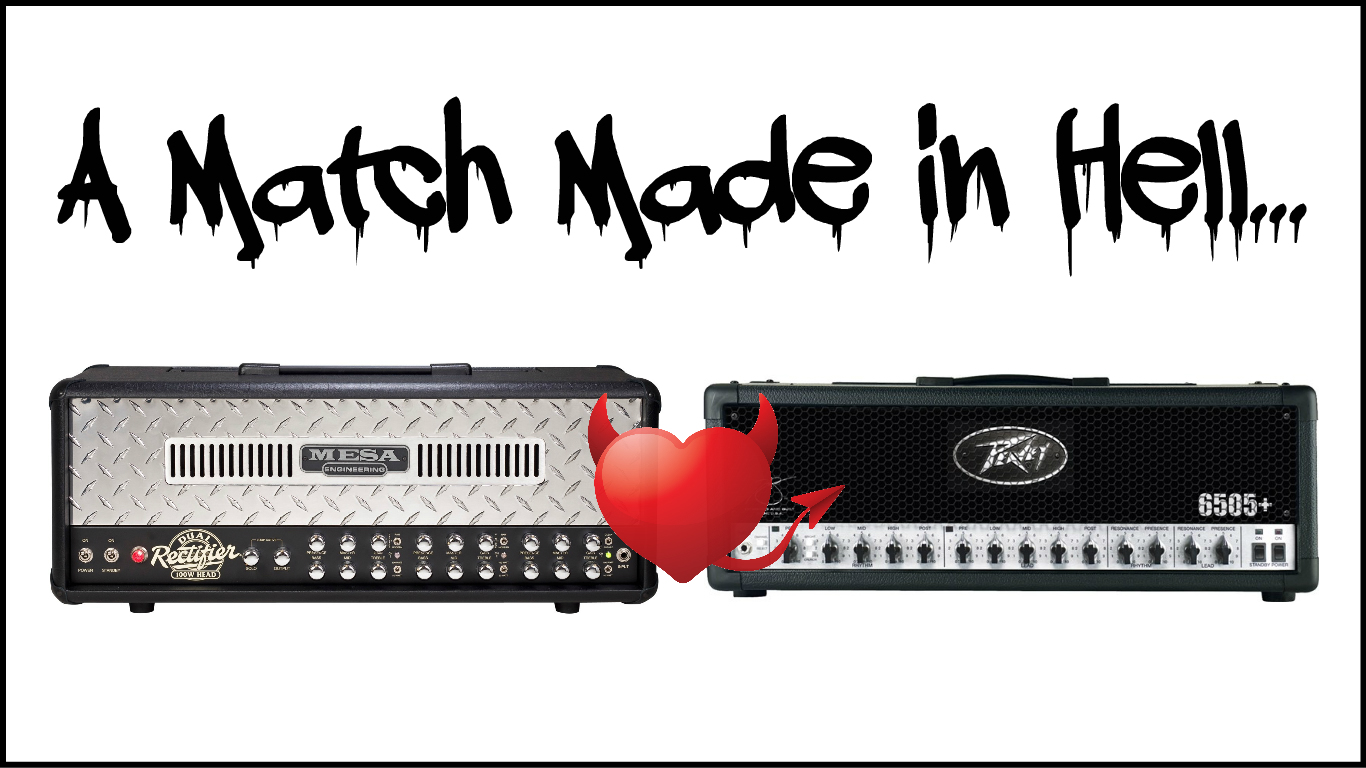
Metal production veterans such as Andy Sneap and Colin Richardson have been known to use the classic “Mesa Dual Rectifier and Peavey 5150” combo on many of their biggest albums for this exact purpose!
Relying on tight performances rather than editing: Let’s face it… as an audio engineer, it’s inevitable that you’re gonna have to tighten up a poor guitar performance or two every now and then.
The problem comes when you’re automatically editing every single performance just for the sake of it, and actually unknowingly having a significant negative impact on the stereo width of your guitars!
The width of a double tracked guitar part primarily comes from the slight differences in timing and timbre caused by the natural variations in a guitarist’s playing.
If you go in and align every single transient & waveform in your doubles to be perfectly in-time and in-phase with each other, you’re basically making the two takes more similar, and in return, causing them to become more MONO when combined.
A far better alternative to editing guitars to “perfection” is to simply work hard on recording the double-tracked parts as tightly as humanly possible and to leave the subtle variations untouched for some nice L/R fluctuation.
Of course, there’s nothing wrong with correcting a few blatant errors where necessary, just don’t make it a habit to iron out absolutely all of the humanity…
5 – Stereo FX (Reverb, Delay, MicroPitchShift)
Unless you want your mono lead instruments (such as vocals and solo-guitars) to sound tiny and unimpressive in context of the mix, you’re probably gonna want to give them some size and width with some of the following stereo FX sends:
Room Reverb: Reverb doesn’t always have to be a washy or obvious effect! Try sending your mono sound source to a short, stereo room-reverb and blending it in under the dry signal gently to where it’s felt rather than heard.
Convolution/Impulse-response based reverb FX are often better than linear/digital algorithms for this purpose. This is because sampled “real” spaces aren’t often acoustically symmetrical or “perfect”, meaning there are some welcome differences between the left and right returns which create width.
Faux-Stereo Delay: Lots of engineers prefer to use mono delays on their vocals, as having too many syncopated delay subdivisions ping-pong’ing between the speakers at all times can eventually become a little distracting for the listener…
These “mono” delays don’t have to be completely mono however!
My favourite delay plugin, Soundtoys’ “Echoboy” for example, isn’t just a great emulator of classic analog delay units, but also has an excellent built-in haas-effect-esque stereo widening algorithm, allowing you to push the mono effect return further out towards the sides of the speakers and get it out of the way of your dry signal.
Micro-Pitch-Shift: Another extremely popular method of adding some instant width & dimension to a mono sound source is by using a stereo “pitch shifting” plugin such as Soundtoys’ “MicroShift” or Waves’ “Doubler”.
This effect was popularised in the mid 80’s with several presets found in the Eventide “H3000” analog FX processor (which they also now do in a plugin form), and is still heavily used by pro engineers to this day!
VIDEO: Don’t just take my word for it… Check out this awesome Eventide H3000 plugin introduction clip, in which mixing legend Andrew Scheps (Green Day, Adele, Red Hot Chili Peppers) talks about the effect and how he likes to use it in his mixes:
Width – The Conclusion:
Think of the space between your speakers as a blank canvas;
You can either haphazardly fill it up, resulting in a single, blurry, murky colour that masks all of the intricate detail hidden beneath, OR… work in strategically placed, contrasting strokes that compliment each other, forming a dazzling technicolour masterpiece in which each tone has a place to clearly shine through and be seen.
Stereo width can have a huge effect on the quality of your mixes, so you better do everything in your power to learn how to manipulate it effectively!
Final Words:
This concludes “The Secrets To A Wide Mix”. I hope that this article has given you some new ideas to try out during your next project. Be sure to comment below if any of this information has helped you out, or if you have any questions.
Stay tuned for more production/mixing related articles in the not-so-distant future!
Nail The Mix is our online mixing school that gives you REAL multi-tracks from REAL bands, plus a mixing class from the producer who recorded it. Past guests include Periphery, Chelsea Grin, Machine Head and State Champs. Join now for instant access!
When it comes to the technique of singing and screaming, there are few people as knowledgeable or experienced as Voicehacks founder Mary Zimmer.
Alongside being one of the most talented professionals in the field of vocal coaching, Mary has honed her craft over the years as an in-demand session vocalist and the lead singer for bands such as Luna Mortis, White Empress and Santa Marta.
White Empress – The Ecstatic and The Sorrow
In a recent interview with Mary, I asked her what it takes to make it in the session business, the importance of proper vocal technique in the studio, and a bunch of other important vocal-related questions:
Can you tell me a little bit about your technical singing background?
MARY: I got my degree in classical music fairly young at the age of 22. Even after my music degree, I did an absolute ton of research on the anatomy of the voice and tried to absorb all of the information that’s available out there.
People seem to think that you can just get your bachelor’s degree and you’re done, and while It does gain you quite a bit of knowledge, I felt I had a lot more to learn after getting mine…
Even now as a vocal coach, each time I teach somebody I run into a different set of challenges which I need to figure out how to solve, which is also an excellent source of education.
VoiceHacks with Mary Z – How to sing with Grit
Overall, I feel like my MBA in music came from actually being in the music industry.
School is ok for a formal education, but I don’t actually recommend people starting out there…
You also studied audio engineering?
MARY: I kinda had to create my own recording minor in the broadcast department of my school because they didn’t have one at the time.
I was taught about all these different microphones, how they sound, how to run a real 48 channel desk, how to record on reel-to-reel tape… It was fun to learn about, but I personally don’t really enjoy recording or mixing… It takes a painstaking amount of detail which I personally don’t have the patience for.
If I had to do it all over again nowadays I probably wouldn’t pay a university thousands of dollars, I’d just join URM instead!
Recording is a heavily male-dominated business, why do you think that is?
MARY: I don’t know! It’s not particularly masculin, or like you have to be physically stronger to do it…
It still astonishes me that all these years later I’m still one of the only women who knows anything about this stuff… It’s just weird!
How did you make your start in the session musician business?
MARY: I think it was mainly the fact that I had the skills necessary to record my own vocals, and that I had a certain amount of “business professionalism” which made it easier for people to trust & hire me.
It also came from my connections to producers I’d worked with in the past. For example Jason Suecof, who I’d worked with while I was in Luna Mortis, called me out of the blue a few years back and asked if I wanted to do some opera vocals on the Motionless In White album “Infamous”.
What he needed was someone who could perform classical singing on a professional level and also record themselves properly, so I got the job!
Motionless In White – Synthetic Love
Musicians like to roll their eyes when I talk about the importance of professionalism in the studio, but it matters, and can definitely have an impact on whether you’ll get hired or not.
In this business, professionalism means being polite, having a set of terms, and being able to accept some changes and criticism from the people you’re working with. After all, if you’re at home then the producer isn’t in the room with you to give direct feedback as you’re recording, so you have to be reasonable to fulfill their needs.
How important is it for session musicians to know how to record themselves?
MARY: Very important! A lot of people ask me about how to get guestwork, and I’ll tell them that they have two choices: You can either try and get really lucky in a place like Nashville or Los Angeles and work for hire as an “in” person for other producers, or… you can just learn to record yourself at home and work worldwide.
Of course, recording yourself means you have to make a few investments which can seem expensive to a beginner, but a decent vocal setup is definitely a lot cheaper than recording something like drums or guitar…
Matte Black – Weiss (ft. Mary Zimmer)
As a session vocalist, if you don’t learn how to do this stuff for yourself then you’re kinda shooting yourself in the foot, as you’re gonna have a much harder time finding any collaboration work that you can actually take part in from a distance…
Is there any value in audio engineers learning how to sing?
MARY: Definitely! When I was working with Jason Suecof and Mark Lewis on the Luna Mortis album, Jason would often lay down some great additional backing vocals after I had left the studio.
Luna Mortis – Anemic World
There was a similar thing with Kane Churko recording like 12 layers of backing vocals on the Papa Roach song which was on Nail The Mix. If you’re an engineer who can sing, it just makes it easier to try out that kind of vocal production stuff without having to rely on somebody else to perform the parts.
What are some “easy-to-correct” vocal mistakes that a lot of singers and producers seem to make in the studio?
MARY:
Mistake #1 A lot of bands don’t have the right key for the singer figured out from the start, and it’s much harder to change that stuff AFTER you’ve already tracked an entire song…
The solution is to introduce some basic vocals into the fold early on in the writing process. That way you can put things in the right key for the vocalist. Otherwise, they’ll be straining to try and hit certain notes, and if they’re not gonna get it, they’re not gonna get it…
Mistake #2 Stop getting vocalists to aim upwards into the microphone while recording! It’s well intended by the engineers, but actually causes their throat to respond to the thought of looking upwards. The result is the singer’s larynx shooting up in a non-relaxed position, making it much harder to sing…
It’s way easier for a singer to sing a high note while looking DOWN! This being the case, I want all engineers to stop putting the microphone above the singer, and instead to place it straight in-front, or slightly below their mouth at a 45-degree angle.
7 Voice Hacks With Mary Zimmer
Mistake #3 I’ve been in so many vocal booths that have an air conditioning vent blowing air right on top of you. This air dries your vocal cords and can really screw up your takes!
A better option is to put a humidifier in there instead and get rid of any blowing air from vents. The moist air helps the vocal cords to move smoothly and will vastly improve people’s takes, even if they don’t know what they’re doing or haven’t warmed up!
Mistake #4 Stay away from black/green tea and caffeine drinks in the studio! They can really dry the vocal cords out… Mint tea on the other hand is really helpful during and after a performance, as it can reduce inflammation, moisturise the throat, and prevent you from getting hoarse.
Mistake #5 Vocal rest is really important! If you feel that the singer doesn’t have great vocal technique then make sure to pace them and take regular breaks.
Also, don’t push the vocalist too far if you notice they’re voice is sounding fatigued or their mood is going downhill. The more frustrated a vocalist gets, the worst the takes are gonna get. In these cases, just stop and do something else for a while!
As a vocal coach who has to push people to do things out of their comfort zone on a daily basis, I’m telling you: singing isn’t the same as other instruments… It’s not all “no pain no gain”, it’s connected to their mind, and if they get blocked, it can only get worse…
What about some advice for the engineers who are tracking singers in the studio?
MARY: I tell engineers this a lot: You can’t speak to singers in the same way that you speak to other musicians… You have to always keep it very gentle, and be careful not to push them to the point of breaking. It’s all in their head, and if they get a mental block then it’s all over – everything will clam up in their throat, and you’re done for the day…
A lot of the inexperienced singers don’t understand the process of comping takes in the studio. You have to basically handle them with kid-gloves at all times and explain what you’re doing and why you’re doing it, as well as reassuring them that every album is recorded that way regardless of how good the singer is!
CONCLUSION: Thanks for all the excellent advice! To top off this interview, have you got any current/future projects that we can look forward to hearing soon?
MARY: I’ve done a bunch of session work for a few people abroad in the last few months which will hopefully be released fairly soon.
Apart from that, I’ll have a new EP from my current band “Santa Marta” released at some point this year, and as always, I’ll continue to release more lessons and podcasts on the Voicehacks YouTube pageon a regular basis.
Santa Marta – Cersei
Final Words:
This concludes “Vocal Perfection (With Mary Zimmer)”. I hope that this article has given you some new ideas to try out during your next project. Be sure to comment below if any of this information has helped you out, or if you have any questions.
Stay tuned for more production/mixing related articles in the not-so-distant future!
Nail The Mix is our online mixing school that gives you REAL multi-tracks from REAL bands, plus a mixing class from the producer who recorded it. Past guests include Periphery, Chelsea Grin, Machine Head and State Champs. Join now for instant access!
When it comes to drum sounds, there is one man we reach out to when we have questions: Matt Brown (aka Professor Drum). He’s been our go-to drum tech on countless productions, and this man understands drums on a level that you’ll have to see to believe. He’s forgotten more about drums than 99.9% of us will ever learn in our lives!
And today, Eyal Levi sits down with him to talk about the huge (but poorly understood) impact that bearing edges have on drum sound.
We love Matt so much that we’ve roped him into creating the world’s most advanced, in-depth, and scientific drum production course: Ultimate Drum Production. The course launches soon, but in the meantime you can get a sneak preview of the kind of stuff he’ll be covering in this episode of Ask Professor Drum– get comfortable, because you’re gonna want to take a lot of notes on this one 😉
Nail The Mix is our online mixing school that gives you REAL multi-tracks from REAL bands, plus a mixing class from the producer who recorded it. Past guests include Periphery, Gojira, Meshuggah, Machine Head, A Day To Remember and State Champs. Join now for instant access!

 Nail The Mix is our online mixing school that gives you REAL multi-tracks from REAL bands, plus a mixing class from the producer who recorded it. Past guests include Periphery, Gojira, Meshuggah, Bring Me The Horizon, A Day To Remember and Papa Roach. Join now for instant access!