Jens Bogren is the producer, mixer, and mastermind behind Sweden’s Fascination Street Studios. He has a massive discography and is the go-to guy for bands with complex, dense, and epic arrangements. He’s been at the helm for iconic albums from bands like Opeth (Watershed, Ghost Reveries), Devin Townsend (Deconstruction), Amon Amarth, and Arch Enemy. More recently, he’s handled massive productions for Dimmu Borgir, Amorphous, and Leprous, cementing his reputation for turning incredibly layered sessions into powerful, clear, and impactful metal records.
In This Episode
Jens Bogren is back to talk about the beautiful chaos of managing huge modern metal productions. He gets real about the challenges of his recent work with Dimmu Borgir and Amorphous, explaining the “loss of physics” that happens when you try to cram a full orchestra into a mix with a crushing metal band. Jens dives into his philosophy on delegation, automation, and how he builds trust with artists to navigate these massive projects. He also reflects on how his methods have evolved since mixing Opeth’s Watershed, drops some technical gold on cleaning up drum bleed, using snare samples effectively, and why you should never, ever use a software de-esser on a snare track. This is a super insightful look into the high-level problem-solving and creative thinking required to mix some of the most complex music in the genre.
Anthony Potenza is a producer and engineer who has turned a teenage passion into a full-time career in just a few years. After attending one of the very first URM recording bootcamps at age 16, he dove headfirst into the world of audio. Now in his early twenties, he runs his own studio, focusing on the local and regional metal and rock scene, and has built a business based on solid client relationships and a relentless drive to improve his craft.
In This Episode
Anthony Potenza joins the podcast for a super transparent chat about what it really takes to go from aspiring producer to a full-time pro. He shares the awesome story of quitting his restaurant job (with his boss’s full support!) and navigating the first scary months of self-employment. Anthony breaks down his philosophy of using downtime to constantly level up his skills and his room, even getting into the details of building his own acoustic panels. He offers killer advice on attracting and retaining clients by focusing on genuine relationships over sales pitches, using his own experience of landing a mastering gig through a vocal lesson as a prime example. He also gets into the critical hierarchy of what makes a recording great—spoiler: it’s the player, not the preamp—and why investing in your monitoring and room treatment is the smartest move you can make. This episode is packed with practical, real-world wisdom for anyone grinding to build their own studio career.
When studio engineers decide to take a swing at doing some live work, they’re often fairly oblivious as to just how different the two worlds actually are. (Trust me, I know I was!)
This being the case, unless you’re prepared to learn things the hard way, you might want to be aware of some of the following differences before signing up for your first gig:
1 – Prioritise Your Time! You Won’t Have Much Of It
Imagine turning up to your first live engineering gig and being told that you only have 30 minutes to mic-up and sound check the ENTIRE band. Are you going to waste all of that precious time obsessing over a single instrument at the expense of everything else? Or are you gonna make sure that everyone is ACTUALLY AUDIBLE in the mix with some workable tones that you can build on…?
In the studio, we’re used to the luxury of having several hours to dial-in a single guitar tone or snare drum until it’s “absolutely perfect”, while in a live music environment, perfection often needs to take a backseat to practicality for the sake of getting things done on time.
On that note, here are some crucial “Do’s And Don’ts” for live engineering on a tight schedule:
DON’T: Spend ages obsessing over exact microphone positions or trying to find the “perfect” angle & distance for each one…
DO: Use “tried and tested” mic placement methods that work perfectly most of the time. (Ex: Mic’ing up a guitar cab with a single SM57 in the classic “cone meets dust cap” position takes less than 30 seconds and will always produce great results!)
DON’T: Focus too heavily on the FOH mix until you’ve sorted out the band’s monitoring.
DO: Spend a few minutes dialing in a decent monitor mix for the band, even if it’s just a simple shared mix… If the musicians can’t hear themselves, no amount of FOH mixing will salvage the resulting poor performance!
DON’T: Rush through the “basic” setup process in order to spend more time playing with the fancy stuff.
DO: Perform a quick line check to make sure that everything you’ve plugged in is actually in good working order!
DON’T: Neglect basic stage safety in order to save a few minutes of setup time.
DO: Quickly make sure that you haven’t created any tripping or fire hazards that could prove dangerous on a darkened stage!
The bottom line is: Always start by focusing on the things that’ll result in the biggest pay-off for the least amount of time & effort expenditure!
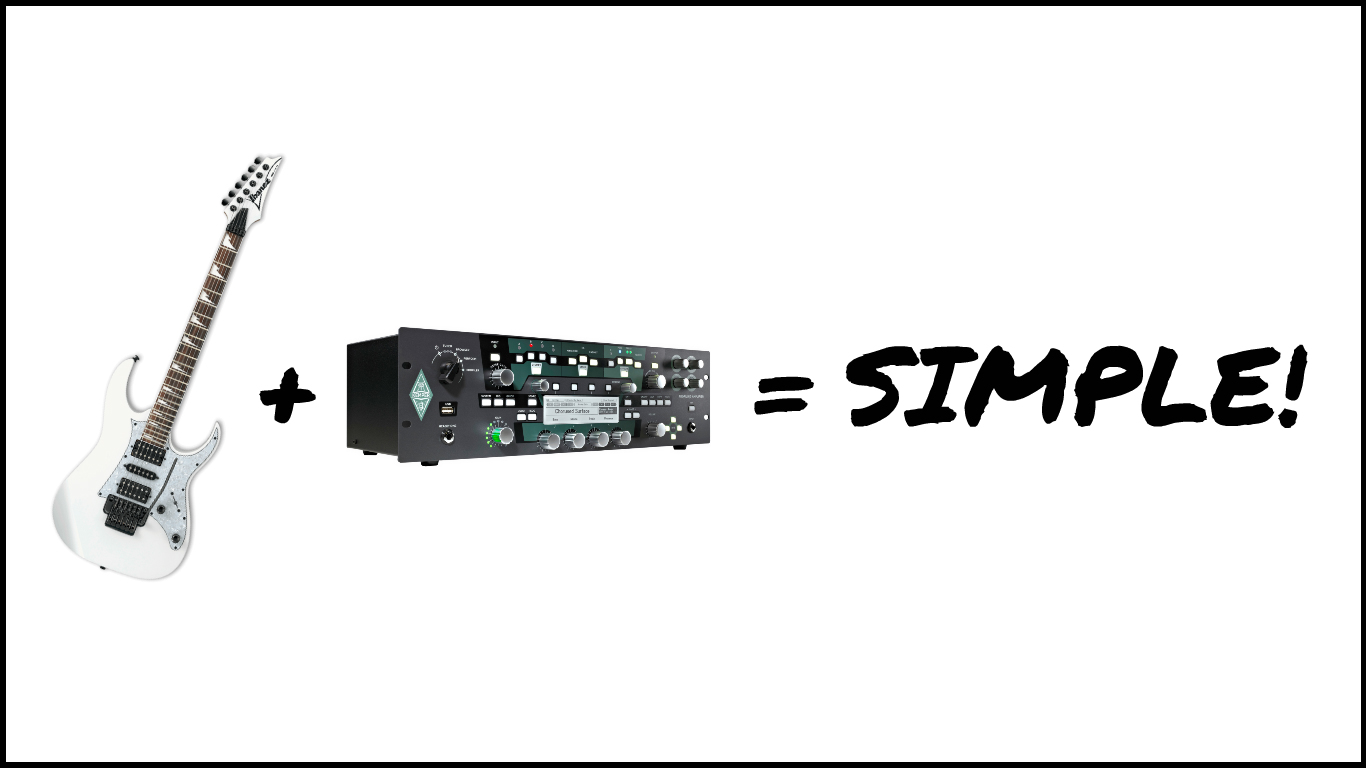
2 – Simplicity Is Key! (Assume That Everything Is Gonna Go Wrong)
I’ll often come across inexperienced musicians on audio forums and Facebook pages asking about how they can use their complicated “Laptop & Amp Sim” setups in a live environment, and will always give them the same one-word answer: DON’T!
Just imagine the following scenario: You’ve spent a huge amount of time & effort rehearsing with a band, planning with a venue, working with a promoter, and liaising with a tech crew, only for your guitar rig to completely glitch out and crash in the middle of the first song…
“Umm… Sorry guys, our laptop has crashed so the gig is cancelled!”
Unfortunately, I’ve had the pleasure of being the guy standing behind the mixing desk for a few of these incidents, and have asked myself the same question every time: “Why did I allow the band to use that set-up in the first place?!?”
VIDEO: Maroon 5’s James Valentine has an incredible wet/dry/wet Live guitar rig consisting of several boutique amps and cabs running simultaneously. Although it sounds absolutely awesome, as an engineer, having to maintain this kind of a setup every night would be my worst nightmare
Looking back, It’s funny to see just how drastically my live engineering priorities have shifted over the years, and how the crazy ideas & complicated gear setups I was once so naively enthusiastic about have since been entirely replaced by simple, elegant, foolproof solutions that in most cases, sound much better anyway!
My point is: Don’t put all of your eggs in one basket! Even if you’re a fan of complicated setups, always make sure that you have a backup plan in place for when things inevitably go wrong!
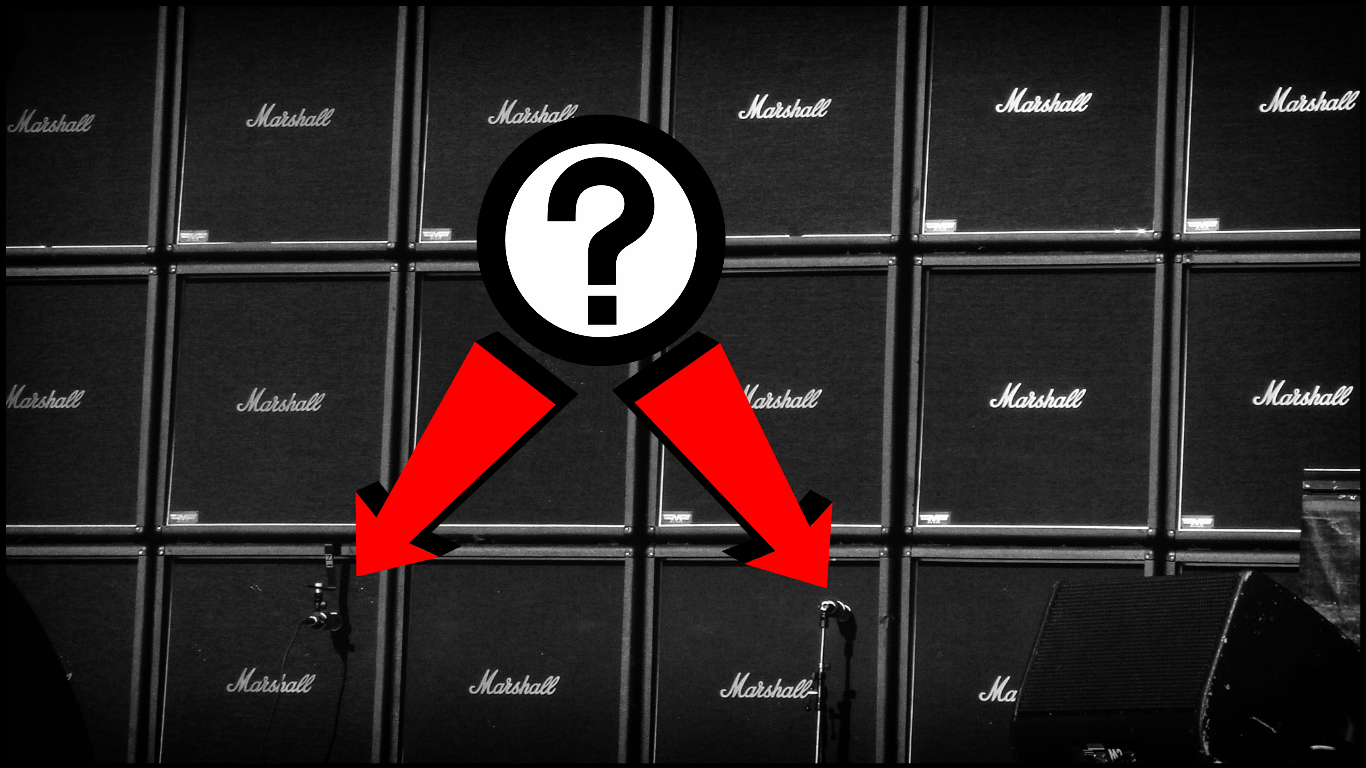
3 – You Don’t Need To Mic Up Everything
A simple rule of live sound is: If you can get away with not mic-ing something up, it’s just one less thing for you to worry about at the mixing desk…
Rather than explaining, I’ll just leave you with a few basic common-sense questions to ponder on this topic:
If a drummer’s hi-hat is bleeding into the overheads, the snare mic, all of the tom mics, and even the vocal mics, do you really think it needs close mic’ing AS WELL?
Is it really necessary to mic up a 100W guitar amp which is placed in the corner of a tiny 50-person pub?
A band have just arrived at the small music club you’re engineering at, and are due to go on in 15 minutes. The bassist’s amp has a great DI-out, but he insists on you blending several mics on his 8×10 cab in order to capture “his tone”, what do you do?
I think you get the idea: Make sure you’re giving your all in everything you do, but also take steps towards making your life easier wherever possible!
4 – Is Live Music Really Stereo?
When mixing in the studio, we’re often aiming for maximum stereo width and instrument separation through the hard-panning of certain musical elements. Although it may seem logical to apply the same mentality to a live performance situation, it can actually end up doing more harm than good in certain cases…
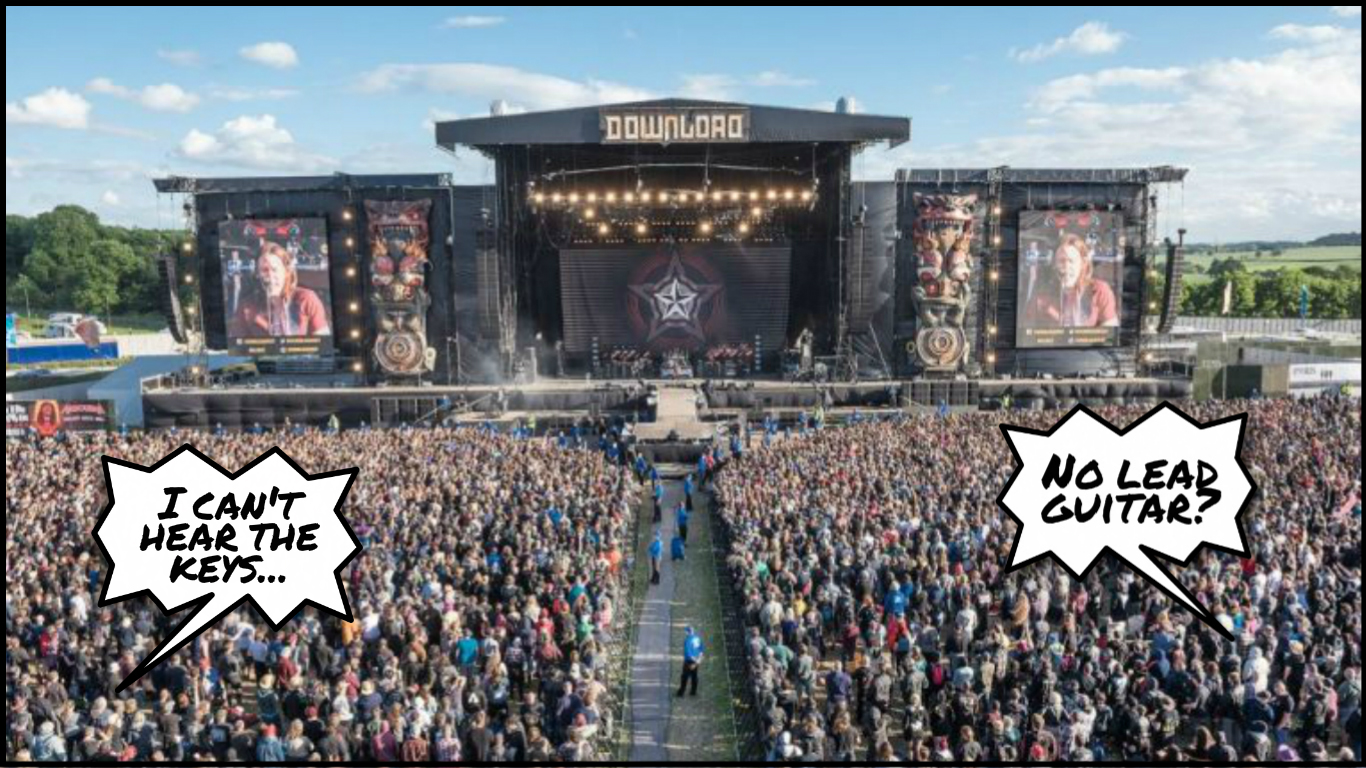
In a large concert hall or arena for example, the speakers are usually spaced so far apart from each other that only a tiny percentage of the audience will actually be in a position where they can benefit from any kind of stereo imaging whatsoever!
In these situations, panning a lead instrument further towards one side means that the listeners on the other side are potentially missing out on that aspect of the performance, which can in return subtract from their overall listening experience.
The solution to this problem is fairly simple: Always pay attention to which instrument is taking the lead role in a performance, and actively move things around slightly to ensure that everyone in the audience can hear what’s going on!
NOTE: It’s perfectly fine to hard-pan things like doubled guitars or synth parts, but just make sure that when one of them goes to take a solo, they’re not just playing to half of the audience…
The Verdict : Pan to please the audience, not to please yourself!
5 – CONCLUSION: Put Down Your Headphones And Mix To The Room!
Unless the venue you’re mixing in has been acoustically treated and “flattened out” with some room correction software, chances are the speakers in the room are gonna sound completely different to what’s coming out of your desk headphones…
The typical “semi-professional” venues that you’ll start out at as a rookie live engineer are usually pretty far from being “sonically ideal”. This means that in order to produce a decent mix in said environments, you’ll often end up with some whacky EQ moves that you’d never think would sound good under normal listening conditions…
Another important factor is the audience: As rude as the following statement may sound, human beings are basically just giant sacks of flesh and water, which funnily enough, are actually a great means of absorbing sound!
The fact that these variables can shift so dramatically from situation-to-situation means that “conventional” studio mixing techniques will rarely work as expected in a live environment, and that the mix sounding great in your headphones prior to actually running it through the FOH is absolutely meaningless!
My final piece of advice is: Don’t make live mixing decisions based on what would “usually work” in a controlled studio environment. Every venue is different, meaning they’ll each require a custom tailored approach in order to produce the best results!
FINAL WORDS:
This concludes “5 Major Differences Between Live & Studio Sound”. I hope that this article has given you some new ideas to try out during your next project. Be sure to comment below if any of this information has helped you out, or if you have any questions.
Stay tuned for more production/mixing related articles in the not-so-distant future!
Nail The Mix is our online mixing school that gives you REAL multi-tracks from REAL bands, plus a mixing class from the producer who recorded it. Past guests include Periphery, Chelsea Grin, Machine Head and State Champs. Join now for instant access!
This month on Nail The Mix we’ve got Jens Bogren mixing “Heir Apparent” by Opeth, and let me just say that it’s truly an honor and a pleasure to dig through this massive beast and get an up-close look at all the insane little details that make it so special.
Opeth ‘s “Heir Apparent” session mixed by Jens Bogren is RIDICULOUS!! It has layers and layers of guitars, vocals, synths, effects, and some of the most incredible natural metal drums you’ll ever hear. Eyal Levi takes you on a guided tour of this jaw-dropping session in Pro Tools.
Layers and layers of guitars, e-bow, synths, percussion… this song has EVERYTHING in it, and every single note is played perfectly and engineered with insanely meticulous attention to detail… seriously jaw-dropping!
Even if you’re not a fan of the band, holy crap – you NEED to watch this. It’s a master class in tracking, engineering, songwriting and arrangement… you could study this session for weeks and find something new every time!
Nail The Mix is our online mixing school that gives you REAL multi-tracks from REAL bands, plus a mixing class from the producer who recorded it. Past guests include Periphery, Gojira, Meshuggah, Machine Head, A Day To Remember and Bring Me The Horizon. Join now for instant access!
Spoiler warning: it’s NOT by spamming your business cards at NAMM
Getting that first established band to say yes is one of the hardest parts in any producer’s career. Once you get your first “yes,” the rest of them come much more easily, so getting that first domino to fall is a HUGE milestone in your career.
But easier said than done, right?? But here’s how Eyal did it with NO contacts, NO credibility, NO legit clients, and with a “studio” in his parents’ basement…
Getting that first established band to say yes is one of the hardest parts in any producer’s career– once you get that first “yes,” the rest of them come much more easily. Here’s how Eyal did it with NO contacts, NO credibility, and NO legit clients…
Remember, this stuff takes TIME – you’ve gotta be patient. Networking isn’t a one-time event, it’s a process that needs to be constantly running in the background of your life.
Don’t make the mistake of trying to “close the sale” 45 seconds after you meet someone. Instead, think about how you can build long-term, lasting relationships with people where you’re providing REAL VALUE – then watch the dominoes fall 🙂
Nail The Mix is our online mixing school that gives you REAL multi-tracks from REAL bands, plus a mixing class from the producer who recorded it. Past guests include Periphery, Gojira, Meshuggah, Machine Head, A Day To Remember and Bring Me The Horizon. Join now for instant access!







![How to book your first signed band [ The Career Builder Show ]](https://urm.academy/wp-content/uploads/2018/05/Ad_CBS_EP11_Networking_thumbnail-100x56.jpg)