Finn McKenty, Author at Unstoppable Recording Machine - Page 5 of 51

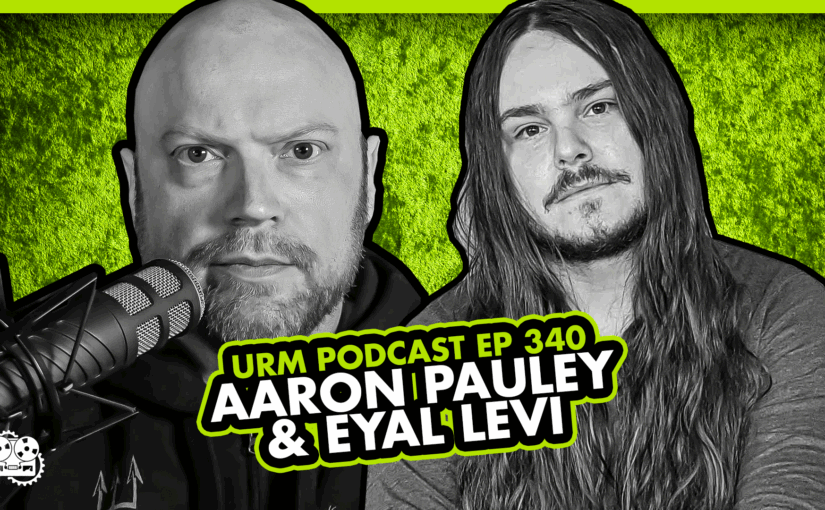
AARON PAULEY: Self-Producing Of Mice & Men, Breaking Old Rules, and Mixing the Song Not the Audio

Aaron Pauley is the vocalist, producer, and mixer for the metalcore band Of Mice & Men. Stepping into the producer role for the band’s recent material, he has overseen the creation of their self-produced EPs, including 2021’s Timeless and Bloom, followed by the full-length album Echo. His work showcases a modern, in-the-box approach that has allowed the band to maintain a completely self-contained workflow without sacrificing commercial quality.

In This Episode

Aaron Pauley joins the podcast for a super chill chat about the modern musician’s workflow and why old-school rules don’t apply anymore. He gets into the blurred lines between pre-production and final tracks when you’re producing your own band, and shares a killer story about Howard Benson’s advice to just use a bounced MP3 from a demo because it simply sounded cool. Aaron talks about how your mindset is your most important tool, emphasizing the need to mix the *song* and not just the audio—a lesson learned from watching David Bendeth mix. He also covers the value of limiting your options to make better decisions, how to get the most out of a struggling computer by committing to sounds, and the crucial importance of timing. This episode is packed with practical insights on trusting your ears, developing your taste, and focusing on the creative vibe over pointless technical debates.

Products Mentioned

Timestamps

  • [3:19] How to keep from blowing your creative load on pre-production
  • [6:07] The Howard Benson “just bounce the MP3” philosophy on using demo parts
  • [8:14] Why making music in-the-box doesn’t cheapen the final product
  • [10:30] Do most listeners really care how a record was made?
  • [15:09] Getting ripped off by a local studio and the motivation to learn recording
  • [17:25] Does having unlimited options actually hurt your development?
  • [19:51] Why it’s a great idea to periodically delete most of your plugins
  • [25:16] Shifting your focus from “mixing audio” to “mixing a song”
  • [28:31] Learning about performance-based mixing from watching David Bendeth
  • [33:52] The Nolly trick of using distortion on a snare to make it pop
  • [36:29] Debunking old forum myths from the Gearslutz days
  • [43:22] A simple, manual way to tame harsh cymbal frequencies with a multiband EQ
  • [51:52] The story of mixing Of Mice & Men’s “Timeless” EP on a 2012 MacBook Pro
  • [56:14] Making the most of a struggling computer by committing to sounds and printing tracks
  • [1:00:24] The ability to make good decisions is what allows great mixers to work anywhere
  • [1:05:05] Aaron’s top-down approach to mixing
  • [1:24:42] David Bendeth’s insane ability to hear millisecond timing differences
  • [1:25:51] A mind-blowing trick: fix a slightly out-of-tune vocal by dragging it behind the beat
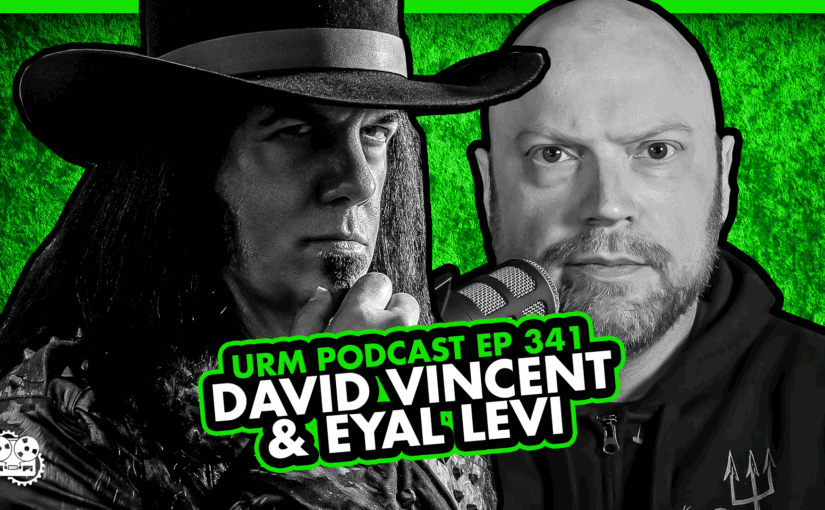
DAVID VINCENT: Finding Your Voice, Learning from Failure, and The Man in the Mirror

David Vincent is a bassist, vocalist, and metal icon known for his foundational work with Morbid Angel. His extensive career also includes projects like I Am Morbid, Genitorturers, and Vltimas, as well as a foray into outlaw country. In 2020, he released his book, “I Am Morbid: 10 Lessons Learned from Extreme Metal, Outlaw Country and The Power of Self-Determination,” which distills his unique life experiences and philosophies.

In This Episode

This is more of a philosophical chat than a technical one. David Vincent dives into the mindset behind a long and influential career, discussing the importance of developing an authentic artistic identity by looking inward for inspiration rather than just imitating your heroes. He gets real about learning from failure, explaining how mistakes are just opportunities to grow stronger and why hands-on experience is something you can’t learn from a tutorial. For producers and artists, this is a deep look into the value of work ethic, conviction, and self-determination. David shares his thoughts on why being in the room with your bandmates creates a magic you can’t get by sending files, and why the most important competition you have is with the person in the mirror. It’s a powerful conversation about the intangible qualities—like authenticity and honesty—that make art connect with people.

Timestamps

  • [3:28] Looking internally vs. externally for inspiration
  • [4:25] When imitating others becomes parody
  • [6:08] Developing his own sound and independent thinking from a young age
  • [7:48] Reconciling extreme music with a good upbringing
  • [8:59] Viewing failures as opportunities for growth
  • [12:04] The idea that the meaning of life is progress
  • [13:56] Why watching tutorials won’t make you a pro without real-world experience
  • [15:11] The value of earning it instead of getting it easy
  • [17:25] The right way to offer constructive criticism to younger bands
  • [24:42] Did Morbid Angel have a stated commercial goal?
  • [26:10] Why writing in the same room is superior to sharing files
  • [28:43] Why his book doesn’t contain “dirt” about other musicians
  • [35:02] The hardest lesson David had to learn: humility
  • [36:45] Finding inspiration in mavericks who go against the grain
  • [40:43] Your best friend and worst critic is the man in the mirror
  • [41:23] Taking responsibility and removing negative people from your life
  • [51:23] Why Alice Cooper is a great singer, even without perfect technique
  • [56:28] The importance of delivering an authentic, emotional performance

PETER TÄGTGREN: Writing songs in his head, his self-taught approach to production, and keeping the soul in modern metal

Peter Tägtgren is a Swedish musician, multi-instrumentalist, and producer who has been a fixture in the metal scene for decades. He is the founder, songwriter, and vocalist/guitarist for the melodic death metal band Hypocrisy and the industrial metal project Pain. As the owner of the famed Abyss Studios, his production and mixing work includes seminal albums from bands like Immortal, Dimmu Borgir, Amon Amarth, Possessed, and Children of Bodom.

In This Episode

Peter Tägtgren hangs out to talk about his completely self-taught, “learn-by-doing” approach to music and production. He gets into the old-school challenges of making metal records on ADATs, figuring out drum triggers in isolation, and his philosophy on keeping the “soul” in modern recordings that can easily become over-quantized. Peter shares his strategies for working with other bands, explaining why the song is always king and how his job is to help them realize their vision, not force his own. He breaks down his approach to songwriting—which happens entirely in his head, not on an instrument—and discusses how he builds Hypocrisy’s signature massive, layered soundscapes. From blending up to five amps for a single guitar tone to using console distortion to save a vocal take, Peter offers a ton of practical insight for anyone carving out their own path in the studio.

Products Mentioned

Timestamps

  • [3:07] How he got into production: he just wanted to hear the bass for once
  • [4:33] Learning to produce completely isolated, with no internet or mentors
  • [6:55] The challenge of getting drum triggers right on old ADAT machines
  • [9:15] Peter’s thoughts on sterile “laptop productions” and losing the soul in music
  • [12:35] His philosophy for suggesting arrangement changes to a band
  • [15:37] Why he avoids listening to pre-production demos too much
  • [17:20] The difference between a producer and a mixing engineer
  • [23:16] Crafting the massive, layered “wall of sound” on Hypocrisy records
  • [26:25] An easy arrangement trick: have the bass play half-time against fast guitars
  • [32:21] Peter’s process for writing riffs entirely in his head
  • [39:09] His method for getting past writer’s block
  • [48:50] Using the gain on an old Amec console to add distortion to vocals
  • [50:18] Why it’s more important to listen to a mix than to look at waveforms
  • [55:51] Why you should mix your snare louder than you think it needs to be
  • [57:10] The balance between a guitarist’s hands and their gear
  • [1:05:07] Creating a huge guitar sound by blending five different amps and mics
  • [1:08:16] How touring with Cannibal Corpse forced him to learn how to sing
  • [1:23:13] Using subtractive EQ to get rid of “ugly” frequencies when tracking
  • [1:24:54] Blending an acoustic kick mic for the click and a sample for the low-end

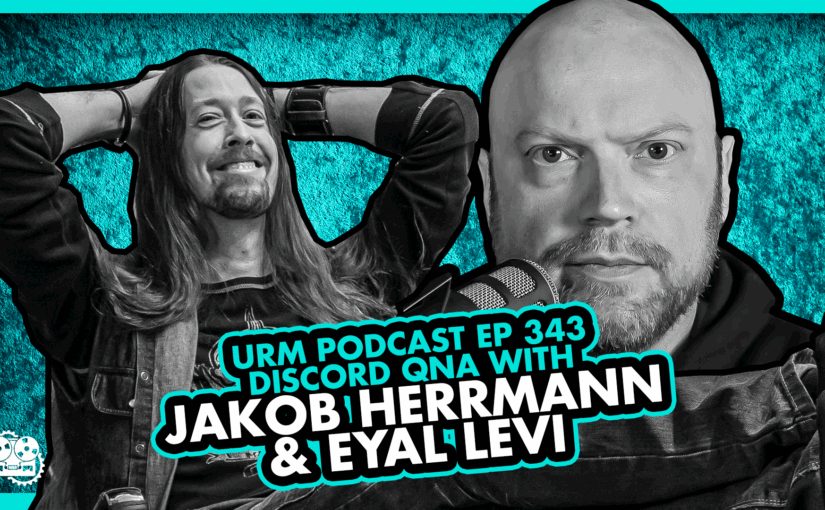
JAKOB HERRMANN: Pro Drum Miking, “Feels Good” vs “Sounds Good”, and Recording Orchestral Metal

Jakob Herrmann is a producer and engineer based out of Top Floor Studios in Gothenburg, Sweden, a unique facility built inside an 1850s theater. He’s been a key player in the Swedish metal scene, known for his recording work with bands like Vola, Evergrey, and Amaranthe, and has also worked with international acts including Machine Head and Anthrax.

In This Episode

In this special Discord Q&A, producer/engineer Jakob Herrmann and Eyal Levi field questions from the URM community, dropping some serious knowledge along the way. Jakob gets into the nitty-gritty of his recording techniques, breaking down his philosophy on overhead miking (is it for the whole kit or just cymbals?) and his killer trick for distance miking bass cabs to capture high-end detail, not low-end mud. He explores the crucial but abstract concept of what “feels” good versus what just “sounds” good, and offers solid advice for producers on how to handle the pressure of that first big-name client. For those working with more than just standard rock instruments, he also shares his approach to capturing orchestral elements and making them fit in a dense metal mix. This is a super practical session packed with insights on communication, intentionality, and the technical decisions that separate the pros from the pack.

Products Mentioned

Timestamps

  • [2:06] Jakob’s unique studio setup in an 1850s theater
  • [3:21] Overhead mics: capturing the whole drum kit vs. cymbals only
  • [3:52] Using a room mic on a bass cab to capture mids and highs
  • [7:23] Miking Vola’s unique and compact drum kit setup
  • [8:22] The line between what technically “sounds good” and what “feels good”
  • [10:34] How experience trains your ear to know when a sound is working
  • [12:12] How to handle the nerves and pressure of working with a high-profile band
  • [15:00] Why you should treat every production as an important one
  • [19:13] The challenges of recording orchestral instruments for a metal mix
  • [22:28] What actually makes a drum mix “good”? (Hint: it serves the song)
  • [23:47] A common beginner mistake: focusing on individual drum mics instead of the whole picture
  • [26:04] Why beginners need to focus on intentionality and phase relationships in drum mixes
  • [29:56] Common mistakes when tracking vocals in a bedroom studio
  • [35:05] The best drum to start with if you want to learn tuning
  • [36:10] Why a good drum head is more important than an expensive snare
  • [38:58] How to communicate with the mixer and band to unify the vision for a record
  • [41:58] How much processing to apply on the way in when tracking for another mixer
  • [45:48] Jakob’s go-to snare head and thoughts on other popular heads
  • [49:23] Do you want brand new bass strings or ones that are slightly played-in?

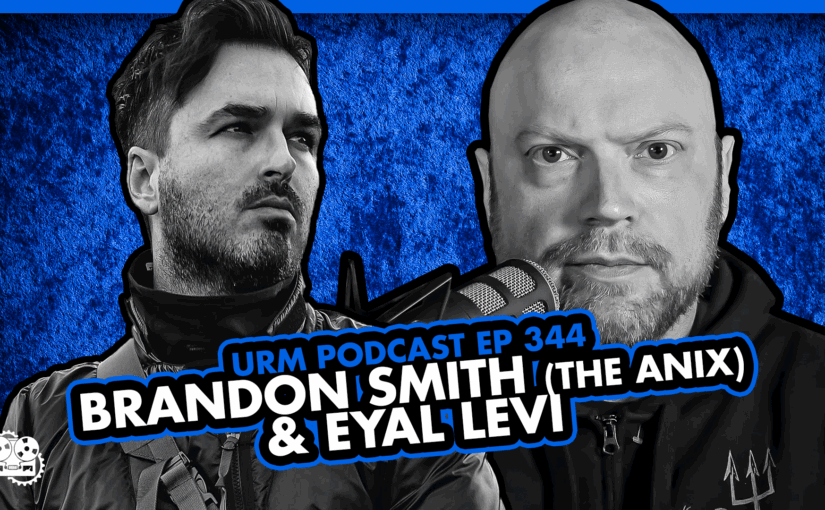
BRANDON SMITH: The Monthly Single Strategy, Getting on Spotify Playlists, and Sync Licensing

Brandon Smith is the artist, producer, and mastermind behind the electronic rock project The Anix. Blending alternative rock with a dark, electronic edge, he’s built a significant modern following, pulling in over 300,000 monthly listeners on digital platforms. As an artist on the FiXT roster, he’s known for a prolific release schedule and has also landed major sync placements in video games and movie trailers.

In This Episode

This one’s for everyone trying to figure out how to actually build a career in the modern music world. Brandon Smith of The Anix joins the podcast to break down the blueprint that’s working for him right now. He gets into why he takes a hardcore DIY approach to his visuals and marketing to ensure a totally cohesive vision. We dig into his strategy of releasing a new single every month, treating each track like its own mini-album campaign to keep fans engaged and maximize his chances of landing on major Spotify playlists. Brandon also shares his philosophy on creating unique, limited-run merch that goes way beyond the basic black t-shirt, and drops some serious knowledge on how he broke into the world of sync licensing for games and movies. It’s a masterclass in building an authentic brand and a sustainable career in today’s landscape.

Timestamps

  • [2:09] The DIY mindset for maintaining a cohesive artistic vision
  • [5:58] The importance of having a clear vision before hiring collaborators
  • [8:43] Why big-name producers might not be the right fit for a unique sound
  • [11:44] Arranging electronics and guitars to coexist in a mix
  • [13:23] Using separate tracks for different song sections to enhance dynamics
  • [16:20] The “one song at a time” approach to songwriting
  • [20:51] How stopping comparisons and just having fun can unlock creativity
  • [22:37] The modern release model: Treating each monthly single like a mini-album
  • [29:24] How to get your music on Spotify playlists
  • [32:10] Why releasing singles gives you more chances to get playlisted than an album
  • [35:24] The role of a modern label and why you might still need one
  • [48:40] A modern approach to merch that goes beyond black t-shirts
  • [55:15] Creating scarcity with limited-run merch drops
  • [58:43] How to approach collaborations and endorsements with brands
  • [1:03:39] Breaking into sync licensing for games and movies
  • [1:05:49] Structuring songs specifically for movie trailers
  • [1:09:04] Dealing with rejection and the lack of feedback in the industry
  • [1:15:08] Why seeking constant feedback can be counterproductive
  • [1:31:46] The illusion of influencer culture vs. building an authentic career
  • [1:42:57] The power of targeting a niche audience and intentionally alienating others