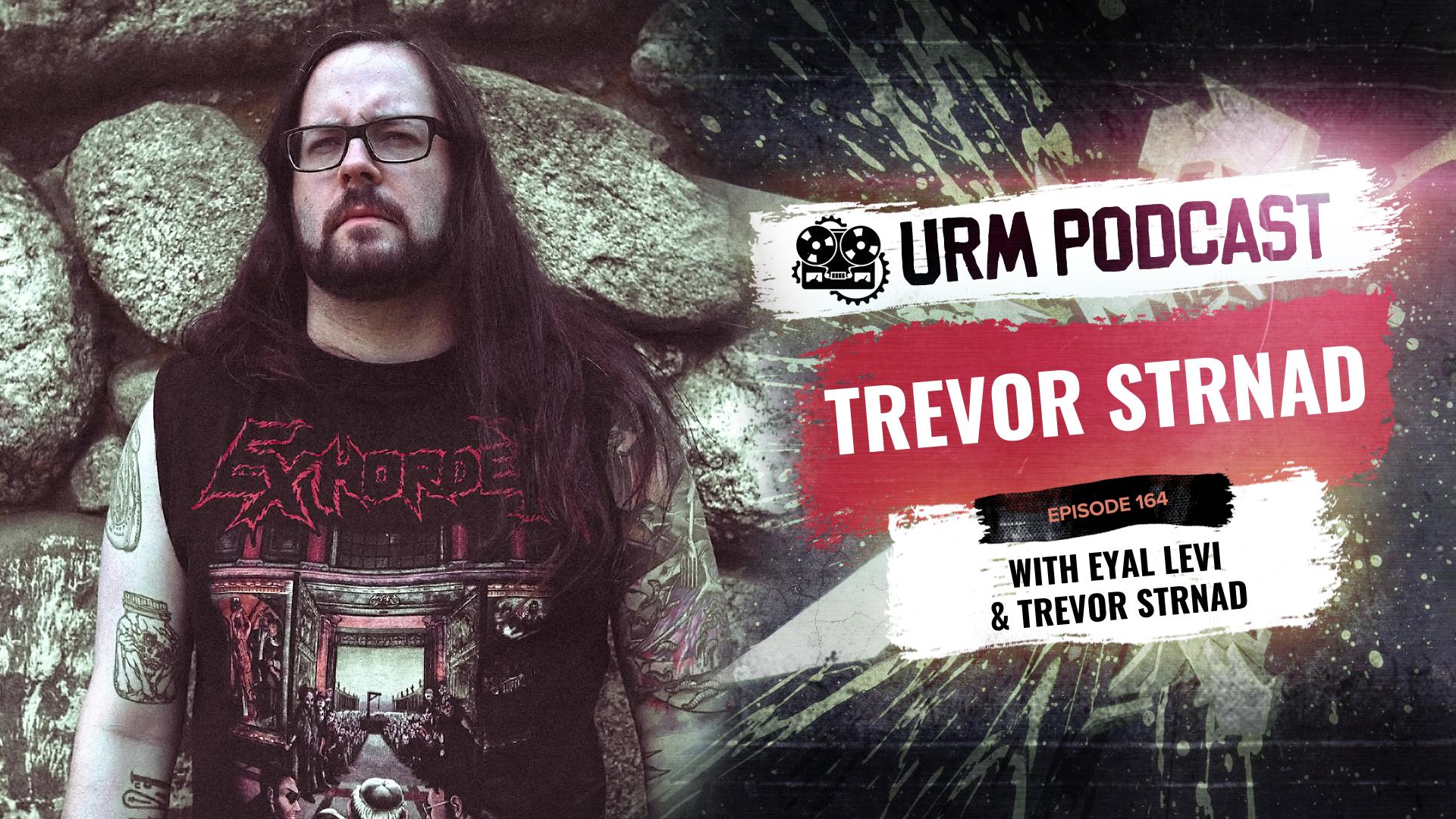
TREVOR STRNAD: Overcoming rejection, relentless work ethic, and building a fan community
Finn McKenty
Trevor Strnad was the vocalist and a founding member of The Black Dahlia Murder, one of the most successful and enduring bands in modern melodic death metal. Known for his versatile range, blending high-pitched shrieks and guttural lows, he fronted the band on all nine of their studio albums, including fan-favorites like Nocturnal, Ritual, and Abysmal. He was also a passionate champion of the underground metal scene, frequently using his platform to promote up-and-coming artists.
In This Episode
Trevor Strnad of The Black Dahlia Murder hangs out to share the inside story of the band’s journey from underdog hardcore kids to death metal titans. He gets into the importance of having a killer work ethic, maintaining high standards, and fostering a positive band dynamic—especially when you’re crammed in a van for months on end. Trevor shares the nitty-gritty of getting signed back in the day, from dealing with 28 rejection letters to finally landing a deal with Metal Blade Records, proving that persistence is everything. He also drops some serious wisdom learned from early tours, including how getting schooled by The Red Chord changed their entire approach to playing live and why it’s crucial to be professional and respectful on the road. For anyone working with developing bands, this episode is a masterclass in what it actually takes to build a lasting career, straight from a guy who lived it.
Timestamps
- [00:02:55] How Trevor uses his column on Metal Injection to champion underground bands
- [00:07:15] Dealing with being mislabeled as a metalcore band early on
- [00:09:21] The importance of having an authentic, fun image
- [00:13:27] The band’s intense work ethic and high musical standards
- [00:14:31] Their rigorous vetting process for new members and splitting everything five ways
- [00:15:30] How negative attitudes can drain a band’s soul on tour
- [00:25:14] The band’s non-stop, two-year album cycle
- [00:30:29] Trevor’s advice for young musicians trying to get signed
- [00:32:01] Using mp3.com to get noticed before MySpace existed
- [00:37:40] Where the band found the confidence to push through constant rejection
- [00:44:46] The inspiration found in Henry Rollins’ book “Get In The Van”
- [00:49:10] Why Trevor quit guitar after seeing how good his bandmates were
- [01:10:08] Learning the touring ropes from bands like Goatwhore
- [01:11:54] How seeing The Red Chord live inspired a band meeting that changed everything
- [01:22:24] Learning professionalism by observing unprofessional bands
- [01:25:42] Clueless mistakes made on early tours with As I Lay Dying and Every Time I Die
- [01:31:48] The reality of having no stage room as an opening act
- [01:35:23] The story of “The Blast Fiends” and how they built a powerful fan community
Transcript
Speaker 1 (00:00:00):
Welcome to the Unstoppable Recording Machine Podcast, brought to you by the 2017 URM Summit, a once in a lifetime chance to spend four days with the next generation of audio professionals and special guests, including Andrew Wade, Kane Churko, Billy Decker, fluff, Brian Hood, and many more. The inspiration, ideas and friendship you'll get here are the things that you'll look back on as inflection points in your life. Learn [email protected]. The URM podcast is also brought to you by heirloom microphones. Heirloom microphones are high-end condenser microphones with something that has never been seen in the microphone industry, a triangular membrane with our patented membranes and our tailored phase linear electronics. Your recording and live experience will never be the same heirloom. Our microphones will help you discover clarity. Go to E-H-R-L-U-N-D SE for more info. And now your host, Eyal
Speaker 2 (00:01:03):
Levi. Alright. Welcome to the Unstoppable Recording Machine Podcast. I am Eyal Levi and with me is one of my favorite vocalists and people in the metal scene. Mr. Trevor from Black Dahlia Murder. In my opinion, he's one of the most versatile and recognizable singers to come along in Extreme Metal. I think in the past 15 Years's, one of the founding members, and you know him. If you've ever heard the band, you know exactly what he sounds like. And one thing I think is really cool is that you are a metal encyclopedia. Anytime I've talked to you about metal more than just about anybody I've ever met, everything, it's insane. And what I'm wondering is metal music one of the only things that you have an encyclopedic knowledge of, or is that just how you are? You just collect information.
Speaker 3 (00:02:08):
It's really the only thing I've gone so gungho about, I think in my life, and I have the same level of excitement for it that I did as a kid. And then it really dawned when the internet came into full swing and I could really dig around and absorb as much info as possible. But I definitely say all my eggs are in this one basket for sure.
Speaker 2 (00:02:35):
Well, I mean it seems like it's worked out well with this basket, I'd say, but I mean when you said that you're as excited about it now as you were as a kid, so do you still spend the same amount of time looking things up and learning about it?
Speaker 3 (00:02:55):
Yeah, man, if not even more. I mean now I do that column for metal injection, the obits where I put bands out every month and it's all stuff that I hand pick. So yeah, man, I'm digging even harder for that. But I mean, it was something I was doing anyway just for fun and I kind of felt like, wow, there's so many great bands that I just don't see in Metals Press that I'd love to see. And Brutal Death Metal in particular is in such an upswing right now. It's the biggest it's ever been, but you never see it anywhere in any magazines or on your average metal sites and stuff. So I just felt like this kind of responsibility to give a voice to these bands that I really like and feel like are flying under the radio so hard.
Speaker 2 (00:03:45):
Name me a few, please. I am in need of some new stuff.
Speaker 3 (00:03:53):
Well, one of my favorites of the year is this band, V-E-N-E-N-U-M. They're from Germany and it's like a black death, kind of like a necro, but it has a lot of drama to it. It's like tribulation. So there's a sound tracky kind of aspect to it. Really long songs, real narrative songwriting that makes you feel like you're on this big quest or something. And the album is called Trance of Death, and it's one of the most original things I've heard in a long time. It's so powerfully good. It's so good. Another one I've been to lately is it's a local band here from Detroit called Temple of Avoid. They have a new album called Lords of Death. Yeah, that's two of death records in a row I'm telling you about. But they're like old school death metal, but slow like Doom Death. It's got a crawling kind of pace. It's super, super heavy. Kind of like a hooded menace or something like that. It's very Finnish and Swedish at its core, I want to say. And yeah, it's making some waves. It's on Shadow Kingdom records. I see a lot of positive reviews for those guys, so I'm getting pretty stoked for them. They're relatively small. So
Speaker 2 (00:05:07):
Do you find that, you said that there's a resurgence I guess in the music. Do you find that there's a resurgence in the audience as well?
Speaker 3 (00:05:19):
I think so. I think it's coming into popularity in a way that it hasn't been in a while. Death metal in particular? Well, metal overall. I think that on a high school level you're going to find a lot more black than when I was in high school. I seriously was the only death metal kid that I knew and I felt like such an alien Sam here. So to jump headlong into this world of music and I don't come up, I seriously just tunnel vision on the band and the underground. And I hate politics. I hate the state of the world. I hate real life. I a super, I don't know. I'm a big kid to the point that it's probably sad and I tunnel vision on this thing. It is what makes me happy, man. New sounds, new music, championing the underground death metal. My whole closet is full of death metal shirts. That's all I fucking have. It's pathetic. I'm like Rain Man for this shit.
Speaker 2 (00:06:18):
Whoa. I mean, but you know what? It really comes across also in your own music. I don't know how versed you are in it, Brian as well. It's funny, I remember when you guys came out, people thought you, they called you guys a metal core band. I was like, no, no, no, no, no. This band is legit. Listen to them. And I feel like you guys are, I don't know, I mean there's been a lot of cool bands over the, so I don't want to say the wrong thing. I've been a lot of cool bands over the past 15 years, but you guys have always stuck out to me because of just how authentic and catchy it is. Oh, thanks
Speaker 3 (00:07:06):
Man.
Speaker 2 (00:07:07):
The best way you're
Speaker 3 (00:07:08):
Making me blush over here. I'm trying not to interrupt you when you say all this complimentary shit the whole time.
Speaker 2 (00:07:14):
Yeah,
Speaker 3 (00:07:15):
Trying not to just know that I'm blushing, but I always saw it that way too. I thought people would see what we were all about right away. But I think that just our appearance kind of skewed people's perception. And I think that we took on this sudden popularity in the wake of us being on Oz Fest with the second album that was a huge jump into more of a limelight with press and stuff. So all of a sudden there's all these pictures of us out there in the magazines next to Kill Switch and G and as I lay dying and unearth all the big metal cord dudes at the time. And that was the huge thing. And then trends come and go and now then we're a Death Corps band for the next five years.
Speaker 2 (00:08:01):
And you don't sound anything like those bands never really have. But
Speaker 3 (00:08:05):
Honestly, I don't get bent about it anymore. I think if anything, the genre fight that always follows us has led all kinds of people from the underground into the band. You know what I mean? I see all walks in the crowd and I think it takes more than one kind of fan to fill up a room, you know what I mean? And we've just been really weirdly lucky to kind of transcend this glass ceiling of death metal and you know what I mean? We've taken it, I don't know, we try to take it down different avenues, you know what I mean? That I guess aren't typical, but I don't think that we have a typical position in the universe. You know what I mean? I think that doing Warp Tour for example, you know what I mean? There's tons of people that would cry, sell out.
(00:08:47):
There's tons of people that did. But to me, we went as ourselves, we went, we played our music, we didn't compromise anything we did to be there. All we were trying to do is get in front of some new faces. And we've always been trying to think about appealing to all different kinds of fans that like us. You know what I mean? So we've toured with all kinds of mans man. We've toured with death core acts, we've toured with terror, we've toured with tons of different shit, man. And just kind of realizing the versatility of this weird situation I think is a big reason why we're here at all and around still.
Speaker 2 (00:09:21):
Well, I think that one of the things that draws people to you guys, but also might've been part of what caused the genre wars that you guys don't hide that you enjoy doing this. Whereas I think a lot of extreme bands pretend you hang out with them on the bus and they're like the funniest motherfuckers ever. But you see them in photos and they're putting on this image of being really, really dark and evil people. And you guys have always just been like, yeah, we party. And I've always thought that that's awesome.
Speaker 3 (00:10:00):
Yeah, that was just kind of this out of necessity. We just didn't look right for the job, first of all. And initially we were like, alright, let's not put photos of ourselves anywhere. There's no photos in Unhallowed, there's no photos in any of the records. But it started with Unhallowed for that reason. And we're like, well, we just want to trick everyone first. We don't want 'em to know that we got short hair and we're coming out of the hardcore scene in Michigan. You know what I mean? But then Metal Blade was like, yeah, this is a necessary evil. You got to do photos, you got to do videos. So we started taking photos and there we are punching each other in the face. And at the time that was so atypical. Now I see that that's become such a popular thing to kind of reveal your comedic personality, you know what I mean?
(00:10:48):
But at the time, it was so, I think so starkly different from what everyone was seeing. And I think it just said to anyone, well, me in particular being this be spectacle, kind of misfit just said, anybody can do this. You know what I mean? Get off your ass and get in this shit. You know what I mean? And I think also we just came as fans. All I ever said was I'm a fan and I feel lucky to be here and be a part of this and seeing music and playing music and I can't not smile up there. I love bands that are hard. I love bands that are scary. Bands scare the shit out of me when they do it, right. I love that. I love,
Speaker 2 (00:11:27):
Yeah, of course
Speaker 3 (00:11:28):
There's room for all kinds, man. But for us it was just kind of like being ourselves, I guess, and slowly revealing who that was and somehow, I dunno, somehow it worked. You know what I mean? I think they just saw that we were real. And so
Speaker 2 (00:11:47):
Well, yeah, I don't think that if behemoth suddenly put on a party image that that would work. Either their image fits their personality musically perfectly.
Speaker 3 (00:12:00):
But then you have al selling you coffee and stuff now, so it's somewhat changing for them. But I mean they're obviously doing it right. I mean, they've ascended to the top of the heap here in the States. You know what I mean?
Speaker 2 (00:12:13):
Absolutely. So you said something interesting before, which is that anyone can do it, just get your ass in it and get to work, basically. But I've worked on a few of your records and I know that you guys don't just do it, man. You guys have an insanely top level work ethic and the standards that you guys have for yourselves musically are just brutal and the best possible way. So I mean, I feel like you're not giving yourself enough credit, but I want to talk a little bit about that because bands just don't get as tight as you guys are. Or for instance, when you replaced some members, but you always replace them with people that are incredible. You keep on raising the bar, and I know that that's an integral part of how you guys work because seen it from the inside. Have you guys always been that way?
Speaker 3 (00:13:27):
Yeah, there is a lot of comedy, but that's kind of what comes after the success. You know what I mean? That's us celebrating that. We worked hard and we played a good show. Hopefully that's the ultimate goal, is to be a tight band, to be a good band, to make good records that resonate, to make songs that are dynamic, to make songs that can emote in spite of being a fast band and being a death metal band. But it's always something we've taken so seriously. But now we have a lot more tools. We're a lot more wise, a lot more educated. I mean, I'm not educated musically at all, but it's definitely much more prevalent in the band now and with the players we have. And I mean obviously you want to upgrade when you're looking for a new guy. You know what I mean? If you can. But you definitely have to keep with the standard, you know what I mean? And the other thing, it's like no one has been just a hired gun.
(00:14:31):
There's rigorous testing to see what you're like. And we try to have someone that embodies what we feel is this group personality of the band. And that will accentuate that and will be good to the fans, will be grounded, will be respectful. There's so many factors. It's more than just playing, but you have to live with these people and they have to respect this brand that we've been able to bring to life. You know what I mean? And honor the legacy. And so it's really important on that personal level too. So I see bands that are hired guns. I see bands that don't trust each other. I see bands that don't pay each other equally, where there's all kinds of different jealousies and unrest. And we've always split everything five ways. No matter how long you've been in the band, you're here blood and sweat with us, man.
(00:15:30):
You're going through all the shitty motions that are being in a band, all the downtime in the van, all the being filthy, all the waking up after two hours of sleep and having to go back and do it again and all the shit that sucks. And you have to have people that are positive forces, man, because we've had negative guys in the band and all they do is bring you down, man. And you already know touring sucks. You're taking a lot in stride when you go tour and you do it positively. So you don't need somebody pointing out every little flaw. Some people that were in the band, you'd hand a sandwich. So we'd be at somebody's house. This is way back in the day when we used to stay at people's houses. They'd hand him a sandwich and he'd eat some of it and they'd be like, it'd be really sick if this had lettuce on it.
(00:16:17):
You know what I mean? And just living with that, living with that person constantly that just has that attitude is such a drain on your soul man. And it's like a drain on the whole thing and on everybody. And we keep the band in such a, we run such a tight ship that everybody airs their grievances out as soon as they hit. That's the best way. Nobody's internalizing shit. It's like the force. You can tell when something is wrong in the band. You know what I mean? It's easy to see when it's like this because we have such a unified thing, even through all the members, it seems like it's been such a rapid change of members. But when you're here living through all these shows and all these experiences and tours and albums, it seems like a long just evolution.
Speaker 2 (00:17:09):
Well, and relationships run their course. So I know you guys are still cool with Ryan, for instance.
Speaker 3 (00:17:21):
Most of the members in the last while we're all cool with, and that's just kind of come with maturity I think. Whereas Brian and I were very, very bitter when the initial member changes happened and we got screwed on some occasions and there was definitely warranted anger. But now even all these years later, I just want to be cool with everybody that's been through this thing. You know what I mean? I have respect for them. I love them for what they did for us. They made a lot of sacrifices, like what they did. It's not for nothing. You know what I mean? I've been able to mend some bridges and that's felt really good. I still have some kind of deep seated guilt in some regards with some of these people because it was ugly, man. There were times when things were pretty ugly.
Speaker 2 (00:18:13):
Well, things get nasty, man.
Speaker 3 (00:18:16):
They do. And it's such an emotional thing. And when the dream was so new and it first felt like it was under threat, it was just such an emotional thing. I couldn't fight it back. You know what I mean? And now I've just grown and I realize that people's dreams are different and I'd be asking a lot for someone to come in the band and want it as bad as Brian and I have all this time. I think, you know what I mean? We hope for that. But I always think that there's a chance that people are going to change their minds or grow out of it or do something else. Life is a mysterious and weird thing, and there's all kinds of factors that can make it difficult and touring. It's not easy right out of the gate, man, like you said, it's terrible. I mean, well, it's terrible for relationships at home
Speaker 2 (00:19:12):
Doing
Speaker 3 (00:19:12):
It at the rate that we're doing it, it's, I know it's hard to even have the energy that you're supposed to give a relationship sometimes just being on the road, you get defeated, you get deflated, you get misanthropic even sometimes. And it's a lot of pressure to have that duality in your life and when you feel like you're constantly losing because we're gone more than we're here. You know what I mean? How much are you gone? Not as much as we used to be. The longest we ever went was 10 weeks straight, and that was a bunch of tours butted up against each other, just nonstop. But I want to say it's about 200 shows a year now.
Speaker 2 (00:20:02):
Man, that's a good amount.
Speaker 3 (00:20:04):
But it used to be more and we had a lot more to fight. I'm not saying we don't have anything to fight for, but now we have time to back off a little bit and create some kind of anticipation. Whereas before it was just like we were knocking on the doors. You know what I mean? When we started.
Speaker 2 (00:20:20):
So it is interesting. There's this quote that I kind of agree with. It's just one of these cliche self-help quotes, but I actually do think that it holds some water, which is that you are kind of the average of the five people that you spend the most time with, so choose them wisely. And I think it's none more true than when you're stuck in a van
Speaker 3 (00:20:48):
With people. I've never heard that before. And that is so absolutely goddamn true. And going back to those same negative people that I was speaking of, it was true. They brought down the whole, you had to defend your honor, you know what I mean? Sometimes you had to apologize for them, sometimes just it's true. It was absolutely true.
Speaker 2 (00:21:11):
So this vetting process that you guys have now, I remember that I kind of met you guys around, well no, when I came to Detroit, that was when Alan was first kind of joining the band. He wasn't quite in yet, and he was recording the drums. And I remember that you guys tested him for quite a long time. And I imagine that you guys didn't have the, I guess you guys weren't in the position probably to correct me if I'm wrong, to put your initial members through that sort of vetting process. Now you're in a situation where you can take the time to see if people are as committed as you are.
Speaker 3 (00:21:54):
Yeah, that's very true. You thought you knew what you were getting into because they were your friends and you had a lot of fun. But when it came down to living together constantly and enduring a lot of hardships, it can separate you and yeah, definitely. We have a lot more scrutiny bringing people into the band. Also searching nationally and even globally at times opened up a lot of doors because we were just mining a very underdog kind of underground scene here for people. And there can be a glass ceiling on that kind of talent. You know what I mean? So Ryan was the first person we reached out to that was from out of town. And I remember thinking, how do these bands have members all over the place? How does this even work as opposed to all living in the same town and practicing regularly.
(00:22:49):
Now that Element has just been completely gone from BDM for so long because we have people all over the place. So we have people kind of doing their own upkeep at home on their chops before tours. Then we show up, we get together in Michigan at our practice space, which at so rarely, I don't remember the code to punch in to get in. And Alan's there all the time because he's the drummer and he's dedicated as hell. He's been a blessing man. He's been the most dedicated drummer we've ever had. He warms up incessantly, he cares about it. He's constantly working on it. No kind of ego has come to him that's like deterred any of that. It's like he's really grounded and he doesn't seem like a death metal drummer. And I mean that in the best way possible. Some of 'em are such fucking freaks, man.
Speaker 2 (00:23:39):
And you would've known by now if the ego thing was going to happen.
Speaker 3 (00:23:42):
For sure. I mean, he's gotten praise, I don't think nearly as much as he deserves, honestly.
Speaker 2 (00:23:47):
I completely agree.
Speaker 3 (00:23:48):
I feel like he's still somewhat in this weird shadow of Shannon. I think maybe because of the success of the first DVD that was escaping, the shadow of that lineup in particular has taken a long time. I think for that reason, people saw us as a TV show as well, or some kind of comedy troupe or something. You know what I mean? I dunno. It became a catch 22 to have that DVD. It introduced everyone to us, got 'em attached to us, and then when the lineup got shaken up, it was really detrimental. It divided people. And I think, I don't know, it was just a weird thing to combat. You know what I mean? And I feel like Alan, he doesn't get the dos that Shannon does. I'm not quite sure whether that is,
Speaker 2 (00:24:39):
Well, he had a lot. That's a lot to live up to. But I mean, he's not just, is he awesome, but he's really stepped it up from when he was first joining the band till now. I've watched recent live videos of him and man, he was already really, really good when I recorded him, but he's way better now.
Speaker 3 (00:25:02):
Oh, I agree. I agree, man. I feel like I've seen a lot of growth on his part and I feel like I see growth on everyone's part, not myself. I'm very deprecating, but I do definitely. And the other guys,
Speaker 2 (00:25:13):
You sound great, the
Speaker 3 (00:25:14):
Other guys constantly, especially when it comes time to record and we see where everybody's head is at two years later because people say, oh, you make records so fast. But we live fast, man. You know how many freaking shows we play, how many nights we're together, you know how many different bands we see in our travels and how many records we listen to and how much info gets absorbed and how many ideas are exchanged between us. It's par for the course at how fast this whole thing has been moving. So it doesn't seem like suicide to us to have to write a record in a few months and get it done. You know what I mean? It's just what we do. It's been what we've always known. So now it's like a total scheduled thing for us. It just feels like it always does.
Speaker 2 (00:26:05):
Well, that's the work ethic thing that I was talking about earlier, that one of the things that I was impressed by with you guys was just how business-like everything was run, but not to the point of stripping the fun away from it, just to the point of keeping the standards super high, getting the work done and not fucking around.
Speaker 3 (00:26:28):
That's pretty much it. That's the credo. And that's been it. We realized the opportunity right from the second, the first second, and Brian and I have always been the kind of two-headed thing of this band. And we made a pact, dude, we got on metal blade records, let's do it. Let's tour, let's get a van, let's hit the pavement. Let's go out and do as much damage as we can and not stop until the last drop. It's gone so far beyond making one record, which was my initial dream. All I wanted to do was have one final product in my hand to be like, look guys, look mom. I did it all that time. I spend in my room staring at these death metal records and look what I did. And so, I mean, it's obviously gone so far beyond that. So I feel like my dream is, in a way, it's just never slowed. It's never stopped. It's been like this snowball just gradually growing and growing. My body's gotten old and I remember we used to be sold as this super young band, like, wow, they're so fast and they're so young. Look how cute they are. And now we've survived through a couple different trends and a couple generations it kind of feels like, and we're the old men and people in the crowd are 15 and looking at me, I'm some old wizard.
(00:27:56):
How does that feel? It's weird, but it's cool. Sometimes it's insulting. Sometimes they think you're way older than you are and you're like, ah, I'm riding the alcohol too hard or whatever. But for the most part, it's cool. They really seem to respect me and I try to be really good to the fans. I see myself in the crowd every day as a young kid, as an introverted 15-year-old with a bull cut wire glasses, the kid that slips through the cracks at school and I pay extra special attention to that kid. That's me. I didn't come into this bloom or whatever you want to call it, until this whole thing and being out on tour and just jumping headlong into this metal world and surrounding myself with it and just putting my blinders onto everything else. It's been the most rewarding thing for me, and I've found my footing.
Speaker 2 (00:28:59):
So was there ever anything else that spoke to you, I guess kind of like this, or is it just like you found this and you knew it was, you knew it was your calling and
Speaker 3 (00:29:11):
That's it?
Speaker 2 (00:29:13):
No, looking back,
Speaker 3 (00:29:14):
I guess just music as a whole. It's not just metal. I love punk. I love hardcore, I love all different kinds of stuff. As I get older, I even more different. I open myself up even more. But yeah, it's always been music, but really coming into metal and just kind of realizing, I don't know. It took me from not having a place and not having any friends to finding like-minded individuals to realizing that religion was a fraud and I didn't have to feel this guilt about myself, about touching my own dick at 13 years old or whatever the fuck. And just everything that defined who I still am just came with it. And I don't know. It's like my
Speaker 2 (00:30:04):
Still going strong.
Speaker 3 (00:30:05):
Yeah, yeah, for sure.
Speaker 2 (00:30:07):
Well, I guess when you look at that kid in the crowd that you relate to and you're like, that's me say that, that kid's like, man, I want to do what you do. What would you tell 'em to do? What would be the first piece of advice be just dedicate your life to it.
Speaker 3 (00:30:28):
I'd tell 'em to eat for
Speaker 2 (00:30:29):
Jump in.
Speaker 3 (00:30:29):
I'd tell 'em to eat four hot pockets in a row and just fucking do it. Just tell 'em like, I don't know, man. Just tell 'em the basics of how we got signed. You know what I mean? It wasn't fucking rocket science, you know what I mean? It was reaching out to a ton of labels. It was making bios for ourselves where we jacked ourselves off in the third person about what little pathetic achievements we had achieved at the time. For us, it was like being number one in death metal on mp3.com for a while, which was a big thing at
Speaker 2 (00:31:04):
The time. Oh, I remember mp3.com.
Speaker 3 (00:31:07):
Yeah. Yeah. Before MySpace, before that whole thing. And
Speaker 2 (00:31:11):
Did you guys ever used to get, were you guys on it back when they used to pay you?
Speaker 3 (00:31:15):
Nah,
Speaker 2 (00:31:16):
Dude. So in 99 or 2000, they would pay you. They paid out something like a hundred grand a month to independent artists. Can you believe that shit. And then they called it Payback for Playback. So you had all these bedroom artists back when bedroom artists were first a thing around the turn of the century who were making 20 grand a month off of mp3.com and stuff. Usually electronic artists. But I did discover some metal artists as well.
Speaker 3 (00:31:50):
I remember using it as the ultimate tool to Hunt at the time. I remember hearing decrepit birth on there for the first time, and just so many bands that are like a staple in my life.
Speaker 2 (00:32:00):
I found Origin.
Speaker 3 (00:32:01):
Yeah, yeah, spawn a Possession. I remember when we heard Dragon Force and they were called Dragon Heart back in the day they were killing it on mp3.com. And I think us being a bunch of nerds that were semi computer savvy helped right out of the gate because we knew how to reverse engineer the way we found bands and the way we found blogs and different outlets online. We got in contact with all of 'em. You know what I mean? When we were at this demo level and we were trying to spread ourselves around man, and we kind of fought our way onto this Hell fest lineup. We were bombing these message boards and some band had dropped off and we ended up squeaking our way on there. We were trying to get as many little achievements under our belt as we could at the time, just so we could put 'em in that wrap sheet so we could convince some label to bite. And we got 28 rejection letters first and out of 30. And we did every label you've ever heard of all the big ones, nuclear blast, century Metal Blade on Down, your Willow Tips. They were the first one to bite, actually. And we were very excited about that. And to me, that's still an honor. And now Willow Tip is Bryce the awesome label that it was then. And Jason, the guy that ran, and I think he was,
Speaker 2 (00:33:36):
I was about to ask you if he's still running it.
Speaker 3 (00:33:37):
He was embittered for quite a while, I believe, because we had the contract in our hands and then Metal Blade rang, and obviously you know what we had to do, and so did he. But now through my championing of metal and stuff that's on his label and stuff, we've become friends and we talk a lot. And that's really cool to me. I really like that. But Metal Blade called, they called so much later then all these snail mail rejection letters came back that we thought it was a joke at first. And we didn't know who Faley was. You only saw Slagel's face. Slagel was the only identity that I had attached to the label that I'd known who Slagel was since you were 14 or something. Getting into metal blade, picking up Slayer records and seeing metal blade ads with Scan Lee, glad chicks and hockey jerseys.
(00:34:38):
And for me, it was all about cannibal corpse and Broken Hope. And the real Gore driven death metal was my first really big boner for death metal. I wanted the most torn off heads, the most zombies, the most macabre ever. And that's really still what I strive to do in my own way with what we do thematically and lyrically. So metal Blade, I equate with the beginning of what is known as guttural, death metal, what has led to brutal death Metal. You could argue that suffocation, I mean musically is probably the biggest impetus behind it. But you look at Chris Barnes and Joe from Broken Hope, they were so guttural at the time. So
(00:35:35):
I mean, there were other guys in other corners of the world that were doing it, but they weren't in the limelight like that. They weren't on metal blade. They weren't. So to me, metal blade, it came into my life as this death metal label. You know what I mean? And I still view it that way. It's such a versatile thing. They've done so much. And there's so much classic records that I've learned about now from their past that I didn't know as a kid when I was just kind of like, I used to have my nose up to anything with clean singing. You know what I mean? It used to just be like, it had to be so extreme.
Speaker 2 (00:36:07):
I remember those days
Speaker 3 (00:36:08):
And it was so one dimensional by thought and it got boring so fast eventually when I tunnel visioned on it so hard. But I remember being too cool for anything I had liked previously. I was too cool for Pantera all of a sudden just like, whatever. It's not heavy enough, just being really lame about it. And now I see that kid too. There's so much elitism on all different kinds of levels that it's just ridiculous out there. You know what I mean? And I thought coming into metal that we wouldn't be judged harshly because I thought of it as the most accepting thing you could be a part of. And then not quite, you get in it, you get in it and you see the scene is like, it's just high school. You know what I mean? In every facet, they want you to be in a certain uniform, whether it's leather and chains or you know what I mean? Who knows. Each kind of corner of the scene has its own look and kind of trademarks. So it was really, I dunno, it was kind of disheartening for a while at first. But like I said, instead of just being butt hurt, that we weren't called death metal. We just marched on. And eventually that kind of became its own positive, allowing us to just reach down so many avenues and appeal to so many people on this really broad spectrum that was just totally unexpected. We could not have foreseen it.
Speaker 2 (00:37:40):
So basically, it sounds like to me, so you got 28 rejection letters. You were initially rejected by the metal audience. You guys just had the confidence obviously to just in what you were doing, to where even if you're getting this uncomfortable feedback or whatever that just fuck you, we're going to do our thing. Where does that come from? Because a lot of people will just crumble under that. I know that. Okay, so a lot of people experience the rejection thing and then eventually get signed. So that's a common story is that lots of people who get signed went through rejections, but then I know then there's the next level where you're baby band and you're dealing with press for the first time, and you're dealing with being an opener and having people stare at you and they don't want to watch you, and you're getting hate on a whole new level that you've never experienced.
(00:38:42):
Then that's kind of like threshold number two that makes bands crumble. I know that you guys got it pretty hard. Where did that confidence come from? I'm asking this also because for our audience, we've got a lot of people who either want to pursue music or they want to quit their day job and pursue a recording career, or are trying to just find the confidence to make it happen. And you do have to go through a lot of shit to make it happen in a creative field, I think. And so I'm just wondering, where did you guys find that confidence?
Speaker 3 (00:39:21):
I think it was kind of being underdogs in our own scene even. We got no respect here. We weren't cool kids in the hardcore scene. We were always on the outside. The outliers. There was really no, there might've been death metal shows going on, but I didn't know where. And Detroit just was not on the map at the time for that. And so was hardcore was being seriously metalized at the time that you had your prayer for Cleansings, the pre BT band band and your undying, and there was a lot of Swedish riffage creeping in, and that's where we started. We had breakdowns and everything on the first demo, and we were an exact prayer for cleansing clone.
(00:40:13):
But I think if anything, we found it in each other. Man, we laughed so hard and we were such great friends and we fucking hated everyone. We made fun of everyone to know. And behind our own closed doors, of course, we were nerds. We weren't going to get our asses kicked, but we were total dicks, total piss ants. We made fun of everything. We took the piss out of everyone. If someone didn't like our shit, it was fuck them. If anything, we had more of an attitude then, you know what I mean, than we do now. And it was just youth man, it was just being rebellious. It was like a bunch of cats in a bag that just wanted so bad to fucking do this thing and get some respect and leave town. All we wanted to do was go somewhere where someone would show up, they've had heard the stuff and receive it.
(00:41:04):
You know what I mean? That was the goal. And coming into the band, I tried out a few different times and initially I came down because, well, I didn't even have a voice yet for it. I had sang in punk bands and hardcore bands and I've screamed and stuff, but it was a different kind of thing altogether. And it took me a few tries. I didn't really sound like what I was going for until the third tryout. And the first time I went out, they had this really shoddy drummer. And I mean, I was a really late bloomer man just in all regards. So for me to leave my town drive 45 minutes to somewhere else where I didn't know where the hell I was closer to the Detroit and it just was not part of my world. You know what I mean? It was so strange. And it felt like such a big deal. And I was so far from and so out of my element that the drummer, they weren't.
Speaker 2 (00:42:07):
So what made you do that? Man, it just fascinates me because I know. So we talk to thousands of kids, man, we've got so many subscribers and we always talk to them and there's certain kids who want it, but they just won't take that step. They won't go past their comfort zone and go to the town 45 minutes over for the opportunity.
Speaker 3 (00:42:34):
Well, that was the thing I did that much. I went there because I'd met Brian at some parties. I met him at hardcore shows, and I knew he was a geek. He didn't belong. He was on the outskirts. He was like one of the few guys left standing there that wasn't involved. So we were last pick, you know what I mean? And we became friends. And I remember I used to play guitar in this really shitty metal core band. It was like, I dunno, we wanted to be disembodied, but we just could not play a period and we had everything else. But anyway, I used to pattern the vocals for the singer, and I got my first taste of writing evil metal lyrics there. And before that, like I said, I was singing in different bands. And at one show, Brian Mosh to our band, and I was like, okay, by default, I like this kid.
(00:43:31):
So we started talking online kind of through this little Michigan message board thing. And I remember he got dissed by some chick, and I remember him talking to him about that, and that was one of the first things we ever talked about. And eventually the band broke up or whatever, and he got ahold of me online and was like, Hey man, I'm looking for a singer for this metal thing. We called it Metal Core, but metal core is such an umbrella term, but then it was like I said, this Swedish death metal with a few hardcore breakdowns thrown in, you're on Earth thing or whatever. And I was like, I'll do it. I'll try it. I know I can write it. I know I can pattern it. So I know I came down, I hadn't heard any material yet. They hadn't recorded anything. And I brought some of my writing. I tried to sing along with it or kind of reappropriate it to whatever the song was, and they recorded me in a four track and they were seeing all these other people, and I wasn't good yet. If anything, I showed a lot of enthusiasm. I jumped off the bass drum. I didn't just stand there, but just got into it.
(00:44:46):
And I also came with this attitude I had toured before, but it was on a super DIY level, a laughable level honestly. But at least I left town and it put that spark in my fucking heart. You know what I mean? Somehow when I was a kid reading Get in the Van by Henry Rollins about how his time in black flag was so miserable, something about that just made me say, holy shit, I have to do this. I have to take control of my life by my own hands on this very ground, basic level and do all the work that needs to be done to make this happen. All the bios, all the everything. Don't fucking sit there and be complacent. There's always something to be done. There always was. It was crazy.
Speaker 2 (00:45:38):
There still is. I'm
Speaker 3 (00:45:39):
Sure for sure. It never stops. And if you stop, it's like, what the fuck, man can't, this thing is still going. It's still getting bigger. I have to honor this opportunity. It's a one in a quadrillion. You know what I mean? It would be such a disrespect to myself, to the label, to anyone.
Speaker 2 (00:45:59):
It really is a unique thing to be in that opportunity. But at the same time, it doesn't just happen.
Speaker 3 (00:46:10):
No, no, for sure.
Speaker 2 (00:46:11):
Yeah. Like you're saying, you did decide to do all the work that went into it and you haven't let up. You guys have not stepped off the gas in what, 15 years or something?
Speaker 3 (00:46:23):
Yeah, it's so many now that I can't remember. So 15 or 16, something like that. Something like that. But what I did that was the most important that day was plant this seed of, I don't want to just fucking play around locally. You know what I mean? I want to leave this town at some level, you know what I mean? And find where they want to hear this shit. You know what I mean? Because if they don't know who we are, we can fool 'em. That's what I thought. I thought if they don't know who we are, we can fool. Everybody just fucking writes us off. So I think that was the most important thing I said that day, and the most important idea that I put in there and why they had me back was my general enthusiasm and that I had this vision already that I had some semblance of what to do to make it happen.
(00:47:12):
You know what I mean? And it wasn't like a whole lot of knowledge or anything. It was just you have to just do it. You have to get this thing into the people's hands. You got to send it to 'em. You got to make noise on every avenue you can, mp3.com and whatever else is out there at the time. Make as many waves as you can on all these different levels and try to document it in this bio. That was going to be the ultimate culmination where we talked about ourselves in third person, how awesome we were and how we're going to take over the world, whether you helped us out or fucking not, it worked. And I guess so. And then I came back a second time and it went a little bit better. And then they got this kid, the drummer who was Corey, who was on the first record, and all of a sudden they had real blast beats real traditionals. It wasn't like the metal core blast where you're cheating on the high hat. It was the real deal.
Speaker 2 (00:48:14):
It was the Wse blast.
Speaker 3 (00:48:16):
It wasn't the Wse blast. It was the real deal. And it was at that point when I was like, oh, I'm driving 45 minutes to come out to this thing. And they sent me the song and I thought, wow. I was like, this is that fucked up song. They were playing with that shitty drummer. I was like, this is so good. And I told Brian, I was like, dude, well, I forgot to tell you that I kind of pussied out. And I said, this is really far for me. And the drummer situation, I didn't know if I saw that much promise, really. Although I did really like Brian and John Deering, who is before the first album, but I thought they were really talented. Just the first time I saw those guys, they were quite a few years younger than me, and they could play guitar so good that I never picked my guitar up ever again.
(00:49:10):
I seriously was like, what the fuck have you been doing? You've been just wasting your time. And so that's what I really decided to go for this vocal thing. And so there was a time when I said, Hey, I appreciate the opportunity, but I don't think I'm going to be coming back. And then eventually Brian just sent me the song, I think, to kind of razz me. You know what I mean? To be like, fuck you. And I said, listen dude, I'm going to sound like the hugest cock in the world right now, but I got to say this. Have me back out there. I was like, this is worth driving for. This is fucking good and I want to try. And so I sat with the song right in front of my computer. I listened to it on Fucking Win Amp a hundred times, and I wrote it into Word or something, and this is essentially exactly what I do now to this day.
(00:50:02):
And I remember writing it along to it and being like, am I doing this right? Is this right? I mean, should I sing here? But I was so serious about it, and I really, really tried to feel out the song. And I wrote these super crybaby emo metal lyrics really metaphoric. I'm Bleeding my heart. Oh, that was so typical at the time. And I came with the song Memorized to Practice, and I was singing it to myself in this kind of whisper voice there at home and not really knowing if I was even going to be able to really do what I wanted to do once I got there. But I had it in my mind how I wanted it to sound a high and low voice at the time. They weren't that extremely different really. But it was an attempt to do two things.
(00:50:52):
And I came, they rolled tape on me and we sang the song. We rolled through it once, then we did it again, and it sounded good. And I could tell that they were impressed. And they had this other guy named Brian Ebert, who I think eventually, I don't even see him anymore. He used to be one of my great friends. But I think he got so embittered with the band's eventual success that he has kind of disappeared. But he was vying for that same spot, but he already had two other cool bands and shit. But I felt very jealous that he was coming in. I was like, oh, well, he's got a great voice and he's going to get the job. But I guess it was the lyrics and the patterns and I don't know the content or something. And I had
Speaker 2 (00:51:41):
He probably also the effort
Speaker 3 (00:51:43):
And the attitude. I had the lyrics right there for them. They got to read 'em and stuff, and I felt proud. And we played a couple songs and they were like, you did really good. Do you want to go to the show with us? And yeah, sure, let's go. It was at this place, Mr. Mugs in Ypsilanti, Michigan, which is the middle of nowhere. It's like the next town over from Ann Arbor. And there was this place there. It was like the epicenter of our hardcore world, basically. You'd have Bain come through there, throw down circle of Dead children all the time. Creation is crucifixion. That was our second show. All these bands that we were so into at the time. And Oh man, so Mr. Bugs. Yeah. So we went to the show there. It was Circle of Dead Children, this band The Plague, which we really looked up to at the time.
(00:52:37):
They were a lot like us, not, but a lot of the same elements. And they were just so good. We looked up to them so hard. I believe Poison The Well was on the show. They jumped on in a weird occurrence. But then I made Brian Leaf before Poison The Well, which I'm kind of sad about now. He really loved them. But I was so far from home. I had to go back to Cory's house and get my car, then drive back. I was going to be home at three in the morning or something. And at the time, that was just, I don't know, it's just not happening. We weren't partying yet, you know what I mean? There was no drugs. There was no alcohol. We were a bunch of straight edge wieners. But at the show, they had kind of gotten together in their private corners and had discussion about me, and they came eventually and were like, so do you want to do this? And I said, hell yeah, man. Absolutely. And that was it, dude, that's where it started. It was the most
Speaker 2 (00:53:36):
Rest history.
Speaker 3 (00:53:37):
It was the most exciting time to be in a band that I felt was way beyond my talent and something where I had to push myself. And that was in the very infancy. I mean, you could really laugh at hearing the demos now. I sure do. But when I hear 'em, I remember the time. I remember how important the songs were to me, how life and Death the whole thing seemed. It kind of was the driving force in my whole life. My whole happy place was this idea of some kind of success or achieving something or making an ep, getting something real pressed. And so it was Slow Steps. It was first that demo. Then we used that to kind of garner some local following a little bit. We kind of had our own people showing up after a while, not necessarily that every guy that was at the Bain Show or whatever.
(00:54:34):
And then I forget, we had some kind of outlet, [email protected], I want to say there was some way that people were able to hear us shit, maybe some kind of embedded player on a website or something. I'm not sure. I can't remember. But we were getting some praise from other Midwestern bands that had gotten wind of the demo or whatever. And that was exciting for us. That was a little boost of confidence. And then we pitched it around a bit. We almost got signed to this label called, was it Indecision or Undecided Records, and they were putting out as a sunsets at the time, that was their big flagship band. And they were blowing up, and we were so flattered that, well, one half of the people in the label while Brian went to Crazy Fest with a Disc man, a backpack full of our demo CDs, and he was making people listen to it. He set up right with all the merch and with all these bands and was doing this crazy ground level work. And he got one bite from this one guy who was in Indecision Records, and they eventually shot us down because the other guy didn't quite see it or wasn't quite as excited as the first. But those moments where we got close to something and meant a lot, and we kind of took that as a compliment. So then
Speaker 2 (00:56:00):
You know what? It's really interesting that you say that you took it as a compliment because one thing I've always done when opportunities come my way, as I've always told myself, even if this doesn't work out, the fact that I was even considered for this is a really good sign, and just look at it that way.
Speaker 3 (00:56:22):
Oh yeah,
Speaker 2 (00:56:23):
For sure. The fact you were even in the running means a lot. So appreciate it. And if it doesn't work out, the fact that you were in the running means you can get in the running again and eventually it will work out.
Speaker 3 (00:56:35):
That was exactly what happened. It was first that then we flirted with this label called World War iii, and they were getting pretty decent distribution. They were somehow tied to Death Row records. We eventually found out, and the label itself fizzled out kind of shortly after. But at the time, their albums were at all the local record stores and shit. All their death metal albums were there. And we were like, wow. And then the guy who was running it, his name was Jerry Battle, he seemed like kind of a toolbag, and eventually he got kind of overly emotional on us and weird. And so we decided it's probably not for the best to do this. We're getting closer to something better. Then we kind of clawed our way onto that Hell fest appearance. Well wait. Before that, we got picked up by a small label, this upstart label called Love Lost, and we were to be their first release, and pretty sure they heard us through em three.com, and it had to be the old demo track. All we had at the time, the songs were in chronological order and how they were written. So the last song, the demo was more advanced. It was all blasts. There was no breakdowns, and it was the first of what you would call the BDM sound entirely.
(00:57:50):
So we made a point to point that out. This is where we left off. This is where we're going. We want to take this into a more extreme metal realm. And so we had gotten the attention of this label. They pressed it up, the ep, they got it reviewed, and we did a lot of legwork still. We were sending CDs to everywhere. We were sending bio sheets everywhere, trying to make some noise, and we were getting it reviewed. We were getting it into Distros and Distros back then were Paper, and they had a mini review to try to sell you on what it was when we were in Relapse Magazine, and they were saying all this great shit about us and all these other little kind of outlets. That meant a lot to me at the time, and it was just a real excitement there. So we knew we had to get a Pro Press CD out there so that we could get snippets for the reviews and then pull out the best stuff for the Ultimate bio. Somehow it was all about assembling
Speaker 2 (00:58:50):
All about that bio.
Speaker 3 (00:58:51):
Yeah, it was all about assembling this ultimate punchline for yourself. You know what I mean? So that when you did really finally reach out to these labels that they would see, you were dead fucking serious. And so the bio had pictures of us playing out Hell Fest and talked about how we claw our way on there. It talked about any good local shows that we'd played with international bands, the few dorky times that we left town and four cars to go to Fort Wayne, Indiana or whatever to play in front of No one, just anything we could really do. And we said, there's an impending full eighth coming. And that was it. It was like, yeah, we had this thing on Love Loss. We were getting it reviewed. We started to hear talk from bands that were on relapse that they'd heard of us through people that were there working. And that was,
Speaker 2 (00:59:49):
Give me a feel for what year? This is
Speaker 3 (00:59:51):
Approximately 2002.
Speaker 2 (00:59:54):
Okay.
Speaker 3 (00:59:54):
So On Hollow came out in 2003, and that's in 2000, I think we signed in 2002, somewhere near the end of the year. So it was just little bits that just kind of solidified that people were being fooled into thinking that it was a real band and we were just kids and that's what we wanted. We want it to be real. We want it to be taken seriously and to make good music and to do shit. And I remember just eventually Relapse sent one of those rejection letters, and I think they just saw us as two, I believe they just saw us as two generic, you know what I mean? And there were other bands like us at the time, and I've never said we were an original band. It's definitely a melting pot of many different styles and classic kind of elements, I think. But it did hurt my pride that we weren't cool enough or sideways and original enough, I guess, for Relapse and the roster at the time. You know what I mean?
Speaker 2 (01:00:59):
They were the cool label back then.
Speaker 3 (01:01:01):
Oh yeah, I
Speaker 2 (01:01:02):
Remember that.
Speaker 3 (01:01:03):
I mean, I still love them now, but they've kind of gone down this weird, I go to college music.
Speaker 2 (01:01:11):
But back then though, I remember they had Bastard On when they were first.
Speaker 3 (01:01:16):
Oh yeah. And Cephalic Carnage and
Speaker 2 (01:01:19):
Yeah. Yeah, they were the cool label
Speaker 3 (01:01:22):
For sure. Uphill Battle when we met those guys, we met those guys the day before we played at Hell Fest, and this is Hell Fest in Syracuse. That used to happen back in the day. That was the biggest fest in the States as far as this big crossover between hardcore and death metal and all these different things in between. It was huge for that. This is where the red chord was breaking out and Walls of Jericho and all these other bands would go and play huge, huge performances and it would cause such a ripple for them. And so it was a real goal for us to get there and just try to shake things up. And I remember the night before we scammed our way out to the show, it was just like a DIY show at some practice space in New Jersey. And Uphill Battle was playing and they were on relapse, and they were the ones that told us that guys at the label had been talking about us, and we just basically shit our pants at that point.
(01:02:20):
So that was really the last push that we needed. So then we got John K on guitar and we had our first league guitar player. And so immediately we were writing new songs and we wanted to show the labels and crap what we could do with leads. So we had these new songs, all of which would end up on Unhallowed, and they had John's first leads, and it was a three song demo that we recorded. So we would send that out with the eep itself, so you could say, oh yeah, this is good, but here's what we're doing now. It's better. And we had our ultimate rap sheet finally. But like I said, 28 of 'em came back. And when Metal Blade called and bit, we couldn't believe it. We thought it was a joke. At first we thought it was a prank because it happens so much later. And even, give me an
Speaker 2 (01:03:14):
Idea, give me an idea for how long was Elapse between when you got your first rejection and when you finally got, they finally bit, how long were you just dealing with rejection?
Speaker 3 (01:03:27):
Months, man, months, four months or something? I don't know. Long. So
Speaker 2 (01:03:31):
Long enough. Long enough to where you could have gotten discouraged?
Speaker 3 (01:03:36):
We did, and we were discouraged that we didn't make it to the first Choices, but Willow Tip was coming up then and we were seeing their bands on tour all the time at this DIY level and Status Euphoria and Circle of Dead Children and all these cool bands were coming through, and they seemed to share that kind of punk rock, DIY ethic that was in line with what we were already going for. And they were a great label. So we were very excited about at least doing that. So we were going to sign with Willow Tip and we were going to do our best and try to go up from there and just do the same thing, try to get it reviewed as much as possible, try to get it in as many distals as possible, and just use that banner of Willow Tip as an even better vehicle.
(01:04:27):
So then Metal Blade called and we told, we looked up. No, of course. Like I said, and then it started when we finally, they called back the second day and it was Slagel, and he's like, Hey, I'm Brian Slagel, have you've been talking to my right hand man, Mike? And we're like, we're like, oh, wow. And he's like, I'd really like to work with you guys. And then that was it, man. It was the biggest turning point in my life. It was the biggest revelation. It was huge. All we wanted to do was quit our life to do this. You know what I mean? That was the dream to get that opportunity, man.
Speaker 2 (01:05:18):
I know the feeling because I guess when Monte Connor first hit me up to sign my band in 2005, even though that's not what I'm doing now, I also consider that the biggest turning point in my life getting signed to Roadrunner changed my life completely. I remember getting the first email from Monty and just being like, is this real?
Speaker 3 (01:05:39):
Oh yeah, I remember that too. Is this really happening? Getting business emails and being in on threads for the first time of things?
Speaker 2 (01:05:45):
Yeah,
Speaker 3 (01:05:46):
I remember the time from when we were doing the contracts to the time that we recorded on Hollowed, and then the time that it came waiting for it to come out, it seemed so excruciatingly long to us because we were so excited to get out there and get on tour.
Speaker 2 (01:06:03):
And how long was it really?
Speaker 3 (01:06:05):
Well, I mean, the wait was three months, just like it always is from the recording to when it comes out, but I don't really remember how long the process took with the contracts, but it seemed so excruciating at the time and just like it would never end. It would like, are we ever going to do this? Or is this going to fall apart somehow before this happens? There was an era of some kind of skepticism, you know what I mean? Because
Speaker 2 (01:06:29):
I know exactly what you're talking about.
Speaker 3 (01:06:30):
We didn't have any grip on how it was supposed to work or how long it would take, or we didn't know. We didn't know the ins and outs of it. So it was a time of uncertainty, even though they would keep reassuring us and they kept expressing excitement in the band. And
Speaker 2 (01:06:46):
So, man, that shit was so excruciating. I know exactly what you're talking about. It took from the moment that they said, we're going to sign you until the moment that we signed was like five weeks or something.
Speaker 3 (01:06:59):
Right. And
Speaker 2 (01:07:01):
Man, those five weeks drove
Speaker 3 (01:07:02):
Me insane and trying to scrutinize over these contracts and you've never seen anything like it in your life. And we were reaching out to lawyers that were laughing at the amounts of money that were on there because they were used to dealing with Motown artists and stuff, and they weren't honestly very helpful in any way. And we were just so green kind of coming into it that I think the contract could have been better at first for sure, of course. But that's how it always works, really. And I think things are way worse now. You have these 360 deals and all kinds of different things that can rip your butt hole. And it's like, so finally we handed them, I remember going to record, well, we wanted to leave town and go record at all these studios I'd read about and all these different records that I liked.
(01:07:52):
And it just logistically wasn't possible. We didn't have enough money to put ourselves up and feed everyone, and there was no income yet. There was nothing. So we had to record where we'd already recorded. And I remember at the time, I was really bummed about that. I thought that we were like it was a short sell somehow or it wouldn't come out as good as it could have because we were staying locally. You know what I mean? And I mean, that was Unhallowed. That's what we made Unhallowed. And it wasn't perfect. And I remember at the end of it thinking this isn't a perfect record. And I was kind of bummed about that, but there wasn't a whole lot of time. We weren't the best players. We were definitely reaching very far beyond our technical ability for some of this shit at the point because we weren't practicing fucking fire drills then. You know what I mean? Weren't playing back to back songs. We had no endurance. We had no real understanding about how to get there or that that was going to be a thing that separated the men from the boys. We used to take fucking five minutes between each song and just blah, blah to the crowd and just be super annoying. You know what I mean?
(01:09:01):
It was challenging to get it done even to the level that it was. And we kind of caught up shortly after that. You know what I mean? By just jumping in and going out and playing and
Speaker 2 (01:09:12):
Just, was there maybe another band that you toured with maybe that schooled you guys or something? I know that for us, when we were first touring and we didn't know what the fuck we were doing, we were lucky enough to have our first few tours were with Goat Whore and On Earth. And On Earth when 2007. They had already been pretty big for a while, and they're just the coolest guys ever. So they took us aside through that whole tour and just kind of showed us how to be a band. And same with Goat Whore. Goat whore. They're in 2006, 2007. They were also, I don't know how much they tour now, but they were touring crazy back then and they were just like a touring machine and they just taught us how to do it. They taught us everything from how to pack your trailer to how to load in to how to set up merch to all of it.
Speaker 3 (01:10:08):
Oh, dude, I remember asking, well on this tour, it was Goat Whore or Soland Green. We used to tour with both of 'em so much that it's a blur now kind of. But I remember asking, what's a buyout out? And they're like, well, it's in your contract. If they don't give you food to eat every day, they're supposed to give you $10. So I was like, what? So when we left, we were just as green, you know what I mean? And the band, well, first of all, we made friends with the Red Chord when they came through town, and we just played with them as a local band. And it was very obvious that they were nerds and very obvious that they were Big Death metalhead in a hardcore scene. And we kind of hit it off with them. We had been talking to 'em kind of on the web before that, and they sent a demo tape that would eventually be songs on the first record, and they just blew our heads off. They were the most original thing we had heard. And then when they came to town and we saw them, they were so fucking tight. They were so terrifying. Their just overall aesthetic and tightness and just their attitude and their kind of like tongue and cheek, the banter and stuff was so bitter and satirical and funny though awesome
Speaker 2 (01:11:39):
And awesome. I remember seeing them in 2004 at Maryland Death Fest and was just like, oh my God, how is this so explosive?
Speaker 3 (01:11:48):
Everything
Speaker 2 (01:11:49):
About them was just an explosion of just, I don't know. I don't see that kind of stuff anymore.
Speaker 3 (01:11:54):
I don't think there's another band really that ever will scratch that same Mitch for me. I don't know. They have an anomalous place in my heart kind of. And that day after they played, we had a fucking meeting right at the show, and we were like, I do not know what the fuck that was, but we have a lot of work to do. We have to go back to the drawing board. We got to start ripping these songs out Rapid Fire, right? One after the other. We got to shut the hell up. We got to fucking get into it to a level that is really exciting and channel this insane passion that they seem to exude. And they really liked our band and they were really good to us. We went on one tour, right when we got signed, it was booked by Rob who sang for a Life Once Lost, and he was based out of Philly, and he was booking for small bands and doing kind of small weekend tours and shit.
(01:12:57):
And he put us together with this other band that was on Love Lost Records, that same little label that put us out the ep, but the metal blade release was impending at that point. So they bought us a van, we begged them to get a ride and said, Hey, this is the only thing holding this back man is something to ride to the next town. And you point at it, we're going. So that was a huge milestone. So then we went on this little tour. Nobody was really coming around to see us, maybe a few people. We had some of those reviews out there, but nothing really big yet. And there was some talk about the band because of the release that was coming on Metal Blade. And it came out and
Speaker 2 (01:13:37):
Wait, wait, is this before or after you got schooled by the Red Court?
Speaker 3 (01:13:40):
It was after,
Speaker 2 (01:13:42):
But
Speaker 3 (01:13:42):
What I'm getting at was that the first tour we went on whatever, it was really fun. It wasn't much in way of exposure at all. It was a lot of fun though. And then the second tour, Redcord had a band drop off of this really sick lineup, and they decided to take us out on the opening end of the bill. I believe we were second of four, and it was US Dead Water drowning. Nate Johnson's old band through the Eyes of the Dead and all these other things he sang for then Premonitions of War who had just gotten signed a victory and put out an album. And they were down that dead guy pipeline, like a botch dead guy, kind of disjointed, heavy, crazy coalesced kind of metal. And they were devastating, man. They were from Toledo, so they were nearby and they were kind of a part of our scene.
(01:14:36):
They would come up into Michigan and play and they would just annihilate everything. And then Redco was at the top of the bill and they were blowing up. They had fused together and revolving doors out, and it was blowing up. And they had label offers from every label at one point. And really Guy, the singer was such a mad scientist. I think he was torturing the people at the labels. He was putting through these weird tests. He was fucking with them. He was really abusing them to try to see what he could get away with and who was going to take the most. And I think honestly, he spent too much time in that period where they should have bit right away and got that second record going by the time the thing came out. Honestly, clients, by the time it came out on Metal Blade, I think they'd lost a lot of steam already from being away. There was just too much time had lapsed between the
Speaker 2 (01:15:32):
Albums. Yeah, I think you're right.
Speaker 3 (01:15:34):
And I mean, they still had a good ride after that, but there was a moment where they could have been as big as Dillinger was at their height. You know what I mean? I
Speaker 2 (01:15:41):
Was about to say that exact same thing. They could have been a Dillinger Escape
Speaker 3 (01:15:45):
Plan band, and they were that in that kind of scene, they combined so many things. They combined death, metal, tech metal. There was that kind of dead guy element. There was hardcore breakdowns. There was some fucking mad ball parts in there. It was everything. It was like the most violent cocktail. It was like a no rules. Let's take everything that kills and put it all in one band. You know what I mean? And just have no fat whatsoever and just have this shape-shifting disgusting hydra of crazy ideas and originality. And I think and pummeling lies. Oh my God, they wrecked everything, man. They just, seriously, it must've been so exciting to see them around New England, even before I caught them just destroying everything. I can't imagine them extending their hand to us and taking us out was huge. I mean, they were buzzing so hard at that time.
(01:16:44):
We were playing to 200 plus shows on our second tour ever. You know what I mean? They were very IY shows. They were in your gymnasiums and your VFW Halls and weird little record stores and all those great fun places to play. And they were so serious and so driven about their own label that they were running black market activities. And at that time, they were getting the offer from Metal Blade and they were settling that out. But the actual writing of clients, I think is what, and I think the changing of drummers actually slowed 'em down a lot too. So before they had that kind of lapse,
Speaker 2 (01:17:25):
That
Speaker 3 (01:17:26):
Laps right there, that lapse of, they just kind of lost some of the wind in their sails there, I think in retrospect. Well,
Speaker 2 (01:17:35):
He was just an explosive drummer.
Speaker 3 (01:17:37):
Oh yeah, Mike, man, he's crazy now. He's with Mad Ball. He played with On Earth for a Spell, and
Speaker 2 (01:17:44):
I should hit him up. I haven't talked to him in a
Speaker 3 (01:17:46):
While either. I haven't seen him in centuries, man.
Speaker 2 (01:17:49):
Yeah, me and him were really good friends for a while.
Speaker 3 (01:17:51):
Hit him. Mike's cool. And I remember just, I looked up to them so hard and to premonition so hard. And at the time, the guitar player, who was kind of the main man backbone of Premonitions, kind of their Get It Done Guy was this guy Mike. And the two of them did black market activities together, which when Metal Blade picked up guy, they also picked up his label and he became this subsidiary. You know what I mean? That was putting out this cool shit architect, not architects from England, but architect found Dead Hanging all these dead guy Dillinger, that kind of crossover area was what he was into one he was putting out. And so just hearing those two talk and just how serious they were and just their, I literally looked up to them. I felt like they knew how to take it to some level that we didn't yet and that we should observe them on every front because they were so intense live.
(01:18:58):
They were conveyed so much passion. They had so much of this fuck you attitude that you were afraid to not join with them. You know what I mean? And you knew that if you didn't like him, that they were going to just put that middle finger right in your face. And so that really rubbed off on us, and it was such a huge compliment to have Guy reaching out and extending his hand to us like that. And that was the beginning of a snowball that grew and the record, it helped it pick up steam, you know what I mean? And helped us get on people's radars because there was a tour being advertised on lamb, goat and shit like that, and it was like a legitimate tour or close enough at the time. That was really the big step, man. So Redcord is the band, and then eventually we started to, we went out with Soylent Green, like I was saying earlier, them lit. Golden Sky was on it, man, who else was on it? But yeah, that was the first real tour we were taking. The first tour where we had a booking agent, it was John Finberg.
Speaker 2 (01:20:09):
Oh
Speaker 3 (01:20:09):
Man. Yeah, a nightmare.
Speaker 2 (01:20:12):
Oh dear.
Speaker 3 (01:20:12):
I remember just his reputation preceded him. Everywhere we went, the promoter would be like, yeah, he had these big dudes beat my friend up, or you know what I mean? Or just all this crazy shit. Oh
Speaker 2 (01:20:23):
Man,
Speaker 3 (01:20:24):
Of course, eventually we had to part waste of them.
Speaker 2 (01:20:28):
How did that go? Did he threaten to burn your house down?
Speaker 3 (01:20:31):
Oh yeah, of course, of course. And Brian got really pissed at him and he kind of shoved him and we were at House of Blues in Anaheim and he had us kicked out of our own show.
Speaker 2 (01:20:44):
Man, that dude definitely threatened to kill me when we parted ways with
Speaker 3 (01:20:49):
Him. Oh, dude, he's done that to everybody. I think he's threatened to kill his own mother. You know what I mean? He's so mercurial, but whatever. I've laughed him off out at my system a million years ago. But yeah,
Speaker 2 (01:21:02):
I mean, I'm talking about stuff that happened in 2007,
Speaker 3 (01:21:07):
But we were getting out on this tour with, and Ben from Soylent Green and Goat whore, I'd met a few times from going to see his bands and kind of just fanboying out on him, and he remembered me. He knew I was a huge fan, and a lot of what I do on stage is directly influenced by Ben. It's directly just bitten off of Ben. From what I saw the first time I saw Goat Whore, and it had just had my jaw on the ground, and that was in 2001 when we were cutting our very first demo in the band's infancy. I remember driving from the kid's house we were recording at and to go see them at the iroc, and there was only a few people there. It was them and Emulation and just Ben, and the way he spoke with his hands and the way he moved, and they did the Claw and all this expressive shit. And I was just like, oh my God, this is how to be a front man. So he knew I idolized him and I was doing this little Ben Jr thing, you know what I mean? Probably what it looked like on stage to him. So it was probably cute, and they were really nice to us, and they kind of helped us with a lot of those aspects that you said, how to pack,
(01:22:24):
Be economical, how to do everything and not how to make it work, not party. So idiotically that you have to burning bridges with places. You know what I mean? We used to do dumb shit. I took a big shit in the parking lot. You know what I mean? Or just stuff like that where they're wagging their finger at you. No, no, no, you got to come back to these places. You can't just act like it's the end of the world at every show. You know what I mean? That's another thing we learned early on was there were so many bands we saw that would take advantage of people, that would take advantage of merch cuts, that would scam, that would steal stuff from the venues that would break stuff. Like there were some kind of rock stars backstage or who knows what, and we decided, dude, no way. We are going to have a reputation of being fucking cool to people, being good people, working with the staff, being communicative, and just planning for a future, not just going around being a Jag off and just, yeah, wow. We left a trail of carnage on our wake. That was really cool, but now what can we do now? We can't go back to any of those venues. No one wants to book us, et cetera, et cetera. You know what I mean? Man,
Speaker 2 (01:23:39):
It's really good to have a band teach you that stuff before you end up,
Speaker 3 (01:23:44):
Before it's
Speaker 2 (01:23:45):
Too late lighting a venue on fire or something,
Speaker 3 (01:23:48):
Right? Because there's so much ego that comes with even being signed because you wanted it so bad, and all of a sudden you're opened up into this world and given the key to immortality basically it feels like. And you're staying at people's houses, you're making out with chicks. You know what I mean? Fucking all this stuff you want to do. You're playing shows in front of people. A few people are buying your record every day, and it feels like you're doing this missionary work for yourself, like spreading the name around. And it was also exciting. It was hard to keep your head out of the clouds in some regards. You know what I mean?
Speaker 2 (01:24:23):
Do you remember the Nosium story on the OPEC tour? I think this was 2008 when they first got signed to a bigger label, I believe, and they got that oped tour when they were really supposed to be the next black metal band, and they threw the TV out the window.
Speaker 3 (01:24:40):
Yeah, Worcester at Palladium. Yes.
Speaker 2 (01:24:43):
There
Speaker 3 (01:24:43):
You have it. See, you're,
Speaker 2 (01:24:45):
That's exactly what we're talking about.
Speaker 3 (01:24:50):
A you're not mayhem. It's not 1988. So it's like, who do you think you are? And if you want to be on a professional tour with OPEC and go out and just embarrass the shit out of yourself and do the most juvenile shit you can do right out of the gate and just totally shoot yourself in the foot, blow your foot entirely off even on the third day. Yeah, exactly. What a bunch of clown ass motherfuckers. You know what I mean? So I mean, there was a lot to be learned by observing bands that were idiots too. You know what I mean? Wasn't all just by observing bands that knew what they were doing. We'd run into bands that we thought were dickheads all the time, or clueless or egomaniacs or disrespectful or there was a lot to be learned from both sides of the coin it felt like.
(01:25:42):
But yeah, there was a lot of ego that came with it and a lot of misunderstanding about our place in the food chain. When we started to get decent tours, really a big game changer was when Metal Blade, I think pushed for us to be on this as they dying every time I die co-head liner. And they were both at this amazing, amazing height. They were rising astronomically all the time, and they were flip-flopping, and we were the second of two bands and we were green. We were very slow to set up. We were probably twisting our symbols before coming off stage, like total juice bags, local bands, and we just didn't get how to be efficient. We didn't get how we were kind of stepping on the toes of the schedule and how detrimental that is to everyone in the tour. And we felt like, well, these big Tim land beast is coming down and barking orders at us, so get our shit together.
(01:26:41):
And we're like, what's wrong with this guy? We didn't get it. We didn't get it at all. It took a second kind of, and I think that they really, both of them probably wanted to shake the shit out of us. I think they thought we were funny guys. We did have laughs with 'em and stuff, but I think especially every time I die, I think they just wanted to grab us and just shake the shit out of us. You know what I mean? What the hell's wrong with you? Yeah, you guys are okay, but fuck you idiots. So that was kind of revelatory at the time. It took a second to really realize all of those things. I mean,
Speaker 2 (01:27:18):
Did you eat their food?
Speaker 3 (01:27:19):
Yes, of course. Of course. Our merch guy was eating rat boys hummus and pissing 'em off and all just tons of little amateur shit where they're just probably look at these clueless fucking clown assholes, and if any band came around me doing all the same shit right now, I would think the exact same thing or worse. You know what I mean? And so there was still a lot of growing to do, but that tour itself was so fucking huge for us, man. They were playing in front of 500 to a thousand people a show, and we were on it part of this, and we were being celebrated as being an asset to this really killer package that was just going to go wreck North America. And it totally did, and we turned a lot of heads. We did. That was when I first started drinking and playing.
(01:28:20):
I used to do 10 stage dives every night during our set. I used to have no regard for myself whatsoever. And I remember by the end of the tour, my body, I looked like a giraffe from just being held by people's fingers or poked by people's hands trying to catch me in my ribs and stuff. And we were young. We didn't get hung over like a dad. I do now. You know what I mean? We had very resilient bodies. We could party. We partied to eventually we became this party band and kind of known for that to be this Jaeger swilling circus sideshow. But that was a gradual kind of thing. But that was when it kind of first kicked off. And so yeah, we were making impressions, we were jumping in the crowd, we were playing this fast ass music. I was a little dork with a serial killer haircut and glasses, and that was a big beginning for us. It was a big kind of ripple, and it felt like a very important kind of, it led to, I dunno, it's the very beginning of all this shit, kind of like the real serious touring and real good shows, good opportunities. And after that came, I don't remember the exact order of all the tours anymore, but King Diamond was early on for us. That was huge, and that was one where we felt a lot of animosity from long hairs.
Speaker 2 (01:29:57):
I was about to say that's that was real brunt. That's a legit metal tour.
Speaker 3 (01:30:02):
It was us. It was behemoth opening. Then us behemoth was just getting steam in America on De God,
Speaker 2 (01:30:12):
Were they badass yet?
Speaker 3 (01:30:13):
Oh yeah. Are you kidding me? They've been,
Speaker 2 (01:30:17):
Oh God. The idea of following them sounds terrifying.
Speaker 3 (01:30:21):
It was terrifying. It definitely was. And playing on huge stages with big monitors, and I didn't even know how to fucking use monitors yet. Still at that point, I was like, what the fuck do you do with these things? I tried to get myself dialed in what I thought I needed, but I remember it being a real intimidating thing and kind of missing. I like shitty shows where you just go on the stage and do it. That's easy. But anyway, so there was growth in that way too, but there was so much learned on that King Diamond tour just by observing Nile, observing the King of course, and also the taste of that hierarchy where you're the very first band, you're in front of three different back lines, including King Diamonds, all of his set stuff, which takes up tons of room. We're talking to big Cemetery gate, all these shelves full of skulls and candles and butcher knives and shit, and there was literally no room at the front of the stage. I remember there was shows where I'd sang with my feet. I would be on the barrier, you know what I mean? Running back and forth on the barrier because there wasn't going to be anyone crowd surfing or whatever. I could be down there, and I remember being really angry about that too at the time. How can we even look good if we don't even have any room to run around, do anything? I remember being really offended and feeling really neutered.
Speaker 2 (01:31:48):
How did you get past that? Man? I feel like that's another one of those things that baby bands and local bands need to just get over. They just need to learn it. Don't eat the people's food. Be cool about the amount of stage room you get. How did you just realize that that was the deal? You just had to make a waste
Speaker 3 (01:32:06):
Of it did, and it didn't get realized. Then eventually, I mean a few years back, we were on a show with In Flames and Lamb of God, and I thought it was one more band, and we were in Australia and they all have so much production and so many contractual obligations. We're going to have our riser up there too for ease of use and all this other shit that all the pro bands want. And we were left with such a minuscule literal corner of the stage that I was taken right back to that feeling. You know what I mean? I felt so stunted or stifled. How can we make these people like us if we can't even be allowed to do what we're going to fucking do? You know what I mean? So I didn't say I wholly got over it because that was probably 2007 or something that I felt that, you know what I mean?
(01:33:01):
So that's after a lot of achievements. But we were on the very opening end of the spectrum. It was a huge opportunity. The bands were cool to us, but I remember being offended by them at the time because they didn't stop what I considered to be such an offense on my own pride. You know what I mean? You're just going to let all these crew guys do this? I was like, yeah, this is what happens. You know what I mean? But then we got done with the show. We went upstairs and I'm fucking kind of fuming, and In Flames was up there and they had watched the whole set and they were like, wow. They were like, you guys are so fucking sick. And they said so much nice shit to us.
(01:33:41):
That was huge. That was a really big compliment. I mean, the Jester Race and Oracle were two huge cornerstones of what we did, you know what I mean? And just that we were already on a tour with them in the form of Oz Fest, but they were getting so big at the time, and there were so many other bands on there that I understand why maybe they didn't catch us or making an effort to obviously didn't know who the fuck we were, but to get that kind of vouch from them at that moment was so cool. And we've remained friends at some level. I see those guys around, they're really cool. They've talked to us about taking us out, which I still hope for someday. I'm always hoping to be at the opening end of the spectrum now. You know what I mean? There's only so much you can do if you just keep headlining it every time. It's awesome. I'm not saying it's not awesome that we can do it, but we want bigger. We want to go bigger, and that's one of those ways, man, we need a Slayer tour. We need a Lamb of God, we need a inflames a di. We're still hoping for those kinds of things. So hopefully it seems to, the success
Speaker 2 (01:34:59):
Team has got a new record coming.
Speaker 3 (01:35:01):
See, the success for us seems to grow with every album a little bit. And with this one, it's looking astronomical. Actually. We have,
Speaker 2 (01:35:10):
I saw that it was the biggest pre-order, the biggest presale yet in Metal Blade history.
Speaker 3 (01:35:15):
Yeah, so just that being black and white in front of my eyes is like, holy crap, man.
Speaker 2 (01:35:22):
Congrats.
Speaker 3 (01:35:23):
And a lot of it is this fan club that we have embraced. It was at first just an unofficial thing. It was headed by these kids that had these really intense collections of our merch, and I used to know one of 'em, Kyle, just his name, because I'm following his Instagram, and he was seeking to get every single merch design that we ever had, and back then, even it was still a lot already. And I remember thinking that was really cool, really flattering, and that he kind of got it like, oh, he gets this aesthetic. He likes what we're doing in that way, and it meant something to me. So I kind of always had that kid in the back of my mind and kind of checked on him, and then he told me about the group he had going. It was like a closed Facebook group called The Blast Fiends, because we tried to do a couple different things that we tried to have stick in what we called the fans.
(01:36:18):
There was the Vampire Youth. That was the first one. I still use that lyric sometimes to kind of tie it into other times I've used it. So it's just a little Easter egg kind of thing now. But then it was the Blas Fis kind like a twist off the Misfits Fi Club because we had this logo. It was just like the Fi Club shirt. It was the circular text that was around the misfit skull, but instead it was the Ape. And so that's kind where the name came from. So he told me about this fan club, whatever. That was cool. I'm like, yeah, that's really cool. So I started, it was about 500 people strong. Then I started posting about it on our social outlets, and they were bringing people in at an astronomical rate, and now it's 20,000 people deep, and it's people from all over the place.
(01:37:08):
But the most important thing about it is there's these eight people, they're admins and they're like the absolute most hardcore BDM fans I've ever been privy to, and they're following us around the Grateful Dead almost on tours now. It seems that every tour, they're trying to outdo each other to show up at the most shows. We had Jarel and Kyle I think went to 13 shows of the last tour, and in my mind, those are the two ultimate heads of the fan club, and they've created this culture for collection for our shit, and they've somehow gotten the message to people that are in this club about how important a presale is and how important it's to sell a copy of your record at this time, and you know what I mean? Above all, because it's so hard to do now, I think that they've helped people really understand that and created this absurd, absurd race to be the biggest fan in that way. And it's God absurd, but they've made this plan to rock the charts and to do everything they can to advertise it themselves, and it's been like this crazy street team. You know what I mean? So that is the biggest difference I can tell you is that in the last two years, we put elbow grease into this thing, and Kareem, who was our old tour manager,
Speaker 2 (01:38:36):
I remember him. Yeah,
Speaker 3 (01:38:37):
Yeah. He works for Indie Merch, so he's very tied to the band and what we do still, he's still an advisor for us because he sees so much of the scene through what he does, and he also helps me secure artists and do all the merch legwork and stuff that we always did together. So nothing like that has ever changed. We went through a few years where we, Kareem was pushing us to do this fan club and us being the stoners we were, we just never got around to really fleshing it out. It had a name, it had membership cards, blah, blah, blah, but it never really kind of came into anything after that. We kind of fumbled it, and then Kareem eventually he hooked up with that group when it started to grow. He became like an admin there basically. And then he started to envision this fan club where they'd be able to get exclusive merch that had this Blaine's logo, which we eventually made.
(01:39:34):
We made the admins, these jackets, like bomber jackets with their names and stuff, and he just made, he sends merch out from his own home to do this thing for us. It's a labor of his love. It's something that he really wanted to do that he really wanted to see happen for us, and I can't believe really what it's even been doing. It's really just taking on this insane life. And there's people calling me Papa Trev that started in that group. That's where I hear that every day of my life now on tour. And I see kids in Serbia when we play there with these blasting shirts that you can only get by being a member and dealing with them. You know what I mean?
Speaker 2 (01:40:16):
Dude, I got to tell you, man, Facebook groups are the secret to life with my company right now. We do something called Nail the Mix where you probably haven't heard of it, but once a month we get a mixer and a band that we think is awesome, and we put out their tracks. Obviously we pay the label, we pay the publishing and everything, but we'll get their tracks, and at the first day of the month, we release the tracks to our subscribers and they go and do this mixing competition.
Speaker 3 (01:40:52):
Awesome. That's
Speaker 2 (01:40:53):
Really cool. There's this big community thing, and then at the end of the month, we do a live stream with that mixer. So for instance, this month we got Shuga on, and we're going to Sweden at the end of the month and going to Daniel Berg Strand's place and it's Future breed machine. So he's going to show them exactly how he makes Future Breed Machine, and they're getting the actual tracks from it. It's pretty cool, man. We've had Gaira on This is the second time having Shuga. We've had data, remember Papa Roach, all kinds of bands and all kinds of awesome producers like Kane Chiko, Andrew Wade, TUI Madson came on, Logan Mader, just great dudes. And we have a Facebook group called The Private Producers Club that we've just been, myself and my partners have just been putting a lot of effort into trying to make this a real life thing for all these kids and adults that want to get better at mixing. And they now have chapters all over the world. They meet up in real life. We also have 12 admins who
Speaker 3 (01:42:03):
That's exactly what's happening with us, dude.
Speaker 2 (01:42:05):
It's so powerful.
Speaker 3 (01:42:07):
These people are meeting, they're becoming friends, and we're the common ground. And every day, almost at every show, there's this little chapter of these Blaine kids that meet up in the parking lot, and I don't know, it's insane. Sometimes I meet 'em, sometimes I don't, but it's just going like this crazy wildfire, man. It's been crazy. So I see obviously that it's been integral. It's been awesome to have, and they're just showing up right now. So that is what I attribute a lot of their energy and their elbow grease to the amount of pre-sales right now. And it's like, I don't know. It is crazy. It's like they know my dream, and I think being so available to them, especially the admins, it's spoken to them a lot. You know what I mean? And we just have great fans, man. We have diehards. I see something in our fans that I don't see in every band's fan. It's this Metallica kid level of, you know what I mean? Just die hardness. And it's an honor man. It's really flattering, and it's really the driving force that pushes us to want to be better and want to outdo what we did for them to impress them. It's to keep them around.
Speaker 2 (01:43:39):
One thing Metallica has always been known for is how well they treat their fans.
Speaker 3 (01:43:44):
Yeah. I mean, they've had pretty much the fan club, I guess you'd say. You know what I mean?
Speaker 2 (01:43:50):
Yeah, yeah, exactly. For decades now. But that's always been like no matter what people were saying about them, whether they liked their new music, but New Metallica has been a thing for 20 years now. So whether people like their new music or not, or whether they like their haircuts or not, or whatever the fuck they feel like saying about Metallica, the one thing that people have never, ever really said is that they're assholes to their fans. They've always said that that band is one of the warmest bands ever to their fans, and that they treat them great, and they have always treated them great and have always put a ton of energy into their fan base.
Speaker 3 (01:44:30):
I mean, it's obvious. I mean, they could exist in a total vacuum if they wanted to. You know what I mean?
Speaker 2 (01:44:35):
Yes.
Speaker 3 (01:44:35):
But you see what they do. You see how they extend their hand to people. You see the favors they do for people. A Metallica cover band that got their shit stolen, you know what I mean? They send 'em equipment. Just crazy things like that. They have the ability to do anything they want. They have the money to do anything they want, and they use it, I think, for good in a lot of ways. You know what I mean? I'm not sure how the second festival they did turned out, but I felt like that Fest was something for the fans. You know what I mean? It was something that they really wholeheartedly assembled in that mindset.
Speaker 2 (01:45:14):
Yeah, absolutely. That's a good example to follow. So Trevor, we've been on for almost two hours, so I'm going to let you go, but I just want to say thank you so much for coming on and taking the time to talk to me and our audience and just being so open and everyone should check out Night Bringers on October 6th. Well,
Speaker 3 (01:45:39):
Thanks, man. Well, thanks for having me. It's been nostalgic in a way that a lot of, I don't know, it's been the most nostalgic interview or whatever you want to call it in so long that I feel like I tapped a lot of events and things that I haven't thought about in so long, and I even found myself getting a little for clamped at a couple of times because I've just,
Speaker 2 (01:46:02):
It is great stuff. I mean, I'm really proud of you guys. You guys have, I mean, I'm a fan, but I feel like my opinion's a little different since I've also worked on some of the stuff. But yeah,
Speaker 3 (01:46:19):
You're appear to us. You know what I mean?
Speaker 2 (01:46:21):
Yeah. I've seen it from all angles at this point, and I just see that anytime that something seems like it's negative happens, you guys always turn it around and turn it into a win, and you never have let your standards drop with the music where a lot of other bands do, and you just kept it real, and it's awesome. It's great. You guys deserve all the success that you get, in my opinion.
Speaker 3 (01:46:51):
Thanks aal, man. That means a lot. Thank you.
Speaker 2 (01:46:54):
So it was a pleasure having you on, and the record sounds great from what I've heard.
Speaker 3 (01:46:59):
Oh, thanks a lot, man. Very excited about it. And like I said, man, huge time right now for us. I feel like we're on the verge of something amazing, so just ready to see what happens next. Iron Man six. The
Speaker 1 (01:47:11):
Unstoppable Recording Machine podcast is brought to you by the 2017 URM Summit, a once in a lifetime chance to spend four days with the next generation of audio professionals and special guests, including Andrew Wade, Kain Churko, Billy Decker, fluff, Brian Hood, and many more. The inspiration, ideas, and friendship you'll get here are the things that you'll look back on as inflection points in your life. Learn [email protected]. The URM podcast is also brought to you by heirloom microphones. Heirloom microphones are high-end condenser microphones with something that has never been seen in the microphone industry, a triangular membrane. With our patented membranes and our tailored phase linear electronics, your recording and live experience will never be the same heirloom. Our microphones will help you discover clarity. Go to E-H-R-L-U-D SE for more info. To get in touch with the URM podcast, visit urm.com/podcast and subscribe today.

