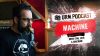
Jesco Lohan of AcousticsInsider.com is a mixing engineer and acoustics expert with a unique background in aerospace engineering and audio technology. Based in Berlin, he started his audio journey producing electronic music before transitioning into mixing. Jesco built his career from the ground up, initially mixing for friends and gradually expanding his client base through word-of-mouth and recommendations from mastering engineers, honing his craft and growing his reputation by helping artists at a similar stage in their own careers.
In This Episode
Jesco from Acoustics Insider stops by for a killer Q&A session, tackling all your burning questions about room treatment and workflow. He gets into the nitty-gritty of why you might be better off with a great pair of open-back headphones than trying to work with a sub when you’ve got difficult neighbors. Jesco also breaks down the science of finding the perfect listening position, explaining how to balance low-end response with a solid stereo image, and offers solutions for taming problematic low-mid frequency buildup. He shares his personal pre-mix routine, including his “no faders” approach to initial balancing, and dives deep into acoustic concepts like the purpose of air gaps behind panels and the critical difference between sound pressure and particle velocity when placing bass traps. It’s a super technical but practical episode for anyone looking to level up their listening environment and mixing process.
Products Mentioned
Timestamps
- [1:05] Dealing with crappy neighbors when you need to monitor low-end
- [2:22] Why a good pair of open-back headphones is a great investment
- [4:03] Why stereo imaging is crucial when choosing headphones
- [5:20] How tight low-end timing is more important than a flat frequency response in headphones
- [6:35] How to find the sweet spot for your listening position
- [9:05] What to do about a nasty low-mid buildup around 200 Hz
- [11:50] Jesco’s pre-mix routine for getting in the right headspace
- [12:55] Getting all the technical prep work done before the creative mixing starts
- [14:15] Priming your brain with reference tracks at a matched loudness
- [15:10] Why Jesco does his initial level balancing with clip gain instead of faders
- [17:00] His process for taking notes on a mix the next day
- [20:55] The science behind using an air gap with acoustic panels
- [22:05] Why material right up against a wall is less effective for absorption
- [24:10] A potential career path for becoming an acoustics consultant
- [33:10] The problem with small vocal booths
- [39:30] A common misconception about bass trapping in corners
- [40:21] Why the points of highest sound pressure are the least effective for velocity-based absorbers
- [41:40] Why you should spread bass traps across the entire length of a corner
- [43:00] Why tri-corners are theoretically the least effective places for mineral wool bass traps
- [44:10] Applying the “bass hunter” technique to tracking and mic placement