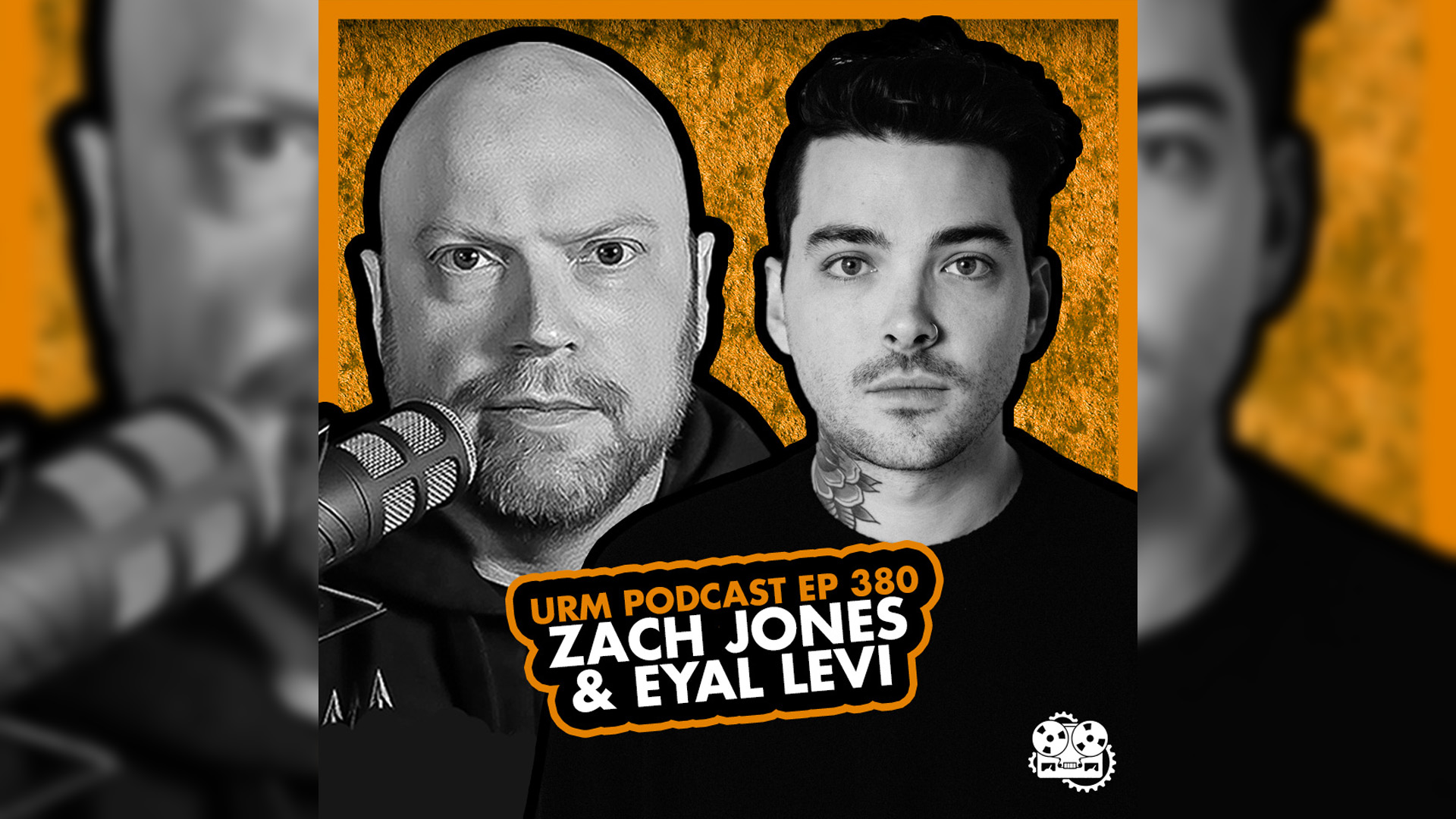
ZACH JONES: Producer Psychology, Creative Workflow, Getting Repeat Clients
Finn McKenty
Producer, songwriter, and musician Zach Jones has built an impressive and diverse portfolio working with artists like We Came As Romans, Plain White T’s, Fever 333, Veil of Maya, and Chelsea Grin. Equally comfortable co-writing and developing an artist’s sound as he is behind the board, Zach brings a holistic and artist-first approach to his productions.
In This Episode
Zach Jones sits down for a chill but insightful chat about the psychology and workflow of a modern producer. He gets into the nitty-gritty of structuring his day for maximum creativity, the career milestone of finally being able to take weekends off, and why that time away is so crucial for staying sharp. Zach shares his philosophy on being an integral part of the creative process—acting as an extra band member rather than just an engineer. He offers some killer advice on navigating sensitive creative conversations, explaining how to suggest changes and give feedback without killing the studio vibe or putting an artist on the defensive. He also breaks down how building genuine rapport with a band before even hitting record, as he did with Veil of Maya, lays the foundation for a smooth and successful project. It’s a great look into the human side of making records and what it takes to get clients coming back.
Timestamps
- [2:45] Zach’s daily workflow: mixing in the morning, creating in the afternoon
- [5:54] The four-to-five-hour sleep sweet spot
- [8:01] The benefits of taking weekends off for a creative recharge
- [9:32] Why you have to earn the right to take days off early in your career
- [12:21] Why Zach avoids “shut up and push record” sessions
- [14:45] The difference between caring about the final product and being creatively invested
- [17:32] How to suggest changes without turning it into a debate
- [20:30] Keeping negative language out of the studio to maintain momentum
- [22:05] The importance of building rapport with an artist before the session starts
- [27:34] The story of how he landed the Veil of Maya record
- [29:35] Why getting repeat clients is a major career milestone
- [31:20] Why being a “genius” producer isn’t enough if you’re a nightmare to work with
- [34:28] The problem with over-intellectualizing creative choices
- [36:25] When the real answer to “Why did you use that?” is simply “Because it worked”
- [38:34] How the explosion of online learning has changed music production
- [42:10] How the home recording revolution killed the “shitty local studio”
- [46:36] Securing a long-lasting career by becoming irreplaceable to artists
- [47:19] Launching his new record label, Blood Honey
Transcript
Speaker 1 (00:00):
Welcome to the Unstoppable Recording Machine Podcast. And now your host, Eyal Levi. Welcome to the URM podcast. Thank you so much for being here. It's crazy to think that we are now on our seventh year. Don't ask me how that all just flew by, but it did. Man, time moves fast and it's only because of you, the listeners, if you'd like us to stick around another seven years and there's a few simple things you can do that would really, really help us out, I would endlessly appreciate if you would, number one, share our episodes with your friends. Number two, post our episodes on your Facebook and Instagram and tag me at al Levi URM audio and at URM Academy and of course our guest. And number three, leave us reviews and five star reviews wherever you can. We especially love iTunes reviews. Once again, thank you for all the years and years of loyalty.
(01:01):
I just want you to know that we will never charge you for this podcast, and I will always work as hard as possible to improve the episodes in every single way. All we ask in return is a share a post and tag us. Oh, and one last thing. Do you have a question you would like me to answer on an episode? I don't mean for a guest. I mean for me, it can be about anything. Email it to [email protected]. That's EYAL at m dot A-C-D-E-M-Y. There's no.com on that. It's exactly the way I spelled it. And use the subject line. Answer me Eyal. Alright, let's get on with it. Hello everybody. Welcome to the URM Podcast. Our guest today, Zach Jones is a producer, songwriter, mixer, musician and URM podcast alumni with an ever expanding portfolio. Zach has worked with acts such as we came as Romans, plain white Tees Fever, 3, 3, 3 Velo, Maya and Chelsea, grin among many, many others. Also, he recently started a record label and we'll talk about that. Let's get into it. Zach Jones. Welcome. How's it going? Good. It's something that usually happens is when I start talking to people before we start recording, if I'm not careful, we'll end up talking for 15 or 20 minutes and it'll be like, damn, why didn't we just record that?
Speaker 2 (02:23):
That's hilarious. I feel like, yeah, just off rips. How's it going? It just immediate
Speaker 1 (02:28):
Flood gates open of info. Yeah, exactly. And so we were talking about productive and creative hours, but you're saying that you like to start later and later and later. I was saying that I like to start earlier and earlier and earlier. Yeah,
Speaker 2 (02:45):
I feel like, so the system, because as of now it's, I haven't hired on anyone to work for me yet or anything like that, so I'm kind of just doing everything unless I do a co-produce situation. But I usually try and mix, do all my mixing from 8:00 AM until noon, whatever I have to do for the day. And then I do my main session of writing and production starting at noon until dinner time. And then if I have to do a couple other little things, I'll do it later at night. But yeah, it's usually kind of like the workflow through the week, but I've realized, yeah, if I'm having to write a song, it feels like early afternoon is the time for me to do that, but the mixing and extra production bits and all that, I feel like early morning or late night are when those feel the best. So I feel like I've got it to somewhat of a good system now after a lot of trial and error, but it's just, yeah, that's kind of what works for me as of now.
Speaker 1 (03:49):
So that's kind of similar. I guess the mixing makes perfect sense. You need a fresh brain and fresh ears to handle that. The thing that I've noticed is when writing music, I mean, I can do it at all times and just like anybody else, it'll come to me at weird hours and when you don't want it to and when you're not working on writing and all that. But as far as sitting down to write still, I could make it happen at any time, but nothing is better than waking up super early, like five 30, warming up on guitar for 30 minutes and then by six 30 or seven be writing this level that my brain goes to that only does it. Then I can wake that thing up for five hours straight if I start early enough. But if I start later, I can still kind of wake it up, but it won't last as long. It'll last like an hour or something.
Speaker 2 (04:50):
Okay.
Speaker 1 (04:52):
But if I'm working by seven, I can sustain peak creativity for a good four or five hours. So I have tried my hardest to learn how to go to bed earlier and it's really, really hard for me.
Speaker 2 (05:07):
Yeah, it fluctuates for me. I feel like this past week I was in bed at 10 30, which never happens, and then I'll have some weeks where it's like 2:00 AM I'm still laying there watching tv, trying to fall asleep. I'm sure there is other people where they're timeframe throughout the day is just constantly changing. I feel like I have certain things that are always the same and then it's, there's a lot of other pieces that are constantly changing as far as sleep schedules and stuff like that, but I'll still get up at the same time. I don't know, some weeks I feel like if I get less sleep, I feel better throughout the week.
Speaker 1 (05:51):
Well, what does less mean for you? What's normal?
Speaker 2 (05:54):
I don't know, four to five hours, which sounds crazy, but I feel like anything over that, then it's like pulling teeth, trying to get out of bed in the morning.
Speaker 1 (06:04):
So closer to four that's starting to get red line ish, but above six, then you're starting to get into lethargic mode. There's this five hour sweet spot, but I feel like you can't sustain that after several days of that. You have to sleep longer
Speaker 2 (06:24):
For sure. I think that's why I feel like I have weeks where it's like, yeah, I do the four to five hour thing and then I'll have other weeks where it's like, yeah, I'll be in bed at 10 30 and then sleep until eight or so. But yeah. Yeah, it's definitely a back and forth thing.
Speaker 1 (06:40):
What I do, I kind of stay at my girlfriend's place and when I am with her, I sync to her schedule
Speaker 2 (06:48):
When
Speaker 1 (06:48):
At all possible because she's very routine and that's good for me. So she wakes up at five 20, so I wake up with her. It just keeps me in line during the week, which then makes it really hard to stay up till three or four, but still I'm ending up getting five hours or four hours of sleep at night when I'm staying with her. But that's fine. I can sustain that through the week, and in some ways it's more productive than home where one night I'll sleep seven hours another night, I'll sleep five another night, I'll sleep eight another night, four, even if you're not sleeping enough, I think consistency is better, at least for me.
Speaker 2 (07:29):
Definitely. No, I could agree to that for sure.
Speaker 1 (07:33):
What about as far as schedule goes? Is there any type of schedule that you like to keep that you feel is peak for you? I know in music everything's always changing, so one of the things that you have to be able to do is adapt, but is there any sort of type of schedule where you've been on it and you've just been like, man, this is what works. Everything is just flowing,
Speaker 2 (08:01):
Kind of how I'm doing things now. I was saying the mixing starting around eight till 11 or noon and then start my main session. So whether that's a writing session or an album I'm doing, and then I'll do that from 11 or noon until I feel, yeah, I'll do that till probably seven or eight and then usually break and be off for the night. Or if there is more things I need to do, I'll just go take a dinner break, come back and then wrap up. But I feel like that is the most efficient for me. And I've recently started taking weekends off, which is a huge thing. It gives you something to look forward to and you just feel like, holy shit come back refreshed.
Speaker 1 (08:48):
Yeah, congratulations. Graduated to weekends.
Speaker 2 (08:52):
Yeah. My friend that I work with a lot, drew folk, he's been on here, wizard Blood.
Speaker 1 (08:57):
Yeah, love that guy.
Speaker 2 (08:59):
He was the biggest advocate for that. He was like, take weekends off. I was like, how am I going to get all this done? He's like, trust me, take off the two days and you'll work way harder when you come back on Monday. I was like, all right. So I tried it and yeah, it's nice. I forgot what it was like to, obviously it's music, so it is always enjoyable for the most part. So taking the weekends off when Monday came around, I was really looking forward to coming back instead of it just feeling like just one long sprint.
Speaker 1 (09:32):
I do know. Yeah. Yeah. I can't because of the situation I've landed myself in by adding the band back in, I can't hope to ever get a day off. I haven't had one, I dunno, maybe this year, but that's okay. I still think that people should demand to at least have one day off, except if they haven't earned it, and I know that that's going to sound weird because there's a lot of people out there who are taking their power back as far as how much work they do, but in a field like audio where you set your own fate and you're not working for a boss, you're working for yourself and you have client deadlines, and if you don't do the work, well, it's just me one day later in the early years when you're still proving yourself and you're not established yet, you might not have the luxury of that and not because anybody's imposing it on you, but just because the world doesn't give a fuck about your dreams, it just keeps moving and if you take a day off, the world does not take a day off. So with a production career, I think that's why I said congratulations. It's just because when you get to the point where you can take a day off a week or a weekend, you just do that and your career keeps moving. That's a milestone actually.
Speaker 2 (10:52):
Yeah, and there's definitely times where it's like
Speaker 1 (10:57):
Of course
Speaker 2 (10:57):
Having to do bounce out, some stems wrap up and mix little. I just don't book into big sessions on the weekends anymore. But it did take a long time to get to that point. Yeah. I've always just had this FOMO of, yeah, if I'm not working, somebody else is and
Speaker 1 (11:19):
Well, it's the truth,
Speaker 2 (11:20):
And it's just to get to the point where you're like, you know what? I am going to take the day off. You do have to come to peace with that, that you're okay with somebody else's out there advancing still.
Speaker 1 (11:32):
Well, it has to get to the point where your clients aren't going to leave you over it. Your clients work with you because of what you bring to the table and they's it. They're not going to not come to you because you take Sundays off or something. It's just not going to happen. Once you get to a certain point when people are coming to you because you're the cheapest option or their buddy or geographically close, when if you're not available the day they want you to be, that's when they'll go to somebody else. But if they're going to you because of what you specifically bring to the table, that's when you get to that point. When you've established yourself that much doesn't mean that you're the CLA level or something, it just means you've established yourself to a point where people come to you for what you do. Then you can start to reclaim some of your life back. I think.
Speaker 2 (12:21):
Yeah, I mean there's just different levels. There's guys that love just doing audio and it is not even necessarily wanting to make a name for themselves. They work the studio environment working on lots of different things, but it's not necessarily about the client relationship, if that makes sense. It's just kind of artists passing through and they're like, what do you need? And they just help 'em get through the day kind of thing. But I've always very much been on the end of even very heavy handed in the development of an artist's sound and all that. And when I do take on a record, it does. It's that thing where it does feel like you're that fifth or sixth member or whatever, and those are just all, whenever I take on anything, it's always got to be that for me, I think if it feels like a put shut up and push record, then it's just not for me. I think,
Speaker 1 (13:21):
No, and there's people who are cool with that. God bless 'em,
Speaker 2 (13:24):
And I've had a couple of those in the past and just to try it and I was like, okay. Which for me was more of just a paycheck kind of thing at that point, and I was like, this just isn't doing what I want to do. So
Speaker 1 (13:39):
What I noticed when I did those kinds of gigs, that's what turned me off from it because I'm not as good of an engineer as some other people because that part of my brain that does the good stuff doesn't really come on gigs like that. It didn't, and I didn't know what to do to make myself care. I can't make myself care about something I don't care about. I just can't.
Speaker 2 (14:02):
Yeah. If you know that it's just like, Hey, we have this song idea. We literally just need a studio to lay this down in and that anyone could be at the computer technically that knows how to run it. It does make it hard to care like, well, you're just doing it.
Speaker 1 (14:20):
Yeah. Let me clarify one thing. It's not caring. I don't give a fuck. Anything goes We'll, just let it suck. Not like that. I do care. I care that they get what they were looking for. I get that. I care that it's good, I care about that, but the level of care that comes when I'm really into something, it it's like this whole other, the care to make it the best thing on earth. I can't fake that.
Speaker 2 (14:45):
Yeah, well, I think it's just carrying on multiple levels. It's like, yeah, at the end of the day, it has to be great, it has to sound great, but if they don't want input on their song, it's hard to then you immediately are going to stop caring about the song. It's just a waste of energy at that point. You are like, well, I just need to make sure that everything's coming into the computer correctly. So you could be like, oh, I think that is a bad lyric, but I'm not going to say anything. I'm not even supposed to care about that right now. So yeah, I think when it comes to records and all that, for me it always has to be that thing where you do have to care and you want to care and you do care about every little aspect of it because it's a big thing.
Speaker 1 (15:32):
I mean, even though it's their band, it's your project at that point too.
Speaker 2 (15:37):
Yeah. If everybody's locked in, everyone's is trying to share the same mental space and get on the same level emotionally and everything, I think that's when the coolest stuff is made and how do you create that thing that only you and those other people in the room would create, and if anyone was removed from the equation, it wouldn't have turned out the same. I think that to me is the coolest part about sessions and writing and all that is what happened in the room that day with those people, and that would've not happened if it weren't for that
Speaker 1 (16:12):
For better or for worse.
Speaker 2 (16:13):
Yeah, I've always found that fascinating. I've seen it so much, especially out here, just how fast paced it is, how many sessions just constantly are happening and you start connecting the dots of like, oh, this wouldn't have happened ever if it weren't for this, or it just starts to make more sense and I dunno, it's really cool to dig in deeper with all of that. I don't know,
Speaker 1 (16:37):
Just out of curiosity, because the production style that we're talking about involves like you kind of said, being an extra member of the band, taking it on as your own, becoming part of the tribe basically. But still at the end of the day, that record is going to be handed in and they're going to leave and it's going to be them, and then you're onto whatever's next. They're going to go on tour for a while, and at the end of the day it's still there. So my question is, in that situation where you are the fifth or the sixth or the seventh member, how do you know when to be like, okay, I'm not going to push this point any harder or that you really feel like something needs to get changed, like Lyric and they are just not into it, but part of why you were hired was to help fix songs and be that extra member. So where do you draw the line?
Speaker 2 (17:32):
Well, and I always go into it, so at the end of the day, it is their record and I don't know if there's anything that I've had to fight that hard, I think to get across. If I think it's something where I'm like, this absolutely needs to change, it usually ends up changing, but I've noticed that because I've worked with some guys and I'm just not that kind of person, and they probably get there a lot quicker, but other producers will just shut something down in the moment if they're like, no, that's not good. We're absolutely not doing that. You know what I mean?
Speaker 1 (18:08):
Yes.
Speaker 2 (18:09):
I feel like it's hard, especially if it's a newer, an artist that you're just working with for the first time. I feel like if you just shut too many things down off the bat, it makes, even if good things are still happening, it makes the whole process feel rigid to them I think. So I'll take mental notes as we're writing a song, producing something, I'll take mental notes of all the things that I want to change and fix, and then I'll kind of prioritize it and I'll just slowly circle back to those basically how do you get back to the problem and not put a huge spotlight on it? I don't like to be like this. This is an issue because then I think it is very easy for people to get worked up and when it is their art, it's personal. If there's too many issues, then they're going to be like, well, what's going on?
(19:06):
It opens up the door to so many other problems. So I try to just slowly just chip away at these little issues where it's like, oh, this riff could be a little cooler. What if it hit this note instead of this one? And it's like, oh yeah, that is cool. And then you just pop it in and it was never an issue or a bad lyric where it's like, okay, yeah, let's lay it down and then later on just kind of be like, oh, wouldn't it be cool if you said this instead of this? And surprisingly, most of the time when it is that nonchalant people are like, oh yeah, no, that is cool. Let's try it. But if it were to be like, no, I don't like that at all, what if it's like this? Then it's already a debate. You know what I mean?
Speaker 1 (19:48):
Yes. I mean, it's not what you're saying, it's how you're saying it.
Speaker 2 (19:52):
Yeah.
Speaker 1 (19:52):
That's kind of like one of the secrets to getting along in this world is not what you're saying, how you're saying things.
Speaker 2 (19:58):
Yeah. I don't think there's a right or wrong. I don't think the way I'm doing things is 100% right or anything. It's just just been in rooms where I'll see somebody just shut something down hard and I'm like, the only time I would do that is if I'm trying to get a really pissed off emotional take out of somebody is when I would be like, what are you doing? That sounds awful. Which is very rare.
Speaker 1 (20:24):
Then you're going to have to deal with the consequences. You might get a great take, but you're going to have to deal with the fallout.
Speaker 2 (20:30):
Yeah. So yeah, I've, I've seen all different aspects of it and avenues, and it sounds probably just really lame or whatever, but in the studio, don't like to, I try to just keep any negative words, comments, anything out of it. I don't like saying no or I don't like this or that's bad, whatever. And I just try to keep everything positive moving forward. Even if, and it's most of the time everybody in the room knows if something's not 100% there, but it's like, all good, we're still moving forward. Let's work on this next part. Then once that part's great, it's like, okay, cool, let's go back to this one. And it's like you could probably solve it. Whatever issue it was could probably be solved in a matter of minutes instead of mulling it over for an hour just because, and then everyone's in a bad mood and burnt out. So
Speaker 1 (21:24):
I don't think it's lame at all because there's a lot of bad that comes out of letting the vibe spoil on a session.
Speaker 2 (21:32):
Oh yeah,
Speaker 1 (21:33):
A session lives or dies by its momentum. You got to keep that going and it's not worth fucking with someone's feelings and people are going to be sensitive about these things. There's some people that you can just be like, yo, that sucked, and they're not going to care. They're cool with it. They prefer that type of interaction, but that's something that you need to know about that person before you take that approach. You can't just do that to people. You could do that to me if you were recording me, you could do that to me and it would be perfectly fine.
Speaker 2 (22:05):
Yeah, that's such a huge thing aside from the actual making of the music, it's learning. It's almost, like I say, it's a constant therapy session, basically. So it's like if I'm working with an artist for the first time, I'll try. Sometimes you have to just get right to it and you don't have the option to go out, but I'll usually try to take 'em out, go get coffee or lunch, just hang out first talk, anything like that. If we're about to start working together for a period of time, I think having a day, especially with a record I've never liked, just get to the studio immediately, just start making music. It's like, Hey, let's go out, let's hang, let's talk. And just that one day of just human interaction is going to save you so many hiccups and just troubles in your month of recording an album, I think.
(23:04):
So Mark from Miah, he's one of my really good friends. We just wrapped up their album and the first day he flew in, I picked him up and we went to the mall, we went shopping, we went to Cheesecake Factory, went and got coffee. He wanted to go pick up a new video game we did that, came back to the house, ate dinner and then watched TV, and that was it. But the whole time we were just talking about kinds of songs we want to make, what kind of headspace he was in, and they had just started going back out on tour and all that, and I was just trying to just pick up on just basically how he was feeling and what he was going through, and it just gave me a lot of insight on how to approach that record and what kind of workflow is going to be best. And it turned out it was such a smooth, shockingly smooth record. So yeah, I dunno. I love doing that, just taking the day to go out and just hang out, and I think it just gives you a lot of insight that's going to be much needed throughout the record process,
Speaker 1 (24:09):
And you got to get on the same page. And a lot of that can't really be determined over email or text or whatever sometimes, but in general, you got to feel it out.
Speaker 2 (24:23):
Obviously every scenario is different, so I don't always get to do that, but what I did with Mark, but I do notice also, we could have easily just sat at the studio and had all those conversations, but there's something about being out and about, walking around where there's no pressure. Nothing feels like work at that point. And I feel like when you get honest answers and everything, because you're just out, you're not really thinking, you're just talking and not thinking about it. And then once you get back to the studio, then it's like, okay, we know exactly what we're trying to accomplish here.
Speaker 1 (24:58):
Hey everybody, if you're enjoying this podcast, then you should know that it's brought to you by URM Academy, URM Academy's mission is to create the next generation of audio professionals by giving them the inspiration and information to hone their craft and build a career doing what they love. You've probably heard me talk about Nail the Mix before, and if you're a member, you already know how amazing it is. The beginning of the month, nail the mixed members, get the raw multi-tracks to a new song by artists like Lama, God Angels and Airwaves, knock Loose OPEC shuga, bring me the Horizon. Gaira asking Alexandria Machine Head and Papa Roach among many, many others over 60 at this point. Then at the end of the month, the producer who mixed it comes on and does a live streaming walkthrough of exactly how they mix the song on the album and takes your questions live on air.
(25:50):
And these are guys like TLA Will Putney, Yenz Borin, Dan Lancaster, to I Mattson, Andrew Wade, and many, many more. You'll also get access to Mix Lab, which is our collection of dozens of bite-sized mixing tutorials that cover all the basics as well as Portfolio Builder, which is a library of pro quality, multi-track cleared for use in your portfolio. So your career will never again be held back by the quality of your source material. And for those of you who really want to step up their game, we have another membership tier called URM Enhance, which includes everything I already told you about, and access to our massive library of fast tracks, which are deep, super detailed courses on intermediate and advanced topics like game staging, mastering low end and so forth. It's over 500 hours of content. And man, let me tell you, this stuff is just insanely detailed and enhanced.
(26:44):
Members also get access to one-on-ones, which are basically office hour sessions with us and Mix Rescue, which is where we open up one of your mixes and fix it up and talk you through exactly what we're doing at every step. So if any of that sounds interesting to you, if you're ready to level up your mixing skills in your audio career, head over to URM Academy to find out more. Speaking of Maya, you met Mark when he was brought in to assist on some songwriting, and you clicked well during that session, and as a result, you were later approach to work on the latest veil of Maya. So I'm curious, what was that first session with Mark, and what do you think the reason was that that led to you getting approached about the record? Well,
Speaker 2 (27:34):
It's funny is it kind of ties into what we were just talking about, how you say it or how you approach things. So he came in and it was for this band Jinx. They had just signed to my friend Jason Butler, his label 3, 3, 3. Him and I do a lot of that stuff together, but they had just signed over there and they told me what kind of song they wanted. I was like, well, I know Mark's in town. He's working with a friend, this guy KJ that I work with on a bunch of stuff. I was like, I could hit him up, see if he could pop in and just help write some riffs and all that. And so Mark was down, he came in and we just got right to it. We had crushed out an entire song in two hours, and afterwards he was like, thank you for, he was like, you didn't question what I was doing.
(28:25):
It was the thing where there were little parts that we would go back and touch on again, but nobody in the moment didn't make a big deal out of anything, and he's just fantastic. So there's very little of that, but he was just like, you trusted me, you let me do my thing. I saw everything through. He was like, I want to try this, this, and this. I'm like, okay, cool. We tried all of 'em, and then we would pick the best option instead of me being like, Nope, we're not doing that. We're not doing this, we're not doing that. But yeah, we crushed out the whole song super quick. He was excited on his band, was super stoked on it, and he was just like, that felt a little too productive. And then, yeah, he was just like, yeah. So I don't know. I think we just clicked very well, and I think from my understanding, I think just really enjoyed just the workflow and being able to try just all of the options, hear it back immediately and he got to make the decision. But yeah, it was a really cool workflow. But yeah, I think that is one of those things where seeing that work and pay off in the moment almost,
Speaker 1 (29:35):
It's interesting to understand why artists go back. It is another one of the milestones. I think being able to claim weekends, that's one milestone. Having repeat artists, it's another one. Every once in a while you get these multi-platinum producers who only do one album per band because they're horrific to work with.
Speaker 2 (29:57):
They get
Speaker 1 (29:57):
Another band in who saw the success of their previous client, and then they go and get tortured, but have a successful record. There's that, but in general, that's not who you want to be. Repeat clients is where it's at. I know that lots of people struggle with that. Lots of people struggle with that. I know lots of people listening to this. That's a big question for them is how do you get to the point where you can get people coming back? But I think you basically just answered it. It's like you got to be on the same page. The workflow has to be compatible, the personalities have to be compatible, and of course they have to The output.
Speaker 2 (30:35):
Yeah, exactly.
Speaker 1 (30:36):
But just liking the output alone is not enough. I think I do know of those horror stories where someone is just a genius producer and a terror to be around.
Speaker 2 (30:49):
Yeah. Oh, I see it all the time with guys that are just, I mean, miles ahead of everybody talent wise, and they just can't get out of their own way because they're just nearly impossible to deal with. And for those artists, it's like, yeah, it could sound insane. The song is great, but they're just like, I mentally, and
Speaker 1 (31:09):
They could have their biggest album of their career,
Speaker 2 (31:12):
And they're just like, mentally, I am not doing that anymore. I cannot put myself through that. So it is crazy to see that. But yeah, I think it's just, it's finding that balance of like, yes, it is work. You are hired to do a job. You're hired to make this song, album, whatever it is, as the best thing that it can be, but you also can't be so not corporate, but just cold and it can't be just straight business. I've just seen that where they're like, Nope, nope. That's not going to do well. So it's going to be this, and it's like, but you don't, honestly, no one knows. We all have a good idea of what works just based off the past in music, but no one knows what's going to pop off next. Why not try the, it's all
Speaker 1 (32:03):
A guess
Speaker 2 (32:03):
The risky thing. Yeah. Anyone that's like that says they know is they don't, no one can predict it. You can have a hunch, but no one's certain,
Speaker 1 (32:12):
And you can have a good track record for having good hunches.
Speaker 2 (32:16):
Yeah, exactly.
Speaker 1 (32:17):
But that's all it is. You have a good instinct, but that doesn't mean you're right all the time,
Speaker 2 (32:23):
Which obviously does have value, but it's not certain. I think, yeah, it kind of just comes down to taste. I feel like it's just people that do have those hunches and do see things pan out close to whatever it was. It's usually just because they have a good taste, I think, where they're like, this feels great. This gives me that feeling whenever I'm trying to pick singles or something. It's finding that feeling of when I was a kid before I even knew how to play guitar or anything, just whatever feeling it was when I turned on a song where it's just like, you can't even explain it. You're just like, this feels
Speaker 1 (33:11):
By just saying that feeling. Yeah,
Speaker 2 (33:13):
Yeah, exactly. So that's what I'm constantly looking for, which gets harder the more you do it. Just such high output, so many things out there. It does kind of lose a little bit of that punch, but I dunno, when you have that song, you can feel it though for sure, when you know.
Speaker 1 (33:33):
Yeah. It's like when everyone working on it listens to the playback and it's over and everyone just starts laughing. Everyone knows that shit is sick. That's
Speaker 2 (33:45):
It. They'll laugh.
Speaker 1 (33:46):
Yeah. You just know.
Speaker 2 (33:47):
Yeah. If it's so good that everybody can only laugh, then you're in a great spot. I think that's the biggest thing is pulling out extreme emotions, whether it's excitement, happiness, anger, or yeah, if you're crying at the end of a song, you did your job too. It's just like how do you make someone feel in the deepest level? And if you did that, then if the five people in the room are feeling the same thing, then chances are a lot of other people are going to feel that way too. So it's good to keep track of that throughout the process.
Speaker 1 (34:28):
So one thing that happens a lot, I was actually talking about this on a riff hard podcast yesterday as pertaining to writing, but I think it's the exact same. I've noticed this with mixing too, and with URM students, lots of people will hit me up about my writing and asked me all kinds of technical questions. Was I thinking of this theoretical thing while doing that? And it's like, no. They were saying, I'm trying to write something in your style. So in this part of this song, were you thinking of adding this so that this harmonic movement could happen? It's like, no, I'm thinking of anything but writing something sick and that felt good. And I think that they get too intellectual about these things, and it's the same with URM students with mixing and stuff. It's like they overthink these things. Why did you use this instead of this? Why did you use this instead of that? In this scenario, why should I use this instead of that? When in reality, the most common real answer is I like it. It sounded awesome. And there's a technical answer too, but if people are not using that as be all and all, do you like it, then something's wrong. I think if you don't know, then I guess, yeah,
Speaker 2 (35:52):
I feel like recently too, there's a few artists I've been working with and they're a little more in the developmental stage, so they're still learning quite a bit. I mean, we all are, but they really are. Yeah, I mean through and through and they're like, well, what did they do? Why did, I'm like, because it felt good, whether it is mixing, they're like, well, why would you use this 76 and not this one? And sometimes the answer is just like, that was just the one that my mouse came across first. It's just
Speaker 1 (36:24):
Sorry to disappoint.
Speaker 2 (36:25):
Yeah. So yeah, sometimes it's just not an answer. It's just like, I dunno, I just grabbed that one. And that's cool. And I love those moments where it's like you just do something and you don't think about it, and it just lives. And then to watch somebody else get hung up on that little detail that you didn't even put a second of thought into really. Well,
Speaker 1 (36:46):
The thing is you did put the work into it leading up to that point to where your instincts and your tastes guide you. Your mouse might've just come up on that 76 first, but if you heard audio through it and didn't like it, you probably would've moved on to the next one.
Speaker 2 (37:01):
Yeah, exactly. But yeah, if you're just like, oh, that works, throw it on and it's doing what you want, then you're going to just move on. I'm not going to sit there and shoot out eight of 'em and be like, oh, this one's a little better than the others, I think.
Speaker 1 (37:15):
Yeah, exactly. So the key is knowing that you like it.
Speaker 2 (37:18):
Yeah, and I've seen that. I've had people ask me production mix questions and they're like, well, how do you know what to do in this scenario? Or they're like, what am I doing wrong? And I'm like, I mean, broad stroke, you could do this, this, and this, but the overall thing is, is this going to take a couple years for it to make sense? I could tell you all the things that could be better in this mix or on this production, but you're not even going to know why or it's not going to make sense until you've done it a handful of times and maybe in two years or something you'll be like, I get it now. People that have just started in the past six months, they're like, oh, my mix doesn't sound like that. Great. And I'm like, well, yeah. I mean, that's just that we all did it. I wanted to tear my ears off listening back to my first mix. It's just like, that's just how it goes sometimes. There isn't that immediate answer that's going to fix fix it. It's just put in the time. If it was so easy, there'd be so many people doing this
Speaker 1 (38:27):
Put in the time, but put in the time actually working on it, not so much asking other people for the answer.
Speaker 2 (38:34):
Yeah. I'm curious because with all the podcasts and nail a mix and stuff, because when I was obviously learning, I bought, it was home recording for Dummies books straight up. That was the first that I was like, it had little diagrams of, this sounds bad in a vocal, and I'm reading it trying to figure it out, and there was no tutorials, really, nothing like that. So it was very much just figure it out on your own, which is cool is you come up with your own style that way and whatever, but then obviously there's so much info now, which is so I'm like, man, I would've saved myself probably three years of headache if nail the mix or stuff where a thing when I had first started. But I was curious, do you think now that there is so much info and all that, do you think it's opened up people to be overly analytical with why it is they're doing certain things now? Because there's obviously the people that are good at taking info and just kind of immediately being like, all right, cool. Let me apply this to my thing. But then we were talking about with people overanalyzing being like, well, why was it this and not this, and why was it this and not this? Or how'd you get here? That wasn't a thing when I was starting. I didn't really even have anyone to bounce off of where I was living.
Speaker 1 (40:08):
Yeah. I mean, well, I don't think we're creating the personality type. Those people have always been there.
Speaker 2 (40:14):
No, yeah, of course.
Speaker 1 (40:15):
This just gives them more of an opportunity to do that, I guess. But I don't think that it is creating those people. They would've been doing that about it anyways. They just would've been like, we was just quietly going on message boards and stuff.
Speaker 2 (40:30):
Yeah, yeah. The forums and stuff.
Speaker 1 (40:33):
Yeah.
Speaker 2 (40:33):
Yeah. I was just curious. You guys get to see all of that. I grew up in Virginia and I was like, there was me, my friend Andrew Bayless was nearby, he's cool. Taylor Larson was in Maryland, but there wasn't really many other people, so we would all, I mean, mostly Andrew and I, we'd kind just talk back and forth on stuff, but it's just so wild. It just felt like such a small little, oh, no one really does this, but seeing what you guys are doing, and I mean, just the amount of people that are into it.
Speaker 1 (41:07):
It is nuts, isn't it?
Speaker 2 (41:09):
It's almost mind blowing. I was like, I had no idea that many people were interested in it. It is just so cool to see. Well,
Speaker 1 (41:17):
They didn't use to be, they didn't use be.
Speaker 2 (41:20):
Yeah. You guys have opened up such a huge platform for it to seem not seem like it is obtainable, but I think it almost feels like a myth. I am sitting here being all like, oh, back in my day. It's not like that.
Speaker 1 (41:38):
It's not even that long ago.
Speaker 2 (41:40):
Yeah, it's just crazy. The advance and even the past five years is just nuts. But yeah, I feel like, yeah, me having to go seek out of recording for Dummies book.
Speaker 1 (41:52):
Yeah, man. It was Slim Pickens,
Speaker 2 (41:55):
And then once I found it, I was like, this is gold.
Speaker 1 (41:58):
Yeah. The thing is though, that we've made it easier to get mediocre, basically. It's still just as much work to get great.
Speaker 2 (42:09):
Oh yeah, for sure.
Speaker 1 (42:10):
If anything has happened, there's less use for shitty studios as a result of not just us, of the technology that's out too. We're a part of this evolution. There's a home recording revolution and this technological advancement and what we brought to the table, it all works together to basically evolve things to where you kind of don't need the shitty local studio the way you used to. That's it. You just don't. However, if anything, what we're doing I think really highlights when someone is really good. It really stands out now that so many people are trying to do it and realizing just how difficult it is. I think that it helps them appreciate why you should invest in a good producer or a good mixer. Maybe the shit is not easy.
Speaker 2 (43:06):
That's a really good point. Honestly. Yeah, I mean, obviously we're in the era of self-produced and anyone that can go buy a laptop and buy Logic or Cubase, Ableton, whatever, can technically be a producer. Now you don't need the crazy, most hit songs, like Platinum Songs being made on just a laptop on an airplane. That's just where we're at now. But still, I think it just shows people more than ever. I think that it's not about what you have, it's about, it is just crazy to see the people that are like, well, I went to the studio and the guy's got all this stuff, but it sounds awful. The mix or the bouncy sent back sounds terrible. And I'm like, yeah, it's not that hard of a concept. It was
Speaker 1 (43:59):
Always like that though.
Speaker 2 (44:00):
Yeah, exactly. I just think people now are even more aware of it, which is cool. It's not what you have, it's how you're using it.
Speaker 1 (44:08):
Man. There was a studio in Atlanta that all the famous bands recorded at in the nineties. Okay. So when Brendan O'Brien used it, shit sounded great. Of course, I think he did a corn record there or something. Of course.
Speaker 2 (44:24):
Oh, okay. Nice.
Speaker 1 (44:25):
So all the local bands were like, we're going to raise $1,200 a day and go there for a weekend and record an album. And then it would always sound like fucking garbage. It wouldn't be with Brendan O'Brien, it would be with the house person or the intern overnight or something off hours, and five to $10,000 later they'd have a full length. That was fucking garbage. What I think is that we've put that scam out of business, as far as I'm concerned. I know that some people think that along with the technology has hurt the studio industry, but as far as I'm concerned, we don't need studios like that putting out shitty sounding demos for pants. That is not a valuable service. Shitty demos should be done at home. People should not be dropping. It's not morally right. Man, I remember one time where this band drove in, I won't say from where, just in case they're listening.
(45:29):
And when they showed up, let's just say that I found out that someone had mortgaged a house. It was an unsigned band, and they were fucking terrible, and they had mortgaged a house for the recording. It was too late to send them back. Had I known that that would happen, I would've sent them back. And what we were doing is higher quality than that shitty local studio. But still with that terrible of a band, there's no way it would ever be really good. And I felt like it made me feel like a complete piece of shit to take their money. And when I think about how many local studios just preyed on bands taking thousands and thousands and thousands of dollars from horrible bands putting out horrible mixes, were part of what put an end to all of that. But I don't think we affected the top levels or the truly great engineers and mixers producers. They're doing great.
Speaker 2 (46:26):
They're
Speaker 1 (46:27):
Doing great. Maybe they're not getting 8 million budgets, but there are a lot of people thriving from it, but they're actually good. That's the key.
Speaker 2 (46:36):
Yeah. I think kind of comes back to, I mean, well, it does come back to what we were talking about earlier where it's like, I think you securing a long lasting career is by being for an artist like that thing where they can't just, if you're busy, they're not going to be like, well, we're just going to have to go to so-and-so, or we're just going to have to go elsewhere. They're going to wait whether, even if it's a couple days or whatever, because you are giving them something that they can't get elsewhere. Totally.
Speaker 1 (47:08):
I've got to wrap this up in a few, but there's one last thing I want to talk to you about, which is that you just announced your first artist on your new label Venture Blood Honey. Tell me about that.
Speaker 2 (47:19):
Yeah, so my friend and I, Daniel McCartney, he's had a label for a minute and kind of similar to with Jason Butler, who's in Fever. He has his label 3, 3, 3. So I've kind of produced a lot of the things on both of those labels and Daniel and I have been working on a lot of different stuff with his label and then just some of the artists that he's an agent for. And then we kind of were just talking one day and he was like, Hey, why don't we just start something? We've just seen a lot of cool things happen just with his. So he was like, why don't we do something where you're running it, you're in charge of what's signing. So we set it up in a way where I produce and write with the artists and whatnot, and we're going to keep it pretty small and tight at first. Just kind of leaning into a lot of the weirder aspects of the whole rock and metal and electronic wave that's happening. So I don't know if you follow that playlist on Spotify Misfits 2.0, but there's just some of the artists on there just doing this. No, but I'm going to go check it right
Speaker 1 (48:32):
Now so I don't forget.
Speaker 2 (48:33):
Definitely check it out. A lot of the artists I work on are under that Nova Twins scene Queen. You'll see Fever 3, 3, 3 on there, and then Hades who I just signed. But yeah, it's just bring me a huge thing over there and it's just that crossover of just rule breaking, which has kind of always been not only my production style, but just like my taste in music is, anything that just feels kind of wrong is a lot of times my favorite stuff. So I dunno. It just made a lot of sense when we started it and kind of knew exactly where we wanted to, what kind of artists we wanted to sign, what we wanted to do with it, how we wanted to run it.
Speaker 1 (49:15):
Nice. Well, I wish you a lot of luck with it. Thank you. And it's been a pleasure having you on.
Speaker 2 (49:22):
Yes, thank you for having me. I was looking forward to this.
Speaker 1 (49:25):
Alright, then another URM podcast episode in the bag. Please remember to share our episodes with your friends as well as post some of your Facebook and Instagram or any social media you use. Please tag me at al Levi URM audio at URM Academy. And of course tag our guest as well. I mean, they really do appreciate it. In addition, do you have any questions for me about anything? Email them to [email protected]. That's ey. At ur. Do A-C-A-D-E-M-Y and use the subject line. Answer me a all then till next time, happy mixing. You've been listening to the Unstoppable Recording Machine Podcast. To ask us questions, make suggestions and interact, visit URM Academy and press the podcast link today.

