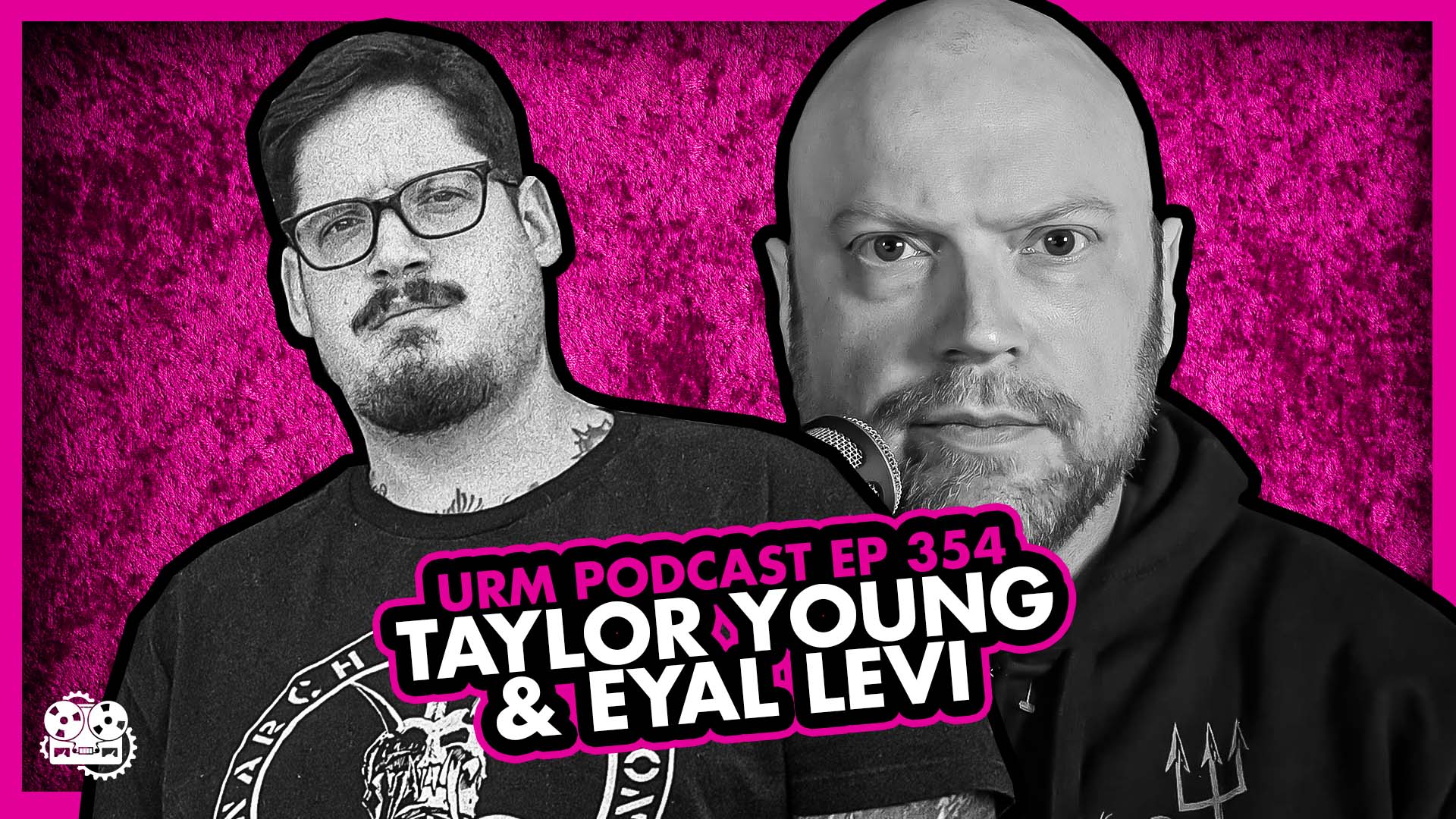
TAYLOR YOUNG: Capturing raw energy, massive guitar tones, and when to send a band home
Finn McKenty
Taylor Young is a producer, mixer, and musician based out of The Pit Recording Studio in California. He’s a key player in the extreme music scene, known for his drumming in the powerviolence band Nails and his role in Twitching Tongues. As a producer, he’s known for bringing a raw, aggressive, and authentic energy to his recordings, having worked with bands like Suicide Silence and Regional Justice Center.
In This Episode
Taylor Young gets real about what it takes to capture raw, intense performances without sounding unfinished. He talks about his high-speed workflow, like tracking full albums in just five days, and why committing to sounds early—even printing reverb on drum rooms during tracking—is crucial. Taylor shares how learning from Kurt Ballou taught him the deep technical precision required to achieve that “raw” sound, emphasizing that it’s anything but casual. He also covers his approach to massive guitar tones, from creating an “ignorant blend” of four different amps to knowing when a simple one-amp setup is the right call. For anyone navigating the line between authentic energy and sonic chaos, Taylor provides a masterclass on trusting your instincts, managing band performance issues in the studio (including when to send them home), and why the player’s hands will always matter more than the gear.
Products Mentioned
- Bricasti M7 Reverb
- Marshall JMP Amplifier
- Radial Phazer
- Pro Co RAT Distortion
- Boss SD-1 Super Overdrive
- Maxon ST9 Pro+ Super Tube
- FabFilter Plugins
Timestamps
- [4:15] Recording a full album in five days
- [6:48] Using a Bricasti reverb and committing to room sounds during tracking
- [8:55] Why you have to “do it wrong a bunch of times” to learn
- [14:52] How recording with Kurt Ballou made him a more technical engineer
- [15:25] The misconception that “raw” production isn’t technical
- [18:10] How his bands’ recordings organically brought him studio clients
- [28:28] Taylor’s go-to Marshall JMP and blending up to four amps
- [30:34] Crafting an “ignorant blend” of amps for the Regional Justice Center record
- [32:37] Spending eight hours on a complex amp blend, only to end up with one amp
- [34:10] A great producer knows when to get the fuck out of the way
- [35:48] You’re not creating a tone with mics; you’re capturing it
- [36:05] Is tone more in the gear or the player’s hands?
- [38:44] The time he sent a band home after they drove 20 hours
- [42:13] How sending a different band home led to them getting better and crushing it
- [43:29] The concept behind his new dual overdrive/fuzz pedal
- [44:23] Using a switch to change the pedal order in the signal chain
- [45:23] Why your amp should be on a low-gain setting when using his pedal
- [47:27] Do we really need another SSL channel strip or Tube Screamer plugin?
- [49:04] Preferring plugins that are designed to be plugins, not hardware emulations
Transcript
Speaker 1 (00:00):
Welcome to the Unstoppable Recording Machine Podcast. And now your host, Eyal Levi. Welcome to the URM podcast. Thank you so much for being here. It's crazy to think that we are now on our seventh year. Don't ask me how that all just flew by, but it did. Man, time moves fast and it's only because of you, the listeners, if you'd like us to stick around another seven years and there's a few simple things you can do that would really, really help us out, I would endlessly appreciate if you would, number one, share our episodes with your friends. Number two, post our episodes on your Facebook and Instagram and tag me at al Levi URM audio and at URM Academy, and of course our guest. And number three, leave us reviews and five star reviews wherever you can. We especially love iTunes reviews. Once again, thank you for all the years and years of loyalty.
(01:01):
I just want you to know that we will never charge you for this podcast, and I will always work as hard as possible to improve the episodes in every single way. All we ask in return is a share a post and tag us. Oh, and one last thing. Do you have a question you would like me to answer on an episode? I don't mean for a guest. I mean for me, it can be about anything. Email it to [email protected]. That's EYAL at m dot A-C-D-E-M-Y. There's no.com on that. It's exactly the way I spelled it. And use the subject line. Answer me Eyal. Alright, let's get on with it. Hello everybody. Welcome to the URM podcast. My guest is Taylor Young, who's a musician, producer, mixer, and owner of the pit studios in California. He's also been in some really excellent extreme acts such as nails and twitching tongues and has worked with bands like suicide silence among many others.
(02:00):
In the studio. Here goes Taylor Young, welcome to the URM podcast. Thanks for being here. Thanks for having me. Yeah, it's a pleasure to have you here. I don't know if you're not allowed to talk about who connected us. I think I am. Alright. Well, I really respect Mark's, I guess, aesthetic when it comes to production. I've always liked the way mostly have liked suicide silences, mixes and productions because they keep it real, which I really, really like. Yeah, he told me that I needed to talk to you because that is your thing. So I went and I did my research on your work and was like, yeah, this is awesome. Because I think that when you in heavy music, when you specialize in having recordings and productions and mixes that have that energy, that raw sort of energy, it's very easy to cross the line into just sounding unfinished or sounding like shit or you know what I mean? To actually have something that has that raw energy, but sounds good. That's tough.
Speaker 2 (03:08):
So some early stuff was just smash and go and kind of tweak from there. And I definitely listened. I listened to records from even as early or as late or early as 2013 where I'm like, damn, I didn't even finish this.
Speaker 1 (03:23):
So is it your definition of what's finished has evolved or you actually didn't finish?
Speaker 2 (03:29):
Yeah, it's just growing up over the years and getting just more tuned in here I guess.
Speaker 1 (03:35):
Yeah, that makes sense. Now in order to pull off what you pull off, I imagine that you need bands that are basically DTF with this style of production and who can actually hang, they can actually play. I'm saying that because we know that in modern heavy music there are lots of bands who can't play their shit in the studio.
Speaker 2 (03:56):
Oh. I mean, I still deal with that a good bit, but at the same time it's a majority of people who come very prepared. I also deal in hardcore bands who don't have money for a lot of days, so we got to get it done fairly quick comparatively to most things.
Speaker 1 (04:12):
What does quick mean for you?
Speaker 2 (04:15):
We do albums in five days or something like that.
Speaker 1 (04:17):
That is very quick.
Speaker 2 (04:18):
Yeah.
Speaker 1 (04:19):
So say that you only have five days to do an album. Do you have any sort of pre-pro or preparation time or is there anything that you do before? That'll kind
Speaker 2 (04:30):
Of only work if it's a band that's going with no grid or anything like that, they'll get here. We'll start tracking drums with scratch guitar and that's it. And usually if it's going to work, we have drums done by the beginning of the second day and then we even have vocals starting at the end of the second day so that we can sprinkle it for the whole week rather than having the person's voice blow on the last day or something like that.
Speaker 1 (04:55):
So you're saying that if the band wanted to use a click, it wouldn't be doable?
Speaker 2 (05:00):
That would take a half a day at least? Yeah.
Speaker 1 (05:02):
Yeah. Okay. So basically they just need to come in ready to throw down if they were to come in with the clicks.
Speaker 2 (05:09):
Yeah, that's happened a few times and definitely helps, but usually a band that brings their clicks needs them, so there's a little bit more post work that goes with it as you're going. I try not to be wondering if it's good, I'll kind of edit as I'm going. Whereas I feel like some people just kind of like, oh yeah, that's good enough. Whereas I don't like to gamble when we are doing it to a click when we're not doing it to a click. I'm still doing some editing whole track splicing or multi-track splicing and things like that. But yeah, it's definitely fast.
Speaker 1 (05:45):
I like that idea of not wanting to wonder if it's good, is it one of those commit as early as possible, but is it the goal is get something that you can commit to so you can move on
Speaker 2 (05:57):
Pretty much. Or we get the take as good as we can get it, and then I'll go in and do quick splices to make sure it's at least rocking enough to be okay with it in that stage. And then I'll do some more tightening once guitars are there. Just because some shittiness kind of pops out sometimes
Speaker 1 (06:18):
It seems to me like the commitment side of it is really important, man. I actually think that that's one of the most important things that producers and mixers really no matter what they're doing, should get comfortable with. Even if they are doing stuff that's totally in the box, a hundred percent fake drums and amp sims and the polar opposite. I guess even in that case, I feel like the best mixers I know to commit to things pretty early on.
Speaker 2 (06:48):
I love it actually because I have a really small drum room. I use a Bricasti reverb on the room mics pretty often, and while before we start tracking, I'll find a room sound I like and commit to it rather than tracking the dry room and then keep it and running it later. So it's kind of picking what studio I want to be in, almost like if I were going to take it to a drum room, I would be committed to that drum room, so why wouldn't I do that on the front end here?
Speaker 1 (07:21):
And if it's a good room, nobody ever complains about that. I mean, that's one of the things universally that people want to commit themselves to
Speaker 2 (07:29):
A hundred percent. They
Speaker 1 (07:30):
Spend extra
Speaker 2 (07:32):
Thousands of dollars on that one sound.
Speaker 1 (07:34):
So you just make sure that you get as close to or that sound that you're looking for before anything is committed, I guess to hard drive. And that makes a lot of sense to me, I think. I guess you got to trust your decision making though.
Speaker 2 (07:49):
I do. That's but that comes from 12 years of doing this. I've figured out what to do and what not to do. Still didn't happen as fast as it should have,
Speaker 1 (08:00):
But it did. I mean, this shit takes a long time. It really does. I talk a lot about committing to things and how important it is, and what I feel like I hear back as feedback from listeners and students of URM is that that's great advice, but if they don't know what to commit to in that they have a hard time understanding what good is, then it makes it really hard because they don't have the confidence yet to know that they're committing to something good. And I'm wondering what your thoughts are. What I say to them is, well, you should commit to something anyways, and then if you commit to it and it sucks, then you have information for next time.
Speaker 2 (08:47):
Oh, absolutely.
Speaker 1 (08:48):
Yeah. But you're not going to get good at committing to things if you don't just start committing to things. You're not going to get good at doing the thing without doing the thing basically.
Speaker 2 (08:55):
Yeah, you got to do it wrong a bunch of times and learn the hard way.
Speaker 1 (09:00):
Yeah. Is that something that you started doing early on?
Speaker 2 (09:03):
Oh yeah. My dad is an engineer, but he was a tech manager for TV stuff, so he was the master of knowing how the gear worked and why, but applying, it wasn't ever his thing. So I still had to learn that myself, whereas I understood how to connect everything and put it together via his help, but I didn't understand what, what and why or what. Mike was good where I had to learn all these things on my own. And this was sort of pre YouTube, so I wasn't really able, I got a fucking C in a recording class and it was definitely a lot of guessing and checking for a long time.
Speaker 1 (09:42):
Yeah, I mean knowing your gear is really important I think. But the application is the whole other side of it. I see a lot of people on YouTube who, I guess for instance, you see some people shooting out converters and doing all these complex, complicated unscientific tests with sign waves and things like that and trying to come to a conclusion on what's better than what. And I've thought to myself, well, this is really bad and really misleading because there's no application here. Showing a bunch of gear with sign waves is not real life. It's not musical. It's not musical. People who make records, who choose certain pieces of gear, they're choosing them for a reason and they like what it does for a reason. Great mixers aren't like, alright, I need new converters. Let's run some sign waves through a bunch of them. That's going to be
Speaker 2 (10:34):
The answer. Let's find it. Yeah. What is this one synth note? Where's it going to sound the best?
Speaker 1 (10:40):
Yeah, no, it doesn't work that way. I do think that the best way to learn this stuff is to just do it and do it some more and do it some more and just be comfortable with the idea of sucking for a long time.
Speaker 2 (10:55):
Yeah, I was comfortable with it because I was still kind of getting what I wanted out of it because I've been listening to music for all of my life just as an intense hobby. And so I would just push guitars to where I wanted them without any kind of technical knowledge really, and just getting the sounds. And I gained the technicality later, but I still kind of get the same. I look back and I'm like, I'm still kind of getting the sounds that I was aiming for back then.
Speaker 1 (11:25):
You just know what to do with them better now, I guess.
Speaker 2 (11:27):
Yeah, I know how to get it on the front end without going, oh fuck, well, how do I get this low end? Just crank the low end all
Speaker 1 (11:35):
The way up. So at nail the mix, we get hundreds upon hundreds of submissions for the mix competition every month, and it's been happening for years and years now. And also we do these one-on-ones with some of the students where they'll send us their mixes. And one thing I noticed is with some of the beginners is, okay, so their mixes aren't good, but you can tell that they understand the music side of it. You can tell they are going in a good direction. There's some sort of, even though the mix is shitty, there's this feel to it or this, it's hard to explain, but
Speaker 2 (12:12):
It has the vibe and maybe the balance
Speaker 1 (12:15):
Something to where you're like, okay, this person gets the music. All they need to do is get some of the technicality and then give 'em a few years
Speaker 2 (12:24):
And
Speaker 1 (12:25):
They're going to be good. I think it's important that people understand the musicality side of it, and I think that you kind of got to understand that going in.
Speaker 2 (12:33):
Yeah, definitely.
Speaker 1 (12:34):
I could be wrong, but I feel like that's hard to pick up later.
Speaker 2 (12:36):
Every band I've ever worked with that worked with an engineer who is only an engineer told me they had a terrible time, like an engineer who isn't really musical in some way, or I think it would be very weird for an engineer to not be a core music fan, but they end up engineering other stuff like outdoor things and movies and things like that, which is cool. But to think about somebody who's not an insane music fan, recording music is fucking psycho to me.
Speaker 1 (13:04):
Okay, so check this out now. I agree with you, but there are a couple outliers I can think of. So TLA is not a musician,
Speaker 2 (13:12):
Chris?
Speaker 1 (13:12):
No, his brother Tom.
Speaker 2 (13:14):
Oh, Tom. Fuck.
Speaker 1 (13:15):
Yeah, his brother Tom. And people can argue which one's the better Mixer, right? They're both godly. I didn't know there was another one. Oh, well, they've worked on a lot of similar projects and have worked together a lot and their neck and neck is how good they are. Tom did lots of the Blink 180 2 stuff, and I mean similar career. That's why I missed me. Yeah, fair enough. But anyway, similar career trajectory of just like top shit. And I remember talking to him on the podcast and him saying that he's not a musician and he feels like he has an advantage as a mixer because he can listen to it like a member of the audience. He's not bound by understanding the music side of it or thinking about it like we do. I think that he's an outlier though. Juror Colin Richardson, the metal producer.
Speaker 2 (14:04):
Yeah, one of my favorites.
Speaker 1 (14:05):
Yeah, mine too. He's not a musician.
Speaker 2 (14:07):
Weird.
Speaker 1 (14:08):
Some
Speaker 2 (14:08):
People have told me he's barely an engineer.
Speaker 1 (14:10):
Yes, he works with amazing engineers, but he knows what he's doing. He mixed my band's record a while ago. He's got vision. The
Speaker 2 (14:18):
Record speaks for themselves. Yeah,
Speaker 1 (14:19):
He's like an old school kind of mixer producer where there's the engineer and then there's the producer mixer, the vision. He's got that. But I mean, I feel like that is such an outlier type situation and nowadays with the way that music is made and the way that musicians all kind of record a little bit, I don't know. I feel like it's important for producers to be music people. Do you find that your drum career has translated in some way over to the production career or informed it or helped it?
Speaker 2 (14:52):
Yes, especially because I did a lot of those records with Kurt, so going and recording with Kurt is what kind of kicked my ass into being more technical, watching this fucking genius walk around, just knowing every little nook and cranny, what everything does. There's no question he can name literally everything he's doing and I'm sitting there going, oh, how do I get my mage parts to sound like this? He definitely influenced me into being technical and better and knowing what the fuck I'm talking about and doing.
Speaker 1 (15:25):
He's a perfect example. His style is the pinnacle I think, of whatever you want to call that thing. The raw thing sounds like it's going to decapitate someone because it's so fucking intense sounding. He's technical as fuck, man. He does know everything that he's doing. There's no guesswork.
Speaker 2 (15:48):
It's down to the literal wires.
Speaker 1 (15:49):
Yep, exactly. I think that that's a great person to have gotten to learn from. So you were already producing in engineering when you worked with him?
Speaker 2 (15:58):
Yeah.
Speaker 1 (15:58):
Did he know that you were doing that?
Speaker 2 (16:00):
Oh yeah. I was over his fucking shoulder. Cool.
Speaker 1 (16:03):
Good. I'm sure that he was very forthcoming with information.
Speaker 2 (16:06):
He was, and very patient with my constant questions and still is. If there's anybody I fucking annoy on the internet, it's probably him.
Speaker 1 (16:15):
I mean, dude, he's fucking great. Before you worked with him, did you think that, I guess this style of production was more, I guess casual? I don't know if casual is the right word. I get
Speaker 2 (16:26):
What you mean. I think I was comfortable in my ignorance, if that makes sense. I didn't care that I didn't do anything, do it correctly, as long as it sounded the way I wanted it to. And going to him made me care for sure.
Speaker 1 (16:40):
Well, you just see how much better things can get when you see someone that's a master of it when you know what you're doing. Yeah, it's super helpful. Do you think at all that you being or having been in a band that is very respected, helped with your studio clients getting trust from them? For instance?
Speaker 2 (17:01):
I think when giving song notes, probably more so than coming to me just record, but when I would help with actual music,
Speaker 1 (17:10):
It was taken seriously. Yeah. We get asked all the time, what can I do to get more clients or get my career off the ground? And one of the things that I think is really, really helpful is if you are a musician, if you are a producer that's a musician, try to take your music seriously because it gives you a vehicle. If you don't have an active studio yet with people coming through, all you really do have is your music. So that is what you can use to have people hear what you're capable of. And then if your music does well, I mean A, you're going to meet a bunch more people and B musicians, we'll know that you kind of know what you're talking about because you
Speaker 2 (17:53):
Do it too. And I was always comfortable with only having the music. That recording side was kind of a bonus for a long time. I only recorded bands because I met bands playing shows. That's how it all started, for sure. So how would you approach them
Speaker 1 (18:08):
About it? Or did they approach you?
Speaker 2 (18:10):
They approached me because they liked my band's recordings.
Speaker 1 (18:14):
Got it. So exactly what I just described.
Speaker 2 (18:16):
Yeah. If you're confident in your own shit, then it'll come.
Speaker 1 (18:20):
You don't really have to do much selling or marketing really. If you have some sort of a way to meet people, if your work's in place, if your work's in place and you're confident in it and there's some way for you to be a part of some sort of a scene, I think that it will come if the quality's there. Yeah.
Speaker 2 (18:42):
I've only cold called one band in my entire life and they wanted it, which was cool.
Speaker 1 (18:47):
They did. Yeah. How did you pull that off? I'm just wondering because the
Speaker 2 (18:50):
Hardest thing for me to do is cold call someone. It was kind of on the spot. We were in the middle of a conversation. I was like, well, if you ever want to record here, I'm there. And he is like, actually that's a good idea. Immediately. And then we've done four records together since then.
Speaker 1 (19:04):
Okay, but you didn't just call them out of nowhere?
Speaker 2 (19:06):
Oh, no, no. Well, it was a person I know, but who hadn't worked with me before.
Speaker 1 (19:12):
And it sounds like in the conversation it was natural.
Speaker 2 (19:15):
Yeah, totally. It was like
Speaker 1 (19:16):
An organic place. I think that that's really important. It's very different than just random spamming people or random cold calling people or any of that stuff that people try doing. Yeah, it's weird. It is really weird.
Speaker 2 (19:30):
It's weird to do for yourself and it's weird to have done to you, so there's no good way to do it really.
Speaker 1 (19:37):
I can't think of a good way to do it. I wish people would stop doing it, honestly for themselves with everything, man. I just think it's hard for people who, they're not actively in a position where they're getting respect for the music they make. They don't know anybody yet. Maybe they're 16 and are in some small town and know literally nobody. It's hard for them to understand how this could possibly work.
Speaker 2 (20:04):
It is, yeah. I think it happens to most people that are doing it either by accident or in this capacity, or they start it as a runner somewhere and just work their way up. There's no real way to just be like, I exist in the middle of Iowa and become a big mix engineer.
Speaker 1 (20:21):
No, not really. How did it progress to where you were doing this as a job?
Speaker 2 (20:28):
It kind of spiraled from literally one band's demo around. I had recorded a few things of friends, but there was one band's demo that came to me. It was like 2009, and everybody heard the demo. The band kind of started to do well within a month or two because this was CDR days. Somebody just heard it and wanted to come to me within two months, and then a bunch of the other local bands did it, and all of those bands blew up. So this was band from San Diego called World of Pain. It was Alba from Pomona riding out from la, all these bands in a row, and they all exploded within a year. So it was kind of lucky.
Speaker 1 (21:15):
Yeah, that's great.
Speaker 2 (21:16):
And then it just snowballed into more and more work. So I just started making records all the time and then I would go tour. So it was just kind of finding a balance of recording and touring.
Speaker 1 (21:27):
That's actually what I've told people is there's two ways to make this happen. One is you work with a band that does well because based off of what you did with them, and there's that path, which is actually really tough. There's some luck involved with that.
Speaker 2 (21:45):
I honestly think it's fully luck for me, but I mean maybe they did come, they liked the sound and obviously that makes sense. But I got lucky that they didn't suck as a band
Speaker 1 (21:56):
And the part about them, the audience liking it. That's the luck. You can't control that. No, not at all. Still can't figure it out. Yeah. I mean nobody, we can't predict the future. We can make educated guesses sometimes, but whether or not the public is going to take an interest in something, that's luck. But if that happens, that's one path I think. And then like you said, the other path is yeah, you start as a runner somewhere and work your way up,
Speaker 2 (22:24):
Which I've seen that happen and it's awesome.
Speaker 1 (22:26):
Yeah, I actually think that's the more common way of doing it, at least here
Speaker 2 (22:29):
For sure.
Speaker 1 (22:30):
Well, I mean you're not going to do that in the middle of Iowa probably. Yeah. But I just don't know of any other ways to make it happen if producing bands is what you want to do, thought about it real hard. Do you know of a third path? I don't, honestly.
Speaker 2 (22:44):
No.
Speaker 1 (22:45):
Yeah, me neither.
Speaker 2 (22:46):
I'm trying to think of friends who have done it and they either fit one or the other. They either just went and did it and they play music or they started as a runner or live sound. They transition in a live sound when one doesn't work out. Yeah, there's that. I don't even understand it. It's a completely different beast,
Speaker 1 (23:03):
Dude. I hate it. Yeah, you've done it hate it. Not professionally. I've been in situations where a friend of mine's band is coming through on tour and I go hang out with them and then they put me on the spot and they're like, we don't have a sound guy on this tour. Could you please do this show? I was like, you really don't want that. I don't do live sound. They're like, no, no. Trust me. How bad can it be? It'll be better than the house guys. You don't know that. But yeah, I've been backed into a corner and done it then and hated every moment of it. It's hectic. Hated it for no
Speaker 2 (23:40):
Reason. Well, for good reason, but it's insanity. And there's so many other factors. You got to worry about power overhead and all that other shit. And you have to understand that every fucking room is different. Everybody brings in meters for every room and shit like that. It's crazy.
Speaker 1 (23:58):
And by the time you're getting it dialed, it's over and then that's it. Nothing the end. Like what? It's not for me at
Speaker 2 (24:05):
All. I'm impressed by anybody who does it.
Speaker 1 (24:07):
Oh yeah, man. Good sound guys. Sound people are very, very impressive because they're able to think very fast on their feet in a very high pressure scenario, and they're able to get things sounding good very quickly in the amount of time that it would take in the studio to tune some drums. The show's over.
Speaker 2 (24:31):
Yeah. Straight
Speaker 1 (24:31):
Off. Yeah. It's kind of amazing. It's not for me. I feel like that kind of pressure, if I'm going to be under that kind of pressure, I have to feel like there's a good reason for it. And to me, that's not a good reason.
Speaker 2 (24:46):
I agree.
Speaker 1 (24:46):
If I'm in a band though, it's a good reason. I'm very happy there is somebody who is into feeling that kind of pressure.
Speaker 2 (24:53):
Yeah, definitely. Just had a scenario where not having a sound guy was detrimental to an entire show, pretty much on tour or just a show. It was a home show, but at a new venue that doesn't have a house guy yet. And we had a sound guy the first night and then just didn't the second night. So it was like me, the venue owner who had just gotten the console and the guitar player of my band, who is also good with sound stuff, all three of us looking at it like it's a fucking math problem. None of us can figure out. I'm so sorry. Yeah, we survived.
Speaker 1 (25:30):
Hey everybody, if you're enjoying this podcast and you should know that it's brought to you by URM Academy, URM Academy's mission is to create the next generation of audio professionals by giving them the inspiration and information to hone their craft and build a career doing what they love. You've probably heard me talk about Nail the Mix before, and if you're a member, you already know how amazing it is. The beginning of the month, nail the mix members, get the raw multitracks to a new song by artists like Lama, God Angels and Airwaves. Knock loose OPEC shuga, bring me the Horizon. Gaira asking Alexandria Machine Head and Papa Roach among many, many others over 60 at this point. Then at the end of the month, the producer who mixed it comes on and does a live streaming walkthrough of exactly how they mix the song on the album and takes your questions live on air.
(26:21):
And these are guys like TLA, will Putney, Jenz Borin, Dan Lancaster, toy Mattson, Andrew Wade, and many, many more. You'll also get Access Mix Lab, which is our collection of dozens of bite-sized mixing tutorials that cover all the basics as well as Portfolio Builder, which is a library of pro quality multi-tracks, cleared it for use in your portfolio. So your career will never again be held back by the quality of your source material. And for those of you who really want to step up their game, we have another membership tier called URM Enhance, which includes everything I already told you about, and access to our massive library of fast tracks, which are deep, super detailed courses on intermediate and advanced topics like game staging, mastering low end and so forth. It's over 500 hours of content. And man, let me tell you, this stuff is just insanely detailed. Enhanced members also get access to one-on-ones, which are basically office hour sessions with us and Mix Rescue, which is where we open up one of your mixes and fix it up and talk you through exactly what we're doing at every step. So if any of that sounds interesting to you, if you're ready to level up your mixing skills in your audio career, head over to URM Academy to find out more. Let's talk a little about guitar tone. You have some very crushing aggressive badass guitar tones. Thank
Speaker 2 (27:47):
You. But you're a drummer. I also play guitar.
Speaker 1 (27:49):
Okay. Alright. That's what I wanted to know. I was going to say, usually people who are really good at guitar tone play guitar because it's real hard, in my opinion, to understand how guitar tone works without having some practical knowledge of how it all works.
Speaker 2 (28:05):
And I would say most of the bands that came to me to record initially were bands I played with in the bands I played guitar in.
Speaker 1 (28:12):
Okay. They
Speaker 2 (28:12):
Didn't come because of the bands I played drums in.
Speaker 1 (28:15):
Got it. Let's talk a little bit about your approach, if you don't mind. Do you use go-tos? Do you have mainstays or are you trying to do something brand new every single time? A little bit of both.
Speaker 2 (28:28):
I have a Marshall JP that is on every other record, at least. It's a fucking monster. It's got a gain mod on it, and it has 60, it's running on 65 fifties. So it's literally a powerhouse that ends up on most things. But otherwise, I am constantly tinkering with other shit or doing blends of different amps and things like that. I do, there was a record I did last year that was a blend of four amps that I had on each performance. That just doesn't sound like anything.
Speaker 1 (29:00):
So is that also four separate cabinets?
Speaker 2 (29:04):
Four cabs, yeah.
Speaker 1 (29:05):
Per one
Speaker 2 (29:06):
Line. Okay.
Speaker 1 (29:07):
But
Speaker 2 (29:07):
I had one line going into four pedal chains that were feeding four different amps.
Speaker 1 (29:12):
And then would it be summed
Speaker 2 (29:13):
Before it got back in? No, I'd just track all five tracks and get a good blend while we're tracking and then have the ability to move it later, make sure everything's in phase and jiving and things like that. So no matter how I blend it, it's good.
Speaker 1 (29:27):
Yeah. That's one of the hardest parts I think of using multiple microphones with guitars is figuring out the phase situation of it all and then the electrical,
Speaker 2 (29:39):
As long as you have 'em similar distance and things like that, electrical. I've had the fucking breakers trip a few times from too many amps
Speaker 1 (29:47):
When using more than one amp, the electrical becomes a serious beast to contend with.
Speaker 2 (29:53):
All of my splitters are active, so I don't get too much ground hum. But with the high gain, it's inevitable.
Speaker 1 (30:00):
Yeah. When you do come up with a tone that has four amps, are you thinking of it in terms of that idea that each tone has a specific purpose? This one is where I'm getting my mid range from. This is the low end, or is it a little looser than that?
Speaker 2 (30:17):
It could go either way. A lot of the time if I'm running two amps, each one has a job. But if I'm running four, it's like I'm just getting an ignorant blend of things where it's just like, it doesn't sound like any specific amp because it's so many. Sometimes
Speaker 1 (30:33):
You do just got to get
Speaker 2 (30:34):
An ignorant blend.
Speaker 1 (30:35):
Oh yeah,
Speaker 2 (30:36):
That's a good way to put it. And that was the whole purpose of that record was just go be as insane as possible.
Speaker 1 (30:42):
I love that. I mean, I feel like sometimes that's just the criteria is does this sound like shit's exploding or not?
Speaker 2 (30:49):
Right.
Speaker 1 (30:50):
Yes. Cool. Yeah,
Speaker 2 (30:51):
That was a band called Regional Justice Center. And that record does sound like shit's exploding the whole time.
Speaker 1 (30:57):
Regional Justice Center,
Speaker 2 (30:59):
Are they on your site? Their cover is, but they don't put their band name on their album covers. And it is a point of contention between us, but it's because they think the art is so good. They don't want to sell it yet. The album's called Crime and
Speaker 1 (31:15):
Punishment. Alright, I just want to hear what this sounds like. Real quick absence. Yeah, one's good. I'm on their band camp. That's all that's up here.
Speaker 2 (31:23):
Okay, cool.
Speaker 1 (31:24):
It sounds like it's exploding. That's awesome. Sure, it does, man. I love tones like those. I don't normally talk about gear and stuff like that on this podcast. It's more about the other stuff, but tones, these, I think they're really hard to make good.
Speaker 2 (31:40):
I agree.
Speaker 1 (31:40):
Because you can descend into total garbage very easily. It can be a mess. Yeah. I mean, I know that the real answer is, it depends, right? Depends on the scenario, but how do you keep things from becoming a mess? Are there certain things that you do or is it just like, I just don't let it become a mess.
Speaker 2 (31:59):
I've had it become a mess a few times. It's kind of just knowing what AMP is going to produce what and what pedal is going to help it. So it's like don't really, I'm not going to put two tube screamers on two marshals and be like, why don't they sound different? Or why isn't this working together? Because I'm going to put a fuzz pedal on one and I'm going to put a smooth one on another and I know that they're going to work together. And as long as I can get the phase, I also have a phase tool that can go with not just a 180 flip. It can get right in the cracks of it.
Speaker 1 (32:33):
Which one is it? It's just the phaser, the radial phaser. Oh, okay. Radial phaser. That thing's good.
Speaker 2 (32:37):
I did have one not that long ago, be a disaster where I was getting ahead of myself and it was just like a thrash record where it could have just been a simple one amp. It would've sounded awesome. And I spent literally eight hours trying to get an amp blend because I thought that's what I had to do. And I ended up with one amp and two mics and it sounds awesome. So it's just kind of like there's a give and take of knowing what the record calls for and what the music calls for and knowing what it should be.
Speaker 1 (33:07):
You said something really interesting just now, you said, because I thought that's what it needed to be and I want to talk about that some because you thought that that's what would get the right tone on the record, or you were kind of got to get lots of mics on this and this blend because that's what we do or something.
Speaker 2 (33:27):
It was a little of both.
Speaker 1 (33:29):
I'm locked into it.
Speaker 2 (33:31):
I really wanted to outdo the first record, which
(33:35):
Was just a simple, where I did the reamp at one time, where I had left and right amping at the same time. That was only from my enjoyment pretty much. But it was really simple and I just wanted to make this one way bigger and more insane and it just didn't need it. It just needed a tight, nice guitar tone because there were so many intricate riffs. So everything I was doing was out of phase or there was this annoying top end hiss that was making the whole thing suck and yeah, just simplicities sometimes the move.
Speaker 1 (34:10):
Yeah. One of the hardest things to do as a producer, as a songwriter, really as any sort of creative person is knowing when to back off, I forget who said this, but this really great quote about a great producer knows when to get the fuck out of the way, which could be translated to a great mixer, knows when not to add things
Speaker 2 (34:34):
And
Speaker 1 (34:34):
When not to add processing. It's a similar sort of thing, knowing when it's too much or what's just enough is a big part of the job actually.
Speaker 2 (34:43):
Yeah, for sure.
Speaker 1 (34:44):
I remember recently, a few months ago, one of our communities of URM is like a mixed crit community. We keep that separate from the main community. We don't want it to become a deluge of people asking for that stuff, so, so we keep the mixed crits in their own corner. But I remember this one dude posted a picture of a cabinet with seven microphones on it and was like, what can I do to make this better? Check this tone out. And I listened and it was crap, dude. It was out of phase garbage. Two less, bro, try one. Alright. One. If it doesn't sound good with one, it's definitely not going to sound good with two or three or four or five or six. It might sound incomplete with one, but if it doesn't already sound good, if you're not like, okay, then the tone is the problem. Yeah, not the mic selection. Exactly. And you're not going to create a better tone by just adding more microphones. You're going to make things way worse.
Speaker 2 (35:48):
Yeah, because trying to capture, not, you're not creating a tone with your mic combo. I mean, you kind of can, but if your
Speaker 1 (35:56):
Source
Speaker 2 (35:57):
Sucks, then it sucks.
Speaker 1 (35:59):
How much do you think that the source is in the player's hands? How much do you think is gear
Speaker 2 (36:05):
50 50? I constantly get people who can't pick hard enough. I have an identical setup to a record that is awesome. And I get a guy who has these weak ass right hand playing or just no left hand chops. But if the player rocks and the gear rocks, it will rock. If the gear sucks, honestly, I can get a good tone out of shitty amp half the time too. If I have a couple pedals, then I'll be fine. Okay.
Speaker 1 (36:28):
So I do think gear is important. Obviously it's important, but it's less, in my opinion. I think 50 50 is being generous to the gear.
Speaker 2 (36:37):
It probably is.
Speaker 1 (36:38):
Yeah, because you just said if the hands suck, no gear is going to fix it. But if the hands are great, you can get around bad gear.
Speaker 2 (36:47):
I think I can. Yeah. So maybe you're right. Maybe it's more like 80 20.
Speaker 1 (36:50):
Yeah, something like that. Yeah. 75 25. Yeah. 80 20, 75, 25, man. Because with drums too, if you have a great drummer that hits great and you do a good job, micing a shitty drum set with old heads or whatever, out of tune heads, it'll still sound pretty fucking good. If it's a drummer that plays really, really well, just slams really great, has a great pocket, great feel, just great phrasing, great control, all of that stuff that goes into being a great drummer. I've definitely experienced it where less than ideal drum set sounds far better than a shitty drummer on the most amazing kit in some studio with an API console and all that stuff.
Speaker 2 (37:41):
I mean, a shitty drummer drummer ruins an entire record. They do. It's over. I did an indie record that had arguably the worst drum set of all time, the deadest heads, and they didn't think about that. And I had to fly in to do this record. So it was like what we have is what we're using. And sounded awesome. He wasn't even a particularly hard player, but he was right in the pocket and knew what was going to do what he did. These tiny little brush fills on these dead ass tom heads and it sounded awesome.
Speaker 1 (38:15):
There you go. Perfect example. A good musician can work in and on less than ideal scenarios and gear and make it work. For sure. So that said, when you do encounter musicians who are not up to par, given that you are going for the real type of production, you can't just fake them. Oh no. What's your approach when they're not ready? They paid for the time they're there. Drummer sucks.
Speaker 2 (38:44):
I just sent a band home two weeks ago.
Speaker 1 (38:46):
Okay.
Speaker 2 (38:46):
Yeah, it was a nightmare scenario. Cause they drove from 20 hours away and we did the whole pre-production day. They had a nine days booked or something. We did the whole pre-production day and spent hours trying to get through a single track and it wasn't happening. And the drummer was playing to a click and it wasn't even 50% good. And they had a guitar player in the band who was really good at drums but didn't know the songs at all or the intricacies on the kit and wasn't capable of learning them in time, but we would've burned four days on drums or something like that, probably. Got it. And it was just like, guys, well, I was going to tough it out and just edit the fuck out of them if I had to.
Speaker 1 (39:30):
The
Speaker 2 (39:30):
Guitar player was like, well, we really want to sub in the guitar player because I think he's going to do better. And I was just like, he may do better, but then we're not finishing the record and it's not going to be very good. And they were like, yeah, I get it. And I was like, if I were in your position and this is coming from the person who would like to get paid the other half of the deposit, I would pack up and go home. And they were like, yeah, well, that's kind of what we were thinking. And they did. Hope they don't break up. I don't think they will. I'm just saying that
Speaker 1 (40:00):
Sometimes fans break up after that. I do believe there is a lineup change in the band already. Good. I mean, I would be pretty pissed off if I drove 20 hours, was getting ready for the studio and one of my band members just couldn't do it, couldn't play the parts. They weren't able to
Speaker 2 (40:20):
Practice because I guess they live kind of far from each other. And what was crazy is that the drummer was the dude who planned it with me.
Speaker 1 (40:28):
Crazy.
Speaker 2 (40:28):
I feel bad he's probably going to listen to this. He listens to all my stuff. So Sorry dude. You're a great person. He is a great person. He's pretty bummed already, so they'll be okay though, even if they don't come back to me, which is if they end up doing that, it's totally fine. Hope they figure it out. There was a band years ago that same thing happened where they came in to do their demo and they had a situation where the guitar player who wrote the songs wasn't good enough to play them well, and then the other guitar player was really good and didn't know them. So there was this weird constant handoff that was happening. Teach 'em the riff. Play the riff, teach 'em the riff, play the riff. I'm like, guys, you have two days booked.
Speaker 1 (41:10):
So that would happen in my band a lot, but we had a lot of studio time always,
Speaker 2 (41:16):
And
Speaker 1 (41:16):
That was the known dynamic.
Speaker 2 (41:18):
That's
Speaker 1 (41:18):
How we worked, was like I write 85% of the stuff. The other guitar player in my band is an Olympic athlete level guitar player. That's amazing. One of the very best on the planet in metal. I'm okay, I'm not bad. I'm pretty good, but not like this. I'll never be as good as him. It doesn't matter. I could practice 12 hours a day for the next 25 years and I still will not be as good as he was when he was 18. It's important to understand that. So yeah, there were a lot of times where I would show him a thing and then he would learn it and track it. I mean, some of the songs we would come in already having totally, totally done. But I mean, we'd be in the studio for eight weeks.
Speaker 2 (42:02):
That's a long time.
Speaker 1 (42:03):
Yes, it's a long time. It allows for stuff like that, but if you only have two days, that is not going to work. That is going to be a very stressful situation.
Speaker 2 (42:13):
Yeah. So I sent them home after we had one single guitar track for one song after three hours or something like that. And I was just like, you guys, you don't have any money and I don't need to take it. Go get good. And they came back with a new guitar player and the guitar player who wrote everything became the singer and they fucking crushed. And then they were a band for five years. They were called Skin Father. They were like an entombed kind of band. That's cool. They did a great LP and played a ton throughout California,
Speaker 1 (42:44):
So it worked out. Yeah,
Speaker 2 (42:45):
It was awesome. And they were glad they didn't have a weak product.
Speaker 1 (42:48):
I like that approach of just dealing with it head on and not letting things suck basically. I feel like most of the time musicians will appreciate that. I do think there's probably always going to be, if you have to have that conversation, some people won't understand it. They will just want to get it done now. But I do think that people who do care will appreciate that sort of approach. They took
Speaker 2 (43:13):
It well. There were all kind of people who were in bands a lot. They wanted to take it seriously from the get go. Makes sense.
Speaker 1 (43:19):
So let's talk about your pedal. This coming out.
Speaker 2 (43:22):
Okay. This is the first time I'm talking about it.
Speaker 1 (43:26):
So a combination of an overdrive and a fuzz. Tell me more.
Speaker 2 (43:29):
It is two separate circuits in one pedal box with a universal bypass in the center. So you can turn on either one or both at the same time. With the center switch, it's based on a classic rat and the classic yellow boss overdraft. The combo created a lot of, I'll say it created a lot of great tones in Florida, if that makes sense.
Speaker 1 (43:54):
Oh yeah, sure does.
Speaker 2 (43:55):
It's a pedal combo I used all the time and it fucking drove me insane trying to get the vintage pedals to fucking operate properly. So I was like, okay. I would like a modern version and I would always put an EQ after the pedals to boost the low end because they're fucking vintage pedals. So I have, each circuit has a low end on it as well, like a low boost. And then there's a switch to change the order of the two pedals, so you can pick which one is first in the sequence.
Speaker 1 (44:23):
That's cool. And so you can use one or the other or both,
Speaker 2 (44:26):
Right. It's built to use both, which is a psycho level of gain.
Speaker 1 (44:30):
Yeah, you could say that.
Speaker 2 (44:32):
I figure if someone's going to buy a pedal from me, they're expecting a psycho level of gain.
Speaker 1 (44:36):
Can you adjust the ratio of one to the other?
Speaker 2 (44:40):
Yeah. Well, so they each have their own level control and gain control.
Speaker 1 (44:43):
Got it. Actually sounds pretty damn cool.
Speaker 2 (44:45):
It's fucking awesome. I used it on the new suicide sounds stuff and I've used it very nice. I've used it on one out of every four records for the last year. I've had a prototype for a year. Oh, cool. When's it coming out? I'm hoping it'll come out early next year and it's a collaboration with my friend Michael Klein who is the builder and he's the technical whiz. What's it called? The oni. I
Speaker 1 (45:10):
Like this idea, man. That's a great combo of pedals actually
Speaker 2 (45:14):
Sick. I think anybody who likes it will enjoy it. I will say when you plug it in, be careful with the gain on your amp. Pull that shit down because you'll have a hot mess.
Speaker 1 (45:23):
Is it meant to be an amount of gain to where the amp should have none or have some?
Speaker 2 (45:32):
Not none but low.
Speaker 1 (45:33):
Okay.
Speaker 2 (45:34):
If you're aiming for a big chug, your amp should be on an AC CDC setting.
Speaker 1 (45:39):
Okay. Alright. Got it.
Speaker 2 (45:40):
Yeah. Yeah.
Speaker 1 (45:41):
I'm very, very curious to check that out when it's a check out a bull. Awesome. Do you make gear or is that a new thing?
Speaker 2 (45:48):
This will be my first time.
Speaker 1 (45:50):
Okay. What inspired you to start making gear?
Speaker 2 (45:53):
I guess it was more that I just wanted this pedal all to exist because it is something I'd use all the time. Yeah,
Speaker 1 (45:58):
Makes sense. I find that a lot of the best gear is that is somebody has been duct taping certain things together for a while. There's just something that doesn't exist. They're looking for a tool. Yeah. They're looking for a tool that did not exist,
Speaker 2 (46:13):
And I'm definitely really pleased with the outcome. I have a couple of different versions of it too that all sound a little different in a good way. One has all vintage chips, so it can go kind of full slayer almost. And then the other is the one that's going to be public is more modern tech in it. Not tech, but modern parts.
Speaker 1 (46:34):
Yeah, makes sense. I'm actually excited to try that one out. I'm not just saying it. Awesome. I love that idea.
Speaker 2 (46:41):
I look forward to your results.
Speaker 1 (46:42):
Yeah. It doesn't sound like something that I've heard of before, which is cool.
Speaker 2 (46:45):
That's awesome.
Speaker 1 (46:46):
Well, I mean, do we need another tube? Screamer? Emulation?
Speaker 2 (46:49):
Oh no. Yeah, I've got fucking five.
Speaker 1 (46:51):
Yeah, five out of
Speaker 2 (46:52):
50,000, but really I just need the one I use the ST nine plus the most. That's my favorite one.
Speaker 1 (46:59):
It's a good one. But I mean, that's kind of the thing is whenever I hear about people making pedals, I'm a little cynical. My first thought is, do we really need another tube creamer?
Speaker 2 (47:11):
That's
Speaker 1 (47:11):
Always my first thought. It's really, really cool when someone is doing something that doesn't already exist. It's like we don't need more emulations of the same shit. We need new ideas, I think.
Speaker 2 (47:23):
Or you can go buy a two screamer, you can go buy that.
Speaker 1 (47:27):
Exactly. Right. It's just like with plugins, it's like, yeah, I get why we have emulations. I get why we have a few different ones, but at some point, how many more versions of an SSL channel strip do we need?
Speaker 2 (47:39):
I was literally going to say the same thing. The actual same thing. Well, I have three and I use one. Yeah, of course. Do they sound different? I don't think so. Maybe a little but not enough to matter. For SSL, I'm just going in and pushing either 5K or eight K and calling it a day. I'm not really doing much more than that on that thing.
Speaker 1 (47:59):
Yeah. I just think that so much of this stuff is marketing hype and sales tactics. It's important for people who are buying this stuff and using this stuff to just realize that lots of companies have to stay in business and so lots of products. I'm not saying that they half-assed them. They do not half-ass them, but they're not always going to have this innovative idea that's going to change the world as we know it. They're just going to build their library more. Their vision of their library being complete equals having an SSL emulation, an 1176 emulation, even though there's a million other ones, in order for them to see their library is complete, it includes that too. But that doesn't mean you have to buy it. It
Speaker 2 (48:41):
Has to have the vintage stuff. Yeah.
Speaker 1 (48:42):
It doesn't mean you have to buy it if you already have one you like.
Speaker 2 (48:45):
Right. I like the weirder tools, at least for plugins, looking for different filters and pair of EQs and things like that. To me, that stuff's more fun than branded shit. Weirder. Like what? Fab filter and stuff like that. I guess that's not weird, but things that aren't versions of gear. Yeah,
Speaker 1 (49:01):
Plugins that are their own thing specifically.
Speaker 2 (49:03):
Yeah.
Speaker 1 (49:04):
Yeah. Not trying to recreate something that they'll never be able to recreate.
Speaker 2 (49:07):
Not something I can buy a box of.
Speaker 1 (49:09):
Yeah. Makes sense. I figure if you can buy the box of it, you would rather buy the box of it. I would, yeah.
Speaker 2 (49:15):
But obviously they have the emulations because not everybody can do that. Yeah.
Speaker 1 (49:18):
Some of 'em are all right. But yeah, I understand completely what you're saying, and I actually do prefer plugins that are designed to be plugins from the inception, so I don't have any issue with digital tools. I'm all about the future, but I do think that the ones I enjoy more are the ones that were from conception to inception. They are digital tools, so that's how they came about. They were meant to be in that world. They're not taking something from another world. That's not to say that the emulations are bad or anything. Just my preference. Right. They're all impressive, but
Speaker 2 (49:56):
Yeah, I would rather use a plugin. That's a plugin.
Speaker 1 (49:59):
Yeah. Makes perfect sense. Well, Taylor, I think this is a good place to end the episode. I want to thank you for taking the time to hang out. It's been a pleasure meeting you and talking to you, and I love your work.
Speaker 2 (50:08):
Thank you. I had a blast. Thanks for having me.
Speaker 1 (50:10):
Yeah, anytime. Alright, then another URM podcast episode in the bag. Please remember to share our episodes with your friends as well as post them to your Facebook and Instagram or any social media you use. Please tag me at m Audio at M Academy and of course tag our guests as well. I mean, they really do appreciate it. In addition, do you have any questions for me about anything? Email them to [email protected]. That's EYAL. At M do acm y and use the subject line, answer me a. All right then. Till next time, happy mixing. You've been listening to the Unstoppable Recording Machine Podcast. To ask us questions, make suggestions and interact, visit URM Academy and press the podcast link today.

