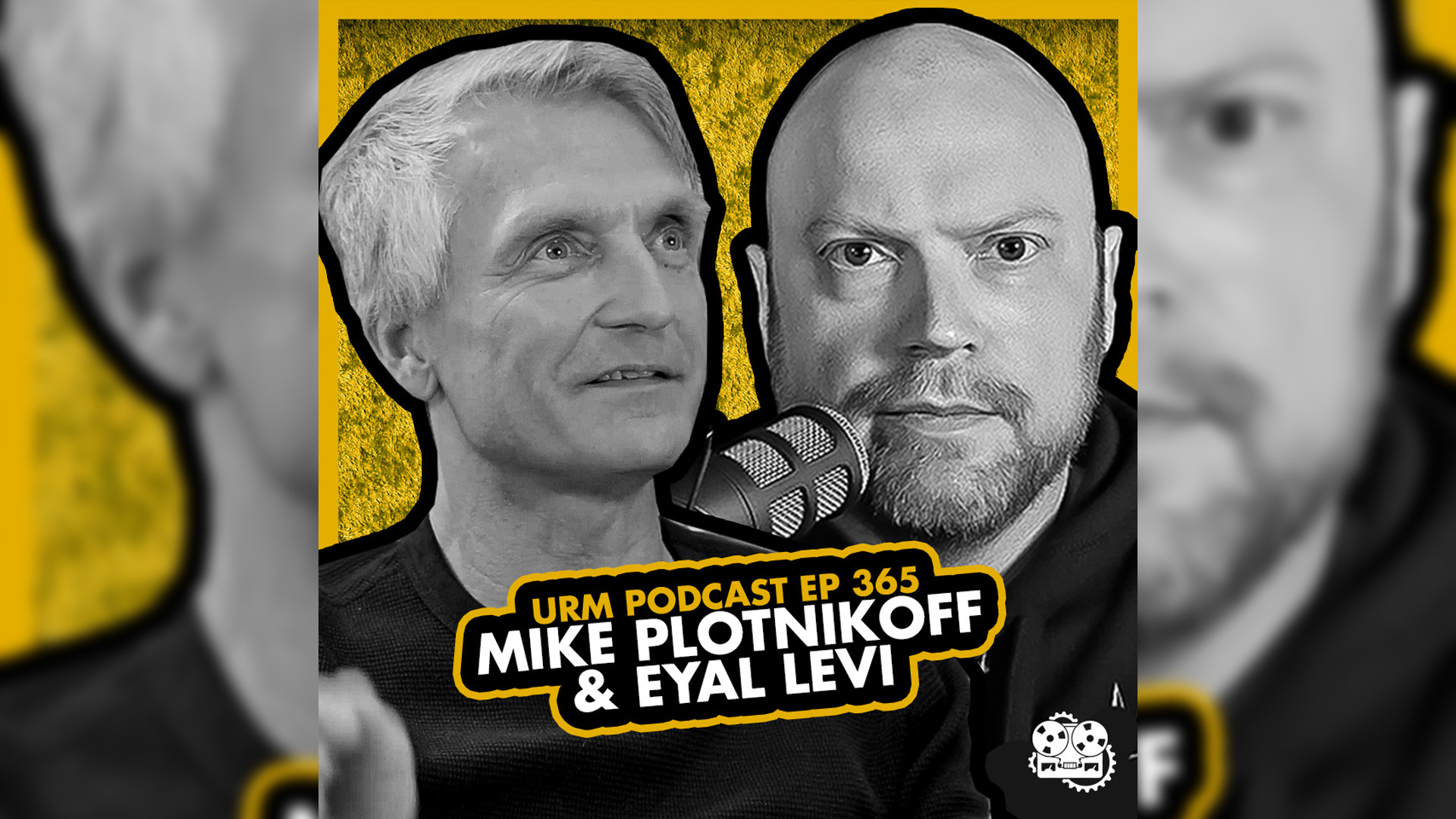
MIKE PLOTNIKOFF: The Mental Game of Hit Records, Visualizing Mixes as Toasters, and a 33.3-Minute Mixing System
Finn McKenty
Mike Plotnikoff is an engineer and producer whose credits read like a who’s who of modern rock radio. He has worked alongside industry titans like Howard Benson and Mutt Lang, and has engineered massive records for artists including Aerosmith, Buckcherry (15), Three Days Grace, Theory of a Deadman, and Bryan Adams. His discography spans several decades, from working with Bruce Fairburn on projects like the 1999 Yes album to recent collaborations that continue to push sonic boundaries.
In This Episode
Mike Plotnikoff drops by for a masterclass on the mindset required to build a lasting career at the highest level. He talks about dealing with the inevitable failures, explaining why you actually fail more than you succeed and how a background in professional motocross racing gave him the discipline to push through it. Mike shares the key to running a stable session: being the calm “pilot” in the room, leaving your personal chaos at the door, and knowing when to call it a day to avoid burnout. He gets into his unique creative process of “seeing” mixes as visual images—from colors to orange trees and even toasters—and how that guides his decisions. He also breaks down his highly structured workflow, including his 33.3-minute mixing timer, and discusses why having a reliable foundation is way more powerful than starting from scratch every time. This is a deep look into the mental game behind the biggest records.
Timestamps
- [3:08] The singular goal of wanting to be as big as possible
- [4:24] Failing more times than you succeed, and why that’s okay
- [8:56] How a professional motocross background shaped his work ethic
- [11:10] Being the stable “pilot” in a chaotic session
- [13:55] The importance of always moving forward and never getting stuck
- [17:40] Why every day is a different day in the studio
- [19:51] Knowing when to end a session to avoid musician burnout
- [23:09] Why marathon sessions can hurt your long-term career
- [27:28] The power of staying in your lane and focusing on your strengths
- [30:17] Still chasing the perfect record sound after a long career
- [32:58] The records he feels he got closest to his ideal sound on
- [36:44] Visualizing mixes as paintings and colors
- [38:28] Why a mix can be visualized as a toaster
- [40:54] Why Chris Lord-Alge is so good (and consistent)
- [42:28] Starting with a solid foundation instead of experimenting from scratch
- [47:52] Mike’s 33.3-minute mixing timer technique
- [50:28] How structure and routine train your creative muscles
- [54:28] How the best mixers in the world (CLA, Spike Stent, Brendan O’Brien) work fast
- [59:24] The power of teamwork and defined roles in the Howard Benson system
Transcript
Speaker 1 (00:00:00):
Welcome to the Unstoppable Recording Machine Podcast
Speaker 2 (00:00:04):
And now your host,
(00:00:05):
Eyal Levi. Welcome to the URM podcast. Thank you so much for being here. It's crazy to think that we are now on our seventh year. Don't ask me how that all just flew by, but it did. Man, time moves fast and it's only because of you, the listeners, if you'd like us to stick around another seven years and there's a few simple things you can do that would really, really help us out, I would endlessly appreciate if you would, number one, share our episodes with your friends. Number two, post our episodes on your Facebook and Instagram and tag me at al Levi URM audio and at URM Academy and of course our guest. And number three, leave us reviews and five star reviews wherever you can. We especially love iTunes reviews. Once again, thank you for all the years and years of loyalty. I just want you to know that we will never charge you for this podcast and I will always work as hard as possible to improve the episodes in every single way.
(00:01:10):
All we ask in return is a share a post and tag us. Oh, and one last thing. Do you have a question you would like me to answer on an episode? I don't mean for a guest, I mean for me, it can be about anything. Email it to [email protected]. That's EYAL at m dot A-C-D-E-M-Y. There's no.com on that. It's exactly the way I spelled it and use the subject line Answer me Eyal. Alright, let's get on with it. Hello everybody. Welcome to the URM podcast. My guest today is Mike Plotnikoff, which is one of the most amazing and inspiring engineers I have ever met. Been around the guy's credits are insane. Everything from Aerosmith to working with Mutt Lang to CLA to Howard Benson, theory of a Dead Man, three Days, Grace Brian Adams. Just the list of credits that Mike has are incredible and I took this opportunity to get inside his head a little bit about what his attitude was and is towards working at the level he's working at. I'm actually going to bring him back for another podcast in a few months to talk about other things because we could talk for a week with this guy and only be scratching the surface, but I enjoyed this conversation very much. I hope you do too. Here goes Mike Nikko, welcome to the URM podcast.
Speaker 3 (00:02:46):
I'm glad to be here.
Speaker 2 (00:02:47):
It's good to have you here. I have been looking forward to this for a while. I'm just wondering, when you got into production and recording audio, was it your goal to go as big as possible or was it just if this works out, cool, I'm just going to keep going.
Speaker 3 (00:03:08):
I want to be big as possible. How big could I be? I want to go to number one and that's
Speaker 4 (00:03:14):
Just
Speaker 3 (00:03:14):
How I was my whole life as a kid, so I wanted it to be big. Right from day one, I thought I'm going to work with all the biggest bands in the world and I'm going to do the biggest rock records, and that's what I thought without knowing anything, and then it happened
Speaker 2 (00:03:29):
Kind of like a singular focus.
Speaker 3 (00:03:30):
Yeah, singular focus. When I decided I wanted to be a recording engineer, that was my thing. I'm going to go and I wanted to work with the biggest rock bands, the Motley Cruz and Van Halen's and all that. Those are the bands I grew up listening to in Iron Maiden and Black Sabbath and all that kind of stuff in the eighties, and that's what I wanted to do and then I was able to accomplish that and recorded a lot of my favorite bands.
Speaker 2 (00:03:59):
I think a lot of people want that, but they're afraid to admit it to themselves or they have this fear about admitting it because you don't want to fail because you don't want to fail. I mean, of course nobody wants to fail, but I feel like it leads them to set dishonest goals or I guess undershooting what they're really going for because they're afraid.
Speaker 3 (00:04:24):
Yeah, I get that. See, I'm not afraid of failing, honestly. I fail. People look at my resume and I've had this discussion with many people before. I fail actually more times than I succeed, and it's like a baseball player. If you're in the major league, if you're in the major leagues playing baseball and you bet 300, you're making million dollar a year salary for hitting the ball three out of 10 times.
Speaker 2 (00:04:52):
Yep, missing seven.
Speaker 3 (00:04:54):
It's like that in recording and I see that with bands. I see that with bands with songs. Everybody fails more than they make it, but what I learned that the people at the top, and it's same if you took, you look at sports or anything at the top, they're failing more than they're winning, but as long as you believe in yourself, you stay focused, you try hard, you say you're going to win that day, even if you don't, it just doesn't happen that day and you go back at it again. And I've just always kept that mentality as, and try not to let the down days get on you and when people don't like a mix or they don't like your production or you get halfway through a record and they decide that they want to go a different direction, whether you're not nailing the mix or you're not nailing the production or whatever, it happens all the time and I just kind of have to go, okay, that one wasn't meant for me. I'll just wait for the next one to come along and not get discouraged or not try to get down on myself.
Speaker 2 (00:05:50):
Don't let it crush you.
Speaker 3 (00:05:51):
Yeah, don't let it crush you. It's just part of your life. You just keep going and if it's meant to happen for you, it's going to happen. Even if you failed nine out of 10 times, it's going to be always that one time that's going to keep carrying you through to the next one and that's what you got to stick with and believe in that. And so I just try to do that and try to always have that positivity going forward.
Speaker 2 (00:06:11):
I think that letting a failure crush you is a matter of zooming in that if you zoom in too closely, that's all you're going to see. We zoomed in on the failure and you're going to hyperfocus on it and over exaggerate the importance of it. If you zoom out some and it's just one bump in a long ass road, it's really not so big of a deal.
Speaker 5 (00:06:34):
Yeah,
Speaker 2 (00:06:34):
So I think it's a matter of how much energy and how much focus you're willing to put on that. I know people who are, I guess URM students or I've just known people in my life who with a recording engineer, they'll get fired or they won't win a test mix or something along those lines and it will really, really destroy them and rather than just accepting, okay, I'm going to feel bad about it for a day, but tomorrow I'm moving on with my life rather than doing that, they'll just fixate rather than just admitting, look, that sucks. That was disappointing. I wanted it to work but it didn't work, but done is done. Now I need to make the next thing work. And then just getting onto the next thing.
Speaker 3 (00:07:23):
So I guess if I were to give advice to people, it's like I said, honestly, I fail more times than I succeed. You see the successful records, but all the ones in between that didn't succeed. Again, as you go on in your career, you do start succeeding more, but it's that getting off the ground is the hard part and that's where you really have to work hard at it and it's the first five years or six years where you don't have a name yet, you haven't proven yourself, but you got to just keep going and get through that initial, and then once you get that first one that works, all of a sudden it starts clicking and then you remember that you know what, Hey, I failed before but I made this one, so let's go for another one and then maybe instead of failing nine out of 10 times, now you're only failing eight out of 10 times. And then, oh, you know what? I just got three in a row so now I'm good. And then all of a sudden you'll lose five in a row and then you'll get four in a row and it just kind of goes like that. I've been doing this long enough now that at this level there's a lot of super talented people at it that do amazing stuff and everybody's going for the win and you're not always going to get the win, but you have to be okay with it.
Speaker 2 (00:08:41):
Is this something that you had to train yourself attitude wise when you were younger, did you take this stuff harder or are you just blessed to where you naturally were able to see things from the right perspective?
Speaker 3 (00:08:56):
Well see, I think for me, I started out as a kid, as a professional motocross racer, so I started racing motocross and that's what I thought I was going to be as a kid. I knew what it took to win and I knew that I wasn't winning every race. So then when I decided motocross wasn't going to work out for me and I was going to do music that I took that mentality that I had, that I had learned since I started racing from a young age all the way up to 17 years old. So I was ingrained with that. I had a strict coming home from school and training and practicing to win for the weekend and all that. I was really brought up to win in a sense. I was pushed hard by my dad, and so I brought that work ethic into recording and I still look at it as being a sports.
(00:09:47):
Either you're a football team going for the Super Bowl or you're Formula One race, you're going for the win. And I know it's small at the top. I know only one person could win. I know when I raced you're not going to win every race. Some races you're going to crash out, some races you're going to win and some races you're going to finish second, some maybe you're not even going to qualify. You had a bad race. So I took music the same way. It's just life's that way. And then I noticed bands too that don't make it working with artists. Their last record was a huge album and then their next record wasn't so big and then all of a sudden their third record was another massive hit or so I go, well, it's like that for everybody. So I go, if it's like that for everybody, it's not just like that for me. So I took me out of the equation and just put myself into, it's like that for everybody.
Speaker 2 (00:10:37):
I love that perspective. Honestly, I think it's super healthy and I feel like sometimes when people say the mindset is everything kind of stuff, they say it in a way that disqualifies the amount of work involved, but when you really break this stuff down, mindset kind of is everything because your mindset is what will allow you to persevere through the bullshit.
Speaker 4 (00:11:03):
Yes, absolutely.
Speaker 2 (00:11:05):
Without that, you're not going to put up with the stuff that will come up for everybody.
Speaker 3 (00:11:10):
And when you train your mind like that too, then everybody is comfortable around you. So a lot of times bands and we just did the thing with Howard and I and I was lucky to learn from these amazing people, and I'll use Howard's quote, Howard Benson, he has a quote, you have to think of this as a pilot. The musicians come in or the bands come in and they bring all the crazy on. So now you're getting on a flight, you're going to fly around the world on a plane. Well, you're going to want a pilot that's going to be able to take off and land that plane no matter what the storm is and no matter what anybody's doing on that plane, now if you start partying on that plane with everybody else else or freaking out because you got turbulence, it's not going to be a very fun flight
Speaker 2 (00:11:58):
Or a successful flight
Speaker 3 (00:12:01):
Or a successful flight. So you're not going to want to get on that flight. And so you got to bring that in because a lot of it, there's so much chaos already in music, there's so much uncertainty and because in music you're dealing with emotions I guess, and everybody has their different emotions. So the stronger you could be coming in, leave all your stuff behind, then the bands feel comfortable and then they don't, they're not bringing their insecurities and you're not adding your insecurity to the mix. Then it's just their insecurities and you're stable. You're the stable thing in the middle that holds it all together. And sometimes that's the biggest thing that works. So even if it's sometimes it's not that great or you're not doing the best you can or you feel like your sounds could be better, as long as you don't put that uncertainty or insecurity or negativity into what you're doing and go, you know what? I did the best I can. In that case, a lot of times that'll win is because there's already enough of that from the artist.
Speaker 2 (00:13:04):
I've always thought that life is chaos already and then the music industry is like chaos squared almost. You don't need to add more into the situation. There's already enough to go around.
Speaker 3 (00:13:18):
Absolutely.
Speaker 2 (00:13:19):
The idea of I could get a better sound, I could do better. I mean if you don't have that in you, you're not going to get better. So you have to find a way to always be striving for better and to maintain a critical ear without being negative about it. I guess there's a positive frame for saying this isn't good enough, it has to be better. There's a way that you could approach that negatively that bums everybody out, and there's a way that you could approach that in a way that inspires everybody to make it better. It's all in how you approach it.
Speaker 3 (00:13:55):
Exactly. And I come through that a lot and what I've learned and from some of the best people that I work with is never get stuck because you're always going to run into a problem whether you're doing one song or 10 songs like a whole album or 13 songs, there's going to be some songs that are just going to be really difficult and some songs that aren't. It's that's the way it is. That's why there's hit songs and that's why most songs aren't hits. So how I look at it is always keep the ball moving forward. It's easier to go back than get stuck. And what I see a lot of people do is they get stuck into a situation and can't move out of that loop when it is not going their way. For me, and I learned this from Howard and Bruce Fairburn who I worked with is just move forward.
(00:14:47):
It's easier to go back. It's like there's no need to beat yourself up as something's not working. Go forward, move on to another song, move on to another sound and come back to it. And usually when you do that, it's like instantly it's fixed. It's like, okay, I have this solution now. And then nobody gets bogged down because they always feel like they're moving forward. It's when you feel like you're moving backwards or you get stuck on something too long. So I have a good gauge of when something is not working and I could feel it with the artist, maybe they're not sure. And if I'm not sure that uncertainty goes in, so I go, okay, you know what? This is not working. Let's move on. We'll come back to this. And then when you do that, they always feel like they're moving forward and then you go back and you can fix it easily
Speaker 2 (00:15:32):
Without saying exactly what, because we're going to go into exactly what later this year. I have actually witnessed this with you, something like a snag in a production, and I've seen how you handle it. You handle it exactly like you just described. Let's just say for people listening, that was watching Mike work on something and something was just not working with a musician and the musician's tone and it was actually kind of really not working. And it was a situation where I've been in that scenario in different studios with different producers and that's the kind of thing that will actually derail a session. I've seen stuff like that just put the brakes on an amazing session to where sometimes they don't recover from it or drama ensues or you never know. I've seen it go some bad directions, but the way you handled it is exactly like you just described, came to the realization that this is not working. Put it down, thought about it, came back, tried it a different way, solved the problem, moved on, and it really didn't end up being a problem, but I think it's because of how you approached it
Speaker 3 (00:16:49):
And a good way of looking at it. And I do a lot of exercises like you say, because it is mental. People don't understand the mentality. So when I come into the studio again and I work with any project or mixing, I come into it like I'm at a race. This is a Super Bowl. This is the championship motocross race or the Formula one final race. So I have to come in there no matter what happened at home or my private life or whatever's going on that's not going to be in this zone or this space at this time. I will deal with that later because I'm not meant to deal with that now. I'm meant to work here. I'm not meant to think about whether I had an argument with my girlfriend or my wife or bills or whatever it is. Life brings everybody different challenges and you have different challenges every day.
(00:17:40):
So I leave that the minute I walk into the studio, whatever challenges I have for that day, they're put aside until I'm finished working and then I'll deal with what would I have to take care of. What I've also noticed by training myself in my mind is every day is a different day. You know how you feel. Some days you'll wake up and you'll go, man, I feel amazing today. I could run 10 miles and go to the gym and I feel like doing stuff. And then there's other days you wake up and you go, oh my God, I feel like I've been hit by a bus and I don't want to get out of bed.
Speaker 2 (00:18:14):
I didn't even do anything last night.
Speaker 3 (00:18:16):
Yeah, I didn't even do anything. And making records is the same way. You're going to run into the same problem. So I know that you know what, let's give it a day. Let's see what happens. Tomorrow is a different day. Everybody's going to wake up and have a different energy no matter what. It's a different day, it's a different now moment. So how are we going to create? And I'll take that chance and go, you know what? It's probably going to be okay tomorrow for whatever reason, it's not working out today. I don't know why I'm not going to try to figure it out because if somebody could figure that out, they'd figure out life, but we can't. So let's see what happens tomorrow. And without frustrating everybody just go like, you know what? It's just not happening right now. I don't know why. And instead of feeling like going, oh my God, and going down the rabbit hole of this is never going to work, just go, no, tomorrow's going to be different. Let's come back, fresh minds, whatever. And oh, all of a sudden, okay, now we're clicking altogether. It just takes that extra night that sleep come back in fresh.
Speaker 2 (00:19:16):
It's amazing how powerful that is. Great musicians have a great work ethic. They didn't get great by being lazy. They got great by working their asses off. And so that work ethic is what has kept them going when they don't feel like doing it when they're tired, like that discipline. And so that's both an amazing thing and it can be kind of a bad thing sometimes in the studio when you know that you're past the expiration date on a part, you need to end the session so that they can go home and sleep,
(00:19:51):
But their work ethic tells them, no, we need to keep going until we get this With a drummer, for instance, a drummer say that you've tracked them for six hours, it's been great, but after that six hour or something, they will just lose steam. And I'm just using that for example. It could be anyone, but I've been in situations with drummers where they will just kick ass track three songs great in six hours and we're getting onto the fourth song. It's just like, what happened? It's just not working anymore. But because they are such motivated people, they want to sit there and keep going, and if it takes six more hours to do that fourth song, they'll sit there for six more hours and get frustrated and pissed and just piss everyone else off and then get everyone burned out for the next day, where if you can just convince them that it's cool, man, we're done for today. Just come back tomorrow. It'll be fine. You're not going to lose your great drummer badge or anything over this. Just come back tomorrow. And then usually when I've been able to talk people into that and keep it positive the next day they come in and we get everything done in 30 minutes that we spent three hours beating our head into the wall over.
Speaker 3 (00:21:07):
Yeah. Well, so here's the thing. You mentioned drummers because Howard and I, and since we've been working together, when we do drums, we'll usually take three to four days and we do three songs a day. Say if it's a 12 song album, that's
Speaker 2 (00:21:19):
A good pace.
Speaker 3 (00:21:21):
How we look at it too is again, so if you're a drummer, of course after four hours, unless you're training for triathlons, which most drummers aren't after four hours and especially depending on what kind of music it is, how do you expect to be running? If you go off for a run right now, your first mile, you're going to be able to run fast. Your seventh mile, you're going to be a lot slower. So if you're thinking about time you want to run a mile a day, if you have to run four miles, you're going to run four miles quicker if you run one mile a day than if you run four miles in the same day. It's just your body's going to start tiring out your feet mentally. You got to jump now you're in your fifth song. There's so many moving parts into it, it's better to break it up and obviously you come in the next day, it's fresh, that song.
(00:22:11):
That's all you have to think about. Now, if you're in the first day and you're on your fifth song already and you want to keep going, just your muscles are going to be tired, so you're not going to be hitting your snare as hard. Your kicks going to be a little, it's not going to be the same velocity. You're hitting your kick on your first song. I don't care who you are. You could be even the best athlete, the best athlete because you're going to be giving it the best for your first. It's going to be a slow decline, so it's better to come in fresh the next day. It just is.
Speaker 2 (00:22:41):
Yeah, and there's some musicians where even after their decline, they're still, their fifth hour is still better than most people's first hour. You get those people, but still you can't judge them against other people. You can only judge them against themselves. And if you know that they have better in them and it's not happening that day, why not just come back tomorrow?
Speaker 3 (00:23:05):
Yeah,
Speaker 2 (00:23:05):
It's not a lazy thing.
Speaker 3 (00:23:07):
Not at all.
Speaker 2 (00:23:07):
No, it's a smart thing.
Speaker 3 (00:23:09):
It's a smart thing and it makes it fun coming in the next day because you don't get burnt out and so you're not burning everybody else out in the studio and you're not burnt out, then you're excited to come in the next day. The worst is when you burn yourself out the night before and then you have to crawl back into the studio the next day and you're going like, oh God, you want to come in fresh and brand new to go again? Not to come in and going because you've been up all night trying to get one part that if you would've just waited and slept an extra night, come in and do it in one hour instead, like you said, six hours, it makes coming in the next day fun and everybody's always having fun. Then everybody has good energy. They like getting home early because then they get to have a normal life.
(00:23:53):
They get out to get out and go do things, and then they're excited. I get to go play tomorrow. Whatever it is, I get to play my instrument. Or I think it's like coming into play, even making music, whether you're the engineer or the producer or the mixer, it's playtime and you want to always come into playtime happy. You don't want to come into playtime miserable going, I was up till four in the morning racking my head on a mix, my ears were dead. I don't even know what I was listening to for the last four hours. It's a vicious cycle, and if you want a long career, it's just going to burn you out because I can't say all the time it's not going to work. There are times when you do spend those extra hours that you get something special, but in the long run, it's really going to wreak havoc on your career if you're going to do those, I got to get it and just beat it out yourself and whatever musician, you got to really make sure that this is going to be worth it in the end.
Speaker 2 (00:24:45):
The thing about those crazy marathon sessions and working till four in the morning or something by doing what you're saying and going at a good healthy pace where nobody's burning out and you are approaching it with good energy and intelligently that allows you to do the 18 hour session when needed.
Speaker 4 (00:25:11):
Exactly.
Speaker 2 (00:25:12):
You save up the energy and then when you actually need to, sometimes you do, sometimes it just works out that it's the best thing that you go nuts that day, but by approaching it the way you're talking about that allows you to have the energy to do it right.
Speaker 3 (00:25:29):
And another way of looking at it too, and I've told s this, so it wouldn't be fair to them if I burnt myself out on the session before they came in and it wouldn't be fair to the band that's coming in after them if I burnt myself out on them. So it works both ways. So you go, listen, if I had a session before you guys came in, the last record I did, I completely burnt myself out and it wouldn't be fair to you and then it wouldn't be fair to the band after you guys. You want a hundred percent of me when I come in, so we got to make sure we all stay on the a hundred percent.
Speaker 2 (00:26:04):
I've seen that happen, by the way, what you're talking about where a producer is burnt from the band before or they're overbooking themselves to where they're working on one band during the day, mixing something else at night, and then also working on two other things at the same time and not managing their time properly. And what ends up happening is everything suffers. There's very few people I've ever met in my life who are actually able to balance that kind of schedule and the ones who can, they're freaks and good for them, but I can literally count on one hand how many people I know that are actually able to do the 15, 16 hour days every single day, give everything a hundred percent. They're just weirdos that are, they've got this weird ass wiring, but they don't have to try to be that way. That's the thing, the people I've met that are able to do that, that is just the way they are. They're not burning themselves out or burning the candle at both ends or anything like that. They are wired at that RPM and if that's you, awesome. But that is a very, very rare personality trait. I think
Speaker 3 (00:27:16):
What you just said actually is good. You have to know yourself and how you're wired. So if you are wired that way, and I do know people like that as well, I'm not like that. So you have to know what,
Speaker 2 (00:27:27):
Nor am I,
Speaker 3 (00:27:27):
Yeah, nor
Speaker 2 (00:27:28):
Am I.
Speaker 3 (00:27:28):
You have to know what your strengths are and where your strengths lie. So focus on your strengths. And people have always looked at my career and says stuff to me and I go, because I stayed in my box, I had so many opportunities to expand my box, but I go, but I'm not good at that. I would suffer if I did that. So why don't I just concentrate on the couple things that I'm really good at and just be okay with that. There's amazing programmers out there. There's guys that are amazing at electronic stuff. There's guys that are amazing at doing hip hop or different kinds of things, and I go, I'm just not that good at electronic music. I love what they do and I appreciate it and I'm jealous and envious on these guys that could do amazing electronic music. And I go, but I'm just not that good at it, so why do I want to get in that lane?
(00:28:19):
It's like if I'm an amazing golfer, why do I want to try to be a basketball player and a hockey player and a football player? Just because I'm good at golfer a sport doesn't mean I'm going to be good at every sport. I'm only going to be good at that once. So I look at what I'm good at and I know that that's where I work the best, and I just kind of stay in that lane. And sometimes it sucks because you miss projects and you think, well, I should be doing that, but what I learned is it's better. And I gave away projects because I go, you know what? I'm just not going to do it as good or as somebody else is going to do it. I'd rather not take the money and have somebody do a better job than me take the money.
(00:29:03):
And I'll do that with mixing. Sometimes when I'll work, I'll go, they want me to record and mix, and I go, you know what? Sometimes when I record and mix, because when I record, I'm already kind of mixing, so now I'm going to mix. It's almost double mixed. It's not as good. So I go for this. I'd rather give the money that you were going to give me to somebody else to do it, and I'll just track it and produce it. I know that it won't be good. So I try to really stay in that lane and go, or a type of music I go, I'm just not that good at it. I'd love to do the project and I'd love to make the money and all that stuff. I go, but I think that will hurt me in the long run because now I start spreading myself thin and that's not what I'm really good at. And
Speaker 2 (00:29:45):
What's interesting though is I know that you're always pushing yourself to get better though, and you're into modern tools. I want to make the distinction though that while understanding your lane and understanding your strengths and knowing when to turn something down, because it's not something that you would hit the grand slam on, that doesn't mean that you're limiting yourself from improving. It's interesting to me that you have found a way to keep pushing yourself without diluting yourself.
Speaker 3 (00:30:17):
Yes, and I do. I always push myself. So yes, and I always want to get better, and I still, in my head, I haven't made the record that I feel like I want to make. I hear I've got close on a couple of records that I did that I go like, that's a sound that I go, okay, that's when I listened to that record. That's really close. But I still feel like I haven't hit that sound of what I hear in my head. I want my record to sound like,
Speaker 2 (00:30:42):
Hey, everybody, if you're enjoying this podcast, then you should know that it's brought to you by URM Academy, URM Academy's mission is to create the next generation of audio professionals by giving them the inspiration and information to hone their craft and build a career doing what they love. You've probably heard me talk about Nail the Mix before, and if you're a member, you already know how amazing it is. The beginning of the month, nail the mix members, get the raw multi-tracks to a new song by artists like Lama, God Angels and Airwaves. Knock Loose eth masu shuga, bring me the Horizon. Gaira asking Alexandria Machine Head and Papa Roach among many, many others over 60 at this point. Then at the end of the month, the producer who mixed it comes on and does a live streaming walkthrough of exactly how they mix the song on the album and takes your questions live on air.
(00:31:34):
And these are guys like TLA Will Putney, Jens Borin, Dan Lancaster to I Mattson, Andrew Wade, and many, many more. You'll also get access to Mix Lab, which is our collection of dozens of bite-sized mixing tutorials that cover all the basics as well as Portfolio Builder, which is a library of pro quality multi-tracks cleared for use in your portfolio. So your career will never again be held back by the quality of your source material. And for those of you who really want to step up their game, we have another membership tier called URM Enhance, which includes everything I already told you about, and access to our massive library of fast tracks, which are deep, super detailed courses on intermediate and advanced topics like gain, staging, mastering, low end and so forth. It's over 500 hours of content. And man, let me tell you, this stuff is just insanely detailed. Enhanced members also get access to one-on-ones, which are basically office hour sessions with us and Mix Rescue, which is where we open up one of your mixes and fix it up and talk you through exactly what we're doing at every step. So if any of that sounds interesting to you, if you're ready to level up your mixing skills in your audio career, head over to M Academy to find out more. So let's talk about which ones you think you've gotten close on. You said that there's just a few. I want to know which ones.
Speaker 3 (00:32:58):
Well, I just did this record with Tommy from Alice Cooper and Mutt Lang worked on it's very ac, CD dc. And when I hear it's not out yet, but just sonically how it sounds, I'm going, this is amazing. This will go down. I go as one of the top records and it should come out this year sonically. It's just, it's how I think a record should sound song wise, everything is there. So that's one record. I did a record with the band, yes, in 1999, which Bruce Fairburn produced it. I recorded and mixed it, and it just has a sound when I listen to it. It sounds amazing. I don't know the way it's mixed and balanced, the way it comes out of the speakers, it sounds, it
Speaker 2 (00:33:45):
Just works for you.
Speaker 3 (00:33:46):
It just works for me. And the bass tone, the drum tones I got on it, the way everything sits, I just really sonically how that sounds, the Buck Cherry record I did is another one like Crazy Bitch that record the record's 15. It just has this sonic sound that sounds good everywhere. Just the tightness of the bottom end, the low end, the way the guitars are mixed, everything, the way the vocals sit. I just really liked the way that record sounds. And then there's a couple of records I did in the beginning of my career, a band called Noise Therapy. I just liked the way it sounds. Probably nobody's ever heard of the band. And then there's a song by a band called Delirium. They're a Vancouver band, and Sarah McLaughlin sang it, and then it was programmed by Reese. And anyways, in delirium, I just like the way the mix looked and when I listen to it, it's like one of those things when I listen to it every time I hear it sounding different. So to me that's a good mix. It's like when I listen to Pink Floyd, every time I hear Listen to Pink Floyd, I see a different image in my head and the images are always amazing images. And when I listen to these records that I've done, every time I listen to it, I get a different image. And when that happens, then I know that it's on. But when I listen to something and I don't want to listen to it anymore, I don't get an image. It's like
Speaker 2 (00:35:07):
I was hoping that we could talk about the images, something that you were telling me about that I think is the way you describe it, it sounds unusual, but then at the same time, when I think about how I imagine music, I get an image too. So you were saying that when something sounds right, it produces an image in your mind, and if it doesn't produce this image, then you know that something is off in the sound, and that's kind of your gauge is whether it produces this mental image. And so when you told me about that, I was like, Hmm, how does that work? But then I realized whenever I do think of a mix, I close my eyes and I imagine it there is a visual to it that when it sounds right, it looks right in my mind. I don't know how to describe it besides saying that, or when I hear a drum mix where it doesn't sound cohesive and I call it kicks in space or something like when the drum samples don't sound glued to the rest of the kit, and it just sounds like different unconnected elements in my mind's eye, I will just see these kicks.
(00:36:29):
They're not kick drums, they're just like this thing. But I'll see them I guess, floating above the rest of the image, totally not connected to it, and it's not an image I have to try to make. It just appears.
Speaker 3 (00:36:44):
And that's for me too. It's hard. People ask me, but I never always had this thing where I saw images, but the more I do this, it's something probably I had didn't know I had it, but then started going, huh, kind of looks like it started off slowly with colors. This mix is a little darker sounding, and then I go, well, it's kind of brown. Then instead of just darker, brighter, it's like, Hmm, that's brown, that's orange. Ooh, that's kind of a blue. So then it started slowly coming as colors to me in the mix, and then I started going, well, what if I use those colors? And I was an artist. So I started, honestly, I started looking at paintings. So I started just studying different artists from renaissance art and different artists, different impressionists, and started going, I wonder what if I tried to do mixes where I see a picture and it could be anything.
(00:37:43):
It could be an orange tree. I think that's what I told you. I might've used that reference. I use that. It's very easy to imagine because in the yard at the studio, we have an orange tree, so when I'm mixing, I could look out the windows. Right now they're blocked like you saw. But the shades never used to be on there. So I could look out at the trees and I go, what if I just mix and just if I could see that tree in the mix and go, I think that's where brown would be on the ground, and that's where my guitars would be, let's just let me just try it and see what happens. And then when I did that and I listened to the mix, I go, yeah, that sounds good. And anytime I could get a picture in my head like that, no matter what it was, it could be a toaster. I don't care what it is, as long as there is an image,
Speaker 2 (00:38:26):
A toaster, I like that.
Speaker 3 (00:38:28):
Yeah, it doesn't matter. As long as I could see something, I started noticing that the bands, anytime I sent the mix out or the bands came in and listened, they would like what they heard. They go, yeah, this is amazing. Maybe it'd just be a little volume thing here, but it would always be I'd be in the 95% range if I never saw anything or I'm going like, I'm struggling to get a picture out of it, I don't know, or I can't get an image out of it, it always failed. So I'm going like, am I onto something? So I just kind kept working in that direction because sometimes you don't know if it's your mind, especially when you're sitting listening to things. You go, am I crazy? Is this, am I really seeing this? I sitting here mixing and I see a spaceship or whatever, and I see purples and yellows and stuff.
(00:39:19):
Is this just me or am I nuts playing something in my head? And I go, and then when the band comes in and they listen to it, they go, yeah, this is amazing. Maybe just lead up a little bit or whatever, a little more reverb on the vocals and we're done. So anytime I started doing that, I go, so I go, this must be something. And then I kept honing in on that and honing in on it. And then so I went, not even from mixing, I go, well, let me try this. When I'm recording with the band, let me just start out now with a painting of what it is. So I'm going, well, what am I going to paint? Am I going to do a tree or whatever? And I go, well, no, that's too hard. Let me just do what's easy. And to me, it just came to go, well, we're in the studio, we're in my room.
(00:40:00):
Let me just do what it feels like in my room. I got my speakers up there, my guitars are over here. I got gear all over the place. Let me just see if I could kind of go, yeah, the guitar or that part will sit where that speaker sits over there and then the sounds would always come together. So I go, well, maybe I'm onto something. So I would start using that gauge and it just works now for me. So that's really how I try now to approach everything. Then I started noticing that when I listened to my favorite records as well, if I listened to Pink Floyd or I love Spike who makes his mixes, and even like Chris Lord allergy, his mixes, I started noticing. I go, I know why Chris is so good. Because for me, I always tend to do a different picture.
(00:40:54):
So sometimes people like that and they don't like it, and I'm not good with doing the same picture I should, but I started listening to a lot of what Chris does, and Chris always has the same picture in my head to me and I go, that's why Chris is so good. And that's why he can mix so fast. He always does the same picture every time I listen to Chris Lord, because Chris mixes a lot of stuff that Howard and I do. So I go, man, that's the same. Oh, I started noticing it. He just does the same picture all the time and it's for all bands, but it works. It's like a good picture. It's just the way he has it. I'm not going to say what it is if that's his thing. But what I see in Chris is it's the same thing every time and I go, that's why it works for him. And he's so good at what he does is you're always going to get that. It's like if you go buy a Coca-Cola, you're going to get a Coca-Cola. You're not going to get, huh? There's some kind of weird peppermint licorice, spearmint,
Speaker 2 (00:41:54):
I guess that kind of ethic or I don't know what the word is, that kind of consistency. I've noticed that you also put that into your engineering choices is in exactly what you're going for and what you consider to be right from the outset. And you will go for that right out the gate and then tweak it from there rather than trying to explore your way into finding something you like. I've noticed that you kind of go for what it is that is good and then use that as the starting point.
Speaker 3 (00:42:28):
Yes. And that makes it life so much easier because already people know what you do. And if I know what I do good and get that basic off the bat, I already have a good foundation. So now my foundation isn't wobbly. Now if we want to go and explore, everybody knows that foundation is good, but now if I start exploring from the beginning and it's not working, if it does, great, but if it doesn't, then now all of a sudden I start putting a little bit of fear and insecurity and now the band is going, well, I'm not sure about that. And once people start questioning, it's really hard to recover from that. It just is. So if you could go and find your base, know what's going to be good, your base foundation of your house that you're building, and you start there, basically you come in, you have the confidence, you already know that it always works. Yeah, it might be a little vanilla maybe, but you go, that's okay because vanilla is good. A lot of people like vanilla.
Speaker 2 (00:43:28):
I do,
Speaker 3 (00:43:28):
Yes, let's just stay with the vanilla. If we want to add minter something later, let's just at least get the vanilla. Because once you get the vanilla, everybody knows they're in good shape. And then you could go, you know what? Let's try to experiment. We could always fall back on the vanilla if we need to. But you always have that foundation that gives everybody confidence. And once the artist has confidence in you, it's so much easier going forward. The minute they lose confidence, it's really hard to recover from that. Then you're on shaky ground the whole time anything goes wrong. And then they want to find an excuse because you got to remember, the artist is already insecure about their music. It's new music. They're insecure about the lyrics they wrote, are the melodies good enough? Is it going to compete with everything else out there? So they want somebody to come in and go, no, this is amazing. And be able to hold that floor for them and then to be able to build upon that. But if they come in and then you got a little bit of insecurity, it's really hard. So
Speaker 2 (00:44:32):
It's kind of like getting a quick win is start on a winning foot basically and go from there.
Speaker 4 (00:44:39):
Yes.
Speaker 2 (00:44:40):
Yeah. It's interesting because I know that some people think that you need to experiment or start from scratch every single time. And I don't think I agree with that. I think that there's a lot to be said for consistency. If you're good and people like what you do, there's a lot to be said for consistency. I've noticed that people who operate at the higher levels, there's so few people in music that are actually consistent, reliable. I mean there's a lot of when you get to the top, there are some great people, but there's not that many. And so when somebody is actually reliable, dependable, that goes a really long way.
Speaker 4 (00:45:21):
Yes, it does.
Speaker 3 (00:45:22):
And
Speaker 2 (00:45:22):
You can always tweak from there.
Speaker 3 (00:45:24):
Exactly. And once you get the foundation and if the foundation is solid, there's so much you could do. And you saw when I mic guitars and what I do, it's very simple.
Speaker 2 (00:45:34):
It's kind of amazingly simple,
Speaker 3 (00:45:36):
But the thing is, I always recorded di, so as long as I have that base, you could re-amp it. But if you don't have the original, that foundation, then even the amping doesn't work. You're struggling with the amping, it doesn't matter. Then it's just nothing is good because there's no steady foundation. You've weaved insecurity and doubt and fear into your production, into your sounds. It's there. You have to think as we're all humans, we're all 70% water. We're electricity, so the sound is going through us. We're like the filters in the studio. So you got to think of yourself as a filter. That music, whatever that guitar sound is, or that drum sound or whatever sound it is, it could be a keyboard sound. Well, when you put it up, that filters through your body and through the bodies in the studio. So whoever's in the studio with you, those sound waves are going through all of our bodies and getting recorded either onto analog tape or getting transferred from analog to digital and recorded in whatever dos system you're use. So if you're in a fearful spot or insecurity, that sound, that attaches to the sound that is being recorded.
Speaker 2 (00:46:50):
You know what I've noticed too about this insecurity and attaching that to your work is a lot of people are better than they realize, but they don't allow that to be what they go with because they're insecure. So they will find a really good sound pretty quickly or get to a really good mix really quickly, but they will not accept it. And so they will keep going and tweak it into something that's not so good. And whereas they had it 15 minutes in, but they couldn't accept that
Speaker 3 (00:47:25):
Because they thought it came too easy for them. Honestly, that's a hard thing to do. And as a mixer for some reason in recording, I don't have that or producing, but in mixing, it's really tough when things come really easy or I'll have a mix in an hour and say it's done. It's like, well, no, it shouldn't be done. Done. Is
Speaker 2 (00:47:43):
It really done though? Is
Speaker 3 (00:47:44):
It really done? So you want to be there. So I don't know if I told you my process of when I mix how I do it.
Speaker 2 (00:47:50):
No, I'd love to hear it though.
Speaker 3 (00:47:52):
I do this all the time. So when I come in and mix, first thing I do is when I set everything up and I have a template that I use, probably everybody, you just want to get your template always the same. I don't want to be searching for plugins or what it is. I just kind of want to always go from the same template. But I set my timer on my phone for 30 minutes, so I'll mix for 30 minutes. I actually do 33.3. That's my thing. Nice. And then I print the mix at 33.3, then I start a new mix and I do that again for 33.3, and I do it three times. So now I've worked for a little over an hour and a half and I have three mixes, and then I'll take an hour break and then I'll set my timer for an hour and a half and then I'll mix for an hour and a half and I print that mix.
(00:48:39):
So now I have four mixes and usually I'm done for the day. I will not mix any longer. And I go home and then I listen to those four mixes the next day and you have no idea when you listen to it the next day you go, the first mix or the second mix is so close, there's a couple cool because you've had more time with the hour and a half, so there's some cool vocal effects or maybe you did in the last hour and a half. So you go, you'll just import those in, but you end up going back to the first mixing and you go like, man, I can't believe how small the fourth mix is. Can the first mix is like everything is big, you put it on. Yeah, some of the balances are a little off. Maybe this is too loud or the vocals aren't loud enough here because you didn't put in your rise.
(00:49:26):
But the overall track is just so much better, so much more exciting. The fourth mix now, everything is overmix. It's starting to get small, everything's starting to phase with each other. You're using too much eq. It's just got really bright. Just so many things have gone wrong in the balance compared to the first mix, and you would never know that. But people, they'll keep continuing. They won't save their mixes or listen or they might mix way too long on the first mix without printing it and they lost it. And then you, you're searching, you go, I think it sounded way better like an hour ago. And then now you start panicking and sweating a little bit because you're going, I don't even know where I was an hour ago, and you're all messed up.
Speaker 2 (00:50:09):
I feel like by imposing that sort of boundary on yourself also you're making yourself focus. You're not allowing yourself to get distracted with bullshit. You got to get it done. In this short amount of time, you're going to gravitate towards the most important decisions.
Speaker 3 (00:50:28):
What happens is you start training your muscles that you're not all over the place because it's like a schedule. So we keep it, and I know it's art, but like I said before, I'm not the artist. The artist already. You got four musicians. I deal a lot with bands. So you got four or five guys in the band that are already bringing all the chaos and stuff. If I stay on focus like that, then I train my muscles always to be in that. I'm never out of that. That's it. I know what I do in 33.3 minutes. It's just always that it's, it's not 35, it's not 36. It's just that, I mean, print three mixes, I start at the same time every time. I don't go like, well, today I'm going to start at three. Tomorrow at four five. It's like I come in, no, that's my start time and I'm going to work from this hour to this hour, and that's it. So everything is, I got to get it done. So now my muscles are trained, my mind is trained to get that amount of work done in that time. It doesn't vary Day to day, it's not going to be, well, today's going to be 10 hours, tomorrow's going to be one hour tomorrow. I may start at four today I may start at eight. It's snow, balance it, and then I'm able to harness the energy and harness the emotions of the band without putting my own stuff in because now it's a work. It's just a job,
Speaker 2 (00:51:47):
Man. I do think that some people mistakenly view speed or boundaries like that as an excuse to cut corners, but I don't see it that way at all. I think that by imposing those boundaries, it's like you said, you're training yourself to where your body and your mind know that you are on. This is what's happening during this time period, and you're able to put 100% of your energy into it and you're not letting yourself get carried away with stuff that doesn't matter or go in circles or go down weird rabbit holes. You're doing the stuff that actually matters. It's very powerful
Speaker 3 (00:52:29):
And I learned a lot from working with Chris. It would take me, say noon and a lot of times I'd be there till 10 at night or 11 at night and going to a point where I'm going, I really don't enjoy mixing because my ears are tired. I don't even know what I'm listening to anymore. They're probably not going to like it. I feel self-conscious even sending the band the mix at night. I go, they're going to want to hear it. I don't even want to listen to it. I don't even know what I'm listening to right now. I even check it in my car. But like I said, I've been working on it for 10 hours now. I don't even know what I'm listening to right now. And then Chris started mixing our stuff and he would mix the whole record in a week.
(00:53:04):
And I go, well, how's he doing that? And he'd finish a song in three hours. He'd do songs a day and three hours on one, and he'd get the next song up in three hours and he'd be done. And the mixes are amazing all the time, and he always stayed on that schedule. And I'm going like, holy. And the mixes always are amazing, and anybody could say whatever they want, whether they like Chris's mixes or not. But the guy is one of the most successful mixers in the world for 40 years and still is today and has major hit records. And that's his mixing protocol. He does not change what he does, and it's a business, and he's one of the best in the world. He's just never changed, and he just stays. So he's completely trained like that. He doesn't mess around trying to, like you said earlier, trying to go for I'm going to get super creative here and do this. No, he takes, the song goes, okay, what do you got drums? Here's the drums, okay, that drums are sound good here. Put the guitars in vocals, whatever parts, and that's it. It's done. And if you want to make a living out of it in a career, I would follow that instead of spending four or five days on a mix. And great. Hey, if you're one of those guys like Mutt L that could spend four years on a record, but then sell 30 million albums of it, great.
Speaker 2 (00:54:26):
Yeah, that's cool.
Speaker 3 (00:54:28):
All to you. But I don't know many people like that that can do that. Most of the people I know that are really good and have a good career, whether it's Howard Benson, he always brings the budget in producing records. The label tells Howard, listen, we have this much money and it has to be done in this time. It's done in that time and usually under budget all the time. He brings it in on time and under budget or right on the button, and he does it over and over and over again. No matter how hard the project is, if the songs are good or bad, he figures a way to get the songs, whether he has to bring outside people in, but he stays in that. He doesn't make excuses. Makes it happen, Chris. He gets other people's stuff. He'll never blame the engineer producer, no matter bad, how good or bad the tracks are.
(00:55:15):
If it's to him, he makes it happen. It's like, I get it and I'm going to make it in this same amount of time. And he gets it done. And I know Spike stand, same thing. He doesn't take long to mix his records and his records are detailed compared to Chris's. It's a different kind, the more the pop stuff is more stuff. And I went out and hung out while he's mixed. And same thing, he could get a hit song from the biggest pop stars in five hours. He'll start mixing at 12 and the mix is done by five in the afternoon and he's gone. Same thing, I worked with Brendan O'Brien and I did Aerosmith Getter Grip, and I remember going and he mixed the Aerosmith Getter grip record. So I went and hung out while he mixed that record, and he would come in at one o'clock in the afternoon.
(00:56:04):
He was out of the studio by six at night every night and nailed the mixes. And he would never spend long. I'd go like, these guys have it down. They're not sitting there beating themselves up, and these are the best in the world. So I go, even when I worked with Bruce Fairburn, I was lucky I started working with him. That's where I started at Little Mountain. And no matter what, we start at one o'clock in the afternoon at five, the studio in Vancouver was close to his house. We're working on ac dc on the live record, and we were recording some of this stuff on the live record, and Angus Young could be in the middle of a guitar solo. That's it. Five o'clock he stopped the tape, I'm going home for dinner, I'll be back at seven. He would be back at seven at night and we'd work till nine o'clock at night and we'd take Saturday and Sunday off. That's how he worked and produced the biggest, and he stayed on that schedule. It didn't matter. That was it. So that's kind of why I learned the technique and stayed on it too. So I was taught that technique by those people.
Speaker 2 (00:57:07):
It's one of those things where kind of like you said before, you don't let yourself get sucked into the chaos and you're not introducing chaos into the situation. I think that when engineers, producers are first starting out, they will have a schedule that's more musician as in all over the place, and that definitely works against them. I haven't noticed musicians really do appreciate it if you have a set consistent, dependable schedule. Yeah.
Speaker 5 (00:57:36):
Yeah.
Speaker 2 (00:57:37):
It's one of those things that seems counterintuitive because lots of musicians like to work all night or have all kinds of crazy hours not into the schedule thing, but it's different when they're paying you to work on their music. They want it to be done in a timely, dependable manner.
Speaker 3 (00:57:57):
And so you could look at it this way too, so you could divide it up and I understand why people are producers. So in today's world where you don't really have to go into the studio and see, I think I have a little bit of that old school in me where bands would have to make sure they had the songs done before they went into the studio. So if we were going to record an album, and this is up to just 12 years ago, you would make sure that the band would have the songs first. You'd pick the songs and it could take six months of writing. Then you have your 12 songs or whatever you're going to do. Then you'd get a rehearsal room and the bands would go and rehearse for a couple weeks and you go, okay, now we have our songs.
(00:58:40):
So we have our 12. We know exactly how we're going to play. So now we're going to start the record. So what's happened now, I know Howard and I don't work this way and I try not to work this way either, is try to go write in the, we're going to make the record and write at the same time. Like you said, now you're starting to blend being a musician, a producer, and an engineer into one, try to separate it maybe. And I know it works for me that we separate it. So okay, we have the songs, they're all demoed out. Are we happy with the demos? Okay, let's make the record now. So now we're going to make the record after we're happy with the songs.
Speaker 2 (00:59:19):
Yeah, it's very defined parameters for every stage of the process.
Speaker 5 (00:59:24):
Yes.
Speaker 2 (00:59:24):
One thing too that I've noticed that is kind of amazing about the way you guys work is the amount of teamwork and coordination involved is pretty amazing. And also how everyone on the team knows exactly what their role is and has that dialed in. You don't see stuff like that in music very often.
Speaker 3 (00:59:50):
No. And we're lucky because we obviously need a bigger budget to do a record with Howard the way we do. But yeah, the teamwork is amazing. We have the editor so I'm not editing because the worst is, so now when you start having to wear three or four caps, it starts getting very difficult because everything starts deteriorating slowly. You just can't be the best editor and the best engineer and the best producer and the best mixer all in one record. It's just not going to happen. You're going to have to divide it up. So when we give, when I could track the record and I don't have to edit, and I give it to Paul de Carly who's the best editor in the world, and so I know that I know what the window is of recording and I go, okay, well, all I have to worry about is if I could get it in this window.
(01:00:40):
And it's like the timing, is this good? Yeah, that's easily fixed. I'm going to give it to him. I don't have to worry about doing the vocals. I know Howard's going to do the vocals, so I'm not here for the vocals and Howard doesn't like being here for the guitars, or he'll be here for the drums, but he's not really into sitting trying to get guitars and guitars in tune. He knows that I'm going to take care of that. So now he only has to concentrate on getting the vocals and the harmony. So he's not burning himself out. He is going, well, I got four days off because it's going to take Mike at least four days to get me three or four songs before I start doing vocals. And then now I just have to concentrate on the vocalist coming to my studio at his house, and the tracks have already been edited and everything's recorded, and I know it's going to sound good.
(01:01:26):
So now I just have to put a hundred percent into getting vocals and then I don't have to tune him. I'll just comp him and send him back to Paul, and Paul will tune him. Okay, now mixing, I don't have to worry about mixing. We can give it to Chris Lord Alga to mixer, or whoever is the mixer at the time, or Joe Ricard or whoever we use at the time to mix. So everybody has their place and when it works like that, and then we have an assistant who does all the file managing and backing up. So I know that everything's backed up. I don't have to worry about and go like, oh my God, I just spent all day trying to get a guitar into, now I got to worry about getting all the files backed up. No, somebody's going to take care of that.
(01:02:02):
But that's on Howard's records. I don't even get that on my records. So it's a treat to work on records like that. It makes it a lot of fun because you just get to concentrate on a small part. And it is very enjoyable like that actually. And knowing that you got the best people knowing that, you know what? How's he going to go put amazing vocals and amazing harmonies on these amazing guitar tracks and drum tracks I just recorded? I don't have to worry about it. And then I know that Paul's going to tighten up all this stuff and it's going to sound amazing. So he's going to make all the guitars and drum sound tight, and then I know it's going to go to an amazing mixer who's going to mix it to sound awesome. So it makes making records a lot of fun. It takes a lot of pressure off you to nail every part because somebody else's has to worry about. So if some editing is not done right, you're not to blame for the editing. Now you're going like, oh my God, they don't like the guitar sound. And now the mix is sucking. So I've just taken myself out of five equations that could go wrong.
Speaker 2 (01:03:09):
You just do the thing you do amazingly,
Speaker 3 (01:03:12):
And then I just could concentrate on that. So it's like I'm not thinking, oh my God, I got to mix this now. Am I getting the right sounds for the drums? How's it going to sound when I'm going to mix it? I'm not thinking of that. It's not in my hands anymore, but I know the mixer is going to love my drum sounds and guitar sounds.
Speaker 2 (01:03:31):
And I'm sure that also kind of circling back to maintaining your energy, working on the Howard team and making records like that allows you to have the energy for your own records where you are doing way more things.
Speaker 4 (01:03:49):
Yes, it does.
Speaker 3 (01:03:51):
You're
Speaker 2 (01:03:51):
Not burning yourself out ever.
Speaker 3 (01:03:53):
Yes, exactly. That's what we talked about before. It's always having that energy because you always want to bring that energy strong to every project because you don't know which project's going to take the most energy. And if you burn yourself out on a project that actually you don't need to burn yourself out, and then the project coming up next is the one that you need all your energy for because it's going to take every bit of life out of you, but you burnt yourself out on a project that you didn't need to do that. Yeah, you're in trouble. So that's where, again, learning to conserve your energy, learning to know when, why, it's just not going to happen. I'm not going to force the issue, and that's okay because it happens all the time, but it always gets resolved. And knowing that in the back of your mind and having that confidence that, you know what guys, it's okay today. It's not working out, but tomorrow will come in. It'll be a new day and we'll make it happen tomorrow.
Speaker 2 (01:04:45):
Yeah. I think that that's just such an amazing way to approach things and work. But I think now is a good place to end the episode. I want to thank you very much for taking the time. I'd love to do this again in the future, and it is always a pleasure talking to you. Yeah,
Speaker 3 (01:05:02):
Let me know. Like I said, I love talking about this too and making a record. It's my passion. I love it so much. And just to give back and if people are interested in it or somebody could learn from it, because I know a lot of people look on YouTube and there's a lot of stuff, but I've been lucky, super blessed that I got to work with so many amazing people coming up and started that I learned so much. So if somebody could learn or for me or something, one person, I think that's great. Like I said, I love talking about it and I could talk about it for hours and days and months if needed.
Speaker 2 (01:05:41):
Yeah, it's never ending. Well, thank you Mike. Alright then another URM podcast episode in the bag. Please remember to share our episodes with your friends as well as post some of your Facebook and Instagram or any social media you use. Please tag me at al Levi URM audio at URM Academy and of course tag our guests as well. I mean, they really do appreciate it. In addition, do you have any questions for me about anything? Email them to me at al at M Academy. That's EYAL at urm dot ACA MY. And use the subject line answer me Eyal. Alright then. Till next time, happy mixing.
Speaker 1 (01:06:23):
You've been listening to the Unstoppable Recording Machine Podcast. To ask us questions, make suggestions and interact, visit URM Academy and press the podcast link today.

