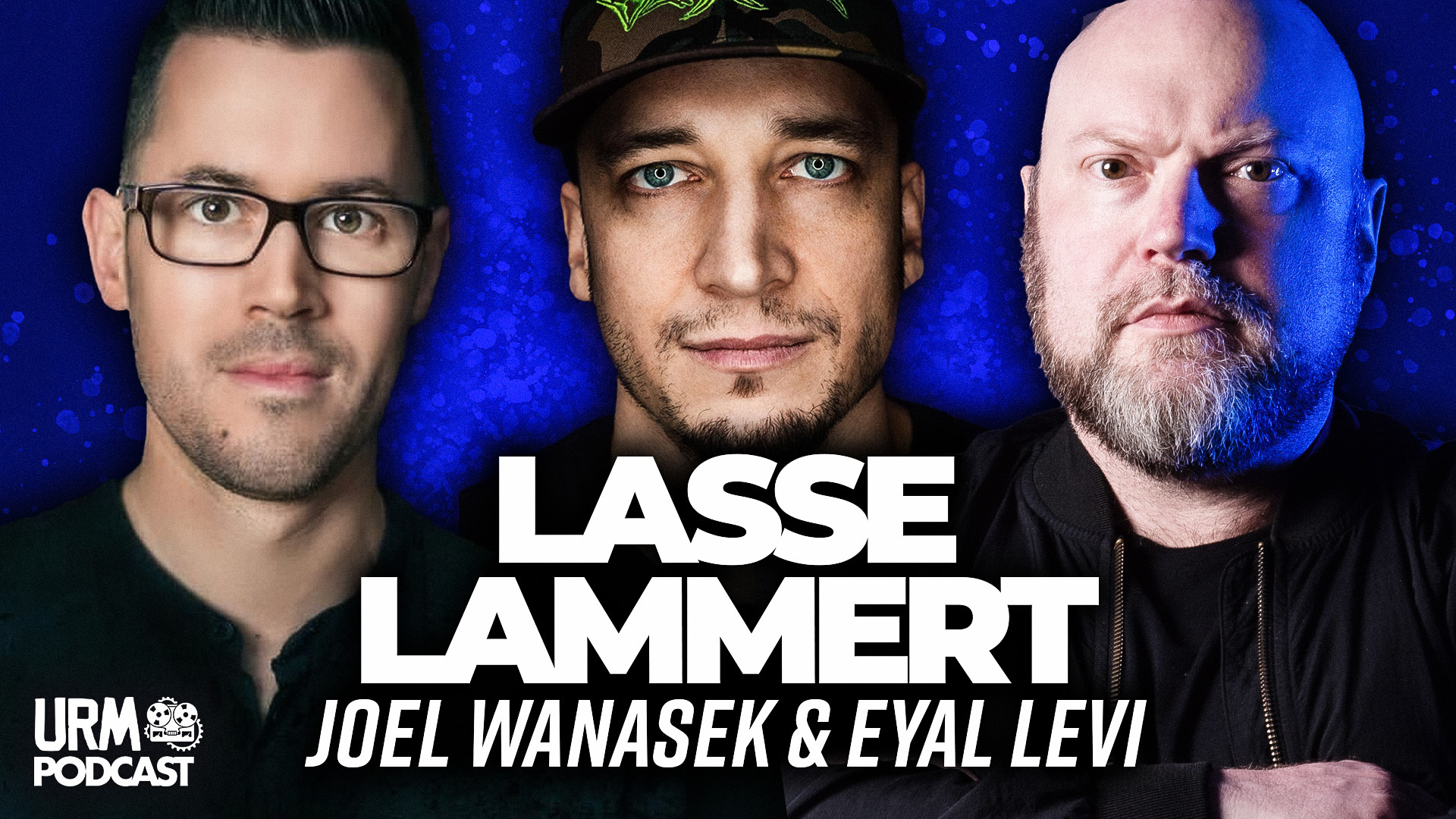
LASSE LAMMERT: Battling “Demo-itis”, Salvaging the Warrel Dane Album, Crafting Modern Guitar Tones
Finn McKenty
Lasse Lammert is a German producer, mixer, and engineer with a reputation for crafting killer guitar tones. Operating out of his LSD-Studios, he’s worked with power metal mainstays like Alestorm and Gloryhammer, as well as the avant-garde Japanese black metal band Sigh. He has collaborated with STL Tones on a signature Tonality plugin and ToneHub pack and was notably tasked with mixing the posthumous solo album from Nevermore vocalist Warrel Dane.
In This Episode
Lasse Lammert returns to the podcast for a deep dive into the real-world challenges of modern metal production. He breaks down how his approach to guitar tone has evolved to fit denser arrangements and discusses the fine line between using a band’s demo as a helpful guide versus falling into the trap of “demo-itis.” Lasse gets into the common but frustrating issue of “track-itis”—when a musician gets so used to hearing their own part loud during tracking that they can’t hear the mix objectively. He also shares some incredible stories about making things work under pressure, from knowing when to send poorly recorded tracks back to the band, to the extreme lengths he went to salvage the challenging Warrel Dane recordings. This one is all about the mindset, compromises, and creative problem-solving required to deliver a professional record, no matter what gets thrown at you.
Products Mentioned
- STL Tonality – Lasse Lammert
- STL Tones ToneHub
- iZotope RX
- Synchro Arts VocAlign
- Shure SM57
- Driftwood Purple Nightmare
- Peavey 5150/6505
- Mesa/Boogie Dual Rectifier
- Soldano SLO-100
- Celestion Vintage 30
Timestamps
- [2:03] Has Lasse’s method for dialing in guitar tones changed with new tech?
- [3:26] Adjusting guitar tones for modern, dense mixes
- [5:03] The danger of “demo-itis” and overly polished demos
- [9:30] “Track-itis”: Why musicians always want their instrument louder
- [11:24] Realizing that even on your favorite albums, some elements are compromised
- [13:37] Lasse’s mix revision workflow and how he sets expectations
- [14:58] The endless battle between guitars and keyboards for space in the mix
- [16:12] How COVID changed band workflows and deadlines
- [18:01] The importance of sending tracks back to be re-recorded
- [19:34] Dealing with vocals that are clipped into a solid brick
- [22:11] When asking for re-records might *not* lead to a better result
- [23:34] Why “bad” recording techniques can sometimes add a cool vibe
- [27:05] Mixing the posthumous Warrel Dane album from laptop mic demos
- [30:45] Using VocAlign to align a messy vocal performance to a new guide track
- [34:42] Why clients don’t care about your “nightmare scenarios,” only the result
- [41:45] Rapid fire: Favorite mic for heavy guitars
- [42:39] Rapid fire: Favorite guitar amp head
- [44:51] Rapid fire: Favorite speaker in a guitar cab
- [45:34] Rapid fire: Favorite amp sim
Transcript
Speaker 1 (00:00):
Hello everybody. Welcome to the URM podcast. Joel is out today recovering his voice from a bunch of webinars that we've been doing. Our guest today, and I'm going to mispronounce it, is Lasse Lammert. He's returning a German mixer, producer engineer, who I am known now for like 11, 12 years. And he came on my radar just being a badass with guitar tone back when I was really struggling with it a lot. And so I really started paying attention to him. And over the years, his career has just grown, worked with bands like Glory Hammer, Alestorm. He's done a tone hub with SDL tones. He's done all kinds of stuff. His studio's called LSD Studios. And he is just a cool dude. A cool dude. Oh yeah. And he did August, 2024 nail the mix as well. So the guy's been around. You have heard him on this podcast before. We'd like to welcome him back. Here goes, welcome back to the URM podcast.
Speaker 2 (01:11):
Thanks for having me.
Speaker 1 (01:12):
My pleasure. So you're now a nail the mix veteran.
Speaker 2 (01:17):
Am I a veteran already?
Speaker 1 (01:19):
I mean, yeah, all it takes is once, right?
Speaker 2 (01:22):
Well I'm a veteran then.
Speaker 1 (01:24):
Yeah. Yeah, so I'm glad that went. We had talked about it for a really, really long time, and I'm not sure if you remember this, but 10 years ago or 13 years ago, one of the first times we spoke, I was in a hotel in Seattle prepping for my first creative live shoot and we were sending each other our mixes and you sent me something you were working on. I was like, damn, that sounds good.
Speaker 2 (01:57):
Honestly,
Speaker 1 (01:58):
Probably don't remember.
Speaker 2 (02:00):
I can't remember sending you stuff, but I have no clue what it was.
Speaker 1 (02:03):
Oh, well I don't remember what it was either, but I remember back then thinking, damn guitar tone is really, really, really good on this. And I know that guitar tone is one of those things that you kind of pride yourself on and are kind of known for is being really focused on really sick guitar tone. I'm wondering, since the last time we spoke with lots of changes to technology and how people work, has your method of dialing tones changed at all?
Speaker 2 (02:39):
Not really, I don't think so. I think some of the style, the importance of the guitar tone has changed a little bit. So much. I feel like in the last couple of years, mixes have gotten so much denser and arrangement is this is more intricate now and more busy. So more often now the guitar tone has to be a bit more subdued and take a bit of a backseat compared to what it used to be like I think. So that kind of changed the methods a little bit, but it's not really something I do, nothing I changed on principle, it's just something that I adjust to match the task at hand. So depending on the mix and stuff,
Speaker 1 (03:22):
So maybe make them darker overall,
Speaker 2 (03:26):
Move the mic just slightly more to the sides of the center
Speaker 1 (03:30):
And
Speaker 2 (03:30):
Stuff like that.
Speaker 1 (03:31):
And is this something where in advance when you're getting a tone, kind of what role it's going to play in the final?
Speaker 2 (03:40):
Hopefully, yes, at least that's what I'm aiming for. And usually what I'm producing that's usually pretty simple. I already have a picture in my head, but often these days when bands send me stuff to mix, they don't even send a guitar tone anymore, they just send a gi. So I'm sometimes just flying blind and trying to meet their vision of the sound somehow. And sometimes it can happen, but then stuff collides in the mix and then just something doesn't sit well and then I have to adjust the guitar tone, but usually I'm close enough so that a tiny cut here and there does the check. What
Speaker 1 (04:19):
Do you prefer? Do you prefer that they send you a reference tone or how much do you prefer upfront? And I'm wondering just because different mixers have different attitudes about this, I know some people who if you send them a reference mix that they'll be really happy because they feel like now they have something they can beat, but at least they know what you thought as an artist was good enough to send. But then I know other people who say that anything like that gives them preconceived notions and takes them away from just organically finding what it needs to be.
Speaker 2 (05:03):
I think it's a bit of both. For me, I do, I want to know where the band is coming from and what their ideas are, what their goals are in terms of sound. And often communicating guitar tones or tones in general isn't really that simple because it's very subjective. You get those brighter, darker, whatever. I mean that's clear to most of us, but it's not, well, it might mean something different to the artist, so it's good if a rough direction to go. And same goes for the mix, so I'm kind of happy to get some sort of a reference mix. I don't like it if it's too detailed and too finished. Then you get into the demo artist issues and you start fighting. Well really just the perception of what the mix should be like that's derived from listening to the demo for way too long. So then the band is essentially trying to coax you into mixing what they already have. So that's always a real danger thing. So I do like a reference for guitar tones, for drums, for vocals, for rough levels, but I usually don't like having a too polished mix
(06:15):
That just means fighting later.
Speaker 1 (06:17):
Hey everybody, I want to take a quick break from this episode to talk to you about URM Academy now. So if you're new here, URM Academy is the best online school for metal and rock producers and musicians. When you join, you get a whole access to a range of content. There's nail the mix, which I'm guessing most of, and that's where we bring on a different artist and a different mixer every month to walk through a mix and give you the raw multi-tracks. And we've had on mixers like Will Putney and Borin, Tom Lord Algae with artists Bring Me the Horizon, chuga, periphery, opec, even Nickelback and tons more. If it's under the heavy music umbrella as I like to call it, we cover it. You also get our mixed lab tutorials, which are little bite size tutorials about very specific topics. We have over a hundred of those now.
(07:15):
So if you don't have the time for a nail to mix session or an entire course, you just want to find one tidbit of info to help solve a problem. That's what Mix Labs are for. We also have exclusive members, only Facebook and Discord groups where you can make friends with and talk to thousands of people from all over the world who do the exact same thing as you. And what's super awesome about our community is that it's troll free. We kick trolls out. It's like an Oasis online and also our instructors are part of the community and they interact with everybody. So you can not only make friends, but you can I guess socialize and learn from the best. Also, we have URM enhanced, which is our more advanced membership tier. The main focus of that is our FastTrack library, which are some very, very, very detailed courses on everything from editing drums to post-production effects, automation, creating impulse responses, working with low tune guitars and more.
(08:17):
We have over 70 of these. It's actually insane how deep and comprehensive the fast tracks are. And when you join Nail the Mix or URM enhanced, you also get access to Riff Hard. Our online school for metal guitarists with hundreds of lessons from artists such as Animals as Leaders, spirit Box, Ark Byer, Jason Richardson, and many more. So go to URM Academy. Let's get back into this episode. I learned something about Demo IUs on the last doth record when I was over with Jens and it had to do with people having mixed notes because I was the only one, well, Sean was actually in Sweden for part of it, but he wasn't there for the whole thing. So it was me there for most of it and I was getting mixed notes from the rest of the band. And then I was the conduit for Jens. And one thing that he told me was that you have to take it with a grain of salt when someone has recorded their own tracks on certain things because that means they've been listening to it like 10 db too loud this whole time.
Speaker 2 (09:29):
Oh yeah.
Speaker 1 (09:30):
So you need to analyze whether them asking for more volume is because they're used to listening to themselves tend to be louder than everything else, which is understandable because they're tracking and they're working on their parts. Obviously if you're working on your parts, you might want to be able to hear it the best out of everything else. It's not like when you're mixing and sometimes mixing in solo is a bad idea or sometimes you want to EQ things at the volume that they actually live in the mix. It's not the same. I think with tracking your parts, you want to be able to hear every single little detail and if that's what you get used to, yeah, you might get used to your guitar or your orchestration or whatever it is way too fucking loud.
Speaker 2 (10:23):
Absolutely.
Speaker 1 (10:24):
And so that's different than demo itis in some way. I think it's like track itis.
Speaker 2 (10:31):
Exactly. That's what I get a lot with Jams, for example, I'm working with some amazing drums. One in particular, he's like kites person. He is lovely. He's absolutely amazing, one of the best dramas. And so he is doing all these little intricate hi stuff and ghost notes and dynamic fills and all in black metal and death metal and whatever. And he is amazing at it, but he knows obviously all these little details he's playing, he knows exactly what he played where, so in a dance mix that might not be as audible as he likes it. And then we go into this discussion every single time that needs to be louder and louder and louder until it's at the level where he's comfortable with. And then it's just essentially sitting the jumps on top of everything else. And same is true for other musicians as well, like guitarists, vocalists in particular and stuff like that.
(11:24):
They obviously know all those little tiny details they put into it. The music is their baby and they crafted it and they want to hear every little nuance of it. And often the transition between being the musician and being the consumer, it's very hard to make if you're too invested in the material. I think so for example, when they then reference an album they like, which sounds perfect to them, they totally ignore the fact that maybe Las Ulrich on that metallic album also thinks that his Hyatt bit is missing. He can't hear it either, can we? But we don't care. We still, the songs are not the Hyatt part for example. And I think that happens often with musicians that they totally ignore that. The same thing is true for every band, every album, every release ever. There's always compromise and there's always something that one member of the band is going to be like, ah, I wish I would've heard that a little bit more in the mix or whatever. But you have to step back at some point and accept that it's about the impact that makes on the listener about the song and about the overall sound rather than your little guitar solo note or your
Speaker 1 (12:36):
Whatever inflection. The listener doesn't care because the listener only knows the version you gave them to them. That's the song so Exactly.
Speaker 2 (12:47):
And it either moves them or it doesn't. If it moves them, it's mainly because those little tiny ghost notes that are hidden in the background, maybe it's not, but that's all that matters in the end, I think.
Speaker 1 (12:59):
Yeah, exactly. And I think that's why it's good to not have entire bands there for mixing. And it is important to do mix notes obviously and to have that part of the process, but it is good to have limits. It is good to have limits because I think it's very easy for a band to take it and drive it off a cliff basically with too much feedback. If you had to give too much feedback, you might be with the wrong mixer.
Speaker 2 (13:37):
Yeah, there's one mix I'm working on right now, for example, which is, it's a good example because the mixers, the way I usually work is I mix one song as many revisions as it takes until the band is happy. So that's my kind of template that I start from.
(13:52):
That's just the core elements like bass, guitar, drums, keyboards, vocals, whatever. Then I apply that to all the other songs, go into those songs and tweak those on track by track bass, all the automation and all the little extra instruments and all the important stuff that I need to bring out or lower a little bit for clean sections or whatever. And then I send that to the band and usually what I'm looking for is at that point there shouldn't be global adjustments anymore. No, we don't like the snare tone or something like that. So at that point it's going to be like, could you please edit it later that vocal or lower the harmony there or whatever. And usually that works pretty well, but sometimes you run into an issue where, like I said earlier, there's always compromise. And in this case for example, they wanted the keywords to be ever so slightly more audible so I not say basically nothing like two DD very tiny nods around 5K and three K or something to bring out the orchestra a bit more of the keyboards.
(14:58):
Then that was the first mix of it when the first song and set it back and they were all happy and loved it. And then I went moved on and did all the other songs and then they came back and by now the guitarist thinks the guitar could have a little bit more bite. And so we're going into this back and forth between keyboards and guitars and vocals and whatever stuff that is always going to be masking each other to a certain degree. And the difference between the band being happy of the guitar, guitar has been happy was literally two dbs, not very tiny at 5K or something like that. And that's a compromise that at some point there has to be a decision that has to be made by one of the band members or producer or whatever to not run to nudge into a situation where you've got individual band members fighting for their own voice in the mix for their own instrument.
Speaker 1 (15:58):
It can get hairy man at some point. Someone's just got to say, this is it. I mean that's what deadlines are great for that, right?
Speaker 2 (16:08):
Deadlines are amazing.
Speaker 1 (16:09):
Yeah, it's got to be done. This is it
Speaker 2 (16:12):
Actually since COVID, I feel for me that has changed a lot, not for the better because before I had a very, I'm not the most structured person to be honest, but I usually had my calendar and had a band four weeks or six weeks or three or whatever, and then at 2, 3, 4, 5 days as a buffer and then the next band project would come in. That never worked, always was some overlap like a few days or something. But when COVID hit and people couldn't get into the studios and everything was delayed, stuff just started piling up and some point halfway during COVID, I was working on 12 or 14 albums at the same time, never finishing anything. It was always just, and it kind of hasn't changed much since then. It seems like that's the way bands are working now. Many of my bands anyway, to just work on an album for literally years and nothing is ever finished, so you're just chasing your tail and you're just trying to finish something just to not get depressed about it. At some point you're losing all the motivation and stuff. And that has changed for me for COVID, but they want to finish their records.
(17:28):
They often do, but then back then when everything was working the way I intended it to work, if they didn't come back with a mixed notes for example, and a reasonable amount of time, I had the next project in ra, so they had to wait until the next slot opened up. So usually what happened is they knew that I told them seriously, I can't send everyone home just because you can't do your mix notes. So they just did it and now they don't. Now they just wait until I find the time to work on it again, which might be weeks and everything is delayed again now.
Speaker 1 (18:01):
So here's something that might've caused the delay, and we're not going to name any names here, but I heard a story about you that built my respect for you actually. So I heard you got some vocals from somebody and you sent the vocals back and made them be retraced and I heard about that and I was like, fuck yeah, I love it when people do that because anytime I've done that back in the day when I was mixing it was because what I got from them wasn't worth me trying to mix. It was just not worth me trying to mix. I remember once a band sent me DI's off of a dead battery and they insisted it wasn't dead, but it was dead and super out of tune guitars with other people and it's just one of those things where no matter what you do, you're not going to win on the tone because of how badly fucked up the tracks are. So got to be redone.
Speaker 2 (19:13):
Exactly. The credits are still going to read a mixed master buy and not, we didn't have money to replace the battery, so buy new drum skins or whatever,
Speaker 1 (19:21):
There's no amount of editing that can fix the dead battery. No amount of tricks to fix a dead battery. So from what I understand, the vocals you got sent were too hot or something
Speaker 2 (19:34):
That happens so often that I don't even know what project you're referring to now, but that happens very often actually that they're recorded. Oh, okay, I remember. Yeah, yeah, no, yeah, of course they were quite hot to the degree where they were literally clipping and I knew that the vocalist is very capable and he could just nail it. So I was very happy that he agreed to just do it again
Speaker 1 (20:02):
Hot to the point where it was one black sausage on the screen. Yeah, no cool clipping, just the bad kind. Yeah, just black. When I've had to redo things, they've always come out better if I've ever been told to redo something thing. So it's good when people have a good attitude about it. No one's asking you to redo something just to have you redo something. There's always a good reason
Speaker 2 (20:32):
And it can actually mean more work for me as well. I might have edited everything already and cleaned everything or my assistant or whatever and done a lot of work and that happened so often that I just spent hours and sometimes days editing stuff and then be like, well actually know what I think you can do better and I don't bill them for that double editing, then that's on me. So I still rather do this and pay that out of my own pocket or do it myself again than dealing with a compromised starting point. Yeah.
Speaker 1 (21:01):
So you got this brick wall vocal and did you try to work on it or was it just from import? It was like, eh, no,
Speaker 2 (21:11):
No, I tried to work on it and it was usable to a degree. With rx, there's a lot of fixing you can do, but I just think if you can get around the need for fixing, not having to fix it, it's just a better starting point and there's so much more you can do. There was a bit of a consistency issue as well. Some bucket were very soft and some were very loud and clipping. So I saw myself having to clip gain a lot and I'm a big fan of consistency and especially if I'm using hardware compressors, but also compressors in general, I want to hit them in the same way and that means a lot of clip gain automation before I even start mixing. So that's a ton of extra work. It's a compromised product to start mixing with and that's all going to affect the outcome or the negative, so why not just redo it if there's the possibility it's not always the case.
Speaker 1 (22:11):
Yeah, well the possibility of it getting better is also really important because I don't know if you've experienced this, but there's been times where I've gotten really bad guitars and I've asked people to redo them and they redid them and they weren't better and it's because they didn't get better as musicians in those two weeks. It's the same thing that led to really garbage guitars. Those conditions didn't change. So it wasn't just like me saying over email, please redo this. And they're like, oh, okay, I know what I did wrong, I'll fix it. No, they thought those tracks were fine. So I think it's important to assess whether or not asking someone to redo something is going to lead to it being better on the other end within some cases.
Speaker 2 (23:05):
Yeah, that might be the case for what you just mentioned, that they don't even hear what's wrong with it in the first place or it might be that especially with vocalists or beat guitar playing that they just capture this perfect take and the stuff that we send might be cleaner in terms of game staging or whatever, but it might not have the same vibe you're looking for so that I would still fall back and go to the original one and try to fix it and make it work,
Speaker 1 (23:34):
Man. So on the first, well second doth record the Hinders, we self recorded it at first and then we got James Murphy to come mix it just like in 2004 and some of the vocals were kind of clipped, but they sounded cool. This was a long time ago, like 2000 3, 2 4, long time ago. But I remember while I was tracking the vocals that was hitting red, but I was like, it sounds cool, I'm just going to go with it. James got there and was not happy at all with it clipping and made us redo the vocals. And I still think that the original sounded cooler. I think that the distortion, but it wasn't like a sausage, it wasn't a brick fucking wall, just brick of vocal. It was kind of hitting the red and mostly inside of the pre-amp. So it wasn't pinning the digital input, it was mostly on the pre-amp itself that was getting the clipping. So it was kind of like an analog distortion. It was kind of intense at points, especially on some of the more intense screams, but it didn't bother me at all. It kind of made us, gave our vocalists then it wasn't Sean, a bit more of it was more black metalish kind of sounding just nasty. I liked it. So sometimes in my experience, sometimes it's important to ask yourself, is it actually worse like this or is this mistake, this recording mistake, is it actually a benefit to the recording because sometimes it is.
Speaker 2 (25:30):
Yeah, it really depends on the project. This one project where we went back and the vocal is recorded everything. That was a thing that has been in the works for again years and so we thought we had a pre-production demo stuff, but then once I got all the vocals and stuff, the main guy in the bed actually decided to remove that part for that part over there and it was rearranging everything. And so it was definitely helpful to have consistent vocals that I could just copy paste and not have very low level on one part and then the next song very high level and clipping and stuff like that. For me in general, I'm a big fan of consistency when it comes to a record. It doesn't mean every song has to sound exactly the same, but I consistency in the key elements. So that's something I'm looking for in the recording as well.
(26:19):
But yeah, like you said, it doesn't always have to be necessarily the best sounding track that is the track that makes it on the record later. For example, I'm working with this Japanese black metal band called Sai, that've been around forever. They were signed by the Mayhem guy back then and they're this underground legend black metal band. I feel like I've heard of them probably might have. Yeah, they're really, really good. The previous record I did was called Cheeky and it's very also the drama I mentioned earlier, the crazy guy. So it's very jazz elements and it's amazing. I really recommend people to check it out.
(27:05):
And they also recorded at home like everyone in their own place and the vocal in that case were like that as well. Very different from song to song and some clipping, some very audibly clipping and others not. This music was so vibey that I definitely decided to just go with that and make that work rather than having them redo everything and risking it being sterile in the end. And then there's the other extreme case where you just can't fix it. I've had this one thinking about how much I can talk about that, but it's been ages ago. I've always been the biggest Nevermore fan and also the biggest Andy Snoop fan. So that kind of goes hand in hand. And at some point Central Media called me and asked me if I could mix the world danger record and it was this the last record he did before, after, during he died during the process essentially. And so I thought, well that's amazing. I would love to do that. And then they told me, you've got one week to mix it. I thought, oh, that's tough, but I can make it. And then, well, some circumstances I shouldn't mention, it took me 10 days to get the tracks, which were supposed to be edited already. They looked literally at Per song. I had 80 or so vocal snippets, like snippets not even in the right place, so I had to move them around and play tetras.
Speaker 1 (28:33):
You had to kind of figure it out,
Speaker 2 (28:35):
Figure it out, and had at that point, maybe extent of the deadline, not even a week, like five days I think to mix the entire album and edit it. Well, yeah, but it wasn't a studio recording. It was literally sitting in front of his laptop singing to the laptop mic ideas to draft demo ideas while that backing was playing from the same laptop speakers, so click and bleed and backing and everything. And I had to work with those laptop mic recordings. So I think one or two songs were actual studio mic recordings, but a lot of them were literally ordained being not entirely sober, kneeling in front of his laptop, singing ideas into the laptop for a demo. And that was during those recordings he sadly passed. And so that was the legacy record and I had this massive, massive weight on my shoulders really. I had to compete with what Snoop did with Nevermore, which is amazing of course.
Speaker 1 (29:42):
Legendary.
Speaker 2 (29:43):
Yeah, legendary. They wanted wanted to do this legendary vocalist justice. And then there I was had four or five days to mix an album where I thought literally thousands of snippets from everywhere and I was like, okay, this is the last thing I'll ever do. This is going to ruin me. I ended up even singing the album myself. It's not on the album, don't worry, that's still ordain. But it was so chopped up with little bits and pieces that I first had to clean the click out of and the bleed from the speakers and everything. And then obviously it wasn't perfectly in time because it wasn't like an old performance. So that's why I sang the entire performance myself and then used vocal line to align world ordains timing to my guide timing and stuff like that. And so sometimes it's just the weirdest fixing you have to do to make things work. So obviously in that case it wasn't really recording, it wasn't a possibility, so I just had to make that work.
Speaker 1 (30:45):
That's actually a nifty little trick right there is vocal line to somebody else's vocal.
Speaker 2 (30:53):
Yeah, can work.
Speaker 1 (30:55):
Yeah, definitely. I mean look, that's one of those situations where you just got to work with what you've got and make
Speaker 2 (31:05):
The best of it. It tips you on your toes. I love doing stuff like that. For example, early two thousands when I just started doing this and there was this team of German all star pop stars, people outside of Germany, you wouldn't know them, but it's big bands, famous bands back here and they sent us to, it was like a year after tsunami, they sent us to Thailand and to the jungle and we improvised a studio literally in an orphan in the jungle. So we had a pearl export kit that we rented from there, no new skin. So I actually flipped the Toms around to use the resonant hats or spatter hats. We had a Mackey desk and pretty much nothing else. So I remember I went out and got a three meter, what's that nine foot pole metal pole that actually hit into the ground to get some proper grounding just to reduce some of the hum we heard.
(32:02):
And the plan was to record 16 songs in two weeks or 16 days or something like that. Also with those kids, like kids from the age of three to 12 or 13 orphans in Thailand, the idea was to have these German pop icons and the Thai kids and just gel and make music together, which obviously was, I don't want to say a better idea, it was a great idea, but it just didn't work out like that because the Thai music system is not congruent with our Western 12 tone system. So that was a lot of work and also making all the gear work and stuff like that. It's very challenging but still of the outcome I think stuff like that just keeps you on your toes. It just keeps you
Speaker 1 (32:48):
Motivated. How did you get on the same page musically?
Speaker 2 (32:53):
I don't know. It's kind of interesting. There was some of it was the German guys wrote their western pop music and then we enhanced it with their instruments, their special authentic instruments. And some of it was just Thai classics, like children's song that we westernized and essentially covered in a western style so that the kids could sing along and stuff like that. So it was just in the laws of stuff and I've always liked working like that. So that's for example, the reason why I love this approach we're having with Eight Storm where we just go to some studio somewhere in the world and there's always going to be compromise. I'm always almost never going to have the mics I need or the mics I would like to have or there's going to be not enough cables or mic stands or whatever and we just make it work.
(33:44):
And that's something that I like because it kind of keeps you from falling to this template, mixing stuff. Nothing's wrong with template, but I always like to capture what's there and to capture the vibe. I still do use templates to make my life easier, but not in terms of just one size fits all kind of approach. So this is something that is very interesting, I think to just be thrown into a situation where you have to make it work. And I've started doing that very early on in my career, in my mixing life or whatever and I've always enjoyed that even if I don't know the desk, even if I don't know how to operate in the studio, if I don't know how anything works, just to find someone, some assistant in the studio to help you out so that you can do your stuff comfortably and just make it work. And I think that's always leading to something interesting and something unique and more work.
Speaker 1 (34:42):
I think that, yeah, just making it work. I feel like I cannot tell you how many times, and I learned this the hard way too, so this is personal experience, but when getting hired and being presented with a nightmare scenario, the people hiring you don't give a fuck if it's a nightmare scenario they're hiring you for, they don't care that that's what they're putting in your lap. They just want you to deal with it. And so if you tell them it's a nightmare scenario that might not go well for you, what really matters is did you get it done and how hard it was, what hoops you had to jump through, how crazy it was, what insanity you had to deal with, whatever. None of that matters. And I think that engineers, mixers, producers who the earlier they internalize that and just make peace with it, just become zen about it, the better off they're going to be in their careers and also their sanity I think.
Speaker 2 (35:55):
Yeah, I do still like to involve the band into the this is nightmare scenario thing. Oh
Speaker 1 (36:03):
I mean the labels, I mean the labels,
Speaker 2 (36:04):
No labels, but even the band, not like I'm complaining there's garbage, but I try to explain to them how we make the best out of it for we don't have enough inputs, that's why I can't put you in here. I know you like to do this thing together, but we don't have enough mic lines or whatever. So what I like to do is do this first and then whatever you, whatever. So I try to communicate with them to work around this nightmare scenario.
Speaker 1 (36:30):
That's just professionalism. I mean if the label sends you something and you complain to them about it, that doesn't change anything. That doesn't change that they want you to do it. The label's not going to fix it. They don't know shit about audio. And if they send you a musician to work with that's got mental problems or drug problems, are they going to come and punish them like a parent or something? They can't do anything is what I'm saying. So complaining to the label or the management or whatever, it doesn't do any good. It just labels you as a complainer. However, what you're saying right here of talking the artist through challenges I think is really, really important. Especially if you're in a compromised situation. I think that the more information people get and the more they kind of understand why you're doing things a certain way, the better I think.
Speaker 2 (37:33):
Yeah, I think there's a difference between, there's obviously a difference between complaining and explaining, but even to a label to a degree. I mentioned the other day, literally the last week I had a big label approach with a rema or no actually with a master for a vinyl, one of the bands back catalog and that's a very, very big dom metal band. So it was very dynamic and organic. That was the goal. And so I wanted to rerelease this thing like 10, 20, whatever years old on vinyl now and they asked me to do a vinyl master, but I didn't have the original mixes or vinyl master, they just had the CD masters. So I did what I could with it and try to make it more dynamic, try to make it appear more dynamic. They were obviously limited to bits, limited to absolute like well minus five or what.
(38:29):
So I tried to make it more dynamic and tried to make it a little bit less harsh without changing the sound. I tried to monitor the bass and take care of the desing, some of the high end and stuff, the stuff you do for vinyl masters, but I still had to work with the CD masters, which were incredibly hot. So when I sent the version back and said, well see, this is what I did. I told them what I did and why I did it and also said, well, it's still going to be pretty loud, can't just unlimit it to that degree. And then a week the label loved it, but a week later the artist came back with, yeah, there's way too loud, way too limited. So I could have done the complaining thing and be like, yeah, but you sent me out. And that's what it was like, yeah, sorry, I have to what I have to work with and this is what I can do. And yeah, there was just no winning. So there's no absolutely no reason to start whining and complaining if the artist doesn't like it and he thinks or they think it's not dynamic enough, well it's not dynamic enough, it's not my fault, but it's still the same result. It's not dynamic enough. So I didn't get that gig and I'm fine with that. I knew I did what I could do.
Speaker 1 (39:46):
Yeah, that makes sense. I mean look, I think everything is a case by case basis for sure, but that definitely does sound to me like a situation where it's better to just be forward about it. I'm more thinking of things where label has sent you a band, the band are not prepared or the vocalist is a huge alcoholic and it's going to take a while to get 'em done. Hitting the label up and telling them, Hey, these guys are a bunch of alcoholics, they're not ready. It doesn't help anything.
Speaker 2 (40:34):
They still need to release that thing.
Speaker 1 (40:36):
They still need to release that thing.
Speaker 2 (40:37):
Chances are next time around the label is new client, but the band is because the band had blown up and they picked their producer and the mixer and if you went back to the label and complained and told them how shitty they are, it's not very likely that they're going to come back to work with you. But if you make it work, if you work with them and just quirks the best possible performance out of them, that's what they remember and they come back and even if the labor then wants to send them to someone else, which often happens because someone else is cheaper, whatever, then it's the band saying, no, we worked with him last time and he's great. We want to do that again. Even if a label sends me a band, for me it's always the artist is the client and the label is the business behind that maybe.
Speaker 1 (41:21):
Yeah, that makes a lot of sense. So I'm going to give you some rapid fire stuff and I want to get your first idea that comes to mind and why. And I guess we can talk about it some, but favorite mic for heavy guitars still the 57.
Speaker 2 (41:45):
Why? Because it just works. I often like to blend a second mic, but if I can't make a single 57 work there somewhere else a problem. So definitely the 57 or anything basically if I could have one mic, it could be the 57, I could do an entire production within 57 even on symbols, I don't care.
Speaker 1 (42:09):
I think that's right.
Speaker 2 (42:11):
You can
Speaker 1 (42:12):
Do anything with one of those.
Speaker 2 (42:14):
And I don't think there's another mic that you could say the same thing about even the most expensive, say EU 47 or whatever. It's great on some Vogues, it's great on this, but try using any mic for everything on an album, it wouldn't work. I think the 57 is one of the very, very few that you could do that with.
Speaker 1 (42:36):
I agree. Favorite guitar head
Speaker 2 (42:39):
Drift,
Speaker 1 (42:39):
Full purple nightmare. Interesting. Why?
Speaker 2 (42:43):
Yeah, it was so involved in developing it and it's combines a lot of stuff that I love. Mark, the guy that developed the Drift, what he sent me the first an early prototype and I told him what I like, what I don't sent it back and it went back and forth a couple times until I got the first production model, which is still sitting there. And so I'm very much in love with that amp. But that said, it's still not my desert auto amp because I don't have that. I don't, don't play guitar myself anymore. Not that much anyway. So you always have to have to adjust to the situation again. I think that's a theme for this podcast, but you have to adjust and make things work. And not every guitarist has the same picking hand. For example, I love the rectifier, it really works in the mix. It's fantastic. But their guitarist with a weak right hand, but just make the rectifier sound like they've got rubber bands for strings, very bouncy and spongy. And there's like the 51 50, which I love because it always works and rectify. It literally always works in the metal context but it's got other downsides. One is it's a very used and maybe overused sound. It's also as very mid forward so it can lead to other problems later down the mix later down the line. But Sano best lead amp, not necessarily for 800
Speaker 1 (44:16):
Right behind you is that an Avenger?
Speaker 2 (44:19):
Avenger That's an Avenger, yeah. But I also have the SLLA hundred which are also both grade amps. Actually I did use this for rhythms now, but we rarely do that. I don't really have one favorite hat. If I do, it's the drift force, but I wouldn't say I need the 35 40 heads I have in the studio, but I would need five or six, seven probably. Yeah,
Speaker 1 (44:47):
Makes sense. Favorite speaker in a guitar cab Vintage
Speaker 2 (44:51):
30 closely followed by one that you can't have that's I think it's called a V 60 something. I can't remember the proper name. It's anniversary model that Esan built for AMP doctor in Germany and I think they made 200 and it's like the same materials basically as the British 30 built in England. And it sounds slightly different but it sounds absolutely amazing and I think they made 200 of those and I've got two and one of my driftwood caps and all of it. That sounds cool. It's really good. Yeah.
Speaker 1 (45:28):
Alright. What about Amp SIM's favorite Amp Sim.
Speaker 2 (45:34):
Okay. LSD studios LA SDL Tonality. No, I don't think it's called SD studios Ality obviously with SDL tones it's absolutely ridiculous how it turned out. I mean guitars, EMS have developed and evolved and they're all like, many of them are great anyway, but this was so closely involved in the creation of this thing that I am still stunned by how identical it sounds. What they did is they sent them those three heads, they modeled and they took them completely disassembled them and measured every single component and then recreated it digitally. And for the IRSs I created all those here with my cabs and usually you've got a couple of positions and the rest is interpolated between that with a queue or something. And I didn't want that. I wanted an actual IR captured for every single position. So I ended up capturing 9,600 IRSs for this em So that every position, yeah, everything every angle is an actual captured ir and so this ssom really feels like a remote control. It feels like I've got the amp and cab in the other room and I feel like this is the thing I can't even hear a difference. That's how close it is.
Speaker 1 (46:57):
How did you capture 9,000 irs? So you use the robot?
Speaker 2 (47:01):
Did use the robot and a specifically written program for it that S St L su plugged the with and that I then tweaked together with a developer with S st L tones the way I wanted it in terms of what angles and everything
Speaker 1 (47:16):
Makes sense. That's a lot of irs.
Speaker 2 (47:19):
Yeah. Plus I want consistency. So if you don't use a robot, there's no way you can reproduce like 80 degree angle, three meters, three millimeters off to one side exactly the same on all the speakers. So there has to be the robot and program to do that.
Speaker 1 (47:35):
Yeah, totally. God, I was just trying to imagine how long it would take to do that manually.
Speaker 2 (47:41):
It still took a while. Oh I'm sure. Took a couple of weeks.
Speaker 1 (47:44):
Yeah, it's no joke capturing that much stuff. The thing with Amp sims is at this point, they're so good that I think it's just a matter of taste, a matter of taste and workflow if you like them or not.
Speaker 2 (48:01):
Yeah. For me, one of the reasons I shy away from amp amps I don't really do, but if I do it is because I don't want to fall into the preset trap so often. Basically 90% of the time I'm using my amps m like the SL two 90 or leads and cleans. And for revenues I usually reamp if I've got the possibility to do that. Not because the AMS A doesn't cut it, but just because what if I find this perfect sound in the AMS A then I'm going to use it again next time and I don't want to do that. I always want to approach the project from scratch and get the band their own fitting sound. I then still capture that though the tone up, the new tone up update has the possibility to trace is what they call it, trace the tone or the entire rig. And I think it's way more accurate than the camper even. So I always capture that just in case they come back and want something changed or whatever.
Speaker 1 (49:05):
So it's a way of keeping yourself on your toes still.
Speaker 2 (49:08):
Yeah,
Speaker 1 (49:09):
That makes a lot of sense.
Speaker 2 (49:10):
Don't get lazy.
Speaker 1 (49:11):
Yeah, don't get lazy. Alright. Lastly, I think we're out of time. I want to thank you very much for taking the time to hang out. It's been a pleasure catching up and you nail the mix was great. Thanks
Speaker 2 (49:24):
So
Speaker 1 (49:24):
Much. Yeah man, thanks
Speaker 2 (49:26):
So much.
Speaker 1 (49:26):
Thanks
Speaker 2 (49:27):
For having me on again. It's an absolute pleasure.
Speaker 1 (49:30):
Of course. Anytime we should do it again and not in five years. Absolutely. Always here. Awesome man. Have a good one. Thank you. Thanks
Speaker 2 (49:38):
Man. Take care.

