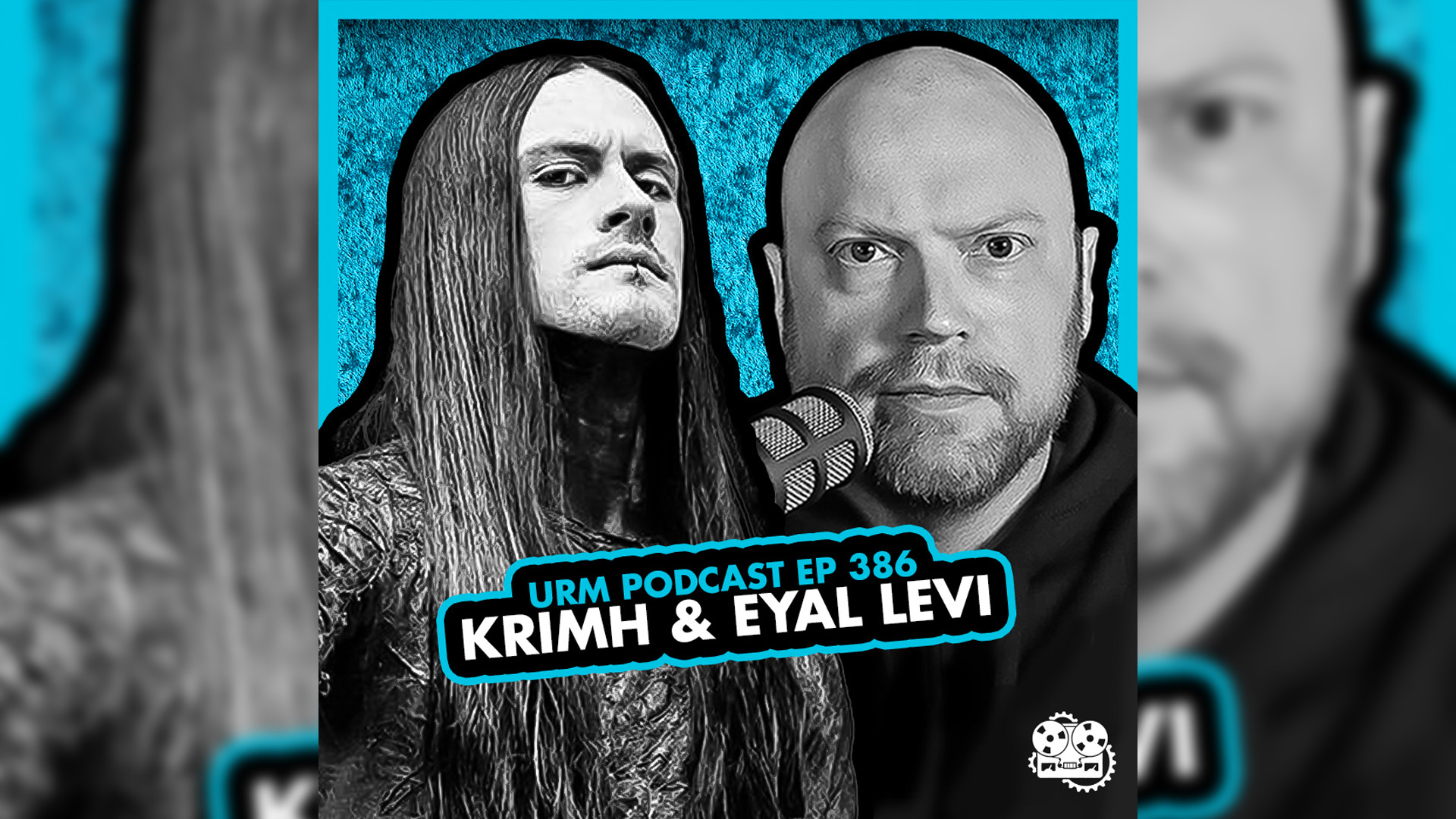
KERIM “KRIMH” LECHNER: Joining Decapitated via YouTube, filling in for Behemoth, and creating Krimh Drums
Finn McKenty
Kerim “Krimh” Lechner is a powerhouse drummer in the modern metal scene. He’s currently behind the kit for the symphonic death metal titans Septicflesh and the recently reunited Dååth. His impressive resume also includes stints with Polish death metal legends Decapitated and live session work with Behemoth. Beyond his band duties, Krimh has cultivated a massive following through his popular YouTube channel and has ventured into the world of music tech, collaborating with Bogren Digital on his own virtual drum instrument, Krimh Drums.
In This Episode
Krimh joins the podcast to talk about the realities of being a multi-talented modern musician. He gets into the nitty-gritty of his intense daily schedule, explaining how he balances duties for multiple bands with creating content for his YouTube channel and developing his software instrument. He shares some awesome stories about his early days, how posting drum covers led to his big break with Decapitated, and the mindset required to jump on scary, career-defining opportunities like filling in for Behemoth on short notice. He also gives a behind-the-scenes look at the creation of his Krimh Drums plugin with Jens Bogren, discussing the 14-hour sampling session and the “less is more” design philosophy. For all the producers out there, he breaks down exactly what he looks for in an engineer during a session, offering crucial insight into creating a comfortable environment that allows a drummer to deliver their absolute best performance.
Products Mentioned
Timestamps
- [3:47] Krimh’s strategy for managing his insane workload
- [4:43] Why he practices drums at 5:30 AM
- [7:49] The pros and cons of running his brand as a “one-man shop”
- [15:39] Overcoming the stigma of being a “YouTuber musician”
- [20:02] How YouTube practice videos led to his audition for Decapitated
- [23:09] The importance of recognizing and seizing scary opportunities
- [25:54] The pressure of filling in for Behemoth on short notice
- [29:05] Dealing with imposter syndrome in high-stakes situations
- [31:20] Why he left his dream gig in Decapitated
- [43:33] The spontaneous story of creating Krimh Drums with Jens Bogren
- [45:00] The 14-hour marathon sampling session for Krimh Drums
- [45:32] The benefits of having fewer options in a virtual instrument
- [48:00] Finding the right tempo for the Dååth song “No Rest, No End”
- [51:43] Krimh’s process for memorizing complex song structures
- [55:48] What makes a great producer from a drummer’s perspective
- [59:42] Getting a drummer warmed up for the perfect take
- [1:02:04] Why it’s dangerous to push a drummer too long in a session
- [1:04:16] His “last chance to dance” mindset for nailing the final take
Transcript
Speaker 1 (00:00:00):
Welcome to the Unstoppable Recording Machine Podcast.
Speaker 2 (00:00:04):
And now your host,
(00:00:05):
Eyal Levi. Welcome to the URM podcast. Thank you so much for being here. It's crazy to think that we are now on our seventh year. Don't ask me how that all just flew by, but it did. Man, time moves fast and it's only because of you, the listeners, if you'd like us to stick around another seven years and there's a few simple things you can do that would really, really help us out, I would endlessly appreciate if you would, number one, share our episodes with your friends. Number two, post our episodes on your Facebook and Instagram and tag me at al Levi URM audio and at URM Academy and of course our guest. And number three, leave us reviews and five star reviews wherever you can. We especially love iTunes reviews. Once again, thank you for all the years and years of loyalty. I just want you to know that we will never charge you for this podcast, and I will always work as hard as possible to improve the episodes in every single way.
(00:01:10):
All we ask in return is a share a post and tag us. Oh, and one last thing. Do you have a question you would like me to answer on an episode? I don't mean for a guest. I mean for me, it can be about anything. Email it to [email protected]. That's EYAL at m dot A-C-D-E-M-Y. There's no.com on that. It's exactly the way I spelled it. And use the subject line. Answer me Eyal. Alright, let's get on with it. Hello everybody, and welcome to another episode of the URM Podcast. I'm Eyal Levi, and today we have a truly extraordinary guest joining us. Not only is he renowned drummer in the modern metal scene playing with some of the biggest names, his band, septic Flesh. He used to be in Decapitated. He's played with Behemoth. He's also a member of my band Doth. He's known for his innovative and boundary pushing drumming style and has built a massive following on his YouTube channel with over a hundred thousand subs. And if that wasn't enough, he's also made his mark in the world of music technology with the virtual drum instrument, Krimh drums that he made in collaboration with Boren Digital, which is an awesome up and coming plug and company that I really, really love. So without further ado, let's give a warm welcome to the one and only Krimh. Let's do this Krimh. Welcome to the URM podcast.
Speaker 3 (00:02:36):
Thank you for having me.
Speaker 2 (00:02:37):
It's a pleasure. I know we wanted to do this for a while, but both of us have insane schedules and that was one of the things I wanted to talk to you about first was I know, I mean, I've known everybody knows you do a million things.
Speaker 3 (00:02:53):
Yeah, that's true.
Speaker 2 (00:02:54):
I do. Yeah, and we've talked about this before about how to keep your sanity throughout it. I know that we both talked about periods of feeling utterly overwhelmed
(00:03:09):
And we talked about having to reduce our workloads, and so I'm wondering how do you strategize getting through a typical week? You have stuff to do for septic flesh, you have stuff to do for YouTube, you have stuff to do for Krimh drums, I'm guessing probably more stuff with borin digital stuff, with doth stuff, with whoever else you're doing sessions for. You have drum clinics and I'm sure there's a bunch of shit I didn't even mention. You have a lot of stuff going on. How do you just take a typical week? How do you plan that out?
Speaker 3 (00:03:47):
It's pretty straightforward. First of all, I try to get the most information as I can and try to write it down in an old school calendar. I like to have it in front of me on a piece of paper, and then I kind of see already, okay, in this month there's going to be a lot to do and I like to use every bit of free time to kind of work ahead to just have things done. So whenever there's a small window where I could do a video or do some content, then I try to do that. Sometimes I cannot plan because certain things are just popping up. It could be that you get an email, I dunno from Morgan Digital, that they are planning to do some contest or they want to have more content going on to promote something. So it's always a little bit of being flexible enough to squeeze certain things inside.
(00:04:43):
And in general, I think it's just mainly that I have some sort of a motivation going on. I like to do that thing. I like to be busy. Just the hard part is sometimes to also respect your own limits. Sometimes the mind wants to do more than the body's able to do, especially playing drums. I feel like I have a certain limit I can play per day spend behind the drum kit and then everything else, if I would push too much, I kind of regretted the days afterwards. So it's better to have a strategy. So I would use the mornings for practicing on the real drum kit. So right now my schedule is kind of that. I wake up between 5:30 AM I just get up, get dressed, drink a coffee, some water, and just go straight to play the drums, which is pretty early.
Speaker 2 (00:05:38):
It's a great time though.
Speaker 3 (00:05:39):
I don't know. For some people it works for, it is not. But for me, the main reason is that in the rehearsal space where I am based right now, it is, there are many practice rooms and there's a lot of bands, maybe 40 bands or so with different schedules, which means that of course you'll have people starting to rehearse on the afternoons and especially evenings. Some of them play through the night, but nobody's as crazy as I am and goes to play at four or 5:00 AM 6:00 AM and that's fine. For me, it works better than as if I would have to work through the night. I would prefer to just go to sleep pretty early and wake up super early to record in the morning. So yeah, for me it's fine to be in the rehearsal space like 6:00 AM five, 6:00 AM and just play for one hour, two hours, and then it's kind of enough because I feel doing more than that is not beneficial for my body and I get pretty tired.
(00:06:40):
So it's like two hours, then I get back, eat some breakfast, and then there's all the other shit that I have to do. Maybe I have to go to the post office and send orders from my merchandise. So I would combine that. And afternoons I usually spend by doing organizational stuff, writing back to people, working on content, so editing videos, making trailers, making t thumbnails, basically nothing that is too physical. Being a content creator most of the time is just doing all the editing stuff and planning all the posts and just, yeah, I did not expect it, but it feels like it just adds more and more as coming in because you kind of want to have a specific standard of things, like a specific standard of quality. That's what I mean. This requires quite a lot of time and I do all of it my own. So I don't have any people around me that would edit my videos or write any posts or pack the orders from a merchandise. It's just one man chop, just
Speaker 2 (00:07:46):
You.
Speaker 3 (00:07:46):
Just me. Yeah.
Speaker 2 (00:07:47):
Do you like it that way?
Speaker 3 (00:07:49):
I do like it. Sometimes I just wonder if it is maybe not on the long run, a little bit too much. I feel like I'm not yet in this position where I think it pays off to have someone else coming in because obviously you have to pay the person and it's just so that the outcome right now, it doesn't make sense, so I'd rather do it myself.
Speaker 2 (00:08:13):
That makes sense. The thing I've noticed also when hiring people to take on a role that you used to do, it really helps if you know exactly how to do it before you bring someone else in because otherwise it's going to become their vision of what the thing is supposed to be,
(00:08:32):
For better or for worse, usually worse. So it's really, really good if you have enough knowledge of, for instance, how you want your videos edited. I'm sure that at some point with everything growing, you're going to have to have somebody editing your videos. I guarantee you that at some point that's going to happen. But that's just the natural evolution of a YouTube content creator is that they get an editor because it's too much. But if you know exactly what the style is and what the details are, it's going to be so much easier than if you were to just find someone who knows how to edit videos. There's a lot of people who know how to edit videos and then have to train them to have your aesthetic, your feel, your sensibilities. The more established you are, the easier it'll be to make that transition.
Speaker 3 (00:09:25):
Yeah, probably it's true what you said that you kind of have to catch the specific feeling. When I edit my videos, I feel like I add another level of ness on top of it, so it's just not me, the performer only, but it's just the creativity by how I edit the videos. Small details. If it's certain effects that I add or what I do with logos and stuff, it's of course not as professional or in such a high level as a professional editor would do, but I do what I can and I feel like it still adds a certain personality to it. I just forgot to say though, that for the audio, for example, right now, I ask my band mate a guitar player from Septic Flesh to mix my audio because he's doing that kind of on a daily basis that he's recording bands and mixing. And for me, I've always been interested in also the whole process recording mixing, but I just feel like I can do much more on my own by video editing than audio. I feel like my knowledge and my tools that I have right now are not comparable, for example, to what he has.
Speaker 2 (00:10:39):
That makes sense.
Speaker 3 (00:10:40):
So actually I do have already someone involved. I should have mentioned that before, but the rest of it, I do all of myself,
Speaker 2 (00:10:48):
My partner Finn, I'm sure that people listening to this know this. He's the director of operations at URM, however, he's also a big fucking YouTuber with the punk rock, NBA channel. I don't remember if it's at 500,000 subs,
Speaker 3 (00:11:03):
That's a lot. If it's 500,000 Chases,
Speaker 2 (00:11:05):
448,000 on his main channel, and he has a secondary channel where he puts up a lot of his Twitch reactions. It just passed a hundred thousand subs
Speaker 3 (00:11:17):
And I guess he's uploading really frequent, right?
Speaker 2 (00:11:20):
Very frequent and it's really interesting stuff. His opinion is with YouTube, if you're a musician or a producer, that's your thing. The audio, that audio has to be great. The video can be less good as long as the content's good, but you can't have shitty audio. You have to have good audio. That's the rules. So it makes sense if you don't feel confident in your mixing, get someone who can. That's a wise move.
Speaker 3 (00:11:49):
And especially with the audio, I feel like I have way more people around me that do a much better job than me. I actually don't know anyone who's editing videos, for example, but all the engineers, I have a bunch of them that I know in my friend circle. I agree. Just you have to deliver a certain quality. I mean, the content itself has to be good, but yeah, it has to sound good and it has to look good. Just for me personally with this YouTube journal, yes, I'm a YouTuber in a way, and I'm kind since 2007, the really early beginnings of YouTube, I'm doing that stuff, but I never really wanted to focus a hundred percent on that. Compare myself to let's say Sams six, six Sams who completely turned from just having a YouTube channel and then having a job next to it, but then he quit and he's streaming and throwing out content weekly. I never saw myself doing that. I feel the most comfortable to be honest, on stage and performing and playing.
Speaker 2 (00:12:53):
I think Samus doesn't want to or is not able to tour something. It's something along those lines.
Speaker 3 (00:12:58):
He has some issues with his immune system, I believe. So he gets sick pretty quick.
Speaker 2 (00:13:04):
And I toured with him once. DA toured with him in 2009. I think he was playing for Abigail Williams.
Speaker 3 (00:13:11):
Yeah, he did that.
Speaker 2 (00:13:12):
Yeah, he was phenomenal.
Speaker 3 (00:13:15):
I know he's like a machine.
Speaker 2 (00:13:17):
It was like a holy fuck moment seeing that kid play drums. He sounded just like Adi of Bo ear record, I guess he had his triggers set perfectly in whatever sounds he was using. And remember, 2008, 2009, it was a little different than now. He sounded just like puritanical or something. It sounded huge even at these tiny places we were playing, and his playing was so damn good. So I'm really glad that he found a way to still keep being an incredible drummer and keep doing it all the time, even without being able to tour. He's great.
Speaker 3 (00:14:01):
Exactly. I wish that he would be healthy fully that he could go back on tour and enjoy playing life. But on the other hand, if he's happy, what he's doing right now, and I feel like he's doing a really good job, he found his spot. People love it for a good reason. The content he makes is funny. It's great. He plays amazing. He's very precise and super funny. And when you said Abigail Williams, I actually saw him also the first time with Abigail Williams here in Austria. Might have been, I'm not a hundred percent sure. I was not yet in decapitated. I actually didn't know about that. Might be in this band, but I think must have been 2008, something around there. I met Sams the first time in real life. We knew each other kind of from YouTube content. And then later on I toured with him. We did the Kret birth decapitated. We spent a whole month to get in a tour bus. It was really funny. And then now it's like it's great to see him, how he's building up his YouTube channel and doing his thing is really nice to see that.
Speaker 2 (00:15:13):
What's interesting to me about your YouTube and his YouTube is that there was a time, and I'm sure you remember where, and I don't think it's accurate anymore, but there was a time when I guess the YouTuber thing was first really starting to get popular with musicians where there was this idea that musicians with YouTube channels weren't real musicians. Do you remember that?
Speaker 3 (00:15:38):
Yeah, of course.
Speaker 2 (00:15:39):
Yeah. But it's like nobody can say that about you or Samis or some of these other current players that have YouTube channels, that whole idea that YouTubers are just shitty musicians who couldn't hack it with music, that's a complete and total myth. But did you ever encounter that?
Speaker 3 (00:16:02):
Not really, but maybe it was because that I was pretty quickly playing actually live shows and also having live footage on my YouTube channel to prove that, hey, look, it's not just faked in front of the camera, but this dude is actually playing because the audio associated this must be from a camcorder or a phone and you cannot kind of cheat there, but it sounds tight. So I believe the same with Samos, the way he played. And when you look at it, especially as a drummer, you see certain movements and you know how they should sound. And if someone sounds extremely powerful, but the movement is very small, then something is off. Right. But I can tell you with Samuels, whenever I heard him live the first time, I was like, this guy plays a machine. It was so spot on. And I feel like that we both, for example, have proven that we are actual musicians. We had bands, we were touring so people could check us out. Of course, everyone has bad days and sometimes we had popcorn on the kicks. I call it
Speaker 2 (00:17:15):
Shoes in the dryer
Speaker 3 (00:17:17):
Or that, but it's part of it. Otherwise you can listen to the cd, right?
Speaker 2 (00:17:22):
Yeah, exactly. Speaking of those early days, I remember seeing a video of you from man, I don't know, 2007 playing a DMU Borg gear cover.
Speaker 3 (00:17:32):
Yeah.
Speaker 2 (00:17:33):
How old were you?
Speaker 3 (00:17:34):
I was 18.
Speaker 2 (00:17:35):
You look like a kid, but you played the song. Well, I remember seeing that and thinking to myself, well, I didn't see it back then. I saw it years later. But I remember thinking, wow, if I saw that now I would think this kid has a future, which is interesting. I know that a lot of people see clips of young players ranging from 18 all the way down to five years old and will always say, wow, they're amazing. But I normally don't feel that way. I don't know. I'm not impressed by shitty younger players. I'm an asshole. But no, when I saw yours, I was like, man, if I had seen this in 2007, I would've thought to myself, I need to contact this drummer. You can tell from that video that there's a future ahead of you, a good one with drums. And so what I'm curious about when you made that video back then, were you very much set on what you were going to do? I'm going to be a drummer in sick real bands and be a professional metal drummer, top level professional metal drummer. That's what I'm doing with my life. This is what's going to happen. Or was it just kind of a hobby you were good at? What was your mindset back then?
Speaker 3 (00:18:51):
Well, first of all, thank you for the nice compliments. I'm glad I made such an impression to you when you were watching that stuff. Yeah, I was.
Speaker 2 (00:19:00):
It's impressive.
Speaker 3 (00:19:02):
Thank you. I mean, I was still young and I was still, I just finished school kind of, and I started playing drums when I was 13, 14 years old. I started to really play regularly and I got my first drum kit with 14. And so for me, it was mainly about having fun and I love to play this instrument, and eventually I got better. And the thing was, I just realized a little bit later I already uploaded on YouTube that there might be a potential, but I would have never thought that I could actually achieve that because I'm from Austria. It's a small country and we are well known for good musicians. I mean, Mozart.
Speaker 2 (00:19:46):
Oh yeah. There's a long lineage in Austria of some of the greatest music in history.
Speaker 3 (00:19:53):
That's true. But we talk about metal drums and heavy drumming.
Speaker 2 (00:19:58):
Well, I realize it's not the 17 hundreds anymore, but
Speaker 3 (00:20:02):
Still. So for me, I could see when I started to play with my first bands, local bands that somehow it's hard to break out of this circle somehow. It's always the same people supporting the same scene, which was lovely to have such a scene, but it was not in a professional way obviously. So it was all underground bands. And so I actually uploaded YouTube videos because these were kind of practice videos. I saw that YouTube was there and I saw a couple of drum videos and I was like, Hey, I could actually do the same. And for me, it was always a good way to check how I play by just recording myself, because while I play, I could not really focus on sometimes how tight I played because I was just struggling to basically go through the song. I recorded all those old videos in my old school, I borrowed a camcorder.
(00:21:01):
I had four mics, one in the kick, one on the snare, two overheads. I run it into a small mixer and then from the stereo out straight into the camera without any EQ or anything. That's why the kick sounds like a piece of shit, but it doesn't matter. I didn't know I tried to do what I had with all that stuff and just one takes no edit, go for it. And then whenever people wrote to me, and especially with decapitated or some bands before decapitated writing to me international bands like, Hey, we like your stuff. Maybe you want to play with us. It just opened up a total different world for me. And I kind of the first time felt, Hey, actually there might be a chance to do this in professional, but I just finished school and I wasn't sure what I want to do.
(00:21:53):
Shall I become a sports teacher like my dad because I'm really into sports? Shall I study something else? What's my place in this world kind of. And I also thought of studying drums like chess or pop drums in order to be a professional musician after all. But YouTube kind of gave me a shortcut. It just said like, Hey, look, you present yourself on a platform. You just play from your heart. You don't have to have actual any knowledge because it seems like people are still loving what you're doing and you're basically getting offers from bands that they want to play with you. So I was like, okay, I think this is possible. And then yeah, of course with decapitated, whenever I got this email on MySpace that, Hey, you want to maybe come to Poland to try out for audition, I knew this moment was like, okay, now the door opened and I just have to grab it and do it even though it was scary. And I was young, I never lived abroad. I was just a kid, but I understood that, hey, this will be probably your opportunity to get into the business. And so this is how it started.
Speaker 2 (00:23:09):
What's interesting to me about that is that I know a lot of people who don't recognize the opportunities or when they see the opportunity, they get scared and go the other way. As a producer, I have encountered many situations where the band that we've all heard of loses a lead guitarist, for instance. And I know somebody who can fill that spot who is not in a sign band, like someone from a local band, and I would recommend them and they wouldn't want to do it because they were afraid of leaving their local band or any number of reasons. And I always thought that it was fascinating to me that people would have that reaction because the thing that's always worked for me is I am always looking for what the next opportunity to advance is. And so when I see it, I've trained myself to immediately not question it.
(00:24:02):
I just see it as like it's usually not going to just land right in your lap like a gift. It's going to be like a clue or something that this could be a direction. So by the time this comes out, it's already announced that we signed a metal blade. So for instance, when the doth stuff started going again, I did not think that labels were going to come into the equation, not this quickly. I thought maybe eventually after releasing music independently for a while, but the moment that I had one conversation with one label casually that gave me the clue that, okay, there's more of this, pursue this direction and keep going with it. And it was the same back in 2005 when I started to see, okay, there's a little bit of a clue that if I go in this direction, this could work out, so I'm going to go in this direction.
(00:24:56):
That's how everything has ever worked for me. For URM. Before URMI was doing videos for creative live educational videos. I never thought I'd ever do an educational video before. I did the Creative Live stuff, and I was very surprised when those videos got popular and I was surprised. I enjoyed doing it. I thought it was going to be super lame, and I was kind of embarrassed to go do those videos. I was actually doing them as a favor for Finn because he was my friend and he worked for Creative Live and I wanted to help him. Much to my surprise, that started to take off. And so that gave me the clue that, well, if I do this on my own, it can be successful. It's always been just like you get a clue that this could work and then you have to figure out how to make it work. But I've noticed with a lot of people, they see that clue and then they go the exact other way for some reason
Speaker 3 (00:25:50):
Because scary as hell. That's why it
Speaker 2 (00:25:52):
Is scary. You're right.
Speaker 3 (00:25:54):
I guess because of the possibility to fail. When I decided to do that, I was scared too, and I was hesitated or hesitating to say maybe, hey, maybe I should say no. Maybe I'm not ready for that. This was specifically a situation with the behemoth gig where I had to kind of fill in last minute, just learn a bunch of songs and play with them a week later on a big festival.
Speaker 4 (00:26:19):
And
Speaker 3 (00:26:19):
I was like, fuck, if I don't take this, I will probably be hating myself for the rest of my life, but if I say yes to it, you have to deliver. Are you ready to deliver that? What does that mean? Does it? And I was like, okay, I have to, am I actually able to learn these songs? Where do I am able to practice this stuff? At that moment, I didn't have a rehearsal space and I was like, how shall I do that?
Speaker 2 (00:26:46):
Behemoth is no joke.
Speaker 3 (00:26:48):
No, it's not. That's what I mean. And if someone is asking you to do that, the last thing you want to do is to not only embarrass yourself, but just let everyone else down with what you're doing. So it is extremely scary. And I don't know, maybe we both are a little bit risk takers sometimes, but
Speaker 2 (00:27:09):
I think so.
Speaker 3 (00:27:09):
I guess we also understood that at some point you have to understand that this clue there is a higher chance to success than with others things, and you just go for it.
Speaker 2 (00:27:20):
That's an interesting way to look at it because I've always said that for me, the way I describe it is I see a path.
(00:27:28):
If I can visualize, and I don't mean this in a lame of visualize your future. I mean, if I can actually see the path, like the logical steps to how something will succeed, like with URM, I saw exactly how it would work. I had no clue if it would or wouldn't. There's nothing else like it. There's no way to know if it would work. But in my head, logically I could see A plus B plus C plus D equals whatever the next thing. It made perfect sense. And so with things where I have decided not to go forward, it's because I couldn't understand the path to success. Lots of people who have asked me to invest in their companies or have brought me their business plans, and they're usually garbage. And the reason is not that it's not a cool idea, it would be in a fantasy world. It would be cool if this idea they had worked, but I just couldn't understand the path to success. And I've felt that way with lots of bands I've seen or just lots of things that have come up. But the things that I have pursued, I've always been able to understand how it would work to some degree to make a good guess to where it didn't seem as stupid as jumping off of an airplane without a parachute or something.
Speaker 3 (00:28:46):
Yeah. How is it called? Risk assessment? Is this the word? Yeah,
Speaker 2 (00:28:51):
Risk assessment some level. Obviously if it's a risk, there's still a chance of falling on your face.
Speaker 3 (00:28:58):
Of course there always is. I mean, even if you get out of bed, there's a chance that you just immediately break your leg for some stupid reason.
Speaker 2 (00:29:05):
Yeah, it happens. But you know what you were just talking about with behemoth, can I do it idea? So you hear this a lot in Riff Hard and URM, and I know actually everybody I know who has had any success in creative fields has this imposter syndrome feeling. I don't know if you get this, but this feeling where people are like, why me? People don't know that I suck or people don't know that I'm a fraud or I don't belong here. They're making a mistake. They don't know what they're doing getting me. It's like these weird feelings where whenever I've gotten those feelings, I just do the thing anyways, those feelings will happen and then I just ignore them and just keep going
Speaker 4 (00:29:53):
Because
Speaker 2 (00:29:54):
I know that it's just a voice in the head. It's not reality. And I hear a lot of people on URM who get those feelings and it cripples them. They just don't move forward. That stops them from trying. And the thing that I wish they'd understand is that almost everybody who has any success with music gets those feelings at some point.
Speaker 3 (00:30:16):
For sure.
Speaker 2 (00:30:17):
Yeah.
Speaker 3 (00:30:17):
Just for me, I realized that you can be the best player and you can practice your ass off every day, but if you are not able to take certain chances or see those opportunities when they're coming, because to be honest, you have to be also quite lucky. You have to be good. You have to be consistent, you have to be respectful, you have to do your job, basically. But on the other hand, I was lucky that I uploaded the videos at a time where YouTube was still new. There was not a big competition, even though, I don't want to say it's a competition, but there was almost nothing up there, right?
Speaker 2 (00:30:55):
No competition for views, that's for sure.
Speaker 3 (00:30:57):
Yes. But you know what I mean, competition between musicians. But I had the chance to be part of something that just started to grow, and it opened me up a place where I could present myself and how I play. And this opened me another door for becoming a professional musician. And then I started touring and eventually at one point you will maybe leave from a certain band and you don't know what's going on. Because there was another thing where I felt really scared of I just say no to my dream. When I left Decapitated, I had nothing at that time, nothing else after that, but it just didn't feel right to continue with that band for specific reasons. So it was extremely scary because I was like, you just worked your ass off to be in this position. You don't know what's going to happen next. Are you sure you should do that? But I felt not really good playing my instrument, and so it was kind of logical situation and I understood that there will be other opportunities. You just have to keep going and be busy,
Speaker 4 (00:32:05):
Do
Speaker 3 (00:32:05):
Other things. And then I started to do more of my solo project and then eventually Behemoth came, and that was because we toured together with Decapitated and Behemoth, and they saw me everyday play. So they knew, okay, there's a guy that can pull off stuff. And whenever it was about time to find a replacement for Infer for that time, they said maybe the Austrian guy can do it. And then they called me. So it's like one thing after another. Sometimes you just have to work and work without seeing any results at the moment, but everything you do will help you in a way. Right now I'm doing videos. Maybe I'm not the typical content created that does advertisement and gets paid shit set of money. I just keep going and doing my content. But I know that by doing so, I'm building up the brand cri me my name as a drummer, as a musician, and this will maybe be interesting for my brands that I endorse. It will be interesting for all kinds of people I work with. So these are things I understood that you just have to be lucky. And then whenever there's the moment that you get the opportunity, you should be smart, realistic, but also take a little bit of risk. Otherwise nothing will happen. You will stay always on the same spot. You have to jump into the cold water. You have to push yourself. Otherwise, yeah, you're going to stay where you are.
Speaker 2 (00:33:37):
Hey, everybody, if you're enjoying this podcast, then you should know that it's brought to you by URM Academy, URM Academy's mission is to create the next generation of audio professionals by giving them the inspiration and information to hone their craft and build a career doing what they love. You've probably heard me talk about Nail the Mix before, and if you're a member, you already know how amazing it is. The beginning of the month, nail the mix members, get the raw multi-tracks to a new song by artists like Lama, God, angels and Airwaves. Knock Loose Opeth Shuga, bring me the Horizon. Go Jira, asking Alexandria Machine Head and Papa Roach among many, many others over 60 at this point. Then at the end of the month, the producer who mixed it comes on and does a live streaming walkthrough of exactly how they mix the song on the album and takes your questions live on air.
(00:34:29):
And these are guys like TLA Will Putney, Jenz Boren, Dan Lancaster to Mattson, Andrew Wade, and many, many more. You'll also get access to Mix Lab, which is our collection of dozens of bite-sized mixing tutorials that cover all the basics as well as Portfolio Builder, which is a library of pro quality multitracks cleared for use in your portfolio. So your career will never again be held back by the quality of your source material. And for those of you who really want to step up their game, we have another membership tier called URM Enhanced, which includes everything I already told you about, and access to our massive library of fast tracks, which are deep, super detailed courses on intermediate and advanced topics like game staging, mastering low end and so forth. It's over 500 hours of content. And man, let me tell you, this stuff is just insanely detailed. Enhanced members also get access to one-on-ones, which are basically office hour sessions with us and Mix Rescue, which is where we open up one of your mixes and fix it up and talk you through exactly what we're doing at every step. So if any of that sounds interesting to you, if you're ready to level up your mixing skills in your audio career, head over to M Academy to find out more, it's not so bad if something fails. I mean, I don't agree with the people who say that they like failing. There's this whole,
Speaker 3 (00:35:54):
Yeah, I know what you mean.
Speaker 2 (00:35:55):
Yeah, this motivational speaker thing where they talk about failing is good, no failing sucks,
Speaker 3 (00:36:01):
Sucks big times.
Speaker 2 (00:36:02):
It sucks. I don't know what the hell they're talking about. I fucking hate it. But the thing is, it's really not that bad. There's way worse things that can happen. So a project you tried failed, so what? It sucks. The thing there is do you let that define you or do you just keep going? And if you keep going, things will probably be okay. That's what I've noticed. It's really not that big of a deal If something fails, I mean it doesn't feel good, but just keep going.
Speaker 3 (00:36:31):
You just keep going. And sometimes if it doesn't work out, then yeah, do something else. Or maybe it was not the time yet to do certain things, but I totally agree with you saying that failing sucks or is extremely uncomfortable. Looking back, maybe after you have digested your failure, let's put it this way, you might see the positive outcome like, Hey, maybe I wasn't ready yet. Maybe I should invest more in practicing or get more experience in certain things before I will try again playing for a bigger band or whatever. But still, you just have to do certain things, even if it's uncomfortable, you just have to take a risk and go for it.
Speaker 2 (00:37:12):
Yeah, that's the big thing is whatever it takes, you have to get some level of comfort with risk. I see this with a lot of producers too. A lot of the successful producers that I know, and I mean a lot of URM students too who they might not be students anymore because they became pro and don't have time or they're students, but they only log in once in a while. But a few of the ones who have become successful, and then also just people I know who have become successful, oftentimes it involved a massive risk like moving to another country or another city. I know certain people who lived on the east coast of the United States and then put all their shit in a car and drove to Los Angeles without having a gig there and just did it. And then within a couple years, we're working for some great producer and then within a couple years from that are getting paid a little better. And I mean, the shit takes time. So they put themselves in a very rough situation of moving to a super expensive city where there's a ton of competition that is definitely throwing yourself in the cold water in the deep end, trying to swim with combat boots on. But I've seen it work. I know one guy who came all the way from Jordan, Jordan in the Middle East made his way. First he got to Columbus, Ohio,
Speaker 3 (00:38:46):
Somehow
Speaker 2 (00:38:47):
Tried to work at a studio there and from Columbus, Ohio, he made his way to LA and got in the industry that way. I've seen Josh Eck, for instance, from Borin Digital.
Speaker 4 (00:38:59):
Yes,
Speaker 2 (00:38:59):
He's an old URM student. He used to live in San Francisco, and I remember talking to him as a URM student about how he was starting to get very worried. He was like 35 and still hadn't found a studio to work at. He still didn't have his audio career together yet. And starting to get scared about age, which is, it's a valid, valid concern. And one of the things that I told him to do was, look, man, it might not be in San Francisco. It might be who knows where the opportunity, it might be in Sweden. But what you need to do is you need to start figuring out where these places are that you want to end up and actually find a way to go there and start meeting those people. And just you have to, it's not working for you here. You're not getting younger. What do you want to happen? Figure that out and then physically start putting yourself in those positions. And that's what he did. And before I knew it, he's working with the ends. And before I knew it, him and Jens are starting this software company before I know it, he owns a house that Jens used to live in. I've seen that happen so many times. And it's always the people who just, it's not like they're not scared. Everybody's scared of doing this stuff.
Speaker 3 (00:40:22):
Of course, for sure. They
Speaker 2 (00:40:24):
Just do it. The difference is they're scared, but they do it anyways.
Speaker 3 (00:40:27):
Yeah. And it's also nice to see that it's possible. I feel like it's very impressive and it's motivating you to try to also fulfill your dream. I mean, for me, it was the same thing. I kind of understood. I will probably not be able to become a famous metal drummer in Austria, so I said, fuck, I'm going to Poland. I dunno the language. I know three people. I've never lived anywhere else except my home in my hometown, but I'm just going there and see how it goes. And eventually one thing led to another. And yeah, it was good to do that. And it's nice to hear that it's possible multiple times, not just of course for me, but for other people too. As you said, everyone is scared. Absolutely. People with feelings and humans do have feelings. Everyone is scared
Speaker 2 (00:41:22):
And that's fine.
Speaker 3 (00:41:23):
Yeah, it's totally fine. It's how it's supposed to be. And I think it's also good because sometimes you have to trust your gut feeling, but if you would do certain things without thinking about it or thinking what are the possible outcomes, you might direct yourself or you will be living on the street. So it's always like a balance between can I do that? Do I have enough trust in myself? What are the outcomes? What is option A, option B, option C? Because what's the other thing, I will just be at home, but I might not be able to fulfill my dream. And so I'm a hundred percent sure everyone has their moments where they're just struggling, not sure if it's going to work out, but then you keep trying, you make connections, you find your way, you find your spot where you can be, where you grow. And yeah, Yatsik is a perfect example for that.
Speaker 2 (00:42:26):
It's really cool to see. So speaking of Bo and digital, I don't produce bands anymore. So right now my extent of music is the doth stuff. That's the only thing I do. So I didn't actually try Krimh drums until very recently
Speaker 4 (00:42:45):
Just
Speaker 2 (00:42:45):
Because I have a workflow that was working with Easy drummer it, I had a template, it works. And so I wanted to try Krimh drums, but I just didn't want to fuck with my workflow.
Speaker 3 (00:42:58):
Understand.
Speaker 2 (00:42:59):
So I tried it recently though, and holy shit man, sounds great. And I'm not saying this just because I am biased towards you or anything like that. If I didn't think it sounded great, I'd just kind of try to avoid it in this conversation.
Speaker 3 (00:43:13):
Yeah, you could have also put it that way,
Speaker 2 (00:43:16):
Not bring it up or something. But people I trust that told me that it sounded great. I was just a little not skeptical, I just didn't want to fuck with my workflow, that's all. But I did try it and damn man, it sounds great. I'm shocked by how good it sounds, actually.
Speaker 3 (00:43:33):
That's perfect. What else can I say? I mean, I'm really happy, to be honest. It was also like an experiment. It was, but it was again, in my opinion, a moment where one thing led to another because I was in Sweden, I just finished recording a septic flesh album. And to be honest, it was a tricky album for me to record. And with Jens, it looks like this, that if you book one week of drum recording, he will probably show up one or two days afterwards. You just work with an assistant. And so he's there for recording purposes. And so for this recording session, we did that in Fascination Street Studios, in Studio Grand Al in Stockholm, and Ys is not based in Stockholm, so he had to come over and he came in the night. And so we recorded the songs and we have finished the album, and then all of a sudden YZ comes inside and he's stroking his beard, and he looks at me, he's like, Hey, do you want to maybe make a drum sample library with me? And you mean just sample sheets? No, but an actual drum instrument. But now, but I'm leaving in two days or something, but we can still try. I said, okay, yeah, sure. So let's get started. And then he ordered extra skins. And from there on, I was sampling for 14 hours straight drums.
Speaker 2 (00:44:58):
Oh yeah. It takes forever.
Speaker 3 (00:45:00):
It takes forever. And we went through the symbol stash that had there literally till the last moment I said, okay, I can do one more crash and then I have to leave, otherwise I will miss my flight. Jens was already gone, so I kept sampling with the assistant. We were not sure if it's going to work out or not, but eventually it did. It just took quite a bit, I think two years or so. What I really like about is that it's pretty straightforward and you do not have too many options, which I actually think is good.
Speaker 2 (00:45:31):
Yes, very good.
Speaker 3 (00:45:32):
Because the focus is on just a couple of things. You can still mess with them and you can still change EQs and whatever, but it's just one drum kit. You have a couple of Toms, you have it coded and a clear, you have just two snare drums. You have a bunch of different symbols, but not too many. So it's pretty compact, but it works. So I'm really glad that Ys asked me to do so that we are doing it together. I'm really happy as well because I feel like it's a different drum sound.
Speaker 2 (00:46:02):
It's very powerful.
Speaker 3 (00:46:03):
It is powerful. But a friend of mine said, Hey, I really like your instrument, but I use it mainly for pop productions, especially the snare because it's so open, it has a ring, and you can amidst that in other drum instruments. So I feel like it's good that we have tried to be a bit different compared to other.
Speaker 2 (00:46:26):
Totally. And what I like about it, having few options, personally, I like gear like that where it's like, this is what it does. Maybe there's a couple different things you can do with it, but pretty much this is the thing it does, and so you know what to use it. To me, that's my favorite kind of stuff is where something has a sound to, it has a sound. You know what that sound is, and hopefully you like that sound, but you know what it is that the tool, because I just see plugins and any audio gear as it's just a tool.
Speaker 3 (00:47:02):
Of course it is.
Speaker 2 (00:47:03):
I don't have any personal feelings ever about gear. Some people do. I don't give a shit. It's just tools. And so my favorite ones are the ones that have a very specific thing about them that that's what they do. You know what you're going to get with it. And so I like it. It's very easy to use. It sounds great, and it doesn't, like you said, it doesn't sound like other ones. So it's a very, very specific thing. Obviously it's not going to be appropriate for every single situation.
Speaker 3 (00:47:33):
No, of course not
Speaker 2 (00:47:33):
Imaginable. But for the things that it's good for, it's fucking great. And I'm not trying to do a Krimh drums ad, but it really is awesome. It really is. Thank
Speaker 3 (00:47:45):
You. Appreciate it.
Speaker 2 (00:47:46):
I want to talk about doth and no rest, no end a little bit. Right now with this podcast coming out, the only new song anyone's heard is No Rest, no End. And that's a song that we almost didn't make.
Speaker 3 (00:48:00):
I just remember sending it back and forth the stuff and shall we do it or shall we not? And what about this part? And I just remember it being, it is already fast, but I remember you sending me at an even faster tempo and I was like, how shall we?
Speaker 2 (00:48:13):
Yeah, it was,
Speaker 3 (00:48:14):
We cannot do that. I mean, it's so busy. We have to calm it down a little bit.
Speaker 2 (00:48:19):
Thank you.
Speaker 3 (00:48:20):
I think it was a smart decision, right?
Speaker 2 (00:48:22):
Yeah, I listened to that. So basically, I think the original version was a 2 20, 2 20,
Speaker 3 (00:48:29):
And
Speaker 2 (00:48:29):
We tried at two 10 and we settled at two 14. I listened to the two 20 version the other day and I was like, oh man, it's already stressful enough to try to play this at two 20. Look, I know there's some bands like Arc Spire or whatever who play that kind of shit at 300, but I'm not that guitar player. It's a different kind of music too.
Speaker 3 (00:48:50):
Yeah, it's true. And specifically, this song has so many layers. It's so dense that I feel like if you would do it even faster, you would lose the quality of each of the layers. It will be just rushed. It will just sound like watching a YouTube video at 1.5 speed. Yeah,
Speaker 2 (00:49:10):
You're right, you're right.
Speaker 3 (00:49:12):
So I remember that we were very specific in finding the right tempo. That still is fast. Obviously the song doesn't give you any rest, obviously. And it's like from start to finish, you kind of like, what was that? And you just a little bit overwhelmed in a positive way, obviously. So it is a trip, this song, and I just feel like that by finding the right tempo, all the elements work perfect right now.
Speaker 2 (00:49:42):
That's one of the things that I think actually a good producer helps bands with that. But I think that that's one thing that people who are listening who are in bands should really spend a lot of time with that. That determines the feel that determines everything. It's like all the way to how the vocals sit, how they come across. Literally everything is determined by that tempo, that tempo. Do the wrist feel good? Do they feel rushed? Do they feel slow? Literally everything is built off of that
Speaker 3 (00:50:15):
True.
Speaker 2 (00:50:16):
So it's so important to figure that one out,
Speaker 3 (00:50:19):
But sometimes you just don't know. And we did basically, we tried out all different options. I mean, we did the smart thing of doing demos and working with media drums, so we could easily just change the tempo, listen back and forth, and kind of get an idea like, Hey, how does this feel for you? It feels good, but it could be a bit faster, but not too fast because we should be able to play that, and it should have also some sort of a groove, a certain feeling. So I think for this song, especially also with all the layers that are happening, and because we knew it only, or I knew it mainly in a demo state, and then afterwards when I just heard what else will come on top of it, extra samples, extra guitar layers, and I was like, wow, it's even denser now.
Speaker 2 (00:51:12):
Yeah, I tend to think in terms of layers. How did you go about memorizing it? I'm curious about that because for me, I'm thinking in terms of key changes, riffs, melodic changes, what's going through your head when you have a very complex, the middle section for instance, it's complicated. There's a lot happening, lots of changes. How do you memorize? What are you thinking about when you memorize or are playing a complex section like that?
Speaker 3 (00:51:43):
For me, the most important is what is the main thing that holds everything together? It's usually the rhythm guitar or the riff. And I remember this baroque part specifically, you sent me with a bunch of leads on top and melodies going up and down on both sides differently, and it was just a lot going on and I wasn't sure what to hold onto. So that's why I tried to just listen to the rhythm guitar and trying to figure out where certain changes are in the feeling in the polls. I would then make my own click track, which sometimes is not necessarily what the actual time signature would be, but something that would indicate me the certain feeling or where a change would happen. So for me, when I also recorded that song, I listened just the rhythm guitar and the click track, because that's the main thing I focus on because with the layers afterwards, you might sometimes lose a little bit the driving force. And for me, a driving force is actually the combination of riff and drums. The bass, yes, but the bass is just, it's not for me crucial because in terms of knowing where I am in the song,
(00:52:59):
I need of course to have a thick bass sound after all in the production. But for memorizing parts, the less information I have in terms of to process for me, for my brain is better because I have the riff. I know it's that long, this is where the change is happening, what could be the time signature. I will focus specifically on this note. Then I know, okay, now comes the fill or now comes the double kick part. So that was for me, that's how I work usually just one rhythm guitar, figuring out what is the feeling of this riff and then trying to match my drums to that.
Speaker 2 (00:53:39):
Do you memorize the riff when you're learning a song?
Speaker 3 (00:53:43):
Yeah, so for me and the way I learn my songs is never really by transcribing anything. So it's just repeating, listen to it, repeat it, and building it up. I would play the first seconds of a riff and just loop it constantly until I memorized this riff and I figured out a drum part that works for me, and then I would add a little bit more, but I would continue repeating everything from the beginning. So eventually it gets longer and longer and longer and everything is done by ear. I have to memorize it from my head by listening to it. It's never really writing it down, just when it's very complicated, specific rhythmical pattern, it sometimes helps to have a visual thing. So I would watch actually media notes. If there's a program, drums, for example, I would watch the kick pattern
Speaker 4 (00:54:38):
In
Speaker 3 (00:54:38):
Front of me knowing that, okay, it's two kicks, then three, then two, then four, then three, then two, whatever. But it's still not notation in terms of writing it down, like actual drum notes. It's just having an visual or I do this with the wave file. I see where the peaks are and I know that this one is a snare and this one is a kick. And I would watch while practicing. I would watch the waveform passing by, and this is kind of my notation.
Speaker 2 (00:55:07):
So when you go to the studio with a song like no rest, no end or septic, flesh, whatever. When you are at the studio working with a producer, an engineer, what is it for you that you look for in a engineer or producer that makes you comfortable and you feel like you can do your best work? Most of the listeners of this podcast are producers. So I want to hear from a drummer's perspective, what can a producer or an engineer do to help you feel like you want to work with them again? Because you're able to do your best work and you like the way it comes out.
Speaker 3 (00:55:48):
I think a producer has to find this thin line of letting you try out different ideas, but also guiding you. And specifically with yz, I remember first time I was working with yz, I heard some stories that he's very critical and you will have to play a million takes, and he's very strict, blah, blah, blah. So I felt a bit like, okay, I don't know how it's going to be the session. Maybe I will be completely destroyed after it. But then we started to record and I understood that he is always looking for a specific character. When you play, he didn't care too much about what are you playing, if it's always the same. He would rather say, this take had the right attitude, even though the kick was a bit sloppy, but we can fix that. But I just love how you played that, what feeling you had.
(00:56:46):
And musically, it made more sense to play it this way. And that's what I really appreciate about Ys is that he guides you, but he's not telling you straightforward. You have to play this. This is the only way that it can be done, but rather just giving you options. With most of the engineers I have worked with and those I have continued working with, this is exactly the thing. You want to feel comfortable with them. Of course, they should know their stuff, they should know how to mic the drums. They should know something about tuning the drums and whatnot. But when you record with them, I liked,
Speaker 2 (00:57:22):
I feel like those are assumptions, right? If you're going to work with someone, you assume that they know how to do that stuff,
Speaker 3 (00:57:28):
But sometimes you never know. And so I like to have someone who, as I said, guides you and it's also prepared. Usually I try to be as prepared as I can by preparing the click tracks, all the playbacks and everything in advance, just making sure that everyone is on the same spot with everything so that the tracking is smooth as possible. And so I feel like you should support, especially as a drummer, I tell you one thing, it's a very physical instrument and sometimes you will overplay or sometimes you're not ready for the studio. Of course, this works for other instruments too, but I feel for drummers, it's even worse. So sometimes you have booked a studio month in ahead, and then you come to the studio and you feel the worst you have ever felt because you just practice too much. And for some reason you have this blockage in your head and you cannot do it or your hip is fucked up from playing.
(00:58:36):
I've been in situations like this and that would've been the worst if the producer would just basically try to force me to do certain things or say like, no, you have to do that. You have to be a bit flexible and understand. It's a very difficult thing to do to play this fast stuff and play heavy and play with feeling and groove. But yeah, give the drummer a little bit space and give him options. Lead him to the best take. Not force him maybe, let's put it this way, you should lead him towards it. You can say, this take was good. We keep it, but I think there's a little bit more in you. You can do that one more time. We have it. Or let's just do one more for fun and see what it does. Because sometimes exactly such words will take away some of the stress that you have all the time because as soon as the red button is hit, you forgot everything. You just throw the techniques out of the window and you just, survival mode, you just play. That's what I'm really looking for in a good engineer. Recording drums.
Speaker 2 (00:59:42):
One thing that I always used to do with drummers, and this really worked with it, worked with all of them, but especially the really, really good ones, is I always thought, I want you to feel the way that you feel when you're on your third or fourth song in a set.
Speaker 3 (00:59:57):
Exactly.
Speaker 2 (00:59:58):
Not warmed up before the set, because you're never really fully warmed up until you're actually three or four songs into the actual set. That's how I want you to feel when we're recording. I don't want you to feel the way you do after just playing on your pads for a while and stretching. That's not warmed up. That's like prewarm up almost. And it's a mental thing too. It's like that looseness and also the full body warmup. It's a mental thing too. That's why I say the way you feel three or four songs in, because that's when the adrenaline starts to subside. You start to feel more normal, but you're warm and loose. So what I would do is we would just loop the song. I'd record every take. I wouldn't tell them I was recording every take.
Speaker 3 (01:00:49):
I know that trick. Yeah,
Speaker 2 (01:00:50):
But I wasn't planning on keeping them all. I'd say, why don't you just play this over and over until you feel exactly like that. You're on song four of a really good set and then we'll record. So it would take them, they'd play it for 30 minutes
Speaker 4 (01:01:07):
And
Speaker 2 (01:01:07):
Get really, really, really warmed up, really loose. And then it would only take three takes through the song after that and we'd be done. Then for the next song, let them do the same thing. It takes a little less time to get to that point record and three or four takes and we're done. They're great. I notice that it's a longer prep for every song, but the actual time of recording is way faster. They feel way better about it. I still never try to go past three songs in a day, even though some of the drummers, I feel like drummers, especially because it's such a physical thing and they're like athletes, so they have the very, I can do it. I have to do it. Kind of like athletic mentality. And so even though they physically could keep going, I could tell when we have passed the peak
Speaker 3 (01:02:04):
And
Speaker 2 (01:02:04):
We're now on the way down because they're athletes and they're motivated, they believe oftentimes that they can just keep going and they probably could once I felt like we were past the peak. If we had enough days, obviously, because that to factor in how much time you have, I would then just stop the session then no matter what. Even if it was only after six hours or whatever, never allow it to go into one of those crazy sessions. Even if the drummer is pressuring me really hard. It's
Speaker 3 (01:02:35):
Dangerous. It's
Speaker 2 (01:02:36):
Dangerous. Exactly.
Speaker 3 (01:02:37):
Super dangerous.
Speaker 2 (01:02:38):
Yeah. Better for them to rest, recover, come back the next day. We do it again and feel just as good on the next batch of songs as we did on the first batch rather than have three. Amazing. And then everyone gets a little worse from there and then they're completely sore the next day and it just kind of sucks.
Speaker 3 (01:02:58):
Of course. And this technique, I actually do this most of the time just for certain songs which are extremely complicated. It's better to do it part by part, but I would still like to play through the song a couple of times.
Speaker 2 (01:03:13):
Oh yeah, of course.
Speaker 3 (01:03:14):
With Decapitated, the one album I do with them, the carnival is forever. We just played every song. We recorded three or four takes for every song and that's it. And then we just chose the parts. But I would always play the full song through from start to finish and it just kind of works. And the same goes for my YouTube stuff for Playthroughs, I usually learn the song dead Well that I feel like as if I would have to perform it live and then I would just take one, take 2, 3, 4, 5. As long as I don't lose a stick, I would just keep going because it's a different thing. It's a different attitude. And it's funny that you mentioned the fourth song in the set. It's usually my third or fourth take or fifth, which are the best ones.
Speaker 2 (01:04:07):
And then you can always go back and punch little things, but the body of the take, yeah, it's always between Takes three and five. I've noticed
Speaker 3 (01:04:16):
That's true. And another thing I like to do when I basically know that I kind of have enough, but I could still record another one. I just like to say to myself, last Chance to dance. And whenever I said that, it means for me it doesn't matter anymore. You can just relax and just play for fun and sometimes, sometimes actually most of the time, but just saying that words this take is the one that I can take the most out of it because it's just like, yeah, just play. See what happens.
Speaker 2 (01:04:49):
You're
Speaker 3 (01:04:50):
More loose.
Speaker 2 (01:04:50):
I've heard that movie directors do that too. Quentin Tarantino talked about doing that a lot, but Krimh. I have to end the podcast now. I want to thank you very much for taking the time. It's always a pleasure to talk. I know we're going to be talking a lot soon anyways, but I'm glad we got to do this. Thank you very much for taking the time.
Speaker 3 (01:05:13):
Thank you very much for having me. It was awesome. Cool questions and I hope you guys enjoyed listening to us talk a little bit about nerdy drum stuff and songwriting and whatnot.
Speaker 2 (01:05:24):
It's always fun. Sure. Alright man, have a good one. Thank you.
(01:05:27):
Alright then another URM podcast episode in the bag. Please remember to share our episodes with your friends as well as post some of your Facebook and Instagram or any social media you use. Please tag me at al Levi URM audio at M Academy and of course tag our guests as well. I mean, they really do appreciate it. In addition, do you have any questions for me about anything? Email them to me at al at URM Academy. That's EYAL at urm dot aca. DEMY. And use the subject line Answer me Eyal. Alright then. Till next time, happy mixing.
Speaker 1 (01:06:06):
You've been listening to the Unstoppable Recording Machine Podcast. To ask us questions, make suggestions and interact, visit URM Academy and press the podcast link today.

