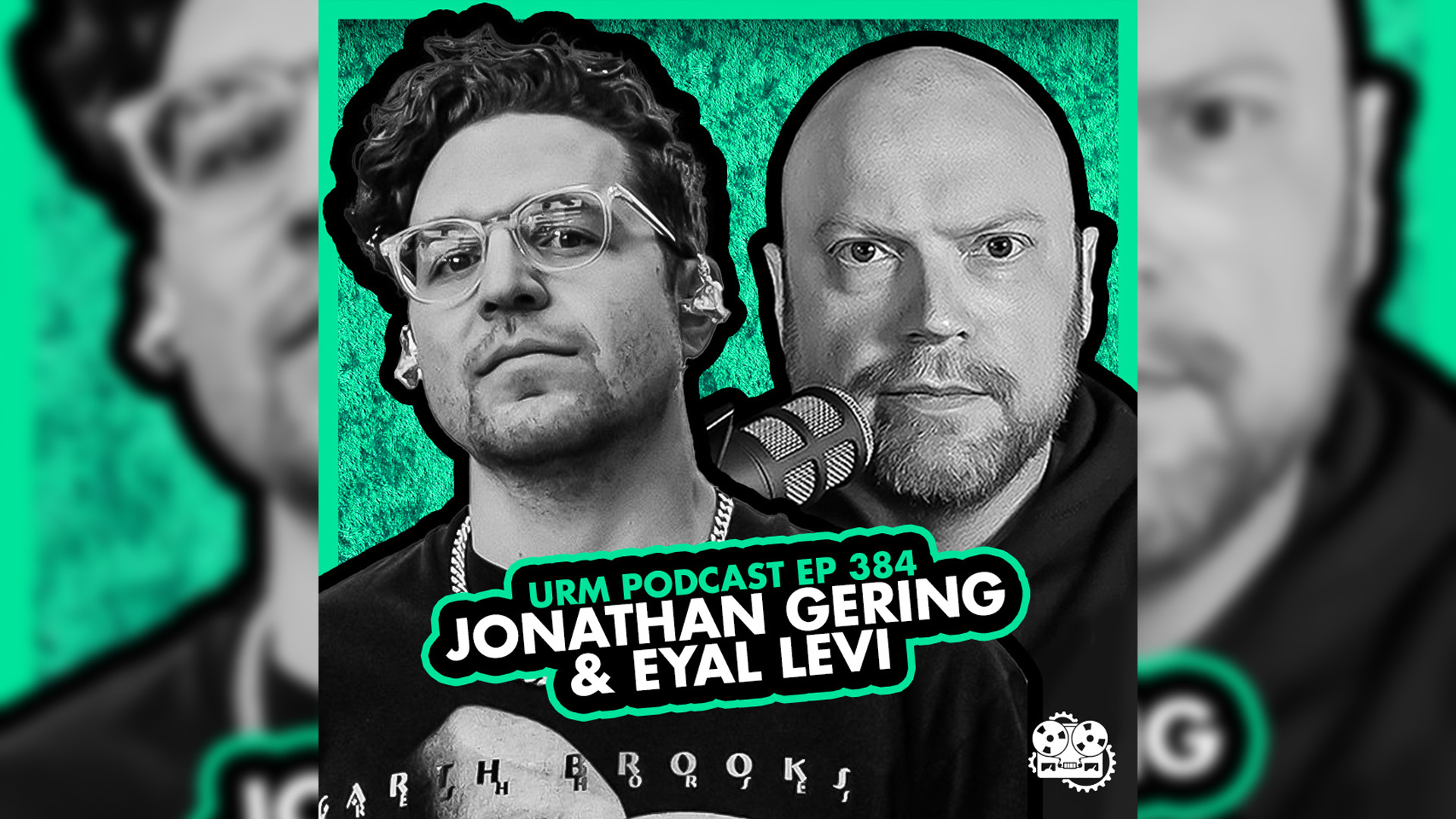
JONATHAN GERING: Writing For The Garbage, The Producer Mindset, Reading The Room
Finn McKenty
Jonathan Gering is a musician, producer, and songwriter who currently handles keyboard duties and serves as the in-house producer for The Devil Wears Prada. His diverse production and songwriting credits also include work with major artists like A Day To Remember, One OK Rock, and Papa Roach.
In This Episode
Jonathan Gering drops some serious wisdom on the creative mindset required to survive and thrive as a modern producer. He gets real about the delicate balance of songwriting—how you have to love your idea like it’s your child, but also be ready to throw it in the trash without a second thought. Jonathan breaks down the concept of “writing for the garbage” as a way to stay prolific, avoid getting stuck on one “perfect” idea, and build a massive catalog of creative starting points. He also dives into the collaborative side of things, stressing the importance of reading the room and understanding that the goal isn’t to make the “best song possible,” but the best song the people in that specific room can make together on that day. From dealing with client feedback (or the lack thereof) to using music theory as a tool instead of a cage, this conversation is packed with actionable advice for navigating the psychological and artistic challenges of making music for a living.
Timestamps
- [2:14] The pros and cons of going to audio school
- [3:24] Why there are no “rules” in music, only guidelines
- [5:38] Your mindset is the key to getting the most out of any education
- [7:25] Dealing with getting ghosted by potential clients
- [11:00] The mix isn’t for you, it’s for the audience
- [14:32] Songwriting: Love your idea, but be ready to throw it in the trash
- [16:17] Why getting too attached to one idea will get you stuck
- [18:35] The creative power of “writing for the garbage”
- [21:07] Keeping your system for organizing song ideas simple
- [26:16] The importance of daily creative practice
- [28:54] “Being uninspired is not a reason to not write something”
- [30:46] Don’t be afraid to delete your first idea if a later one is better
- [33:11] Why reading the room is a critical skill for producers
- [35:26] The goal: Make the best song the people *in the room* can make *today*
- [38:55] How creative limitations can actually help you write better songs
- [42:17] How to know if the “magic” you feel will translate to listeners
- [44:16] A good mix can only amplify the magic that’s already in the song
- [48:03] Pinpointing the best feeling in the entire creative process
Transcript
Speaker 1 (00:00):
Welcome to the Unstoppable Recording Machine Podcast. And now your host, Eyal Levi. Welcome to the URM podcast. Thank you so much for being here. It's crazy to think that we are now on our seventh year. Don't ask me how that all just flew by, but it did. Man, time moves fast and it's only because of you, the listeners, if you'd like us to stick around another seven years and there's a few simple things you can do that would really, really help us out, I would endlessly appreciate if you would, number one, share our episodes with your friends. Number two, post our episodes on your Facebook and Instagram and tag me at al Levi URM audio and at URM Academy and of course our guest. And number three, leave us reviews and five star reviews wherever you can. We especially love iTunes reviews. Once again, thank you for all the years and years of loyalty.
(01:01):
I just want you to know that we will never charge you for this podcast, and I will always work as hard as possible to improve the episodes in every single way. All we ask in return is a share a post and tag us. Oh, and one last thing. Do you have a question you would like me to answer on an episode? I don't mean for a guest. I mean for me, it can be about anything. Email it to [email protected]. That's EYAL at m dot A-C-D-E-M-Y. There's no.com on that. It's exactly the way I spelled it. And use the subject line. Answer me Eyal. Alright, let's get on with it. Hello everybody. Welcome to the URM Podcast. My guest today is Jonathan Gering, who is a musician, producer and songwriter who's actually the keyboard player and full-time producer for the Devil Wears Prada. He's worked with bands such as a data, remember one oh K Rock, Papa Roach, and a bunch More. This is a great conversation about songwriting. Here it goes. Jonathan Gering, welcome to the URM Podcast.
Speaker 2 (02:04):
Thank you so much for having me. Really stoked to be here. It's
Speaker 1 (02:07):
A pleasure to have you here. I just want to hear about something. You went to audio school.
Speaker 2 (02:13):
I did.
Speaker 1 (02:13):
How was that for you?
Speaker 2 (02:14):
I feel like I got a lot out of it. Personally, I would say, I know it's a very controversial thing kind of. A lot of people think it's a waste, and I would say it's definitely not for everyone. You can definitely get anywhere in the music industry without it, but it's also, there's a lot of good things to be learned. And I think a lot of my theory background and stuff like that comes from going to music school, and I rely on that a lot in just kind of everyday work. I think in any profession, it's all about building up a catalog of knowledge that you have and wherever you get it is wherever you get it. And I had a good experience. Some people have terrible experiences and I think it's mindset. It's whether it's worth it for you. It is all just kind of up in the air,
Speaker 1 (03:11):
But it worked for you. I think what really matters is that you get educated. That's like
Speaker 2 (03:16):
For sure, really
Speaker 1 (03:17):
The moral of the story is just to figure out some way to know what you're doing. That's what matters.
Speaker 2 (03:24):
I had a couple teachers, and I've heard from other people that went to music school that there are some wrong ways to do it. And I think when you tell people there's only one way to do things, that's the wrong way. But most of my teachers, it was just very much about exploring and figuring out your own way to do things, especially in music recording songwriting. That's it. There are no rules. There are only things you can learn that could be guidelines that could help you along the way.
Speaker 1 (03:52):
I think that the part of audio school where people have felt like it's a waste has been when they spend a lot of time focused on things that have nothing to do with it or I am not going to say where, but I toured some big audio school once they invited me to speak and they gave me a tour and it was towards the end of a semester. And so they were getting ready for finals and I, they would take me into classes and I remember we walked into one class that was in session and they were talking about the difference between mono and stereo. And so that would be one thing if it was week one,
Speaker 3 (04:45):
But
Speaker 1 (04:45):
This was one week before finals. So it makes me wonder what did they do? I know how much people pay. They pay upwards of 80 grand. So what did they do for four months that they're covering mono versus stereo a week before finals
Speaker 2 (05:06):
That you didn't come in with that knowledge
Speaker 1 (05:09):
Or knock it out in the first week?
Speaker 2 (05:12):
Yeah, yeah, for sure.
Speaker 1 (05:14):
So I think some people have had some experiences like that where they feel like their money was wasted, but I know lots of people too who had great experiences and who are doing great in their music careers. But really I think what it comes down to is just getting serious about getting better and
Speaker 2 (05:33):
For sure,
Speaker 1 (05:34):
Finding how you personally can do that the best for you.
Speaker 2 (05:38):
I think it is all a mindset thing. There are people that do really well in school and people that don't do really well in school, and neither is good or bad, but if you were someone that, let's say you were in high school and you just hated school, you hated doing homework, you hated all that. Definitely don't go to audio school because it's the same format, but just for learning different things. And as with any kind of school, if you go in trying to do the bare minimum or just trying to pass, you're going to get enough out of classes. It's all about you have to go up and beyond. You have to be willing to explore on your own, not just trying to get a grade, because a grade literally means nothing. I mean, obviously working in the real world, no one's grading you.
Speaker 1 (06:22):
No, they're judging but not grading.
Speaker 2 (06:24):
Yeah, they're judging, but they're not grading. There is no just passing. You either do the job or you don't.
Speaker 1 (06:30):
So for me personally, I hated school. A terrible student hated it. That's why I don't think it worked for me, but not because I don't like learning. I go down rabbit holes all the time. I just didn't do well with homework and things like that and
Speaker 3 (06:51):
Working
Speaker 1 (06:52):
At a classroom pace. But that works great for a lot of people. There's a lot of people who do terrible, will do terribly with self-directed learning. For a lot of people that could be a disaster. But I think you're absolutely right that it is a mindset thing. The mindset that you're going to get as good as possible and make everything as high level as it can be. Not just that people don't grade you in the real world, they also don't give you too many chances.
Speaker 2 (07:25):
Yeah, I mean they won't even give you notes chances. I mean, there's been lots of projects earlier on where I would work for people and I just never would hear back. And it's like maybe it wasn't good enough. Maybe it just wasn't the vibe, but that's just kind of how it is, and you kind of have to just get back up and go on to the next project. But that just happens and it's that self-determined motivation that kind of keeps you going through those things.
Speaker 1 (07:56):
And I think sometimes people aren't even trying to be dicks when it comes to that type of ghosting. It's noticed. I've done it a couple times and I felt bad about it. I try to tell people if something's not a good fit or not good enough because I think that they need to know, they know why it didn't work out. But sometimes I have ghosted, not because I was trying to ghost, but because I heard what they gave me or saw what they gave me, and then my brain just immediately just shut it off. It was like, this is not even an option. The pressure in this situation is so high. I need to find the solution for this now. This is not the solution
Speaker 2 (08:34):
For sure.
Speaker 1 (08:34):
And I literally just forget that it even happened.
Speaker 2 (08:37):
Yep. Yeah, I've done that way too many times because when you're working on a project, you're full project focused and if things don't end to the project being better, you're just like, I don't have time for that right now. Move on. And it's not even screw this person or anything like that. It's just like, oh, that kind of didn't help me at all. I got to go find what is going to help me. And writing that response that's like, well, this just didn't fit the project, just it's not worth your time at the moment.
Speaker 1 (09:10):
No, because you have to stay focused
Speaker 2 (09:12):
Yet
Speaker 1 (09:13):
To stay really, really focused. So that's happened to me too, where I just never heard back about something or sent a mix and then poof, vanished. That is your feedback right there. That's your feedback.
Speaker 2 (09:26):
Yeah. Yeah. I mean, whether it was 99% there or 1% there, it really doesn't matter because someone else was a hundred percent
Speaker 1 (09:35):
That's
Speaker 2 (09:35):
Going to win every time
Speaker 1 (09:36):
Or 99.1.
Speaker 2 (09:38):
Yeah, yeah, exactly.
Speaker 1 (09:40):
Yeah. I've noticed this in the nail, the mix in the URM community with our nail the mix competition that lots of times people, they will submit for the competition and not make it into the polls not win, and they will get very, very angry about it because they feel like their mix is better than other people's mixes. But I actually think that even though the nail mix competition is not real life, that it's a good example of what real life might be like. However, real life is far more brutal, but somebody,
(10:18):
One of us is picking who goes into the polls and we don't have a checklist of things we're looking for as when we're listening to these submissions we don't discuss amongst ourselves with the criteria is it's literally, do we like it or not? That's it. It don't like it the end, and it doesn't matter what somebody else thinks about their own mix. All that matters is do we like it or not? And when your test mixing, doing work for clients, that's all that matters too, is it doesn't, your opinion on your own work is fine and all, but really it doesn't matter. All that matters is do they like it? Do they not like it? How do they feel about it?
Speaker 2 (11:00):
Yeah, I mean I think that's actually a huge point in any sort of mixing or song thing. It's like it really, obviously you should like your mix and you should be proud of it, but the mix isn't for you. You're not the only person that's going to listen to the song. In fact, you're a very small fraction of what is and you're mixing in order to make either your own song or someone else's song appeal to a very wide audience. And that should be your goal. And if you love it and someone else doesn't like it, maybe ask yourself why that is. Even if your mix is, which I hate when people are technically better, if you're thinking like Mike hits more. Exactly. You could have something where someone just threw a 1 27 velocity snare sample, but it just hits. It could be the worst snare sample in the world, but it just hits. And for some reason in that specific song, it just works and that can make so many people so mad. But if it works for the song, it just works.
Speaker 1 (12:11):
It makes people mad. But it's interesting how much a voice can get amplified out of proportion from reality. So you hear these voices on the internet that are very, very loud and uproarious. Good word. Yeah, I just saw it, I believe, what's his name? The dude that just took over dc James Gunn, I believe. Just he was getting a lot of shit. I saw this today and he called, he was getting a lot of shit for some decisions they've made lately, and he called the comments uproarious or something. I thought I'm, I'm going to use that later today. Somehow I'm going to find a way to use that, but I don't agree. When people say it's just a bunch of incel in their mom's basement, that's not true. Online commenters are everybody, they're your peers. They are incel in their mom's basement, but it is literally everybody, everybody's online, so you don't know who they are and to just say that it's a bunch of losers or whatever, just accept the fact that not everybody's going to like it, but also accept the fact that if a song is successful, most people who like something aren't going to say anything
Speaker 2 (13:21):
For sure.
Speaker 1 (13:22):
I know I rarely comment something positive, but human nature, you're not going to see a lot of the good feedback towards something. So if maybe 100th of listeners hate something, I mean you're not seeing the other 99% of them because most of them won't comment. You might see some of them, but me personally, when I like something, I'm not going to go comment on the band's YouTube page or something.
Speaker 2 (13:51):
Yeah, it's definitely, it's a comment for a reason. When you hear someone's going to comment on something, you're like, Hmm, that's probably not going to be great.
Speaker 1 (13:59):
Yeah, exactly. So just out of curiosity, you were saying, so the song's not for you when you first started writing for either Prada or anyone in a professional context, I mean it's all professional, but as a non-member writing, how do you bridge that gap between being distant enough from the outcome to where you're cool with whatever, but caring enough to put the passion into it so that it's both your own but not?
Speaker 2 (14:32):
Yeah. Yeah. I mean it is very tough because I always say that when you're writing a song, you have to love it. It's your child, but be ready to just throw it in the trash can.
Speaker 1 (14:46):
It's your child.
Speaker 2 (14:47):
It's this weird kind of, yeah, exactly. No, don't do that. But it's like this weird push and pull in your brain to, you have to 100% believe in it, but be ready to just be like, yep, let's just move on to the next idea. This thing that I loved completely, a hundred percent, let's just move on. And that's something that it's really hard to nail down because as songwriters, producers, there is that level of art in everything that we do, and we love to believe 100% in everything we're doing and just craft these very intricate things that take us so much time and then we want to hang onto it. It's that human instinct of attachment where we're like, well, I built this, this is mine. But as we were talking earlier, it really doesn't matter what's yours or what you think about what you did. If it's not working, whether you're just in a room with one other person or showing it to millions of people on the internet, they may not like it. No matter how much you love it, they may not like it. It's not for you, it's for them. So you got to, I don't know, it is been something I've had to work on over the years and I'm definitely not perfect at it, but you got to have that voice in your head that's like, just move on, keep going.
Speaker 1 (16:07):
And I think that having a prolific level of output helps with the process of moving on, have the next thing you're working on very quickly.
Speaker 2 (16:17):
If you're too attached to stuff, I feel like you'll get stuck.
Speaker 1 (16:20):
And I
Speaker 2 (16:21):
Feel like that's where so many beginning producers and songwriters end up getting stuck, have this one idea. They'll think it's their best idea ever, and they'll tweak it for three years and it'll just sit on a hard drive for three years because no one wanted it, but they think it's the best thing ever and they'll keep changing it and changing it and changing it and make little tweaks and stuff. But what you really should have done is just ridden a hundred other ideas and just left that one because you're probably not making that one idea better. You're just kind of beating a dead horse and yeah, it's very tough, but yeah,
Speaker 1 (16:54):
It's bad. I remember specifically, and I've seen this a few times, but there's this one example that really illustrates it for me. So my band got signed in 2006. Okay, so 2006 and we formed in 99. It took that long, and in that time there were other local bands who had been around way longer, way longer, and I remember exactly by the time that right when we got signed, there was another band that had been around 10 years at that point or 13 years, and they had eight songs, period, eight songs and the same eight songs that they had since 1997 or 96 they still had in 2006. And then I just got curious about what was going on with them during the pandemic, just the pandemic thought. Are they still around?
Speaker 4 (17:54):
Are
Speaker 1 (17:55):
They alive? Dude still playing shows on those same eight songs. They're really nice. People still playing shows with those same eight songs, still pushing them, still serious, well serious about wanting to do the music thing for real, and I have seen that a bunch of times when I was producing local bands. I saw it quite a bit like a band that literally keeps the same songs only for a decade or more. It's absolutely ape shit. I feel like those are extreme examples, but that is any form of that is bad. I think
Speaker 2 (18:35):
It is. And I mean, there's lots of things you can do. I mean, there's one thing that kind of changed my perspective on writing stuff and it's not my thing, so I don't want to take credit for this. I can't remember where I heard it, but it's writing for the garbage pretty much, and if you want to just get new ideas out.
Speaker 1 (18:54):
Did you hear that on the Riff Hard podcast by any chance? It's possible. I don't know where I heard it. Well, me and Kevin Thrasher talked about that in detail on his episode. I use that term a lot. I heard it from him. Maybe you heard it from him.
Speaker 2 (19:09):
Yeah, it's possible. But I was just like, yes, that makes so much sense to me because
Speaker 5 (19:17):
Then
Speaker 2 (19:17):
You can just practice this complete attachment from something and just let kind of your subconscious take over. I feel like it's like when you write a joke song, everything is so easy. Ideas come so quickly because you're not taking it seriously. The weight is just kind of lifted a little bit off your shoulders, and when you write to throw something away, it's kind of the same thing, and a lot of times you'll end up with something really cool. On our new record, that song Broken. I literally wrote in one of those kind of things because I was like, this song's too simple, blah, blah, blah, but whatever. Let's just go. Probably won't ever do anything. And it's doing pretty damn well now.
Speaker 1 (20:00):
Yeah, totally. I think also with the writing for the trash, it inspires more writing and more writing.
Speaker 3 (20:08):
Yeah,
Speaker 1 (20:12):
It's like write for the trash and write for the trash a lot.
Speaker 3 (20:16):
Dude,
Speaker 1 (20:16):
That's really worked for me too. If you do that and just don't get attached, but just keep making more, keep making more. Something good is going to happen eventually.
Speaker 2 (20:28):
Yeah, it will, and you probably won't know it in the moment, but maybe you listen back to something that you did the other day and you'll be like, oh, that's sick. Plus when you're writing music, having a catalog of ideas, especially when you're working with other artists, that's so huge because you can just scroll through one of the hundreds ideas you have sitting there and you'd be like, oh, maybe this'll work. Read the room. Okay, no, not that one. Next one. Oh, that's kind of cool. Alright, let's push through that one. It's just like those instant little creative starters, having a starting point is so huge When you're writing with people,
Speaker 1 (21:07):
Do you have a way of organizing those ideas so that you can just scroll through them quickly?
Speaker 2 (21:15):
I should, but it's mostly memory and then I just kind of put them down by slight sub genres. I'll have folders of, these are metal ones, these are more radio rock ones. These are a little more technical ones. These are pop ones,
Speaker 1 (21:31):
But nothing too crazy.
Speaker 2 (21:32):
Yeah, you'll be in rock session, you'll be like, let's pull up this pop one and then reformat it into something that's more rock and that'll work. Maybe just the cords in a little lead line were something that was inspiring to an artist.
Speaker 1 (21:45):
No real rules. I was talking to some Riff hard members the other day who they were talking about getting some sort of a complex system together for organizing your writing ideas so that you can always have 'em on hand and be able to mix and match really effectively. But the problem is that the people I was interacting with only write six ideas or seven or eight ideas per year.
Speaker 3 (22:17):
So
Speaker 1 (22:17):
What do you need a system like that for? Because of the people I know who write professionally and composers generally just have a very simple folder system of this is where my ideas go, that I'm not using maybe sub genres like you do,
Speaker 3 (22:34):
Maybe
Speaker 1 (22:35):
Not really. I have not seen too many super complex systems, so I thought it was interesting that it almost seemed like procrastination. I can't write until I build this system. This system's so complicated that I just got to focus on that. That's
Speaker 2 (22:53):
One of the tasks that I would throw into the, like, I have to be done for the day working because I'm really frustrated, so I'm going to organize something or I'm going to clean up my studio, or I'll organize my samples today are the, I did something productive, but it's because I can't do anything else right now. When you have a rough session or you're really stuck on a song idea, then go do that. But I wouldn't start with that. The organization is going to save you maybe a minute in a session. I mean, if you only have six or seven ideas, they're not going to save you any time because you should know which ones they are.
Speaker 1 (23:33):
It's going to waste your time.
Speaker 2 (23:35):
Yeah, I have a couple genre folders and then with each project that I do within the project folder, I'll have just a folder. I will label graveyard and any session where I'm like, I'm pretty sure this ain't going to work, but I'm just going to pop it in here for later use, and it'll just sit in there and sometimes it pops out of the graveyard, sometimes it doesn't.
Speaker 1 (23:54):
Yeah. Hey, everybody, if you're enjoying this podcast and you should know that it's brought to you by URM Academy, URM Academy's mission is to create the next generation of audio professionals by giving them the inspiration and information to hone their craft and build a career doing what they love. You've probably heard me talk about Nail the Mix before, and if you're a member, you already know how amazing it is. The beginning of the month, nail the mix members, get the raw multitracks to a new song by artists like Lama, God Angels and Airwaves. Knock loose OPEC shuga, bring me the Horizon. Gaira asking Alexandria Machine Head and Papa Roach among many, many others over 60 at this point. Then at the end of the month, the producer who mixed it comes on and does a live streaming walkthrough of exactly how they mix the song on the album and takes your questions live on air.
(24:46):
And these are guys like TLA Will Putney, Jens Borin, Dan Lancaster to I Madson, Andrew Wade, and many, many more. You'll also get access to Mix Lab, which is our collection of dozens of bite-sized mixing tutorials that cover all the basics as well as Portfolio Builder, which is a library of pro quality multi-tracks cleared for use in your portfolio. So your career will never again be held back by the quality of your source material. And for those of you who really want to step up their game, we have another membership tier called URM Enhanced, which includes everything I already told you about, and access to our massive library of fast tracks, which are deep, super detailed courses on intermediate and advanced topics like game staging, mastering low end and so forth. It's over 500 hours of content and man, let me tell you, this stuff is just insanely detailed and enhanced. Members also get access to one-on-ones, which are basically office hour sessions with us and Mix Rescue, which is where we open up one of your mixes and fix it up and talk you through exactly what we're doing at every step. So if any of that sounds interesting to you, if you're ready to level up your mixing skills in your audio career, head over to URM Academy to find out more. How often do you write?
Speaker 2 (26:05):
I try to every day, but probably I would say three days a week I'm writing something. When
Speaker 1 (26:11):
You say you try to every day, obviously that can't means a song a day,
Speaker 2 (26:16):
Not a song a day Ideas just get something out. Unless I have stuff that really needs to get done, I'm working on a project or something, I'd like to make that the first thing I do when I get in or when I walk down to my studio in my basement, just get a couple ideas out and they'll just go sit in a folder or maybe just one idea or work on an idea that I started the other day, if that's feeling inspiring. But I try to get some creativity out every day, whether it works or not, that's up in the air. But I think practicing that, even if it's for nothing or for the trashcan, that's important because you'll learn something every time you try to write something and you'll learn more about what you, what you can do. It's exercising. Any other thing.
Speaker 1 (27:12):
Do you feel like if you don't do that, if you let too long go between writing that you kind of have to restart the motor?
Speaker 2 (27:20):
Honestly, not
Speaker 1 (27:21):
Really. I'm jealous.
Speaker 2 (27:24):
I'm kind of trying to take a little bit of a break right now, which has been kind of tough for me. But through the rest of the year, I'm trying to kind of just chill a little bit. I think it can work both ways. You can really get into a creative stride and then just keep going and you can think that stopping you would need to restart your engine, but sometimes when you come back, you come back in a different way. There's new things that are inspiring you, like a new kind of method you want to try. There's something I always say, and it's like if you want to write something, just write it. Don't think about it, don't wait or do wait. Just sit down and write it. So many people will talk about how they can't write for so long, and it's like, well, just write something, even if it's terrible, just write it and that'll let you know that you can write.
Speaker 1 (28:11):
That's the key.
Speaker 2 (28:12):
Yeah.
Speaker 1 (28:12):
Yeah. There's actually a time period where if I do take a break, I'll actually come back better, but if I go too long, that's when creatively I need to get restarted. But I can still make stuff pretty much on command, just it's not always going to be good. And I think that the key to getting to the good stuff, basically, I feel like there's two ways to go about it is either you're going to try to get lucky and do it only when you're inspired and hope that your few inspired ideas are awesome or do it a lot and know that you have more at bats and so more chances for getting inspired, more chances for good stuff.
Speaker 2 (28:52):
I
Speaker 1 (28:52):
Think that that's the safer route.
Speaker 2 (28:54):
This is probably a hot take, but I feel like I hear so many people say, I'm just not inspired right now. And I'm like, what does that mean? Go sit down, play one note and then you might be inspired. But being uninspired is not a reason to not just write something.
Speaker 1 (29:11):
No, I agree. I feel like what inspired means, at least for me, is there's sometimes where an idea will happen. First of all, I have to sit down and write and then the inspiration will hit, but an idea where it's, I know exactly what has to happen now and the ideas are coming faster than I can possibly even put them down and I could see the end of the road before I'm there. To me that's inspired. It's like a lightning strike kind of thing,
Speaker 2 (29:44):
But
Speaker 1 (29:44):
You can't predict that shit, so you just got to sit down and work.
Speaker 2 (29:48):
No, I dunno. You have to create the environment in which that could happen. And usually that environment is working on a song. Yes, exactly. It's kind of like the classic songwriting thing of being stuck on the first part or something where maybe you're working with someone or you're working on yourself and you're just trying to get this one riff and you just think it sucks. So you just keep working on this one riff when you should have just said, that one's done. Let's work on what comes after. Because if you move from the first part to the second part, then you got a song and it's difficult, but there's so many times where I just delete the first riff because I did spend too much time on it and it just wasn't that great. But what it went into was really cool so that there is no permanence there. It's that detachment that helps you kind of realize, well, it doesn't have to stay, but let's see what could happen next. And then if you're on that second part, maybe the rest of the song just writes itself because you get that inspiration. You're in that groove.
Speaker 1 (30:46):
Exactly. I think that's a huge local mistake is basically keeping those first ideas in a song just because you wrote them. So I've noticed that sometimes it takes until the third idea before something good happens. And then, yeah, me too. I will delete what came first. A lot of the times, tell me if it's the same for you, but there's a riff or an idea that happens where you're like, okay, this is the first real idea. This is the actual real first idea for this song. Not necessarily chronologically, but this is like we have a direction now. It's not necessarily what happens first or what you do first. Is it basically like that? It all just comes clear or something.
Speaker 2 (31:30):
And I think the more kind of things you have in a song, for instance, let's say you started off writing a chorus or something like that, which I do a lot of the time, a chorus by itself can feel really hollow and lame and honestly a lot of times too simple. And you think to yourself, well, this is too simple to even be a song. Even if you just write a really simple verse and put it on either side of that chorus, you can be like, oh, this does work. Or something as simple as a little transition into something can give you that framework of reference to that. That part is never going to be heard by itself, so put it in context. Even if the context is like a B minus, it's still context and it can help you realize that, oh, I should keep working on this. And that's something that's always helped me is just not letting something just be one idea or not getting hung up on one idea. Use your copy paste, flush it out, make it into something bigger than the one part, put a fake vocal on it, kind of see if that makes you feel better about the part. I do that all the time. I'll just sing gibberish over stuff and I'll be like, oh, that would work, because it's never going to be heard without a vocal, so why not just slap one in there?
Speaker 1 (32:57):
So when you're writing for people you're working with, do you have a way that you go about presenting ideas or do you like to work with people in the room? Is there no way it always goes down?
Speaker 2 (33:11):
I mean, not really. It's all just kind of like, what's the vibe? What are people feeling? Is everyone going to be stoked if we start from scratch from those folders, I'll just pull up some sessions. What do we want to listen to? Sometimes I like to start when I write, let's listen to some stuff, whether it's other music, whether it's like some stuff I've worked on, some ideas I have. I'll ask people, what's inspiring you? What's sick? Let's listen to some stuff. Let's kind of get the energy going. And then whether we start from scratch or start working off an idea, just kind of see, you got to read the room. I think that's one of the most, not talked about things in writing, working on anything. You got to read the room. You have to be able to read people's body language. You have to be able to understand are people actually liking something? Are they just saying they like it?
Speaker 3 (34:10):
Totally. Yeah.
Speaker 2 (34:11):
It's all about kind reading energy and stuff like that. And that's something you want to talk about. Music school, you can't really teach that. You can tell people, well, you have to see what people are liking or what people's vibe is. Is it good tension or is it bad tension? And sometimes bad tension can be good. It's all kind of just you got to figure it out.
Speaker 1 (34:34):
When did you start to figure out this reading the room stuff? Is that something that you always kind of knew about or did you have a hard introduction into the reality of this?
Speaker 2 (34:43):
To me, honestly, I mean it's something I'm still learning, but as soon as you start working with other people, or as soon as I started working with other people being creative, I kind of started to learn that. And it's not to say that you have to make everybody happy or anything like that. I definitely don't agree with that, but you just have to read people. And when you're working on music with people, I think people get confused in that, well, we need to make the best song possible. No, we need to make the best song that the people in this room together could make today.
Speaker 4 (35:25):
Because
Speaker 2 (35:26):
If you want to make the best song possible, you, you're thinking about yourself and it's not about yourself. It's about the community of people that are in the room together and where your energy can take you.
Speaker 1 (35:40):
Man, I have made the mistake of sometimes working with somebody and trying to push it in a direction that just is not their wheelhouse, is not their taste. It's my taste, and it was never going to work. It was never going to work to do that.
Speaker 2 (35:58):
And people have preconceptions. People have biases. People have feelings. You could pull up one plugin on your computer and someone can say, I hate that. Never use that. And you could try to explain to 'em that, well, this is, but you just put a bad vibe out into the room. What is that going to do? Except kind of kill a vibe? It seems so stupid and something you should stand up for, but it's like,
Speaker 3 (36:25):
Nah,
Speaker 2 (36:26):
What's the actual goal? What are you trying to do? You're trying to create, keep the positive energy going.
Speaker 1 (36:33):
Totally. So when you're under pressure, right, you've got artists or your band in the room, there's a label deadline, there's all these external things that are putting pressure on it to where it's hard to To just write for the trash.
Speaker 3 (36:51):
Yeah, yeah,
Speaker 1 (36:52):
Because it's not for the trash. How do you get over that and then just get to work? Forget about all that.
Speaker 2 (36:59):
Honestly, it's just all about creating an environment where good things could happen. And that sounds so kind out there, hippie kind of. But you have to create a room with where people feel with, though feel comfortable with saying the things they want to say and working through stuff. Or even if it's just you by yourself, you have to create the environment for yourself where good things can come out and how exactly that happens. I don't think anybody really knows. There is no golden way to get to a great song, and you just have to let things happen. And some things will end up in the trash and some things will end up being great songs. And honestly, those two things could switch depending on what the vibe is. The one that ended up in the trash could have ended up being the great song one day, and the one that ended up being a great song could have ended up in the trash. And that's okay,
Speaker 1 (37:58):
Especially if you write a lot.
Speaker 2 (37:59):
Yeah,
Speaker 1 (38:01):
Back to that. The more output you have, the less each individual idea matters and the easier it will be to just move on. You mentioned music theory earlier. How much do you use it?
Speaker 2 (38:15):
I mean, every day it works its way into everything
Speaker 1 (38:18):
Consciously or subconsciously?
Speaker 2 (38:21):
I would say a little bit of both. Probably mostly subconsciously. I mean in everything you do, music theory, it is just guidelines. You obviously can't take it a hundred percent for what it is, but I dunno, it's definitely just become kind of the fabric that I build off of when I write melody or I write chord progressions or I voice chords. It works its way in whether I want it to or not,
Speaker 1 (38:49):
Man, I just don't agree that it limits people's creativity. I think that's a myth.
Speaker 2 (38:55):
I mean, everything limits you if you want it to limit you.
Speaker 1 (38:57):
Exactly.
Speaker 2 (38:58):
I don't think it limits creativity. It can limit other things, but it's also, sometimes limits are good. They can inspire even more creativity. If I tell you, go write a song, but you can only use two chords, you already have a framework to go write that song, and it might be awesome. Maybe you add another chord later, but I bet you could get through and write me a two chord song in a couple hours
Speaker 1 (39:23):
That really actually helps with option paralysis. It's like, okay, this is the framework. How do I make this cool?
Speaker 2 (39:30):
Giving yourself a couple limitations or a couple guidelines, whether inspired from something else or completely, they can just put you on an easier path to completing something. And sometimes that's all you need to do is just complete something and then you can look at it with a broader lens.
Speaker 1 (39:49):
What kind of limitations do you impose on yourself, or do you have some examples of Well, there's the two chord example.
Speaker 2 (39:55):
Yeah, which I've used before. And then honestly, the song I wrote with that, I wrote a two chord song. I ended up just using the chorus and I had done the two chord song and recorded just a scratch vocal melody on it. And then I said to myself, well, this would be better with three chords. So I put a third chord in there and then it worked. So the one limited idea ended up inspiring another idea, which then I got rid of the initial, which is kind of what we talked about earlier. That's just finding a way to get to the next idea.
Speaker 1 (40:28):
Yeah. I find the process of writing fascinating. Something that's tangible, right, tangible in that you're creating something that didn't exist before and it goes one way, even though it's music, it's a thing you made, but then the process of creating it can be so predictable and unpredictable. I find that really interesting.
Speaker 2 (40:53):
I mean, I feel like that's just the essence of music. We don't really know why we like and don't like the things that we do. We don't know why. Chord progressions just make us feel the way that we do. I feel like it's why I've always been drawn to music is because you can hit a note and then hit another note and it completely changes the first note that you just heard. It's like that's the little bit of magic that always exists in music. It's like when you have a riff and then all of a sudden you can change one thing, and in your mind it just turns into a whole song. And we don't really know what that is or if it just exists within us, if it exists within everyone. But you can't forget that there is that bit of magic. We can get really technical. You can get technical with theory, you can get technical with producing, technical with mixing, and there's time and place for all of that. But at the end of the day, it's just there's that little bit of magic, and that's what makes things good. That's what makes you feel something when you listen to music.
Speaker 1 (41:56):
Do you feel like you've been accurate when you're working on something, whether it's a production or a song or anything that you have been like, yeah, that magic is happening or this song has it, and then that actually translated to where the world agreed? Or where is your perception versus other people's perception on magic in what you work on?
Speaker 2 (42:17):
It depends, and it's why when I start to feel really good about a song, I like to send it to someone else. Or I'll call my girlfriend and be like, come listen to this. And then that's another point where reading someone's body language or even just getting someone else's opinion can be so valuable. I can be sitting down here by myself just jumping out of my chair at how awesome I think this is, and then I'll send to someone else and they'll be like, yeah, it's cool. And I'll be like, that's not what I was looking for, or, yeah, I kind of like it. And then you're like, well, why do they kind of like it? What can I do to translate this feeling that I have and make this idea, make them feel that too? Because the huge thing, you want to transfer the way it feels for you to write that and hear it back to the world. You want everyone to feel that feeling. That's the exact response we all want when we release a piece of music to the world is like, I'm really stoked on this. This makes me feel this way. Please feel that too. Answering that of where does it line up? It's like, well, the goal is when I release something that everyone can feel that magic that I felt or that we felt when we wrote it, and it's not always the case, but that's the goal.
Speaker 1 (43:29):
I actually think that that's where the technical stuff really can save your ass. The craft side of taking an idea and presenting it in a form that other people can experience it in
Speaker 3 (43:40):
The
Speaker 1 (43:40):
Technical is how you get there, I think. So I think lots of times when we create an idea, it can be, and we know what it's supposed to be. It might not be totally fleshed out, but in our head, the big picture's there, but someone hearing it in its rough state
Speaker 3 (43:58):
Doesn't
Speaker 1 (43:59):
Know the big picture, so it's not necessarily that the idea is not great or that it doesn't have that magic, just they can't understand it the way that you understand it. And so that's where the whole technical side of thing comes and then comes the rest of the process, I think. Yeah,
Speaker 2 (44:16):
I mean the technical stuff, it's just like, it's music theory. It's like knowing how to mix. It's knowing how to record. It's those tools that we use to amplify those feelings that we have that magic understanding. It's like showing someone a great song with a terrible mix. It's still a great song, but some people might not get it as much if it's a pretty bad mix. But if you have a great mix on a great song that's presenting it in its best possible way, and it's probably going to translate to more people, and that's the whole point of mixing, is to bring out those magical properties that are within the song already. I don't think a good mix can't create any magical properties. I think it can only bring out what's already there, which, I mean,
Speaker 1 (45:08):
That's
Speaker 2 (45:09):
Kind of an obvious statement, but
Speaker 1 (45:10):
It's an obvious statement to some people. But I think a lot of people think that the magic gets added in the mix,
Speaker 2 (45:17):
Which yeah, you can't. I mean, it's like the old trope of you can't polish a turd. You can't, if it's a crappy song, you can put the,
Speaker 1 (45:26):
I will say though, that having, we've done like a hundred nail the mixes now or more.
Speaker 3 (45:31):
There
Speaker 1 (45:32):
Have been a few sessions that the mixer, when I looked through those raw tracks or whatever and then watched the live mix, that mixer performed a miracle. But that's not the norm. That's not the norm. Generally, these tracks we get are fucking awesome unmixed. They've got the energy, they've got the magic. I mean, we've had lots of great bands, but if you pull up the OPEC raws or the Shuga, it's still Opeth and Shuga. It's still fucking great. Most of these bands are fucking great unmixed faders up, and then the mix just makes it even better. Every once in a while you get one where it's like, holy shit, this person made something that wasn't in those tracks happen, but that's not common, I think.
Speaker 2 (46:24):
Yeah. Yeah. It's definitely not common. And even then, a lot of times when that happens, the mixer kind of steps into more of a production role. They're not just mixing anymore, they're producing some track outs.
Speaker 1 (46:39):
You're right, you're right. They're
Speaker 2 (46:40):
Doing their best with what they're given, and that I think I've had this happen where someone will want me to mix something, which I don't really mix stuff anymore, just not for me, but someone would send me something and they'd be like, well, this doesn't sound like that. I was like, yeah, I didn't add anything. You wanted me to add stuff. And they'd be like, yeah, and I'd be like, that's not mixing. Not traditionally, no. Yeah, why didn't you add any production? I was like, you didn't hire me to produce the song. Granted, all those lines are definitely now a little blurred in this era of the music industry, but
Speaker 1 (47:17):
Yeah, they are blurred, but that's why it makes communication that much more important. If someone did want that, you probably should have known that upfront
Speaker 2 (47:27):
For sure. Yeah.
Speaker 1 (47:28):
Yeah. Even if it is production and not exactly mixing lines, blurred, whatever, what doesn't help is for the job description, not to be clear
Speaker 3 (47:39):
About
Speaker 1 (47:39):
They wanted production, not just a mix.
Speaker 3 (47:42):
How
Speaker 1 (47:43):
Are you supposed to guess that? And I know some people will just add it because that's what they do, but not everyone is cool with that. Some people will only add that upon request
Speaker 2 (47:53):
For sure,
Speaker 1 (47:54):
Or not at all.
Speaker 2 (47:55):
Yeah, it's all kind of what people's sound is.
Speaker 1 (48:00):
So what is your favorite part of the process?
Speaker 2 (48:03):
My favorite part of the process is like it's when an idea becomes a song, to me it's that rush. When you finally see the end goal in your mind, and all you have to do is put the finishing touches on it, and that can happen the first day, or it can happen months in with an idea, or years in, honestly. But it's to me, when you're like, oh, this is like a song song, nothing beats that feeling to me. Getting an idea down and just singing a rough vocal and being like, holy shit, this feels really good. And then when someone else walks in the room or you send it someone and they feel that too, that's just a stamp and you're like, alright, I can finish this.
Speaker 1 (48:54):
This is now real.
Speaker 2 (48:55):
This is now real. Yeah. That's why I make music.
Speaker 1 (48:58):
By the way, you asked what inspiration even means. I think that's kind of a good description, is that feeling of seeing the end right there and just knowing you know what you got to do,
Speaker 2 (49:13):
And it doesn't even mean you have it all, or you know exactly how it is. It's just the feeling that you do or that it could be and that, yeah, nothing beats that.
Speaker 1 (49:24):
Yeah, I agree. Well, Jonathan, I think this is a good place to end the episode. I want to thank you for taking the time to come on. It's been a pleasure.
Speaker 2 (49:33):
Yeah, I mean, thank you for having me. It is honestly an honor to be on this podcast with so many people that I look up to.
Speaker 1 (49:42):
Well, happy to have you and thank you for doing it.
Speaker 2 (49:45):
Yeah, no problem man.
Speaker 1 (49:46):
Alright, then. Another URM podcast episode in the bag. Please remember to share our episodes with your friends as well as post some of your Facebook and Instagram or any social media you use. Please tag me at al Levi URM audio at M Academy, and of course tag our guests as well. I mean, they really do appreciate it. In addition, do you have any questions for me about anything? Email them to me at al at URM Academy at URM dot aca y and use the subject line Answer me Eyal. Alright then. Till next time, happy mixing. You've been listening to the Unstoppable Recording Machine Podcast. To ask us questions, make suggestions and interact, visit URM Academy and press the podcast link today.

