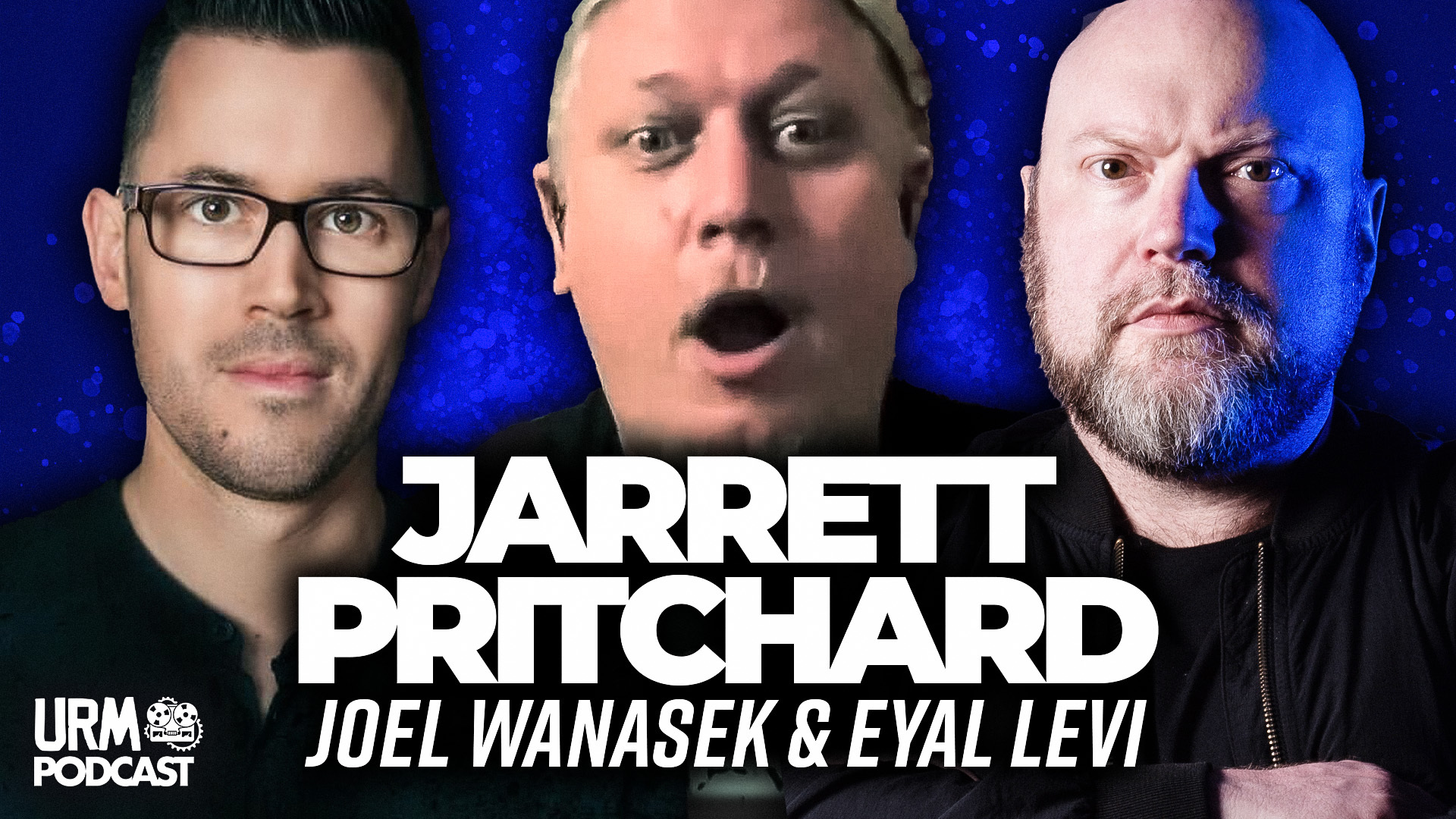
JARRETT PRITCHARD: Vintage Analog Consoles, Why Metal Needs Originality, Recording 1349
Finn McKenty
Jarrett Pritchard is a Florida-based producer, engineer, and live sound tech who has truly done it all. He’s a gear wizard who builds, mods, and restores classic equipment, including his own vintage Trident 80B console. In the studio, he’s known for his work with a host of killer extreme metal bands, notably tracking and mixing several albums for Norwegian black metal legends 1349, as well as working with titans like Goatwhore and Gruesome.
In This Episode
Jarrett Pritchard drops in for a killer conversation that starts with a deep dive into the joys and challenges of working on large-format analog consoles. He and the guys trade notes on the SSL Origin and Jarrett’s Trident 80B, discussing everything from creative recall solutions to the undeniable vibe of using vintage outboard reverbs and delays. From there, the discussion shifts to a more philosophical, but crucial, topic: the importance of originality in metal production. Jarrett makes a compelling case for why producers need to take risks and cultivate unique sounds to prevent the scene from becoming homogenous. He shares stories from recording the new 1349 album in Norway, explains how he adapts his vocal production style to fit different artists, and reflects on the ’90s death metal scene, where legendary bands broke through by being unapologetically different. It’s a great mix of gear talk, production philosophy, and practical advice.
Products Mentioned
- Trident 80B Console
- SSL Origin Console
- Session Recall Software
- Lexicon Processors (PCM 42, PCM 60, 300L)
- DBX 160 Compressor
- Jensen Transformers
- LiquidSonics Seventh Heaven
- Neve 33609 Compressor
- Empirical Labs Distressor
- Death By Audio Pedals
Timestamps
- [1:31] Jarrett’s 1983 Trident 80B console and the story of how he got it
- [2:33] The SSL Origin and its completely recall-free workflow
- [3:58] Jarrett’s modern approach to analog recall using an iPad
- [5:13] A cool trick for instant recall on an SSL Origin using small faders
- [10:14] The connection between hand, ear, and fader in analog mixing
- [12:19] The surprising depth and life of old outboard digital effects units
- [13:48] Fun outboard tricks: crushing a PCM 42 and symphonic bass with a 990
- [15:15] Fixing and modding old gear, like adding Jensen transformers to DBX 160s
- [17:49] The importance of producers having different workflows to keep metal interesting
- [20:12] Why it’s harder to develop a unique sound with so many available shortcuts
- [24:55] Why hoarding production secrets is “utter foolishness”
- [27:25] The physics problem of producing extreme metal: making a wall of harmonic distortion coherent
- [32:55] Adapting the vocal production process to different artists (Goatwhore vs. Gruesome)
- [37:48] Why the key to being a good producer is adjusting your workflow to the artist
- [43:34] The danger of metal becoming too homogenous and losing its impact
- [47:23] How Gojira broke through by being completely their own thing
- [48:59] Being honest with yourself about your artistic intentions
- [58:54] How Ross Robinson’s production on the first Korn album was sonically out of left field
- [1:03:16] An arrangement tip for making fast parts feel truly extreme
Transcript
Speaker 1 (00:00:00):
Welcome to the URM Podcast. Our guest today is a dude named Jarrett Pritchard, who has been on this podcast before and is someone who I've known for a long time. UR M's. Been around now for 10 years. Well, I knew him before URM because he's from Florida and I met him back when I used to produce in Florida, and he's a dude who has kind of done it all. He, as you'll hear in the episode or in the last one, he knows all about building gear, modding gear, fixing gear, but has done live sound for all types of things ranging from TV to extreme metal to electronic artists. He has been producing records forever with some really, really cool extreme bands. He's been an instructor in audio. He's done it all when it comes to a career in audio and super knowledgeable. Super knowledgeable dude, and I really liked his answers, by the way.
Speaker 2 (00:01:16):
Yeah, he was super impressive. What a fun person to talk to. We just had a great time.
Speaker 1 (00:01:22):
Yeah, and he's an og. He's been in the game forever, but we'll stop talking. Here it is Jarrett Pritchard. Alright, what is that board?
Speaker 3 (00:01:31):
It's a 1983 Trident 80 B that came from the sound stage in Nashville. It's been completely recapped and serviced by myself and of course my partner Jeremy Miller and we love it and I bought it right at the beginning of the pandemic during the mayhem, I literally flew to New York, got my friend Sean, who's a really great bass player to help me put it in a truck and strapped it in, hung a hammock across the van and then drove back from New York with it in this van and commissioned it right at the beginning of the shutdown. So I had a lot of time to work on it.
Speaker 2 (00:02:10):
That's
Speaker 3 (00:02:10):
Extreme.
Speaker 1 (00:02:12):
Joel got a board. What did you get, Joel?
Speaker 2 (00:02:15):
I bought an SSL Origin, which is on the newer side. I did work on one of those Tridents once at the Sound Mine. I think Dan Mulch has that board up there in Pennsylvania and it's a cool board. It sounds amazing. Obviously they're legendary.
Speaker 3 (00:02:31):
How are you liking the origin?
Speaker 2 (00:02:33):
It's incredible. At first I was really against it. It has no recall on it and I'm like, how the hell can you make a console with no recall? That doesn't make any sense at all other than for say, live sound, but it forced me to completely reinvent my workflow and actually come up with a way to mix on it that's recall free. That being said, switching from mixing in a computer for 20 years to now having a board in front of me every day, it's radically sped up my workflow. I'm getting way better sonic results much quicker and certain sounds, I never understood how people got as I was learning to mix many, many, many years ago, became very, very clear and apparent on how to get those types of sounds. So for me it's just been like it's the best piece of equipment I've ever bought in my entire life. It wasn't fun buying it. I'm still paying for the dang thing, but I'm very happy I invested in it. Honestly, it's been a total game changer for me.
Speaker 3 (00:03:27):
So I have recall sheets of every piece of gear sitting next to me and this console and I have on my iPad and I have a little eye pen and I literally chart like we used to do with a pencil and analog studios and I just upload all my sheets with the archival file of the mix so it's always there so I can bring it back if I have to. It's a little bit antiquated, but it feels alright.
Speaker 1 (00:03:52):
You using modern technology to at least track it, that's better than paper.
Speaker 3 (00:03:58):
Yeah, I totally, basically I downloaded a lot of the faces of my gear. You can find them on the internet. I can't remember the name of the site now. It used to be something else. But anyway, I got the gear faces and I made recall sheets for the entire room and basically I just draw on the iPad.
Speaker 2 (00:04:19):
Have you seen Session recall
Speaker 3 (00:04:22):
The
Speaker 2 (00:04:22):
Software?
Speaker 3 (00:04:23):
No. What is that?
Speaker 2 (00:04:24):
It's like session recall.net. They have digitized versions with Turnable knobs on A GUI that you can basically load and you can do full, you can basically buy each piece of equipment based off what you have. So for example, you could buy, say you have a Neve MBT, you could go download that for like $5 and then you can make recall templates. So instead of doing it with paper, you can do it on your computer and you can save it, you can do presets. I think it's like session recall.net or session-recall.net or something like that. But
Speaker 1 (00:04:53):
Yeah, you can turn to the knobs. I've seen that. It's pretty cool.
Speaker 2 (00:04:55):
It's really, really nice. I used to do it the paper way as well, but do you have small faders on that at all
Speaker 3 (00:05:03):
On the far end? All the bus masters and tape returns. There's 24 of 'em.
Speaker 2 (00:05:08):
Oh, well there you go. You don't need to recall. So you got direct outs?
Speaker 3 (00:05:12):
Oh yeah. Oh yeah.
Speaker 2 (00:05:13):
Alright. So what I do on my origin, and maybe this works for you or doesn't, but I've never really heard anybody try this before other than what I've been doing with it is, so I mix on my large faders. I've got 32 channels and then I'll mix a song and I'll be like, alright, I'm done. Or I need to do more automation, which I've got to do in the box. There's not on the board unless I want to live mix it, which is also kind of fun to do honestly. But then I can take it, I can print stems when I'm done with that. And then I have my converters and everything calibrated in line inputs where I bring that back on the small faders and it has a zero DB button at Unity, so there's no recall on it. I can literally take a mix, I can print it and I can bring it back at the same level on my board and I push one button that changes the routing to basically the large fader routing follows. The small fader will follow the large fader, but it's either or on that board. And I've got 'em all set at Unity and set up with the Patch Bay normally because they'd use my small faders for effect returns. And essentially it allows me to bring my mix back anytime later after I printed stems. And all I've got to do is recall whatever bus hardware I had. But again, I never changed that. So literally there's no recall on it, which is kind of
Speaker 3 (00:06:22):
Wild. It's kind of beautiful. I think eventually, I mean, I dunno, I really love this console, but I will probably, I don't know, in a year or so I'll probably go to a 4,000 like a G because I was always a big SSL fan. Some of the routing and tricks you can do on that console are pretty, they're hard to duplicate and I miss mixing on the SSL and it's so funny, I know a lot of people that had 'em and then decided it was much easier. And I know the box is a lot easier, but I think there's some, I don't know, some special sauce to the consoles. I don't know, maybe I'm crazy, but I like it.
Speaker 2 (00:07:06):
I agree with you. It's different when you can literally go out and touch the music. And I know that doesn't make any sense to anybody who's ever only worked with a mouse, but when you feel the gain with your hand
Speaker 3 (00:07:18):
And
Speaker 2 (00:07:18):
You feel the EQ with your hand as well as you're moving around the room while you're mixing, which is, that took me a while to learn how to not mix in the sweet spot. I still struggle with it because again, I've only had this thing in here for a little bit over a year, but it's been a learning curve and it's definitely fun, meaning I have less wrist fatigue and less tendonitis and carpal tunnel and just annoyance from the fun of digital working that accumulates. Hey
Speaker 1 (00:07:47):
Everybody, I want to take a quick break from this episode to talk to you about URM Academy now. So if you're new here, URM Academy is the best online school for metal and rock producers and musicians. When you join, you get a whole access to a range of content. There's nail the mix, which I'm guessing most of, and that's where we bring on a different artist and a different mixer every month to walk through a mix and give you the raw multi-tracks. And we've had on mixers like Will Putney s Borin, Tom Lord, algae with artists, bring me the Horizon, Ms. Suga Periphery, ETH, even Nickelback and tons more. If it's under the heavy music umbrella as I like to call it, we cover it. You also get our mixed lab tutorials, which are little bite-size tutorials about very specific topics. We have over a hundred of those now.
(00:08:45):
So if you don't have the time for a nail to mix session or an entire course, you just want to find one tidbit of info to help solve a problem. That's what Mix Labs are for. We also have exclusive members, only Facebook and Discord groups where you can make friends with and talk to thousands of people from all over the world who do the exact same thing as you. And what's super awesome about our community is that it's troll free. We kick trolls out. It's like an Oasis online and also our instructors are part of the community and they interact with everybody. So you can not only make friends, but you can I guess socialize and learn from the best. Also, we have URM enhanced, which is our more advanced membership tier. The main focus of that is our Fast Track library, which are some very, very, very detailed courses on everything from editing drums to post-production effects, automation, creating impulse responses, working with low tune guitars and more. We have over 70 of these. It's actually insane how deep and comprehensive the fast tracks are. And when you join Nail the Mix or URM enhanced, you also get access to Riff Hard. Our online school for metal guitarists with hundreds of lessons from artists such as Animals as Leaders, spirit Box Ark Spire, Jason Richardson, and many more. So go to URM Academy. Let's get back into this episode.
Speaker 3 (00:10:14):
I think that it probably because of the way that I started, I think my ear and my hand are attached and so if I reach over and grab a fader and I just feel like it's instant and then I feel like if I need to make a musical change for whatever reason and I grab the fader and I adjust or whatever in some way, I think it's more general. I don't think it's quite as precise as the computer, but I think that precision is actually a detriment sometimes because I can, working in virtuals especially, I can make moves that are half a DB that feel like to me to my ear, they feel like a drastic change and that's not always good. And there's something about when I'm mixing on my console much doing live shows, I may or may not know but live as well. And I don't know, I feel like it's more musical, oh, that snares a little bit hot. Okay, cool, and I grab the fader and I knock it down a DB or two and I just feel like things settle in a different way and it could be my imagination. I've not measured this, but it feels that way to me. And mixing is largely feeling, I don't care what anybody says, so if it feels a certain way, then it has to be a reality. At least my reality,
Speaker 2 (00:11:31):
I think it's like a left versus right brain thing where when you're looking at a number on a screen, you're automatically thinking, you start thinking math and you analyze, but at the same time, mixing like you said is all feeling, and the better you get at mixing, the more in tune you get with that. And the less you think about the technical side of mixing, like, oh, this needs a little bit of eight K at this and this and that. You're just like, ah, it needs to be brighter. Oh, that doesn't feel right, it needs to be this. Now let's try this. So you kind of just go with the flow and that's what I do like about the analog workflow is it shuts my brain off from a technical standpoint and it prevents me from tripping over myself more and allows me to just focus on being creative, which I really, really love. It helps me mix faster
Speaker 3 (00:12:13):
And I get to use a lot of outboard, old reverbs and delays that no one gives a shit about anymore.
Speaker 2 (00:12:19):
Oh, I love and I care, I have them. What's funny about that, okay, so let me give you somebody who came up in the box as perspective, right? So for 20 years I was always like, I don't get the point, it's just digital in a box. The only thing that you're going to hear is the ad converter as you would see somebody argue online who's never used them. That's what I thought. So one day I just kind of threw down and decided to just buy a rack gear. There's a bunch of junk, you can pick up an SPX 90 for example, or a nine 90 or some of the old lexicon stuff for pennies for what they cost. So I just bought a bunch of junk that people were getting rid of on Reverb for a few thousand dollars and I was like, yeah, I'll just throw it on a firm and if I don't like it, I'm only out one payment and then I'll just sell all of it and it's going to be a wash.
(00:13:10):
I plugged the effects in and I was like in solo. I'm like, eh, sounds like a delay, sounds like a reverb. And then I hit on solo and I was like, oh my God, there's a certain depth and a life and a movement to it that I've never heard before in effects and after I got used to that sound. Now when I go back to the plugins, I'm like, that's a really good sounding reverb, but it still feels sterile and I know I'm not the only person who feels this way, but there's just a certain depth and thing that it adds to whatever you're throwing into it. Drums, vocals, whatever. I don't know. And it's just fun to click through presets and boxes and turn knobs and stuff like that. I kind of feel more like a mad scientist.
Speaker 3 (00:13:48):
I mean, it's fun to smash limiters on the input like a snare into a PCM 60. It's fun to take your guitar bus and crush it through the PCM 42 symphonic out of a nine 90 on bass is still hilariously fun. I mean it's fun and I think it's easier to mix. I think they sit easier in my opinion
Speaker 2 (00:14:09):
That
Speaker 3 (00:14:09):
I'm not going to take anything away from the plugin stuff because a lot of times, especially specific special effects, I'll actually create and print them so that I never have to deal with the processor again. And my Atmos work. I don't think I could do without the seventh oven stuff to be honest.
Speaker 2 (00:14:27):
Oh, I love that plugin. It's so amazing,
Speaker 3 (00:14:29):
So much, so much, especially the film versions of it. But when it comes to mixing a record, I really, really do like my rack of antiques over there. But we keep finding people that they're broken and they want to throw 'em away and somehow we'll get 'em like my 300 l, my lexicon was given to us, it was broken. I did what I could. Then I called up a company in Ohio called Beamish. It's one of the only people that fixes lexicon anymore. I sent it up to them, they changed out two chips, recapped a couple things. The bill was $200 and I got a $4,000 reverb for 200 bucks. I cared enough to have it fixed.
Speaker 2 (00:15:14):
Geez.
Speaker 3 (00:15:15):
You know what I mean? So I just had the PCM eighties gone through by Beamish. I sent two of them up there, had 'em completely redone. We ourselves recapped our PCM 60 and our PCM 42. And so it's like literally we're getting gear from friends sound companies and stuff that they don't want to deal with housing it anymore. And they're throwing it out and then Jeremy and I take it and just fix it. We've got down here, I've got six DBX one 60 that those are awesome, we're given to us, but they're on the PCB. There's literally a slot for a Jensen Transformer to balance the outputs. And this is probably ridiculous. I'm probably wasting time, but I was mixing a record and it was Jeremy that found that. And he goes in the other room and he mods this compressor and he comes back and I'm mixing some friends of mine push button press that sound like Sisters of Mercy or something and he's like, dude, you've got to try this compressor. I'm like, no, fuck off. I'm mixing. Leave me alone. And he's like, just switch the insert. I'll match. Just switch your vocal insert and put this on. And man, the Jensen Transformers in these one sixties, it literally it leapt out of the speakers and then I have to eat crow and go, alright, you're right. I stand corrected and said, then we did it six times. It's amazing.
Speaker 2 (00:16:32):
I was going to say stop mixing. Start modding.
Speaker 3 (00:16:36):
Exactly. But yeah, I love the old gear so much. It is not easier to do records up.
Speaker 2 (00:16:46):
Hell no, hell no.
Speaker 3 (00:16:48):
About 50 times harder. But after you do it for a long time, I think you've got to kind of figure out what you enjoy about it and hang on to and explore those things so that you still still love it because it can get
Speaker 1 (00:17:03):
Mundane. I think that's key actually. I mean we know a lot of people who, especially in metal because metal is like a factory, if you work in digital only, if you work in the box only, it can get very, very factory farmed and really, really I guess get super monotonous and tough for people to stick with. And so I think finding what you actually enjoy and what stimulates you is not just about being soft and needing to enjoy something when there's people who have hard jobs. It's actually what'll keep you engaged enough to do the hard work. So I think it's actually really, really important.
Speaker 3 (00:17:49):
I think it's good that we work differently too because it's funny, I told you I had some things I wanted to talk about. One of the things that I think is increasingly important is that we do have different workflows and we do approach things differently. We do try to get different sounds from each other as probably I told you before, how much I like to talk to other engineers and stuff and share information. I think that's super important. I mean, that's part of my life's blood. I enjoy the work so much and I love to talk to other people that have the same interests and share ideas and this and the other. But I also think that it is extremely important if we want to see extreme music continue, that each of us that found ourselves in this weird unlikely position to be making these records that we are intentionally with intent doing our own thing.
(00:18:48):
It's very easy to use a drum sample on a kit. It's very easy to take this IR or that ir, and sometimes that's the right thing to do. Sometimes it's the best thing to do. But I think also it's super important, especially now as there's more and more content and it's so hard to see through the forest of so many people presenting their art of something that's truly transcending truly special and everything else. I think it falls on us kind of to take risks, to do our own thing, to not necessarily do what everybody else is doing. Sometimes it's going to fuck up, sometimes it's going to be the washing machine, sometimes it's not going to work. It's happened to me plenty, but I think it's important. I actually really think it's important to try to do, just try to do it different. It's kind of like that first wave of death metal. You had carcass, you got entombed, you had morbid angel, you had deicide, you had obituary, you had atheist, you had malevolent creation all coming at the same time. It's all completely different, but it's all clearly death metal. Yeah, absolutely. That idea needs, I think it should be more present in our psyche. That's all.
Speaker 2 (00:20:06):
I love that line. I just love that philosophy so much.
Speaker 1 (00:20:12):
It's tougher in that it's so easy to pick up what somebody else is doing. Absolutely. And so I think that there's people like shortcuts, I mean that's part of the human condition is to try to find a shortcut. Then there's nothing wrong with that because some stuff you should be finding shortcuts on. There's no reason to do things the dumb slow way. If there's a better way, if there's a better being the key word, if there's a better way that's faster, why do it the worst way? That's slower. And since we're wired to find that with the way technology is now, it's very, very easy to find as many shortcuts as possible and bypass the developmental period where you're kind of finding your own voice or your own sound. So I think that it's inherently tougher these days because of that. However, if you do the hard work and do not just try to lift from other people, but develop your own sound, the potential these days is greater than ever to do something unique because of the options. I think
Speaker 3 (00:21:41):
Mean I that learning from other people, especially other engineers, is those that have gone before. So they can save you some legwork. I'll give you an example. One of my favorite engineers ever is Joe Buri. I love his catalog. I love his work. I love, and he's a really nice guy. I've been fortunate to meet him, but he has a series of videos where it's two videos where he just goes through his tracking and his mixing and it's just fantastic. I mean me, I try to learn something every day from somebody somehow, whether it's on YouTube or whether it's talking to somebody or this side or the other. And learning from other people that have gotten through those shortcuts is I think it's as equal as important as cutting your own road. I think they're both really relevant is what I mean. I totally agree.
(00:22:40):
I mean all of us that are engineers, we all know about when the levee breaks, like everybody does. We know about a staircase, we know about a drum set, we know about the one 60, we know about the Benson. And in that technique translates years later into, okay, well when I record the drums in my live room over here, I'm also going to put this microphone out here and I'm going to roast this with a compressor so that I just get this distortion and put, it's really a basic concept, but you know what I'm saying, it's like the ideas of what other people, it
Speaker 1 (00:23:11):
Wasn't always.
Speaker 3 (00:23:11):
It wasn't always. That's right. And whatever those opportunities to take from each other and share ideas are fantastic. And I think if you are doing that and you're looking for ways to streamline the process, because like you said, metal is kind of a factor. And I certainly have a fast way to replace kick drums because what record have you done where you didn't, you know what I mean? None. Right, exactly. So the combination of trying to make your own sounds, streamlining the process and using the tools that are available and sharing ideas with each other, I think it's all relative. I think it all plays off of each other in its way.
Speaker 1 (00:23:55):
The sharing ideas concept. I mean our whole business is sharing ideas 10 years now. But I have noticed, and Joel, I'm sure you can back me up on this, that in our early days of the company, a lot of the metal community was not too cool with what we were doing. You had people who were cool from the beginning with what we were doing, but you had a lot of voices in the extreme world who thought that we were basically heretics for trying to get this information shared and trying to help the next generation and trying to spread this knowledge. But it's interesting because you don't really hear that anymore. I think that the world has evolved and the scene has evolved or the understanding within the scene has evolved to where it's commonplace now to be cool with sharing information. That idea
Speaker 3 (00:24:55):
Is utter foolishness. First of all, I agree. I taught large format recording and post-production for five years. I was always forthcoming. I've always been very, very willing to share any technique I have and I have no fear. I don't need to keep these secrets. I don't need to keep it under the belt because only I hear I, I can tell you every knob that I turned and why I did it, what I thought, what its result was supposed to be. At the end of the day when it comes to the very base thing of this, which is where I'm going to set the faders, only I hear the way I hear good or bad. I mean I might suck the way I hear fine, but only I do it. So based on that notion, I have nothing to fear. I'm happy to share information with anybody at any time. And I think anyone that's got some idea, even at that time or now of I'm hoarding my whatever, get over yourself.
Speaker 1 (00:25:56):
I agree. Well that was the argument. It was, look, we have data in that every other art form on earth has been studied in universities formally. The information is passed on and yet those art forms are still developing and people that are still making careers in them, every other genre in audio can be studied at a university. And those genres continue. People keep getting better, they keep making careers. Why is metal the only one where first of all, it's the most complicated one and no one's passing it on. It's fucking nuts. So it's really good and I know that you've always been cool about that.
(00:26:44):
It's a good thing though that the scene has gotten over itself for the most part with that because I do think this is the hardest genre anything, let me just say anything is hard to do well. So I don't think there's any genre that's easy to do well, but I think technically speaking, it doesn't get harder than a genre where every single thing is noise and everything is stepping on top of everything else and it breaks all the rules of good arrangement and the speed at which it's happening is just not, the physics are not on your side. No. Even the
Speaker 3 (00:27:25):
Physics of a kick drum just a hit and then followed by a hit that chokes the first hit by its very nature, it's not going to work very well. It's why we use a sample. I mean I do it live and in the studio and you're basically trying to make a wall of harmonic distortion, coherent at high speed. Tricky. Tricky, very tricky
Speaker 2 (00:27:51):
Metal's. Funny normally everything. If someone were to say to me, imagine a client, they come to you and they're like, oh, I need everything in this mix to sound massive. I need really loud guitars, really loud drums, really loud vocals, massive crushing, super loud bass. You'd be like, okay, well if everything is massive, then literally everything sounds small and nothing is massive, so we need to pick and focus. So that's kind of like this weird thing in metal where everything has to just sound so over the top, but somehow we make it work. And it's really, I feel like walking, what was that show that blew up in South Korea where the death challenges where they're like walking
Speaker 1 (00:28:33):
Squid game?
Speaker 2 (00:28:34):
Yeah, squid game where they're jumping on the glass panels over the
Speaker 1 (00:28:37):
Fucking awesome. I love that show.
Speaker 2 (00:28:38):
Yeah, like the glass panel thing. That's what I feel like we do every day. It's like trying to survive that and not fall through the glass toward death, but somehow we do it.
Speaker 1 (00:28:48):
When we mixed the doth record with Jens a constant conversation me and him had was, alright, you want to hear this? What are we going to sacrifice in order to hear this thing? Nothing. That was once he got it to a certain point where it's already killer, it was then. And when we're getting into, well what needs to be the loudest thing or what do we need more of? It was always, alright, what are we going to get rid of or turn down?
Speaker 3 (00:29:21):
Where are you going to change the focus to What's going to become background and what's going to become foreground? Yeah, what has to give.
Speaker 1 (00:29:26):
Sure. What are we cool with sacrificing here?
Speaker 3 (00:29:30):
Nothing. It all matters
Speaker 1 (00:29:32):
Problem. Everything as loud as
Speaker 3 (00:29:34):
Possibles, everything loud, everything.
Speaker 1 (00:29:37):
That's the problem. So let's talk about 1349. Okay, yeah, let's talk about 1349. We could probably talk about not 1349 for three hours, but I want to make sure that we get to that. So you travel a lot, so I don't think, I know you texted me and told me you went to Norway for a lot of it, but I think that those of us who have toured or tour or just traveled is not as big of a deal to do that, but it's still fucking cool I think. I've always thought it's cool to go to another country and record some metal.
Speaker 3 (00:30:19):
Totally.
Speaker 1 (00:30:20):
Yeah, absolutely. So you went to Norway to the source? Yeah,
Speaker 3 (00:30:23):
So I've been there. Each of the three albums that I've done, we've done 'em over there. And the first one I did out in Toin at Ronnie Laro from t and t, the guitar player owns a studio kind of in the middle of nowhere and I did massive cauldron completely there. And then in Fernal Pathways I did half of it at a place called Amone in Oslo and then the other half out there in the country. And this time I went and I tracked everything in Oslo at Amone except for the vocals. And so I did all the guitars and bass drums out there and then I came back here and I love to be in Norway no matter what I'm doing. I mean it's cold for a Florida guy, that's a little bit of a thing, but I really like it there in general. I just like it.
Speaker 1 (00:31:19):
I feel like in, I haven't spent as much time in Norway, but I feel like I end up going to Sweden. I know they're a little different, but they have the talent level or that talent thing the Scandinavians have, they both have it in both. They're similar in that way and I feel like I go to Sweden as much as I used to go to LA at this point. There's always stuff in that area of the world regarding related to what we do. And the thing I've noticed is that there's something peaceful about being out there that you don't, maybe you have it here in places like Wyoming or something, but there's this peaceful kind of thing even in the cities where it's conducive to working on music for some reason. There's something in the air over there. Totally.
Speaker 3 (00:32:23):
I mean when I was at Studio Studio there's the control rooms has windows on both sides and it's so funny, you could just see nothing but forest and snow for miles, except when the moose would stop by every day, this moose would walk outside the studio and just hang out outside the studio. It's very tranquil. The moose was a big part of the production. I promise
Speaker 1 (00:32:46):
It's perfect for black metal recording. Absolutely. So then you brought a Norwegian back to Florida to do vocals. Yeah, so I mean
Speaker 3 (00:32:55):
I've been working with these guys for 16 years now and we're really close. We're really good friends and we work well together. And on this one I just decided that I wanted to mix it here. I didn't want to try to do it over there and it just seemed easier to do vocals. I don't remember if we've talked about this before, but I tend to work with my vocalists a lot. They'll have the song written and they'll have the idea for it and then it comes time for the dig where you start really pushing timing. You start building layers, building this, we had talked about Goat who before and Ben and I are like that as well. We spend a lot of time on making it because I felt like a lot of times with vocalists that they sing the album and it's freshly written and then here it is and then six months of touring it, six months in after they've been playing it on the road, then the song really appears. And so my job, what I wanted to do, which I have accomplished with Ben and Raven both, I don't want that six months. I want to find it now. I want to find the feel now. I want to find the flow now. And so we've all worked that way and so this time instead of doing that over there in Norway, I just decided it would be better just to come home, do it here, my spot and mix it here. So yes, I brought him with me.
Speaker 1 (00:34:24):
Joel and I were actually talking about this yesterday about the priority of vocals and I was mentioning that we were talking about order of operations and how, I guess in the pop world it's normally drums based vocals and then you would add guitars and that's kind of like in production too. Metal production, that's kind of how the priority is. You spend all this time on drums, all this time on guitars and then lots of times vocals are just this afterthought. It's just get it done. And I've never agreed with that, but it's just how metal records have been done a lot of the time where the vocals are just like, alright, you spent three weeks on everything else. Let's put a day into this.
Speaker 3 (00:35:20):
Well, I think it depends on what you're working on because I'll tell you right now, I just finished all the principal tracking on the new Gruesome and Matt Harvey, exhumed Gruesome has always notoriously walked in and done it in like a day or two. He knows exactly what he wants. There's no screwing around at Justin, this is it. I'm going to sing it, I'm going to double it and it's going to be killer and I'm done. As opposed to 30 49 or go to her I was describing before where I'm actually trying to paint a picture with the vocals.
(00:36:01):
It's interesting. I'm definitely trying to do more than just a day on the vocals. And you're right, we put all this attention into the rest of the record and then sometimes we just blast through that and that's fine. That's the way to do some things. But sometimes when you're trying to build something or build textures or build a world, I mean even with Ben on Angels, there's a lot of talk about what character are you. I mean it's true producing, it's maybe someone that's not into extreme music, can't understand the depth, but if you pay attention to Ben's writing and this, that and the other, he's actually different characters and if you've ever seen him live when the finger comes out, he's the narrator, he's warning you. And then the deep growls are almost like a different creature and the higher pitch things are a different one.
(00:36:54):
And Raven's a lot the same. There's a lot of spoken word, there's the demon dictator I call it, where he is kind of like at the end of Atomic Chapel. There's just a lot of textures, a lot of things to work with and being able to spend the time and figure out what works where, what lends itself to the song, what makes it more interesting than someone just growling in a single tone over a record, which is fine. I mean that's great too, but in those two cases it's a little bit deeper. So yes, I brought him to America, it was comfortable here and hung out for however long and did the vocals and they mixed it
Speaker 1 (00:37:35):
Well. I think the key right there is what I want to point out for people listening, in my opinion, the key is that you adjusted how you worked depending on who you were working with.
Speaker 3 (00:37:47):
Absolutely. When
Speaker 1 (00:37:48):
You're working with Matt who comes in and it's like it is what it is and you're working with that artist who comes in and it is what it is, it's going to be killer. You work one way when you're working with an artist that you're going to bold something with, you're going to work another way. Where I've seen a lot of people trip up is trying to work the same way with every artist. And you can say that for mixing too, and we see this a lot with Nail the mix students trying to use what they did one month on the next month where the band is a completely different genre, completely different situation. Or when a mixer tries to basically shove square peg into a round hole with a template or something. I'm not against templates, but I'm against just doing things blindly. So I think the key here is you being flexible enough and understanding enough of who you're working with to adjust your workflow to the situation. I think that's like everything. Yeah, I mean
Speaker 3 (00:39:04):
Absolutely. I think you have to, I personally, I wish that I had a template to be honest with you, but I don't typically go through the same. I think my process is in the same order, but the results are different each time and I think sometimes that I'm like, well, if I just had a template, I could do a lot more work a lot faster and
Speaker 1 (00:39:30):
Well hold on. I just want to give a disclaimer. I think some templates are good. There's some templates where it just eliminates you having to do a lot of repetitive stuff that you would do the same way every time. Oh, I agree completely. And that is good stuff like routing or if you use the same plugin for something hatching. Yeah, for sure. There's no reason not to templatize that stuff in my opinion.
Speaker 3 (00:39:56):
No, not at all. And you know what? I think it's probably my flaw that I don't use a template because I do pretty typically do the same things. My snares are going to get bused together, they're going into a stressor. It always happens. It's an API and a stressor that's going to happen every single time. I'm going to have a parallel bust. It's always going to be a 33 6 0 9 always. It hasn't changed for years. And so if I was smart, I would probably save myself the effort and make a template, but I don't know, maybe it's the zen of the process that I'm addicted to that I like going through that layout. Maybe it puts me in the spot, I don't know, but I feel like if I'm smart, I would make a template.
Speaker 2 (00:40:45):
Yeah, it's almost like there's good templates and bad templates and a bad template is the square peg, round hole extreme example. Or when a band goes to a mixer who is clearly the wrong thing and that mixer puts 'em exactly into the same thing they've done for the last 10 things and it just does not work with that artist or a producer for example, just totally the wrong fit.
Speaker 3 (00:41:06):
And there are some big, big, big records that get done that way
Speaker 2 (00:41:13):
Wrong. There
Speaker 3 (00:41:14):
Was a ton of
Speaker 2 (00:41:15):
Pressure to follow the flavor of the, we'll call it, I don't want to call it the week,
Speaker 1 (00:41:20):
But that's despite, I really do think that's despite that method, not because of that method. The reason I'm saying that is because if you hear that this dude who is top tier level mixer, who's in that top 0.01% of skill and talent and also artists works that way, people need to understand that that person can make it work because they're at that skill level. So it's not because they work that way that it's working, it's because they're that good
Speaker 3 (00:42:03):
That
Speaker 1 (00:42:03):
They're able to make that work. They'd be able to make anything work though. And while you're developing your skills, that's a quick way to not develop your skills or to basically stunt your own growth. Getting stuck
Speaker 3 (00:42:18):
In a rut. Yeah, absolutely. Doing the same thing, not exploring other ideas. Yeah, I agree completely. For sure.
Speaker 2 (00:42:25):
It works. It's broke. Don't fix it. Don't try to change anything. I mean you can get in a lot of trouble doing that. And what the hard part is when you're doing this professionally is there's a lot of, if something blows up, I'll take for example, when I was mixing with Sturgis back in the day and when Joey was just on fire, he was the dude, there was so much pressure from the artist coming in to come up with the exact replica of something that was done before for a different band that he invented. And it's like you do something like change the kick drum, god forbid, change the snare slightly or try to push it out of that box and to do what you might think would be right for that band. And then the band calls you up and it's like, we want to sound exactly like about that life atilla, what the fuck are you doing? Why doesn't this sound exactly the same? You're like, well, you're not that band and you have to go through that thing. But some artists are just not ready for that reality and they don't care. I mean, same thing. You get label pressure a and r, there's a lot of pressures for things to conform, and I think that's a challenge working professionally when you want to be unique and creative and treat everything freshly and it's tough. How do you deal with that?
Speaker 3 (00:43:34):
I'm really glad to hear you say that because it's like I was mentioning earlier, it'ss an hourglass, how much longer that this is going to be important if everything sounds alike? There have been moments over the last 15 years or so where certain things have stepped out and largely it's been because they're so wildly different. Take something like Ghost for instance, or take Go Jira, take Magma. Just the way that that album sounds is not really anything else. But we know we have thousands of records that sound very much like the same sort of brutal techno blast style of death metal. And I'm not taking anything away from that. I really like all extreme music, but it's extremely important that the music be different because if not, we're watching the sand drain because when it becomes so blinding that it's all the same and your Spotify playlist, you can't differentiate one artist from the other.
(00:44:49):
I mean, people are going to turn to other things and already largely, whereas when we were kids, concert culture was still alive and well, whether it was the death metal show or you were going to see Alison Chains or whatever the hell was going on. And now I'm telling you from personal experience being a sound engineer, when I see things happen, like I'm at Red Rocks and Sting plays one night and the DJ artist that I'm working for that essentially is pushing play on a playlist, no disrespect, that's just how that works technically speaking, and they sell out two nights at Red Rocks and I'm watching where the focus of the music audience largely is. If the already microcosm that is extreme metal doesn't stay diversified and stay interesting and have things that step out by being different, by being creative, by working harder, we will go away.
(00:45:52):
It will. And that's a terrifying idea to me. I've spent most of my life in it and I want to see things flourish and be different and be interesting and be creative so that people get super passionate about this stuff or really absorbing it. What I don't want to see is a hundred bands wearing the same vest, the same black eye makeup, singing the same vocal style, emulating some sort of cross between death metal and black metal every night of the fucking week when I'm on tour doing the same fucking thing and expecting that they're going to be this grand thing when they're really not bringing anything interesting to the fucking table.
Speaker 1 (00:46:32):
Well, if you think about Dmu Borg gear, if you want to talk about corpse paint, when they blew up, that was not like anything else.
Speaker 3 (00:46:41):
It was fantastic.
Speaker 1 (00:46:43):
And Gera are an excellent example because by the way, I'm looking at a spider, what has me distracted, but Gera, their riffs are like legit death metal riffs and that stuff is pretty damn extreme, especially in the older days. Maybe not extreme brutal death metal, but it's there. It's like Morbid Angel meets, I dunno something else, but I have to just remind everyone they went number one on billboard.
(00:47:23):
Yeah, that's shit that Slipknot does or Pantera did or that it's almost unheard of and they did it with pretty extreme music considering and by being first of all, fucking killer. I mean, anyone who's seen them live knows that they are just devastating, but they're also very much their own thing. They're not trying to be, they don't try to be evil. They don't try to be anything. They've always had their own take on things, their own message, their own sound, their own feel. Like when you hear them, it's them, but they are very much rooted in legit parts of the genre to where people like true Metalheads can love them. It's really, really interesting. Another one who I'm not as much of a fan of, but they also have done their own thing and it's more debatable how much they take from true metal or whatever. I don't care. It is like Sleep Token is another example of a band who has just blown the funk up and totally have done their own thing. They're basically in their own genre or whatever. I think Ghost is another example, but I feel like that's kind of required. To your point, if you want to break out and metal and actually hit the masses, you have to be doing something different.
Speaker 3 (00:48:59):
And I mean, I don't want to sound like negative about it. I mean, if your thing is that you want to buy a guitar rig and get together with your buddies in the garage on the weekend and play something that's still derivative of death or obituary, more power to you, it's fucking fun, man, do that. Hell yes, I agree. Do that, do all of that. But if you are trying to make art, I'd say be honest with yourself and don't lie to yourself about what your intention is. Do you intend to do something to bring something new to the table? Do you intend to work hard enough at it? I mean, listen, I mean I'm a shit in the studio. I've definitely looked at a guitar player before and been like, oh, you like playing your little festival, looking down on those kids. You like signing your little shit? Ask yourself, do you deserve it? Are you playing like you deserve it today? I've definitely said that. Love it. So just be honest about what you're doing. If you're contributing or you're trying to do this, that or the other, but don't go to the suffocation playbook and play your version of the replica of brutal Technical Death Battle and call yourself an innovator. Just be honest about what you're doing. That's all I'm saying.
Speaker 2 (00:50:21):
Not
Speaker 3 (00:50:21):
The most popular thing I've ever said, but I'm saying it.
Speaker 2 (00:50:24):
One thing I love about growing up in the nineties was you talked about this a little earlier, the diversity of things. For example, take John Tardy is a vocalist of obituary, right? Who the fuck sounds like him? Only John Tardy sounds like John tardy period. Or when Chris Barnes came out with Cannibal Corpse, like who sounded like that? Nobody, it was just such a unique defined style.
Speaker 1 (00:50:49):
David Vincent.
Speaker 2 (00:50:50):
Yeah, David Vincent. Oh my God. Morbid Angel Covenant. The riffing style, the types of riffs they would write. I mean, I could listen to that record every time and I still get goosebumps the first time I heard it when I was a kid. It's amazing. So I really love the push for originality and just how important it was to have your own voice and be totally your own thing back then. I also understand the market supported it more in terms of the label structure and the development, and there was a lot more money and a band could really be a band. There wasn't such a push for conformity for risk management.
Speaker 3 (00:51:25):
It was a short window though, being in camp at the time. Yeah, it was a very short window playing in eulogy at the time. It was the first wave of bands got signed and death metal looked like it was blowing up. Morbid Angel playing the new music conference. I mean, spin Magazine is covering it. We've got 98 Rock has a death metal show. And it was a very short window until people decided that, okay, well obituary got big. My band should sound like obituary. It was a very short amount of time where people realized that it wasn't this flow of original ideas anymore. What? There were a lot of bands all over the place that sounded very similar to what worked. And I think that the record labels figured out not quick enough, but pretty quickly that 10 bands that know how to play an augmented power chords slowly that are taking the vibe off Celtic Frost, except they're not getting it from Celtic Frost, they're getting it from obituary, isn't really going to sell.
(00:52:33):
And I think that they learned that. Meanwhile, unfortunately at the time, I do want to add this, there were extreme innovators that definitely did not get the attention that they deserved. And Ripping Corpse comes to mind, and if your listeners don't know what Ripping Corpse is, I beg you to go find out just one of the most amazing things ever. But my point being is that there was a very short window where a lot of really cool, really big bands all sounded completely different and came onto the scene like a fucking tidal wave. But that only lasted for about three years because the next two years, if we're talking about 93 to 95, was the major labels thought they were going to sign death metal and make all this money where it's like 200,000 units to a death metal band is fantastic. But to Warner Brothers, that's an object failure, especially in those days. Yeah, totally. Pre streaming when it was all about physical product. So it was a really great, great time to see all those innovators, especially vocalists. I wanted to say I loved David's vocals earlier than Covenant. I loved his vocals on Altars and the Funerals Bootleg and the Thy Kingdom come demo. I really, that was my favorite
Speaker 1 (00:53:56):
Era OT shit.
Speaker 3 (00:53:57):
Yeah, that was my favorite era of David. Fucking look at True Floridian. Sorry. No, no, because I also love John Dee Che from Reor and that was Texas, so maybe it's, I dunno, maybe southern hemisphere. I dunno. Anyway,
Speaker 1 (00:54:13):
I do have to say though, in the nineties, even though the death metal wave was short-lived, there were some other things that continued that were still pretty extreme by mainstream standards like Pantera for instance. Absolutely. Right. Pantera was flying around in Jets in the nineties, I think hit number one in the billboard charts in 95, I believe. And that was not death metal, but close enough. I mean, that's pretty certainly extreme. Pretty damn extreme. And Slayer doing fucking great in the nineties too, for sure. And then you had artists like Danzig just blow up Typo, negative blow up Fear Factory when Gold New Metal. Yeah, there was a lot of cool stuff that happened, I guess parallel and after the death metal wave that a lot of people talk about the late nineties as if it was a desert. And I don't think it was,
Speaker 3 (00:55:23):
I was either,
Speaker 1 (00:55:24):
Because if I think back it's like, yeah, you had Pantera, you had Danzig, you had Typo Negative, and then you had Korn who people might not remember, but when they first came out on the scene, that caused its own tsunami basically
(00:55:43):
Big time before new Metal went in a really weird direction. The original energy that Korn brought to the scene, they were playing with death metal pans and were kind of a part of that scene. I don't know. It was a very creative time period, and I do think that nineties metal lasted longer than three years. It was just that one peak moment where True death metal was getting signed to major labels and selling hundreds of thousands of records. That was amazing though. It was amazing. That even happened in the kind of like a miracle that even happened
Speaker 2 (00:56:22):
Vis and Bo Man and
Speaker 1 (00:56:23):
Had bang
Speaker 2 (00:56:24):
His ball
Speaker 1 (00:56:24):
Ace Ventura, man,
Speaker 3 (00:56:26):
Hell yeah. It's really funny. Do you know that I didn't understand Pantera at first when I first heard it. I was just like, but it's EI don't care. And I was like, I don't fucking understand this. And then I went and saw him live and
Speaker 1 (00:56:46):
I get it.
Speaker 3 (00:56:47):
Oh, I fully understand this. This is great.
Speaker 2 (00:56:52):
That happens though. I mean, not metal don't beat me up, but I never got Creed and I work a lot in rock and I saw a few months ago play when those Creed songs opened up. I've never seen a crowd of people connect with music like that before in my entire life. I was just so blown away by it. I'm like, then I got it. I'm like, wow, now I understand why this band connects. I'm like, this is amazing music. It took me years to fly and figure that band out, but as soon as I saw that music being performed, I got it. It clicked, and I was like, now I get this band. This is cool what they're doing.
Speaker 3 (00:57:31):
Yeah, sometimes you have to see it presented and it's it's entirety way supposed to be.
Speaker 1 (00:57:37):
Have you seen Korn?
Speaker 3 (00:57:39):
Yeah. On the Jesus, probably the first album in The Life is Peachy Tour. The first two records, I was fascinated by it, oddly. People I was working with at the time came to me and sort of suggested that my band take this weird left turn because shoots and ladders had been on the radio. And of course me being me, I was like, yeah, you're fucking mind. But I was fascinated by it because it was such a different sounding thing and that first record isn't dark. I wouldn't call myself a corn fan, but I'm definitely not a corn hater. All their stuff is
Speaker 1 (00:58:14):
Dark.
Speaker 3 (00:58:15):
That first record is
Speaker 1 (00:58:16):
Dark. Yeah, it's very real. But I saw them way later in their career. But I think that that's another one of those artists where if you see them live, it's hard to not get it, especially later in their career where you realize, oh, that's a hit, that's a hit, that's a hit, that's a hit, that's a hit. They've been playing for two hours, and I know every single one of these songs, every single one of these songs is a hit, and their songs are two minutes long. Fantastic. They don't talk between songs. It's just songs, songs, song, song, song. And they're devastating.
Speaker 3 (00:58:54):
It's great that you bring this up because regardless of whether or not a person likes or dislikes, you and I in this conversation are sort of reinforcing my point. What Ross did with that first corn album is show out of left field sonically at the time. I mean, the way that snare drum sounds using the 8 0 8 sample, which we've all been plagued with for 30 freaking years now, and it was completely out of left field, it was completely different. And I don't know, I think in the extreme world, I think people are almost looking for, I don't know, that thing that fires off the adrenaline gland and changes in it things differently seems to work. And that's a great example. Core for a lot of people turned the world on its head. I definitely know a lot of people that were tripped out by it. I was certainly fascinated by it because of the sound. I was like, this sounds so different from everything else that's happening. What an intriguing thing to do. But it lends itself to the idea that I'm trying to get across here is that I think it's important to take the extreme music and make new and innovative things with it.
Speaker 1 (01:00:12):
Well, Korn, in their own words, and obviously paraphrase a little, because I read this 20 years ago, they said they wanted to take all the slow parts, all the slow parts for Morbid Angel songs and get rid of the solos and make that a band. Alright.
Speaker 2 (01:00:35):
What's interesting about that is thinking about the mainstream appeal that I remember being that age and the thing to do is everybody had systems in their car back then with, they'd get a subwoofer in their trunk and it would rattle just going down the street. I feel like not as common now. I hear that. But when we were back then that was the thing, and everybody, when Blind came out, that was the song. You'd go to school in the lot, there'd be five people playing it sitting around when that sub drop hits over that ride symbol and it comes in. That was just the thing to do and it was always like sonically so cool. And you had people that didn't know what sonics were, audio production that were like, man, this sounds so cool. I dunno. People were just enamored by that sound. It was really interesting to witness
Speaker 1 (01:01:21):
Car stereo test music. That's what I referred to Metal as for a long time because car
Speaker 2 (01:01:29):
Stereo test.
Speaker 1 (01:01:30):
Yeah, I remember that in the nineties, people would come over to my house with a new car system just to listen to whatever had just come out. I remember specifically happening several times, corn was one, beer factory was another. That was a thing. Dream
Speaker 2 (01:01:50):
Theater had great production in late nineties, early two thousands. Those guitar tones. I mean that was like, man, we used to always listen to that. A new dream theater record would come out. You'd listen to those guitarists come in and you'd just be like, holy shit. What is that? Guitar tone mind.
Speaker 1 (01:02:05):
Try axis. So speaking, speaking of guitar tone, we're almost out of time. Do you want to do a rapid fire?
Speaker 2 (01:02:14):
Yeah,
Speaker 1 (01:02:14):
Yeah, go ahead.
Speaker 2 (01:02:15):
Alright. I'm going to ask you a couple of questions here and just the first thing that comes to your mind and why. Okay. If you could give one mixing tip, what would it be?
Speaker 3 (01:02:26):
Emotion. Follow the emotion. Just however the song needs to feel like something from point to point.
Speaker 2 (01:02:32):
What is the most important thing a producer does?
Speaker 3 (01:02:38):
Drags the best out of the band by giving them equal parts, A safe place to work where they feel like they can express themself, but also not letting 'em get by with bullshit.
Speaker 2 (01:02:49):
What's one thing in your approach to making records now that you wish you could go back in time to when you started and tell yourself,
Speaker 3 (01:02:59):
Shit, end shit out. If I get it right on the other side of the microphone, there's not a lot I have to do on this side. In front of the mic is everything.
Speaker 2 (01:03:08):
If you could give one arrangement tip for extreme metal, what would it be?
Speaker 3 (01:03:13):
Arrangement,
Speaker 2 (01:03:15):
Yes.
Speaker 3 (01:03:16):
Fast is only fast when it's exciting. If you start from 0.1 at 275 bpm and go for a blast the entire time. It's not extreme, it's just a drum roll. But if you start a song with's heavy with riff with groove, and then you light into a blaby like Dave Woody from Humor remains like you got flesh burning off you as you run down the street, that becomes extreme. So that's my arrangement tip, is to make what's brutal, make what's fast as extreme as possible by surrounding it with other contrasts.
Speaker 2 (01:03:47):
And name one record that inspires you right now. Could be new, old, whatever.
Speaker 3 (01:03:54):
Oh God. The things that inspire me. Anything that Martin Birch ever produced, and that includes Purple, Sabbath, blue, I should call pretty much any of that and slow dive. Oh, and this cat in New York named Oliver, that's got this band called A Place to Bury Strangers because it's so weird and so distorted and so fucked up and so brilliant. A place to bury strangers. Yeah,
Speaker 1 (01:04:20):
They're amazing. I like that. Oh, that's a good name for sure. His side project is a place to bury friends or something. A place to bury my wife.
Speaker 3 (01:04:31):
Yeah, he's a genius. He makes death by audio pedals and he used to be in a band called SkyWave that's very like my bloody Valentine. Jesus Mary chain. It's fantastic. You should listen to it. It's great.
Speaker 1 (01:04:41):
Will do. Well, Jart, it's been a pleasure talking to you as always. Likewise. It's always fun hanging out with you guys. Yeah, thank you for coming on. For sure.
Speaker 2 (01:04:52):
Thank you so much.
Speaker 1 (01:04:53):
We should do this again. Definitely.

