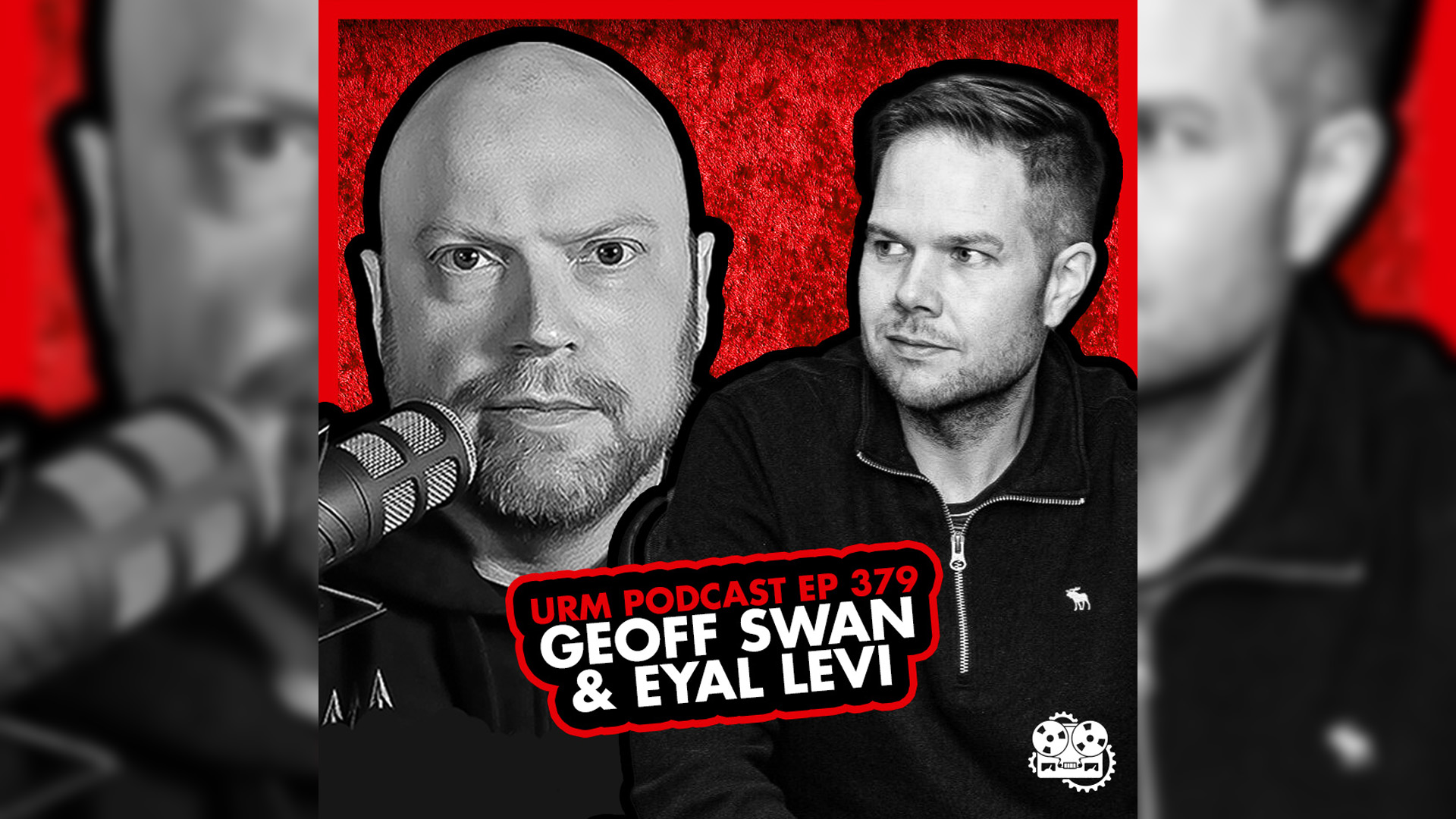
Geoff Swan: Mixing for Pop’s Biggest Artists, The “Demo-itis” Trap, and Navigating Team Feedback
Finn McKenty
Geoff Swan is a Grammy-nominated producer, mixer, and engineer known for his work in the pop world with artists like Ed Sheeran, Charli XCX, and Yungblud. He got his start in the major leagues by assisting mixer Spike Stent, an experience that provided a huge education on how records are made at the highest level and helped shape his collaborative, genre-spanning approach.
In This Episode
Geoff Swan breaks down the key differences between the metal world’s “lone wolf” production style and the massive, multi-stakeholder teams common in pop. He offers some killer advice on how to navigate feedback when you’ve got the artist, producers, A&R, and management all weighing in, and why having a single “figurehead” is crucial for a smooth process. Geoff gets into the psychology of mixing, talking about why you should be suspicious of a mix that gets approved on the first pass, the trap of “demo-itis” where a rough take just has a better vibe, and the importance of stepping back to listen like a fan instead of getting lost in the technical minutiae. He also shares how assisting a top-tier mixer was his ticket out of the local scene, underscoring the value of mentorship and collaboration over trying to figure it all out yourself.
Products Mentioned
Timestamps
- [3:15] Why pop music has so many more stakeholders than metal
- [4:03] The need for a “figurehead” to lead a production
- [6:11] Geoff’s strategy for balancing feedback from a big team
- [8:25] The importance of compiling all mix notes into one document
- [9:27] Why getting a mix approved on the first version can be stressful
- [10:44] The unique challenges and rewards of working with new artists
- [15:05] The danger of artists being “too savvy” for their own good
- [17:25] The trap of getting hung up on small imperfections in source tracks
- [18:41] Avoiding the “sunk cost fallacy” when a mix idea doesn’t work
- [20:20] Remembering to listen like a consumer, not just a producer
- [22:43] Using NS-10s and why their unpleasant sound is so useful
- [25:18] “Demo-itis”: when the original scratch track has a better feel than the “perfect” take
- [26:00] How a messy vocal recorded on an SM7B can beat a pristine studio take
- [31:24] The biggest challenges in mixing modern pop music
- [33:41] Thinking about a pop song’s journey like scenes in a movie
- [35:41] How assisting Spike Stent was the turning point in his career
- [40:16] Why collaboration is essential for learning faster
- [42:25] The classic problem of bands writing parts in Guitar Pro that they can’t play
Transcript
Speaker 1 (00:00):
Welcome to the Unstoppable Recording Machine Podcast, and now your host, Eyal Levi. Welcome to the URM podcast. Thank you so much for being here. It's crazy to think that we are now on our seventh year. Don't ask me how that all just flew by, but it did. Man, time moves fast and it's only because of you, the listeners, if you'd like us to stick around another seven years and there's a few simple things you can do that would really, really help us out, I would endlessly appreciate if you would, number one, share our episodes with your friends. Number two, post our episodes on your Facebook and Instagram and tag me at al Levi URM audio and at URM Academy and of course our guest. And number three, leave us reviews and five star reviews wherever you can. We especially love iTunes reviews. Once again, thank you for all the years and years of loyalty.
(01:01):
I just want you to know that we will never charge you for this podcast, and I will always work as hard as possible to improve the episodes in every single way. All we ask in return is a share a post and tag us. Oh, and one last thing. Do you have a question you would like me to answer on an episode? I don't mean for a guest. I mean for me, it can be about anything. Email it to [email protected]. That's EYAL at m dot A-C-D-E-M-Y. There's no.com on that. It's exactly the way I spelled it. And use the subject line Answer me Eyal. Alright, let's get on with it. Hello everybody. Welcome to the URM podcast. My guest today is Grammy nominated mixer engineer producer Geoff Swan, who's worked with everyone from Ed Sheeran, Charlie, XEX, Youngblood, and many, many more. Let's get into this. Here it goes. Geoff Swan, welcome to the URM Podcast.
Speaker 2 (02:00):
Oh, thank you for having me.
Speaker 1 (02:01):
Thanks for being here. I have something that I've always wondered about in pop production. There's a lot of people involved in pop production, so coming from the metal world where there's lots of, I'd say the majority of metal productions are lone wolf style or a duo where there's the main person that was hired and then that person's assistant, or there's that duo plus the mixer who is maybe a lone wolf or maybe mixer plus assistant, but it's usually 1, 2, 3, 4, 5 people total on the entire production team. Whereas in pop, from what I've seen, there's a lot more people involved. And so what I'm wondering is, so when you see people's pop credits, what does that mean? Because I've seen some people who list that they've worked with certain artists and I know they have, I know it's true, but it's like assistant engineer or not the role that you would think from looking at their Instagram. So I'm wondering is how do you interpret pop credits correctly?
Speaker 2 (03:15):
It's very different from project to project, but I think that certainly in pop music you have a lot more stakeholders definitely right from the writing to the production to usually if it's an album, I mean there can be four or five different mixes on it, usually one mastering engineer, but when you are talking about even just one song, there can be multiple people involved and multiple people with different opinions. But I tend to find for the most part when I'm working with specific artists doing mixing the bulk of an album or mixing a song that's got several producers on it, they'll generally be a figurehead or somebody that's almost executive producing that you can lean on for direction. I guess
Speaker 1 (04:00):
Someone has to be charting the course.
Speaker 2 (04:03):
Absolutely. It becomes rudderless if you haven't got that. And certainly I think pop mixing, which is really the world that I see more than anything else, is you are really about enhancing a collective vision rather than you're not trying to break down what you've been given and rebuild it in a completely different form. Sometimes you do, but for the most part it's about where are people trying to go with this? What can I bring to the table to give them more of that and take it to the next step, whether that's five 10% more or a little bit more than that if there's room to add it in. But generally speaking, you do have to have somebody that spearheads the production of the record, and sometimes it's the artist. It all varies from project to project. So yeah, I mean roles when you look at what somebody does in terms of a credit situation, I mean there are assistant engineers that doing a lot more than the assist, and then there's also engineers that don't really do that much engineering, if that makes sense. Yeah, yeah.
Speaker 1 (05:09):
So just take it with a grain of salt.
Speaker 2 (05:13):
I don't think there's not a hard and fast rule. I think people that tend to work in and build credits within a role, they do that because they've shown their ability to do that job well, and so they get rehired and reused again, and you build relationships with people and it might be a relationship with a producer where you become their go-to person for engineering purposes, or it might be you become somebody's go-to mixer or whatever your role may be. It's really about building a name for yourself and then also if you're doing that assistant role and you're doing more than that assistant role and you are consistently doing that, is how do you step out of that and then maybe get the credit that you should be getting or how do you negotiate that next step I guess.
Speaker 1 (06:01):
Yeah. How do you go about balancing the needs and expectations of a big team, or do you usually just interface with one main person? Generally,
Speaker 2 (06:11):
What I always like to do is be in touch with that figurehead that we were talking about a second ago, like being in touch with the producer or the artist directly if they're very invested in the mixing process or sometimes it's a combination of being involved with producer a and r management and involved with everyone. But generally what I tend to find is almost like hit one person's expectations at a time to an extent. So generally speaking, if you've got a project where an artist is, artists have busy lives in the pop world, definitely they're touring relentlessly, they're doing promo. All artists, I think in all genres are busy. They're busy being artists, so a producer can often be a great conduit for communicating what they want from a mix or what they're hearing is wrong with it and translating it into language that is maybe a bit easier to understand or slightly more palatable to my ears and explain to me what they want.
(07:14):
So I quite often deal with getting it right for the producer and the artist first, and then if there's a label involved in management and there's opinions coming from that side as well, then once we've got to a point where we we're feeling good about a record, it's then about diving in and letting the next set of opinions come in. I guess it's like that's an ideal situation. It doesn't always work like that. If you can tackle rather than having conflicting opinions coming at you via notes, like multiple notes from multiple people, that can make it very difficult. But to be honest with you, most people I work with are really good at vetting that before it ever gets to me. I think, and again, that's having that person that can lead the charge so to speak and go, okay, well, I've got all these notes from everyone I've collected at what everyone's saying and this is what we need to pass on to Geoff to address, I guess.
Speaker 1 (08:04):
I mean that's what I tell mixers to do when they're dealing with bands as far as mixed notes is tell them to compile them and a hundred percent communicate, communicate with only one person, no texts in the middle of the night, just if it doesn't go through that one person, it doesn't count. So that one person speaks for the group as a whole.
Speaker 2 (08:25):
And when you can implement that or when it's implemented for you, it is always a smoother process. But I think that the nature of working with bands like a traditional band setup is that everyone is coming at it from both a unified perspective and also an individual standpoint. So I think once you're at a point, the best situation with any mix is to get it where everyone's feeling good about it, and really what you're doing is from that point onwards experimenting with trying other people's wishes. It doesn't matter if you get to mix six and everyone's happy with it, you've gone on and you've done any major overhauls, you've done any minor overhauls, and then suddenly somebody wants the guitars, three DBS louder in this section and somebody wants to try something that other people don't agree with. Well, for the time it takes to run a pass like that, why deny people the ability to hear it? That's my philosophy on it anyway.
Speaker 1 (09:25):
You've got the hard part out of the way.
Speaker 2 (09:27):
Yeah, absolutely. Absolutely. And also I'm always a little bit suspicious when things get signed off on ref one. I'm like, really? You are
Speaker 1 (09:35):
A hundred percent. That used to stress me out.
Speaker 2 (09:37):
It kind of stresses me out. I'm happy that people like things, but I'm also like, well, is this going to be something that we're definitely a hundred percent done or is this going to be something that we park for a month and then suddenly it's like, oh
Speaker 1 (09:50):
Yeah, am I going to hear about this? Six months later
(09:55):
When I was mixing, my fear was always, there were some, the locals never did this, but some of the sign bands did this. Not all, only a few, but it only happened a few times where we'd get like, that's great on mix one. It's like, what do you mean? That's great. Do you have any notes? No, it's awesome. You sure? I knew it wasn't done. And then those times have come back to bite me in the ass. It's like good for a first mix and they're happy with that, but there were new bands and they hadn't had the experience of having their music mixed professionally, so they didn't really understand the process of mixed notes. So then six months later they realize that they don't like it. That's not a good time for them to realize it.
Speaker 2 (10:44):
No, it is not. But also I think that's one of the joys and the curses of working with new artists and certainly artists at a local level. My experience of doing that was very much, they would often be wowed by the results they would get because they maybe never heard themselves recorded before and certainly never heard themselves recorded with the kind of touching up that is possible. But then also you'd either get, oh my God, this is amazing, so fucking happy, we are done. This is great. And then on the equal footing, you'd also get, I played it to my mate from college that's doing a production course and he says, this is not right with it. And then you'd be like, okay, well we can do your mate from college's notes. That's fine if you want to do that. But often it would be, it generally be having an opinion for opinion's sake, I guess.
Speaker 1 (11:41):
Man, once a producer I used to work with, he did not do spec deals and did not work with unsigned in general, but there was this one unsigned band that had some friends of mine in it that they're very, very talented. I really felt like they needed a shot. So I talked my partner into us doing two songs on spec and getting them signed, and so we gave them a very basic one pager. Basically, you do this with us, you get signed from it, we get the right of refusal, or you buy this out, like the basics. There was nothing crazy in it, but one of them's roommates was a law student, and that person started marking it up and basically we got back a one page simple agreement where literally every sentence had red line under it. It never got done.
Speaker 2 (12:38):
In those instances, it's like sometimes you hear something and you think this is too good not to work with, and you go, well, how can I protect myself but also offer somebody an opportunity and then mechanics somewhere come into play and it just messes it up for everyone because in that instance, it's certainly with bands and artists that are really just starting out, whatever kind of leg up they can get, it's a good thing. And if it's a basic one page document that just protects your interests and explains to them how it works, shouldn't be something that goes through that kind of intense vetting.
Speaker 1 (13:15):
It wasn't like some 60 page deal.
Speaker 2 (13:19):
You weren't grabbing their image rights and saying or anything like that. So yeah,
Speaker 1 (13:24):
No, we were just trying to help 'em out. We didn't formally walk on the project. We saw the markup and we're like, this is going to be more of a pain in the ass than it's worth. And just that was it. It was over, man. I wonder how many local bands have shot themselves in the foot doing that sort of thing. I've heard of quite a few over the years who were holding out for the right deal and turning down all kinds of deals, and you hear about the very few that have succeeded from that. But I think by and large, that is a stupid thing to do.
Speaker 2 (14:02):
I'm from a very small town or just outside. I'm from the countryside, so there was a small music scene when I was growing up in this town and there was a lot of talented people and talented bands, but there was a lot more emulation than innovation. There was a lot of sounding like other people, rather than pushing forward and doing something new are the bands that really stood out and were doing something different. There has to be a basis of understanding of what you're trying to achieve. And I think I'm talking about the early two thousands, late nineties, there wasn't the plethora of information there is today about different deals and different opportunities. There wasn't the resources there are available, and I think that at that time, everyone was just trying to play live and get in front of industry people where possible to go and play shows in London and try and showcase what they could do for somebody to give them the financial backing to take things to the next stage, whatever that may be.
(15:05):
Whereas I think now people are more savvy, which is a good thing, very good thing. But also I think the knock-on effect of that is sometimes people are too savvy in a way. And on the flip side of that, also naive, a record deal is not necessarily the way to go for a lot of bands. You don't need to do it. So if you're a certain type of artist, why would you do that? Why don't build yourself to a point where you are the person calling the shots, not look for somebody else to help you take it to the next level, take it to the next level yourself and then negotiate the best option for yourself. But certainly shopping yourself around for a deal if you haven't got that platform in place is a very difficult thing to do. Totally.
Speaker 1 (15:44):
I do think obviously being savvy is really, really important, but what you're saying about being too savvy is I think it's a lot in mixing where people I've noticed in the URM community will get too hung up on little things and that prevents them from moving forward. I've noticed when people are too savvy sometimes they overthink these insignificant little details that don't matter in a contract or the timing of every single last little thing, instead of just staying consistent and putting out more and more and more. I feel like I see a lot of mixers in URM when we give them the nail, the mix tracks. We're giving the actual tracks that came into us from the mixer, so real sessions in real life, they all have mistakes in them. There's always going to be something weird no matter who's producing or mixing. If humans did it, there's going to be human error without a doubt, like always, and then it's your job as a mixer or the mix assistant, whoever to solve those problems. There's always going to be something, and I've noticed that there's a level of student who hold themselves back because they see those problems as there's something wrong with the files as opposed to, no, this is part of it. You need to solve these problems.
Speaker 2 (17:25):
And I can definitely relate to that, and I still challenge myself and remind myself today about that when something comes in and I'm like, oh, this would be so much better if it just wasn't like this or why did they do it like that? But that's part of the production, so you've got to work with it and you've also got to, like you say, not focus on the minutia. It's about broad strokes and the bigger picture. So if there's something that's not right with the file in your opinion, if you can fix it, fix it and see if it changes the feel of the track, it depends on what it is. Something that happens more often than not I find is that you might get a vocal in that's not being recorded in a particularly great environment, but you clean it up too much, you lose the room ambience. That's not necessarily there intentionally, but it's part of the vibe and part of the sound. It's like, okay, well the vocal is technically better, but it doesn't feel as good. I think that's something that is a learning process with mixing and producing as well. You just kind of feel that out as your experience grows. You kind of have to make that mistake to realize that it is a mistake, if that makes sense. Your intentions are good by cleaning that vocal up, but it might not necessarily benefit the song. Does that make sense? Yeah.
Speaker 1 (18:41):
And then the sunk time fallacy kicks in where someone will feel like, well, I did the work so I can't just undo it. I put the time in.
Speaker 2 (18:53):
Yeah, yeah. It's like, well, yeah, I've spent three hours doing this and dude, I've been there so many times with various things where I've spent hours and hours and hours on things and then to literally get a response going, now we preferred it before, and you're like, okay, cool. No worries. You just got to take it on the chin. That again relates back to the experimentation thing. It's like, okay, well let's try this. I might state that something's going to be better if I do this. I then send it to somebody and they go, no, it's not better. It's opinion based, and if the general consensus is that they're right and I'm wrong, then that's cool. You've just got to not have any ego about it, I guess, or fatigue really. You've got to be like, can't the amount of time I spent on this, it's not something that, and it's just put it out of my mind. It never happened. It wasn't, it's done now. You're not going to get it back, so don't think on it anymore.
Speaker 1 (19:53):
Yeah, it's interesting how if you don't engage your ego and just let it go, you will forget that it even happened because the previous version will become the version you're working on. That idea you had is long gone and you don't even remember what it really sounded like after a while if you let it go properly. It doesn't have to be difficult.
Speaker 2 (20:20):
Well, I always find it hilarious when I've mixed something and I've been focusing in on minutia or I've just been going crazy over a part that's been bugging me or whatever, and then I suddenly hear the song three months later and I'm just not listening being critical. The song's there in the background, I'm like, oh, that part doesn't even remotely. But I didn't even think about that part until after the song finished and I reminded myself because that song has conjured up the memories of the mix, not because it was, and that happens so often that it's like you've got to be able to to consume music. I think production and mixing particularly, you've got to be able to consume music like the consumer. People aren't going to listen to records in the way that you listen to them. That doesn't mean it's not your responsibility to concern yourself with it being the best it can be and question everything. But when people hear that song, the majority of people are going to be like the song don't the song that guitarist call that baseline's Wicked, didn't like this, didn't like that, but they're not going to be like, oh, Tom's got this horrible resonance at 600 hertz. And it's like, no,
Speaker 1 (21:37):
They're not.
Speaker 2 (21:38):
Nobody's going to think that.
Speaker 1 (21:41):
No, man, I just went through that. Tracking evert tune guitars on the new doth stuff. So the thing is with Evert Tunes is they're not perfectly in tune, it's just they're better in tune. So instead of dealing with 15 cent or 20 cent variations, you're looking at like 3 cents, but still once you're dialed in, you start to hear that and then everything starts to sound out of tune. And so you get into this really weird headspace where you can hear two or three sense and it makes you insane. And so you're hyper hyper-focused with the strongest magnifying glass possible, your guitars and going nuts, and then I won't hear it for a week and then I won't. Sounds perfectly fine. Sounds great. I didn't notice any tuning issues whatsoever.
Speaker 2 (22:37):
It's funny how we can zero in like that, isn't it?
Speaker 1 (22:40):
It's your focus. You're zoomed in when you're in the studio,
Speaker 2 (22:43):
And it's also, I spend most of my days sitting in front of a pair of Ms tens. They're not pleasant speakers to listen to. They don't give you anything. You don't turn 'em on in the morning and go, ah, I'm listening to something that's really gratifying that when something's wrong or something jumps out. Because I guess, and it's probably the same with anyone working on any pair of speakers that they've worked on for a long time, when something's wrong on them, it's just constantly hitting you in the head. The hammer just going, and that's the point. This isn't right. Yeah, and that's what you want, of course. But I find regular ear breaks and just walking away very, very regularly is the best way to combat that. And also my assistant, I will quite regularly, he becomes my extra set of monitors in the room because I can be focusing on something. I won't say anything to him about it, and then I'll be like, is that snare bugging you? And he's like, no. I'm like, okay, well it's not bugging. You haven't even thought about it until I mentioned it. And then if I have to actually describe what I'm talking about, I know it's not a problem. I know it's just me zeroing in on it.
(23:52):
It's good to canvas opinions sometimes on these things. They can stop you spending hours and hours going down rabbit holes basically.
Speaker 1 (23:59):
However, though, sometimes you're right, and that's where the head games come in because for instance, like you just said about the vocal cleaning up the vocal and losing the vibe where it's objectively better but it's worse. This just had this issue with pre-pro tracks. I'm wondering if you've had this where, so I had these pre-pro tracks for these clean guitars. Well, I pre-pro for everything, but the clean guitars specifically, they're not perfect, but they were perfect for the part. I guess I recorded them at the exact right tempo when I wrote them, but then in the studio we redid them higher quality, more attention to all the details, and they were objectively better performed, better sounding, just better. It is just if there was a test, they would get a higher grade,
Speaker 2 (24:57):
But
Speaker 1 (24:57):
Not better feeling and not better in the song. But then the question becomes, do I have demo itis or am I right that the demo is actually better? So have you ever had that type of second guessing where it's like, I think this is better, or am I just being crazy right now?
Speaker 2 (25:18):
That must be harder when it's something that you've written and you are playing that's like an extra level to it,
Speaker 1 (25:24):
Or maybe not, though I know what it's supposed to be,
Speaker 2 (25:26):
But sometimes I think you know what it's supposed to be, but then you do have to trust the feel of something. I would always trust the feel of something. I mean a really good example, and I've had this happen maybe, I dunno, three or four times where a song's been cut in a writing session very, very basically, and a scratch vocal has been recorded where an artist is not thinking about it, just relaxed, having a good time, really just feeling the song and it's been recorded on an SM seven B in a room with people making noise with shitty noise all over it, but there's something about that take that's great. Then it's gone off. The song's gone off and been produced and worked on and multiple versions of it have been created along the way. It's been sped up five BPM, and so that vocal has been pushed and pulled about and it's been sped up
(26:26):
And there's crazy kind of aliasing going on by this point. The vocal, the vocal, you are limited to what you can do with that vocal, but there's still something magic about it. And then everyone knows that this has happened to the vocal, so it's like let's recut the vocal and nine times out of 10 that demo vocal stays because there's a feeling in it and it can go through that process of being pushed and pulled about, run through like CLA Vox five times, pitched up, sped up, whatever, but there's still some magic in that original capture that you can't recreate or you can recreate it, but it then just sounds like a bad imitation of what it should be, if that makes sense.
Speaker 1 (27:11):
Then now the mixed students get it and they're like, why do I hear problems? It's like, you don't know you weren't there. You don't know why you're hearing aliasing or artifacts. It could be exactly what you just said because actually that was one of the reasons for redoing some pre-pro, and I've experienced this in the studio too with other artists is engineer wanted to redo it because I had time stretched things trying to find the right tempo and there were artifacts in the DI's. That's fair enough, but if the proper one doesn't feel better, then who gives a shit at the end of the day?
Speaker 2 (27:50):
Yeah, it really doesn't matter. That's also your job when it comes to mixing. If you'll send something that's like that, you've just got to make it the best version of what it can be, and sometimes the answer isn't like cleaning it up and then slamming it through whatever compressor and eq. It's just really, it's really about, okay, let's start with let's just start with it raw, balance it in and then work out what can we do to fix it for not fix it, but again, make it more of what it is, enhance the feeling of it. What can we do to it to enhance what they like about that in a positive way?
Speaker 1 (28:33):
Hey everybody, if you're enjoying this podcast, then you should know that it's brought to you by URM Academy, URM Academy's mission is to create the next generation of audio professionals by giving them the inspiration and information to hone their craft and build a career doing what they love. You've probably heard me talk about Nail the mix before, and if you're a member, you already know how amazing it is. At the beginning of the month, nail the mixed members, get the raw multitracks to a new song by artists like Lama, God Angels and Airwaves. Knock loose OPEC shuga, bring me the Horizon, go Jira, asking Alexandria Machine Head and Papa Roach among many, many others over 60 at this point. Then at the end of the month, the producer who mixed it comes on and does a live streaming walkthrough of exactly how they mix the song on the album and takes your questions live on air, and these are guys like TLA Will Putney, Jenz Borin, Dan Lancaster to Matson, Andrew Wade, and many, many more.
(29:34):
You'll also get access to Mix Lab, which is our collection of dozens of bite-sized mixing tutorials that cover all the basics as well as Portfolio Builder, which is a library of pro quality multi-tracks cleared for use in your portfolio, so your career will never again be held back by the quality of your source material, and for those of you who really want to step up their game, we have another membership tier called URM Enhance, which includes everything I already told you about and access to our massive library of fast tracks, which are deep, super detailed courses on intermediate and advanced topics like gain, staging, mastering low end and so forth. It's over 500 hours of content and man, let me tell you, this stuff is just insanely detailed. Enhanced members also get access to one-on-ones, which are basically office hour sessions with us and Mix Rescue, which is where we open up one of your mixes and fix it up and talk you through exactly what we're doing at every step.
(30:32):
So if any of that sounds interesting to you, if you're ready to level up your mixing skills in your audio career, head over to U Academy to find out more. Out of curiosity, since I know that you're into metal and a whole lot of people who listen to this are into metal, what I'm curious about is what is the big challenge in mixing pop versus metal and metal? Obviously it's carving space when you have none, is how to make something that should not work in the real world work. Awesome. I think that's the number one challenge in metal mixing, but in pop you have good arrangements and great sounds, but I know it's not easy, so I'm wondering what the challenges are as opposed to with metal,
Speaker 2 (31:24):
The challenge that we all have when you're coming into a project as a separate entity, as a mixer, you are dealing with what's been done before and the biggest thing that I find is that quite more often than not, productions come in and what people have been listening to and where production mixes have got to, they're good, they sound good, but they're also slammed super loud. So it's like, okay, well we haven't got headroom. There's certain things that when you do that to attract that you basically cement in certain things, whether it's the level of the base or just a general RMS of a record, how loud things are versus everything else. I think one of the challenges is how do you make it better without, you haven't got the room to turn everything up. It is about carving space and it is not always about pushing through.
(32:13):
It's that same principle is there, it's like how does everything sit and work and for work together and not get into each other's way? But I mean, I think with metal and I mean I'm no metal mixer, that's not like, that's not something that I would ever profess to have mass expertise on, but I definitely think it's like when you're dealing with metal, I think there's a lot more broadband stuff going on. Guitars are fucking hard to mix. Rhythm guitars are hard to mix, to create space. When you have got all of that frequency information going on, that is tough. That's really tough, I think, and whereas in Pop, we do have, I mean, Pop's constantly changing. It's not a static entity in any respect. I think you look at different time periods and the sonics of the music is sometimes really bright, sometimes really dark. Sometimes there's a lot of focus on eight oh eights being the soup de jour or whatever, and sometimes it's some other sonic palettes, so it's changing all the time, but there does tend to be a bit more space than I would say with metal records. In my experience of it. You're not necessarily dealing with something that's quite as relentless in terms of what's going on all the time. Does that make sense? It does a lot more about the metal world than I do.
Speaker 1 (33:30):
It's interesting to me with Pop, how it's almost like different parts of a song are almost like different scenes in a movie.
Speaker 2 (33:41):
That's how I think about music.
Speaker 1 (33:43):
So getting those to work together I think seems to me like one of the bigger challenges, but I don't know, maybe it's not. Yeah,
Speaker 2 (33:51):
I think it's about making sure that flow and transition is evident, particularly again, living in the world where we're not set up for the massive dynamic shifts that you would've had 20, 30 years ago. It's always when a chorus steps in, it has to step in, but it's not suddenly jumping up in level. It's jumping up in terms of what's going on parts wise, how are we going to, and maybe we are using width rather than the volume to accent to change. I would say, when I'm talking about transitions from section to section, I think the journey of records is, the important thing with pop music is if you've got three minutes or two minutes 30 now, everything seemed to just get shorter and shorter. You want people to go on that journey and then want to go straight back to the beginning and hit play again. So it's like, and that's all dependent on the type of record. If I get a record that's really upbeat and has got a lot of tempo to it, I just want it to hit as hard as possible. I want the drums to bounce. I want as much whack as possible so that it enhances that energy so that when you get to the end, you just want to go back to the beginning again and have some more of that hype, if that makes sense. I dunno if that does make sense, but yeah,
Speaker 1 (35:12):
That does make perfect sense. How did you get to the point where you no longer working with just locals? How did you get to the point where you were, people were coming to you, but they were people in the actual record industry? I'm sure it wasn't just one thing that happened, but you think was the big turning point. There had to be something that was a big turning point.
Speaker 2 (35:41):
The biggest thing was definitely in terms of getting me out of just doing local bands and local artists was definitely going to work for Spike Stents as assistant because it was a huge education. It was amazing, stressful, busy time of my life where I learned a lot. I also just had exposure to understanding how records are made in that world and then really building, I guess having people come to me. It sort of happened organically out of necessity as much as anything else. I set up the ranch production house with Neil Kennedy in 2008 and then Louis Johns, who I know came on board engineering out of there, and both of those guys are super, they're just insanely good engineers, super talented. I still do learn a lot from them if I want an opinion on a piece of gear or a mic or something, they're the first people I'd give a call, but they were very much focused on working in the genres that they worked in and I think I'd kind of fallen out of love with that style of music by the time I was at that point in my life, I guess, and I was listening to a lot more electronic music.
(36:53):
I was listening to a lot more pop music, a lot more kind of avantgarde stuff that I'd never really listened to when I was younger. The job with Spike came along at kind of the right time for me to go, okay, well, he's somebody that I really look up to and he works on, he's not pigeonholed by genre. He works in such a wide range of genres, which is exactly what I wanted from my own career. I was like, this is somebody I could really learn something from and get a real sense of just a completely different understanding of mixing because up until that point really I know shit. I didn't know what I was doing really. I'd fuck up my productions by mixing them a lot of the time, to be quite honest with you. I'd just do too much. I wouldn't listen to where I'd got to with the band or an artist and then I, I'd go, right mixing, I'm going to completely change everything, and I said, that's, that's not the way to go. We spent weeks or a few days making a record and they're happy with where it's at, so we need to expand on that. Again, going back to what I was saying, I was just kind of not playing the role, my role as producer and mixer, particularly while I was producing and then not mixing the record to where we wanted, where the artist did wanted stuff to be or probably I had in my initial thought process, if that makes sense.
Speaker 1 (38:11):
Totally. For people who want to work with signed artists, there's basically two paths and one is either you find a way to work for someone who is working with the types of artists you want to work with and you work for them. You learn how it's done, you learn who's in that world. You basically insert yourself in that world, make yourself valuable, or some band that you worked with becomes successful and people start coming to you because of what you did with them and you grow together.
Speaker 2 (38:44):
Yeah,
Speaker 1 (38:44):
Those are basically the two paths I've seen are the most common. Yeah,
Speaker 2 (38:50):
You're definitely right there that there is kind of the pathways that you can go down and I think the nature of assisting and those guys that work in studios as runners and as assistant engineers, those guys have a work ethic built into them. I think before working for Spike, my work ethic was good, but it wasn't as good as it is now because I wanted that job so bad. I was like, I'm going to do the best I can. I was like, I'm available whenever I'm needed. I'll do whatever. It's got to be done, and most people I know that are lucky enough and fortunate enough to have those opportunities and the few big studios that remain today, they have to have that work ethic. It's very much dog eat dog. You've got to be the best you can be, and those are the situations where you get the chance to showcase what you can do, which can lead to more opportunities, I guess.
Speaker 1 (39:39):
Yeah, totally. I mean, how else would you get those opportunities or how else would you refine yourself to be at that level? I think every once in a while you'll find some genius from the middle of nowhere who figures it all out on their own, but that's super rare, super, super rare. Most of the time you need a mentor or you need to be taught how things are done or else it's going to take you way too long to figure it out. That's why it's so great to have someone like Spike. Most people do get a mentor,
Speaker 2 (40:16):
I dunno about you, but do you find, I mean I collect mentors over the years. I find, and collaborations just so important in the sense of learning from people. There's nothing better than collaborating with people and the sooner, I think it's something that does happen with age to an extent, but the sooner you can drop the concept of being an island and being like, I'm going to a collaborative process is so much better than trying to do things in isolation because you will learn so much quicker. And I mean working with Neil and Lewis, just seeing the techniques that they use to do certain things and just being able to borrow them and reinterpret them into my own workflow when I was at the ranch. And same with Spike, and the same with going back to when I first worked in studios, the first guys I ever worked with, those guitarists I looked up to in local bands, all of them have been mentors to me in some way because I've just taken something from some information from them and it is helped me to step move on to the next step and whilst it's great that we have so many resources these days to lean on for information, but I do think there is nothing better than working with other people in the flesh and learning.
(41:35):
You can't change that. I mean, you can watch a YouTube video on what happens if you change mic placement in this way or that way, but actually being in the room and doing it and seeing the effect of it has and hearing the effect it has, things like that just they're really visceral. If you can get tactile with that world, it just imparts itself in too much quicker and I think and cements itself much better than anything else.
Speaker 1 (42:00):
I mean, you have to do it in real life.
Speaker 2 (42:01):
Yeah, yeah, for sure. That's the thing that kind of blows my mind. It was only the last time I was recording a metal type band, I guess was probably like 2012, I guess 2011, something like that, and I was kind of blown away that everything was brought in to Guide Track Wise was like everything was done in some guitar MIDI program.
Speaker 1 (42:23):
Oh, guitar Pro. That
Speaker 2 (42:25):
Was a Guitar Pro. Yeah, and then the drummer had kind of, he hadn't programmed his midi tracks and the whole thing was just like, you've written this record that's not bad in any respect, but you guys can't actually play.
Speaker 1 (42:39):
Ah, yeah, 2012 plus a lot of other things from that era. Stupidities from that era is what led to me starting URM Guitar Pro. It's actually a great tool if for instance, you write something in order to document it because just recording it, that's not enough, I think because you might play it differently if you want to document exactly how to play it after you've written it and actually played it. Guitar Pro is great, especially if you want someone else in the band to learn it too. There's all these great uses for it, but I noticed that a lot of bands would write in Guitar Pro without ever checking if it was playable, and that is just a disaster.
Speaker 2 (43:28):
I remember our control room was after one side and we had no line of sight to the live room. The drummer had set up this pretty standard kit, nothing particularly crazy about it, but I do remember he had Zed custom symbols and thinking, I hope he's not going to hit those too loud. They were always super, super loud. Whenever I tracked them, I was like, that was my only thought was, I hope he's not going to wa them too hard. Let's see how he plays. And I remember hitting, hitting record, and I honestly thought he'd fallen over into the drum kit. I was like, I'd stopped him and say, are you okay? He was like, yeah, why did you stop? And I was like, oh, okay. You can't play either. So at that point it's like, okay, well let's program the drums. Let's have you play symbols over the top of program drums and then the Guitar Pro stuff. You just, you're battling through trying to get people to give you something that's like a usable take. I can see how that would definitely be an inspiration to kickstart education. That was bleak, that experience, to say the least.
Speaker 1 (44:29):
It was that, and because I could see that home recording was starting to take off little by little I could tell that it was about to explode and coming into the studio, that was the early days of bands no longer coming in for a whole record, just coming in for drums, tracking all the guitars, maybe vocals themselves than coming back in for a mix and the shit they were giving us was so bad. I'm not talking about on the level of, oh yeah, there's some problems you need to fix them. Like we were discussing earlier, it was just straight up shit. It just felt like someone needed to show these people how to not fuck it up and how to do this.
Speaker 2 (45:10):
I'm kind of imagining that these kind of things that you were getting were clipped, asking people to take DI's and then them giving you super clipped and just that kind of thing,
Speaker 1 (45:27):
And not in a good way.
Speaker 2 (45:28):
No, no, I can well imagine. It's amazing how many things can go wrong between two stages that you're not involved in. If you let people go away and do their own thing or they insist on going away and doing their own thing, it's like if you don't have the knowledge, that's what it's so important to learn. Just the basics of signal flow. I think it's essential to be able to record things properly. So yeah, I mean it's a good job that they're out there nowadays. Resources for sure.
Speaker 1 (46:02):
Totally. Well, Geoff, I think this is a good place to end the episode. I want to thank you for taking the time to hang out. It's been a pleasure talking to you and thank you.
Speaker 2 (46:14):
Oh, thank you for having me. It's been fun.
Speaker 1 (46:15):
Alright, then another URM podcast episode in the bag. Please remember to share our episodes with your friends as well as post them to your Facebook and Instagram or any social media you use. Please tag me at al Levi URM audio at URM Academy and of course tag our guest as well. I mean, they really do appreciate it. In addition, do you have any questions for me about anything? Email them to [email protected]. That's EYAL at M dot aca DMY and use the subject line answer me Al. Alright then. Till next time, happy mixing. You've been listening to the Unstoppable Recording Machine Podcast. To ask us questions, make suggestions and interact, visit URM Academy and press the podcast link today.

