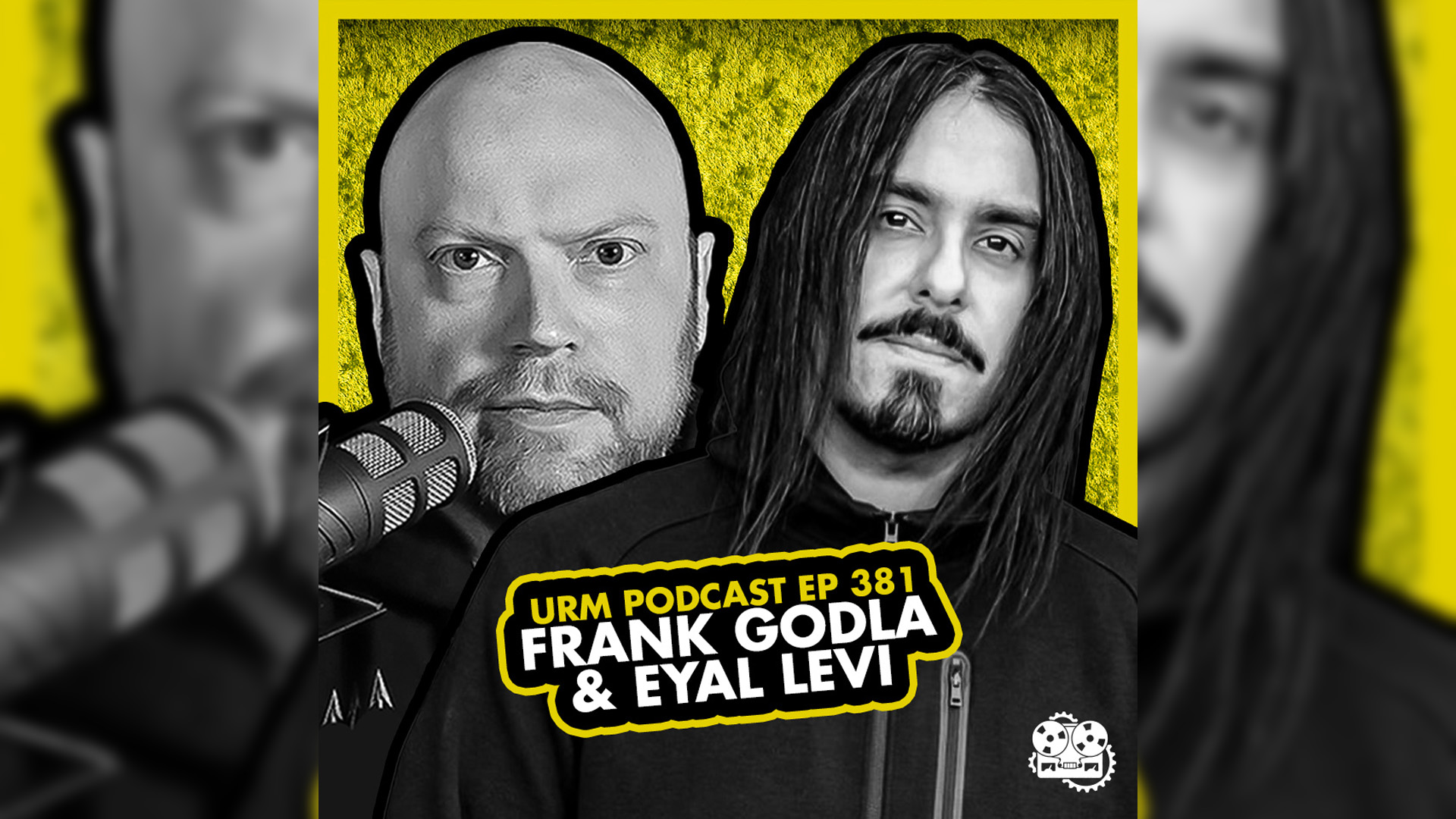
FRANK GODLA: The Digital Nomad Lifestyle, Building Metal Injection, and Finding a Unique Voice
Finn McKenty
Frank Godla is a musician and the co-founder of the influential media outlets Metal Injection and Metal Sucks. For nearly two decades, he has been a key figure in online metal journalism, championing the genre’s progression through news, interviews, and innovative video content that helped define a new era of digital media for heavy music.
In This Episode
Frank Godla gets real about the mindset and lifestyle behind his influential career in metal media. He shares the story of how he reinvented his life to become a “digital nomad,” traveling the world while running his empire from the road. Frank discusses why he values real-world experiences over material success and how that philosophy shaped his journey. He dives into the early days of Metal Injection, explaining how he and his partners cornered a market before it even existed by learning from their mistakes and embracing a DIY ethos. He also breaks down the massive undertaking of the “Slay At Home” virtual festival, the pressures of content creation, and why finding a unique voice is the most critical and difficult challenge for any band today. It’s a deep conversation about creative drive, personal growth, and what it really takes to build something meaningful from the ground up.
Products Mentioned
Timestamps
- [05:30] Becoming a “digital nomad” after a personal crisis
- [09:28] How humble beginnings fueled his desire to travel
- [11:53] Finding comfort in uncomfortable situations and escaping the “rat race”
- [15:20] Why experiences, not luxury items, lead to true happiness
- [20:01] Maneuvering a media career to support a nomadic lifestyle
- [26:09] Cornering a market before it existed and the importance of learning from failure
- [29:11] The evolution of Metal Injection from a TV show to a full media outlet
- [35:38] The pressure of constantly trying to top your last big project
- [38:06] Why the time you spend on something doesn’t equal its value
- [42:14] Remixing classic albums vs. preserving the original vision
- [46:06] Gauging a live performance: audience connection vs. technical perfection
- [47:06] The “energy transfer” between a band and the crowd
- [50:15] How Frank deals with situational anxiety before performing or interviewing
- [55:56] The importance of zooming out for the big picture
- [59:56] The origin story of the “Slay At Home” virtual festival
- [01:06:27] The challenge of creating a “band” feel when collaborating remotely
- [01:16:30] Why being unique is the hardest and most important thing for a band to do
- [01:17:47] How to develop a unique sound by carefully curating your influences
Transcript
Speaker 1 (00:00:00):
Welcome to the Unstoppable Recording Machine Podcast, and now your host, Eyal
Speaker 2 (00:00:06):
Levi.
(00:00:08):
Welcome to the URM podcast. Thank you so much for being here. It's crazy to think that we are now on our seventh year. Don't ask me how that all just flew by, but it did. Man, time moves fast and it's only because of you, the listeners, if you'd like us to stick around another seven years and there's a few simple things you can do that would really, really help us out, I would endlessly appreciate if you would, number one, share our episodes with your friends. Number two, post our episodes on your Facebook and Instagram and tag me at al Levi URM audio and at URM Academy and of course our guest. And number three, leave us reviews and five star reviews wherever you can. We especially love iTunes reviews. Once again, thank you for all the years and years of loyalty. I just want you to know that we will never charge you for this podcast, and I will always work as hard as possible to improve the episodes in every single way.
(00:01:10):
All we ask in return is a share a post and tag us. Oh, and one last thing. Do you have a question you would like me to answer on an episode? I don't mean for a guest. I mean for me, it can be about anything. Email it to [email protected]. That's EYAL at M dot A-C-D-E-M-Y. There's no.com on that. It's exactly the way I spelled it. And use the subject line Answer me Eyal. Alright, let's get on with it. Hello everybody and welcome to the URM Podcast. One quick little announcement before we get into it. If you notice that the URM podcast hasn't been very frequent lately, that is by choice. Over the past few years, been podcasting a lot, a lot, a lot, especially starting with the pandemic. We upped the frequency of your podcasts and added the Riff hard podcast. And to be honest, I've just been feeling a little bit burned out on podcasting, and that's not fair to listeners, it's not fair to the guests, it's not fair to anyone, and that's not what I want for any of you out there who get so much out of the URM podcast.
(00:02:24):
So over the past few months, I stepped off the gas a little in order to recharge the battery. The battery is recharged and the URM podcast is going to resume. First up is someone who is not just a longtime friend of mine. And when I say longtime, I mean I think we're closer to two decades of friendship than one decade of friendship. This person is one of the good guys in the music industry, and his story proves to me that anything is possible in music, anything is possible. It might seem impossible from an outsider, but if you have the right product or the right offering to the right crowd at the right time and you really go for it with the right partners, you can pull off the seemingly impossible. So my guest today is Frank Godla, who's a musician, the chief company director and co-founder of the legendary media metal injection, the Blasee Network, and recently Metal Sucks, starting out with a passion for metal in the eighties. He's poured his life into the pursuit of championing the progression of metal for now the last 18 years. In between podcasting, hosting, website, keeping up to date with everything new in metal, traveling constantly, which we'll get into and branching out to a brand new division covering Latin American artists. Frank is undoubtedly one of the best informed and hardest working, most inspirational individuals in the industry. Alright, let's do this. Frank Godla, welcome to the URM Podcast.
Speaker 3 (00:04:02):
Thank you for having me Al. It's been so long since I've seen you.
Speaker 2 (00:04:05):
It really has.
Speaker 3 (00:04:06):
Yeah,
Speaker 2 (00:04:06):
It really, really has.
Speaker 3 (00:04:08):
It's not just because of the pandemic either. It's sad to say it actually. Where are you living right now? I don't even know.
Speaker 2 (00:04:14):
I live in Atlanta. I go back and forth between Atlanta and Milwaukee because my girlfriend and one of my business partners is in Milwaukee, but it's been forever.
Speaker 3 (00:04:24):
It seems like Milwaukee is making a comeback actually with the metal fest and everything. I've been hearing people possibly moving out there, so that's
Speaker 2 (00:04:32):
What's wrong with them.
Speaker 3 (00:04:34):
I don't know.
Speaker 2 (00:04:34):
They don't want to do that. Don't do it.
Speaker 3 (00:04:36):
It seems like an all right place. I dunno, I haven't been there in a while.
Speaker 2 (00:04:39):
I mean, you know what? Nothing's worse than where I already lived. So the way I see it is I will move anywhere for a good reason and I've already done it. This is not worse than Sanford, Florida, so it would have to be really bad to be worse than Sanford, Florida, so I can handle this Milwaukee shit.
Speaker 3 (00:05:00):
Yeah, I remember visiting you out there. Those was good times though.
Speaker 2 (00:05:03):
It was a good reason to do it, but it was kind of out there in the middle of nothing.
Speaker 3 (00:05:08):
Yeah, I mean, it kind of picks a picture of middle country sticks type situation.
Speaker 2 (00:05:14):
Lots of broken down, used cars and animals that'll eat you.
Speaker 3 (00:05:20):
Yeah, kind of awesome
Speaker 2 (00:05:21):
Whether that'll kill you. Yeah. Oh
Speaker 3 (00:05:23):
Well, especially now. Yeah.
Speaker 2 (00:05:24):
But what about you? Where are you living? I feel like I don't quite understand your situation right now.
Speaker 3 (00:05:30):
I love that I'm a digital nomad, that's what it's called, which I didn't even know that term to be honest with you until I just started doing it and trying to explain to people what I was doing. I didn't realize this was a movement or a thing. I just went through some really hard times during the pandemic and it wasn't even related to the pandemic itself or quarantining or anything. I was just in a really bad spot in life. I fell apart pretty hard and it's a little hard to go through and really talk about it and say, but I hit a wall where it was either I was going to end my life or do something very active about saving myself, and that's really what I did. And I kind of got in my car and took all the essentials that I needed and just went, I just went cross country. I was hiking a lot at different national parks and camping out of my car and just getting in touch with nature and I found myself all the way cross country to la and I stayed in an Airbnb for, I think it was like five months. This was all during the pandemic, and I kind of just realized, I was like, wait, I can just do this
Speaker 2 (00:06:43):
Indefinitely.
Speaker 3 (00:06:44):
And Airbnb is really kind of opened up that possibility of living in different spots in the world without feeling. Hotels can be really expensive, but Airbnb is the, you're basically living in somebody else's shoes for a minute, for as long as you need or want, and then you move on to another Airbnb spot. So I came back to New York. I donated everything I own except a lot of the mementos and stuff like that. I had a lot of posters and my t-shirts I've been collecting since I was nine years old. I wanted to keep all that and storage, but other than that, I just got rid of everything. I took the bare essentials and I'm still at it now. A year and a half later, I'm still Airbnb. So right now I am back in New York and I haven't been here in a year now, but I'm back here for a month. Then I'm going to head out to South America for a bit.
Speaker 2 (00:07:49):
The thing about being a digital nomad, I've experimented with it to a degree, maybe not as extreme as you, but when I left Florida, I decided I'm not buying a house again for no plans on it and not because I have anything against it, but I already done that, already had a nice house, I know what it's like, I don't want it. I wanted to not really have roots anywhere and just be able to pick up and go, and that's kind of how I've been living my life since URM. I've had apartments since spots, but the amount of time that I've spent at those apartments sometimes would be like come in for three days every six weeks or something. There's a side to it that can be very disconcerting for some people or discombobulating, but at the same time, I think that some people are wired for it.
(00:08:43):
What I'm noticed is when I was a kid, I always wanted a life of travel, not of vacations, but I wanted to do something that involved me moving around a lot where my work would just have me everywhere. It's probably because I grew up with a dad that was all over the place. So touring made perfect sense and then when I was at the studio in Florida, I was always trying to get the fuck out of there. It was driving me insane to be stuck to one place. So then URM and what I've done since the way I designed it keeps me moving all the time. Pandemic was the first time in five years that I slowed down on it. So I get it, you're probably just wired for it.
Speaker 3 (00:09:28):
What's really funny is I think the outcome is pretty much the same for us, but we grew up very differently. I was the complete opposite. My family was so incredibly poor that vacation was going to Coney Island, which was two stops away on the train. We just didn't have money for anything. There was times where we were stealing food to survive and I was even homeless at one point in my life. So I have very, very humble fucked up beginnings and I would just dream. I would read books. I mean a library card at the time was my escape. I read books about travel and stuff like that, or stories about people traveling. Of course, as a metalhead way back in the day, I would subscribe to magazines and stuff and read about stories like this new band emperor from Norway and this new band at the gates from Sweden, and I was just in my head, it just felt like a million miles away, this far off weird land that I can't even imagine. Obviously this is before the internet, you can just look it up and see photos or videos, whatever, and you build this in your imagination what it looks like. And it just seemed like this magical place that I'll never be able to get to so poor and I could barely leave the block. That's kind of just made me so obsessed with travel, the idea of travel, actually this is what the whole tattoo on my right arm's about. It's just like a nautical map and everything. But you know what
Speaker 2 (00:11:04):
Though? Lots of people think they want that and regardless of their background, they think they want that and then they get into a situation where they have that Being in a band for instance, that as well as that first tour is where most bands break up
Speaker 3 (00:11:23):
Or
Speaker 2 (00:11:23):
Start to lose members because in reality, most people are not wired for constant travel. I think it's one thing to dream about it and want it, but it's a whole other thing when you actually get it to not only like it, but rearrange your life to align with that.
Speaker 3 (00:11:43):
Well, I've been told my whole life that I'm a typical Sagittarius, so I don't know if that makes sense to anybody listening, but
Speaker 2 (00:11:50):
I have no idea what that means, but I'm sure some of our listeners do. But
Speaker 3 (00:11:53):
Just means that I can never sit still. I'm always on the go or doing something or looking for adventure. I live by adventure and different set of rules basically. But I'm also very self-aware and I kind of check in with myself sometimes. I realized before I became a nomad that I was part of this rat race in New York City, or maybe not just New York, but really the us, our mentality of climbing and climbing and climbing. And I climbed this ladder to a place where I had this really expensive New York City apartment and it was super nice and I was stoked that I had it and everything like that, but I'm also like, why am I paying so much for fucking four walls and for what? And it just made no sense. So I completely changed my life. Sometimes I like to do that just to kind of test myself. I don't think that's something a lot of people do or maybe want to do complacent in where they are. And what I find is most people don't like to be uncomfortable. What I find about myself is I like to be comfortable in my uncomfortable nature. I find comfort in putting myself in a sort of fucked up situation sometimes and really testing myself.
Speaker 2 (00:13:14):
You feel at home in that,
Speaker 3 (00:13:15):
I wouldn't say at home, but I feel alive. The adrenaline kind of like when I'm traveling solo through Northern Africa and I'm getting robbed, which has happened. It's just one of those things where it's just like, wow, this is real life. My heart's racing. My palms are sweaty. It's just a really fucked up situation that I survived and got away from. But I'm like, fuck, man, that is, I don't know, there's something about it that you walk away from and you're like, I feel like I just had a real life experience.
Speaker 2 (00:13:49):
Well, you did
Speaker 3 (00:13:51):
Well. Yeah,
Speaker 2 (00:13:52):
You sure as fuck did. It's interesting you say that about the apartment in New York. This is something that I've felt guilty feeling this way. I had a nice house in Florida, but my first real success was URM. So in the first few years it was like, this is awesome. And I got this apartment in Atlanta right in the city on the top floor of a building, and it was everything that you'd think you'd want and it was cool, but I was depressed as fuck, and it made zero difference whatsoever that I had it. So it was on paper, it was this very awesome thing. But in reality, after the first day or two of being there, it was just like any place else. And I realized how privileged I sound saying this, so whatever, but that's my reality. So you only have your own reality to base your opinions and feelings off of. But yeah, it was a completely empty, meaningless experience to have this thing that I thought I wanted for all this time. For all this time. I thought if I can get to the point where I can afford this top level view of a city, I know that shit's going well and I got it and it was like, well, I guess that means shit's going well, but I don't give a fuck. My brain
Speaker 3 (00:15:20):
Is still broken, dude, I am totally there with you. As I've told you, I've come from very humble beginnings and then after 18, almost 19 years of doing metal injection and now what I've reached and doing all this and the success, it's just like the success isn't what makes me happy. I don't even know that I am happy. It's I guess what you're saying and what I'm saying is just that it doesn't matter what you have, what apartment you have, all the luxury items or items in general, it's just, it's not what's going to make you happy. What I found has made me happy is living experiences fulfilling my life with real experiences, and you don't necessarily need money for that, but I mean it helps.
Speaker 2 (00:16:06):
It helps. But I think experiences and relationships,
Speaker 3 (00:16:10):
I can have a fucking conversation with a friend that will, I don't know, make my heart explode and make me feel like I've shared a real experience, something that is meaningful and that means so much more to me than, I don't know, money or a car or whatever. I don't even care about stuff like that. I don't care about cars and whatever.
Speaker 2 (00:16:30):
The thing that I wonder though is that stuff doesn't make me happy, but how much more unhappy would I be if I was failing in my professional pursuits? And I do think that I'd beh, I think I'd be way more unhappy. And so I think that while it doesn't create happiness, it fends off misery to some degree. It doesn't cure depression, but it fends off misery, if that makes sense.
Speaker 3 (00:16:56):
But you seem like a tenacious person to me. So if you weren't doing well in those endeavors, wouldn't you just shift gears or try harder or figure out a way to
Speaker 2 (00:17:06):
Oh yeah,
Speaker 3 (00:17:06):
Yeah, I've done that. Exactly. Yeah. I mean we've all failed and managed our way and I think there's two kinds of people, people who play a video game and they're not winning, so they throw the control down and walk away. Or somebody who continues to try and try and try until they can beat it, write
Speaker 2 (00:17:23):
Their own video
Speaker 3 (00:17:23):
Game even better,
Speaker 2 (00:17:25):
Basically. It's an interesting thing. I was thinking about this too the other day. You just said you don't care about cars. I couldn't give a fuck less about that stuff, watches, cars, any of that stuff. I don't have that part of my brain that cares about it. And no offense to anyone who does care about it. If you're into that stuff, cool, when people start talking about that stuff, my brain literally checks out. I couldn't be more bored than when people start talking about cars or watches. And the whole time that this has been happening, like URM and things have been going well, I've been thinking to myself, if the whole point of all this how hard I've worked and everything I've gone through was to be able to put a watch on my wrist, I can't equate those two things together. It doesn't make sense, but to each their own, because I do know that someone who's like a total watch person and what he tells me is it's not about the watch, it's what the watch represents, grew up poor. This watch is a gauge for what I've done and okay, if that's what it means to you. Cool.
Speaker 3 (00:18:31):
Sure, I can see that. And as you said, to each their own, that's his way of kind of flexing, I suppose. Mine was definitely traveling or reminding himself or that. Yeah, mine is traveling for sure, crossing off those countries on my bucket list and having those experiences with natives, and that's just how I go about it. So kind of come full circle. I guess that's why I travel so much these days and why I went ahead and did this to my life. It is just so I find a much more fulfilling life doing it this way.
Speaker 2 (00:19:02):
The music industry is like any other industry. I know that there's things about it that are unique, but if you want to have a lackluster boring life in music, you can have that at any level of the game. You can have a routine bullshit life if you allow it to happen. So just because you're successful in the music industry doesn't mean that you're enjoying yourself or anything like that. And I think it's important that people take stock of their resources if they're not happy with how something's going, see what it is that they can do to improve it. So for instance, in your particular career, your career does allow you to be a digital nomad and not everyone's career allows for that, but yours does as does mine for the most part. So you have this synergy, I guess, or this alignment between what you want plus your career allows for it. So fucking awesome.
Speaker 3 (00:20:01):
I really had to maneuver it that way though. It wasn't like, oh, well you work in media. I mean, what other person in media does this? As far as I know, none. It's really just something that I pushed for and had to put certain things in place to make this possible because most people want an office or stuff like that. And I opted out of that in metal injections history. We had an office for six months and that was really towards the beginning of things. Me and Rob, we just thought like, oh, well maybe we'll be more productive if we had an office. I know didn't work out the way at all
Speaker 2 (00:20:38):
Did I got an office once at the beginning of URM, guess how many times I went to it? Five zero. I had an office for six months, I went to it. Exactly. Zero times.
Speaker 3 (00:20:51):
Yeah, tends to happen. You think you want something. It's like people in New York, they all want a place with a backyard, but they forget how much work it is, the mosquitoes, everything else, and how shitty the weather is here. So it's like, oh, well you use it three times a year.
Speaker 2 (00:21:05):
Yeah, I understand that There's maneuvering, of course there's maneuvering because no matter what, this is a non-standard way of life, even in media, even in metal. This is not a normal thing, but it is really awesome though that your career can be maneuvered into something where this works.
Speaker 3 (00:21:24):
Yeah, for sure. I mean, trust me, I don't take it for granted every single day. My life is insane. Totally fucking insane. It's getting harder and harder to just maintain my schedule because it's so nutty. I mean, I was just on a flight, this happened yesterday when I was talking to your assistant you work with, I flew from LAX to JFK, got in a cab, went to Merrick Long Island, picked up a motorcycle, rode two hours to meet up with Max Caval at the show last night in Jersey, and then had a ride an hour back home and I don't know how, I was awake for a day and a half and didn't eat anything and just kept going and going, but that's kind of like just one day in the life snapshot. There's been a lot worse than that too, across from Africa to Mexico. I
Speaker 2 (00:22:17):
Think it's because what you're doing gives you that energy. So I think I was thinking about this because recently when I went to Sweden, so finishing the doth recording basically led right into finishing this Zach Wild course with no days off whatsoever. So the whole everything was 18 hour days, 18 hour days nonstop for months, and then immediately the next day after finishing the previous night at four in the morning, at eight in the morning, I had to go to the airport to fly to New York and then fly to Sweden, and on the flight I had to watch and make notes on this other eight hour course that we have that's coming out next year. And so then when I landed, then I got a car and drove three hours from Stockholm to Oroboro to get to Fascination Street, and Ys was mixing when I got there, so I just went right into the session and worked with him till 10:11 PM but I didn't feel the pain at all. It's what I wanted to be doing. Everything I was doing the whole time gave me the energy. I crashed out afterwards, but I feel like it's the same. It's thing you're doing the stuff that gives you the energy to make it through shit like that. Cool.
Speaker 3 (00:23:38):
Yeah, I'm stoked still after all these years. I'm still stoked on what I do. I'm very fortunate for what I do do. I never take that for granted, as I said, because I did have jobs before all this. Obviously I had jobs that I hated where I hated my life and I wanted to change it, and I think back on those times a lot, not out of nostalgia, but I just like to think about how I got here. It allows me to be grateful for where I am today. Thinking about the days where I went to eight hours of a job that I hated and then ran home to work another eight hours on metal injection that didn't pay a damn thing. But I did that for years and years and years until it became my full-time job. And if it wasn't for that drive, I wouldn't have this today.
Speaker 2 (00:24:30):
You definitely wouldn't because what you pulled off is next to impossible. It is what you guys did with metal injection and blast bead and all that is not normal. It's fucking inspiring too.
Speaker 3 (00:24:42):
I appreciate that. I've definitely watched a lot of different companies, much bigger than us that have a lot more money than us try and fail, continue to today. There's obviously more, I feel like there's more metal media out there today than there ever has been big or small, whether there's big companies behind it or not. There's just so many of them and we are very fortunate to have what we have, and I think a lot of it is our drive in it, our continued drive in it, and the staff that I have working with me, they're all great and I'm still out there, man, every fucking day just listening to metal bands and going to all the festivals and checking out new bands and meeting people. I mean, at this point it gets really hard to remember everyone. There's like,
Speaker 2 (00:25:29):
I mean, yeah, how could you
Speaker 3 (00:25:30):
So many dude, it's so, so many, but it's definitely a crazy life, but I would recommend it. I love what I do.
Speaker 2 (00:25:39):
I think that what's really important in my opinion for listeners to glean from this is it really is possible to pull off the seemingly impossible if you're willing to pay the price basically.
Speaker 3 (00:25:54):
Yeah, I mean it's kind of like what motivational speakers talk about. You get out what you put in, whether they're personal trainers or business coaches and stuff, but I will say there is some fortune and luck in there. Well,
Speaker 2 (00:26:08):
Yeah, for sure.
Speaker 3 (00:26:09):
Also, we cornered a market before it existed. We have that foresight to say, oh, how do we put our silly TV show that we only had on Brooklyn cable access television and get it on the web? And we did that before YouTube existed and it was expensive and hard and to figure out, but we've always been that trial and error type of people just by the seat of our pants, try to figure it out, DIY, all the way, and we learned all the mistakes and I feel that that's the biggest value that you can really get in life as well, is we were talking before about failures and stuff, and I think those are so important because they train you for successes.
Speaker 2 (00:26:52):
Absolutely.
Speaker 3 (00:26:53):
We had to fail and had to fail and had to make those mistakes over and over again to know what worked. And I think we were willing to be those people who kind of like a pro skater would if they fall down, they don't walk away from it, they just get up and try again. And that's the kind of mentality that we had that got us to where we are now.
Speaker 2 (00:27:15):
I think the cornering a market that didn't even exist, that's huge because what we did too, and the thing is, I'm not saying that no one could sneak up on us, but it's going to be really fucking hard in metal to sneak up on us because we went so hard at the beginning to establish something in metal that did not even remotely exist, and by the time anybody had realized what was going on, we were entrenched, and I think that that is exactly what I saw you guys do back in the day. That's what I've thought is so impressive about it was. Yeah, back then. Look, I remember you guys coming to shows. I'm not sure that people know how long I've known you guys, but I've known you guys since forever, over 15 years now. So I remember,
Speaker 3 (00:28:08):
Yeah, I want to say like 2005 or something
Speaker 2 (00:28:11):
Over 15 years. Back then there was metal media, but it wasn't like you guys were doing. It was either big time on MTV or something, or it was Blabber mouth, which is just written news or really, really shitty video interviews. The shittiest you can possibly imagine. There was nothing quite like the way you guys were doing it where it was people from the community who were actually fun to hang out with just coming out and hanging out. It was a whole different thing and it didn't seem like a big deal back then. You guys were just hanging out and part of I guess the circle, but if you think about it, if you zoom out and you look back, there was literally nothing else like it for a long time, for a really long time. I think by the time people started ripping you guys off, you guys were so established that it was pointless.
Speaker 3 (00:29:11):
I mean, that doesn't stop them from trying. I still see people try to rip us off every day, but yeah, I appreciate you saying that. I mean, again, we were just kind of doing, trying to fill a void that didn't exist and how some bands say they started their band because they wanted to write music that they wanted to listen to. We were doing that with our website, editorial Media and video. It might've started as a TV show and us hanging out and doing video interviews and stupid sketches and whatnot, but it really went through so many different iterations. We added in the news section and then the review section and then editorials and features, and I mean now it's a whole different beast than what it started out as. Again, a lot of it is looking at the metrics and seeing what works and making those mistakes and learning from them and moving on and trying new things. I always said, I think if my forte in metal media is probably just having a well of ideas and coming up with new and being the first, I mean, I'm still the first to do a lot of things. I mean doing sleigh at home, that was a massive undertaking, and if it failed, I wasted tons of time and resources, but it did really, really well and I'm stoked on that. I'm stoked that it resonated with the metal community.
Speaker 2 (00:30:42):
How long would you have let it go? How long would you have let it go before cutting it? Do you have a general rule about determining when something is a dud?
Speaker 3 (00:30:52):
I mean, I guess that's more of a personal thing. It depends on what we're talking about. Different projects require more time and attention than others, so it's like if you're pouring something in and it's really kind of overtaking your life, you want to make sure that it's actually working something on the record, for instance, an idea that it had around for a while and then they wind up pulling it out. In 2012, that really kind of changed the game for what we were doing at Metal Injection too, because we were doing silly interviews and stuff like that. And it was the first time I think that we took a serious slant. It was a mini series that focused on the changes within metal, how the internet has changed what we do. There was a whole episode about that and it's kind of newer day Netflix series that you see like these miniseries.
(00:31:42):
But I wound up doing this in 2012 and it wound up getting written up and newspapers and won an MTV award and all this other stuff, and it was the first time I really thought like, wow, okay. Something I thought of outside of the initial start of metal injection, but it was the first time, it was just like this project that took me three months or four months or whatever to conceptualize film edit and then get out there kind of shifted gears for what we were doing. And since then, it's just all about, I'm always in competition with myself. I'm like, well, could I do something bigger and better next time? And it gets a little hard to think those up, but kind of like a band who is trying to write their 12th record, or could they still write a meaningful song that's relevant and still going to speak to their fans and still have something catchy that people want to hear? There's all the, but at the same time, you really shouldn't worry so much about that. You should just try to do what you want to see, create what you want to see, create what you want to hear and hope for the best. But I don't know. I think in terms of a time stamp, I dunno if we try a new section and it doesn't work after say six weeks within the metrics and I would just pull it. Yeah,
Speaker 2 (00:33:14):
Makes sense. So it's like give it enough time to establish itself, but not so much time that it's like beating a dead horse. Hey everybody, if you're enjoying this podcast, then you should know that it's brought to you by URM Academy, URM Academy's mission is to create the next generation of audio professionals by giving them the inspiration and information to hone their craft and build a career doing what they love. You've probably heard me talk about Nail the Mix before, and if you're a member, you already know how amazing it is. The beginning of the month, nail the mix members, get the raw multi-tracks to a new song by artists like Lama, God Angels and Airwaves. Knock loose OPEC shuga, bring me the Horizon. Gaira asking Alexandria Machine Head and Papa Roach among many, many others over 60 at this point. Then at the end of the month, the producer who mixed it comes on and does a live streaming walkthrough of exactly how they mix the song on the album and takes your questions live on air.
(00:34:15):
And these are guys like TLA Will Putney, Jenz Borin, Dan Lancaster to I Mattson, Andrew Wade, and many, many more. You'll also get access to Mix Lab, which is our collection of dozens of bite-sized mixing tutorials that cover all the basics as well as Portfolio Builder, which is a library of pro quality multi-tracks cleared for use in your portfolio. So your career will never again be held back by the quality of your source material. And for those of you who really want to step up their game, we have another membership tier called URM Enhance, which includes everything I already told you about, and access to our massive library of fast tracks, which are deep, super detailed courses on intermediate and advanced topics like gain, staging, mastering, low end and so forth. It's over 500 hours of content. And man, let me tell you, this stuff is just insanely detailed and enhanced. Members also get access to one-on-ones, which are basically office hour sessions with us and Mix Rescue, which is where we open up one of your mixes and fix it up and talk you through exactly what we're doing at every step. So if any of that sounds interesting to you, if you're ready to level up your mixing skills in your audio career, head over to URM Academy to find out more. Does the prospect of topping yourself, do you lose sleep over that?
(00:35:38):
I know that every single year when I look at what we pulled off, I get this pit in my stomach about how in the fuck am I going to do better than this? Because there's so many things that happen every year that are the biggest thing I've ever done or that took years to put together that it's like, well, how am I going to repeat this? If this thing took five years to put together, how am I going to do that again next year? Did I empty the clip basically? Am I done? But then I never am. All I do is just get to work. That's really all there is to it is get back to work.
Speaker 3 (00:36:16):
Also, when it comes to content creation, they move so fast and we need an update on the site every 40 minutes, and it's wild how we have to keep on going and going and going. So we have things being worked on that are long format and take a long time simultaneously with things like news updates, obviously that have to be up every few minutes and hopefully between the two, you make some sort of impact with people. It's really unfortunate that sometimes the things that take so long they don't do as well. I could make a video that take a month or two months and I'm like, oh, this is going to be so sick. And then you put it out and it's just like, oh, okay, well, I got 40,000 views or something, and then something you did as a joke got a million views and he did it in two minutes. And that's so frustrating. Sometimes.
Speaker 2 (00:37:14):
It's the same with songwriting. On the production end of things, it was the same. You'd work with these bands that are glorified local bands, like local bands with a record deal. If you heard their pre-pro, you'd be shocked that these bands are big, but they are, and this garbage that you have to mold that they didn't work hard on at all charts in the billboard top 20. And then you have these other bands that are fucking the most elite of the elite, the elite musicians, and so much fucking care goes into it, and it's like it doesn't fail, but it doesn't even scratch the surface. And I've seen that many times. I don't mean that great musicians go undiscovered or something. I don't really buy that too much, but I just mean that you never can tell. You can never predict what it is that's going to pop off with the public.
(00:38:06):
And oftentimes it's going to be the thing that you didn't think of basically, or that you didn't put that much thought into that you just kind of did. And it is frustrating, but what I have learned to kind of accept or a philosophy or just an understanding I think for me is that the amount of time you spend on something doesn't equal its value. Even though we're wired to want something that we spend more time on to be more valuable, the two aren't linked. So just because we killed ourselves for months on something that doesn't make it more valuable, all it means is we killed ourselves for months on it. The amount of time and effort we put into something does not equal what it will mean for other people. I feel like once I started to really just accept that my anxiety and frustration went down considerably.
Speaker 3 (00:39:00):
You're absolutely right about that. And I completely agree with you, and I think it gets even worse as time goes on, because we are also in a time in a world where people are now evaluating their work with likes and stuff like that, and I think that's a terrible way of looking at or gauging the worth of something for sure.
Speaker 2 (00:39:22):
But it's what we got. It is a terrible way to do it, but what is the other way to do it? Well,
Speaker 3 (00:39:28):
I'm just saying when it comes to your own personal work, you shouldn't look at it like that. Okay, yeah. So I'm like, of course you need the metrics to know where you stand and where you stand against others or how others are doing or whatever else. But if you put four months into something and it got whatever, a hundred views, a hundred likes, but you're still fucking proud of that, hell yeah, dude, be proud of that. I think that's awesome. You didn't spend four months wasting your time. You did it making something you're proud of. And there is no replacing that.
Speaker 2 (00:39:59):
No, there is no replacing that because just kind of like we were talking about with cars and apartments and all that stuff, the outer success of something you've worked on isn't going to change its meaning for you. If something got a million likes or something, that's cool and all, but if you're not proud of it, that's not going to make you proud of it. It's going to make you think, cool. It got a million likes, but it's not going to change the meaning of the thing and my experience. The one thing though that I have noticed is over the years, the things that I have worked really hard on that have not resonated with people that I am proud of, I feel like that's a good lesson too. I feel like it's important for me to understand why those things didn't resonate. For instance, the doth self-titled record, nobody gave a fuck about that one and worked really fucking hard on it really, really hard.
(00:40:55):
And so for a long time I had this like, well, fuck you everyone feeling about it. But then I just start thinking, what about it made it not resonate? And I have some ideas and stuff I won't repeat. For instance, it was mastered super quietly. The drums are raw as fuck. I'm just not sure that that's exactly how das should be presented to the world. And the proof is in the pudding, basically. And it doesn't matter how hard I worked on it, the presentation was fucked, and that led to the results that it led to. And that doesn't mean that I'm not proud of the work that went in, but it's a good lesson to see how it does, see if people care, see if they resonate, and then at least analyze. It doesn't mean that it should sway you one way or another. If it does sway you, you should consciously be swayed. But it's good to understand, I think.
Speaker 3 (00:41:45):
Have you ever considered re-releasing it with a new master? Yeah.
Speaker 2 (00:41:48):
And have it sound the way it should sound?
Speaker 3 (00:41:50):
Yeah. Yeah. I mean, it might be a good experiment to see if something like that would change whether or not it resonates with people. But I've seen bands do stuff like that all the time. OPEC wasn't thrilled with some of their stuff, so they had it redone, which is super silly to me. The originals were perfect.
Speaker 2 (00:42:09):
Yeah, but you know what? I know what you're talking about. You're talking about deliverance damnation, right?
Speaker 3 (00:42:14):
Yeah,
Speaker 2 (00:42:14):
Those remixes. The thing is, I agree that the originals are perfect fucking masterpieces, but those remixes are pretty fucking great too, and they're completely different vision for the songs. And if that was burning a hole through Michael's head the entire time, this is not what this record's supposed to sound like. It's kind of back to what we were saying about the success is not going to change the meaning of it for you. So if that record, those two records were not what he wanted them to be, then more power to 'em. I guess. Kind of like the Dmu Borg gear remix of Puritanical, that's a record that was foundational for me when I first heard puritanical, it changed my idea of extreme metal. I always thought that whenever people talked about cradle of Filth, I always imagined that's what they would sound like, but that's not what they sound like.
(00:43:11):
Then I heard Demon was like, that's what I thought it should sound like. And so the idea of remixing that album is like, why are you fucking with perfection? But then I heard the remix and it's like, okay, it sounds like previous era Dmu Borg gear. It has a whole different feel to it. It's way more keyboard heavy, it's way more ambient. And if I didn't know the original mix and just heard it independently, I'd probably love it. And so 20 years or so where they've been living with a record that isn't what their vision was, I guess I understand why fans are like, why the fuck did you do it? But I get why they did it.
Speaker 3 (00:43:52):
Well, I mean, for us fans who've been there with Dimmu and OPEC for so long, for sure, or even if you wind up doing this, the doth fans will have known that piece of work a certain way for so long and just resonate with that, whether they liked it or not, whatever, but they just know it one way. And to hear it's done different way, it's going to be a little bit jarring. You know what I mean? To hear some of your favorite music done differently. So I understand both sides. I really do. I think that if a piece of work was colored or tainted by somebody, that is the thing about working in music. You are at the Mercy, really, of other people working with you. You're a mixer, your producer, your master. If it's a live show, the speakers, the live sound guy. Sometimes it's not a bad show because of how you play, but because of how it Yeah,
Speaker 2 (00:44:50):
And you just have to live with it.
Speaker 3 (00:44:52):
Yeah, I mean, I've seen that happen to a lot of bands I've seen. I go backstage and bands are so upset. I thought it was a killer set. They played every note perfectly and put so much heart in it, and they were next to crying because the sound was so fucking bad. And I'm like, yeah, but people will understand and no they won't. They'll blame us. They don't ever think to take it out on the sound guy or something like that. They're like, oh, that band just sucks. People are very quick to judge sometimes.
Speaker 2 (00:45:20):
Yes, they are. What's even more interesting is when you see a band get off stage and one person is elated and the other person is throwing bottles against the wall, they played the same show, but a completely different experience.
Speaker 3 (00:45:37):
Yeah, that's wild. But you're absolutely right. That happens all the time. Just
Speaker 2 (00:45:41):
The subjective nature of it is what I think what I'm referring to is just all you have is your own subjective interpretation or experience with a thing. And so if it's negative, it's negative. That's all there is to it.
Speaker 3 (00:45:55):
When you play a show, how do you usually gauge? Is it the crowd reaction? Is it trying to get every note flawlessly? Where do you gauge your performance?
Speaker 2 (00:46:06):
It's like this overall feeling. It's more like the connection. Did I get into it completely and forget the world and completely connect with the audience? Were we on the same page? And if so, I don't give a fuck about notes or accuracy. I want there to be that next level experience. And if that's not there, then I start to feel really weird, super self-conscious and insecure. Then I start to care about the notes and stuff. But those shows where there's just this, it's almost spiritual, this bond between you and the crowd and the music. When those shows happen, you might miss notes, but then it really doesn't matter.
Speaker 3 (00:46:54):
I love that. That's perfect, Ben. Yeah, I would hope that more or all musicians want to get there. I know that's not true for everybody though. I've asked that question to many friends.
Speaker 2 (00:47:06):
You had to have experienced it though. I think that's part of it is you kind of won't get that until you've experienced it. It's one of those things. I remember watching a year and a half in the life of Metallica back in the day, and I feel like Kirk Hammett was talking about the energy transfer between audience and musician. And when I was 15 and hearing him talk about that, that I was almost tuning out while he was talking about it, I just didn't really get it totally. It wasn't until I experienced it. It takes you completely out of, I don't want to say it takes you out of reality, but it alters your reality to almost like this heightened flight or fight mode where nothing else exists and you can't simulate that. You can't think your way into it. You can't really rehearse for it. It just happens and it's like this involuntary thing. So I think sometimes maybe people haven't experienced it, and then if they haven't experienced it, you can't expect them to prioritize that. Once they've experienced it though, I think then it's a different conversation
Speaker 3 (00:48:14):
For sure. And maybe that is that guy who walked off the stage elated, and then there's the guy throwing the bottle is fixated on the snare hit that the drummer missed in the third song. And this second chorus, people get really wrapped up over certain things when you play live. And I've had it both ways. I've definitely had my share of shows that blew me away, and I just felt, felt the energy, nothing. And then there's shows were like, I had too much anxiety going in and I just fixated on not fucking up. And then of course, that made me fuck up. And then it's just quicksand.
Speaker 2 (00:48:54):
And that doesn't mean you played badly or anything.
Speaker 3 (00:48:56):
No, I'm just fixated on that one fucking tiny mistake out of 40 minute set that ruined my experience.
Speaker 2 (00:49:04):
What's interesting too though about that is just because you had that experience doesn't mean the audience did or doesn't mean that every member of the audience was right there with you. So even if I'm talking about this energy transfer and this connection thing, it could all just be in my head too. It could be that I'm feeling that and nobody else is, but I can't know that. All I know is my experience, and I know that when I've been in that mental state that you're talking about the going in with too much anxiety and then hyper fixating and then getting pissed off about this and that, and then it's a shitty show.
Speaker 3 (00:49:42):
Yeah, no, you're absolutely right. And like I said, I've had it every way, and I've found that just trying to calm myself before I play is, or really do anything is the best way to go when you go in levelheaded to something, a performance or getting on stage, whatever, because I am a person who always suffered from anxiety and depression and stuff, and I just have over the years, over my 40 years, have kind of managed ways to know myself and help myself get through things.
Speaker 2 (00:50:15):
How do you deal with situational anxiety, what we're talking about, you're about to go on stage, your anxiety's high. How do you manage it?
Speaker 3 (00:50:24):
Yeah, usually I'll take a few minutes to myself. I thought you were about to say, usually I take lots of drugs. No, no, no, no, no. I take a couple minutes to myself. I mean, being alone is a really big part of my life. And because I think, as I was saying before, life's just nuts and there's always so many people around me. I find that sometime an escape even to the bathroom. I don't necessarily have to go to the bathroom, but it's a good place to escape people sometimes if you don't have a dressing room or whatever else. But just sit there, sit in a mirror, look at yourself and breathe and kind of center yourself and then go out and do it and you're fine. At least for me, that's something that works for me. Breathing, kind of centering myself. I also try to meditate every day and work out as well. That definitely changes my entire mood and focus.
Speaker 2 (00:51:16):
I was thinking about a conversation I had with Gel the other day, actually, I don't know why this just popped into my head. It was like a conversation we had on Oz Fest in 2007, some conversation, who knows where, and we were talking about prep time for live, and we were both on the same page that in an ideal situation, you'd have a full hour where you can warm up and you can get your head in the right space and do some exercise and connect with the band. And there's this whole process and ritual almost. But what if that doesn't happen? And I remember him saying, I can still do it in five minutes. It's not ideal, but I can get myself there in five minutes. I just do all that stuff quickly. I remember him saying, so it's like regardless of the circumstance, he is going to do whatever he can to get into that mental state. And he's got, I'm sure it's far more developed now because he's been at it that much longer, but he already had a set of techniques and practices that got him from every day to fucking conquer front man and behemoth mode within five minutes.
Speaker 3 (00:52:33):
I mean, everything in life is practice or you know what I mean? So yeah, even something as, I don't want to say simple, but something like that where most people don't really think about that life or that part of a performer's life, that is something that even they have to practice beyond the writing and the practicing their instruments or whatnot. That's something very real that they have to go through. The transition between
Speaker 2 (00:53:02):
Regular life to conquering an audience, that's a major, major shift in mentality, I think.
Speaker 3 (00:53:10):
Yeah, and we we're applying this to metal musicians, but it really goes for anyone out there. I mean, I have to kind of mentally prep myself when I do interviews, even I do them. I've done so many in my years, but it's still something that I have to at least for five minutes, just get myself together and stop doubting myself or whatever else, and then just go with it. Yeah.
Speaker 2 (00:53:39):
I know that if I'm pitching my business partners on something, I will prep the shit out of it. I will go through so much stuff just so that when we have that meeting, I'm a hundred percent in the meeting and I'm in the conversation and can just flow with it. And really, I can take this idea that is so meaningful to me and powerful and help them feel that, but the only way that I can really get there is I have to be there. And in order for me to really be there, there's a mental exercise I have to go through. And it takes a little while. It involves thinking of everything wrong with the idea what they're going to think is wrong, even if it's not wrong, what will happen if this goes right. All kinds of stuff. I have to really spell it out for myself. However, I don't always have that luxury. Sometimes I have to convince people of something and I didn't have the time to put that together, and I will still take five minutes and do a shorthand version on a notepad of that stuff just for my own sake, not even if I'd never look at it again. It's for my own sake, getting my head in the game basically.
Speaker 3 (00:54:54):
I totally know what you're talking about. And I've actually done certain pieces of content and videos where I was just too close to it, or even parts of the site and things that we're developing. I'm just too close to it, and I need to literally put myself in a head space where I sounds silly saying this, but I would literally walk outside for a couple minutes and then come inside, sit at my desk and pretend I'm somebody else looking at this for the very first time. And I would method act in a way where I'm somebody else looking at this piece for the very first time. What are my thoughts? And then I would just start making notes on that to change. Sometimes you are, you're way too close to an idea, to a pitch or whatever else that you need to really kind of just zoom out. And I think we've said that a couple times in this podcast so far, but zooming out, there's something really powerful about that. Just kind of stop, zoom out for a second and things become clearer sometimes.
Speaker 2 (00:55:56):
Yeah, zoom in when it's time to do the heavy lifting and stuff. And I think about it in terms of tracking on some of the new doth stuff, there's eight rhythm guitars happening at the same time, playing the exact same thing. And in order to get it sounding like two guitars, there can be no wiggle room between the takes. They have to be the exact same thing. And that means I need to be able to play it the same way over and over and over and over again, which means really getting inside of the riff, but zoom out, is the riff even good? If it's not, what the fuck am I doing practicing it enough to get it that tight? It's pointless to even fuck with it. So without zooming out and asking yourself, is this even worth pursuing? The whole zoomed in experience, there's only a point in doing that if you've zoomed out and still give it the, okay.
Speaker 3 (00:57:00):
Right. Absolutely. Yeah, and by the way, I mean, everything you showed me of the new doth is so fucking amazing. Thank you. I'm really looking forward to Thanks.
Speaker 2 (00:57:09):
I appreciate that. A lot of work has gone into bringing that back from the dead.
Speaker 3 (00:57:14):
Yeah, I'm stoked, man. I was always a big fan, as you know, so I definitely think it's time and we're definitely stoked over here at Metal Injection and Metal sucks.
Speaker 2 (00:57:25):
I appreciate that. It's one of those things where I thought I was over it and I tried to be over it, but the way
Speaker 3 (00:57:32):
It
Speaker 2 (00:57:33):
Went down never. As the years went on, I got more and more pissed and a normal person would've just been like, okay, that didn't work out. Move on. But I just could not let it go. It was like I know that this band had the stuff of greatness in it and just through bad decisions, bad chemistry, bad, just whatever. It didn't really work out. But I have a really good track record for making shit work that I feel strongly about and I'm not used to shit not working out that I feel that strongly about. So it kind of never died with me, and so when I decided to bring it back, I decided to bring it back full force. Every single thing that I may have caved on in the past or let go in the past, I'm not letting go now. It's exactly what I always wanted it to be. So it better be fucking good
Speaker 3 (00:58:36):
Or I'm a fucking idiot. Right, right. Yeah, a lot of pressure on there. No, well, I love it so far, so congratulations on something that's not even done yet. Thank you. How are you doing with drums these days? Well, so during Slay At Home, such a good idea by the way. Thank you. Once again, talking about ideas, and it was early in the pandemic, it was maybe a month after everybody went into quarantine. I think it was Warner Brothers, the label or something like that. They wound up putting ads out everywhere for this virtual concert. It was a virtual festival and everybody, like millions of others, I wound up signing on the day of, and it was the most pathetic thing I've ever seen in my life. All it was was prerecorded stuff like Foo Fighters from South by Southwest in 2010 and whatever. It was just all prerecorded shit, basically a playlist on YouTube, and they wound up making money on this and they weren't even transparent about the money that they were making because they were selling merchandising and all this other stuff and pre tickets, and the entire thing just reeked to me of a really fucking shit corporate move.
(00:59:56):
So I was just like, I can do this better and I can do this honest. So that's where Sleigh at home was born. I wound up contacting so many people after, like I said, almost 20 years of doing this, I've been very fortunate to meet a lot of my heroes and work with them, and I just started reaching out and saying, Hey, if I were to do this thing, could your band maybe submit something? If you guys record it all separately and put it together, we'll mix and edit and everything. So it became, everybody started saying yes and yes and yes, and then I started putting covers together and then that was all yeses, and then trying to figure out who's going to be on these covers and work. I was drumming on a bunch of them too, so it was very overwhelming. And as I mentioned earlier, there was just a lot going on in my life at the time that had me in the hospital kind of regularly, and I was just having severe panic attacks, but I just powered through it and no matter how many panic attacks I had, honestly, it would kind of ruin the day, but then I would have to wake up the next day and get right to it, keep on going.
(01:01:15):
They had this vision of this thing that was going to happen, and it was a virtual festival and it was 100% all recorded stuff for this festival. I wasn't taking bullshit trackings and live shows or whatever else, and everybody came forward with something that they actually created, and I personally edited a lot of it, and I hired a mixer to work with me on mixing a lot of that. Mikhail, who's a great dude, so we wound up getting this thing done, and it was funny. Well, it's not funny. I mean, I finished it an hour before it went live. Funny how that works. I mean, I was cutting it so fucking close in the stress level that dude, I lost years of my life just putting this thing together, but it went over super well. It raised $200,000 in charities and it was just something that really resonated with Metalheads all around the world.
(01:02:17):
And that to me was kind of the biggest and proudest thing was the community that was behind it, all the comments and we had the live chat room and everything and people checking in from Japan and Germany, Australia, Europe, us, Mexico, literally everywhere in the world, just tuning in for this thing. And I forget, at one point I looked it up, it was almost 200 countries and I was just like, fuck, this is, yeah, I was so stoked on that just to have the idea of people from 200 different countries just coming and watching something together from around the world.
(01:03:01):
I don't know. I was really stoked on it and it did really well, but I got to drum a lot because of that. I was doing a lot of covers with a lot of my friends slash heroes, and that's always awesome. Outside of that, I've done a couple of shows and so like Silver Tomb, which some of the type of negative guys, I've done some fill in spots for them, but not much, man. It's just one of those things where four years ago I had three bands and then they all seem to kind of wither away through stuff. So with Mika's murder, my vocalist slash guitar player, he got a job offer that he couldn't refuse. It was for Apple, and they had to relocate him to San Francisco, and that kind of put a hiatus on our band right away, which is fine. We always said real life first, and he went a different way with it.
(01:03:58):
So that band still has been on hiatus now for four years, and the others, they went different ways about it. So I've really had nothing, and that's another reason I think that this whole nomadic life thing makes sense right now. I don't have a place to go back to. There's no jam room, there's no band or anything. If I did have one and I want one, trust me, there's not a day that goes by where I realized know how we were talking about happiness, true happiness and stuff. That is something that's missing from my life big time. I definitely need to get back into playing because it fulfills a part of my life that nothing else possibly can.
Speaker 2 (01:04:40):
I completely understand. I was thinking about this, the only thing on earth that I do where I lose reality in a good way is writing music. That's the only thing I can do where I can sit down and I wake up and it's 12 hours later and something awesome happened. Literally every other thing on Earth doesn't do that for me. So getting back into writing music, it was like, fuck, how did I not do this for so long? What is wrong with me? And now I am determined to not stop again. This whole part of me has just been inactive. I'm lucky that my brain was able to create cool shit in the meantime and to keep things going, but fuck never doing that again.
Speaker 3 (01:05:32):
So I, I've, especially because of Slay At Home, I learned how to use das and I bought E drums, an e set, and picked up tune track to replace the sounds and everything so I can get some solid recordings going. I did make a record, actually it was called a death metal record called Night Soil with my good friend Nick md. We did that right before the pandemic, and we kind of finished it during the whole quarantine period. Of course, that's on top of everything else going on, but we didn't have a vocalist. We filled out everything else. We did guitar, drums, bass, and it was really him sending me tracks and I was kind of playing a Lego set, taking his tracks and forming songs and writing drums to it and everything else, and he would just send a block, an hour long block of riffs that I was just cutting up and creating songs out of.
(01:06:27):
Basically, I came out to be this band called Night Soil, and we didn't have a vocalist, so once again, I just enlisted more friends. I called on Trevor Stern to sing a song and Dave Davidson and James from Ghost, basically every song features are different vocalist on there, so that was really cool. We talked about maybe messing around with another EP or something, but ultimately it was kind of a weird project because, well, first of all, I'd never done anything like that where it was like we were completely separate. I was doing this by myself really, and I even tracked the vocals and everything and then Will Putney mixed and mastered it, but it didn't feel like a band. You know what I mean? I'm the kind of guy that needs to be in a room with dudes working shit out to feel good about it. I've tried to write stuff my own solo stuff as well, and I don't know, I keep hitting these walls and it just doesn't, I mean, it sounds like you have a great time doing that and you can do that.
Speaker 2 (01:07:30):
Yeah, I was just thinking how I love collaborating with people, but I am perfectly content by myself for just writing some part of the process. I have to do that and then bring other people in, but I feel like something's missing if I don't get to do that. We're short changing the music if I haven't had my alone time with it.
Speaker 3 (01:07:53):
That's interesting. Yeah, I am kind of the opposite man. Interesting. I really, really need that comradery or bouncing ideas, and I love arguing about a fucking note for half an hour in a song that probably nobody else is going to notice, because that's the kind of passion I think that drives me or us or the project to kind of move forward. Yeah, I don't know. I always thought of music. I envy that. I really do. I envy the people who can just sit there by themselves and write songs. I'm not that person. I need to finish the thought though I
Speaker 2 (01:08:31):
Never ever consider it complete until the other people have done their thing. Anything that I've just written on my own is unfinished. It's not music yet if it's just me. So for me, the collaboration is super important. Actually. I feel like that's what takes it beyond me and makes it an actually awesome piece of music is when you do bring the other people in and let them shine and do their thing and all that. I just need to do my thing first, so I need both, but I completely, I get it. If it's not like your thing, then what I think was important is that you know that about yourself because then you can create situations that work best for you.
Speaker 3 (01:09:15):
Oh yeah. Going back to what we were saying before, but I am very self-aware and I think that you have to kind of take inventory sometimes on who you are and how you feel about things so that you can play to your strengths. I became good friends with the guys and Typo, and I would always hear these stories about Peter. My takeaway from a lot of it is how genius he was of a writer, first of all, but how he was so honest about his capabilities and he would lean on the other members to really fill out the parts that he couldn't, and I love that humbleness to his band mates in that, and I think there's an important message there about trust.
Speaker 2 (01:10:00):
Absolutely. When you were collaborating with all these great musicians, what was that like for you? Did that feel band or was it because you know that those dudes have their own bands or whatever? It felt disconnected,
Speaker 3 (01:10:13):
Very disconnected because first of all, I'm working with David Vincent on One Track while I'm also working with Dave Davidson on another track while I'm working with Alex Skolnik on another track, and Kenny Hickey on another track, and everybody works completely different. They want to do their way completely different, and it was awesome because I got insight into how everybody works. It's just so knowledgeable to kind of be in that experience where I'm like, oh shit, I'm learning how all my favorite musicians do their thing and get in the moment and do whatever. But it was kind of disconnected first and foremost because I wasn't maybe in the same room with them, and a lot of this was phone calls and emails and sharing transfer files or whatever else. That's just personal. I think there's something about me making music next to somebody. That's where it feels like, alright, this is something happening When I'm transferring files or whatnot, it just feels sort of disconnected to me.
Speaker 2 (01:11:24):
Yeah, I totally understand. It's interesting because again, this music is such a personal subjective thing. The new doth has a bunch of features. There is a core lineup, there's Crim, there's Jesse Reti, there's Sean Z, but then there's also a bunch of guests. There's certain elements of the lineup that I either am not planning on settling on one person or I just haven't found the person yet and I'm not going to just add someone in. And so in the meantime, having really amazing people fill that role. But then thing is, for me, what's really cool about it is make it is having it still retain the DNA of doth and still be a hundred percent doth even bringing those people in. I can't mention the names on the podcast because we're going to announce them later. To me, what was really cool about it was if you have a soloist who's not in the band, in another band, he's not going to join the band. How do I create a part if I understand their style? First of all, I'm only inviting people in who I think their style would work, but if I bring them in on a guest solo, the challenge is on me to create a part that they can play over that will sound totally organic to the band and the song to where it doesn't sound like their band. It still sounds like them, but a natural part of the song in this band. And to me, that's a really fun challenge.
Speaker 3 (01:12:55):
Yeah, absolutely. And there's something to be said about those people, the guest people who sound like themselves no matter where they are.
Speaker 2 (01:13:04):
Yeah, there's some musicians out there that, I mean, everyone has their own unique thing, but there's some people who, their sound is just so defined.
Speaker 3 (01:13:17):
I think of Andy La Rock playing solo and slaughter at the gates. It's like, clearly it's all at the gates. And then he comes ripping out of solo and be like, fuck yeah, that's Andy La Rock, man. Yeah, there's a lot of personality in somebody's playing that transfers, and I think that's a, for the greats, the great players, that there's personality in there and that's pretty amazing,
Speaker 2 (01:13:41):
But they know how to work with the song. They know how to make the song better. That's part of why they're great, I think.
Speaker 3 (01:13:47):
Yeah, and it's also the foresight of the band as you are to see those moments where it's like you can have so-and-so play right here and it would be perfect. You can already hear that. I envy that too. Songwriters who can see the big picture way before it's finished.
Speaker 2 (01:14:06):
I feel like I'm actually better at that than playing. That's what I've always been best at, way better than playing. I always need to work with virtuosos to make up for my limitations playing, but I've always been good at the bigger picture stuff, is understanding how it all works together and creating basically a stage for them to shine on. I find that fun. Fun and fulfilling actually.
Speaker 3 (01:14:31):
Yeah. That's interesting. So you think of yourself a better songwriter than a player?
Speaker 2 (01:14:36):
Yeah, a hundred percent. A hundred percent. I'll never be a virtuoso compared to the people that I'm working with now or have worked with in the past. People are aware of Amil, that dude is one of the greatest guitar players on earth. There's no world in which I could even come close to how he plays regardless of even if I practice five times as much as him. There's no world which that would happen, and that's how it is with a lot of the people that've worked with or working with. Now they're like Olympic athletes basically. And I think it's great. I feel like we need each other. I'm not saying they can't write, they're all pretty good at writing too. It's just, it's like any team really. You got to understand what it is that you do that no one else can do you, and you got to understand what other people can do that nobody else can do like them, and figure out how to utilize that in the best way possible where everybody is stoked to be doing that thing that gets them going.
Speaker 3 (01:15:40):
Yeah, absolutely. And again, there's something to be said about the new doth is a new lineup, but it still sounds like doth and it's very clear that the band sound is you. I appreciate that. I mean, I was
Speaker 2 (01:15:53):
Always writing
Speaker 3 (01:15:54):
The majority of this stuff,
Speaker 2 (01:15:55):
So I think anyone that's curious about that, once they hear the new stuff, they're going to be like, oh, okay. It's still the band.
Speaker 3 (01:16:03):
Yeah, I mean, it's not to say that like, oh, well you just wrote another doth record. No, it's fucking killer. There's a sound to doth, I dunno how to describe it, but you think of ura and you know what that sound is. You think a typo, you know what that sound is, and it doesn't sound like anybody else. Doth has that too. You have a very specific sound to what you do
Speaker 2 (01:16:24):
Appreciate you saying. So to me, that's the most important thing. It's like the priority
Speaker 3 (01:16:30):
And it's like the hardest fucking thing to do. To be unique in a sea of millions is so hard, man, and I feel like that's what everybody should be chasing more than anything. Every time I do panels or whatever else, and people will ask questions like, well, how do I get my band noticed? Or whatever else. It'll be like, find out what makes you unique in the world. We've had a million thrash bands, we've had a million black metal bands, and they're just more and more every single day. What makes you unique? What makes you stand out? I mean, I get pitched, it's unbearable actually how many bands I get pitched every week, but I still listen just in case, but still it's deafening to some degree how there's so much of the same thing going on. So when I hear something unique out there, it's, it's just refreshing. It's noticeable and it makes a bigger impact and I don't know. I do think that's one of the hardest things to do, and I understand that as well. It's really hard to create a new sound or you don't have to reinvent the wheel, but you have to bend it a certain way that makes it a little bit different than the next guy.
Speaker 2 (01:17:47):
It's hard to do, but it's not impossible, and there's ways that you can get yourself closer to that without, it's not this magical thing. It's a process of eliminating influences you don't want and focusing on the stuff that you love and really, really, really going deep with that. So for instance, I went to Berkeley and stuff, but I hate jazz and I always hated jazz. I hate blues. Like sorry, I just do. I just am never been into that stuff and I purposefully failed those classes. I did not want that polluting my sound, and I know how elitist that sounds, but I just had this idea that I still have that anything you learn, anything you take in is going to come back out. Just like food, what you feed your brain musically is going to come through. So be very careful.
(01:18:48):
If you love jazz and you want that element like Dave Davidson, he's great at that shit, cool. But he's not trying to love that. That's what he loves, kind of like inve legitimately loves the stuff he does. Find what it is that you love and lean into that, and then also lean into making writing a priority. And I think that if you actually eliminate the things that you don't love and really focus on the things that you do love and you make it a priority to lean into those things, it's going to be a lot easier to have your own thing happening because your tastes are unique, your personality is unique, so really you just have to get good at it. You have to get good at music, but if you really focus on what it is that you personally are all about, you don't have the same taste as anybody else on Earth. You don't have the same personality as anybody else on Earth, so you've already got the DNA for having your own sound. I mean, then again, there are quite a few people who don't have very, let's say, distinct personalities, but everybody's got a unique personality, so it's there if you want it to be, but you have to purposefully shut yourself off from stuff you don't want coming through. And I think also if what you love is super standard stuff, I mean you might be coming up with some super standard stuff too.
Speaker 3 (01:20:14):
Yeah,
Speaker 2 (01:20:16):
Yeah.
Speaker 3 (01:20:16):
It's like, yeah, I want to start a band that's like half godsmack and half five finger death bunch. Your shit better be catchy as fuck if you're going to do that.
Speaker 2 (01:20:25):
But even then, if that's what you're into, you're probably into really good vocal hooks if you're into those bands.
Speaker 3 (01:20:32):
Right. And again, who will read a judge? Honestly, if you do what you do and you love it, that's what matters. If you're trying to become a band that's going to sell records or get noticed or whatever else, then you're probably doing it for the wrong reasons.
Speaker 2 (01:20:47):
Yeah,
Speaker 3 (01:20:47):
I always think success is something that happens accidentally on the way to you living your passion.
Speaker 2 (01:20:53):
That is a great way to put it, and I think that's a great place to cap off the episode. I want to thank you for taking the time, man. It's been a pleasure catching up. It has been forever, and thank you.
Speaker 3 (01:21:03):
Yeah, I can talk to you forever, man. Let's get together soon and we'll hang for sure, man. Thank you.
Speaker 2 (01:21:08):
Alright, then another URM podcast episode in the bag. Please remember to share our episodes with your friends as well as post some of your Facebook and Instagram or any social media you use. Please tag me at Al Levi m audio at M Academy and of course tag our guests as well. I mean, they really do appreciate it. In addition, do you have any questions for me about anything? Email them to [email protected]. That's Eyal at M dot aca, DEMY, and use the subject line, answer me a all then till next time, happy mixing.
Speaker 1 (01:21:48):
You've been listening to the Unstoppable Recording Machine Podcast. To ask us questions, make suggestions and interact, visit URM Academy and press the podcast link today.

