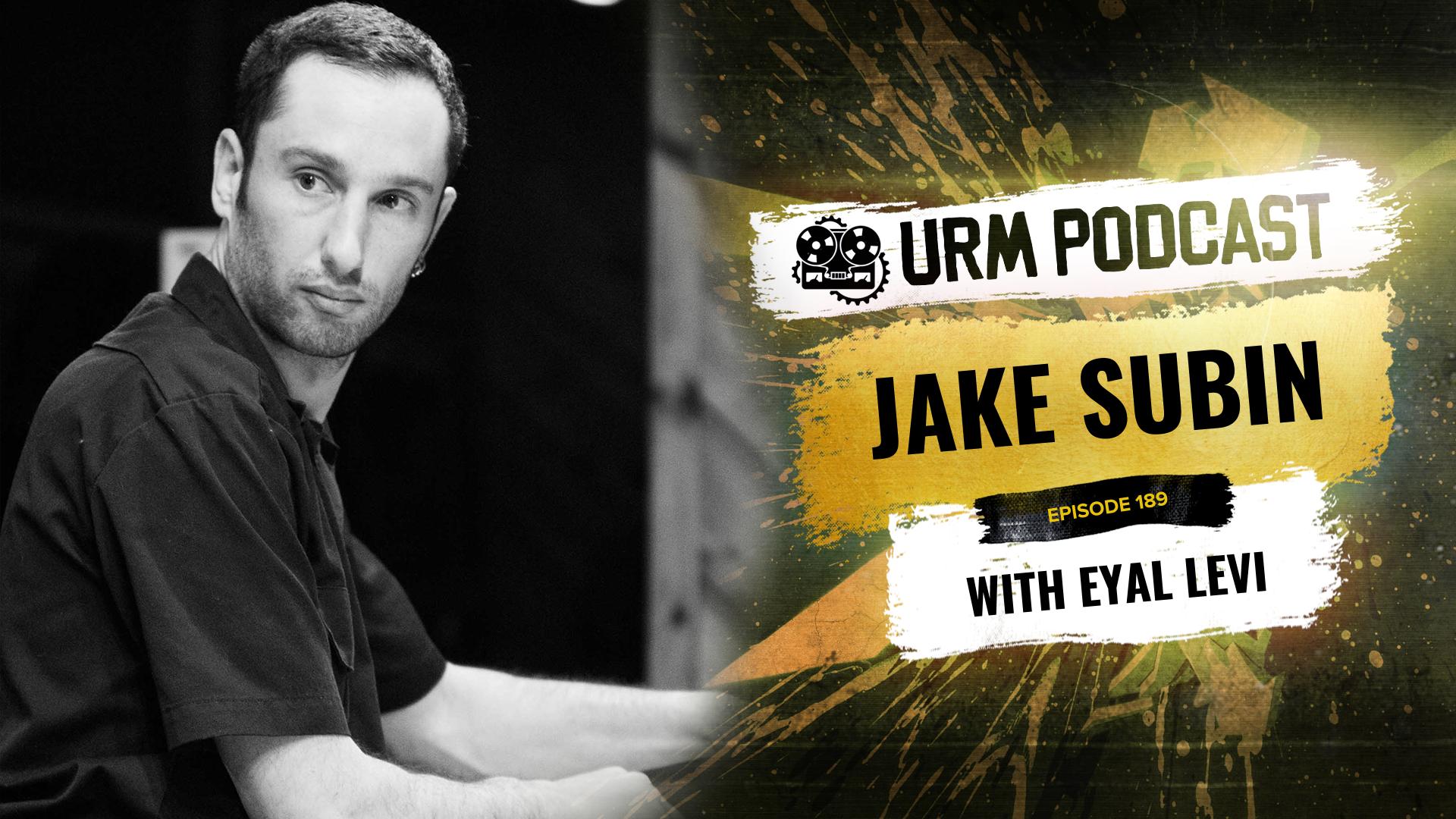
JAKE SUBIN: Telefunken’s Mic QC, Ears vs. Spec Sheets, and Talking Tech to Musicians
Finn McKenty
Jake Subin is the Chief Engineer for Telefunken, where he splits his time between two critical roles. On one hand, he’s the final line of defense in quality control, performing real-world listening tests on every condenser microphone before it ships to ensure it meets their standards for noise and polarity. On the other, he’s the in-house engineer, running sessions for Telefunken’s “Live from the Lab” series and for clients at their commercial studio. Jake also maintains a freelance career doing studio work and live sound and previously worked in commercial facilities in New York City.
In This Episode
Jake Subin joins the podcast for a conversation that’s all about the intersection of the technical and the practical. He gets into why real-world testing and using your ears will always trump relying on spec sheets, offering a peek behind the curtain at Telefunken’s QC process for their classic tube mics. The chat also explores the crucial soft skills of the job, like how to communicate technical feedback to non-technical musicians without killing the vibe. Jake discusses the importance of having enough technical know-how to troubleshoot on the fly, the ongoing pursuit of work-life balance, and why you should always be learning something new—like the room-tuning software he’s currently mastering. This episode is packed with great perspective on building a sustainable, multifaceted career in audio.
Products Mentioned
Timestamps
- [1:45] Jake’s role as Chief Engineer at Telefunken
- [3:25] The value of real-world testing vs. relying on spec sheets
- [5:11] Mixing with your ears, not your eyes (and why meters can be misleading)
- [7:29] The QC process for Telefunken’s tube condenser microphones
- [12:54] Translating what you hear into actionable feedback for technical staff
- [15:08] The difference between communicating with techs and musicians
- [19:12] Jake’s non-traditional path into audio engineering
- [28:27] Why technical knowledge is crucial for troubleshooting in a session
- [34:21] The value of having separate roles for producer and engineer
- [36:01] Separating the technical setup phase from the creative mixing phase
- [37:27] Balancing a diverse audio career with personal life
- [41:36] Making sure your actions match your priorities in work-life balance
- [46:50] The mindset that being a good engineer is a given; it’s the starting point
- [49:26] Why you should be a lifelong learner in the audio field
- [52:17] Learning Smaart to better tune PA systems and studio rooms
- [59:14] Why “get it right at the source” is harder to implement than it sounds
- [1:03:37] Common issues in home studio recordings (noise from appliances, barking dogs)
- [1:05:54] How working in compromised environments makes you a better engineer
Transcript
Speaker 1 (00:00:00):
Welcome to the Unstoppable Recording Machine Podcast, brought to you by IK multimedia. Ik. Multimedia gives musicians access to the most famous and sought after guitar gear and studio effects of all time. With our Amplitude and T-Rex analog modeling software, now IK has created the ultimate all in one bundle for bands and engineers. The Total Studio two max, combining all of I K's award-winning amp effects sounds and more. It's everything you need to track, mix and master your music. Ik, multimedia musicians first. For more info, go to www.rkmultimedia.com. And now your host, Eyal
Speaker 2 (00:00:46):
Levi. This show is brought to you by URM Academy, the world's best education for rock and metal producers. Every month on Nail the Mix, we bring one of the world's best producers to mix a song from scratch, from artists like Ms. Sugar, periphery a data, remember, and bring me the Horizon, and we give you the raw multi-track so you can mix along. You'll also get access to Mix Lab, our collection of bite-sized mixing tutorials and portfolio builder pro quality multi-tracks cleared for use in your portfolio. You can find out [email protected]. Okay. So Jake Subin, welcome to the URM podcast. I'm glad that we finally could make this work.
Speaker 3 (00:01:26):
Oh, thank you so much for having me on. I really appreciate it. Yeah,
Speaker 2 (00:01:28):
My pleasure. And so I know you as the chief engineer for telefon, and I know that that's not the whole story, but could you tell us what that entails? And I'm also curious about how that even came to be.
Speaker 3 (00:01:45):
Yeah, so my job is split into two categories here at telefon and one is QC for all the condenser mics. And one is mixing recording on the QC side is exactly what it sounds like. It's basically real world testing of all of our condenser microphones prior to them shipping out. So the mixing recording side would be any content that's driven by tele funken, whether it be live from the lab, which is our video series or some kind of promo that we're doing. And then we also have a commercial recording studio here that you can book out. And I run all those sessions, whether it's assisting for another engineer or actually doing the engineering myself as well as any mixing projects that would come in. And then every once in a while we do live events here where we will have a band come in, we'll have a crowd come in, it'll be exactly like live show. We have a front of house engineer, a monitor engineer. And then I'm getting a ISO split and I'm doing a live to broadcast mix for the band. And that's basically what I do here, very similar to any recording studio, with the exception that most of the content is driven by tele funken,
Speaker 2 (00:03:10):
Which is obviously doesn't need to be said, but which is obviously a classic company that has a huge array of products, not just microphones
Speaker 3 (00:03:25):
For sure. So yeah, so we have microphones, headphones, di, and we're in those situations. We're able to like the live in the lab series or the live events or any other content that we're driving, we're able to take those products and test them. Real world. It's definitely one thing to put microphone through. Its testing like ncoic chambers or through an A PX, any kind of mathematical testing or theoretical testing or even practical electrical testing. But it's a completely different thing to put it in a real world situation.
Speaker 2 (00:04:13):
It's interesting that you say that, and I'm probably going to get blasted by someone on your staff for saying this, but I've just noticed that there's a lot of up and coming engineers that will look at the spec sheets for a product, be it a microphone or a to D converter, and they will go just by what's on the spec sheets. And so if one piece of gears specs match another piece of gear specs, they'll believe that there's no difference when in reality, anyone who makes records and who has any sort of an ear will tell you there's a major difference, especially with converters. And you will see people go to war about this topic online especially. So it's good to hear someone who says that, yeah, it's one thing in a lab, it's one thing on paper, but it's a completely different story when you're actually trying to make music with it.
Speaker 3 (00:05:11):
Yeah, I mean, thank you for saying that. I mean, I can't stress this enough. And in my experience teaching as well as working with interns or working with out in the field, doing consulting for other people, this is something that nobody ever seems to grasp the severity of it, which is you, that's a good word. You mix with or you mix and record, you do audio with your ears. It's this, what does the waveform look like thing? Or what does the mic look like? Or Oh, look at this and look at that. And to me, I was always taught that you do this with your ears, it's your ears that are telling you the truth, not your eyes. And a perfect example of that for me is meters. I know a lot of people rely on meters, but for me, I've been in so many studios where the meters aren't telling me anything. I don't know if they're calibrated or if they're broken. Who knows? It's more practical for me to dial something in, listen to it, if it sounds good, who cares if the meter's doing nothing or pegging.
Speaker 2 (00:06:35):
Yeah, absolutely. And so do you look at yourself as the final line of defense almost in a way when it comes to actually putting this stuff through the real world tests?
Speaker 3 (00:06:47):
Yeah, so definitely. I mean, the other part of my job is doing qc. So with the exception of the DI's and the dynamic microphones, all condenser microphones will come through me first before they ship out. And I will do a real world listening test. And there are some other tests that I'm doing here in the studio, but mostly it's just to make sure that what you're looking at on the computer, what you're looking at on the analysis is actually true in the real world.
Speaker 2 (00:07:23):
Is it a proprietary thing or do you mind sharing a little bit about what goes into those tests?
Speaker 3 (00:07:29):
Yeah, yeah. I mean, so basically what I'm looking for is the noise, because with the exception of the M 60 in our condenser microphones, they're tube microphones and tubes inherently have two microphones, inherently have more noise than solid state microphones because tubes are noisy. So one of the things we're looking for is that those tubes in the microphones are within our threshold of what's okay, what's acceptable in the noise realm. And that's not just level. It could be the tube has a little sputter this or fluctuation of noise or where the frequency of noise sits to my ear. That may not be acceptable. And I may say to the tech, can you give me another choice? Can you give me another tube? This one has this, that, or the other thing. We're also looking at polarity to make sure that all of our microphones are consistently going out with the same polarity. And that decision was made prior to me coming here, what the polarity should be. And then we're
Speaker 2 (00:08:54):
Just for consistency reasons.
Speaker 3 (00:08:56):
Yeah, for sure. And because we want to make sure that if you buy, let's say you buy a stereo pack from us or you buy multiple mics from us, they're not one's one polarity and the other's the other polarity. And you get 'em in, you're like, why don't these work? What's going on? Why is everything so thin? And it's easier for us to ensure the highest possible quality.
Speaker 2 (00:09:24):
The classic issue when you go about buying Chinese made two bikes on the internet
Speaker 3 (00:09:29):
For sure. Absolutely. Yeah, no, for sure, for
Speaker 2 (00:09:31):
Sure. Never know what you're getting.
Speaker 3 (00:09:32):
Exactly, exactly. And we want to ensure that we don't want to turn out products that you have to guess and you have to be worried about and oh, is this actually, no, we want you to get that microphone. It sounds great. Right off the bat, it's going to work. Everything's correct. You can just plug it in and go.
Speaker 2 (00:09:56):
So how many times will you sometimes send something back? I'm just curious because I've seen software creation, for instance, and I know that it can just take
(00:10:08):
Years longer than people expect just because of these bugs. And to the end user, it's frustrating, but to the people making it, they're just trying to get it right and refusing to release something that's going to just break or spit out wildly different, wildly different things based on randomness. They're doing their best, but it definitely takes way more revisions than you're used to. And the reason I'm asking is I have never made gear in my life. I know some guys, some guys are all about it, but I'm not one of those guys. So I'm just curious.
Speaker 3 (00:10:47):
Yeah, no, I mean it's nothing to that extent. I will say the one thing that really blew me away when I came here, because prior to tele Funken, I was working in commercial facilities in New York City, and when you're in a commercial facility with large format consoles and lots of outboard gear, you're dealing with techs who come in to fix things inevitably because stuff breaks. The techs that work here by far to me, are above and beyond, I would say 99% of the texts that I've dealt with. The attention to detail and the quality that they produce really is exemplary. So as far as what I fail is very, very small. And they've come to learn through their own testing and the back and forth between us because it's not a wall.
(00:11:52):
It's a team effort to try to turn these things out. So I learn from them, they learn from me, and we are always talking and always shooting back and forth to try to find that, how to make each other's job easier. So with vacuum tubes, they can be a bit unpredictable sometimes. So maybe when they were tested at the tech side, they were fine, but whatever happened and they got to me and now it's not okay. Or it is a frequency range that I don't like coming from the noise that they couldn't pick up, and so I send it back. But as far as revisions and how many times I'm sending them back or how many I'm failing, it's fairly rare.
Speaker 2 (00:12:44):
Very, very, very interesting. Does that make for any interesting challenges when they don't hear something that you hear?
Speaker 3 (00:12:54):
Yeah, I mean, that's the going joke. Yeah, because making records is, again, for me, it's an experience that I'm using my ears. I was brought up on the backside of the old school guys who these guys don't look at screens. Even if they had pro tools running, the pro tools was being operated by somebody else on the other side of the room. They were sitting in front of the console and that's what they were looking at the console and the band in front of them. So I have become accustomed to, you are able to pick things out a little better after using your ears for 15 years in a critical listening environment, right?
Speaker 2 (00:13:58):
Absolutely.
Speaker 3 (00:13:59):
But for the texts, that may not be the case. So a lot of times what it is is I have to be able to translate what I'm hearing to something that they can literally go in and fix, which has for me been a learning experience to be like, okay, what do I hear? What could be causing it? And what could a possible fix be? Present that to them and then they can take it from there.
Speaker 2 (00:14:30):
That's really, really interesting to me. So you worked in a commercial facility, and I know that a facilities, and I know that you're freelance engineer as well as your gig for tele fun. And so I'm assuming that a big part of your stuff outside of tele Funken involves explaining to artists how to change something or fix something that you hear in one way that they may or may not understand. How does it differ between communicating that with, say, your studio clients versus texts at a major microphone company?
Speaker 3 (00:15:08):
Well, thankfully, a lot of the texts here are musicians, so not as different as you may think. I think the things when you're making a record, what I've found is that there's not as much, I'm always totally honest with people, I never want to put up a front, but there's a difference between being honest and being a jerk. Well, it's true. It's true. And I always have to keep in mind, and this is very difficult for me, but I always have to keep in mind it's not my record, it's not my music. I'm making somebody else's record, and my job is to take their vision and get it, capture it, and make it the best it can possibly be in their mind, not in mine. So when I'm communicating with texts, that's not really an issue.
(00:16:14):
I can be totally blunt and honest, and if I see something like whatever, I don't know. For example, we could take, I'm moving the microphone around and something's rattling in there. I probably won't go to the tech and be like, this is just a fantastic microphone, and that's a great shirt you're wearing, but I'm not going to sugarcoat it. I'm just going to be like, Hey, it sounds like something's going on. This is what I think here it is. With a musician, if there's something we could take tone, for instance, because that's always a big thing, whether you're a guitarist or a bassist or a drummer, a lot of musicians kind of have their sound, their tone that they've been working on or what
Speaker 2 (00:17:04):
They think
Speaker 3 (00:17:04):
Is their tone. Right, exactly. So it's my job to never put up a front, but do it in a way that doesn't hinder anybody, because that can totally stop the process. And when you're paying a hundred plus dollars an hour for a studio, totally bringing the process to a halt is not an option. That's not okay.
Speaker 2 (00:17:28):
No, not okay at all. Do you find that you have to switch into different modes? This is my all business. Talk to the text mode, just hear what's wrong,
Speaker 3 (00:17:41):
Say
Speaker 2 (00:17:41):
What's wrong, and then say later on that night, go to a music session with musicians, and do you have to get into a different mental state?
Speaker 3 (00:17:54):
I guess I've never thought of it. I guess so, but I wholeheartedly absolutely love making records. I love it. I can't even explain to you enough how much I love recording and mixing bands, whatever it is, whether it's a singer songwriter or a big band or an orchestra or a metal band or whatever. I love it. I love every second of it. So when I get into a session, I guess I'm not thinking about that because I'm so excited to be there, and it's so honoring to me that somebody has picked me to realize this vision with them. And on the tech side, I would say the guys and girls that work in the techs in the tech shop are so nice. Everybody's super down to earth, so it's just never been a problem. So whether there's a frame of mind switch or not, I'm not sure, but I think being able to just relate to people on different levels has helped.
Speaker 2 (00:19:02):
Is that something that you were always able to do, or is it something that you taught yourself
Speaker 3 (00:19:07):
Still learning?
Speaker 2 (00:19:08):
Good answer. And did you always want to be an engineer?
Speaker 3 (00:19:12):
No. And you know what? Your podcast, I've listened to a lot and other podcasts I've listened to, other audio podcasts I've listened to a lot, and the one thing that I keep hearing that I really feel like I missed out on is people keep saying, when I was a kid, I played in bands and we went on tour and I got signed and whatever. Either I was really interested in the studio or we needed to record an album, and I was the guy who happened to know a little bit, so I jumped on.
Speaker 2 (00:19:45):
Yeah, that's a common story.
Speaker 3 (00:19:47):
That was not me. I was a percussionist growing up. I played drums and I played clarinet and in school band, and I played drums in some bands, but wasn't really serious. Music was always a love for me, but I didn't have that seriousness that I hear from people on the podcast typically.
Speaker 2 (00:20:14):
That's interesting though too in a row Now, who did not start off that way? I just spoke to a guy named Andy Marsh. He plays guitar for a band called dus Murder, and he's just a genius of a guy who has just accomplished so many goals he set out for himself, but one of them did not used to be music. He only really discovered it when he was at the tail end of high school, actually in early college.
Speaker 3 (00:20:44):
Yeah, so
Speaker 2 (00:20:45):
Right to each their own.
Speaker 3 (00:20:47):
Yeah, exactly. I mean, my first pass at life was working with children, so nothing to do with music at all. I
Speaker 2 (00:20:56):
Was about to say that's not that different than working with bands.
Speaker 3 (00:20:59):
Oh, no, not at all. I mean, right. If anything, that helped me get along a little bit. But yeah, when I got into college, I got a chance to go to college for engineering, and that's really where I hit the ground running this story I also hear, but in college you get free studio time, so I just spent every single waking minute in the studio recording bands and playing with the gear, figuring out what it did. I got the chance to rebuild a console MCIJ 600, so I got all these great opportunities in college to really immerse myself in the studio without having to worry about the per hour rate or anything like that. That's really putting pressure on. I was recording bands for free and it was okay to mess up. It was okay to make mistakes. It was the safe place, per se.
Speaker 2 (00:22:08):
How did you get to that though? How did you decide you wanted to study engineering? Because that's not just a normal degree that you get at a college. It's a very tough degree.
Speaker 3 (00:22:17):
Yeah. I mean, so my degree is in audio engineering and the program that I went to, it's a mix of audio and electrical, and I was applying to, so that college, I worked at the radio station at that college, which we were talking about earlier.
(00:22:45):
The program came up because I was applying to other programs actually for master's degree, and I was not married. I had no kids, and I just thought, why not? Go for it. If you get in, great. If not, who cares. But if you get in, you can try this thing. If it doesn't work or you hate it, you have something to fall back on. You can do something else, but it's part of life is going out and kind of stepping outside your box a little bit, even if you're not really sure if it's going to work, if you do it, you succeed or you have a very good chance of succeeding. If you don't do it, you have zero chance of succeeding. Right.
Speaker 2 (00:23:32):
You basically write in your own fate by not trying.
Speaker 3 (00:23:36):
Yeah, exactly. And like I said, I did, I loved music as a kid and I loved music growing up. I have no musical relatives at all. Zero. None of my family was in music, but I played drums and I played clarinet, and I DJ'ed for a while and I was interested in electronics and taking things apart and manipulating things, and I did when I was growing up, we had TVs that were not flat screen, and I remember taking the TV apart and my dad just losing it because
Speaker 2 (00:24:20):
That's pretty dangerous.
Speaker 3 (00:24:21):
Exactly. He knew I could kill myself and he just lost it, but that's what I would do. That was me as a kid taking things apart, figuring it out, putting it back together. I love that stuff. So I went and did it. I just jumped in and I did it and I moved. I lived at school for the first year or so, and I loved it. I just absolutely loved it.
Speaker 2 (00:24:49):
Maybe you can answer something for me. So back in my band days, my band used to practice at my original studio and went through a lot of gear. I bought a lot of crappy gear, and it would break, and we would always give it what we called a proper burial, just destroying it once it broke. But when it came to an old school computer monitor, it was built kind of like an old tv. It just wouldn't break no matter what we did. It just would not break. Though. I know that with modern flat screens, you can drop a penny on them and that's it
Speaker 3 (00:25:33):
Shattered
Speaker 2 (00:25:34):
Forever. What is it about old TVs or monitors that I guess would have so much pressure, like internal pressure on it that would help it withstand baseball bats and being dropped and stuff? I've never been inside of one of them, so I don't know.
Speaker 3 (00:25:54):
Yeah, I mean, I'm probably not the best person to talk about that, but I will say this. The thing I did notice when I took those things apart was, and this is really, I truly believe that they don't make things like they used to thing. That's an actual thing. And the thing with the TV is if you think about a flat screen tv, where are all of the electronics in a flat screen TV in a very compact, tight space. If you ever open one of those old TVs up, it's like, or if you open up an 1176, there's nothing in there. It's shell for days. And then you have the innards of it are far away from the walls. So you hit it with a baseball bat, you're hitting plastic, you hit a flat screen TV with a baseball bat, you're probably crushing something in there.
Speaker 2 (00:26:56):
Yeah, done for.
Speaker 3 (00:26:57):
Right. Exactly. And I do not recommend it, but super fun.
Speaker 2 (00:27:02):
Yeah, yeah, yeah. Don't do it. The only time that we would do it was if a piece of gear was just dead.
Speaker 3 (00:27:09):
Well, you got to do it once in your life, but again, we don't recommend that.
Speaker 2 (00:27:14):
Yeah. Yeah. It's actually kind of fun.
(00:27:19):
Yeah, don't start doing that. So actually now, okay, so it makes sense to me how you ended up doing what you're doing. So a combination of audio plus taking things apart and putting them back together, that makes perfect sense. It's always interesting to me how some audio guys, for instance, we just had Dan Lancaster on Nail the Mix, and he's about as non-technical of a human being as it gets. He's a fantastic mixer and producer. His stuff sounds incredible, but that's just not how he thinks. And then I guess someone like Dan Corn on who we had a few weeks, ago's, done some incredible work, and that's totally how he thinks. And so it's definitely not a gauge for somebody's, just because they know or don't know electronics or building gear doesn't mean they're going to be a good or bad engineer. But I just think it's very, very interesting how there's a breed of engineers who come from that school. I've always thought it's very, very interesting and I'm also very thankful that you guys exist.
Speaker 3 (00:28:27):
Yeah. Well, for me, obviously it was an interest for me, but also my very first studio experience. I got in because I knew something and I was able to do something that nobody else was able to do. The other thing was after talking to engineers as an intern, I was exposed to a lot of engineers, and then as an assistant and as an engineer myself, it was horrifying to me to think that I'm in a session, something breaks, and I have absolutely no clue what to do. I, I'm dead in the water. And although that's probably a little extreme, that thought kind of propelled me to want to know more about the gear that I'm working with so that if I'm doing a session and something goes down, I have tools in my toolkit to be able to quickly and efficiently troubleshoot something to know whether it's actually dead or I just hit it a couple times and it's good to go.
Speaker 2 (00:29:39):
That's actually really, really wise because I mean, I'm one of 'em, so I am part of the problem, but maybe you wouldn't be impressed, but listeners, you would be amazed how many engineers don't know a thing about the equipment that they're using and really couldn't troubleshoot a serious problem if their life depended on it.
Speaker 3 (00:30:04):
And again, I think that it's just a mindset, like you said, it has no bearing on whether you're a good mixer or not to an extent. I think even the guys who aren't tech savvy at all, they know what they're doing because they're listening and they've done it enough times, right?
Speaker 2 (00:30:23):
Absolutely
Speaker 3 (00:30:24):
Right. But I feel like it's the same angle as engineers who are not musicians.
Speaker 2 (00:30:31):
Now, that's always weirded me out, and I know that is not as common as it used to be, but I know that there was a whole era preceding this one where that was actually really common where producers and engineers were their own. So it's whole track and you did not have to be a musician. I think nowadays, the way that most, the next generation coming up, most of them are going to be musicians in my opinion.
Speaker 3 (00:30:59):
And it's a little bit different in the sense that I feel like it's important for you to be able to communicate with musicians. If you have zero idea, it's going to be very difficult for you to have an efficient session with a band because if anything musical is off, which inevitably it will be, that's your job to sit here and listen and help that band move along and get to where they need to be. And you can't communicate at all. You can only talk in voltages, and you can show them a schematic, and all they can do is be like, look, this cord and that cord, and you're like, I don't know. Youre total miss. So you need a little bit of that. I think.
Speaker 2 (00:31:55):
Hey, everybody, if you're enjoying this podcast, then you should know that's brought to you by URM Academy UM Academy's mission is to create the next generation of audio professionals by giving them the inspiration and information to hone their craft and build a career doing what they love. You've probably heard me talk about Nail the Mix before, and if you're a member, you already know how amazing it is. At the beginning of the month, nail the mix members, get the raw multi-tracks to a new song by artists like Bringeth Horizon, gosh, asking Alexandria Machine Head and Papa Roach among many, many others. Then at the end of the month, the producer who mixed it comes on and does a live streaming walkthrough of exactly how they mix the song on the album and takes your questions live on air. You'll also get access to Mix Lab, our collection of dozens of bite-sized mixing tutorials that cover all the basics as well as Portfolio Builder, which is a library of pro quality multi-tracks cleared for your use in your portfolio.
(00:32:53):
So your career will never again be held back by the quality of your source material. And for those who really want to step up the game, we have another membership tier called URM Enhanced, which includes everything I already told you about, and access to our massive library of fast tracks, which are deep, super detailed courses on intermediate and advanced topics like gate staging, mastering Low end and so forth. It's over 40 hours of content. And man, let me tell you, this stuff is just insanely detailed. Intense members also get access to one-on-one office hour sessions with us and Mix Rescue, which is where we open up one of your mixes on a live video stream, fix it up and talk you through exactly what we're doing at every step. So if any of that sounds interesting to you, if you're ready to level up your mixing skills and your audio career, head over to URM academy.com to find out more. Absolutely. When I think it was okay where you could get away with it in the older days was when you had way more different jobs. The
Speaker 3 (00:34:00):
Studio, well, you,
Speaker 2 (00:34:00):
The studio split a producer. Yeah. Producer was just a producer, engineer was just an engineer.
Speaker 3 (00:34:06):
Yeah. And those are the sessions to me that really, I love that. That's how I want to work. I know it's very old. Well, I shouldn't say that. I don't know if it's very old school.
Speaker 2 (00:34:20):
It still exists.
Speaker 3 (00:34:21):
It does. I do it a lot. But to me, the way I think about it is if my job is to do things like hold down the session technically, make mic choices, make gear choices, make sure sonically everything is happening, and then I have next to me a producer who's doing things like, was that the right take? Where were the misses in that take? Was somebody sharp? Was somebody flat? Should we try a different chord here? Should you play open so that you get a bigger sound? Whatever. If we are splitting the duties, then neither one of us has to work double time on anything. And that to me, makes both of our jobs a little bit easier and freezes us up to be a little bit more creative.
Speaker 2 (00:35:12):
I was about to say, it's not just that it's easier, it's that it's in lots of ways more effective.
Speaker 3 (00:35:17):
Yeah, no, absolutely. But it's not as prevalent these days, I don't think.
Speaker 2 (00:35:22):
It's not as prevalent. But one thing or one of the main things that we tell people though, is that even if you're not able to have that kind of situation, you should create as much of that kind of situation in your workflow as possible. For instance, when mixing, do the technical setup stuff on a different day or at least a different session so that you can get into the creative mindset and not have anything technical getting in your way. And so that when you are in the technical mindset, you can just zone in on that and not have to worry about the feel of the song or something.
Speaker 3 (00:36:01):
Yeah. I mean, I would say that for me, it's a little bit different, but when I mix a record that is a hundred percent true, it's very difficult for me to go through and clean a session and make sure everything's right and arrange everything and color code and labeled tracks, and then go right into mixing. My mind just can't shift quite that fast. I need a little bit of separation. So usually what I'll do is I'll do those two things on different days.
Speaker 2 (00:36:34):
Well, and also, not just your mind, but what about your ears? I mean, even when you're doing the setup, you still probably have to hear some stuff.
Speaker 3 (00:36:42):
Oh yeah, for sure. Yeah.
Speaker 2 (00:36:43):
I know at least if you're replacing drums or reinforcing them or making final edits or cleaning up tracks, whatever it is that you do in your process, you're most likely listening to audio a good amount of the time.
Speaker 3 (00:36:59):
Even when I'm setting up mics for a session, I usually have something playing in the background. And I would say the taking a break, being able to let your ears rest a little bit is always productive.
Speaker 2 (00:37:15):
So how do you divide your time now? It sounds like both your pursuits are pretty all encompassing.
Speaker 3 (00:37:27):
Yeah, there's more. I've been taking on more and more and more trying to branch out a little bit and diversify, if you will. I don't know if that's the right word, but my time is,
Speaker 2 (00:37:39):
I call it de-risking de.
Speaker 3 (00:37:41):
Okay. Yeah, I like that. I like that I, because I do live sound and I do front of house and tech and consultations for a lot of ministry churches and artists that I've worked with. And then I do the studio thing, recording and mixing, and then I work at Tele Funken. So the time is usually split where I know that I'm going to be at tele funken mostly days Monday through Friday during the day, and then sessions at night or on the weekends or depending. So I'm trying to arrange things so that everybody loses out and I'm not letting anybody down, and then still having time for that work-life balance that nobody has actually perfected yet.
Speaker 2 (00:38:39):
So to say you actually, you can have a life too. That's
Speaker 3 (00:38:42):
Crazy. Yeah. Well, I mean, have my biggest fan of all time is my wife and my daughter. I guess when we, I'm sure that helps. I mean, look, I've met, I won't say any names, but I met this guy who, we recorded an album together and I met his wife, and all she could talk about was how much she hated this guy's music. And I just couldn't,
Speaker 2 (00:39:14):
Wow.
Speaker 3 (00:39:16):
I
Speaker 2 (00:39:16):
Couldn't even, that's so brutal.
Speaker 3 (00:39:17):
Well, I couldn't even imagine it. I could not imagine it. And I was fortunate enough to meet my wife through music, and she has just always been a hundred percent on board, nothing less.
Speaker 2 (00:39:35):
Wait, wait. So his wife didn't even, it wasn't even like, I hate that he works so much.
Speaker 3 (00:39:40):
Oh, no,
Speaker 2 (00:39:41):
No. Or it was like his music sucks.
Speaker 3 (00:39:44):
Well, I think it was more like she had spent not divvied out the priorities well, and he had spent so much time on his music that she now hated the music instead of hating him. So we would go, I would say something like, oh, we're going to be in the studio this weekend. Are you going to swing by and take a listen and hang out? And she's like, no, I would never, no, I'm not going to do that. I can't believe he's still doing this, and stuff like that. So the bottom line for me is having that huge amount of support regardless. My wife doesn't care what the record sounds like. She doesn't care if I sell a million records or if I sell zero records. She's always going to be my fan. She's always going to support me because that's how we do.
Speaker 2 (00:40:40):
That's incredible. I kind of wish every, everybody who took it upon themselves to make a creative field, their job had that.
Speaker 3 (00:40:49):
Me too
Speaker 2 (00:40:50):
Definitely would make their lives a lot easier.
Speaker 3 (00:40:52):
I would not be doing what I'm doing right now without her. There's no question. No question.
Speaker 2 (00:40:57):
So you brought up something interesting though. You said that you thought that the guy did not prioritize his work life balance well enough to where, so it's not necessarily that his wife was the problem. It sounds more like he was the problem and she just got tired of it. And I actually think that that's something I see very often that the wife starts as supportive, and then over the years it just chisels away at her will. Little by little by little until 10 years later, she just can't handle the fact that the dude still even owns a guitar
Speaker 3 (00:41:36):
Dude. Absolutely. And I mean, look, this is a huge thing, and they don't teach you this in school, but I've heard this from many engineers. You have to, there's two different things setting here, right? There's you setting priorities and then you actually living out those priorities. You can say till you're blue in the face, my family is my priority. But if you are in the studio 24 7 for the next 10 years and you miss every birthday and every anniversary and every Christmas and every whatever, then clearly they're not the priority. You need to be able to say, no, that I don't work these days because I'm going to go spend time with my family, or it's my wife's birthday, so we're going to go do something no matter what the gig is. And alternately, on the other side, my wife knows that when I say I'm going to be home at six, that probably means one or two in the morning. So she has a lot of give for me. She has a lot of movement, and she's been with me long enough that she knows what a studio session includes. She knows what making a record entails. She knows the time it takes, and we both have to be aware of that. If either one of us starts to fault on that a little bit, the other one suffers.
Speaker 2 (00:43:06):
You brought up something interesting about your actions matching what you say your commitments are. I just made a video for URM. By the time this comes out, the video will have come out just about how if you say you've got an extreme goal, well then you have to put extreme action behind that goal. And if you're not putting in the extreme action, you should ask yourself if that goal really is something you want or you're just in love with saying that you want it. And there's a big difference there, and that goes over to personal life as well. Like you said, you can say your personal life and relationships are important, but until you make them important, they kind of aren't.
Speaker 3 (00:43:50):
Absolutely. And I think that you can roll that over into your entire life, whether it's your professional career, your personal life, whatever it is. I mean, look, if you tell a band one thing and they have totally unreal expectations based on what you told them, guess who's not going to be happy? And that's not going to make for a good ending. It's just never going to make,
Speaker 2 (00:44:18):
Nobody's going to be happy because one, they're going to have unrealistic expectations and they're going to grind you for those expectations, and then they're going to be unhappy when you don't meet them. B, you're going to start hating them because they're grinding you for things that you feel are unrealistic, and C, you guys are probably not going to work together again because you hate each other,
Speaker 3 (00:44:41):
And it totally negates the point of what you're doing. Again, for me, I just wholeheartedly love making records, and I love the people that I spend time with to make those records. It's just opposite of what I should be doing to create expectations that aren't realistic. It just doesn't make any sense to me. And I feel like what I've heard a lot, which I don't know how true it is, and again, I don't want to set out any negative anything, but when people would talk about the industry to me, they would say things like, watch out in the music industry, whatever people lie, cheat, steal, blah, blah, blah, blah, blah. I haven't experienced that, but I think it's really what you make of it.
Speaker 2 (00:45:30):
I mean, how's that different than any other industry? It's just people.
Speaker 3 (00:45:33):
Exactly. Exactly. And that notion of working with people in any format, but this goes back to how do I get gigs? Hey, can you tell me how to get gigs? How do you get gigs? And it's like you go and you meet people and you talk to people face to face, and you make relationships, and those relationships blossom into something, and then you're in the studio, and while you're in the studio, you're forming more relationships and you're talking to people and you're having conversations. It's the human element.
Speaker 2 (00:46:09):
Absolutely. And not to mention you're wowing with your work the entire
Speaker 3 (00:46:15):
Time. Well, right. I mean, look, Dave Pendo, do you know him? Not personally, but you know the name.
Speaker 2 (00:46:23):
No, no, no. I don't know him personally, but he's definitely one of the guys that started the whole online audio education thing that we now have built a whole company off of that's He was one of the guys who was doing it, even though it was for free on YouTube. He's one of the guys who was doing it before it became a thing. Exactly. So of course.
Speaker 3 (00:46:50):
Yeah. So I was at a workshop with him in Nashville at Blackbird, and he said something that was totally not life-changing, but very, very important to me, which I kind of knew already, which is that being a good engineer is a given.
Speaker 2 (00:47:08):
Yep. It's assumed.
Speaker 3 (00:47:10):
You don't get any points for being a good engineer. If you're not a good engineer, you may lose a little bit, but when you walk into a big session or any session and you're not a good engineer, that's just one of those things that you have to be, that's the starting point, right? And that is, how do you get that? Well, you do things like I was talking about, I did all this free work in college for four years. I recorded bands for free. That's how you get that experience, and then you go and you be an intern and your stuff, all of the online education that you guys do and that Dave does, and that all these people do, you're gathering information. You're gathering information. Does that mean that every session is going to be perfect and you have to be the best engineer in the world? No, but you have to walk in and be able to have a session that's efficient and it's not wasting people's time, and you're getting done something that's being progressive.
Speaker 2 (00:48:17):
Actually trying to be the best engineer in the world is sometimes counterproductive.
Speaker 3 (00:48:20):
Oh, for sure.
Speaker 2 (00:48:22):
It's merely being super competent is a fantastic goal because, well, for a few different reasons. I'm not saying sell yourself short, just saying that ultra competency is actually pretty rare. And if you can achieve ultra competency, the byproduct is you probably will be one of the best in your region. At the very least, ultra cut competency is not as common as people may think. But I feel like that should be the goal, because it's almost like you can take ultra competency and map that into tangible, tangible things like what does it mean? Maybe it means I need to become an incredible drum editor, which daws do I need to become an incredible drum editor on? Which drum editors do I know? How fast do they normally move? Do they use macros? All these questions that you can answer, yes, no, yes, no. Okay, I'll do this, this, this, and this, as opposed to just thinking to yourself, I'm going to be amazing or something.
Speaker 3 (00:49:26):
And one of the things that I do love about this industry in particular, which I guess again, you could really fall down into any industry, but this one in particular is that I am always learning, constantly learning. It's just a repeated every session trying to take something in, no matter how small it is, because that is what is going to make you better in the end.
Speaker 2 (00:49:56):
Did you ever have a time period where you were like, yeah, I'm good.
Speaker 3 (00:50:02):
Never.
Speaker 2 (00:50:03):
I don't need that info, right?
Speaker 3 (00:50:05):
No. No.
Speaker 2 (00:50:06):
Do you know any great engineers who have ever even given that off?
Speaker 3 (00:50:15):
No. No. This sounds like a guess. I'm going to say no, but what I will say is I have heard some engineers talk well in their right to be a little cocky per se.
Speaker 2 (00:50:31):
Well, in their right is not what I mean. One thing is if you do great work and the world agrees that you do great work and you kind of know it, that's okay. There's nothing wrong with that. Oh, for sure. I mean, you're just accepting reality. But I still have never heard any of those guys who are pretty confident be like, there's nothing left to learn.
Speaker 3 (00:51:00):
Oh, no, never.
Speaker 2 (00:51:01):
I got this down. No,
Speaker 3 (00:51:02):
No, no, no, no. And even the big guys, you always hear them saying things like, oh, I felt like I was in a little bit of a rut. So I just changed everything. I just went for it.
Speaker 2 (00:51:17):
I hear that all the time.
Speaker 3 (00:51:17):
Yeah. So no, absolutely not. It's a lifelong pursuit of learning, for sure.
Speaker 2 (00:51:25):
How do you go about learning now? Because talking about balance now, where do you find time for that? Or is it just built in?
Speaker 3 (00:51:35):
Well, I do think some of it's built in because I, no session is ever the same, even if I'm working with the same band for a week, and I am working with people who are extremely talented and they teach me stuff all the time. On the other hand, I seek things. It's an active process for me to go out and seek something new, to put another trick in my bag, per se.
Speaker 2 (00:52:14):
How often do you find that happening?
Speaker 3 (00:52:17):
All the time. For instance, I just started learning this program Smart by Rational Acoustics.
Speaker 2 (00:52:29):
I have never heard of it, but I'm looking it up and it will be in the show notes. I've never heard of it. Yeah,
Speaker 3 (00:52:34):
Check it out. I mean, basically what it is is it's at the, this is a huge 30,000 foot view, but it's basically software that we use to tune rooms, and it gives you, it's just massive. You have to check it out. But basically what I use it for is to tune live PAs and to tune studios. So it will tell me, well, it'll tell me a lot of things, but the immediate things that I want to know are phase coherency, the frequency response of the room in a real time graphical layout, the impulse. So how, let's say one speaker is arriving at me a millisecond later than the other speaker. That's important for me to know because that can have a whole host of problems along with it, like comb filtering or phase anomalies or all that stuff. So I'm using, I'm learning this program so that I can better tune PA systems, so when I do live shows, I can have it running live, and I have the RTA running and I have a transfer curve, so I know about where I want to be. So even if I don't know the room very well, I can graphically see what's happening in the room. And that with a combination of me literally listening to what's happening, I can usually avoid things like feedback problems, phase anomalies, too much low end stuff like that.
Speaker 2 (00:54:16):
I'm actually looking at it right now. Smart with two As.
Speaker 3 (00:54:19):
Yes,
Speaker 2 (00:54:20):
This program looks incredible, actually.
Speaker 3 (00:54:23):
Oh, it's enormous. It's just a fantastic program. I can't say enough about it. And I've just scratched the surface. I've been using it for about two months now, and it's just been huge. The work has just been really enlightening to me.
Speaker 2 (00:54:42):
This makes me think of something, because basically what you're describing is the exact opposite of stagnation. I really do believe that if you stay in the same spot, you die, you evolve in reverse.
Speaker 3 (00:54:56):
I agree.
Speaker 2 (00:54:56):
But I've been to certain studios where I've flown out to work with people and walked in and been like, wow, I recognize this place because it's exactly what my studio was like in 2003, and I didn't have an SSL or anything. It was, I'm talking like a Delta 10 10 and Orex and some SM 50 sevens through and about that sort of deal where I can date it based on what version of the software they've got. I know that they haven't updated since 2004, and it blows my mind. I don't understand how that's possible. And then I talk to people on here all the time and they're like, yeah, I'm checking out this new incredible thing, or I just learned this great trick, or whatever it is. There's always something that has got their attention right then and there that they're moving their craft forward with.
Speaker 3 (00:55:58):
It's
Speaker 2 (00:55:58):
Very interesting, the difference.
Speaker 3 (00:55:59):
Yeah, and I mean, for me, usually what kicks it off is something either happens that I have to say, I don't know the answer, but I will find it out for you. Or something peaks inevitably, if you work consistently, well, I guess hopefully if you work consistently, you are hearing and your ability to hear things critically will get better. So as I work, my critical listening gets better, and I'm able to discern things much easier. So I'm going to start to tweak as I hear better to make my listening experience not only better, but translatable to the real world. So I've been mixing at tele Funken for almost three years now in the same room. But I am constantly tweaking, constantly tweaking speakers, constantly checking to see if I can make the room translate even better to the outside world, because if it sounds good in here, that's great, but if it sounds good in here and sounds terrible to everybody else, doesn't really matter. Right.
Speaker 2 (00:57:12):
No, it definitely doesn't matter. And also just because it sounded good in that room three years ago,
Speaker 3 (00:57:19):
Right, exactly.
Speaker 2 (00:57:21):
When you first started working for them, just because whatever you were doing was working out then doesn't mean it's going to work out now because the world evolves
Speaker 3 (00:57:31):
And my workflow and my workflow and how I do things is drastically different from what I was doing three years ago.
Speaker 2 (00:57:40):
I can imagine. What's the one thing that you've dropped doing that you can think of? What comes to mind?
Speaker 3 (00:57:46):
What have I dropped doing? Let's see here.
Speaker 2 (00:57:50):
I don't think I've ever really asked anybody that.
Speaker 3 (00:57:52):
Yeah, and from my standpoint, it's a really difficult question because I find that the evolution of my workflow is things naturally drop out in a slow progression. It's very rare that I ever just cut something. I will say that something that I've really honed in on, I would say more in the past five years, but really since I've come here because of all the critical listening that I've been doing, is trying to take what I'm recording at the very beginning, right from the source and making it as very close to the final product as it possibly can be, just with nothing, no compression, no eq, just mic choice and mic placement starting there, because that really makes it so that when I start processing things, they just get better. I say that to people and they're like, yeah, of course. Why wouldn't you do it? But it's not as obvious as I think people think it is. And to me, I would rather enhance than have to go in there and badger and beat something into submission.
Speaker 2 (00:59:14):
I think I've thought about why it's not that obvious, because everybody, it's one of the audio cliches, get it right at the source. And obviously it's true, but if it was that obvious, then we wouldn't need to say it over and over again. So I started wondering to myself, why is it that it's not as obvious as it seems? What is more obvious than that? Not much, but why does the actual implementation of this escape people? So I started thinking about situation that I've been in where I wanted to get it right from the source, but either I lacked a skill which allowed me to fully exploit the situation, or I felt like it wasn't possible to get it any better at the source. And I was just like, oh, we'll just pull this up, this tool out to fix it, and we'll just keep going.
(01:00:09):
And it's a slippery slope because then you pull out another tool to fix something else, and then before you know it, you're not getting things right at the source and you're creating the exact problem, even though you think you're getting things right at the source. And so there's a lot of self-deception involved, and I think that for a lot of up and coming engineers who don't have a mentor, don't work at a studio. That self-deception, hard to spot because how would you know that you're doing it if there's nobody to really tell you and you've never seen anybody else do it well before? Same thing happens when we tell people, you need to play harder with your right hand. And the picking articulation has everything to do with your guitar tone. And they're like, well, I don't understand why my guitars sound like shit. I'm a good guitar player.
(01:01:03):
And they end the conversation there, and what do you say? No, you're not. You suck. I've heard your tracks. You're not a good guitar player. Where does that go? Then they say, but I am. I've been playing for 15 years. I know I'm good. Everybody says I'm good. I'm fucking good. Fuck you. And then it's where exactly do you go? Unless that exact person is brought into a bootcamp or a seminar or they get an internship or they get to work with really, really great guitar players, or they get a guitar teacher, imagine that and just somehow get shown by other people that their right hand technique is atrocious. And if you just move the pick over to this angle, it's going to solve everything or whatever it might be. Like stop death, gripping with your left hand, whatever it might be. I think that lots of these things are, they're just tough to grasp on your own if you don't have a frame of reference. And so that frame of reference, I think is what throws everyone off.
Speaker 3 (01:02:06):
And I mean, look, by no stretch of the imagination, do I have this nailed packed down? And there are who does? Right? And hundreds upon thousands of things that could make your source not good from the start. Everything from whatever the player, the instrument, the room, the signal chain, whatever it is. And I think as I did it more and more, I was able to suss things out and some things you cannot correct for. You can't pick the band up in the middle of the session and be like, I don't like this place. Let's move to another one. That's not really how it works. And other factors play into that, though I have seen it happen. Well, yeah, right. But I mean, if you're thinking about very rarely, yeah, I mean, you're on a really tight budget, and so you pick a place that you can stay within the budget or you have a really tight budget, so you do it in your house and you can't always correct for the Mack truck that just hit the tree outside your living room in the middle of the perfect take
Speaker 2 (01:03:27):
No. Or the inherent electrical problems that are just because the wiring in your home is 30 years old and it is what it is.
Speaker 3 (01:03:37):
Yeah. I mean, I can't tell you how many times I've been to home studios that have noise issues. Nobody can figure it out. And it's usually something like when the dishwasher goes on, all the Mike Priest get this weird noise in them, but nobody thought about the dishwasher because it's not in the room or the furnace or whatever it is. I mixed a record and the vocalist did all his vocals at his house, and as I started to compress and bring that stuff up, dogs were barking in the background in the middle of the take. It's stuff like that that it's very difficult to correct for if you're going to do it at your house. So you have to be really aware of that stuff. You almost have to be sharper if you're going to be in that situation.
Speaker 2 (01:04:32):
Absolutely. That's why actually I'll nail the mix when, well, first of all, no session is ever perfect.
Speaker 3 (01:04:38):
No, no, no, no.
Speaker 2 (01:04:40):
Doesn't matter who recorded it. It's never perfect. But when we send people stuff, we send them what we got from the mixers and the band, so it is what it is. That's what got released. And oftentimes there will be a bad edit here, a bad edit there, something that got through, and that's a normal part of life. And some people complain about it, and we always tell 'em, look man, that's actually far more beneficial to you than if we were to send you something that was a hundred percent and perfect, because real life will never be that way. It just won't. Part of being a good engineer is knowing how to problem solve on the fly, and whether that means that you know how to do it via technical electrical information and gear building, or whether you just know how to eliminate a bad piece of gear immediately and get something else that'll get the job done real fast up or whatever. You know how to say the right thing that solves the problem of the moment. It doesn't matter what your method is to be good at this stuff, you need to be able to solve problems in the moment incredibly fast.
Speaker 3 (01:05:54):
Yeah, absolutely. And you would be putting yourself at a disadvantage. I feel like if you thought or if, I don't even know if this is possible, but let's say at the very beginning of your career, you only worked in the best possible studios with the best gear and the best musicians and everything is the best, and that's all you ever worked on. And then all of a sudden one time you got to go into something that's even a little bit compromised, you're totally at a disadvantage as opposed to, you record in when I was in bands. When I was in high school, our method of recording was taking the boombox, finding a balance between two guitar amps, a bass amp, and a full drum set, somewhere in the middle of the room pressing record and just thrashing at it. It never came out sounding good. It just was a distorted mess all the time. But when you go from that to a big studio where everything's beautiful, the room sounds amazing, you have amazing mics and amazing gear. The job becomes like a thousand times easier,
Speaker 2 (01:07:11):
And you appreciate it.
Speaker 3 (01:07:12):
Oh, absolutely. Oh man. You're just so thankful to be there and everything just gets bumped with this positivity that's like, it's unbelievable.
Speaker 2 (01:07:22):
Yeah, absolutely. I think that that appreciation goes a really, really long way to
Speaker 3 (01:07:28):
I agree.
Speaker 2 (01:07:30):
So Jake, thank you so much for coming on the podcast. It's been great talking to you, and I really do hope that we can do it again. It's been awesome.
Speaker 3 (01:07:42):
Oh, man, it's absolutely my pleasure and I would love to do it again. Anytime, man.
Speaker 2 (01:07:46):
Well have a great rest of your day.
Speaker 3 (01:07:47):
Great. Thank you so much. The Unstoppable
Speaker 1 (01:07:49):
Recording Machine Podcast is brought to you by IK Multimedia. Ik. Multimedia gives musicians access to the most famous and SAR guitar gear and studio effects of all time with our amplitude and tres analog modeling software. Now, IK has created the ultimate all in one bundle for bands and engineers. The Total Studio two max, combining all of I K's award-winning amps effects sounds and more. It's everything you need to track, mix and master your music. Ik, multimedia, musicians first. For more info, go to www.ikmultimedia.com. To get in touch with the RM podcast, visit urm com slash podcast and subscribe today.

