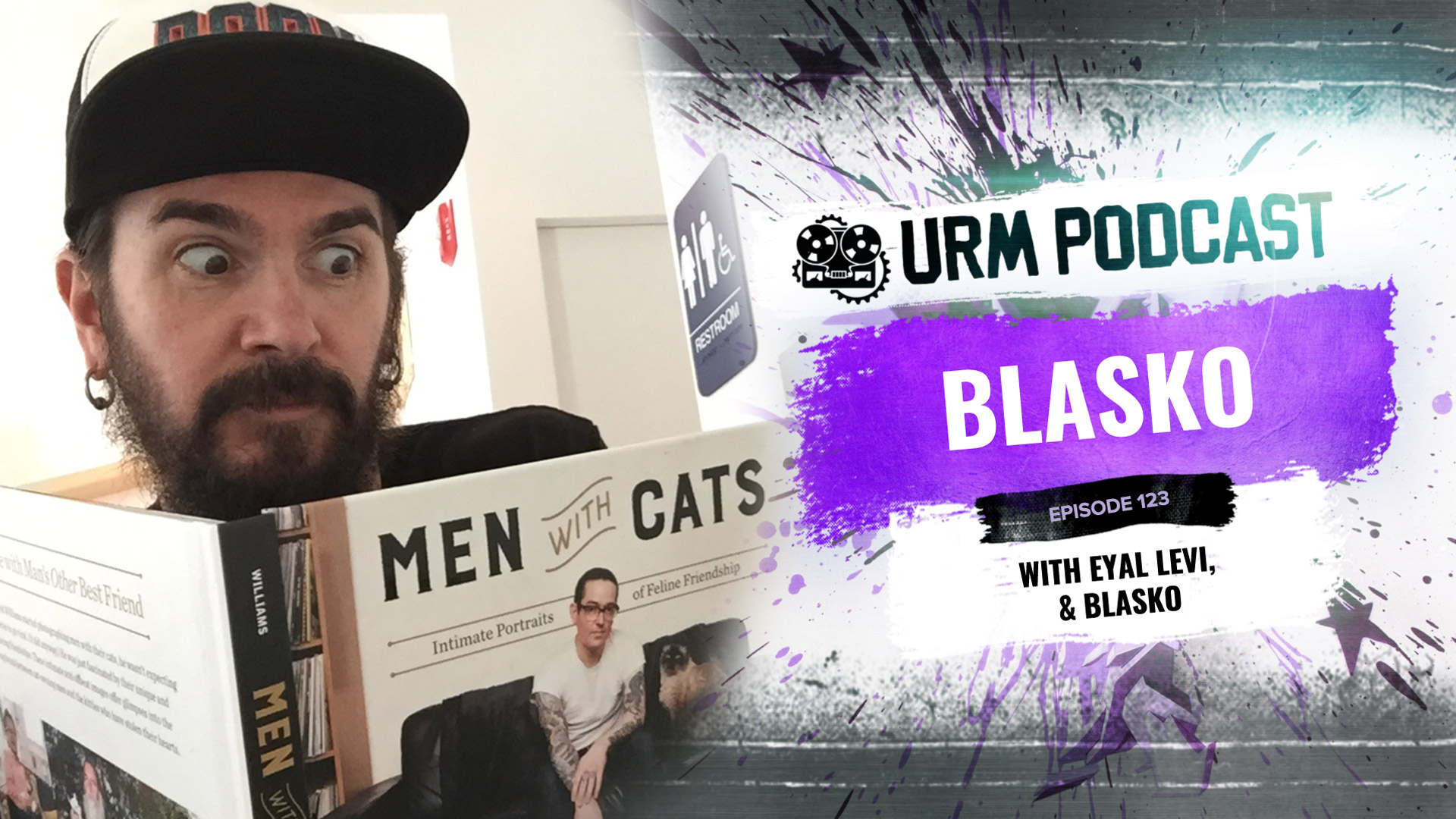
BLASKO: The “House of Cards” Music Biz, Life After Ozzy, and Networking Secrets
Finn McKenty
Blasko is a bassist who has laid down the low end for icons like Ozzy Osbourne, Rob Zombie, and Danzig, and was an early member of the thrash band Cryptic Slaughter. He’s also the co-owner of Mercenary Management, where he represents major artists like Black Veil Brides and Zakk Wylde, building their brands well beyond just the music.
In This Episode
Blasko gets real about the mindset it takes to build a long-term career in the music biz. He talks about why he sees the industry as a “house of cards” and how that fuels his entrepreneurial drive to constantly adapt and stay ahead. Blasko shares the story of his pivot from being a top-tier touring musician with Ozzy Osbourne to starting his own management company, explaining the self-awareness it took to know when to transition. He drops some serious knowledge on how to approach networking, emphasizing that it’s all about providing value, not just asking for favors. He also gets into his personal productivity hacks, like his five-sentence email rule and other time management strategies that keep him from burning out while managing multiple high-level projects. It’s an awesome look into the business side of things, packed with advice on how to avoid bitterness, stay motivated, and appreciate the insane opportunity of making a living from heavy metal.
Timestamps
- [1:36] The “shark” mentality: Why you have to keep moving forward in music
- [2:18] Viewing the music business as a “house of cards”
- [5:49] Getting a record deal at 15 with Cryptic Slaughter
- [7:27] The moment he realized he’d reached the pinnacle as a musician with Ozzy
- [8:00] Transitioning into business and starting a management company
- [10:10] The importance of self-awareness in avoiding bitterness
- [13:36] How to maintain a positive focus in a negative industry
- [14:35] Pivoting from early attempts at production and A&R to management
- [20:37] Why you need to be able to repay favors to build relationships
- [22:49] The right (and wrong) way to approach industry professionals for help
- [25:07] What a band needs to do to get his attention for a tour
- [29:55] The fear and boredom of only doing one thing in your career
- [33:59] Blasko’s early music consulting business and why it didn’t work
- [39:55] Lessons learned from working with a visionary like Rob Zombie
- [42:41] What he looks for when deciding to manage a band
- [47:45] Blasko’s 24/7 work ethic and time management strategies
- [50:32] The danger of becoming a “slave to your inbox”
- [54:40] The five-sentence email rule
- [56:02] His favorite role: Making a living hustling heavy metal every day
- [59:43] The power of “just fucking do it”
Transcript
Speaker 1 (00:00:00):
Welcome to the Unstoppable Recording Machine Podcast, brought to you by Bala ga Guitars. Founded in 2014, Bala Ga guitar strives. To bring modern aesthetics and options to vintage inspired designs, go to bala ga guitars.com for more info. This episode of the podcast is also brought to you by Fishman inspired performance technology. Fishman is dedicated to helping musicians of all styles achieve the truest sound possible. Wherever and whenever they plug in. Go to fishman.com for more info. And now your host.
Speaker 2 (00:00:32):
Hey, Eyal Levi. Welcome to the Unstoppable Recording Machine Podcast. I am Eyal Levi, and with me is one of my favorite heroes in the music industry. It's Mr. Blasko. How are you doing, sir?
Speaker 3 (00:00:46):
You're very kind. You're very kind. Thanks.
Speaker 2 (00:00:49):
Thanks for being here. I'm sure you guys have heard of him, but if you haven't, for the three of you who haven't plays Bass in Ozzy Osborne has played with Rob Zombie and Danzig, the co-owner of Mercenary Management that represents Blackville Brides and Zach Wild. Basically, I have known him, and this is crazy to say, for 10 years now, and always has something new going on, something cool. One of the most interesting and entrepreneurial dudes I know in this industry, and I think it's very, very cool that you're here and I'm excited to pick your brain. Can you believe that it's been 10 years since that Oz Fest, though?
Speaker 3 (00:01:36):
It seems like longer. I feel like I should know you for longer than 10 years, but yeah, man. Wow. And yeah, in tune of my entrepreneurial spirit, it's like it's out of necessity if sharks sink, if they don't keep swimming, and that's where that comes from. Like I don't have a fallback planned. There's no plan B or anything. It's kind of like, this is it, man. So I got to keep up. I got to keep reinventing. I got to keep moving forward afraid of sinking.
Speaker 2 (00:02:18):
I remember you telling me a few years ago that no matter where you feel you could get to, you would always feel like it's a house of cards and that at any point it could go away and that keeps you invested in the game.
Speaker 3 (00:02:36):
Yeah, I mean, dude, we're in the music business. I mean, think about all the things that we've already seen come and go. My fucking card doesn't even have a CD player in it. You know what I mean? It's like that's crazy. And I remember because like in Cryptic Slaughter, we were putting out records in the eighties, and I remember whenever our third record was coming out, and Brian Slagel for Metal Blade Records was like, okay, guys, check it out. We've got this new thing that this record's coming out on. It's a cd, it's a compact. And we're like, there's no way anyone's going to get hit to this shit. Like, look how small the artwork is.
(00:03:23):
That was our perspective of, because the artwork was so much smaller that no one would be into it, right? It had nothing to do with convenience or any of that. It was just kind of cassettes are convenient and they're smaller. You know what I mean? And they're still two sided, but you know what I mean? So just think of that cassettes have come and gone, vinyl come and gone and then come back and then CDs are going away. You know what I mean? And I mean, that's just the platform. But I mean, think about all the bands, all the managers, all the musicians, you know what I mean, that we've seen come and go, man, this business is a house of cards.
Speaker 2 (00:04:03):
It is absolutely a meat grinder too. I'm wondering, since you've seen so many changes, have you noticed that every single time one comes up, people act like the sky is falling?
Speaker 3 (00:04:15):
Yeah, man, I think,
Speaker 2 (00:04:16):
Or is it now more than ever?
Speaker 3 (00:04:18):
Yeah, I think that there's something to that for sure. I mean, I don't know mean, it just seems like now there's a constant state of reinvention, you know what I mean?
Speaker 2 (00:04:30):
Well, and I've noticed, like I said earlier, that you've always got something new going on, always something interesting and always some sort of, I don't want to say it's not a hustle, but it keeps the hustle alive. And I'm wondering if you were always like that.
Speaker 3 (00:04:53):
No, maybe I was. What? That's a good question. I don't even know that I've ever kind of thought about that. Mean, there was something about, I remember having shitty jobs, and I always remember thinking, there's something more for me out there. This isn't the rest of my life. The rest of my life isn't selling used clothes to fucking assholes. It's just not. And there was always just this innate undercurrent of a feeling to where I go, man, there's something else out there. So I never gave up. I was always striving to be successful musician. I mean, that was the inception of everything that I've pursued to now all starts with wanting to be a successful musician.
(00:05:49):
And I think a lot of that stems from the fact that I got such an early start. I mean, in metal, who gets a record deal at 15 years old and then is put out three albums by the time they graduate high school. It's a bit of an unfair advantage, but it also kind of poisoned my mind into thinking like, fuck man, I can just continue to do this shit. You know what I mean? And then you move out of your parents' house and you go into real life and you just go like, wow, this is a lot harder than I thought it was. If I got to actually try and make money at this fucking business, because it's early on, it's like cryptic slaughter. It's like we all lived at home. We were all in high school. It didn't matter. Like cryptic slaughter wasn't about making money because we didn't need any. And then when you realize like, oh wait, this is a business. Fuck, man, I got to reinvent my thought process.
Speaker 2 (00:06:47):
I mean, that changes things a little bit, I'd say, to say the least. For sure, for sure. Well, I mean that feeling of there's something out there for me that's this, there's something bigger or better. I mean, let's be real. You've kind of done things with your career that lots of people would've been like, okay, there's nothing bigger than this point right here. If it ended here, that's fine. Nothing bigger. Do you still have that feeling,
Speaker 3 (00:07:27):
Man? So it's like there was this moment when I joined Ozzy's Band, when I definitely felt that way of, I've reached the pinnacle from the 16-year-old dude playing in a garage in Santa Monica, speed metal and shit from that guy going to the guy that's on arena stages playing crazy train and paranoid with the guy, the reason why we're all here, even talking now, to go from that guy to this other guy, when I got there, I was like, wow, this is really the end of the road. I've reached the end. I have nowhere left to go, and I definitely do not want to be, I definitely don't want to be that guy that ends up just slugging it out in clubs, I feel like as a musician. Anyway, I go, okay, this is where I transitioned into business. And that was the exact moment when I started my own management company is when I joined Ozzy's Band because I was like, well, as a musician, this ends. And so I knew that I wanted to still be in music though. My love and my passion for music was there, but I didn't feel like my career as a 50-year-old musician or 60-year-old musician hired gun guy was going to be my future. I was like, well, I've done that and now I got to figure out what's next. And like I said, that's whenever I started managing because I needed to segue and start to fill in the gaps of the next phase of my career.
Speaker 2 (00:09:24):
Well, at some point, Ozzy is actually going to retire,
Speaker 3 (00:09:29):
And my goal was with him. My goal was that I retire when he retires on his Wikipedia page. I'm the dude that I'm that last bass player guy that just goes down when he goes down.
Speaker 2 (00:09:45):
Not a bad goal.
Speaker 3 (00:09:48):
I figured it's like that as a musician. That's good, man. That's good to end it there. I don't need to keep grinding, man. I don't need to keep slugging it out. And no offense to the guys that do. I'm just saying that wasn't for me. That wasn't at that point, that was my realization that I don't want to be that guy.
Speaker 2 (00:10:10):
Well, I want to pause on that for a second. The fact that you realized that you didn't want to be that guy, and as long as I've known you, you've always seemed like a pretty happy dude. And this isn't industry. That's not just a house of cards, but there's a lot of miserable people in it. And I think that this could may be me just reading into it, but I feel like that self-awareness, you know who you are and you knew I don't want to be that guy who's playing clubs at 60. I don't want to be a session guy after this. I know what I want. I know. Do you feel like that self-awareness has kind of led to you having generally a good time at this game?
Speaker 3 (00:10:59):
Yeah. I mean, I'm still having a good time. I'm not, man, you've seen it too, man. There's a lot of bitter people in this business, and we're lucky not. And we could be, we very well could be because you and I, we followed similar trajectories in terms of carving our own way. You know what I mean? But both of us could have easily just been like, oh, it didn't work out for our bands. Now what? Now we're just bitter and fucking look at everyone else's success and hate them for it. Well,
Speaker 2 (00:11:39):
That's what you focus on. If you go through life enough, you're going to have enough bullshit or enough great stuff to where you could choose to focus solely or weigh your focus heavily in any direction you want, and you can write your own story. So if you want to write a miserable, bitter story, I mean the ingredients are all there, but I think it's a choice not to. And I also think that self-awareness plays a part in that. For instance, with my band not working out, I was already over being in a band anyways, and I knew that I needed to do something else. Same as when I finished doing production. If I was still tricking myself into thinking that I wanted to be in a band, I could be one miserable fuck right now, still thinking about bad record deals or booking agents or whatnot, and why do that?
Speaker 3 (00:12:43):
Yeah, I mean, it becomes, yeah, man, like you said, look, I feel like I've got a pretty good energy and I've got a positive outlook when I wake up every day and I'm stoked to go to work and that it's my own work and I'm up early and I'm grinding, but it's my thing and I'm stoked about that. I don't have to hustle anything for the man. And I'm stoked about that, and I'm fortunate, and I don't take it for granted because there's a lot of people that are born into unfortunate situations, and I feel very lucky that I wasn't, and that I've been given the opportunity to be able to build this. And so, yeah, man, there is a lot of negative energy and stuff in this business, and it's kind of a drag, and you definitely have to distance yourself from it, drag you down
Speaker 2 (00:13:36):
And keep a positive focus alive at all times, which I think sounds kind of hokey, but it's totally not. It's a lifesaver. I want to talk about when you started managing, because I think that that's an interesting transition. You've actually become a prominent manager with elite clients, and I think that this is interesting because lots of times you hear about musicians who want to try their hand at some businessy stuff and not to be a dick, but it's kind of a joke a lot of the times. Did you have any mentorship maybe from Sharon Osborne, or did you just kind of figure it out as you went along? How did you figure this out? I think that the failure rate is pretty high for musicians who go into business.
Speaker 3 (00:14:35):
And I mean, one thing to consider was it just didn't fall into my lap. I knew that I didn't want to be a musician forever. I was content with where I was in that aspect of my life, and I knew I needed to move into something else to build a career. I knew that I wanted to continue to be in music. So in business it's called Pivot, and there was a couple of false starts that I had to pivot into something else. So out of the gate, whenever I made this decision of wanting to build a secondary career elsewhere in the music business, I initially kind of thought, man, I really love recording bands and maybe I want to get into production and stuff. But at that point, it was the realization that a quote producer guy, like a Rick Rubin thing, those guys were becoming dinosaurs. And I wasn't locked into that world enough deep enough yet. You know what I mean? And then my engineer skills were super weak, and everyone was light years ahead of me in pro tools and everything, and you know what I mean? I really kind of explored that for a while until I came to the realization of, this is not a career. There's too many people in front of me. You're
Speaker 2 (00:16:01):
Actually an impressive producer. Let me just say, I know that me and you have worked on some music at times and just you telling me what to do idea wise, taking that producer role was very effective. You're better at it than a lot of guys I know who have all the technical skills in the world just saying,
Speaker 3 (00:16:25):
Yeah, I mean, hey, look, thanks. And I do feel like there is some value there in terms of, like I said, a Rick Rubin type of a producer. I feel like there is a skill level there that I have, and I do love doing it, man. Look, honestly, man, if I could be in the studio with bands all day and helping with arrangements and getting the best vocal takes and working on melodies, and if I could get a job paying me what I need to get paid doing that, that'd be fucking awesome. But there isn't.
(00:17:03):
So I pivoted into what I thought maybe was going to be more of an a and r type type of role. And then I quickly realized that those guys were becoming dinosaurs too. And once again, I wasn't deep enough into that situation to where anyone would necessarily, I didn't have a track record of finding and signing successful bands. As the labels started to develop war rooms and clip all these guys that had high salaries and stuff, I was like, man, this is a dead end. So anyway, so then I pivoted into what I go practically. I go, well, the strength of a manager kind of relies on his Rolodex, if you will, his connections, his reputation. And I go, my reputation is relatively intact. I've had record deals and been in the business and have a lot of friends and a lot of business associations, and I was like, I'm going to give a shake, try my hand at management or whatever. It just kind of practically seemed like the right business move to do, and that's what I did. There was no real mentorship. However, Sharon did come into play whenever she enabled the first clients, because there was a thing at the time called Battle for Fest, which I think was on MTV or whatever, and it was
Speaker 2 (00:18:43):
I remember that,
Speaker 3 (00:18:44):
Yeah. Yeah. And it was like this reality show thing for the people that don't know, it was like a bunch of bands got in this survivor kind of situation, and the winner got to be on Oz Fest that year or something. So it was a while ago, and I kind of forgot how it all kind of fell into place, but we ended up with the runner up band, and that was what started my career like, look, you're only a manager. If you have a client, you can be a manager, you can say you're a manager, but you just got to have someone to actually manage. So she enabled the situation to where she was like, oh, and here's this band. And then we got them a record deal and all that sort of transpired or whatever. And then that segued into other things and building a relationship with Century Media where I had signed other bands and whatnot. So I guess it was a semi mentorship thing, whereas she enabled the first client, which then triggered all the others.
Speaker 2 (00:19:49):
I think that what's interesting to note though is that while the situation you were in facilitated client one, what I've always said to people is connections. All they do is open a door. And this is true if all the way down to if you are the kid, the rich kid who dad knows, an entertainment attorney who knows the owner of a label to the situation you just described, the connections will open the door, but they definitely will not keep you in the room to stay in the room. It's all what you do once the door is open.
Speaker 3 (00:20:37):
Yeah. I mean, yeah, I couldn't have said it better myself. I mean, that's true. I mean, you got to get in there and you got to start proving yourself because at some point, people will get tired of you when they see your number pop up or whatever. Oh, here's this dude calling me for a favor. Again, you've got to build it up to where you can repay favors, and that has to be your agenda from the get go. You have to go like, okay, cool. I know I'm going to slug it out for a minute, but my agenda has to be to where I can call those people back and repay those favors sooner than later because eventually you're just going to tag yourself out of the situation if you're not turning things around in your favor.
Speaker 2 (00:21:28):
It's interesting that you put it that way about the returning favors, and it's interesting to me that very few people do that sort of thing, and the ones who do strangely enough happen to be the guys that I've known the longest. And it's not even this, it's calculated, but it's not, I don't know how to say it. It's not like this fake thing where you feel like you're being bought, it's just that that your friend or your contact actually is thinking of you, and when something comes up, they're actually try to help you out. And that's what it feels like trying to help you out, not so much being bought. And I feel like that authenticity is something that when people are trying to say, networking is important and your social skills are important in this business, sometimes they forget to mention how important it is to actually come off as authentic with this stuff.
Speaker 3 (00:22:37):
It's
Speaker 2 (00:22:38):
Hard to even describe properly for me, but the difference, of course, you do when you feel like someone's just trying to buy you with favors.
Speaker 3 (00:22:49):
Yeah, I mean, I think it's a matter of perspective too. A lot of times you got to approach someone in it, what's in it for them? Because I can't tell you how many emails I get, and I'm sure that you get 'em too. And it's always formatted in a way to where, what's in how they benefit, not how I benefit. It's like if you're coming at me and I have something that you want, you better tell me how it benefits me. If you're only telling me how it benefits you, what's my motivation? You know what I mean? I get these emails all the time, like, oh, man, we'd really love a tour with one of your bands. It would really help us out. And yeah, I'm sure that maybe it would, but what the fuck do I care, man? You know what I mean? No offense. But it's just like, this is business, man. What are you going to do for me,
Speaker 2 (00:23:46):
Man? I'm just thinking about how funny that is. We would love a tour with Zach Wild in case you didn't know. Could you hook that up please?
Speaker 3 (00:23:55):
Right. And that's the kind of shit that I get on a daily basis all the time or just, and even if it just kind of generically, but I guess my broad stroke point is it's like if you don't have anything to offer, then you shouldn't be hitting up people that have something to offer you yet. You're not ready. You're not ready to start. I mean, I get it. You know what I mean? We're living in the world of social media, and I'm excited. You can hit me on Instagram. You know what I mean? We're relatively easy to find types of people. So because we're out there, it's easy just to put together an email and just kind of throw it out there and go, well, fuck it. I'll just email 'em, whatever. But don't waste everybody's time, including your own, you know what I mean? It's like, man, there has to be a balance. You know what I mean? Don't just fucking, because it's like you. You're developing bad habits early on whenever you're just reaching out to people that you think have something to give you, but you're not offering anything in return.
Speaker 2 (00:25:03):
Well, okay, so conversely, what is a way to get your attention?
Speaker 3 (00:25:07):
I mean, it depends what you're looking for, but in the event that say, someone's looking for a tour, right? Come at me with your stats. Come at me with what you can bring to the table. It's so much time. It's like, oh, we're just looking to get on one of your tours because it's, that'll really help us, really us get us in front of people. I'm like, oh, okay. Well, so I mean, so I think that it's one of those things where you got to be like, we've done X, Y, and Z. We've accomplished, we've sold X amount of records out of our trunk. We've played with so-and-so bands. You know what I mean? We've sold X amount of merchant. It's like, look, if we're talking about touring or whatever, touring's a business. I told someone recently touring's a business, and the value that you bring to a booking agent or to a tour is the fact that you sell tickets. The only currency that we're talking about when there's shows, right, when it's a tour or shows or whatever, it's like you got to be worth tickets. And if you're not worth tickets, then you're not ready to be on a tour yet. And then you get these cry babies that are like, well, how do we do that if we don't play in front of people, we can't be worth anything. And it's like, you know what I mean? The snake's eating its fucking tail or whatever. And I'm like, yeah, yeah, but other people have done it.
(00:26:40):
It can be done. But you got to grind. You got to get out there. And I know I use the phrase that no one likes to hear, but hard work, man. It's like, you got to get out there, you got to grind. No one's going to do you a favor. I'm not knocking on your door going, Hey, man, I got this great opportunity for you. No, it unfortunately doesn't work that way. It's like other bands have created their own value, whether they start their own record label, they go out there and they tour on their own, they find fans on social media, whatever it is, but they build up value. I mean, there's a multitude of ways that that can be done, and that could be a whole separate podcast episode, but the reality is you got to have some kind of value. And so I don't know, that's a long-winded answer, but that's just the way is
Speaker 2 (00:27:32):
Fantastic answer. I think that it's really, really fascinating to me how long it takes people to understand that and how some people never get that ever through their heads. But I can tell you from my own experience that that's been maybe the one thing that has remained consistent in every advancement I've had in my own career has been through every good thing just about, has been through hooking somebody up over with something. And I don't mean hooking them up with drinks. I mean at the bar one night though, that never hurts. I mean, helping them out, bringing them value over time and proving myself to deliver that value over time and to be dependable, that's literally been what the thing that has helped me stay alive in this whole thing.
Speaker 3 (00:28:38):
Yeah, I mean, you have to lead by example, but also you need to learn that no one's any more special than anybody else, right? No one knocked on your door and said, Hey, man, I heard you fucking want to get into producing. Here's this band and here's a budget. That's not how it worked. And the same thing with me. I go, okay, cool. I need to build a secondary career. I'm going to get into management. No one knocked on my door and said, Hey, man, I heard you want to start a management company. Check it out. Here's a band and a free record deal. And you know what I mean? It's like, no, man, both of us, we had to reach out to some people. We had to put our nose through the grindstone and we had to get our hands dirty, and we just had to figure it out along the way. And whenever you feel like you're wasting time, you do away with that and you focus on something else, and it's an ebb and flow, but you've had just, I've had different flows of our career that it's not like we've only done one thing ever. We were doing multiple things at all times. And for us, that's the way it works.
Speaker 2 (00:29:55):
I am dreadfully frightened of the situation where you do just one thing. I mean, I know some of those guys who have done one thing their whole career, but that just honestly, first of all, it feels like it would be kind of boring.
Speaker 3 (00:30:11):
Boring,
Speaker 2 (00:30:13):
And I don't ever want to be bored. But it also feels kind of scary. I think that adaptability is, like we said earlier, is really important. And I question how adaptable someone is if they've only done one thing.
Speaker 3 (00:30:29):
Yeah, I mean, I agree mean, it's like not only is it, not only is it boring, but what are you going to offer? What else can I mean? I don't know, man. It's just a different business. And I think that there has to be some level of flexibility, at least from my perspective, looking at me and you, it's like, this is the way that we're going to survive is by being flexible and putting ourselves out there. But I mean, I've never really been given the opportunity to only do one thing. And if that one thing was selling used clothes to people, fuck, I'm glad that's not what I ended up doing.
Speaker 2 (00:31:10):
Well, I mean, speaking of adaptability, I would've never guessed that I'd be making better money than ever in my life off of an educational venture. I never saw that for myself. I never thought I would enjoy it, first of all. And I never really saw that this internet education thing would, you know what I'm saying? I didn't see this six years ago.
Speaker 3 (00:31:39):
Hey, look, as cliche as it sounds, man, it's not the destination. It's the journey. And we don't know where this is going to lead us. I mean, yeah, did I get into the business to be in a band and play music? Yeah, I did for sure. And I still do that, but that hasn't been my solo focus for a long time. And if you want a career, you have to be open-minded, I think, and you've got to be willing to roll with it and put yourself out there. Look, I've got a list of things like a list of projects that I take to certain levels. Some die on the vine and some get far into execution, and some go all the way to success. But I'm always putting myself out there and trying the next interesting thing. And like I said, but it's like there's as many failures. There's probably more failures than successes, but this is what we got to do.
Speaker 2 (00:32:43):
Well, if you don't mind me bringing something up from 10 years ago, I remember one thing you tried that didn't work out, and I'd like, if you don't mind me bringing that up, I just want to so that we can kind of explain to people what it's like to try something it not work out, and then quickly pivot. I remember you tried doing a coaching thing for a little bit. I actually bought a session from you and it went really well. I really enjoyed it. But I remember you did that for a little bit. You were coaching band members. This was what, in 2008?
Speaker 3 (00:33:19):
It was in the MySpace days. So when was that? You know what I mean? However long ago that was.
Speaker 2 (00:33:25):
It was after Oz Fest,
Speaker 3 (00:33:26):
Yeah.
Speaker 2 (00:33:27):
Oh seven, but was, I don't know, it was around oh 7, 0 8 kind of time periods.
Speaker 3 (00:33:36):
Sure, sure.
Speaker 2 (00:33:37):
Something like that. And you did it for a little while, if I remember correctly, and had some clients, and then you just stopped. And I think you explained to me once that you realize that it's too much backwards momentum, and basically the juice wasn't worth the squeeze.
Speaker 3 (00:33:59):
Yeah, I mean, it's interesting, right? Because this applies to so many things. One of a side hustle that I started that I pivoted away from quickly when I realized it was not going anywhere, which is interesting because you just said that you would've never thought that you would be killing it in the educational space, which is what I was doing with that thing, with that coaching situation. So it was for anyone that doesn't know, it was a music consultant kind of thing where you'd send me your music and I'd listen to it and we'd get on the phone for an hour. And I think the idea of it was is that I'd be like a mentor, like a coach, and in my mind, the vision of it would be this sort of reoccurring thing where we would chat for an hour and then I would give you these tips and things that you would do, and then you would do it, and then we would connect then in a week or two weeks later, and we would go through all that, and then I would give you the next set.
(00:35:06):
You know what I mean? I think that that was the vision of what it was. Now, unfortunately, the reality that I came to was is that people only call because they thought that I had some magic potion of success where I would just, in one hour I'd be like, Nope, you got to do X, Y, and Z. And then they would do that and they'd be like, oh my God, that was it. And that's not true. So the problem quickly became that there was no return customers because it was like, oh, man, I'm going to call this guy and for a hundred dollars, he's going to give me the keys to the kingdom. And then whenever they realized that wasn't the case and that they actually had to grind it out, even if it was strategic grinding, they weren't down for it. And so I pivoted away from that and because it was just no one was getting anything out of it, I wasn't getting anything out of it.
(00:36:03):
These people were under false pretenses of what it was about, and it wasn't a real thing. So here we are, right? Fast forward here're in the educational space, me and my friend Mike have a podcast in the educational space, and I feel like that's better, right? Because it's like the expectation is low in that we're not trying to make any money from it. We are too bros that talk about music all the time anyway, so why not just record the shit and let people listen to it? And that's fine. You know what I mean? I feel like I am validated now in the educational space, and that's that. I don't know if that kind of answers it, but
Speaker 2 (00:36:50):
It does. And by the way, for anyone wondering, the podcast he's referring to is called Managemental, and it's with Mike Maori who listeners of this podcast will recognize been on. He's a badass manager as well, and it's a really good podcast, actually. I've listened to a bunch of the episodes, so check it out, managemental podcast.
Speaker 3 (00:37:16):
And I think that what we're doing with that podcast that we sort of took from our own wannabe educational experiences is like, yeah, okay, we're never going to escape the types of people that think we have some magic keys to the kingdom. Those people are always going to exist, and we're never going to distance ourselves from them entirely, right? They will listen to an episode or two and they'll tag out. So what we did is we're like, okay, well, what are the things that are the most important to them? And the people that are willing to put in the time will continue to listen and those that won't, and that's just be, but we structured it in a way to where it's a formatted podcast. It's no more than 30 minutes, and we just focus on one topic and we have people write us and we try and engage with them and incorporate their ideas and as well as what the things that they're most interested in. I'm not trying to sell anybody on the podcast, I'm just explaining over this educational space. We went at the podcast with a very thought out idea with what the end result was going to be, and people seemed to be resonating with it, which maybe is an improvement from our early attempts at the music business, educational space.
Speaker 2 (00:38:44):
Well, I will try to sell people on it. I think that people should check it out. It covers a lot of the questions, a lot of the business questions that come up in our private Facebook group, or when we do one-on-one calls with people or just we're always talking to our audience and they always have these recurring business questions, and you guys do a phenomenal job of addressing them. It's almost like you're reading their minds will. Thanks. So yeah, I will go on record saying that people should check it out. So I've actually got some questions for you from our audience, if you don't mind answering some of them. And I'll try not to ask you things that you've probably answered 8 million times.
Speaker 3 (00:39:36):
That's no problem.
Speaker 2 (00:39:37):
Here's one from Johnny. He says, obviously Rob Zombie is a super, and he capital letters a super creative dude, as are many of the people you've worked with. How has working with guys that shaped your perspective on creativity and art in general?
Speaker 3 (00:39:55):
It's been super influential. I mean, Rob Zombie in particular, my time in that band, seeing him be sort of a one man army, right? No one did shit for that guy, and it's not like you could do it anyway. It's just like, you know what I mean? He's writing the songs, he's making the albums, he's doing the album covers, he's designing everything. It's all his vision. You know what I mean? What's someone going to do? Hey, Rob, let me help you with your vision. That's not how it works. And that guy, it's just all the things, designing the stage, how things are going to work, sitting there, looking over the shoulder of the lighting guy, programming lights and everything, that dude is a complete a hundred percent visionary. And look, he puts himself out there a lot, and not everybody might be stoked on every single thing that he does or whatever, but man, he's not afraid to put himself out there, and you got to give a lot of respect to that.
Speaker 2 (00:40:58):
Well, I see that a lot in what I know of you. You're also not afraid to put yourself out there. And on stuff that I've worked with you on, you've had a holistic view on where things are going to go. You've had visual ideas, branding ideas, how things should go musically. You've had the whole picture in your head. Do you think that working with him helped get you thinking like that? And do you think it's helped you be a good manager to have the experience of being around someone that's got the whole picture in their head?
Speaker 3 (00:41:43):
It was inspiring, I think, for nothing else. It wasn't like I sat down. It was learning by observation and just being inspired by someone that just gets up and just, I mean, it's the same kind of thing. I mean, it's like at any point the bottom could fall out of this situation. You know what I mean? For him, a lot less than me. But still the point of it is, is we're all building these foundations on very shaky ground and stuff. So his whole thing was just really inspirational, I think, more than anything else.
Speaker 2 (00:42:22):
All right. Here's one from James Patricio, Jesus, which is, maybe someone already asked this, but what characteristics do you look for when deciding to manage a band? Also, do you when bands are persistent to be managed, or do you find yourself approaching bands instead?
Speaker 3 (00:42:41):
It works a number of ways. I mean, at this point, early on I had no option, right? Because I was a brand new guy. Just like at one point you were a brand new producer, you wouldn't be calling up, no matter how awesome of a skill level you were at, you couldn't call fucking Metallica and go like, Hey guys, I'm your guy to produce your next record. You know what I mean? You're just not there yet. You have to work your way up. So as a brand new manager, I wasn't going to be hitting up established bands and wanting to manage them, no matter how much I thought that I would be a badass, the reality is I had to find things that I believed in that I thought were going to put me on the map, that I could help put them on the map.
(00:43:33):
And I was going to build a career by building other band's careers. I mean, conceptually, that's the only way this is going to work. I got to find something that no one knows about in the gutter, and I got to develop it, and I got to make it this thing to where people are like, oh, wow. Yeah, fuck yeah. And there was a moment whenever, and I'm trying to make this not sound like I'm patting myself on the back, but to me it is a visualizing moment whenever I go, okay, I just put out two records within the course of a few weeks of one another, and both those albums were top 40, billboard, 200 charting albums, and I go, and those were both bands that I found on the internet, you know what I mean? That no one gave a shit about. No one believed in it.
(00:44:22):
I remember shopping the bands and people just going like, dude, these bands suck this fucking, you don't even know what you're doing. There is no chance then. So, okay, you know what? Fine, I believe in myself. I believe in these bands. Fuck all of you. I'm going to go for it. And I did. And then I took both those bands from nothing to something of which they are currently both projecting even further than that. But that was just that moment when I took these two things and I go, wow, okay, granted not top 10, not number ones, but man, to me, I go, wow, that was a moment for me. And so I guess my long-winded point of getting around to it as at this point, I'm not really in that mode anymore. I'm not looking for things that I've got to build up. It does take a lot of time and a lot of effort and sometimes a little bit of money to do that, and you got to be the favor guy again and stuff.
(00:45:23):
And I'm not really there. I, I'm comfortable with my roster that I have, and if I'm going to add anything to my business, it has to be another business. Only other businesses can compliment my business at this point. I'm not looking into getting into charities, you know what I mean? I just don't have the time or the energy to put into. And also too, man, it's just like we're living in a different world. Whenever I picked up these bands and stuff and I developed them, it was pre Spotify, it was pre streaming era, we were still putting out CDs in record stores. There's not very many of those anymore and stuff. So it's a different landscape that I'm not really willing to investigate right now.
Speaker 2 (00:46:14):
And dude, and you know what, it's kind of like back, sorry to cut you off, but kind of back to what I was saying earlier about your sense of self-awareness, it does nobody any favors to take on projects that you're not into anyways.
Speaker 3 (00:46:29):
No, and like I said too, man, it's just a different landscape. I mean, it's tough to break bands now, and a lot of times it just never happens. A lot of times they just kind of come out and they hang around for a bit and then they tag out because it, you start off young, but man, you get a little bit older and responsibility kicks in and you got shit to pay for, and it's just a lot tougher now. So I am more into taking what I have and developing those brands laterally with Zach building his guitar company and building his coffee company and really developing his brand laterally. Those are the more of the things that I'm into these days. I'm not really into picking up more bands unless there's something along the lines of already an established business that I can contribute to expanding their business laterally as well. Well,
Speaker 2 (00:47:29):
Great answer. Here's one from Andre six. How time consuming is your work week considering all the different ventures you're active in? Did that change over the years and how would you have any tips on how to best use the time energy you have and not burn out? Was that ever an issue for you?
Speaker 3 (00:47:45):
Well, I mean, here's the thing. It's like you have to, I don't know if everybody has to, but you have to recognize that this is my own business. So the only time that I'm not working is when I'm sleeping, which is hardly ever. And so it is stressful because everything is on me and I'm the one that gets myself up in the morning. No one does it for me. I'm the one that answers the emails. I'm the one that answers the phone calls. I'm the one that strategizes, everything is all on me to make sure that employees are getting paid and the money's coming in and the clients are being handled. It's all on me. So in terms of time, it's 24 7. But in terms of time management, there are things out there that, I mean, I've definitely done my research and definitely done my trial and error, and I'm sure you have your own styles, but I mean, there's things that you can explore. I mean, just Google time management and there's different things that I use, but I'm a time management guy for sure. There's the GTD system that I use. But
Speaker 2 (00:49:07):
Dude, you're a time management ninja.
Speaker 3 (00:49:09):
Yeah, I mean, I am, and like I said, we could probably do, this is another thing. We could do a whole nother podcast just on time management resources and activation and whatnot. It's just like, but yeah, I'm definitely a guy. I'm just not like, oh, an email come in, I'll answer it now and then figure out what to do with the rest of my day. It ain't that I, from, I answer emails at a certain point in a certain point of the day, you know what I mean? Then I deal with phone calls at a certain point of the day, and then I deal with my, it's like it has to be structured, otherwise it just gets chaotic.
Speaker 2 (00:49:43):
I actually, I got to know your email rhythms.
(00:49:47):
I mean, seriously though, some people may not understand this, but I'll just answer emails as they come in and then figure out what to do with the rest of my day is a very easy path to take in this business. And it is such a bad path to go down because you will get so distracted off the main goal, and before you know it, you spent all day answering emails, some about nothing, most about nothing, and probably dealing with a crisis or two or three that isn't really a crisis and weird deadlines that have no basis in reality where you could have been focused on a goal that's going to actually make you some money.
Speaker 3 (00:50:32):
Yeah, I mean, look, Tim Ferris man, four hour work, a four hour work week. I've read that. And granted his shit is pretty extreme, but there's a lot to take away from that in that, like you said, it's like a crisis is not a crisis, an email crisis, whatever it is, will work itself out. You know what I mean? You don't need, you can quickly become a slave to your inbox, which is fucking deadly, deadly man. And I highly encourage everyone to get an email system and rhythm worked out or whatever. If you're a slave to your inbox, man, you're going down a deadly path. I even think about this, you'll get a laugh out of this. So the other day, kind of inspired by the Tim Ferris method, I was talking to somebody and I go, you know what, man? What would happen if I just put an autoresponder on my email that just said, I don't email anymore. Here's my phone number. I only work via phone. Now what if I only did business? I mean, obviously there's certain things that you have to send people via email or whatever, but in terms of communication, what if I auto responded, I no longer communicate via email. If you have my phone number, you know how to reach me. I will set up a time and we can discuss from this time to this time and we can knock out business via the phone. What if that happened?
Speaker 2 (00:52:05):
I bet you that the communications would be right to the point, look kind of in movies where they have that scene with the CEO where the people go into pitch an idea for the CEO and they have literally five seconds or two sentences to get it done, or he's onto the next thing. I think it would be kind of like that and it would probably be really effective.
Speaker 3 (00:52:30):
I think so too, man. Not that I'm going to try it, but fuck, I wish maybe I will someday. I
Speaker 2 (00:52:37):
Dunno, I have fantasies about stuff like that. It's a great, I mean, I kind of love, and I hate email because I feel like when email's working, when it's doing its job, it's fantastic, but when there's a misunderstanding over, and I don't mean a misunderstanding like a fight, I mean just like some things are not communicated properly because of the nature of text over and you're dealing with something important, the amount of time that it adds to the situation where you could have just figured it out, voice in five minutes, that bums me out.
Speaker 3 (00:53:18):
Yeah,
Speaker 2 (00:53:19):
I like your idea.
Speaker 3 (00:53:21):
I mean, I just feel like conceptually the problem with email, it's not like, Hey man, could you send me that mix? That isn't the problem. The problem with email is a back and forth kind of thing
Speaker 2 (00:53:35):
Where
Speaker 3 (00:53:36):
It's like it takes five emails and there's actually an email at the end where I reply back and I say, thanks, that's a fucking email. You know what I mean? So conceptually the idea is it's like get on the phone with somebody, hash out the main details, and maybe there's even some brainstorming in there. You come up with something that you wouldn't come up with on your own. You know what I mean? You get to the end of that, then there's an agenda, and then that phone call generates one email confirming whatever it is, and then that's it, and it's effective, and then we're done and we're scratching off the list and moving onto the next one.
Speaker 2 (00:54:19):
Dude, I loved your emails. So to the point,
Speaker 3 (00:54:23):
They have to be who's got the fucking time?
Speaker 2 (00:54:27):
Sometimes they're just like, okay, confirmed. Yeah, but that's all you need. You told me once that you had the five sentence rule, do you still go by that
Speaker 3 (00:54:40):
Five sentence? Oh yeah. In an email? Yeah, yeah, yeah. No doubt. If I can't, yes. And if I can't convey what I'm trying to convey in an email and five sentence or less, I should just be picking up the phone and calling that person and talking it out, right? Because it's like, man, who's got the time to, and granted, yes, I get it, and sometimes I'll get negative feedback or whatever, alright, he's so direct in emails, it's a fucking email, man. If we're conversing, I don't have to put dear sir and dah dah, and I don't have to be all formal. It's like we're doing business. You know what I mean?
Speaker 2 (00:55:26):
I love it. I love that. It's right to the point there. There's no confusion there.
Speaker 3 (00:55:33):
That's
Speaker 2 (00:55:33):
The thing I dislike about email is the confusion. So whenever I work with people who have figured out that the best way to communicate online is in the clearest way possible,
Speaker 3 (00:55:45):
Yes,
Speaker 2 (00:55:45):
It just makes life a lot easier. All right. And so final question, and this one's a little off topic, but here's from John Ganser, which is with a wide career as yours has been in the music industry, what would you say was your favorite role
Speaker 3 (00:56:02):
Every day? I mean, man, do you realize, I was just telling somebody this the other day. Do you realize how lucky we are to make a living hustling fucking heavy metal? It's insane. It's fucking insane that we do what we do because of heavy metal of all fucking things, pretty great. Every day is the greatest day of my life. That heavy metal pays the bills. There is no one moment, man. Every day is the fucking moment. Are you kidding me? This is ridiculous.
Speaker 2 (00:56:44):
It's really funny, man, especially when you think about how in this world, it's sometimes easy to forget that it's such a tiny bubble,
Speaker 3 (00:56:55):
But
Speaker 2 (00:56:56):
It really is such a tiny rare bubble, and it's so different than how the rest of the world operates. It's really quite an awesome thing,
Speaker 3 (00:57:07):
No doubt, man. I mean, it is literally insane what we are able to do. It's insane. Anyone stepping into our shoes would just be like, what? Really? This is your guys' lives, man. I got to fucking get up and go do some bullshit that I hate for eight hours a day. You guys are living the dream. So I ain't complaining for nothing.
Speaker 2 (00:57:35):
That's great, dude. Fuck complainers.
Speaker 3 (00:57:38):
Yeah,
Speaker 2 (00:57:40):
Seriously, that's one of the things that bummed me out a lot and about, I'm complaining about complainers, but that bummed me out a lot. But there's a positive spin of this when I first got into I guess more pro levels, and it made me be very selective with who I hung out with, and that was a very positive decision to not hang around complainers or people that will drag you down. It's paid dividends in terms of me not quitting and just having a generally happy life.
Speaker 3 (00:58:16):
Yeah, no doubt, man. I mean because just like anyone listening, man, you're going to be around people that are going to want to drag you down because they don't want to see you succeed because they haven't succeeded. And so first of all, those people are always going to exist. So on one hand, you need to eradicate yourselves from them at all costs, but in the event that you can't just because they're always going to be around and maybe you're married or related to them or whatever, you just got to ignore that shit, man. You got to. I mean, we both wouldn't be here if we listened to everybody that was like, oh man, there's no business in music, man. There's no business in heavy metal especially, and there's no, no, man. If this is your dream and your passion, you got to go all in and you got to focus and you got to be determined, and you can't be impatient and don't feed the fucking haters and don't feed the trolls and just go for it. It's like I get asked all the time, what's your best advice? Just fucking do it, man. You want to be a producer, be a producer. You want to be a manager, be a manager. You want to be in a fucking band. Be in a band, but stop. Stop analyzing it. Stop thinking about it. Just fucking do it. There's nothing else,
Speaker 2 (00:59:43):
Man. It's funny how it's like, just do it. Nike really stumbled onto some genius there, but there's so much power to that phrase because it really is the hardest part, I think, for a lot of people, is to just get out of their own way and just say, fuck it, I'm doing it. And just make the decision that it's going to happen. And what's interesting to me too is that obviously there's no guarantees in life, but I don't know a single person that I look up to who didn't at one point in their life say, I'm doing it. This is what's going down. They all share that.
Speaker 3 (01:00:27):
I mean, look, and it's not like I'm on Easy Street. It's not like I'm just chilling and I got my toes in the sand in an umbrella in my pineapple drink. I have to get up and grind every day, but I love what I do. You know what I mean? So it's like I'm not just spouting off some bullshit advice from my Malibu high top fucking mansion or whatever. Like, man, I got to get up and I got to grind, and I got to do this every day to maintain, but I love what I do. And that's all there is.
Speaker 2 (01:01:02):
And that's great, man. And with that, I just want to thank you so much for coming on and sharing a piece of your mind with our audience, and it's been a pleasure talking to you and catching up as always. And once again, people listening, check out the Managemental podcast with Blasko and Mike Mowry. It will answer lots of your questions about just how this business works and how to approach it. Lots of the stuff that you guys ask us all the time, they have telepathically figured out and answered it. It's a great podcast, so you guys should check it out. So thank you, sir.
Speaker 3 (01:01:42):
Yes. Thanks for having me, man. I appreciate it. And thanks to all your listeners for tuning in
Speaker 2 (01:01:48):
For sure.
Speaker 3 (01:01:48):
The Unstoppable Recording Machine Podcast
Speaker 1 (01:01:51):
Is brought to you by Baller Guitars, founded in 2014, baller guitar strives to bring modern aesthetics and options to vintage inspired designs, go to baller guitars.com for more info. This episode of the podcast is also brought to you by Fishman inspired performance technology. Fishman is dedicated to helping musicians of all styles achieve the truest sound possible wherever and whenever they plug in. Go to fishman.com for more info to ask us questions, make suggestions and interact. Visit nail the mix.com/podcast and subscribe today.

