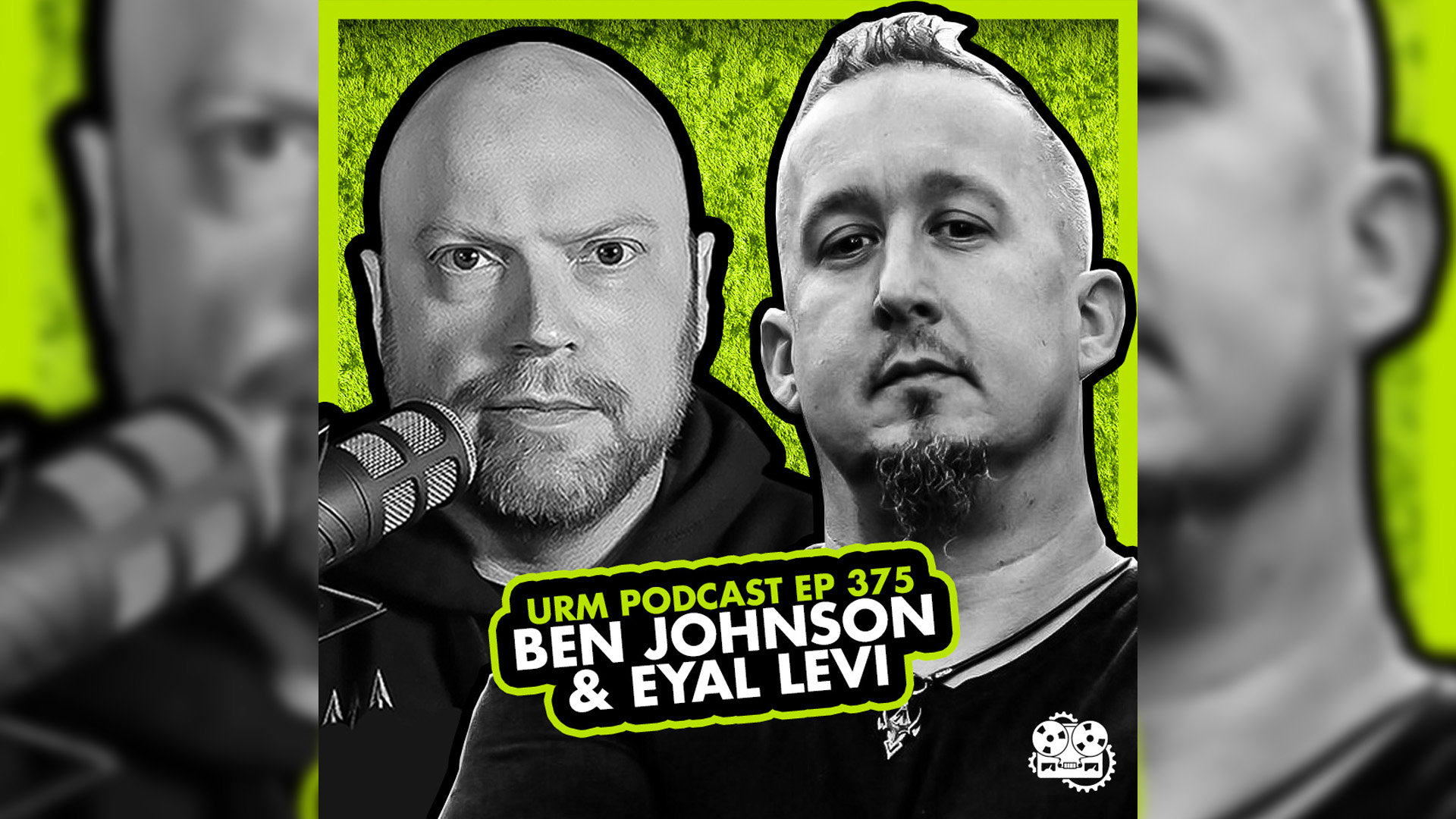
BEN JOHNSON: Quitting his 9-to-5, interning for Will Putney, and overcoming imposter syndrome
Finn McKenty
Ben Johnson is a producer, musician, and URM alumnus who has successfully navigated the path from the local scene to the national recording industry. Starting as a session drummer, he landed internships with Andrew Wade and Machine before becoming an engineer for Will Putney. His credits include work with high-profile artists such as A Day To Remember, The Ghost Inside, Fit For An Autopsy, and Counterparts, showcasing a rapid ascent built on hard work and a sharp learning curve.
In This Episode
In this chat, Ben Johnson breaks down his killer career trajectory and the mindset that got him there. He gets real about making the leap from a corporate nine-to-five to working alongside industry heavyweights like Andrew Wade and Will Putney. Ben shares some awesome stories, including the pivotal moment where being completely honest about not knowing analog signal flow in front of A Day To Remember ended up being a huge career win. He discusses the importance of reading the room, knowing when to just be a fly on the wall, and why your age is just a number when it comes to chasing your goals. For anyone dealing with imposter syndrome or wondering how to get noticed, Ben’s journey is all about putting in the insane hours, learning from the best, and ultimately trusting your own intuition to develop your unique sound. It’s a super inspiring look at what it actually takes to “do the damn thing.”
Timestamps
- [2:52] How Ben made the transition from the local to the national industry
- [4:33] Why being a single dad pushed him towards production over touring
- [5:24] Balancing a corporate job with 12-hour music sessions
- [6:23] The story of trying to get an internship with Andrew Wade for a year
- [8:02] How to survive an internship: read the room and shut up
- [10:22] Dealing with feeling “too old” to start a new career in music
- [12:02] Why self-limiting beliefs are just a clever way to procrastinate
- [14:48] How a life-threatening injury gave him a “no fear” outlook
- [22:41] The biggest mistake interns make (trying to do too much)
- [23:10] Why it’s always better to admit you don’t know something
- [26:23] Ben’s first interactions with Will Putney during the A Day To Remember sessions
- [28:45] The moment Ben’s heart sank when asked to patch analog gear he didn’t understand
- [30:03] Why admitting his lack of knowledge was the fork in the road for his career
- [35:26] The biggest takeaways from watching both Wade and Putney work back-to-back
- [36:46] The incredibly high standards of top-tier producers
- [38:34] Why watching the pros helps you trust your *own* judgment
- [44:50] The danger of asking “What would [another producer] do?”
- [46:54] When it’s okay to copy others (and when to stop)
- [50:10] Ben’s advice for anyone wanting to follow in his footsteps
- [53:47] Giving credit to the URM community for helping him get his start
Transcript
Speaker 1 (00:00):
Welcome to the Unstoppable Recording Machine Podcast.
Speaker 2 (00:04):
And now your host, Eyal Levi.
(00:08):
Welcome to the URM podcast. Thank you so much for being here. It's crazy to think that we are now on our seventh year. Don't ask me how that all just flew by, but it did. Man, time moves fast and it's only because of you, the listeners, if you'd like us to stick around another seven years and there's a few simple things you can do that would really, really help us out, I would endlessly appreciate if you would, number one, share our episodes with your friends. Number two, post our episodes on your Facebook and Instagram and tag me at al Levi URM audio and at URM Academy and of course our guest. And number three, leave us reviews and five star reviews wherever you can. We especially love iTunes reviews. Once again, thank you for all the years and years of loyalty. I just want you to know that we will never charge you for this podcast, and I will always work as hard as possible to improve the episodes in every single way.
(01:10):
All we ask in return is a share a post and tag us. Oh, and one last thing. Do you have a question you would like me to answer on an episode? I don't mean for a guest. I mean for me, it can be about anything. Email it to [email protected]. That's EYAL at M dot A-C-D-E-M-Y. There's no.com on that. It's exactly the way I spelled it. And use the subject line Answer me Eyal. Alright, let's get on with it. Hello everybody. Welcome to the URM Podcast. Our guest today is actually the type of story, which is why URM exists like we exist for stories like these. This is what we hope for anybody that signs up for URM. So our guest is Ben Johnson, who's a producer, musician, engineer, and a URM alumni. Basically been part of the URM community for a long time, who I've seen go from the local scene to working for Andrew Wade and then working for Will Putney and Machine. And he's assisted and worked with artists such as FIF for Autopsy, the Ghost, inside a Data Remember Counterparts, and many, many more. Good episode. Here goes Ben Johnson, welcome to the URM podcast.
Speaker 3 (02:29):
Thanks for having me, man. I really appreciate it.
Speaker 2 (02:31):
It's a pleasure. So lot's happened in the past few years.
Speaker 3 (02:35):
Yeah, it's been pretty crazy. There's definitely been a roller coaster even since COVID and I can't complain. I've actually gotten busier through COVID. I know a lot of people had a hard time with all the things that were going on, but I've luckily found myself in a pretty good position, so I can't complain.
Speaker 2 (02:52):
So I want to talk about how you went from basically being a local band session drummer to this steady progression in the actual industry. And just to be clear, I feel like there's two industries, right? There's the local industry, which is cool, lots of people work in the local industry, wedding bands, local bands, sessions, lessons, things like that. Then there's the record industry and it's two different things. It seems like you made the move from the local music industry to the record industry in the past few years, and I noticed that you were starting to get more work as a session drummer, kind of like right before you started working with Andrew Wade. But then suddenly you're working for Andrew Wade and then suddenly you're working for Will Putney, and it all happened really, really fast. So I want to talk about how did that even happen?
Speaker 3 (03:46):
It probably goes back. I played music my entire life. I started on drums way back when and then when I was in local bands, when I was in my band back in the early two thousands, I've always kind of been on the songwriting side of things. I've always been very heavy handed. So it's not like I was just on the drumming side, but also too, it helps with my way of looking at drums. I look at 'em as a song, as a songwriter, what can I do to make the song better as opposed to I'm not being paid by the beat, so how far can I get this? So I've always kind of had that side, but drums were kind of like the catalyst. So then I was working, I was doing the drum stuff in Orlando, and then behind closed Doors, I was learning to kind of mix.
(04:33):
That's how I found you guys through URM way back in late 2017 I think it was. And I was trying to write a record for myself. This was probably, I'd been wanting to do this since 2006 after all the band stuff kind of went to hell and had to start over, and I always wanted to do this, but technology wasn't where it is now. And when I finally got to the point where I think really what changed it was I have a 14-year-old now. I'm a single dad, and so the band thing, I can't go out on the road and live 300 days a year. And so I'm like, let me get on the side of how can I get with music and how can I write and all these kind of things. And so behind the scenes I was writing with some friends with their bands and stuff, and then I'm like, you know what?
(05:24):
I actually have an opportunity to be in everybody's band. And so it kind of naturally progressed to that. I was working a corporate job, the nine to five for years, but the minute I would get off of work, I would go home and I would literally work 8, 10, 12 hours again on music stuff. And so it actually kind of just got to the point where the demand kind of moved in. I don't really, I know that when I first met you in person when we were down at the URM, the summit down in Orlando, the last one you had there, that was definitely a key moment because it kind of gave me a clear vision of like, okay, all right, there's two things that can separate the musician side and the producer and the songwriter side of things. Was that 2017 or 18? That was 2018 I believe. I didn't go to your first one.
Speaker 2 (06:12):
I
Speaker 3 (06:12):
Think I just joined and I think it was a week before you guys were going to that. And I'm like, I'm not going to crash your party even though you're 10 minutes down the road I think it was. And so I kind of got to that point and then it just moved over into being able to write with bands. And so I was kind of doing that. And then when it is funny, I tried to get in with Wade for probably about a year. He wouldn't return any calls, didn't see my messages when he'd be like, Hey, I'm looking for an intern. And then April of 2019 was kind of where it started. That's where I cut ties with the corporate job that I was doing and went into music full time. And it was like three months later, a bunch of friends tagged me in one of his posts and he was looking for an intern and he hit me up almost immediately. Hey, I'd love to have, can you start tomorrow morning? And the rest is history. I was supposed to be there maybe three weeks and I ended up being there almost four months.
Speaker 2 (07:06):
What do you think it was that made him actually pay attention this time?
Speaker 3 (07:10):
It definitely helped. I had four or five friends that personally tagged me in the post. I don't know, it might've been too just I'm a big believer of timing. And so even if I would've got the job, if he would've offered it, I would've been in the middle of like, what do I do? Do I quit my job or do I have this? There's no way I would've been able to do both. So I think timing was a thing. I don't know. I don't think he actually had any time to really do a background on me. Maybe he did, maybe he didn't. I don't know. But that would be for him to answer on that one. I'm not a hundred percent sure, but I know I'm down to do whatever. I'm open, I'm honest. And so I pretty much, hey, ready to go. So obviously he saw something and the rest is history, so I can't complain, man. I love that guy. He's awesome.
Speaker 2 (07:57):
What was your approach down there to not getting basically booted immediately?
Speaker 3 (08:02):
You know what, it's being able to read the room and being able to shut up. And I know that's a hard thing for me because I talk way too much, but just, I love being a fly on the wall. Lemme just watch what's going on. Kind of, I'd say being able to get the vibe of what's going on, not being in the way and kind of knowing where to get in and out. I think that definitely helps. But also too, I come from the musician side of things, and so I actually relate with the bands and know what they're going through. And I've worked with bigger producers in the past, and so I kind of get that. So it's like I look at things definitely on the psychological side and I think that's a lot more important than physical or your skills on that kind of thing because you definitely don't want to be that third weird wheel in the room that just makes everybody uncomfortable. I think if you have that, it's not going to work.
Speaker 2 (08:53):
That's a weird thing too, to try to explain to people. I feel like they're usually not aware that they're doing it when they're doing it.
Speaker 3 (09:00):
No, that's true. And I think with anything, awareness is the biggest thing that you need to have.
Speaker 2 (09:05):
Yeah, it's just easier said than done
Speaker 3 (09:07):
A hundred percent.
Speaker 2 (09:08):
I think some people don't realize how weird they come off, and I don't think that you need to be the band members, but you need to be able to read the band members and read the producer.
Speaker 3 (09:19):
You just got to be able to be a people person to read because nobody's the same. But yeah, I think being able to read the room, understand the vibe, know where your place is, but also too, I think some of that comes with age. I'm not a spring chicken, I'm not in my twenties, so it's like I've been around the block. So I think that kind of helps too, but just experience of knowing when to move in and when not to. And I'm a firm believer, not in my conversations obviously, but to just, it's better sometimes to just shut up and just, so I took hundreds and hundreds and hundreds of notes while I was there and I still do even here with Will all the time. I'm writing notes down, so it's like I'm just saving these for later watching, observing. And that's how I kind of learn is by watching, not I could read a book all day long, but I can see it happening and then see the results and that for me works.
Speaker 2 (10:09):
So I think what you just said is something that actually makes a lot of people not even try is once they're into their thirties, they feel like they're too old to do this stuff.
Speaker 3 (10:21):
Yeah,
Speaker 2 (10:22):
Too old to get an internship, too old to be someone's assistant, basically too old, which is bullshit. Did that ever cross your mind?
Speaker 3 (10:31):
I mean, there's parts of it definitely on the musician side of things, I really do think there. And even then now though, we're kind of seeing there's some older artists and there's some people that are having longevity and some people are starting in their late thirties. I mean, it's definitely in the back of my mind, but I don't let it, I don't care. Age is just a number. And it's like, honestly, if it wasn't for my age and it wasn't for my experience, I wouldn't be where I'm at. I wouldn't hear things the way I hear 'em. I wouldn't see and do, I wouldn't be me. So honestly, I don't hate it. It's it is what it is. I kind of laugh. I'm like, I know I'm the old man in the room, but you know what? I don't care. I'm here to learn. I'm here to do better. I'm here to help people. And I look at the bigger picture.
Speaker 2 (11:11):
Yeah, basically. It didn't stop you.
Speaker 3 (11:13):
No, not at all. I don't care. I'm that asshole. That'll just keep going. And I don't let any kind of superficial things. I know that's just in my head. There's people, you look at some actors I think, I don't know, like Samuel L. Jackson, he was probably in his forties or don't quote me on that, but I know there's a few other people that literally make their break later in life to where just go for it, man. That's where literally my saying, just do the damn thing. It's like I can make up every excuse in the world why I shouldn't do this, why I shouldn't be able to get where I want to go. I can give you every, oh my age, oh, I live here, or this or that. But it's a bunch of bullshit in my mind. It's like you can stop yourself in your mind before you go. And I don't deal with what ifs. I'd rather try and fail and know for sure and just go for it and it'll be what it'll be.
Speaker 2 (12:02):
Yeah, totally. Well, I think that those types of imposter syndrome ideas or just deciding you're too old or whatever, those things that people tell themselves, they're a very elegant way to disguise procrastination and not having the fortitude to basically try things. But if you say, I'm too old and you decide that that's true, then well, you didn't have to try and get your ass handed to you. It saves you from that and it wasn't going to happen anyways. If you actually believe that it's too old, I'm too old, it wasn't going to happen anyways. It's a clever way to get out of having to put yourself out there. I think
Speaker 3 (12:44):
A hundred percent. I think too, a lot of people are looking for excuses on why they can't do something or why they shouldn't be. And I agree with you there to where it's like if you say you're too old, then you're too old because you think like that. And I tell people all the time, careful what you wish for, what you say, because you'll will some shit into action. And it's like if you say you're too old, then look, you're going to not try. You're going to have every excuse not to do it. And then it becomes a self-fulfilling prophecy. And it has nothing to do with age has to do with your outlook of you not trying, not going for it, not doing it. And I think too, it's like it's the excuses of why it's somebody else's. Everybody loves excuses. Nobody wants to look inward and be like, why is this?
(13:29):
And most people don't want to change. And that's I think between those two and having the excuses, it's a recipe for disaster. And then the problem I see with that is it might not necessarily be a big thing, but it starts small. So it's like, oh, I can't do this because of this, and CI was right. And then when you get into that negative mindset, then you're looking for things, whether you're a positive person or a negative person, your mentality at that moment, I feel you're looking for something to align or to give you feedback on why you can't do something or why you can do something. And if you look hard enough, you will always find something to validate your negativity or positivity. And I think more the negative, I think people get stuck on that. They look, oh, I can't do this, or Oh, I don't have enough money or my kids doing this or my family that, or I don't have a girl, whatever.
(14:23):
But the excuses I think are a dangerous thing because it'll happen. And then if you do that too many times, then that negative, horrible outlook on life just becomes a thing and then it just spirals and you're like, you know what? I'm not worth shit because look at this happens and this. I've met too many people like that. I can't deal with that. I'm not that person. I'm psycho. I'll tell you, Hey, I'm going to go do this and I swing for defenses, and if I don't make it so what? But I'm not going to say that I can't do anything. But I think also too for me, the biggest outlook when I was 18, I broke my neck. I was right out of high school. I was a wild person of things were going crazy and it brought me back down to zero and it made, so
Speaker 2 (15:08):
How'd you do that?
Speaker 3 (15:10):
My parents were out of town. It was Thanksgiving weekend.
Speaker 2 (15:14):
I know the story's already starting great.
Speaker 3 (15:18):
But no, we had a buddy that was going to Europe to be a professional boxer and we were having fun that night and we were drawing names in a hat, ended up boxing for fun, turned into wrestling Florida, three in the morning, grass gets wet. I put him in a headlock, he slips backwards. I couldn't get out in time and literally just jams my head straight down. I broke my second vertebrae, ended up having surgery three days later. It was insane. But honestly, that was key for my outlook because people now they're afraid to do stuff for this. I'm afraid not to do it because I've been so close to never walk in again or never being able to. There was part of it, it was like it was close. It was either dying or quadriplegic. I broke the same thing as Christopher Reeve, that was Superman way back. And I see that perspective on life to where it's like I want to do a lot of stuff and nobody ever says on their death bed, I wish I could sleep more. They wish they would've done that. It's always something that they wish they would've done that they never did. And so that's where a lot of this, I just go for it. It's just like life is too short to sit here and be like, no, I can't do that. And it's like if you don't believe in you, why the fuck should I?
Speaker 2 (16:29):
Fair enough. But again, it's one of those things where I think the stories that people tell themselves end up becoming the truth pretty much agreed. So if they tell themselves It's not worth trying, I'm too old, I shouldn't do this. It's for other people, I just feel like such an imposter, whatever, any of that bullshit, it just ends up coming true. And I actually think that fear or urgency are some of the best motivators. If you've had a brush with death or are afraid of losing everything or there's some big bad thing that you can use, I'm not trying to take any of that lightly at all, but I actually think that it's the best motivator out there. The more severe the alternative is, the more motivating it is to do something.
Speaker 3 (17:21):
No, I agree with it's the fight or flight and you'll see what you're made of real quick when you get to those tough moments where you're like, oh hell, here it goes. Yeah, when you get to that point where I agree with that a hundred percent.
Speaker 2 (17:33):
Yeah. So that said, when you got to Andrews, did you have in your mind this could end at any moment?
Speaker 3 (17:40):
I didn't. I just assumed in the back of my mind, all right, a couple of weeks because it seems like that was the turnover,
Speaker 2 (17:46):
Nothing to do with you. So this is not personal. Again, nothing to do with you, but that's what I expected just because that's what's normal. Most people wash out about that quick.
Speaker 3 (17:57):
Yeah, I don't think we even talked about how long I was going to be there until two months. It just happened. I just kept showing up every day and I just did what I had to do and I wanted to learn. That's the thing is I've been driven so I wanted to learn, and so I don't care what I got to do or whatever. I just go with the flow. And if it was two weeks, great. It was two weeks. If it was two months, whatever, and I just go with the flow and I really didn't have any expectations in the back of my mind. I was waiting for it then it never came, and then me and him hit it off and before you know it, like I said, I was there almost like four months, but I definitely didn't see that coming. Didn't know what to expect, but really didn't ask. So I'm like, I just went and just did my thing.
Speaker 2 (18:42):
It's funny just putting your head down and doing the work will result in.
Speaker 3 (18:47):
Yeah, it's amazing how that works instead. Yeah, I don't know. I'm definitely one to where you just got to do what you got to do to get it. I don't care who's looking, I don't care who's watching. This is what needs to be done. And it's like it was an opportunity of a lifetime for me. I know Wade's an amazing dude. Smart as hell. Seriously. Very underestimated. I know people give him a lot of credit, but dude is smart as hell.
Speaker 2 (19:11):
Yeah. They don't know how he gets a lot of credit, but also I think people don't realize what level he's playing at Brandon power wise.
Speaker 3 (19:20):
No, not at all. No, no. He's definitely on another level for sure.
Speaker 2 (19:25):
Yeah, it's people like that. I know a few of them. You kind of just have to quickly understand what your role is around them and just be cool with it or not. But people like that are kind of like they're forces in nature basically. They're not really changeable and they're brilliant.
Speaker 3 (19:44):
Oh, for sure. And they just are. And that was honestly, I think that was the key to where it's like there's no show with him. He's just him and that's it. And I think that's what I think so many people miss because they're trying to be somebody else. They're trying to be something and they're not just saying, Hey, this is me. I'm this person and that's it. I'm just being true. This is real.
Speaker 2 (20:06):
Yeah, exactly. Hey everybody, if you're enjoying this podcast, then you should know that it's brought to you by URM Academy, URM Academy's mission is to create the next generation of audio professionals by giving them the inspiration and information to hone their craft and build a career doing what they love. You've probably heard me talk about Nail the Mix before, and if you're a member, you already know how amazing it is. The beginning of the month, nail the mix members, get the raw multitracks to a new song by artists like Lama, God Angels and Airwaves. Knock loose OPEC shuga, bring me the Horizon. Gaira asking Alexandria Machine Head and Papa Roach among many, many others over 60 at this point. Then at the end of the month, the producer who mixed it comes on and does a live streaming walkthrough of exactly how they mix the song on the album and takes your questions live on air.
(20:59):
And these are guys like TLA Will Putney, Jens Borin, Dan Lancaster to I Matson, Andrew Wade, and many, many more. You'll also get access to Mix Lab, which is our collection of dozens of bite-sized mixing tutorials that cover all the basics as well as Portfolio Builder, which is a library of pro quality multi-tracks cleared for use in your portfolio. So your career will never again be held back by the quality of your source material. For those of you who really want to step up their game, we have another membership tier called URM Enhance, which includes everything I already told you about, and access to our massive library of fast tracks, which are deep, super detailed courses on intermediate and advanced topics like game staging, mastering low end and so forth. It's over 500 hours of content. And man, let me tell you, this stuff is just insanely detailed and enhanced.
(21:54):
Members also get access to one-on-ones, which are basically office hour sessions with us and Mix Rescue, which is where we open up one of your mixes and fix it up and talk you through exactly what we're doing at every step. So if any of that sounds interesting to you, if you're ready to level up your mixing skills in your audio career, head over to URM Academy to find out more. I do think that in order to survive this, you kind of need to be cool to understand that personality type or the high powered types and know how to give them their space, but then also know how to be useful towards them. So it's like this interesting blend of helping them when they need help, even if they don't say they need help, but also knowing when to get the fuck out of the way.
Speaker 3 (22:41):
Right. No, that's the key There is some people are overzealous and they try to do too much and then they do mistake exactly that. What's a mistake? Oh yeah, they try to do way too much. I'll be the first one to admit if I don't know something or I know how to do something, I'll tell you I don't have any shame.
Speaker 2 (22:58):
Well, look, that's good. That's different. If you don't know how to do something, you should say it. Because the worst is when someone says, yeah, I got it, and they don't got it.
Speaker 3 (23:10):
No.
Speaker 2 (23:10):
In my experience as someone that hires people, I've been like the boss of things for a long time in my life at this point. I was always like the band leader and most working situations in my life have kind of been the person that chooses other people. From my perspective, one of the quickest ways to get on the outs with me once this happens, it's hard for me to forget this. If someone says, yeah, I got this, and they're lying because they're afraid to let me know, they don't know this. I've basically lost trust in working with them. Now if they tell me they don't know something, that's fine. We'll help 'em. Dude, Nick didn't know very much at all about filming when you RM hired him. We helped him develop into what he is today. I mean, his work ethic is fucking insane, but he wasn't what he is now in terms of being able to film. We saw a personality and a type of character and a set of traits that you could help turn into something. And now if he had come in and he had said, yeah, I got this. I am fucking expert.
(24:28):
I'm the shit when it comes to filming, and then we would've never invested in him at all. It would've been over so quick. So that to me is a perfect example of it doesn't matter to me. If someone doesn't know something, if they're upfront about it, it's better to just say you don't know something. Also, if you hire somebody to do something, if you hire a producer or you hire a contractor, you hire anybody and they say, I don't know, I'll get back to you though. Cool. Because I don't think anybody expects anybody else to know everything. So better to say it, just say it. It's all good. Also, most of the producers I've had on here who hire people as far as assistants or take on interns, I always ask them what they'd prefer. Someone that has the right personality but doesn't know shit, or someone who has graduated from school knows all the stuff but is wrong personality. And without fail, they always say, I'd rather have someone that doesn't know anything but is the right person. I can just teach them. Yeah,
Speaker 3 (25:32):
A hundred percent. You can't change somebody that's going to pass the blame or lie or not be upfront. And it's funny you say that too. I had one of those moments, and I think that's what Wade was having the problem with is because in our backyard there's the one school that's there, and he was getting a lot of interns that were coming from there and it was God.
Speaker 2 (25:56):
I mean, when I lived in Florida, that happened to me too. But yeah,
Speaker 3 (26:00):
It becomes, it's like there's this sense of entitlement that, oh, I read a book on this and we did these things and I'm coming from this place. And I think that's kind of like what gives that place a bad rap is because of how people think it does. And
Speaker 2 (26:15):
Hey, producers, you want URM people? Long story short, I
Speaker 3 (26:20):
A hundred percent agree.
Speaker 2 (26:21):
URM people are who you want.
Speaker 3 (26:23):
A hundred percent agree. Because they're there to learn. They want to do, and it's on a wholly different level. I had one of those moments, so two months in with Wade, that was where I found out probably two weeks before, he was like, Hey, this guy Will Putney's coming down from Jersey and he's going to do these couple of, he's working with the data, remember? And he's doing some stuff. So he's coming down and Wade was like, well, you're technically an intern of the audio compound. You can kind of help out and do. So I kind of got it and that's a whole nother story. But there was one moment just to stay on topic, what we were just talking about of admitting when something you can't do anything. I remember, so the first day will comes down, it was closed door sessions, nobody was in there. Second day, some stuff happened
Speaker 2 (27:12):
By nobody. Did that mean you weren't in there either?
Speaker 3 (27:14):
Correct. Yeah, it was Will, it was Kevin Scaf, it was Neil Westfall, and it was Jeremy McKinnon. That was it. It was the four of them. Saturday morning comes, will comes down and just met him. And so Wade takes Saturdays off, so there was nobody there. So I just come in with Will that morning. He's like, dude, I hate to bother you. I have a flat tire on my car on my rental. I'm starting day one. I don't know what to do. So literally go down, ends up being a four hour debacle and don't even bother him. They wouldn't approve the tire because it was a nail on the side. The rental car wouldn't do it. Firestone wouldn't approve it. So I'd be sitting there still probably if I wouldn't have done this, I looked up the local budget rental place or whatever went down there.
(27:55):
I'm like, this isn't even my car. I'm not this person, but this is some bullshit. This is crap. Literally got a new car right there on the spot. I come back and they're about to go to lunch and I come back in a brand new car and I'm like, you're not in that thingy anymore. You have this now. And it's like, what the, I'm like, do we'll talk about it. He's like, Hey, we're headed to lunch. You want to come with us? And so I ended up coming. It was me will, like I said, and the three guys from a day to remember and we went to lunch and when we came back I was like, Hey dude, nobody's here and can I be a fly on the wall and just sit and just watch? And he is like, absolutely. And ever since then I was in there every day.
(28:32):
I was the only other one. I was the fifth guy coming in and then a week later, ghost Inside comes in. But I think where there was the one moment is, I think it was day three, Jeremy comes in with, he had this Neve two channel console from vintage can, this whole expensive thing and Will comes in and he's like, alright, we're setting up vocals for Jeremy to do some stuff demo. And he's like, I need you to run the mic into the Neve into this and into the stretcher and the blue stripe and all this kind of stuff. And my heart sank right then and there. I'm like, oh shit. I'm like, because in the box I have a two channel interface. I don't know anything about analog stuff. I could lie, but no, I don't. And so I literally in front of the data, remember I'm like, will I don't know how to do what you just asked me.
(29:18):
And he's like, dude, thank you so much for telling me looks over at the guys. Say, Hey, give me a minute. And then he proceeded to show me how it was done. Hey, this is what you're doing, this is what we're doing here. And then he is like, thank you for telling me that you don't know what you're doing. Because I've had some people in the past that have acted like they know what they're doing and screwed up and it broke some stuff and he is like, they didn't work here anymore. And it was just that quick. I'm like, that's where I don't have any shame to tell you. If I knew it all, I wouldn't be interning at a studio in my mid thirties trying to learn and trying to do stuff. So it's like I know my place, but I'm willing to admit, Hey, I can't do this. I'm out of my things. And I think that kind of that moment right there, that's just me. I'll be the first one to tell you, hey,
Speaker 2 (30:03):
That moment right there probably is the fork in the road.
Speaker 3 (30:08):
Yeah, probably. I didn't think of it at the moment. I'm just me and I can't not be me, so I'm an open book too much. It's where I'll just tell you. So if I don't know shit, I'm going to be the first one to tell you. I don't know it.
Speaker 2 (30:19):
Dude, that would've been the fork in the road with me. If that was me and my session and I asked you to do something, it was day one in an important session and you were like cool, and then you fucked it up because you didn't know what you were doing. It would end right there. Whereas if you were like, I don't know how to do this, can you help me with it? I would've been like the same thing as Will just been like, Hey guys, give me 15 minutes and I would've shown you how to do it and I would've known, I would've taken note that you didn't waste my time and embarrass me by fucking something up. You just told me, dude, no one is going to judge. If you say you don't know how to do something and ask for help, that's a thing. It actually is going to work in your favor just like it did. I guarantee you that that will noted that. And I guarantee you that that played a big factor in why you work for him now.
Speaker 3 (31:20):
You're probably right. I didn't even think about it at the time. I don't know what I'd do. Guaranteed. Right on. Guaranteed. Well, I have to ask him when we're done with it. No, I'm just kidding. I won't ask him. But you
Speaker 2 (31:30):
Don't need to, I'm telling you. No, I don't. Yeah, exactly. I would bet money on that moment, right? There was a huge part of it right there.
Speaker 3 (31:37):
Right on. And I think it's just people have this necessity to oversell themselves and think it's like they live and die off of on that kind of thing. Just to me, like I said, I don't care if I don't know something, I'm going to tell you I don't know what I'm doing and that's it. And it's just that simple. That doesn't, and I think that's the psychology behind it because people feel that if they don't know something, they're inferior and it's not really the case. It's like nobody knows everything. You have to learn it to go through it. Now. It's one thing if he teaches me that or somebody teaches you something and then 15 times down the road you're still doing it wrong. There's no patience for that either.
Speaker 2 (32:18):
That's a whole other situation though.
Speaker 3 (32:20):
Oh, a hundred percent. But I think the thing is being able to admit that, and it's not a knock on you personally, it's not a knock on your ego, but I really think a lot of people think it is, and that's where I think they try to protect it and then they end up doing way more damage than good. And then they don't have that insight we were talking about earlier to see where they messed up. So they never change that and then they just keep repeating the same mistakes over and over.
Speaker 2 (32:49):
You got to be willing to learn the stuff too. You don't know if you don't know something and you ask for help and it's like a known thing, you don't know how to do this thing. Say on Monday people are assuming that you're going to go learn it and the next time it comes up you better know it. That's the other side of this coin, basically. It's like, yeah, if you admit that you don't know something and ask for help, that's great. That works in your favor. But if you then don't actually learn it after that conversation happens and know how to do it in a reasonable amount of time, then it's going to work against you.
Speaker 3 (33:25):
Yeah, it comes back the other way. A hundred percent.
Speaker 2 (33:27):
Yeah. You have to basically close the loop on that issue by then actually doing the work to acquire that skill.
Speaker 3 (33:36):
No, agreed. And I think too, that's why I love your guys', the Facebook group, the private group that's in there in URM is because
Speaker 2 (33:45):
Private producers club.
Speaker 3 (33:47):
Fuck
Speaker 2 (33:47):
Yeah.
Speaker 3 (33:48):
And it's like when I first joined, I was asking all the jackass questions, I don't care man. And dude, I got a lot. That's how I kind of like, there are no jackass questions. You say that there are, but no, no, I think I ended up having a lot of people, I've always been upfront, I'm like, yeah, I'm older, I don't care, whatever this that, like I said it, it's just a number. But I'd find people and I would ask questions and then a lot of people would be like, dude, thank you so much for asking this. We've had this question for a long time, but we've never gone and asked. We've never done. And so if I need to know something, I'm looking it up. Thank God for Google. Like man, I don't even know where I'd be if I grew up in the YouTube thing.
(34:34):
I sure as hell wouldn't be watching other people playing games all days. Like every damn kid in this world nowadays I would be, how can I learn this? How can I learn that? I've always been a sponge of trying, how can I get better? How can I get better what I'm doing? Where can I kind of go? And so I've just been kind of motivated to always do that. So I think that's the thing too, is if you have the person that can admit when they're not doing something great, but if they don't have the drive to really give a shit about what they're doing or what they don't know to do it, then that's going to show too. And then it's only going to be a matter of time where you're still out the door just because there's no room for that.
Speaker 2 (35:12):
No, there's definitely no room for that. So you're helping with Will, and this is a big opportunity. You may not have been thinking of it as I'm going to end up working for Will, but you had to know that this is a big deal.
Speaker 3 (35:26):
Oh, for sure. Those four months, man. And honestly, I'm thankful that it worked out like that because I got to watch Wade work on two records and then I got to watch Will work with two bands. He worked a week with the day remember, and then he did about five and a half weeks of Pre-Pro finishing up for the Ghost Inside record that came out back in 2020, their return and watching the two to where it's like there was so many similarities between Wade and Will, but then there's so many differences. And so being able to pick and see and be able to watch that and just be the fly on the wall. I have so many notes from back then and it was just like that was a key moment. Being able to see what that level and that distance. So even if that was just it, I would've totally been, that changed me. I ended up producing a record not too long after that that ended up charting on some of the Billboard stuff and I wouldn't have been able to do what I was doing on that record if I wouldn't have had those four months there. There's no way. Yeah,
Speaker 2 (36:30):
Those guys couldn't be more different in terms of personality and musical, I guess visions. But the thing that I think they have that's the same is standards.
Speaker 3 (36:46):
Yes,
Speaker 2 (36:47):
Standards and level of seriousness. I don't mean sense of humor and joking around. I mean the seriousness that goes into the work itself and the standards. People don't understand how high the standards are at that level until they actually witness it. I think
Speaker 3 (37:06):
I even had no clue. I'm like, holy shit,
Speaker 2 (37:08):
How would you know until you see it. That's the thing you don't know until you are there. I know it was the same for me until I was in the room. Colin Richardson was my first big time mixer that I was around. I had been around some good mixers before that, but never asked here. I spent three weeks with him when he mixed the doth record, it was like, okay, this is playing at a whole other level. This is why his shit sounds great. It's this level of seriousness and the standards, you just don't know how high those standards are until you see it. I think
Speaker 3 (37:45):
A hundred percent. I can't put words on it. That's where even with bands, I'm like, I can't even put into words, oh, what goes into this? Or the attention to detail too is like you said, the standards, the vision and that they're so similar. They know what's important, they know what they need and the biggest thing is they know what they want and they trust themselves and they just go and they do it. I think too many people, I think the biggest key too is alright, I saw these guys, I saw how they worked and I saw the key points and I think if I would've worked with maybe Wade separately and then that would've just been it, or if I would've worked with Will separately, that would've, it would've been great, but at the same time. But being able to see both back to back and the same thing and put those kind of things and connect the dots like that, it was key.
(38:34):
And it's like that is such a huge thing once you see it. That's why I tell people once you see it, I can't not see it. It's like that's just now the way. The same thing with getting up here. When I moved up to work with Will, holy shit, do you want to talk about just eyeopening? The first week we talk about imposter syndrome. I'm like, why the hell am I here? But at the same time it's learning it, seeing it. Once you see what goes into it and seeing the process and how that kind of stuff goes, it's like that just becomes the way and it's like, so the attention to detail is there, but then I'm still trusting me because I don't care. I'm not weighed. I'm not trying to be him. I don't give a shit about that. I'm not, I'm not trying to be him. I'm me and I know that I'm going to make my things and I think that's one of the biggest things that I got out of that internship was Wade is Wade and Will is Will. And that's all there is to it. The attention to detail and all that kind of stuff like we were discussing is the similarities, but then they're their own individual and then that's what kind of defines their own path.
Speaker 2 (39:39):
Yeah, totally. How it's done. Courses we put out are basically, unless people get into a situation like you did or I did, where you can actually be there, that's the only chance you're going to get to see how these people work. And it is really, really crucial to get to see how these people work because again, you're just not going to learn it on your own. There's a lot you can learn on your own, and this is me saying this, having a business that teaches people how to do it, there's only so much that you can get from the internet or from running a local studio or whatever that you can get pretty far with that stuff. But to really, really, really take that shit to the next level, you have to get it from someone that is doing it that level. Basically there's two options.
(40:27):
Either you can find a way to watch what they're doing or you can find a way to put yourself there. And now the problem with putting yourself there is that it's borderline impossible because there's only a handful of people who will ever work for one of these producers over the course of their career. The watching it on a how it's done isn't necessarily as good as being there in person. But at the same time, the other thing is you can rewind it. So if you don't know how to do something, you can figure it out on your own timeline and you don't have to ask multiple times. If someone explains something, you didn't get it, you don't have to Then ask Will Putney to explain it again and then explain it again and then explain it again, which could get you fired.
Speaker 3 (41:13):
That's just as irritating. Yep.
Speaker 2 (41:15):
I'm just saying this because people are, I'm not trying to do a shameless plug, but people are going to be listening to this. They're going to be like, awesome, but I'm never going to have this opportunity. And that's actually true. Most people, I mean it's just a numbers thing. There aren't enough great producers out there that have enough openings for all of the people who are going to want to do that. So while I think that anyone with the right skills and personality and character traits could do it, only a few will do it just because of the math involved with it. That doesn't mean that that's the only way to advance. And so you got to figure out some way to learn what it is that people who play at those levels are doing because you're not going to figure it out on your own. There's a reason for why great producers always had a mentor or just almost always had a mentor
Speaker 3 (42:10):
For sure. And that's the thing, machine's a buddy will came up under machine.
Speaker 2 (42:16):
Dude, how many people came up under machine?
Speaker 3 (42:18):
Dude,
Speaker 2 (42:18):
He's killing Sini. Will Josh Wilber
Speaker 3 (42:22):
So many. It's crazy. Dude is a legend. I love him. But that's the thing is people come under that. It's one of the two things. It seems like it's either you're at the right place at the right time and a band maybe comes up or you come up under somebody. And I think a lot of it, the better chance sometimes for the longevity is to come up under somebody. So you kind of see that and you get that experience and if you're willing to listen and kind of understand, you can learn so much. Like I said, just listening, everybody wants to talk. Like I said, I'll be the first one to talk way too much, but at the same time, I try to shut up as much as I can. I enjoy being the dumbest in the room here. I love it for the last year and a half.
(43:02):
I'm the dumbest in the room and it's fantastic. I have so many notes that are making me not as dumb, and that's all there's to it. Trying to learn, trying to see, trying to do, just trying to be better. And so thankfully I have Wade, I got Will, I got Machine and I got a few other people that I could reach out to that literally have been around the game that are amazing that I can get feedback that I knows somebody that gets it, that's on a higher level that will shoot me straight and not just give me a bunch of crap that they think is this or that they are literally giving me feedback from actual experience.
Speaker 2 (43:37):
Yeah, makes a huge, huge difference. Joey Sturge is he did it himself. There's a few freaks out there. Absolutely. But his style is so unconventional, it's so strange. He just kind of invented his own way of doing things and it happens to work and it's very much his own thing. And there's a few people like that out there, but I would urge people not to think that they're one of those people
(44:03):
Just because it's a total outlier kind of scenario. If you happen to have seven fingers and decide to become a guitar player, you might have some advantages, but you shouldn't think that you just have those mental gifts that someone like Joey does. You should assume that you're a normal person with normal gifts who can do great things, but you're going to need to learn how to do it and you're going to need to get as much help as possible and keep your head down and just get help from the right people. I think that that's the healthiest approach to learning how to do this and the most realistic approach too. And if you happen to be a genius like Joey, then fuck yeah. Cool, right?
Speaker 3 (44:47):
Yeah, there's
Speaker 2 (44:48):
Not that many people like that.
Speaker 3 (44:50):
No, but you know, one thing that stuck out though, and I preach this to my bands, I preach this to any artist that I'm working with and some friends that are producers, is the key that you said was Joey focused on him and his sound and what he liked and his thing. And I think that's the key is so many people, it's cool to learn all this stuff, but I see so many people, what would will Putney do? What would machine do? What would Wilbur do? All these people? And at the same time, that's the thing is that was one of my aha moments. I watch Will Wright, it's not my place. I don't say anything. So any writing sessions that are here, the bands aren't hiring me for it, so I'm shutting up. I'm just in the room and I'm listening and my brain is working.
(45:35):
I'm like, oh, I would've maybe done this, but oh, you know what? I would've had this and maybe like this. And there's really no right or wrong answer for that. I think what's great about that is that fact is I don't come into my sessions, what would he do? I just go with my natural intuition and I focus on being the best me. And then I learn, I use the resources that I have, the knowledge and all that kind of stuff to be better and the tools, but then I still at the end of the day focus on and I trust my judgment and I'm just being the best me and I'm finding it. People are coming to me, they're like, you have a sound that we like this and this is why we're coming to you. And it's like, all right, there it is.
(46:15):
It's like I don't care about being anybody else. Not them. I'm just me. My experience, my influence, me being a drummer, I'm going to have more powerful drums. You can tell the guitar producers, you can tell the maybe that's it, maybe it's not. But that's how their ear hears it. That's how they like it. That's what they do. And that's awesome about that. I've heard you guys talk about this, some of the live streams, different things to where people just focus on being them and where you miss the boat is you're trying to be someone you're not because at the end of the day you're going to question everything and you're not going to really be genuine with what you're doing because you're not being you.
Speaker 2 (46:54):
Yeah. I mean one thing is at the very beginning you don't know anything, so you copy,
Speaker 3 (46:59):
Of course I did it. I'm guilty.
Speaker 2 (47:01):
I mean everyone does that. I think that's fine. Probably should do that at the very beginning. Same as when learning an instrument and writing songs and stuff. The first few songs that you write are going to be ripoffs of what you're listening to and who you're majorly influenced by because you don't know anything else. But very quickly, very quickly your own personality should start to kind of steer the ship. And also I don't think that that should take much effort.
Speaker 3 (47:31):
No,
Speaker 2 (47:32):
I think that your own personality, that is who you are. So at a certain point, once you get those first few things out of the way, you kind of know what you're doing a little bit. At that point, your focus should just be on getting better and your own thing will develop as a result of it. And that's all you need to worry about. You don't need to worry about what somebody else is doing or sounds like because you'll never be them anyways.
Speaker 3 (47:58):
No, it's
Speaker 2 (47:59):
Pointless.
Speaker 3 (48:00):
And that's going back to the imposter syndrome that you were mentioning earlier is people can fake themselves out because they're not this level or Oh, my mix doesn't sound like this or those songs are better and mine and all this. And so then they tell themselves that they're not good enough or they feel inferior. And I think, and that's kind of that roadblock for most people because they're like, oh, well I'm not that person so I'm not good enough. Therefore my personal judgment is not good enough. And I think that stops so many people. And honestly it's this fictitious bullshit thing that shouldn't stop you from doing it because it's like at the end of the day, you're going to be you and you're going to make those little things and that's what makes the world go round. It's like don't be afraid of being who you are.
(48:44):
Like you said, we all copy from the beginning, Hey, how's this person do that? But like you said, it's that natural progression to where trust yourself as you go. And I think working with stuff you're starting out, like me mixing, when I started out, there's no way I'd be doing what I'm doing right now because I wasn't there. I didn't need it. And so you can't just go from a jumping to F, you can't get to the end thing without going through the steps, through the process, and you got to go through those hard times, but then you got to be able to look inside you what is your, you got to be honest with yourself and then you also have to be able to go out on a limb and just trust yourself and get that feedback. Just because I come up with an idea and somebody likes it doesn't mean it's great. Just because they hate it doesn't mean it's bad. That's the creative world that we live in with songs and mixes and all that. Everybody has an opinion, but what's the vision? What's the focus? What can you do? Not trying to be anybody else just solely focusing on doing the best that you can do with what you have.
Speaker 2 (49:49):
Yep. I completely agree. Just out of curiosity, give someone at URM sees what you did and it's like, I want that maybe not necessarily work for Andrew Wade and then work for Will, but just do that, get into those types of situations. What should they do?
Speaker 3 (50:10):
Oh man, you got to be self-motivated first and foremost. And you got to be willing to put in the time and the work because like you said, you guys have amazing resources online and your fast tracks everything. There's stuff for everyone to learn pretty much anything. But then that doesn't translate to just because you watched some videos or you've seen it a few times or done it. It doesn't translate to real world. It really comes down to, and that's where my saying, you got to do the damn thing. If you want to get better at something, you got to put in the time you want to get better at drums, play more. If you want to get better at this. And so that's really what has happened. So when I was working my corporate job, I was working nine to five. If you're in, I was in Baldwin Park in Orlando.
(50:56):
So it was like, we called it the bubble life because everything housing stores and my engineering firm was within two minutes driving. I could wake up at 7 47 every day, suit up, shower, get ready for work, and I could drive and be in my office by 8:00 AM And I hated my job, but it gave me stability, paid the bills, gave me insurance. I was able to be there for my son. I just separated with his mom. And so I would do my job. I would get off at five o'clock every day, 5 0 2, I was home. I had bands damn near or somebody, or an artist or whoever at my house pretty much seven days a week if I didn't have my kid at like five 15 every day. And I was just working when nobody was watching, when nobody cared doing anything. I literally was just working, putting out, writing the shitty songs, making the crappy mixes, trying to get better, going back and forth.
(51:54):
But it really is just, you almost have to be psycho with it if you really want to do this. It just takes time. It's an intangible thing. But I can't even put into words how much my ears have grown since I've moved up here and watched Just sitting behind Will, watching him mix every day and just observing and listening and seeing the things, and then hearing that you can't do it, but I'm not going to hear that if I listen to his mixes the final product 50 times over, I'm not going to see those moves, those little things. And so honestly, to get to where this is, you just have to put in the work. You got to put in the time you got to be ready for it. I played music my entire life. I've been drumming for 30 plus years. I started piano when I was like five.
(52:41):
I started hitting stuff when I was two. Music's in my blood. So this is just an extension. The reality is where age comes in, I'm not going to be 50 something years old and in some new up and coming band, that's just not going to happen. That's reality. But coming in really just have to, I'm able to use that experience with the music background and all those things, but really you just have to put in the time. There's no other way around it. And I wouldn't hear what I'm hearing if I wasn't putting in the work. I wouldn't be able to mix like I'm doing if I didn't put in the work. Because Devon Townsend had told me a couple of years ago now, it was the greatest advice, but he was like, dude, songs are never finished. They're just abandoned. Write the shit so you can get to the best next one and just keep going. You have to keep going.
Speaker 2 (53:28):
Yeah, I completely, completely agree. I think that's a good place to end it. On that note, you got to keep going. Ben, I want to thank you very much for taking the time to hang out. It's been a pleasure talking to you and catching up and congratulations on everything is so awesome to see somebody actually ascend.
Speaker 3 (53:47):
Dude, thank you so much, man. I appreciate it. Thanks for inviting me on here, man. It's an honor to be on here. Thank you for what you do. I've told Joel, I don't talk to Joey, but I've told Joel directly, I've told you directly thank you guys for what you have, what you've done, putting the things in place so people like me can have these resources and the opportunities. If it wasn't for you, I wouldn't be sitting where I'm at. But like I said, you got to come in and just do it, man. So dude, thank you so much for having me here. I really appreciate it.
Speaker 2 (54:14):
My pleasure, man. Thank you very much. Alright then another URM podcast episode in the bag. Please remember to share our episodes with your friends as well as post them to your Facebook and Instagram or any social media you use. Please tag me at al Levi URM audio at URM Academy and of course tag our guest as well. I mean, they really do appreciate it. In addition, do you have any questions for me about anything? Email them to [email protected]. That's EYAL at M dot aca DMY. And use the subject line answer me Al. Alright then. Till next time, happy mixing.
Speaker 1 (54:54):
You've been listening to the Unstoppable Recording Machine Podcast. To ask us questions, make suggestions and interact, visit URM Academy and press the podcast link today.

