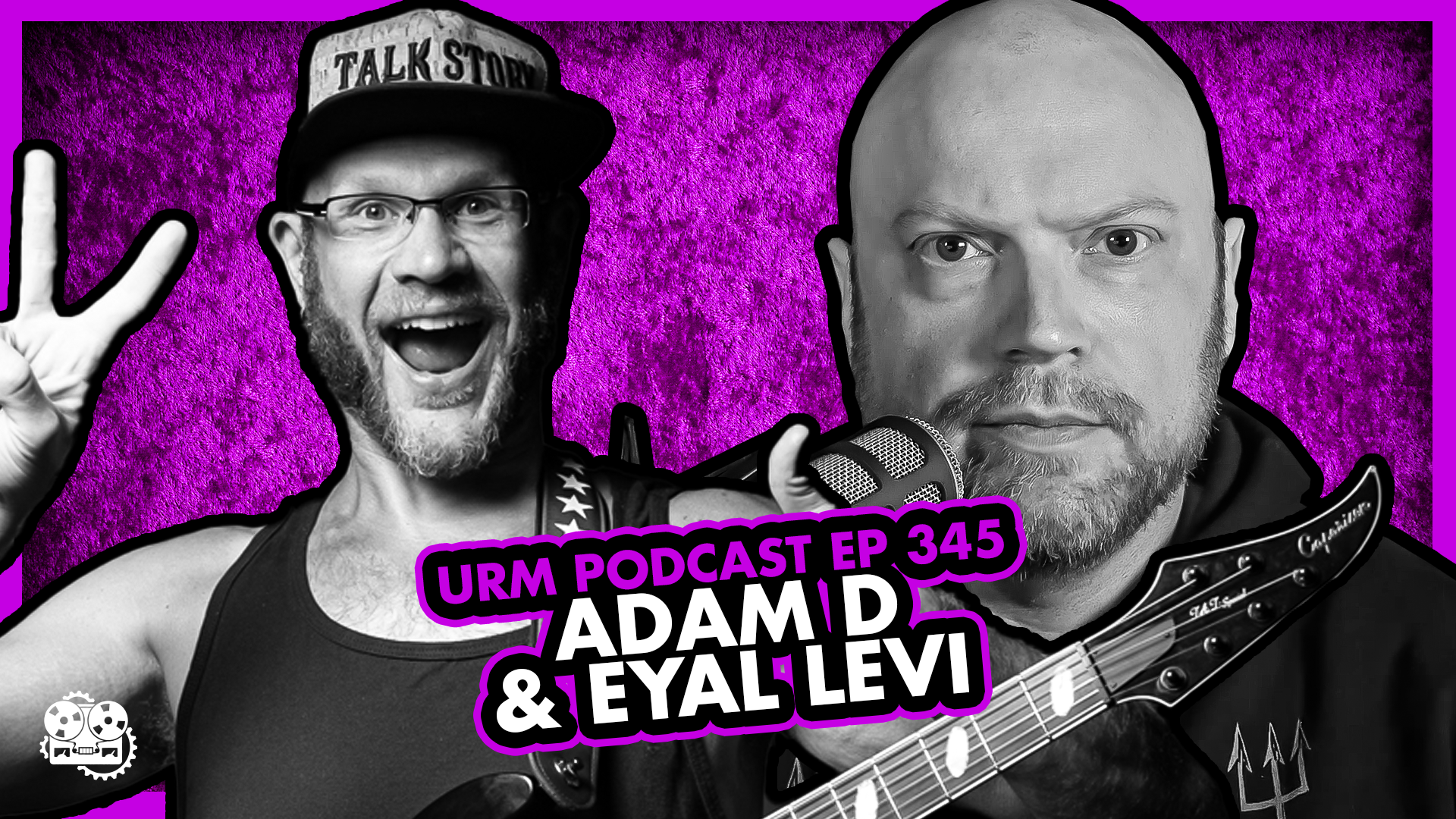
ADAM D: Perfecting Rhythm Guitars, The Dangers of Over-Producing, and Shaping Metalcore
Finn McKenty
Adam D is the guitarist, songwriter, and producer for metalcore pioneers Killswitch Engage and his side project, Times of Grace. As a producer, he was instrumental in shaping the sound of the early 2000s metal scene, working on influential albums with bands like The Acacia Strain, All That Remains, Underoath, and Shadows Fall.
In This Episode
Adam D breaks down his dual life as both a touring musician and a studio producer. He gets into why it’s crucial to have a fresh set of ears mix your work and discusses the dangers of over-analyzing and beating a project to death. He shares his philosophy on guitar tone, emphasizing that a player’s hands are far more important than their gear, and offers some seriously practical advice for tracking tight, in-tune rhythm guitars—from tuning differently for chugs versus open chords to the importance of pick attack. Adam also talks about his approach to communication in the studio, the value of pre-production, and why he’s a firm believer in capturing real, human performances over chasing sterile, grid-perfect perfection.
Products Mentioned
Timestamps
- [3:08] Prioritizing his own music over producing other artists
- [5:48] Why being a musician helps when you’re in the producer’s chair
- [9:39] The danger of mixing your own record and over-analyzing everything
- [13:12] Mixing at conversational volume to avoid ear fatigue
- [18:08] Why his studio internship taught him more than four years at Berklee
- [26:46] Adam’s songwriting process often starts without an instrument
- [28:31] The importance of quality control and deleting bad ideas
- [35:27] The pros and cons of writing remotely vs. jamming together as a band
- [40:15] Why a player’s hands are everything and gear is only “kind of important”
- [41:18] The two biggest mistakes guitar players make in the studio: intonation and timing
- [43:37] Tuning the low string differently for palm-muted chugs vs. open chords
- [46:38] Why he often has the songwriter play both rhythm guitar parts on a record
- [48:02] The absolute necessity of upfront communication in the studio
- [51:13] Why pre-production is the only way to approach making an album
- [59:29] Why you should never save vocals for the very end of a session
- [1:00:19] The process for recording Norma Jean’s “Bless the Martyr…” mostly live
- [1:04:51] How to get clear mids in a guitar tone (hint: turn down the bass and treble)
- [1:08:00] The secret to his signature pinch harmonics
- [1:13:05] Why the overheads are the key to a great drum sound
Transcript
Speaker 1 (00:00:00):
Welcome to the Unstoppable Recording Machine Podcast, and now your host, Eyal
Speaker 2 (00:00:06):
Levi.
(00:00:08):
Welcome to the URM podcast. Thank you so much for being here. It's crazy to think that we are now on our seventh year. Don't ask me how that all just flew by, but it did. Man, time moves fast and it's only because of you, the listeners, if you'd like us to stick around another seven years and there's a few simple things you can do that would really, really help us out, I would endlessly appreciate if you would, number one, share our episodes with your friends. Number two, post our episodes on your Facebook and Instagram and tag me at al Levi URM audio and at URM Academy and of course our guest. And number three, leave us reviews and five star reviews wherever you can. We especially love iTunes reviews. Once again, thank you for all the years and years of loyalty. I just want you to know that we will never charge you for this podcast, and I will always work as hard as possible to improve the episodes in every single way.
(00:01:10):
All we ask in return is a share a post and tag us. Oh, and one last thing. Do you have a question you would like me to answer on an episode? I don't mean for a guest. I mean for me, it can be about anything. Email it to [email protected]. That's EYAL at m dot A-C-D-E-M-Y. There's no.com on that. It's exactly the way I spelled it and use the subject line Answer me Eyal. Alright, let's get on with it. Hello everybody. Welcome to the URM Podcast. This is a highly, highly requested episode. My guest today is Adam d, who is known globally for his work as a guitar player, producer, songwriter, and generally known personality for the band, kill, switch, engage, as well as his recent, I will say long time side project Times of Grace. As a producer, he's worked with bands like well, his own of course, and the Acacia Strain. All the Remains on Earth under oath, shadows fall, and a ton more. I apologize for the wind chimes in the background of his audio. We did what we could. He was outdoors, but take what you can get. I was stoked to have him on, stoked to finally talk to him, and I hope that you enjoy it as much as I did. Here goes Adam d, welcome to the URM Podcast.
Speaker 3 (00:02:43):
Thank you very much. Pleasure to be here, sir.
Speaker 2 (00:02:46):
Pleasure to have you here. So one thing I've always wondered about you is what you prioritize because you do so many different things and you're actually good at them. Most people who do production and have a band and play guitar are great at one, but suck at the others, but you've managed to make it work, so I'm wondering what you prioritize.
Speaker 3 (00:03:08):
That's all debatable if I'm good at any of them, but there's really is no priority. Both of them are fun for me. So I guess I love going on tour, obviously with my friends and drinking beers and playing songs and connecting with fans. That's kind of what I've been really sticking with the most lately. But I guess creating music has always been a thing I just truly love. I've been kind of concentrating on creating my own music as of late and been having a really good time. There's just such a rush with just building something and just watching a song grow up, you know what I mean? So it's a hell of a rush. Yeah.
Speaker 2 (00:03:48):
Do you prefer that than say helping somebody else develop their own song in the production context?
Speaker 3 (00:03:55):
Yeah, I do for some reason. I guess maybe it's because I'm a selfish prick. That's
Speaker 2 (00:04:00):
Yours.
Speaker 3 (00:04:00):
I could do that. Yeah, exactly. I dunno, I've just been getting off on making my own music lately and just the freedom of it. Whereas if I'm hired as a producer, it's my job to, yes, I can be creative, but it's also respecting what the band and what they sound like and who they want to be and what they want to do. So it's a fine line. I have to dance. I obviously give suggestions and try ideas, but at the end of the day, I really want the band to be in charge, not me.
Speaker 2 (00:04:35):
Do you ever get resistance from bands you're producing because they're afraid that suggestions might be too signature to you?
Speaker 3 (00:04:44):
Bands will disagree if I come up with an idea and they don't like it, but I don't even know if it's a kind of thing where they're like, that sounds too much like your band. I dunno if that's ever really come out. But yeah, the way I look at it is you don't know until you try it or suggest it, and a suggestion works sometimes and it sounds better than it did before, or a suggestion I give, I'll say it and we'll try it and I'll be like, that's a terrible idea. Nevermind. Let's go back to the other way. But you
Speaker 2 (00:05:15):
Just never know. One thing that I think in your generation of producers that became the norm is that producers are also musicians where I think once upon a time they didn't necessarily have to be. Do you think that that makes it easier to relate to who you're working with or for instance, Tom Lord Algae was saying that he thinks he has it easier because he's not a musician, therefore he can listen like an actual listener.
Speaker 3 (00:05:48):
That's actually a great point. As a mixer, that makes a lot of sense because you want to make that song attainable for any layman, any non-musician, but a music fan. Whereas I feel production wise, I think the opposite. I feel like it's good to be able to play the instruments and relate to what the performer wants to lay down on a track and how to execute it properly and how to make it feel like the best performance it can be and how it can actually add to the entire project that is the song. Because when you look at it, at the end of the day, if I'm a drummer, not all the songs are about drum licks and drum grooves, but obviously the drums are an incredibly vital part of any metal or rock song out there. I think it's the case with every instrument and every vocal part. I think the vocals more so could be the only thing where you really have to spend a little more time and they may mean a little more just because that's the instrument that's most relatable to most people. It's a human voice.
Speaker 2 (00:07:05):
I mean, if you're changing a kick pattern, there's probably not that much emotion behind it.
Speaker 3 (00:07:13):
Well, there's groove, man, there's groove. It can sit different and people feel things like that
Speaker 2 (00:07:19):
They do, but they're not describing some awful thing that happened to them or recounting some trauma, like lots of lyrics to
Speaker 3 (00:07:30):
Exactly the point I was getting at. Yeah, exactly.
Speaker 2 (00:07:33):
Do you find that it's easier or harder when you're producing your own project or your own band as opposed to somebody? I imagine that you can't help it but have big picture visions for anything you're working on when you're working with other people. It is their vision to a degree,
Speaker 3 (00:07:56):
Right? Right, exactly. Yeah. I feel there may be a bit more pressure when working on my own projects just because you want it to be good, obviously, and of course I want other bands that I'm working with. I want their stuff to be good as well. But when it comes down to some of the decision making, it's all on them. Like I was saying earlier, it's not my job to tell a band that they need to sound a certain way or be a certain sound or whatever. It's my job to just make the shining moments shine a bit more and the good parts be better and make all of the faults kind of just disappear or hide them and cover 'em up, that kind of thing.
Speaker 2 (00:08:41):
What inspired you to find somebody else to mix your stuff back at the beginning? Because early on I think producers who are just starting to get good enough to get stuff done tend to think that they're a lot better than they really are and will make the mistake of mixing their own band stuff. But I thought that having other mixers, Andy, was really, really wise. I remember noticing that back at the beginning and thinking that that was a really, really smart move. I remember doing the same sort of thing with my band just because I felt like I would fuck the mix up because it was too close to it. So hired somebody else and it ended up being the best possible decision in terms of outcome. I'm wondering if you were looking at it kind of like that you're too close and by fuck it up, Andy's amazing.
Speaker 3 (00:09:39):
That's the thing. I feel like I've just made that mistake with the Times of Grace record that we just put out. Not that it's the worst sounding thing I've ever made, but I've truly feel like it could have been better if somebody else's hands were put on it possibly. I'm a firm believer of this. When you spend too much time on something, it's only going to go backwards. You know what I mean? For myself, I should say, I can't spend too much time on a project or I'll just keep beating up and beating it up and overanalyze it and then all of a sudden I'm just doing these tiny little tight Q curved EQ cuts that are like, what the fuck am I doing? Man? Remember the days of just doing analog mixing and just grabbing the notches of what you don't like and just removing it and moving on, and that was the vibe you got and it worked out and it sounded great, and now I'm like, here I am overanalyzing every possible aspect of every EQ curve and every attack and release time, and then all of a sudden I'm just completely burnt out and can't see the light of day anymore.
(00:10:43):
I can't see the forest for the trees. Does it sound good? Does it sound like shit? Well, it's done, so there we go. You know what I mean? So getting somebody involved at the last minute, both with mixing and mastering, I feel like that's the best possible option. Get somebody to mix it and then have somebody else master it so you have even another person involved in the final processes. Just because getting another person's head in the mix, it's always a good thing to have another person just do a dummy check and be like, yeah, I see where you're coming from, but try this out. Cool. Awesome. That sounds better. You're right.
Speaker 2 (00:11:16):
Yeah, I think there comes a point where you're just making things different. You're not making them better, actually probably making them worse.
Speaker 3 (00:11:24):
That's what I'm saying, because you can't hear the original focus and the original idea anymore. You've just beat yourself up so much on working on everything for months, maybe years, and now you're just like, cool. I can't even tell if it sounds good. I'll just keep notching things until maybe I feel better about my life, which is a losing proposition. Sounds going to say that. I've done that several times in my career and it's never a good situation to be in, man. It's good to have another head in the game and having somebody that is going to show you their vision and you work together on it and it can only make it better.
Speaker 2 (00:12:02):
So how do you know where the line is, where you are working too much on a project?
Speaker 3 (00:12:08):
In a perfect world, if you have a month to track a record, that's plenty. That's more than enough. If you spend more than a month tracking something, you're going to start losing your mind. Getting back to the whole mixing thing. When you spend more time thinking about it, more time than you need to thinking about it, you just beat it up and it loses it's direction. Do
Speaker 2 (00:12:28):
You limit your hours to say six hours or eight hours of audio time? I would love that, but
Speaker 3 (00:12:37):
More realistically, I think it's eight to 10 a day just because you need to make sure you get shit done. And having said that, monitor volumes. Don't monitor too loud, just monitor quiet. You're going to burn your ears out, man.
Speaker 2 (00:12:50):
That's one of the things that I started to notice the more and more I got around veterans is it seems like the older they are, the louder they mix, which is only for one reason, which is that their hearing's gone.
Speaker 1 (00:13:06):
Yeah, right, right. Though
Speaker 2 (00:13:07):
I heard that Andy Wallace mixes a conversation volume and has his entire career,
Speaker 3 (00:13:12):
That's how you should do it, man. I really think so. You just have less ear fatigue.
Speaker 2 (00:13:16):
Well, it explains why he's 70 and still doing it.
Speaker 3 (00:13:19):
Yeah, right.
Speaker 2 (00:13:20):
70 something at least. Why did you get into production in the first place? I'm just curious because it seems to me like a lot of metal people from the nineties got into production because they would take their band to local studios that maybe were nice studios, but the engineers didn't know a thing about heavy music and they'd pay a bunch of money for really, really bad recordings.
Speaker 3 (00:13:47):
I feel like people weren't making good metal recordings back then. It was just hard to find a producer that just got the whole, let's scoop it out and get some clicky ass drums and make it precision tight and all that stuff. It was back in the nineties, early two thousands. I don't know if that's necessarily what made me want to do it. I've just gotten off on the whole, like I said earlier, just watching a song grow up and creating that song and having it start with a riff and turn into, oh man, this came out a little different than I expected in the beginning, but I like the direction that it went into and this is cool. It's a rush doing that.
Speaker 2 (00:14:26):
So I guess it's kind of like production is the ultimate songwriting tool.
Speaker 3 (00:14:30):
Absolutely. Yeah.
Speaker 2 (00:14:31):
Yeah, that makes a lot of sense. So do you consider yourself an engineer or is that secondary?
Speaker 3 (00:14:37):
I would say it's probably secondary. I definitely have more fun producing. Like I said, I've caught myself spending too many late nights notching out tight cues and just doing stupid EQ thing. You're like, what am I doing, man? It's like I feel like when you're making a record, you should be spending more time making things feel good instead of overanalyzing things. That's what music's supposed to be, man. It's supposed to be a good time.
Speaker 2 (00:15:04):
What was the first time that you heard somebody else mix something that you produced and it was just fucking awesome in a way that maybe you couldn't have imagined?
Speaker 3 (00:15:16):
Always working with Andy was a cool thing, and it doesn't hurt that he's one of the nicest guys in the world too. He's cool. Yeah, he's great. He's just no nonsense. He's like an old schooler like me and just gets the job. It may not be as dramatic as I want some of the mixes to sound, but he's really good at just notching things out and making it all sit together and you hear exactly what's going on. So that's kind of the definition of what you want a good mix to be. You can hear everything and the integrity of the song is there.
Speaker 2 (00:15:48):
His mixes are pretty spectacular in terms of how well they work together. I think you actually just said it perfectly. He has a way of getting things just aggressive enough, just big enough to where you never lose anything. You're never struggling to hear anything ever any of his mixes, but he doesn't have that problem where everything sounds super separated or the drums are off or in space. It all sounds like a big aggressive band. I dunno, he's just got a perfect ear or something.
Speaker 3 (00:16:25):
He's been doing it a long time, man. He better be good at it.
Speaker 2 (00:16:28):
Yeah, I mean, I know people who've been doing it a long time who aren't very good at it. When you started off, you were saying that you got an internship at a studio around the same time that Kill Switch was starting. How were you, I guess back then balancing the time between the two things?
Speaker 3 (00:16:47):
Oh man. Even before Kills Switch, I was interning while I was just working my day job and then Killswitch happened, so that's kind of when I just became like, all right, cool. Well, I got to quit my day job because I got to try this band and see what happens. And I guess the internship turned into more of a session worker and I would just balance between doing sessions and touring to availability. I was really fortunate to be able to just keep everything I was doing music related at that point instead of working crappy day jobs and stuff like that. So I've been very fortunate in that aspect just to say that I've made my living off of music for the last, geez, 19 years. Yeah, 18 years.
Speaker 2 (00:17:31):
When did you quit your last real world job?
Speaker 3 (00:17:35):
Probably 2001, right when we first started doing Real Tours. We were weekend warriors for quite some time, but then we started doing real tours where we'd have to obviously rent a van and a trailer and just drive ourselves around the us, play what we could, that kind of thing. So yeah, it's probably early two thousands, 2001.
Speaker 2 (00:17:59):
What went into getting the internship in the first place and then not only just getting it but then being upgraded to someone that actually got paid hard work,
Speaker 3 (00:18:08):
Just spending the hours, spending the time and getting your hands dirty to think about it, I went to Berkeley and I probably learned more from my internship than I did in my four years of school. You actually finished Berkeley? Yeah, yeah, I did one of the few. Wow, that's like such a rarity here. It's like, whoa, you made it past year one. That's incredible. I'm like, dude, I got my diploma. David Bowie handed me my diploma.
Speaker 2 (00:18:33):
I dropped out. What did you major in?
Speaker 3 (00:18:36):
MP
Speaker 2 (00:18:36):
And e. That's the one legit major that, and I think music business was at the time, but I think MP and E was one of the only legit programs there. They
Speaker 3 (00:18:48):
Had a really good, the actual desks they had there were cool at the time. I don't know what they have now, but the program itself was pretty good for being what it is because like I said, you can't really learn engineering until in the studio and seeing things happening and doing things yourself. So given that it's a pretty good program for what it is, at least when I was there, they had a variety of mediums. I'm pretty sure they had some, I think they actually had some kind of DAW at that point. The first version of proto whatever the hell it was. God, it was forever ago. We were doing mostly two inch tape at that point. Yeah.
Speaker 2 (00:19:28):
Do you think it prepared you for the internship at the very least?
Speaker 3 (00:19:32):
Yeah, maybe a little bit, especially with outboard gear and the studio I worked in actually had one of the same desks that Berkeley had in one of the studios, so that was pretty cool. That made it easy, but as long as you understand the basics of signal flow, you can pretty much figure out any desk. So yeah, I guess it maybe helped a little bit.
Speaker 2 (00:19:53):
What was your thinking behind actually finishing?
Speaker 3 (00:19:56):
Probably my
Speaker 2 (00:19:58):
Parents', so good reason.
Speaker 3 (00:19:59):
Yeah. Yeah,
Speaker 2 (00:20:00):
You're going to finish college and you're going to a damn job,
Speaker 1 (00:20:03):
So there you go.
Speaker 2 (00:20:05):
Yeah, I mean, honestly, the reason I went was pressure to go to college, which I don't know if there is now. I have no idea. I don't know anybody that age, but it was extreme pressure coming from my parents, so I just figured, well, this is probably the closest thing to not going to college, but appeasing them. I think that one of the biggest critiques about music school, art school, recording school, any sort of creative school is people do end up saying the same thing you just said. I learned more in a very small time on my internship than four years at Berkeley. You hear that all the time about real schools, but some people really, really think they're worth it, so I'm just curious if you could go back, would you still have gone, you still think it's worth it?
Speaker 3 (00:20:55):
Nope. I would've saved a bunch of money.
Speaker 2 (00:20:58):
What would you have done differently?
Speaker 3 (00:21:00):
Interned more. I would imagine just hang out, be a studio rat for a couple more years. Hands-on experience means a lot more in that industry than saying that you have a degree. Having projects that you can show people like, Hey, I recorded this, or I mixed this. I was an assistant engineer on this project. I really feel like that's the only thing that any credential that actually matters within the audio industry is just being like, Hey, I did this record.
Speaker 2 (00:21:25):
I completely agree with you. It's actually kind of funny. When I was at Berkeley, there was a time period where I was looking at studios in town to record the band I was in, wanted to go to a good place and was willing to drop some money, and so I went and I looked at a bunch of places and I remember the first place I went to was talking to the engineer and I told him I went to Berkeley and he was like, just don't say that. Just trust me when you go to the studios around here, just don't tell them you go there because Berkeley guys have a bad reputation in this town,
Speaker 3 (00:22:02):
I could imagine. Yeah.
Speaker 2 (00:22:03):
Did you hear anything about that?
Speaker 3 (00:22:05):
No. No. I guess I never really recorded anything in Boston City Limits. The studio I worked at was closer to home, so yeah, I didn't really do much within in the city of Boston.
Speaker 2 (00:22:17):
Okay. Yeah, apparently that's a thing. It's actually harder to get gigs or anything if you go to Berkeley, at least in Boston.
Speaker 3 (00:22:26):
Yeah. Yeah. I think there is a bit of a tool aspect when it comes to some of the graduates there that dude's a tool and can't even play, man. I could say there's probably some graduates that don't know what they're doing. For sure, still.
Speaker 2 (00:22:40):
Yeah. I remember a dude who was there for three years and still, and he was in the guitar program. This is why this matters. He was there for three years and still couldn't play a single scale.
Speaker 3 (00:22:51):
That doesn't make any sense. How is that even, how are you at a music school when you can't play a scale
Speaker 2 (00:22:57):
In that instruments program as a major?
Speaker 3 (00:22:59):
Wow. Wow. That's like the school's just taking your money, man. That's like, come on, come on, man, come on.
Speaker 2 (00:23:06):
That's what I was thinking when I realized, yeah, what are you still doing on the stuff? That was first semester in your third year,
Speaker 3 (00:23:14):
You should be onto Modal interchange at that point, man, and playing jazz standards. Come on dude, give me a break.
Speaker 2 (00:23:20):
Alright, so speaking of modal interchange and theory, what role does that play for you, if any?
Speaker 3 (00:23:27):
Zero.
Speaker 2 (00:23:29):
I figured you were going to say that.
Speaker 3 (00:23:31):
The only thing that came out of that is that I guess the ear training courses were good for me too because I can hear pitch a lot better, I guess, and I can just hear a song and I know what the chord changes are right away, and I can describe, oh, that chord right There is a modal inner church chord borrowed from this, and just, I can describe things to people, but what good does that do to me in the real world? You know what I mean?
Speaker 2 (00:23:55):
Has it made a difference when working with say any of the vocalists you work with or any of the bands you've worked with? If you're trying to propose a change to a song,
Speaker 3 (00:24:05):
Funny story. Most people that I work with don't know music theory, so I can be like, Hey, man, that note doesn't work there because this is actually a borrowed chord from a different key, so we need to alter that scale here. And you're like, oh, I didn't know that. Cool. I can try it. If it sounds better, I'm going to keep it. Some people are just like, no, I like it the other way. I better out of key. Okay, that's fine too. Whatever you want to do, man. I guess it really just doesn't matter.
Speaker 2 (00:24:33):
Do you find that communicating with people who don't know theory at all becomes more challenging if you do know theory?
Speaker 3 (00:24:41):
No, not at all. Honestly, I feel like if people do know theory, it's just a bit of a relief because the conversation's quick. Like, oh, yeah, yeah, yeah, of course. Yeah, bang. Yeah, bang. Or like, oh no, but I like the grind of that, that note. It's almost like a tension like, alright, cool, and it's just a quick thing as long as you're aware of what you're doing, that kind of thing. You know what I'm saying? Yeah.
Speaker 2 (00:25:06):
I've always thought that if you just look at it as a way to describe how things work relative to each other, it's a great thing. If you start looking at it as some sort of bible for how you should write music or play, then it can be a problem.
Speaker 3 (00:25:23):
Right? Exactly. Exactly. I don't write anything based on theory. Write with your ear. Those are the things that come out feeling the best. Write with your brain, right, with your heart, and then that's when music sounds the coolest. I feel like people who are going to like, well, I'm going to write in this key today, in this scale and this and borrow things for the chorus and here and it obviously sounds like what it is and just a methodic approach to writing music. I
Speaker 2 (00:25:50):
Want to move on from Berkeley, but I got to say this last thing, that was one of the things that was super eyeopening, being in theory classes there and having the instructors play me music that they wrote that was technically and theoretically immaculate, but was like the worst garbage I've ever heard in my entire fucking life.
Speaker 3 (00:26:15):
I was about to ask you how much fun was it to listen to? Did you ask for a copy of it?
Speaker 2 (00:26:20):
Absolutely not. You know what I mean? It's torture.
Speaker 3 (00:26:22):
No,
Speaker 2 (00:26:22):
Like 20 years later, that sticks out to me so much. The music was so fucking bad. It was unreal bad. When you're writing, is it a process of kind of fucking around on the instrument until there's something cool and then running with that idea, or do you have a bigger vision in mind? You kind of hear the song first and then try to download it
Speaker 3 (00:26:46):
Nine times out of 10 when I write a song, it starts with me not even holding an instrument. It's really strange. I almost feel like physical stimulation, it makes my brain work. I'm out taking a hike or I'm walking my dog or I'm jogging or something or whatever, and I'll just sounds and drum grooves will pop in my head and I'm the king of just grabbing my cell phone and singing the part into my cell phone and then go home, play it on guitar, and it all starts with that one riff and then just goes from there.
Speaker 2 (00:27:20):
Has that always been your method for cataloging things when you're not at a DAW?
Speaker 3 (00:27:26):
Yep, absolutely.
Speaker 2 (00:27:28):
I've never done that, but obviously I know several people who have. I guess that in order to pull that off, your singing would have to be semi accurate
Speaker 3 (00:27:37):
Or you remember the original idea that you had and if the singing is a little off, whatever, just get it close.
Speaker 2 (00:27:44):
How detailed do the ideas get?
Speaker 3 (00:27:45):
They're very basic. Actually. It starts, like I said, it either starts with a drum groove or a guitar groove. I've actually had some bass ideas too, but mostly a drum groove or a guitar groove or a melody. Take it from there and then a lot of the times it doesn't even work out. I'll get back in front of my computer and grab my guitar and start laying something down and I'll spend three hours on it, put it away and get up the next morning, have a cup of coffee, listen to it and be like, well, that's absolute trash, and just delete. Just drag and drop into the trash can and start over. So you do delete stuff. Oh God, so much. You wouldn't believe it. Yeah. I think quality control is a very important thing when you're a songwriter. Don't make everything. It's good to make mistakes and then throw 'em out. I
Speaker 2 (00:28:31):
Actually completely agree with you. This is just a running debate that I've had on my podcasts because there are some people who are very good writers who believe in deleting nothing, but they still believe in quality control. But for instance, I heard this one system the other day that made a lot of sense, so this dude will write the entire album in one session in a dawn.
Speaker 4 (00:28:59):
What?
Speaker 2 (00:28:59):
Just hear this out. He writes the entire album in one session, but if he doesn't, I mean this is applicable to a song too, but if he likes an idea but doesn't know what to do with it in context of that song, he just color codes it green. If the idea fucking sucks, he color codes it red, and if he kind of likes it but not sold, then it's yellow and he says that that way it really saves his ass multiple times when he comes to a part in a song and doesn't know what to do or there's some sort of a block. He's got all these green parts that are fucking cool, just didn't find their way into a song at the time. He says that a good 50% of the time, he'll find the solution right there in the green or when he's just not having good ideas using one of the greens to spark something works. I've always been delete.
Speaker 3 (00:30:05):
Yeah, yeah. Well, everyone's different. I think there is a method to that guy's madness because when he gets to a part and can't feel what's next to have an option that can fit, that's great to have. There's a method to his madness. I can see that.
Speaker 2 (00:30:22):
Oh yeah, he's sick. What do you do when you get to a part and you don't know what's next?
Speaker 3 (00:30:27):
I stop working on it and put it away and do that thing and wake up the next morning and grab my coffee and listen to it and see if anything pops into and he bulbs light up and usually it works and sometimes it doesn't and that song just never gets finished and I trash it.
Speaker 2 (00:30:42):
How long do you give it before you've decided this was just the firing blanks?
Speaker 3 (00:30:48):
I may have some half written songs on a hard drive inside. I have no idea. I guess it's kind of like that dude's method where it's like, I really like how that song starts, so I'm not going to really throw it out just yet. It just kind of sits there, but if I listen to it and it just doesn't feel good and this song's going nowhere, it's just knowing that it's like that's trash. I got to get rid of it. I want less clutter. I don't want to see any more songs that I need to finish or whatever. Or if it doesn't feel good to listen, to make sure to just get rid of it because it's just, yeah.
Speaker 2 (00:31:23):
Well, what you just said was actually one of the reasons that he does keep things is you just said you might have half an album written on a hard drive. You're not sure. He said the reason that he does it is because we tend to forget so many things that we've written because it happens in the moment and then the moment's over and we move on and if it doesn't get finished, you'll probably forget. And how many sick things have you written that are just in the ether who said that through doing that? There's been lots of those that turn into a soundtrack or something for a YouTube video or whatever, just because we forget so many cool things that we write if we write a lot.
Speaker 3 (00:32:10):
Yeah, I'm that kind of mentality, I guess. It's just like if I throw it away, it does get released into the ether and maybe somebody else will pick it up. Maybe I'll write it again sometime, who knows?
Speaker 2 (00:32:20):
Have you found yourself doing that, writing something a second time inadvertently?
Speaker 3 (00:32:26):
I've definitely written some rifts that I'm like, ah, shit, that sounds pretty close to something that I've already done. What am I thinking and just scrap it, that kind of thing for sure.
Speaker 2 (00:32:36):
Is that a rule?
Speaker 3 (00:32:37):
Yeah. I don't want to write a riff that sounds remarkably close to another song that I've written. Everybody jokes that Acbc has been writing the same record for 30 years, but there is a cool thing to having a signature sound I guess, but it's also good to challenge yourself and try to write different sounding parts when you can.
Speaker 2 (00:32:59):
Do you think that having a signature sound is something that should strive for or something that just happens naturally as a result of making music?
Speaker 3 (00:33:09):
Everything should feel natural. Absolutely. Obviously for Kill Switch, say we don't want to write something that's completely out of left field, just like what are they thinking? We don't want to alienate any of our fans, so I guess when we go into writing a song or writing an album, it's still, I'd like to keep it somewhat within the same thing. You could say, we do have a signature song because of that, and that's kind of the reason why I wanted to write another Times a Grace record because it was an opportunity for me to actually step out of that pigeonhole and do something completely different and it feels good. It feels great to write songs that aren't metal, and it's because I don't listen to metal exclusively. I just like music.
Speaker 2 (00:33:56):
So it sounds like the Kill Switch signature sound is a process of exclusion rather than trying really hard to have that signature sound. It's just cutting out the stuff that doesn't fit it and using it for Times of Grace or other projects.
Speaker 3 (00:34:14):
Yeah, we're not going to do acoustic ballads for Kill Such Engage. I don't think that's a record of that. Probably wouldn't be a good thing. I don't know. Maybe not. Yeah. Yeah.
Speaker 2 (00:34:24):
When you're writing though, like you said, everything should feel natural if you're following that method or philosophy. Then if you do feel like writing an acoustic ballad, is it more just well write the ballad and then if it doesn't fit the project, then it doesn't fit the project?
Speaker 3 (00:34:42):
Yeah, I suppose you could say that. I don't think we've necessarily written a ballad for that band.
Speaker 2 (00:34:48):
I mean, if you were writing, like say you're writing, well, I don't know, do you guys write all together or do you write on your own?
Speaker 3 (00:34:54):
I think we've all become so tired of writing on our own. I've ended up writing a lot of the records the last several records because I moved away from the east coast, whichever where everyone else is, so we don't even get to get of practice. We barely see each other, so I'll tend to write a bunch of music and Justin will write a bunch of stuff and then Mike will write some stuff and Joel will write some stuff and then we'll just kind of email ideas to each other. Some finished some unfinished. Where
Speaker 2 (00:35:24):
Do you live? I
Speaker 3 (00:35:25):
Live in California now.
Speaker 2 (00:35:26):
Oh, okay.
Speaker 3 (00:35:27):
But we're tired of having the songs being put together like that. We want to feel like a band again. Whenever we start writing music again, I think we're just going to do the whole maybe rent out a house and jam on it and if it's good, just record it right. Then getting back to the whole keeping things fresh and keeping things motivated and exciting while you're working on it instead of beating it up and spending too much time on a project. There's
Speaker 2 (00:35:50):
So many pros and also cons to modern technology and what it does for writing. I think there's a level of detail and refinement that you can go to that
Speaker 3 (00:36:04):
You can drive yourself batshit crazy, man.
Speaker 2 (00:36:08):
You can't go into that level of detail when everyone is together and it's loud as shit, but at the same time, it's harder to get a vibe happening when everything's done separately through a DAW.
Speaker 3 (00:36:21):
Right.
Speaker 2 (00:36:21):
I mean, I know that you're saying that you're sick of writing on your own. Do you have overall a preference?
Speaker 3 (00:36:28):
I wouldn't say that I'm necessarily sick of it. I think it's better when everyone is there and involved and it not only makes the song more varied, but it also includes everyone in the band. So everyone in the band feels like it's part of them, and I feel like that's a big payoff when you're on stage. If everyone is playing a song, they're like, this is part of me, and you can feel like it's almost like they enjoy the song a little bit more
Speaker 2 (00:36:59):
As opposed to having the hired gun feel.
Speaker 3 (00:37:02):
Yeah. There's a lot of songs we play live where I guess at this point, since we've been playing them for so many years, it's kind of like their song, but I'm sure there's songs that we've been playing live, like the newer songs that say Joel or Mike or Justin are like, I have nothing to do with the creation of this song, so it's not really my favorite. Some of the songs that I didn't write when I play it, I'm like, some of Joel's songs, I'm like, I would've never written this riff like this, but it's cool. So we just think different
Speaker 2 (00:37:32):
At this point in time though, do you have that feeling like you said you've been playing it for so long, even if you didn't write it, it's just part of your DNA now, or does it still feel like somebody else's song? Yeah,
Speaker 3 (00:37:44):
Yeah. I guess when I've been playing a song for 10 years, it's now my song. Yeah, it's pretty comfortable. At that point, I can pretty much not even look at my guitar and play this song.
Speaker 2 (00:37:54):
Hey, everybody, if you're enjoying this podcast, then you should know that it's brought to you by URM Academy, URM Academy's mission is to create the next generation of audio professionals by giving them the inspiration and information to hone their craft and build a career doing what they love. You've probably heard me talk about Nail the Mix before, and if you're a member, you already know how amazing it is. The beginning of the month, nail the mix members get the raw multi-tracks to a new song by artists like Lama, God Angels and Airwaves. Knock Loose OPEC Shuga, bring Me the Horizon. Gaira asking Alexandria Machine Head and Papa Roach among many, many others over 60 at this point. Then at the end of the month, the producer who mixed it comes on and does a live streaming walkthrough of exactly how they mix the song on the album and takes your questions live on air.
(00:38:46):
And these are guys like TLA Will Putney, Jenz Borin, Dan Lancaster to I, Matson, Andrew Wade, and many, many more. You'll also get access to Mix Lab, which is our collection of dozens of bite-sized mixing tutorials that cover all the basics as well as Portfolio Builder, which is a library of pro quality multi-tracks cleared for use in your portfolio, so your career will never again be held back by the quality of your source material, and for those of you who really want to step up their game, we have another membership tier called URM Enhance, which includes everything I already told you about and access to our massive library of fast tracks, which are deep, super detailed courses on intermediate and advanced topics like gain, staging, mastering low end and so forth. It's over 500 hours of content and man, let me tell you, this stuff is just insanely detailed. Enhanced members also get access to one-on-ones, which are basically office hour sessions with us and Mix Rescue, which is where we open up one of your mixes and fix it up and talk you through exactly what we're doing at every step. So if any of that sounds interesting to you, if you're ready to level up your mixing skills in your audio career, head over to URM Academy to find out more. So speaking of guitar, just out of curiosity, how important do you think that hands are versus gear when it comes to rhythm tone?
Speaker 3 (00:40:15):
Hands are everything, gear is kind of important,
Speaker 2 (00:40:18):
Kind of where do you think it becomes important?
Speaker 3 (00:40:21):
You need to feel comfortable on your instrument and you need to have something you like the sound of that you're playing through. When you like what you're playing through, you're more inspired and you play inspired.
Speaker 2 (00:40:33):
Now, when you're producing guitar players, do you kind of follow that same mentality, like say that they have a piece of gear or they're going after a sound that you just don't like, but they're super comfortable with it and they play better with it?
Speaker 3 (00:40:50):
Honestly, that's the more important thing right there. The fact that they like it and they're more comfortable with it means you're going to stick with it. Like we're talking about the power of pro tools, it's nothing you can't change later. Very
Speaker 2 (00:40:59):
True. The
Speaker 3 (00:40:59):
Performance is the most important aspect in the studio. You can tweak the sounds as much as you want afterwards.
Speaker 2 (00:41:05):
What do you think is some of the most common but terrible weaknesses that you find guitar players having when it comes to tracking riffs? Stuff that you have been able to help them? Correct. I guess
Speaker 3 (00:41:18):
Intonation is a big one. Make sure your guitar is intonated properly. Timing where you are with the drums, that's another one.
Speaker 2 (00:41:27):
You mean like ahead of the beat or behind the beat?
Speaker 3 (00:41:30):
Yeah, I'm actually guilty of that a lot. If I'm not comfortable with a riff, I play it uncomfortably and I'm ahead of the beat, but the more comfortable I become, the more I'll sit behind it and chill out and play a bit more relaxed and it bounces more that way. I think those are probably the two biggest mistakes, intonation and timing,
Speaker 2 (00:41:48):
And I find that the intonation thing goes deeper than the setup too. I think the setup is crucial. If a guitar player doesn't get that done, it's a losing proposition from that point forward, but their left hand, their fretting hand will fuck the intonation so bad. That's
Speaker 3 (00:42:07):
Why I play medium frets. I don't play jumbos. Can't take the jumbo thing, man.
Speaker 2 (00:42:11):
Do you death grip them?
Speaker 3 (00:42:13):
I don't think I do. I just think I got big mealy hands and I feel comfortable. On smaller frets, there's less possibility of knocking something out or bending it too much.
Speaker 2 (00:42:23):
Do you put much emphasis on which pick you're using when it comes to tone?
Speaker 3 (00:42:28):
Well, obviously the more pick you get on the string, the more you're going to pull it out of tune, the more pick sound you're going to get. I use little teardrop guys because little circular motions are good for the intonation and good for control, I think. But I would use a big fat pick, a thin, big fat pick for acoustic drumming or different applications like that. Just the wide chords. Mostly I stick with a tiny little teardrop. Yeah.
Speaker 2 (00:42:53):
One thing I've noticed about your sound, which I was always curious about, was that it sounded like you were using Ever Tunes before ever tunes even existed before they were even on the horizon.
Speaker 3 (00:43:07):
I still don't own a guitar with the Aune Bridge.
Speaker 2 (00:43:09):
I mean, it doesn't sound like you need one, but your rhythms are so in tune on those older records. That always stood out to me because if you hear stuff from the early two thousands or late nineties in general, when people go to chug, it's just the tuning is just the older it gets, the more suspect the intonation is, but your stuff always sounded right in there, so it seems to me like you always focused on it.
Speaker 3 (00:43:37):
It's hard, man, especially with a drop c tuning. The low string is a challenge. I find myself tuning for different sections of the songs. Obviously something where there's a lot of down picking and poem meeting, I'll find myself dropping my low strings 15 cents. But obviously when you've got big wide open chords for the choruses, you tend to want to strum a little lighter and tune your guitar closer to a more proper tuning, get things closer to the zero scent line, and a lot of it is also checking by ear because everyone plays different. Maybe that dude playing guitar is a bit more of a mangler than you are, so you need to drop down
Speaker 2 (00:44:19):
Mangler. That's a good term.
Speaker 3 (00:44:22):
So you got to drop the looser strings or make sure, because if the tension is lower on those strings, they're going to move a little more.
Speaker 2 (00:44:31):
Yeah. I've always wondered how certain players like Zach Weil are able to play that hard and stay.
Speaker 3 (00:44:39):
Yeah. Well, he plays an E, right?
Speaker 2 (00:44:41):
E or E Flat. Maybe that's part of it. The tuning that the guitar is actually supposed to be in.
Speaker 3 (00:44:46):
Exactly. Dude, all the times are Grace stuff is an E and I'm like,
Speaker 2 (00:44:50):
Oh wow,
Speaker 3 (00:44:51):
This is so cool. Wow, it's so easy to keep all this in tune. This is amazing. They're like, oh yeah, I set myself up for a disaster with kill Switch back in the day.
Speaker 2 (00:45:02):
I think all of OPEC's stuff is an E as well. E standard,
Speaker 3 (00:45:05):
Right? It just sounds just lively, isn't it?
Speaker 2 (00:45:09):
It's kind of like a drum. Drums start to sound weird when you tune them too low or too high. Outside of I guess what the shell is supposed to be, every shell has, I would say a pitch area, not like a specific pitch, but a pitch area that it comes to life in, and I think guitars are the same way.
Speaker 3 (00:45:32):
Every shell is supposed to have a fundamental tone. Yeah, actually, that's why I've always liked dw. They just print it inside of the shelf. This is where this thing's happy. Tune it here. It
Speaker 2 (00:45:42):
Makes a huge, huge difference. Do you find it easier to play in E?
Speaker 3 (00:45:46):
Well, it's definitely more inspiring. Sometimes when you hear how in tune you are, it's like, oh, wow, that's cool, man. It's a lot easier to play on this thing.
Speaker 2 (00:45:55):
Just out of curiosity, do you tune to the attack or the sustain?
Speaker 3 (00:46:00):
Well, it depends on which string it is and where we're tuned. If it's drop C, I will tune to the attack, but like I said before, if I'm recording a section that's like open chords and it's kind of an open, strong dissection, I will tune more so the sustained.
Speaker 2 (00:46:16):
When you're dealing with two guitar players both playing rhythm or say a bass player that is actually playing as opposed to one guitar player playing everything, how do you approach the relative intonation between multiple people? Because that is way more of a challenge than getting one person to do left, right, center, all relatively the same.
Speaker 3 (00:46:38):
It's hard work. We've come to the fruition of me and Joel set if we're tracking a record, whoever wrote the song needs to play both guitar parts. We've been doing that the last several records, and it's easier. It sucked for me the last couple records. I ended up writing good amount of the material, so I'm like, cool. Now I have this tremendous workload. That's awesome. I hate tracking rhythm guitars, man,
Speaker 2 (00:46:59):
Guitar. It's so brutal
Speaker 3 (00:47:00):
With Mike, of course, I want to have Mike on the record, so Mike, it's all relative to watch him the way he plays, and then since he's definitely a mangler, we'll have to tune a lot of his strings down. A good hell. I've been to points where I'm tuning his low string down like 25 cents for 30 cents for a specific part.
Speaker 2 (00:47:18):
Wow, that's pretty far. I guess you got to do what you got to do.
Speaker 3 (00:47:21):
He hits his strings that hard. He truly is a mangler. Yeah.
Speaker 2 (00:47:25):
You guys do have the benefit though of having worked together for a long time and therefore knowing each other's playing styles, strengths, weaknesses, and the longer you play with somebody, hopefully the more in sync you are in those ways. But when you're working with guitar players in a band that you haven't known for 20 years and you are tracking rhythms, how do you approach those types of issues? Especially when there's multiple players, sometimes more than two, even
Speaker 3 (00:48:02):
Communication. That's it. Let 'em know. Show 'em. If I feel it's not right, I'll show them what I think is wrong and why it's wrong and let them hear it. It's just communication. Be upfront and be honest. That's really it, and if they're happy with it the way it is, then we can move on and maybe revisit it if we have to. That kind of vibe.
Speaker 2 (00:48:21):
I guess communication is kind of the key to key to life. I think in order to have a successful band, I mean this is true with anything involving a partnership, but I think people in successful bands have to be expert communicators. So much personal shit wrapped up with professional shit. It is really, really hard to separate the two. We're talking about music and spending all this time together. That's not normal.
Speaker 3 (00:48:51):
And then for us, when we go on tour, it's 12 dudes on a moving bus, and that's literally where we sleep, where we travel, where we we're just around each other all the time. So I think communication is just vital. You can't escape these people, man. They're there. They're there all the time.
Speaker 2 (00:49:08):
Is that something that had to develop over time, how to do it, or do you think that maybe you being a producer gave you a bit of an advantage in knowing how to communicate with musicians?
Speaker 3 (00:49:19):
Maybe so because I've been producing for so long, but I guess I've always known the importance of being an open communicator. In order to get something done, you have to be able to be honest and let people know exactly how you're feeling. That's the only way you solve issues.
Speaker 2 (00:49:36):
Yeah, it's interesting. Anyone I know who has, I mean it's obvious, but anyone I know who's been able to keep this sort of thing going in the long term has basically mastered the art of being forward without being too much of a dick.
Speaker 3 (00:49:53):
Sometimes I need to find balance with that because I'll find myself being too much of a dick. It's hard sometimes. Yeah, yeah. Love me or hate me. At least I tell you what's going on. Instead of passive aggressive, which I feel like a lot, that happens a lot with my band still when people are just kind of dodging the issue and they're scared to talk about something, and I was like, why be scared about it, man? Just get it done. Just like, well, you're going to upset somebody for a little bit and then life will move on
Speaker 2 (00:50:23):
As opposed to stewing on it. Oh,
Speaker 3 (00:50:26):
The stewing is the worst. Then you just build animosity and hatred. Yeah.
Speaker 2 (00:50:30):
It reminds me a lot of that idea of people debating something that's going to happen. Should we do this thing? Should we not do this thing? Yes, no. Yes, no, and the amount of time that they spend debating it, they could have just done the thing and then figured out if they liked it or not
Speaker 3 (00:50:48):
And then fixed it if they didn't like it. Yeah,
Speaker 2 (00:50:50):
Exactly.
Speaker 3 (00:50:51):
All that time,
Speaker 2 (00:50:52):
But being passive aggressive or keeping things inside, it's almost like the exaggerated version of that. So when you're working with bands, speaking of communication, how early on in the process do you get involved and how much communication do you have with them before they come to the studio?
Speaker 3 (00:51:13):
What I love to do is get heavily involved with pre-production. That's a very important thing to do when you're going in and spending all this money in a recording studio tracking. Try to get as much done as you can before you get in that studio so everyone's prepared and on the same page, so you're saving time, you're saving money, and everyone has a game plan. I think that's the only way to attack an approach, making a record. If you walk in with confusion, you're only just going to drag things along and make them more time consuming and expensive.
Speaker 2 (00:51:42):
Yeah. What's the process for yours that just dependent on the scenario?
Speaker 3 (00:51:47):
Believe it or not, it's almost impossible sometimes for me to get demos from bands. They just, just send me the damn demo, even if it's in shitty condition. I just want to hear what the, I believe it is like, well, it doesn't sound very good. I'm like, I don't care. Just put your phone out in your practice space and just record it. I don't care. Just let me hear at least the song structures and see where we're at something. It can be as simple as possible, but getting just bare bones demos and hearing those, it's a great place to start and I'll go through them and say, I like this direction. I don't like this direction. Or if there are vocals down, I'll be able to start critiquing the vocals. That's the way you start.
Speaker 2 (00:52:26):
Do you find that bands that you work with tend to come to you wanting your input on the songs, or is that just depends?
Speaker 3 (00:52:34):
Sometimes yes, sometimes no, and I guess it's that first encounter of me going through the demos and giving suggestions. That's really where we figure out what they want out of me. If they want me to be involved, if they want me to be like, no, why don't you just calm down over there? We're happy with what we're doing, and I'm like, okay, let's just carry on then. Let me know what I can do to help out.
Speaker 2 (00:53:00):
So when they don't want that and you're going through the demos and there's potential, but you know that this shit needs work, what's the approach? All
Speaker 3 (00:53:10):
I can do is suggest, I guess I'll suggest and be like, you guys want to try this? If you don't want to try it, we'll keep going. And it really is up to how open they are to wanting to hear things differently than what they're picturing in it. But like I said, at the end of the day, it's their band and it's their music, and they're the ones that need to be proud of what they're doing. At the end of the day when the record's finished, I go away. It's not my project anymore.
Speaker 2 (00:53:34):
They've got to live with it forever.
Speaker 3 (00:53:35):
Exactly.
Speaker 2 (00:53:36):
Have you ever worked with another producer?
Speaker 3 (00:53:39):
Yeah, we had Brendan O'Brien do one of our records, and it was during the, it's the last record we made with Howard Second singer. Yeah, so I think that was the only one we ever did with somebody else as far as production goes.
Speaker 2 (00:53:54):
But you've worked with other engineers or it's mainly just mixers that you hire other
Speaker 3 (00:53:59):
Engineers for sure. Not many to be honest with you. I guess I'm a bit of a control freak.
Speaker 2 (00:54:04):
I mean, there's a lot of good arguments to be made for being a control freak when it comes to something like this that involves this much of a vision though I would say that some bands don't have that much of a vision, and that's a lot of the times why bringing in,
Speaker 3 (00:54:20):
Right. I guess that's the whole thing. When I'm working on something, I can already hear the finished project in my brain versus some bands can't do that. I guess I just have a musical imagination, I guess.
Speaker 2 (00:54:32):
Is that something that's always been there since the beginning? You kind of just knew, kind of could see it where it would be going?
Speaker 3 (00:54:39):
I just always love music. I guess that's why I'm able to write songs on my own. I just hear song directions and what feels good, and that's literally what it is. It's just does it feel good? It should feel fun to listen to.
Speaker 2 (00:54:52):
Was the way that your career has turned out, was that always the idea to end up in this sort of position from day one
Speaker 3 (00:54:59):
To have the music sound good? Yeah, absolutely. You want it to feel good, man?
Speaker 2 (00:55:03):
Well have it sound good, have it feel good, but also have it be the main thing in your life, not have a job.
Speaker 3 (00:55:10):
I guess I knew back when I first started playing when I was a teenager, I was just like, man, I love music. I love music a lot. Kind of amazing. And I was like, what if I could do this every day? It would be incredible. And I just gave it a shot. Here I am.
Speaker 2 (00:55:29):
How long do you think you would've given it if it wasn't moving quickly or how long did it go before it started to move quickly?
Speaker 3 (00:55:38):
Yeah. I feel like if the band didn't work out, I definitely would've tried to just be a house engineer for a recording studio to do hired guns, sessions, things like that. And if that didn't work out, then I would've to start from scratch. Let's try something completely different.
Speaker 2 (00:55:56):
But it sounds like the idea was you're going to create a living off of music one way or the other.
Speaker 3 (00:56:04):
I really wanted to. Absolutely. I know it's easier said than done, so I've just been fortunate enough to be able to get away with doing it.
Speaker 2 (00:56:12):
Well, you said something earlier that I think is key. You would've rather had a job in music than a non-musical job basically. Even if the job in music wasn't the perfect job, at least it's in music as opposed to something else. I don't think everyone feels that way. I think some people feel like the only way they would want to do music as a job is if it's the exact right situation, and then they would rather have some alternate job if the music job can't be the perfect scenario. I am not like that, but I know a few that are.
Speaker 3 (00:56:52):
A lot of people are motivated by the almighty dollar instead of joy, so there you go. I like to be happy. I think that means a little bit more than money.
Speaker 2 (00:57:03):
Money will not make you happy. I know it's a cliche, but it's absolutely the truth.
Speaker 3 (00:57:07):
It makes you feel safe, but you're not happy.
Speaker 2 (00:57:10):
No. So I don't want to take up your entire day. We have a few questions from listeners. This is cool if I ask them rattle away. Alright, cool. This one is from Scott Bennett and was wondering what was the first thing you noticed when you tried Fishman pickups for the first time?
Speaker 3 (00:57:26):
They are a little bit just heavier than EMGs. Just louder, louder, more alive. And they don't distort when you put 'em through a di, which is incredible because they're louder. So I don't know if the EMGs are just more compressed and the output stage isn't correct on them. I think 81 still have a place in the universe. They do do that sound and they sound magical, but I am happier with the fiss.
Speaker 2 (00:57:55):
So question for Mattias shilling, which is how do you find a balance of pushing artists slash singers to their best while still watching out for their mental health and not to burn them out? You're known for being very, Nope. Another take in the studio. Thanks. I'm pretty brutal,
Speaker 3 (00:58:14):
But like I said before, honesty is the best policy. I think having the singer feel comfortable is a very, very important aspect of being in the studio because if the singer is comfortable, it's just like if they're inspired, you hear that in their performance. It's just like what I was talking about with a guitar player earlier. It's the guitar player likes their sound and it makes them want to play. And you hear that in the take and the performance.
Speaker 2 (00:58:39):
What about vocalists?
Speaker 3 (00:58:40):
Same thing, just as long as they're comfortable. They like the vibe, they like the song. They're not too burnt out and don't let them spend too much time on one thing because they'll start not paying attention and be like, how many times do I have to do this? I can't do it any better. It'll be the kind of thing where I'll save the best take and we'll move on to another section so it's fresh and keep it fresh and a alive feeling and inspired. I think it's an important thing with
Speaker 2 (00:59:04):
Anyone. When in the process do you start working on vocals?
Speaker 3 (00:59:08):
Honestly, as soon as possible. Just so the vocalist doesn't feel like they have such a tremendous workload to handle. When they're comfortable and ready to work on a song, I'll be like, let's do some vocals today. Let's get going on it.
Speaker 2 (00:59:20):
I think one of the biggest mistakes of heavy music production is that traditional idea of waiting till the very end with vocals.
Speaker 3 (00:59:29):
No, don't do that. Don't do that.
Speaker 2 (00:59:32):
It's such a bad idea.
Speaker 3 (00:59:33):
Yeah. Then the vocalist is screwed. Cool. We spent two weeks on drums and now I have three days to do an entire record. You guys suck the budget's out. Well, can you finish your vocals in three days? Try your best. Like I said earlier, I think the vocals are sometimes the most important aspect of the song because that's what people relate to. Yeah.
Speaker 2 (00:59:54):
It's asking for a disaster to wait to the very end. Philip Self is wondering, is it true that bless the martyr and Kiss the Child by Norma Jean were recorded live and fully analog? And if so, what was that experience like and how did it contribute to the feel of the album
Speaker 3 (01:00:12):
Incorrect?
Speaker 2 (01:00:13):
Incorrect? Well then how did it not contribute to the feel of the album?
Speaker 3 (01:00:17):
Well, no, it was not analog.
Speaker 2 (01:00:19):
I'm kidding.
Speaker 3 (01:00:19):
We did it mostly live though. They tracked everything together and there were things where we had to go back and just fix, it's hard for a band to play altogether and everyone get everything perfect the first take. So we would do full takes and then we would go back if a guitar player screwed up a section, they could just punch that in real quick, but we still kept the integrity of the full take. So you could say that it was not chopped in sections. They would all get in the room together and they would all jam the song out and then the best take we'd keep and then just fix whatever individual mistakes were made.
Speaker 2 (01:00:54):
Heavy music recorded live is a daunting proposition.
Speaker 3 (01:00:59):
Yeah. There's a lot of room for error, man.
Speaker 2 (01:01:01):
It's almost like not there's exceptions, but it's almost kind of not really a genre that's designed for live recording.
Speaker 3 (01:01:10):
Yeah, true. I would agree with that. I'd say if you have a metal band that tends to lean towards more of the rock and roll sound, it can work really well actually.
Speaker 2 (01:01:19):
Or if they're just aliens like Shuga.
Speaker 3 (01:01:21):
Yeah, right. Jesus, that drummer, temas dude, he's always been one of my favorite just performers of any instrument. Favorite musician. He's just insane, man. I can honestly tell you, they ask records that change your life. That whole destroyer race and prove record, I think is just a frowning achievement for that super Prague metal genre just because of how real and dynamic that guy plays on that record, but still how inhumane the parts are. There's still such hand dynamic and stick dynamic to all of the phrasing that he's doing, but at the same time, it's the most incredibly technical drum of drumming you could ever have.
Speaker 2 (01:02:07):
I don't know if you're familiar with our Nail the Mix program. It's a online mixing school where we basically will get the actual tracks, we'll license the actual tracks and get the person who mixed it to show how they did it. And we had Daniel Bergs Strand do a future breed machine. I guess Frederick found a dat with that on it somehow and they transferred it to digital and then we went through those tracks and they are every bit as incredible as people would expect them to be. And from 1994,
Speaker 3 (01:02:49):
Yeah, that's the thing. That's why that record shocked me from the beginning because you can just tell those are actual performances.
Speaker 2 (01:02:57):
No click.
Speaker 3 (01:02:58):
Yeah. That's incredible. Right? Everything today is so just computer generated DAW generated. It's just I'm tired of it. That's why I made this Times of Grace record, so just real. It's flawed, but I didn't use much for amp modeling. It's all real amplifiers and it's all real drums and it's all real bass. I feel like people, it's the lost art of making a record with real things.
Speaker 2 (01:03:25):
It's interesting. I think that there's a move back towards that.
Speaker 3 (01:03:30):
I hope so, man, because I'm getting tired of this crap. Every band sounds the same man. Every band sounds the same, or maybe I'm just getting old.
Speaker 2 (01:03:38):
I don't think that's what it is. I think that sound just kind of reached peak saturation, but I mean, look, we've done like a hundred nail the mixes now in six years, and this is going to be like podcast episode 360 or something. So I've talked to a lot of people that do this and we've had a lot of bands on, and I can definitely tell you that it really seems like there's a backlash and from all age groups, so it's not just dudes that are from the nineties or something being like, oh, it was cooler in my day. There's a lot of the new generation also who grew up with DWS in streaming and all that who are making a huge effort to learn how to track real instruments, and it's kind of almost correcting itself. It went too far into fake and it seems like it's correcting itself.
Speaker 3 (01:04:36):
I hope so, man.
Speaker 2 (01:04:37):
At least from my vantage point. So question here from James Hyatt. How do you get the mids to be so clear but not overpowering on your guitar tones and how much do you shape the sound in between the mic and pro tools?
Speaker 3 (01:04:51):
If you want more mids, turn your mids up. Turn your treble down. People put too much trouble in their guitar tone and way too much fucking bass. Everybody uses too much low end in their guitar tones. I need to get one of those mic positioners that you can do remotely because I'm so tired of walking in between two different rooms.
Speaker 2 (01:05:11):
Oh, the robot.
Speaker 3 (01:05:12):
Yeah. I've been meaning to buy one of those.
Speaker 2 (01:05:14):
I think they're called Dyna Mounts, I believe.
Speaker 3 (01:05:17):
Yeah, I think they're actually made here in San Diego too. Mic position is everything. Your cone, depending on what actual speaker you're using, your cone can color your tone so much. It's incredible. So it's, you have to be very mindful of what you're looking for with your guitar tone and how much of that Kona attack you actually want out of your guitar tone.
Speaker 2 (01:05:39):
I mean, I know that there's some really amazing sounding heavy records that have zero EQ on the guitars because
Speaker 1 (01:05:49):
How the fuck do people do that?
Speaker 2 (01:05:51):
Going insane for two or three weeks straight. Finding the millimeter difference in the mic position.
Speaker 3 (01:05:59):
I can't do it, man. I've driven myself crazy too many times. God, I, you're making me stressed out just thinking about it. Can we just stop talking about this? Talk about anything else except mic position on guitar cos.
Speaker 2 (01:06:13):
Alright. Speaking of stressing people out from Carl ha, he says the studio can be a grinding environment, and what was one time that someone was ready to throw in the towel and how did you help bring them back?
Speaker 3 (01:06:25):
Oh boy. I think it's just time taking a break, stepping away from the project for a second. When you're at an absolute level of frustration, like say if one member is really struggling with something, just be like, Hey man, why don't you just take a couple hours and we'll come back to it? Or we can come back to it tomorrow. There are four other band members that I need to work with. I think that's the approach to take because when you're spend time beating yourself up over something that you're not ready to perform or you're not in the right head space to perform, then you're literally just wasting time and you're making yourself feel worse than you need to. Like I said, there's other things that we can do.
Speaker 2 (01:07:01):
Yeah, that makes a lot of sense. There's never a shortage of things you could possibly work on. Question from Ben Berg. Does your mixing or production approach change from one vocalist to the next or more from one genre to the next? And for example, obviously working with Howard versus Jesse or working with higher range vocals from someone like Aaron Gillespie. Do you take a different approach?
Speaker 3 (01:07:33):
It all depends on the treatment of the song. I might even approach working with the same singer differently for different songs. It's just completely subject to the material that we're working on.
Speaker 2 (01:07:45):
Okay. This has been asked like 50 times, and I'm sure you've been asked it 50,000 times, but they haven't heard the answer because they're asking, so Alex Ryan and 50 other people are wondering, how the fuck do you get those pinch harmonics
Speaker 3 (01:08:00):
By squeezing the pick and then tapping your thumb on said string and then shaking it with this hand? That's it, man. It's that easy. Obviously, if you just spend time practicing pinch harmonics, you'll find where you like your thumb near the bridge, and then how wide do you want your vibrato.
Speaker 2 (01:08:23):
I think it's funny with those types of questions, and I'm sure you've been asked it way too many times, but it's funny to me how the answer is always just spend time on it.
Speaker 3 (01:08:35):
Nike, just do it, man.
Speaker 2 (01:08:36):
Yeah. There's never some magic to it.
Speaker 3 (01:08:39):
Get on your squeaky game, bro.
Speaker 2 (01:08:41):
I remember hearing those pinch harmonics and just thinking, man, he must have sat there for a long time.
Speaker 3 (01:08:49):
I think Joel and I just always loved pinches, so I remember the first time hearing Zach Wilde being like, this dude's sick. Yeah, he's great. Or even dime bag like, this dude is
Speaker 2 (01:09:01):
So
Speaker 3 (01:09:01):
Sick. Yeah. I've always loved pinches.
Speaker 2 (01:09:05):
I really hope that listeners pull that from all these episodes that that's kind of the overarching theme with almost any of these technical questions or stylistic questions that they ask is just fucking practice it.
Speaker 3 (01:09:20):
Yeah, try it. It's funny. I don't really practice guitar very much, but when I was learning guitar, that was one of the first things I wanted to learn is learn how do people do squeakies? And they're like, oh, cool. And then I just got into doing it and now I know how to do it. So once you learn it, you got it.
Speaker 2 (01:09:36):
I mean, not to get too nerdy about it, but you had a focus and basically just went for it from the start. You're very, very clear about what you wanted to achieve.
Speaker 3 (01:09:45):
I grew up listening to Eddie Van Halen. Of course I'm going to play pinches. Geez.
Speaker 2 (01:09:49):
You said that you don't really practice guitar anymore, but when you were growing up, was it much more of a regimented sort of thing?
Speaker 3 (01:09:58):
Yeah. My favorite thing to do when I first picked up guitar was just listen to a song and try to figure it out. I think that's the best way to learn guitar.
Speaker 2 (01:10:05):
Where did the rhythm playing come from? I guess technically speaking,
Speaker 3 (01:10:11):
Metallica.
Speaker 2 (01:10:12):
Metallica. Yeah.
Speaker 3 (01:10:13):
Down picking
Speaker 2 (01:10:13):
That shit
Speaker 3 (01:10:14):
100%. Learn how to play a master puppets record, start to finish.
Speaker 2 (01:10:19):
Man, that is a monumental task actually. To actually play it down picking the way he does,
Speaker 3 (01:10:26):
It's a lot of work. I don't think I can play that record all the way through anymore. I've forgotten everything, but yeah, just listen to the actual song Master of Publix. That's a cool riff, man. Get your down picking. I'll set with that. Learn how to do that. Hell, some of our new songs, if I take a break from practicing those songs, when it comes time to pick up the guitar and get ready for tour, they kick my ass. They're hard, man. It's a lot of down picking.
Speaker 2 (01:10:51):
It's amazing how ahead of their time those techniques were.
Speaker 3 (01:10:55):
Yeah. James Hetfield just being a badass man. Yeah,
Speaker 2 (01:10:58):
Fucking beast. Alright, question from Philip Self. He says, I remember you saying in an interview that you weren't happy with the drum sound on as daylight dies, however, it ended up sounding amazing. So how did you solve that problem?
Speaker 3 (01:11:12):
Unfortunately, a bit of sound replacement on the snare.
Speaker 2 (01:11:15):
It happens.
Speaker 3 (01:11:16):
Yeah, yeah, of course. I believe we kept the Toms, but the overheads that weren't too stoked on just because of the room and the mics that we used. I was completely out of my element in that studio. We ended up doing it in this old house in Massachusetts. I think that studio's since closed. Why can't I think of the name of it? Oh, it was like an old classic recording studio in East Brookfield.
Speaker 2 (01:11:42):
Well, there's also been like 8 million studios that have closed.
Speaker 3 (01:11:45):
I know exactly, man. I'm so happy I never owned my own studio. Can you imagine? Yes. Now that everybody just records entire records in their own bedroom, to be a studio owner in the last 10 years is not a good thing. Yeah. Just honestly, just making it work and unfortunately having to rely on some sound replacement here and there.
Speaker 2 (01:12:05):
I mean, that's what sound replacements for those situations.
Speaker 3 (01:12:09):
Those moments where you're like, oh God, I'm not happy with the way that snare drum's cutting there. Here we go. And then problem solved. Cool.
Speaker 2 (01:12:16):
Yeah, I mean, everyone has those moments. So you've never had your own studio? No,
Speaker 3 (01:12:22):
No. Just like a home studio that I record our records from, except I still, I'm a stickler for trying to keep as many real drum tones and overheads and stuff as we can. Obviously you want the overheads to be the best possible thing they can be since they're kind of integral to the way the drums feel completely. So we always track drums in a nice drum room no matter what, just to make sure that we can keep those as real as possible. And then I'll end up just tracking the rest of the record in my house wherever I live.
Speaker 2 (01:12:53):
Do you share the sentiment that I think a lot of studio people have that a good drum sound is almost defined by how good the drum sound in the overheads and rooms?
Speaker 3 (01:13:05):
A hundred percent. That's why I spend hours on hours tuning drums and matching symbols and getting the right mic placement and mic choice. Those things count, man. They're important.
Speaker 2 (01:13:17):
Super, super important. When it comes to drum tuning, do you take sample hits before a song just so you have a tuning reference for when they invariably go out?
Speaker 3 (01:13:28):
Damn right. I do. Well, especially the snare drum because that son of a bitch slips all the time, and depending on how hard your drummer hits and how new the snare head is, yeah, there'll be takes where we're like, I'll try to get the drummer to do a full take and then we'll punch things in and then when we punch in the snare drums so much lower than the take that was there. Like, oh my god, it slipped that much already. Jesus. So we're having to tune the snare drum before we punch in fixes.
Speaker 2 (01:13:53):
Do you use lug locks or anything like that?
Speaker 3 (01:13:55):
Even with lug locks? It still slips. Yeah.
Speaker 2 (01:13:58):
They're not perfect.
Speaker 3 (01:13:59):
Nope. Nope. Definitely not. In the drum world, nothing is perfect.
Speaker 2 (01:14:03):
Not even the pitch of a drum. I think lug locks are better than nothing. But
Speaker 3 (01:14:07):
It still doesn't solve the problem though.
Speaker 2 (01:14:09):
No. I think anyone who produces should either get good at tuning drums or find a drum tech that is always going to be available to them.
Speaker 3 (01:14:19):
Amen.
Speaker 2 (01:14:20):
One or the other.
Speaker 3 (01:14:21):
I think that's the thing that surprises. Most bands that I work with, they'll see me just come into tracking room and start tuning the drummers drums for them. Be like, Nope, lemme do it. I'll do it for you. Don't worry. Because I want it to be right, man.
Speaker 2 (01:14:34):
Man. How often have you worked with a drummer that actually knows how to tune their drums? Right?
Speaker 3 (01:14:38):
Yeah, once in a while, but a lot of 'em are just actually just lazy. I don't know, man, I don't know what I'm doing. You do it. That's usually the answer, like, okay, I'll do it.
Speaker 2 (01:14:49):
The other thing is find a professional to set up the guitars if you don't know how to do it. I think letting the guitar player and the band do it is a bad idea.
Speaker 3 (01:14:59):
I can do it too. It doesn't matter. Just let me do it. I'll get it done, man. Just let me do it. Let's just make sure it gets done right.
Speaker 2 (01:15:06):
So question from Jordan Weathered, which is, how is writing for Times of Grace this time around different than the last album? I assume you're in a better physical state than when you had your back surgery. So curious how the mental process was different on this album than the last? Considering
Speaker 3 (01:15:21):
The physical state is debatable, mental state is also debatable. The whole thing with this project is just the fact that I can be different and I have freedom and I can sing more. I can write lyrics, I can take the song in whatever direction I want to take it in. It's just complete absolute freedom for me as a songwriter, and it feels it's a lot of fun for me.
Speaker 2 (01:15:44):
So Mahmood Katan is wondering, what's your process these days for working on song arrangements aside from the usual metal instruments?
Speaker 3 (01:15:53):
It depends on the vibe of the song. If I hear textures or something, I obviously like adding things that aren't necessarily within the band. Always can take the song into a cool direction. I think it's just, it always boils down to just using your imagination and do what feels right. If you feel like the song needs more, give it more. If the song's feeling great the way it is, don't try not to touch it and mess it up too much. Awesome.
Speaker 2 (01:16:19):
Well, Adam DI want to thank you for taking the time to hang out. It's been a pleasure talking to you.
Speaker 3 (01:16:26):
Awesome. Thanks man. Yeah, thanks for letting me be a part of it.
Speaker 2 (01:16:29):
Alright, then another URM podcast episode in the bag. Please remember to share our episodes with your friends as well as post some of your Facebook and Instagram or any social media you use. Please tag me at al Levi URM audio at URM Academy and of course tag our guests as well. I mean, they really do appreciate it. In addition, do you have any questions for me about anything? Email them to [email protected]. That's EYAL at M dot aca, DEMY. And use the subject line answer me Al. Alright then. Till next time, happy mixing.
Speaker 1 (01:17:09):
You've been listening to the Unstoppable Recording Machine Podcast. To ask us questions, make suggestions and interact, visit URM Academy and press the podcast link today.

