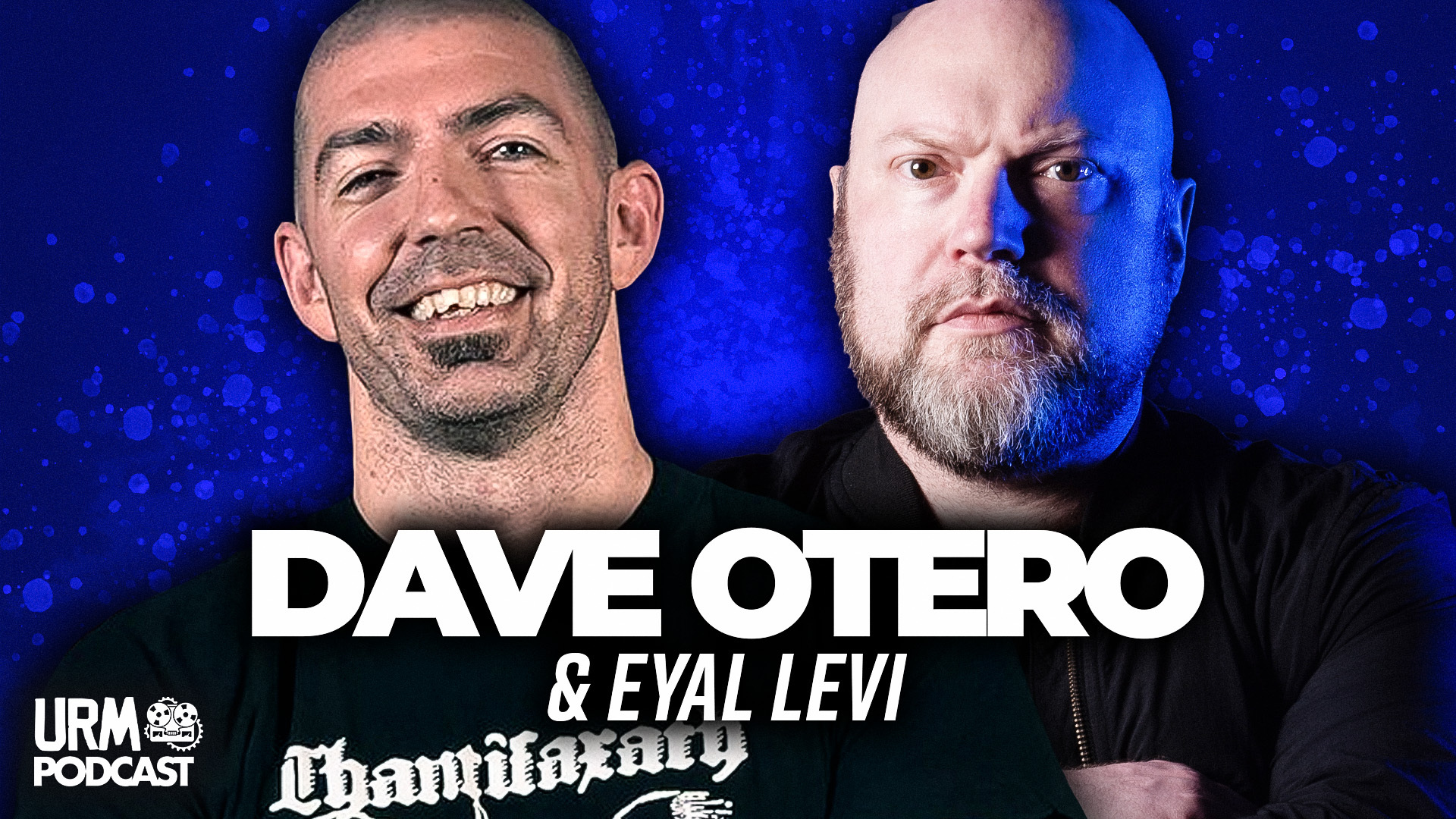
DAVE OTERO: The 20-Year Production Journey, Developing Taste, and Handling Mix Feedback
Finn McKenty
Producer and mixer Dave Otero is the man behind the modern yet natural sound of some of extreme metal’s most respected acts. Based out of his Flatline Audio studio in Colorado, he’s helmed landmark albums for bands like Cattle Decapitation, Archspire, Shadow of Intent, and Khemmis, showcasing a versatile style that’s as crushing as it is clear. His extensive discography also includes killer records for Aborted, Despised Icon, Vitriol, and The Zenith Passage.
In This Episode
Dave Otero gets real about the long game of building a career in metal production. He discusses his 20-year journey, from just scraping by to finally feeling a sense of security, and why sticking with your passion is a smarter move than chasing more commercial genres. Dave explains why developing good taste is a producer’s most important, unteachable skill, and how it guides everything from creative decisions to recognizing a band’s “it factor.” For all the producers out there, he gets deep into the psychology of handling mix feedback—how to push past the initial sting, see things from the artist’s perspective, and use their notes to grow. He also shares a crucial story about the one time he was fired from a mix and the valuable communication lesson he learned about involving the entire band early and often.
Timestamps
- [1:54] Dave on his profile rising significantly in the last few years
- [4:23] How long he’s been making a living in audio (since age 18)
- [9:49] The 20-year journey to feeling financially secure as a producer
- [12:21] Why you’ll do better sticking with what you’re passionate about vs. chasing trends
- [15:43] The importance of taste and why you can’t learn it from a book
- [16:20] Learning to recognize the “it factor” in a band
- [17:41] The rewarding experience of watching a band like Leprous grow
- [22:44] Why making “honest” art is more fulfilling than chasing commercial success
- [26:50] The creative freedom that comes from working with confident artists
- [28:55] How musicians have become more serious and professional over the decades
- [30:05] Forcing yourself to experiment when you have an established workflow
- [31:37] Why getting good at taking feedback is crucial for growth
- [35:25] Knowing when to swallow your pride as a mixer
- [36:54] The immediate bad feeling of getting a long list of mix notes
- [40:18] How communication changes when you’re mixing vs. doing a full production
- [43:31] The one time he got fired from a mix and the lesson he learned
- [46:56] Why older, more established bands can be trickier to mix
- [51:59] Reliability and hitting deadlines is a key to success
- [53:28] Why never being fully satisfied with your work is a creative superpower
Transcript
Speaker 1 (00:00):
Hello everybody. Welcome to the URM podcast. Our guest today is a good friend of the podcast has been on multiple times, Mr. Dave Otero. I would call him a household name in metal production at this point. You know him for work with shadow of intent, cattle decapitation, arc spire. The list goes on. Aborted despised icon. I can just go on and go on and go on. It's just, I'm looking, I'm reading right now vitriol the Zenith Passage just Sikh band after Sikh band, after Sikh band, after Sikh band. Definitely in my opinion, one of the very best in metal and he kind of just figured out his own sound. I would describe it as modern but natural, polished yet real. And he can do anything from the nastiest black metal to the Techiest death metal to radio metal, and it all sounds great. He's a great guy. His nail the mix episodes have been some of the best. We've had him at the URM summit and his presentations have been some of the best all around. Great guy Dave Ro. Here goes. Dave, welcome back.
Speaker 2 (01:23):
Oh, thank you sir. Thanks for having me.
Speaker 1 (01:25):
You're welcome. I feel like we were just talking,
Speaker 2 (01:30):
Well we literally were talking right before we started the podcast, but Well true
Speaker 1 (01:36):
Even before that.
Speaker 2 (01:37):
Oh yeah, yeah, yeah. Well we talk a lot. We're good. We're buds. We're friends.
Speaker 1 (01:43):
Yeah, we shot some video. Was that a week ago or two weeks ago?
Speaker 2 (01:47):
Yeah. Or ago or two weeks ago. No, it couldn't have been that long. Yeah, probably two weeks ago.
Speaker 1 (01:54):
Okay, so you might not agree with this because you're kind of humble, but I want to get your thoughts. Your profile's gone up a lot in the past few years, which I think is awesome. I thought, I've always thought it was a matter of time, but I kind of noticed that in the past few years it's gone from Otero, the Sik underground dude to just Otero one of the names in the running for Sikh bands underground or not still get the underground grid, but now some legit big bands and long waiting periods to work with you. Things are going well and from my vantage point it seems like the corner, I mean you've been slowly building it over two decades, but I feel like that corner got turned in the past five years, more like in the past four years or three.
Speaker 2 (03:04):
Yeah, I'd probably say I see the same thing. It's cool to hear you say that and to sort of see that it feels nice. I try and be humble, but at the same time, this is obviously I've been working my entire life to position myself in a point in the industry where I kind of feel like a go-to guy. So I will take that graciously and very appreciative of it. I honestly think it's probably more longevity than anything. And also, I mean I've gotten better at my craft and the bands that I've worked with for longer periods of time have also risen up the ranks of their own prospective ladders. So kind of like rising tides raises all ships. That's something
Speaker 1 (04:08):
Along those lines. Boats all lift.
Speaker 2 (04:10):
Yeah, boats all lift boat,
Speaker 1 (04:13):
Tidying rises, lift boats all lift.
Speaker 2 (04:19):
That's it. You got it.
Speaker 1 (04:20):
How long have you been making a living at it?
Speaker 2 (04:23):
For a long time actually since I was 18. I mean that was a meager living for a while there, but it doesn't take a
Speaker 1 (04:34):
Living, but that's still a
Speaker 2 (04:35):
Living. Yeah, you're paying rent on an apartment or whatever and have a shitty car that's paid off. That's easier to do in the younger years of one's life.
Speaker 1 (04:47):
And in 2003
Speaker 2 (04:50):
And in 2003, speaking of that, it would probably be more difficult to do it now I feel a little bit for the kids coming up now. Things are just more expensive in general and the pay for audio services hasn't quite kept up with inflation. It's just become a bit watered down.
Speaker 1 (05:12):
Dude, I had this loft apartment in Atlanta right across the street from the masquerade and the top floor of a building and it was concrete floors and picture windows. It was like $600 a month. That's so unheard of. So it was that and $40 for internet. And so yeah, all I had to do was book one weekend a month with the studio and I was fine.
Speaker 2 (05:46):
I and I started by working a lot and just not charging that much. And that's how I stayed busy and got practice is I think when I started I was charging by the hour everyone, it was like 20 bucks an hour or something like that, which at the time I felt like I was fucking rolling in it if I could stay busy because it's a lot of money to someone with no family and not a lot of things to pay for. And it was fun. It was a great gig. And I remember back in those days, maybe 15 years ago, what am I 43 now started when I was 18, so that's like 25 years of doing this essentially full time. I've had a handful of other jobs like busing tables and shit. I would be kind of fucked if as soon as AI figures out how to do my job as well as I do, then hopefully I'll be old enough to retire. I don't have many other skills. This is my only job experience.
Speaker 1 (06:53):
Hey everybody, I want to take a quick break from this episode to talk to you about URM Academy now. So if you're new here, URM Academy is the best online school for metal and rock producers and musicians. When you join, you get a whole access to a range of content. There's nail the mix, which I'm guessing most of, and that's where we bring on a different artist and a different mixer every month to walk through a mix and give you the raw multi-tracks. And we've had on mixers like Will Putney s Borin, Tom Lord Algae with artists, bring me the Horizon, Shuga, periphery, opec, even Nickelback and tons more. If it's under the heavy music umbrella as I like to call it, we cover it. You also get our Mix lab tutorials, which are little bite size tutorials about very specific topics. We have over a hundred of those now.
(07:51):
So if you don't have the time for a nail to mix session or an entire course, you just want to find one tidbit of info to help solve a problem. That's what Mix Labs are for. We also have exclusive members, only Facebook and Discord groups where you can make friends with and talk to thousands of people from all over the world who do the exact same thing as you. And what's super awesome about our community is that it's troll free. We kick trolls out. It's like an Oasis online and also our instructors are part of the community and they interact with everybody. So you can not only make friends, but you can I guess socialize and learn from the best. Also we have URM enhanced, which is our more advanced membership tier. The main focus of that is our Fast Track library, which are some very, very, very detailed courses on everything from editing drums to post-production effects, automation, creating impulse responses, working with low tune guitars and more.
(08:53):
We have over 70 of these. It's actually insane how deep and comprehensive the fast tracks are. And when you join Nail the Mix or URM enhanced, you also get access to Riff Hard. Our online school for metal guitarists with hundreds of lessons from artists such as Animals as Leaders, spirit Box Ark Spire, Jason Richardson, and many more. So go to URM Academy. Let's get back into this episode. When did it turn a corner to where even if it wasn't kind of like it is now, but you were able to reliably know that you're going to be able to have at least a normal life from it. Maybe not top producer spot kind of thing, but where was moving along I guess consistently some stability?
Speaker 2 (09:49):
Yeah, I mean it's never fully stable I would say, but now maybe in that same time period that you kind of brought up in the last four years, it's probably when I have first felt like true security. It's like I'm always going to be able to record someone before that. I would have periods for sure where I'm booked out for six months, eight months, but then the cyclical nature of things, I would still have a worrying period or I've been doing this long enough to go through a few economic downturns in the country and I was like, I'll be fine. And then those hit and I'm like, okay, so things get a little worrisome and at this point I do have a family and kid and a building and house and responsibilities as a typical adult to do so the need for security rises compared to how it was when I was 18 or whatever. So I think maybe just in the last few years, honestly I feel like fairly certain that I should be good, but there's always stuff right around the corner. I don't want to get too comfortable and rest on my laurels. So 20
Speaker 1 (11:16):
Years.
Speaker 2 (11:18):
Yeah, 20 years it took of being a little nervous.
Speaker 1 (11:23):
That's a lot, but I think that's good for people to hear. I like that you did it staying true to what you're into mostly. Mostly. I know there's a few vans, few vans that are questionable. I'm just kidding, I'm just kidding. No, you did it. Staying true to what you're into, which I think is great because a lot of people will say things like there's no money in metal, you're asking to not get work if you stick to the extreme stuff. And I know you don't just do the extreme stuff, but you're super well known for the extreme stuff and I've always thought that that's bullshit, that there's plenty of money in metal. It's kind of cowardly to leave it if that's what you really want to do in my opinion, because there's no guarantees in any genre
Speaker 2 (12:20):
For sure.
Speaker 1 (12:21):
There might be some upward potential in some genres that are greater, it's greater upward potential than metal, but that doesn't mean you're going to do better than you would. I think you're going to do best in what you're passionate enough about to do for 20 years straight in insecurity.
Speaker 2 (12:45):
Yeah, I think that's the thing. It's like, well maybe there are forms of at least having music with higher commercial potential that could potentially, there could be more money in, but that's not where my ears lean. So I think you're better off just sticking with what you're good at and what you know could crush and where you have the ear and I wouldn't have even really known. It's not like I've ever had an opportunity. They're like, Hey, Taylor Swift wants you to do two songs. And I was like, nah bro, blast beats only. Fuck that. It's not like that opportunity ever came up and
Speaker 1 (13:30):
She's got basket of two 60 in her new song.
Speaker 2 (13:33):
Hell yeah. Well we're going to have to bump those up. Two 60 is not going to sell any records.
Speaker 1 (13:37):
No,
Speaker 2 (13:39):
But I probably would've taken opportunities had they arisen if only because it would be fun and because it's good to not pigeonhole yourself even within the underground extreme stuff that I have kind of made my bed in, I try and mix it up. I do things on the very produced side and I have unfortunately not quite as much anymore just because the budgets tend to not support it, but I've done a lot of stuff that's a lot more raw and very limited editing and editing and it's supposed to feel very oppressive and raw and human. I've done slow stuff on chemists and on the facia obviously that probably most people know me for Arch Bryer cattle, that type of thing, done commercial stuff, at least bridging on the commercial stuff like Tetra. But even them, they come to me because they want to live in that world but also have a harder heavier edge. So I can kind of give them a little bit of that aggression that is sometimes missing on the more commercial side, although that's kind of like a lot of bands are moving in that direction, which is cool.
Speaker 1 (14:58):
One thing I noticed with you that I think is, sorry to cut you off, but I'm going to anyways, the thing I think that's really important with the producers having good taste and you have turned me on to several bands that then went on to get a lot bigger and that I think are legitimately great spire and lepers and so I think your tastes are in the right place, which I think is the part of this whole thing that you can't learn from somebody else. There's no amount of listening to a podcast or watching nail the mix or whatever that's going to give you good taste, but
(15:43):
You can learn to develop it to some degree I think. And it's really, really important because I think it's one of those things where nobody can tell you how to do that, but it's a real thing and if you develop it, that helps guide you in the decisions you make as far as when you're producing, when you're mixing, but then also who you're going to work with and how much energy should you put into it or what kind of energy should you put into it. I think your taste guides all of that. I think that's one of the most important things about being a good producer is having good taste.
Speaker 2 (16:20):
Yeah, I think a lot of it, like you said, it's kind of impossible to learn that from a book or a video or something, but the more time you spend in music and just thinking about music, the more you just start to build this sense of recognizing what's special in music or about a band or about a particular musician. And it sounds a little cliche when people say they just got that it factor or they just have that special thing. But it is absolutely a thing that I have learned to somewhat detect I guess with either bands that I'm working with or bands that I hear and it's this combination of talent and originality that's kind of like the golden egg in all forms of entertainment is something that's good and new. It feels kind of fresh in some way and some bands, some people have it right away, some people develop it as cattle I would say is a band that had been around a long time and then finally developed this thing that is very much them and very special that no one can quite touch.
(17:41):
And you can say that about almost any long running successful band. It kind of, it's that thing that just can't easily be reproduced. And I dunno, lepers is a good case too. It's like a combination of all those people and I R's voice and bars drumming both in themselves, amazing musicians, but it's the combo of all that stuff and how they put it together that makes it such a unique listening experience and gives them that it factor like, okay, these guys have a thing. It might not be for everyone. In fact it's definitely not for everyone, but it is strong enough tied to some people's taste that they'll continue to rise. I mean I just saw them a few days ago and every time they're on that trajectory, every time I see 'em, the production's better. They're tighter, they're more comfortable, the whole package is better, the sounds better, the venues get bigger. And working with bands like that too, it's it's amazing to just watch that progression and kind of ride it with them.
Speaker 1 (18:47):
They're the next opeth if they don't fuck up,
Speaker 2 (18:52):
Develop
Speaker 1 (18:52):
Some. Yeah, I feel like that's probably good. Commit some crimes to develop horrific drug habits or something. I don't see it. I think they're on the path to be that band for Prague.
Speaker 2 (19:04):
Yeah, they can be a little more polarizing than opec, although people have super strong opinions on OPEC these days. I guess speaking of that, it's kind of funny, I don't know if you've seen any of the interviews with Michael, his name. He is so annoyed that people are making a big deal about him screaming Again. It's like the contention he has for that death metal vocals essentially is so funny to me. I'm pretty surprised they did it again. And every time I see him talk about it, I feel like he regrets it because he's just so annoyed that people only care about the growls. He's great at it. It sounds
Speaker 1 (19:50):
Amazing. He is great at it. I remember I was driving him somewhere once a long time ago. It was when they were on Sounds of the Underground, so it was a long time ago and we were talking about each other's music and being non-standard and he told me that he knows that people kind of hate them for not doing standard death metal when they could do it just fine. But that's not what he's interested in. And if he's going to lose a bunch of fans that want them to just do death metal the whole time, well they can just fuck right off basically. That's
Speaker 2 (20:35):
Pretty, their
Speaker 1 (20:36):
Whole thing is to not, they don't want to do standard death metal.
Speaker 2 (20:39):
Yeah, well I mean I guess this new one is a little more death metal. I think I've only heard two tracks, but they've always kind of done their own thing and honestly when they made that switch it was pretty ballsy because they had just kind of crested into this new realm of like, okay, wow, you could play big venues now a lot of eyes and you're seen as these gods of this scene. And then they're like, cool, well are we going to change everything about our band now? Pretty much. Obviously the DNA is still there and you could see it happening, but they made a very hard shift with their production styles stopped growling entirely, which it was still at that point it was primarily death metal and they just did it. It's ballsy, continue to grow. It's super ballsy.
Speaker 1 (21:37):
It's interesting to me when a band can do that and get away with it and other times when a band tries to take that left turn and just doesn't get away with it. And I've always wondered what the difference is. And I think with OPEC it does seem organic because they did put out that one all cleans record before and their cleans are so good, always been so good that you could always imagine a universe where they were a classic rock band. They probably are a classic rock band in a parallel universe. It it was a ballsy move but it wasn't incongruent with their identity as an artist. I think when bands do something that's incongruent with their identity as an artist feels forced or something or they take a left turn into something they kind of suck at. I think that that's when it backfires most of the time.
Speaker 2 (22:44):
It felt honest and I think that's what it was. It truthfully was honest and taken aback to the bands that I choose to work with. I think that's one thing I appreciate about the more extreme potentially underground side of things. It's like that doing something for non honest reasons is just never even considered. Why would you ever compromise on your music to try and get more fans? Those conversations don't happen and the type of stuff that I work on typically, and occasionally I'll dip my toe into these more commercial worlds and all of a sudden a lot of the decisions are more about like, well how are the fans going to react to this? Or how is this going to position us in the market? And well, let's fine to be aware of those things to make that your guiding light delivering what it's supposed to be.
(23:38):
Art, it kind of ruins it for me. And then at the end of the day, I'm supposed to be part of the creative team on these projects and it feels like the primary goal is not coming from an honest place. I kind of just start to check out. It's just like everyone wants to be successful and make money, but I do fine. I have enough money. Of course if you're going to hand me more, I'll take it. But that's not my main goal here. It's to be comfortable and then to make stuff that's really fun for me to make and work with people who are excited about the same things I'm excited about. And most of that needs to start from an honest place. I'm not saying that you have to some producers, I honestly think take it too far and don't consider the fan opinion at all, but it just feels bad for me to be making decisions based on what people think might be the most commercially viable choice. Gross.
Speaker 1 (24:48):
I was talking about this whole authenticity thing with Esan and he said something really interesting that the reason that Neral can get away with doing behemoth and then posting a story of him doing yoga or some shit, the polar opposite of his behemoth get up
Speaker 2 (25:13):
And
Speaker 1 (25:14):
Vibe is that the whole thing feels congruent, honest and authentic. So it seems like it would be like, whoa, that's weird, but for some reason it's not because he's just being himself and it works and that's the most important part of it.
Speaker 2 (25:35):
I'm sure some people don't like it and it's kind of like it's talked about. It doesn't hurt them
Speaker 1 (25:41):
Though
Speaker 2 (25:42):
It does not hurt them at all. And he is, he one of the most honest dudes on the internet front man. He's kind of very open about stuff and it seemed like a lot of that kind came to the forefront after he almost died from cancer, I believe is what happened. So that could give you some perspective on life. And he is lucky enough to be clearly a smart and talented musician and then you have a close call like that and then you're just like, ah, fuck it. And then he just dropped the facade, which is interesting because black metal is pretty facade heavy, but he somehow manages to do both and he just doesn't give a fuck when he is on stage, he's performing a show, I dunno. Yeah, he's done a really good job of just melding both worlds where they still feel very different but not separate, which is cool.
Speaker 1 (26:39):
Yep. It's the authenticity part. People can smell that I think.
Speaker 2 (26:43):
Yeah,
Speaker 1 (26:44):
People in metal smell authenticity or lack thereof.
Speaker 2 (26:50):
It's so much more enjoyable to work with an artist that has that as well. They're sure enough of themselves and their artistic output and some of that comes with maybe not age, but time in the spotlight or maybe musical age I suppose, where you kind of build some confidence and you, you know what you can do and know that people will like it I guess. But yeah, it's freeing in a way to just work with a team or work with artists who are confident and what they're putting out and it kind of almost removes some walls from the creative process.
Speaker 1 (27:43):
Yeah, it is funny. Have you ever seen in a movie when they have metalheads in a movie and been like, that's not what, that's just wrong.
Speaker 2 (27:56):
Yeah,
Speaker 1 (27:57):
That's not what they're, or punks or something. And it's clearly whoever runs the wardrobe department and also wrote the script has never actually listened to metal in their life or been around a metal person ever.
Speaker 2 (28:13):
Yeah, well they watch heavy metal parking lot from eighties or from the eighties or something and they see super trashed hammered fans who are two years into puberty and are just full of piss and vinegar. That's one side of metal. And I can get there sometimes that's fine too, but on the behind the scenes and the people creating the arts is very different. And I feel like some of that has changed over the years too. We've probably gotten on this conversation before, but musicians are different now than they were 20, 30 years ago.
Speaker 1 (28:53):
They're better,
Speaker 2 (28:55):
They're just like, they just take it a little more seriously. It's a little harder to make money to become successful and it's maybe not even make money, but get to a point where you can live off of this even remotely. So you kind of got to be a little more on your game. It can't just be about the rockstar facade.
Speaker 1 (29:19):
Yeah, that doesn't exist.
Speaker 2 (29:22):
Yeah, not really.
Speaker 1 (29:24):
Out of curiosity, now that your schedule is always packed and you have bands coming to you for, I know that the more successful a mixer becomes, the more that bands come asking for something kind of like what you did with a previous project. That's very normal. So within all that, what do you still find exciting and do you still find time to experiment with new things, new tools, new plugins, new ways of doing things?
Speaker 2 (30:05):
Yeah, I kind of have to force it a little more now. I've maybe noticed that over the last four or five years just because along with that confidence, you kind of fall into grooves and my workflow has been more established in the last few years than probably it ever has been in my entire life. And you would expect that in some way after doing it for 25 years. But I do have to maybe make myself try new things rather than just following what I've done. And that's fine. You develop a process that works and then it becomes, you mold it as you go. So sometimes it's new tools and sometimes it's just like, I'm not super excited about getting started on this mix or whatever. Let's go plug in hunting and find something that looks cool and try it out. And maybe that gives me a spur of motivation. Sometimes it's hearing a new mix or sometimes it's a request from an artist. Honestly, that happens a lot too is why the more I've done this, the more I want feedback from artists, especially the ones that I feel like have that it factor that we were talking about because that's where a lot of what I consider my innovation, at least within myself is spurred from is a thing that an artist is pushing for either a sound or an effect or a feel
Speaker 1 (31:37):
Man. Well, I know something, me and reti Jesse, we talk about feedback as if you're not good at taking feedback, you're going to really have a hard time in music. And a lot of people have a negative mental association with it, but you should try to have a positive association with it because that's your chance to get better. And so we try to always, when we're giving each other feedback to lean into it, lean into it because if you really respect what the other person brings to the table, then there's probably something about what they're telling you that's worth paying attention to and it'll help you grow. And
(32:24):
I have gotten a lot better in the past couple of years at just what I do musically because of feedback from crim or feedback from Jesse or whatever about something that's not good enough. I've watched bands write and I've ridden with a lot of other people, and so I know that lots of times when someone will say something's not right, there's too much of this thing, or I don't like where this is going, or we need to take it a different direction. If you put a lot of work and a lot of time into it, I've seen people get really fucking mad and have some pretty explosive fights over that and not because they disagree with each other, but more because the person is hurt or mad, frustrated that they put a lot of work into something and they have to challenge it or it's like, what did they do all that work for?
(33:30):
Or now they're going to have to go and do that much work all over again. It's usually not because the person brings bad ideas in. And so every once in a while there is a true, I just disagree, but I think more often than not, when you hear about creative differences and you see band fights and stuff, it's not because someone's bringing a bad idea, it's because someone doesn't react well to feedback. Bands will not go back to a mixer who made them feel bad for giving mixed notes. And I just think that the most, if you're going to work with other people, one of the most important things you could do is get good at taking the feedback because they'll working with you, but really because that's going to be how you really get a lot better because they're going to give you ideas that are outside of what you would come up with on your own
Speaker 2 (34:24):
For sure. And even some of the stuff that happens during the creative process as far as those ideas, and I'm the one that's got to do the bulk of the work in this situation. So someone is like, Hey, let's try this. And in my brain I'm like, okay, that's like two hours of me fucking around. So immediately I'm like, but you got to at least see it through or start to explore an idea. I try. I never shoot down any ideas in the studio immediately. You at least have to discuss it, bring some other people into the conversation and stuff like that. There are times when it is just a case of I'm like, how are you hearing it? This has only maybe happened a few times in my career and one time in the recent past. And it was a struggle because I mean, it was just the case of me and a collection of artists just wanting just different things and they weren't that far off.
(35:25):
But I can be pretty particular with the feel of something I'm working on, be it mix or production or whatever. So when I feel like there's just an absolute divergence of opinions there, it does get tricky. But in most of those cases as the mixer especially, you kind of got to swallow your pride because this is two weeks of your work life and two years plus of creative output from the artists that you're working for and you are working for them or for the label. So you do your best to guide the situation to where you think it needs to be or at least where it's going to be palatable for the general audience. But when it comes down to some of those details, it can suck, but you sort of got to concede in a lot of cases. But yeah, mixed notes and feedback, it's still something that I struggle with because a lot of my self-worth as an artist or as a producer is tied into people liking it immediately. So when you are stoked on something and you send it out and it comes back with a long list of stuff that is pretty far off base from what you envisioned. I was about
Speaker 1 (36:50):
To say, I sent you a long list. Well, yeah, yours were different though.
Speaker 2 (36:54):
Yeah, yeah. Yours were different. They were just more small detail type things and that's fine. I'm like, God damnit, this is going to take me two hours and I don't want to say it, it took me 20 minutes probably, but you'll see a long list and that's a different feeling when you get feedback and it's like you realize that where you took it to is far off from where they were expecting. Sometimes there's an adjustment period, it just varies, but regardless, it feels bad immediately it feels bad, but then you kind of got to kill that because it's not helpful for anyone, especially you. And then dig in and try and see things from their perspective. And then sometimes that's long conversations, sometimes that's trying some stuff so they can see maybe why you made some of the decisions you made along the way. I know it feels ambiguous talking about these situations.
Speaker 1 (37:52):
I can give you an example of how, one thing, excuse me, that happened with Jens where our song No Rest, no End. The chorus is pretty catchy and it's got this layered octave guitar that also has a synth that doubles one of the octaves, but he did mix one and I walked in and heard the chorus and it sounded like a Euro metal band. The way he had it mixed a night wish kind of band, like a Euro pop band kind of thing. It was super, it sounded awesome, super commercial, but it just wrong for that. And he had turned the synth up way loud and kind of buried the octave affected guitars.
(38:44):
And so I kind of showed him an example of a band that did something similar-ish in a part and then showed him the demo and he is like, oh, so my version, which I like better would be the catchy version. Your version would be the sad version. I was like, that's fine, so let's just go with the sad version. And so he did it right and that's what we went with. He still said that he preferred his version, his version, he felt like his version was more commercial or something like that, which I agree, it sounded like one of those bands, one of those European bands that are huge in Europe and have those really catchy, really catchy European choruses, which is not us.
Speaker 2 (39:36):
I'm just envisioning you. And the full leather outfit.
Speaker 1 (39:40):
Yeah, one of those bands that somehow plays arenas in Europe. But it did take a conversation and just getting him to understand what it's supposed to feel like, and he was cool about it. It was fine that he didn't agree with it, but he didn't argue about it either. He stated he didn't agree with it, he didn't think our vision was bad or anything, he just preferred his, but we still went with ours
Speaker 2 (40:15):
And
Speaker 1 (40:16):
That was fine. I feel like that's how it should be.
Speaker 2 (40:18):
You get that kind of figured out early on enough and then it kind of informs YZ as the mixer or whoever of like, okay, this is the feel and then it is getting on the same road. I use that analogy a lot. And when I fully produce a band, there's not really an issue there because we've been creating this record for six weeks, eight weeks, we're already all in the same road. We're literally all in the same tiny car in a row going down a very tiny road. There's no ambiguity, ambiguity as to where we're headed with the creative process. But when you're just mixing, it takes a bit and there's some conversation involved, references help as far as soundscape style stuff, and then sometimes you have to course correct. So typically if I don't know the artist very well or I haven't worked with a band before, I'll maybe send some mixes a little earlier than I would otherwise just to test the water.
(41:22):
So it's kind of like you want to just throw a teaser out there and preface it by saying like, okay, hey, well this is not anywhere near a finished mix, but what do you think? What are you liking and what are you not liking? And that helps you course correct before you go 80 miles in the wrong direction. Versus if it's a band I've done before or an album I produced, or even artists that I know, people that I know well, I will wait a little longer and I'll get some automation in there and level out some vocals and get all some of the smaller details in the right place. And then I'll still be a little nervous when I ship it out and they send that Dropbox link and send a few sentences like, Hey, this is where it's at, what do you think?
(42:13):
But I'm more confident that, okay, I know what they want, I know where to take this and I'd rather get it to something that feels pretty finished and then they're just going to like it even more. I just sent out a mix yesterday that I had gotten pretty far, essentially fully, I'm doing a whole record for this band, but I fully mixed one song, automation delay throws, tucked all the stuff into all the little spots, and there's some danger there because you could be doing work that is worthless if you make substantial changes to the mix, then all of a sudden a lot of the automation's not going to be valid anymore. You could be backtracking quite a bit, but you ship it out. And this band's in Europe, so that's like I send it when I'm done in the studio at seven or eight at night and I'll get feedback when I'm asleep. So you kind of wake up and you peek at your phone and
Speaker 1 (43:08):
It's dangerous.
Speaker 2 (43:09):
Yeah, this case it worked out, so they loved it and we're on the right path. I'm like, cool. Nailed it. But yeah, you got to treat those situations a little bit differently and then roll with the punches when they inevitably come in.
Speaker 1 (43:28):
Yeah. Have you ever been fired off a mix?
Speaker 2 (43:31):
One time? Yep. One time. What happened? It was a band who, the singer lives in Colorado and was present for the mix and he is a very smart dude, accomplished in his field. He's like a professional who deals in facilitating communication. So he came in very confident, I am going to speak for the whole band I'm going to, I'll be the one.
Speaker 1 (44:01):
I will facilitate communication.
Speaker 2 (44:03):
Yeah, exactly. I was like, cool. So we talked about stuff. He was present for a lot of the mixing. We went for this vibe. This is kind of like a band that had been around for a long time but hadn't done anything in a while, so try not to name names here, but they had an established sound but hadn't really been present in the scene. And what we did was push them towards something different from their history that was very aggressive and that I was into. And then the guy I was here mixing was very into, I mean I still remember him sending, we finally let some of the other guys hear some of the stuff that we were stoked on and he was talking about it like redefining extreme music sounds and stuff like that. Well, they fucking hated it. Hated it. And we had taken it really far. We had gone too far and I didn't know these other guys at all and it was kept too separate. So this was a learning lesson for me and for him.
(45:12):
But in the end, it had gotten so far and the amount of time that we had left planned in the budget was just not there and it would've involved almost starting over. So I tried to make some concessions work with what I had, and it finally just came down to the like, this is not what we want. And they took it to another dude that gave them a very old school American death metal sound. It was very different from what we had gone for, which was kind of this more exploding out the speaker nails type of a sound chainsaw guitars.
Speaker 1 (45:53):
I'm into that.
Speaker 2 (45:55):
I thought it's nice.
Speaker 1 (45:56):
I would've probably preferred that.
Speaker 2 (45:58):
Yeah, I mean honestly, I feel like some people would've, but I also, I see their point that it didn't feel honest and it didn't represent them and it's not what they liked. Fair
Speaker 1 (46:10):
Enough.
Speaker 2 (46:11):
The singer, the dude who I was, he kind of stays a little more current, so he's like, oh hell yeah, this new album, this is when the previous nails album had come out. It was like everyone was really into it and the sound was a big part of that. Those guys don't listen to that shit. They were still listening to the first two cannibal court records. So it just felt so foreign to them and it was a lesson for me. I don't give a shit how good you are at or think you think are at speaking for the rest of your band. I won't do that again. Everyone has to be involved and specifically in a case like that where I don't know the guys earlier, the better so we can kind of check progress as we go along. So that situation changes for every band.
(46:56):
You really got to be able to read the room, read the artists, older dudes are going to be more particular. That's kind of how it is. The older a group of artists are, the more diverse by nature, their tastes will be the more spread out across the world. So occasionally I'll mix projects where it's like I have to make five artists happy with their sound and their performances, but somehow put that all together. And two guys are from the Bay Area thrash scene one guy's from Denmark, the bass players from Sweden, and they all have their own little segment they're coming from and expect to hear. And you got to see into the future and decide, okay, how do I tackle this? I need to make sure I'm satisfied with it. It's got my name on it too. But now I have these five very diverse opinions and histories that I have to cater to as well. So some learning lessons. I've had a few projects where those communication skills are leveled up after the end, but through pain and blood and sweat and tears.
Speaker 1 (48:10):
Communications expert, huh?
Speaker 2 (48:13):
Yeah, it's me, Tom.
Speaker 1 (48:15):
Well, I just meant that vocalist, the thing man, involving people too late learned that the hard way too. Bring them in as early as is reasonable.
Speaker 2 (48:30):
Yeah,
Speaker 1 (48:30):
That's why actually when you sent the first mix, I asked you if it's ready for notes or ready for me to show them just because you don't want to bring people not liking something when it's not ready for feedback. So you got to know when a good time is, but in my opinion, the earliest possible is good. The earliest you can bring everybody in, the better.
Speaker 2 (48:57):
For singles, it's easier because both of the songs I've done for Doub have been singles, which you have a little more flexibility. It's like things move faster. If I make a misstep on the guitar tone, okay, I have to reamp one song, not 12 songs. So it makes it a little easier to move quick and you don't have to consider, okay, how's this work going to spread out across the whole record? Things just become more complicated. But the way working with you is different because you just have more perspective on, I mean even other people who do mixing and mastering. You have the most perspective that has ever been had in human history because honestly, because of the ORM stuff, because you've been around it for so long and you've talked to so many people, you've worked with a lot of, aside from ERM, even with doth, you've worked with a lot of different highly regarded engineers and seeing their workflows and seeing how they prefer to communicate.
(49:54):
So you have a thoughtfulness that others don't as far as what you just said, mentioning, okay, so where are we at in the process? Should I send this to those guys? Are you just trying to test it with me first? And then we can kind of speak plainly about that type of stuff. But with most other artists, it's my job to handle all of that without them even really realizing that that's a consideration. Makes sense. I have to makes sense. Preface that or decide when to share things and when not to share things. And it really does change every project. And I was thinking about this yesterday literally because I sent that mix out. I've been working on this mix for a week and a half, and they had heard nothing. So that's a long time. Someone's like, we're paying this dude, what the fuck is happening? And this case, I just felt like I needed to take it further, but man, you're nervous. I'm still nervous. 25 years in when I send that first mix out like, oh God, I hope they don't hate this because it could just totally just fuck my entire next week. But they didn't. It worked out this time. The noise.
Speaker 1 (51:05):
I think that the reason that a lot of people procrastinate stuff with mixing is because of that fear of sending stuff to people. Actually, that's one of the things that we try to combat with nail the mix, with the mix poll and all that because obviously odds are stacked against you if you enter, most people will not win. It's just impossible. Like 500 to one or a thousand to one odds, you're probably not going to win just because the numbers involved, but that doesn't matter. The fact of actually finishing things even before you think they're perfect, just finishing things and getting them done and just being zen about it, what will happen will happen I think is really, really important.
Speaker 2 (51:59):
Yeah, I mean at the end of the day, nail the mixes. It's trying to simulate a situation where you're paid for a task, so you got to deliver. Things have to be delivered. And there are a lot of people in the creative space, not just audio that aren't reliable enough. That's a major thing that is lacking in a lot of creatives, and it comes from an honest place of them not wanting to release something they're not fully satisfied with. I understand that, but it's still a business. When you're dealing with labels, they have timelines and things need to get done. So learning how to push through some of those fears and insecurities and just work on stuff so you get some feedback back and some changes need to be made, just get on it and then get it back to 'em like ASAP. So the train can keep chugging along down the tracks and then everyone feels like they're being heard and the project will be completed in a reasonable fashion. Like blowing through timelines and budgets is the first thing you can do, even as a talented mix engineer or producer to get yourself blacklisted by people who are trying to run businesses around art. So
Speaker 1 (53:23):
It's tricky. Have you ever been fully satisfied with something?
Speaker 2 (53:28):
I've come really close, but no, probably not. There's always, and even if sometimes it's like, oh man, the artist just wanted to just push things a little bit too far in this direction and that bummed me out or yeah, I think that it's a terrible feeling, but also maybe a superpower that probably most successful artists have, and that's what drives them to get better and has been part of what has taken 'em to where they are, is that inability to feel fully satisfied with any kind of creative output. Then you would just stop. Right?
Speaker 1 (54:12):
Yeah, it's an unreasonable and kind of counterproductive expectation to want to be fully satisfied. But Dave, I think it's a good place to end the episode. I want to thank you for taking the time to chill and have a great rest of your day.
Speaker 2 (54:31):
Thank you, sir. You as well. Thanks for having me on yet again.
Speaker 1 (54:34):
Anytime.

