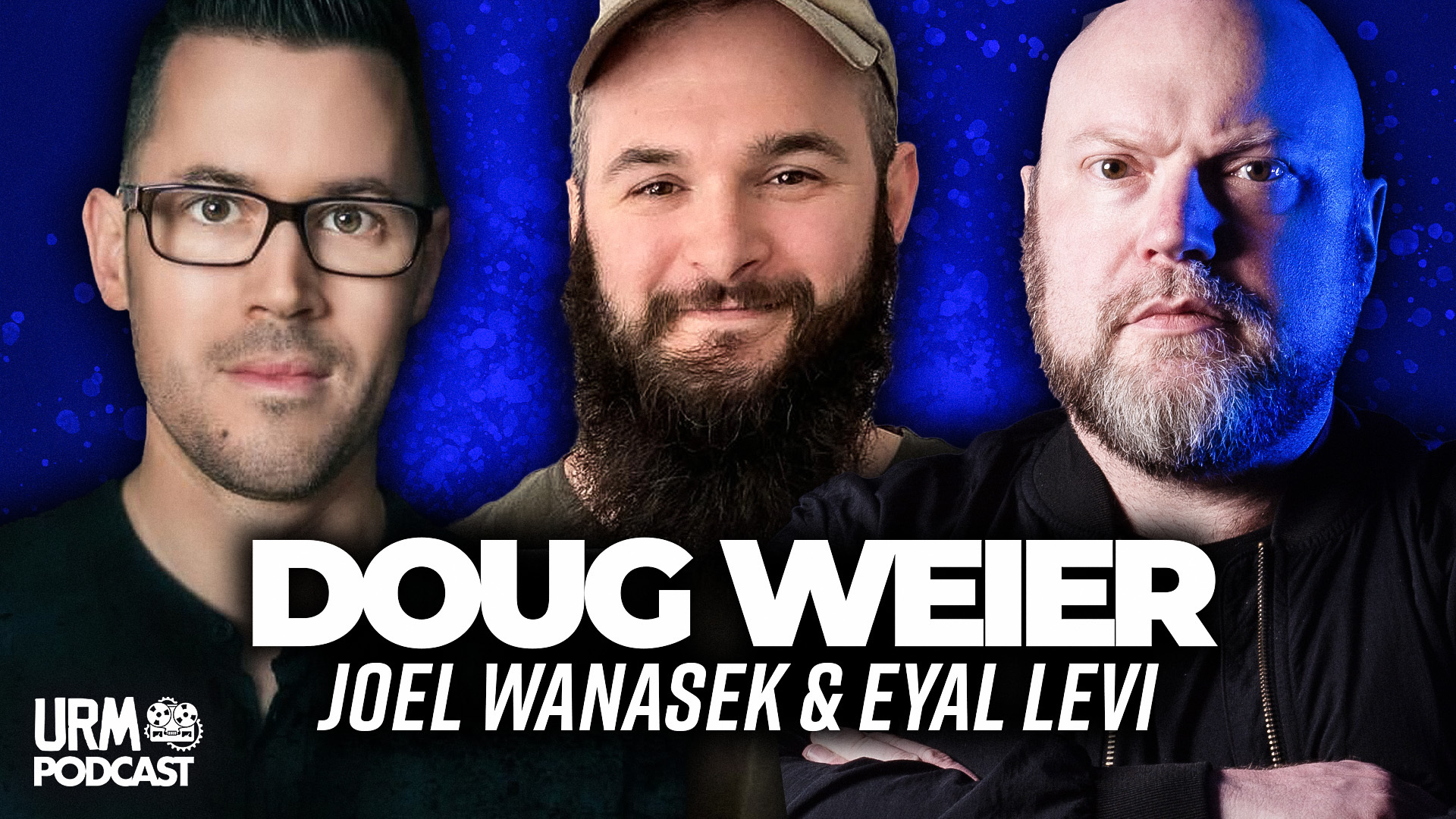
DOUG WEIER: Whatever It Takes Mixing, The Truth About Pocket, Knowing Your Worth
Finn McKenty
Doug Weier is a Nashville-based mix engineer who has seen a meteoric rise, racking up over 20 number-one hits in the Contemporary Christian Music world in just under a decade. He identifies first and foremost as a mixer, but carries a “whatever it takes” mentality, often wearing the producer hat to reprogram parts and replace sounds to ensure every track he delivers is as impactful as possible.
In This Episode
Doug Weier joins the podcast to get real about what it takes to thrive as a modern mix engineer. He kicks things off by breaking down his “whatever it takes” philosophy, explaining why he’ll go beyond the job description—from reprogramming basslines to heavy drum replacement—to make a track slam. This leads to a super insightful discussion on the elusive concept of “pocket” and why feel is so much more important than locking everything perfectly to the grid. Doug and the guys get into the weeds on how sonics affect groove, the massive impact of simple level adjustments, and why a perfectly balanced static mix is way more powerful than one overcooked with a million plugins. They also explore the pros and cons of analog gear, with Doug sharing what prompted his recent journey into the outboard world. For anyone trying to level up, this episode is packed with killer perspective on developing your own taste, the fallacy of copying templates, and the real-world business hustle—including a brutally honest take on “knowing your worth”—that separates the pros from the hobbyists.
Products Mentioned
- oeksound spiff
- JST Clip
- iZotope Imager
- Teletronix LA-2A
- Universal Audio 1176
- Empirical Labs Distressor
- Crane Song Interstellar
- SSL E-Series EQ
- API 560
- UAD Blue Stripe 1176
- Waves CLA Vocals
- Ableton Live
- SoundBetter
Timestamps
- [0:03:04] The “whatever it takes” mentality of a modern mixer
- [0:09:08] Why you can’t fix a bad song or a bad vocal performance
- [0:10:34] What is vocal “pocket” and how do you define it?
- [0:13:28] Why listening to disco records can teach you about pocket
- [0:15:00] A metronome trick for metal players to develop their feel
- [0:16:20] How the forgiving nature of tape helps performances gel
- [0:19:14] Using mixing to add emotion that wasn’t in the rough mix
- [0:20:46] The huge impact of a simple level change
- [0:23:11] The danger of mindlessly following advice from the internet
- [0:24:57] Why Nail The Mix doesn’t give out session templates
- [0:27:53] Developing your own taste vs. copying other mixers
- [0:30:56] Using reference tracks to problem-solve and unlock new techniques
- [0:32:40] How Doug continues to get better, even at the top of his game
- [0:37:01] What prompted Doug’s move into analog hardware
- [0:39:07] Chasing a specific snare transient that only seemed possible with outboard gear
- [0:43:27] Why you can recreate analog sounds in the box (if you know what you’re aiming for)
- [0:47:09] Why arguing about gear online is a waste of time
- [0:50:50] How getting an offensive mix back from another engineer launched Doug’s career
- [0:55:35] The truth about “knowing your worth” when you’re starting out
- [1:03:06] Doug’s go-to in-the-box vocal chain
Transcript
Speaker 1 (00:00:00):
Welcome to the URM podcast. Our guest today is Doug Weier and he's an impressive dude.
Speaker 2 (00:00:10):
Oh yeah, Doug kills it. He's got like what, 23 number ones? He's one of the top a CC mixers on the planet right now. It's
Speaker 1 (00:00:16):
Crazy. He hasn't been at it that long.
Speaker 2 (00:00:21):
Yeah, I mean he's just
Speaker 1 (00:00:23):
Seven or eight years
Speaker 2 (00:00:24):
From what I see. Just talking to him and hanging out with him. Doug just hustled hard in the dirt and he's just a hardworking dude, so he totally crushes it.
Speaker 1 (00:00:33):
That's kind of what I got from talking to him in this podcast is dude is a killer. He has his sights set on what he wants and he goes for it no matter what. I like that. I like that
Speaker 2 (00:00:50):
A hundred percent.
Speaker 1 (00:00:51):
Alright, cool. Let's get into it. Here is the episode. Doug Weier. Welcome to the URM Podcast.
Speaker 3 (00:00:57):
Thank you. Thanks for having me.
Speaker 1 (00:00:59):
It's a pleasure.
Speaker 3 (00:01:00):
Absolutely.
Speaker 1 (00:01:00):
So I'm curious because noticed a trend lately where, and I've talked about this on other podcasts too, where producers and mixers are now songwriters, whereas once upon a time that wasn't the case. I think that there was an evolution where engineers and producers were generally two completely different people. Then it became that producers were also engineers. Then it was that producers and musicians were two completely different people and sometimes they are, but now you have tons of artists that self-produce, and I think that another one was that producers and songwriters were often different. Two different job categories where you hire in outside writers and now producer, it's still done, but more and more producers are writing as part of the package. You go to them and they co-write with you or write for you and produce it and basically the full menu. So that said, how do you see yourself? If I was to meet you in an elevator and you were to tell me what you do,
Speaker 3 (00:02:25):
It depends where we were. If we're in my hometown and no one does music, I would say I make music sound better. That's the deal. But here in Nashville, everyone pretty much knows what that is, so I say I'm a mixed engineer
Speaker 1 (00:02:43):
Straight up. That's it. That's it. Simple as that. I love that. I love that.
Speaker 3 (00:02:48):
Simple to the point.
Speaker 1 (00:02:49):
I love it. Exactly for the reasons that I was talking about, the definitions of what people do are getting so cloudy
Speaker 3 (00:02:57):
That Yeah, totally.
Speaker 1 (00:02:59):
I think when people specialize in the one thing, this is what I do
Speaker 3 (00:03:03):
Is what you
Speaker 1 (00:03:04):
Telling before, I
Speaker 3 (00:03:04):
Would say that is a good point that you had though. I would say I wear the producer hat five to 10% when I'm mixing on certain projects on. Many of them are working with super talented producers. I don't do that at all. I literally just take the audio and make it sound better and I don't add any kind of new spin on the mix. They have all the proportions and the feeling and everything. I just make it sound like the magic is finally arrived, that type of thing. But other projects, I mean I do some pretty shady stuff. I'll reprogram base lines like that type of stuff, make sure the low end sits super tight. I mean, I've ever tracked guitars or anything crazy like that, but drum replacement and then just anything I could do creatively with distortion, saturation effects to if a song is lacking, some kind of energy or feeling or professionalness doing whatever it takes at all costs to make it sound like the best thing that it can possibly sound like.
Speaker 1 (00:04:26):
Hey everybody. I want to take a quick break from this episode to talk to you about URM Academy. So if you're new here, URM Academy is the best online school for metal and rock producers and musicians. When you join, you get a whole access to a range of content. There's nail the mix switch I'm guessing most of, and that's where we bring on a different artist and a different mixer every month to walk through a mix and give you the raw multitracks. And we've had on mixers like Will Putney, Jens Borin, Tom Lord, algae with artists like bringing the Horizon, sga, periphery, opec, even Nickelback and tons more. If it's under the heavy music umbrella as I like to call it, we cover it. You also get our mix lab tutorials, which are little bite size tutorials about very specific topics. We have over a hundred of those now.
(00:05:24):
So if you don't have the time for a nail the mix session or an entire course, you just want to find one tidbit of info to help solve a problem. That's what Mix Labs are for. We also have exclusive members, only Facebook and Discord groups where you can make friends with and talk to thousands of people from all over the world who do the exact same thing as you. And what's super awesome about our community is that it's troll free. We kick trolls out. It's like an Oasis online and also our instructors are part of the community and they interact with everybody. So you can not only make friends, but you can I guess socialize and learn from the best. Also, we have URM enhanced, which is our more advanced membership tier. The main focus of that is our Fast Track library, which are some very, very, very detailed courses on everything from editing drums to post-production effects, automation, creating impulse responses, working with low tune guitars and more. We have over 70 of these. It's actually insane how deep and comprehensive the fast tracks are. And when you join Nail the Mix or URM enhanced, you also get access to Riff Hard. Our online school for metal guitarists with hundreds of lessons from artists such as Animals as Leaders, spirit Box, Ark Byre, Jason Richardson, and many more. So go to U RM Academy. Let's get back into this episode. I like the whatever it takes mentality.
(00:06:56):
I feel like in the metal world, which is the thing I know, it's kind of become just commonplace for mixers to do whatever's necessary because it's so unprofessional it you get such garbage from people that, and not always there's a lot of great producers and engineers out there, but there's just this understanding of the base is probably going to come in out of tune. Yeah, so you could say you didn't hire me to tune the base, or you could just do it, just tune the base or replace the base with the synth base or just do whatever's necessary to get that low end the way it needs to be.
Speaker 3 (00:07:45):
Yeah, I would say at least I would think that's more of an old school mentality where you just get the files delivered, you do your part of the job and no more. But I think new mixers that are wanting to come up and make a name for themselves, you have to do everything you possibly can. If I mix a song and it comes out and it still sounds lacking, that makes me look like I suck when maybe it was the producer lacking a little bit. But every part of the process is so important. The weakest link is so easy to see, so you got to make sure there's no weak links in the process. You got to cover for other people's shortcomings
Speaker 1 (00:08:35):
At the end of the day, even if what you were presented just was a mess, like a D minus and you did a miracle and got it to a C plus or a B minus, still people are going to think that you just put out a C plus. They're not going to see that you took something that was being held together by dental floss and made it coherent, which is a miracle. They're not going to judge that. They're going to judge the fact that it's not as good as your best work.
Speaker 3 (00:09:08):
Yeah, well and that's funny. I think you can actually, I could probably take a D minus and make it a straight A. In my opinion, the only thing you can't fix is a bad song and a bad vocal performance. I mean, you could tune it, but I've gotten perfectly tuned stuff where the performance, you still know it's just terrible. And speaking to my sound better days, seven years ago, the stuff I'm working on now, the producers I work with are killing it. But yeah, I remember back in the day when I was first starting, it was like, how can I take this thing that sounds so bad and make me personally like it? And I would do whatever it takes, replace all the drums, do the bass replacement, tune it, time it. That's another thing. I don't think younger guys coming up know how important pocket and timing is. That kind of is. You can have a perfectly intune vocal, but if it's out of pocket, it just sounds so amateur and you don't know why. So getting that stuff is just, it's more important than the actual mix. It can sound kind of bad, but people will still perceive it as, oh, this sounds great, because that vocal is locked in
Speaker 1 (00:10:30):
Because it feels good.
Speaker 3 (00:10:32):
Yeah, exactly.
Speaker 1 (00:10:34):
So alright. Can we talk about Pocket some because I feel like that actually is one of the hardest things to explain and one of the most important things to get and how do you define it?
Speaker 3 (00:10:50):
I would say just the groove that the singer brings to the song, whether it's, it's usually slightly behind the beat on certain notes, just kind of swag.
Speaker 2 (00:11:04):
I mean that could even be breaths for example. Sometimes when I'm mixing I'll cut out breaths because it's just like a before the chorus starts or something and it just totally detracts from the vibe of the song. But on some vocal flows, if you mess with the breathing, you've totally destroyed the pocket of the entire performance. So you kind of really have to gauge that because sometimes you don't want gasps because a lot of these producers will come in and they'll track 'em to their CL one B too hot and they'll bring up all the breaths by 10 db and then you're hitting it on your side and it's just like every breath sounds like a gasp and you either got to get 'em to the right volume, but even breathing can be a huge impact on pocket
Speaker 1 (00:11:41):
Well because it becomes a rhythm instrument. So what were you saying about
Speaker 3 (00:11:48):
Cut you off pocket is not lining things exactly up on the grid? I would say it's the human nuance that vocalists bring when they're saying one word that's a little late, but it just feels great, that type of thing.
Speaker 1 (00:12:04):
Yeah, I think it's the relationship in time between the instruments and the vocal and it's kind of like where the magic is. I think when you see a live band that just kills it, typically their pocket is all, they're all on the same page about where the pocket is at and that's why their stops and their starts. It's not just that they are a perfect quarter note on a pause or something, it's because they come in ahead or behind the beat. Exactly right. Together. I think that the people get so obsessed with grid that they forget pocket, but then the problem becomes when you start using words like natural feel or you hear a lot of people rag on the grid, then people will interpret that as use no grid or go way off the grid, which is also not good. So I think it's important for people to understand that the grid is there for a really good reason and this off the grid kind of stuff that gives it pocket is still within a framework of being in time
Speaker 2 (00:13:28):
Where a good place to learn pocket is, and if you're a diehard metalhead, please put earplugs in and cover your ears for the next five seconds. But if you listen to disco records because the musicianship is so insanely tight and it's really, really inspiring to listen to those old records and just sit down in a chair active listening and just feel the pocket and listen to the performances and listen to how the players play off each other and how tight they are and realize that stuff was cut to tape. Yeah, there's editing, but editing was done with the razor blade. It wasn't gritted, but it just has a feel to it. That is just like once you kind of get into it, whether you like the genre or not, and I didn't like it for many, many years in my life. I really had to come around to it in the last few years. But I find the pocket in those performances and some of those older records, it just be so inspiring to listen to and it makes me think about modern things when they're super gridded. Sometimes, like you said, you slide 'em around a little bit because you can help find a pocket and a mix. It totally can change a song literally like that and it doesn't cost you anything but a little bit of time to experiment.
Speaker 1 (00:14:35):
There's actually a way that metal players can get better at playing with Pocket already, I guess in line with how they already work on it. So without adding to their schedule or whatever when they go to practice something with a metronome, whether it's scales or warmups or riffs or whatever, instead of just putting it on a quarter note click or sometimes people will put it to an eighth note click or a 16th note click, get rid of any subdivisions in the click and actually get rid of quarter notes on the four beats and just put a click on two and on four. And if you play everything to a metronome with two and four, it does this magical thing where you're focused on the back beat and you start to play. You start to naturally understand, I don't know why it does this, but you start to naturally understand how to play around the beat and behind the beat and with Pocket. It's this really interesting thing. I think it also internalizes your sense of time where a lot of metal players will use the metronome kind of as training wheels basically to keep, that's why they'll put on a 16th note click so they don't deviate at all, but putting it just on two and four, you get your mind into feeling and hearing a pocket without having to do anything extra, making yourself listen to disco for an hour a day or something.
Speaker 2 (00:16:19):
It's worth it though.
Speaker 3 (00:16:20):
Yeah. One thing that's interesting about that though, so you're talking about disco records seventies and early eighties stuff. I think because we're in the digital world now, hearing the stark differences between timing between instruments or whatever, it just sounds so much more unpleasant to the ear that you have the magnifying glass. You don't have the forgiveness that tape has of gluing things together and kind of making it sit and not having the crystal clear precision of separation between parts. I think I would blame that for the reason why things have got so gritted and perfect, but now we have so many amazing tools for saturation and gluing things together that you can kind of cloud things up a little bit in an elegant way that allows for more pocketed playing, which I think is so cool.
Speaker 2 (00:17:25):
Yeah, that makes sense because you think about transient clarity and digital, it's very precise, whereas on different formats, those transients get smeared and rounded and kind of mashed in, especially on tape where everything is just kind of like no one cared about transients back then because they just got deleted. They were just gone. Where now it's like everything is just so pin accurate. You can hear every little attack of every note and any instrument, so
Speaker 3 (00:17:53):
You can hear the thought about it, hear a guitar hit differently with a kick drum hit differently with the other percussive instruments and it could drive you crazy, but gluing that in with that tape, it makes you all okay.
Speaker 2 (00:18:06):
It's true.
Speaker 1 (00:18:08):
It's Weierd though because it doesn't change the timing. It's an interesting
Speaker 3 (00:18:14):
Thing. It does have a smearing effect though, wouldn't you say?
Speaker 1 (00:18:17):
Yeah, for sure. But it's not moving things in time. That's what's interesting about it.
Speaker 3 (00:18:23):
Yeah, it's interesting because it goes to show how differently you can make something feel just by changing the sonics of something that's kind of mind blowing to me. I was watching this man Marquin interview where he was getting started mixing and he realized that he could change how he felt mixing this song differently. You mix a song two different ways, one to feel happy and one to feel sad, and you got a totally different result and it's obviously the same principle, but it just shows how powerful of a job mixers have where we can bring an emotion that wasn't present in the rough mix or production or whatever a hundred
Speaker 1 (00:19:10):
Percent. So adding an emotion that you think wasn't even there inherently.
Speaker 3 (00:19:14):
Yeah, I guess that coming from Groove, for instance, I was working on this country song and I hear everyone's all about dramas making the drums punch so hard and the kick and snare were just balls to the wall, but the bass was kind of sitting underneath it too far, so it didn't have that bouncy groove that I wanted to hear or that revved up energy with just the kick snare smashing. But when you bring up the base, it's literally just a level move bringing up the base, you bring this groove to it that makes you want to dance rather than just sit there and stagnant.
Speaker 2 (00:20:01):
It's so true. Yesterday for example, I was mixing a country song for sync and the rough mix, the producer turned in was great, and I called him, I'm like, dude, you got your vocals too loud on the chorus, and I can't believe I said that, but I'm like, if we bring 'em down in db, they suddenly find this pocket with the top of the guitars. He had a really distorted, saturated kind of hyper baked thing into the vocal where it was almost like an extension of the guitar tone. I'm like, when I bring these down, it totally changes the pocket of the course and it gels in a different way and it just comes together. He's like, well, send me both versions. And I did. And he was like, oh my God, you're right. He's like, I can't believe it. He's like, just that. And the whole mix would've 10% better by a DB fader move just the entire way you perceive that chorus changes.
Speaker 3 (00:20:46):
So true. People get caught up in plugins and saturation and all these complicated things. Side chain, the simple level thing can make the biggest impact
Speaker 1 (00:21:00):
In the URM community. One thing that we do sometimes is this no plugin challenge where we have people try and mix the track with no plugins and see levels and panning only. That's crazy. It's crazy, but it's amazing how much better some people's mixes get than when they're trying to overcook things. Interesting. I think they overlook those basics, those basics, I would say not basics, fundamentals. They overlook those fundamentals a lot in favor of things that are sexier. I
Speaker 2 (00:21:44):
Think it's almost,
(00:21:45):
It's like an ego thing where when you're mixing, if you don't have a bunch of crap on a chain, sometimes you feel like you're not mixing or you're not adding anything, you're not adding your value to a song when you have to almost decommission or it's just a deprogram your mind when you're mixing to basically be like, well, does it really need that or am I just doing that because I feel like I need to do that to justify my worth? But again, your job is to find the pocket. Your job is to bring the emotion of the song. Your job is to conduct it like a movie where it's like you have your highs and lows and your taking the listener on an emotional journey that they connect with. It doesn't matter if you have parallel compression on or not. It doesn't matter if you've got eight side chains and this and that. Honestly, if you don't get the first thing, which is not sexy and not exciting, which is the balance, and you're focusing on the smaller things, you're going to get killed out there when you're against people who are really good at that in the real world.
Speaker 1 (00:22:41):
Yeah, I think also it's not just I have to use a lot of plugins to prove my worth. I don't think that's it a lot of the time. I think a lot of the time I have to use a lot of plugins, what I did last time.
Speaker 2 (00:22:53):
True,
Speaker 1 (00:22:55):
And that's just what I do, or that's the only thing I know how to do.
Speaker 2 (00:22:59):
This is my chain.
Speaker 1 (00:23:00):
Or I saw somebody say that I have to do this, so I have to do this and not really thinking about whether or not it's appropriate.
Speaker 3 (00:23:11):
Yeah, that's a really good point. The Internet's ruined everybody for that one thinking that you have to do something when you should just listen to the song.
Speaker 1 (00:23:22):
Well, I'd say the internet, but I mean I went to Berkeley before the internet became the thing we know and love now, and it was similar. People got you thinking you needed to do certain things just because they said you needed to do certain things. And among the students, there were students I could tell were just drinking. They were convinced they had to learn or do certain things or play certain things a certain way. Just why, because somebody else said so and why did that person think so? Because somebody else said so, and I just think it's a human thing. So the internet just kind added a fuel to that human fire.
Speaker 3 (00:24:14):
I got a good example. So with the home mix with the masters thing and there, there's templates, you can other mixers, templates you can use and they say, this is how you use it. Use this every time and it will transform your mixes. And I get producers that will, I know that they've seen this video, they're using this very intricate template and it just does not sound good to me. So I take it all off. I start from scratch, turn in a mix, and I'm like, oh my gosh, how did you do that? It's like, I just took off all the BS that was caked on and didn't help anything.
Speaker 1 (00:24:57):
That's why we at Nail the Mix have not offered the mixers templates for that exact reason is because you cannot copy somebody's mix template and expect it to work. That's just a fallacy and a myth. So actually that was a decision we made at the beginning of now the mix to not include the mixer template because it's, it's like this short-term sugar rush for the person who's subscribed, but you're not going to say you're scamming them, but you're definitely preventing them from getting better. If you're giving them many quins mixed template and making them think that that's going to get 'em better, they're going to be wasting their fucking time on somebody else's template as opposed to making their own.
(00:25:48):
So I don't know. I feel really, really strongly about this. I've seen thousands and thousands of mixes now handed in for the nail the mix competition where they have had every other nail the mix before it to where they could watch and screen record and copy settings from all the best mixers and metal. And I know some people do that and they do that and it doesn't help their mixes. If it was possible to copy people's mixes, I'd know by now because we've gotten so many thousands of mixes from people and I have zero evidence to prove to me that you can copy other people's mixes.
Speaker 2 (00:26:32):
A hundred percent
Speaker 3 (00:26:32):
Agree.
Speaker 1 (00:26:33):
Yeah, make your own templates.
Speaker 2 (00:26:35):
What's interesting about that in the professional world is if you're doing this for a living as a mixer, if you chase somebody else's sound, you're always playing that person's game and you will never, ever supersede them in any way, shape or form. You'll always be a crappy knockoff of that person at best. Whereas what you get hired for is the way that you hear and your take on the world and your sound and your instincts and the way that you interpret things. And it's like if you focus just on developing that, and of course you'll get inspiration like, oh, that's a really cool approach here or here. But that's what I've always liked about things like what we do al at Nail the mix is like some people want to go and they want to lift settings and they want to try to copy it and try to figure it out.
(00:27:17):
And I understand that sugar rush, but what I care about is when I watch somebody mix, I want to see how they think and I want to get inspired by how they think and how they approach things and then take that inspiration and translate it into what do I do with it and what does my prism and does that help me evolve? And that's where I feel like the real gold is from watching other people mix is getting into their brain, not so much what they did because at the end of the day, what is mixing? You're listening, you're diagnosing a problem, you're fixing that problem, and then you're like, is this better? Yes or no? And then you move on and repeat that process.
Speaker 3 (00:27:53):
Yeah. Instead of if instead using templates, I would say try working on developing your taste. Listen to a bunch of music, decide what you like about that music and then go after that thing because you're not copying that specific mixer. It just like an example of mine, I have a folder of reference mixes that I love because I love big, huge, wide, low mids that they're not muddy, but they add such a size. And I always gravitate towards those types of mixes. An example would be there's this back album, forget what it's called, but it's from 2017, that seven mix. And I mean they're the loudest mixes ever. They're like minus five, lts, all of 'em. But they had this just massive size and punch and impact. And I think deciding what you like in a song, I have people recommend plugins all the time to me.
(00:28:59):
I'll put it on and I'll be like, I don't like that. I have my own taste and that's my biggest asset as a mixer, I that's what people come to you for. They like your taste and your decisions that you make for the mix, and that's why they come to you for this. They go to another guy for that and you kind of create your little lane, and it's just as soon as you find yourself in a loop of just picking up everything people tell you to do, stop and think about it. And rather than just being a gullible internet mixer, decide what you like and go after that thing instead.
Speaker 1 (00:29:42):
Yeah. And it's fine to study, obviously studying what people better than you do is a great thing, but what I specifically think needs to should not happen is mindlessly copying it, using it as a resource the way you were just saying, where you work on your tastes and you understand what you're into and you develop your tastes. And then with some online education, you can use it very, very strategically to help work on techniques by people who do stuff that are kind of in line with your tastes, but not in a copying sort of way. More in just a how did they do this? Alright, this other person does something similar. How did they do this? Alright, there's some clues right there as to how I could try to do this. And then go try to do it yourself, not by copying them, but by taking what you picked up from what they did, trying it for yourself and then analyzing if it worked or not.
Speaker 3 (00:30:56):
And to me, that's the fun of mixing is when you're working on something, you pull on a reference mix to mix to see at where am I at compared to this thing. And you hear something, it's like, man, how did they get that to happen? And putting your mind to it, figuring that out. Just a very specific practical example. I was listening to some serpent mixes and I noticed this big wide low mid stereo field thing happening and I was like, man, how do I get the pieces to expand out and have this space in the middle that just is such a amazing stereo image that's happening. And I was messing with stuff and I remember one time feeling like I completely unlocked, it was isotope imager only on the low mids kind of widening in and out 20% and it just opens up this space that you didn't know was achievable. And what it kind of brought to my mixes was it's kind of like eq. You're adding more content in that area. So it seems like it's adding eq, but it doesn't add all the mud that boosting 200 hertz would do on a mix with eq. The stuff like that, using reference mixes to unlock problem solving things is just like the funnest thing.
Speaker 2 (00:32:20):
What are some other things, Doug, that you do to develop as a mixer? Because I mean you've had what, 20 plus number ones. I mean you absolutely destroy,
Speaker 1 (00:32:28):
That's insane by the way.
Speaker 2 (00:32:29):
Yeah. You're a monster at the top of the game, you know what I mean? So in your position with your level of success, how do you continue to grow? I mean, what are additional ways?
Speaker 3 (00:32:40):
It is hard. I want to get better so bad, but I often find myself, I don't know how, I dunno what to do, but I think it's kind of being a student of anyone. It would be super arrogant to say that I'm past all the YouTube information, but there's stuff of guys that I think aren't that amazing at mixing. I'll still learn a little nugget of wisdom every once in a while by watching up to the 40 minute point in an hour long YouTube video. So it seems like, yeah, I wasted 40 minutes, but we're getting one thing. Picking up one tiny little trick at this stage is so valuable to me. So I would say it's not becoming jaded towards internet content. That's a big one that I always have to remember. I started a YouTube tutorial YouTube thing and it's just like my eyes rolling so hard.
Speaker 1 (00:33:43):
Your tendency would be to have your eyes glaze over with some of that YouTube content,
Speaker 3 (00:33:49):
But sticking around and just kind of like, I dunno, it's like going to Goodwill to try to find a good book. You got to look through so much cramp, like so many. What's that? Nevermind you got to look through all the Martha Stewart cookbooks to find something that's actually cool. So that's one way to do it. And then I meet a super, super cliche sounding, but having a community of peers is very important. People that push you and kind of have different perspectives on things. I remember getting together in a room with my buddies, Matt Huber and Jeff Braun, and we all sat in front of Matt's speakers and just listened to the same song. And we all had differing opinions about certain things, like certain moves that we would try and it'd be like, oh, someone would love that. And then someone would be like, ah, it doesn't do it for me. And I think seeing different tastes in real life was just so interesting. And I want to be able to understand how you're hearing the music because what I do is for other people, I don't just mix for myself. No one would hire me if I just did my thing all the time. I want to be able to hear music, how other people hear it, and empathize in that way and be able to deliver the most emotionally impactful mix by understanding different people's perspective on how they hear music.
Speaker 2 (00:35:30):
I think that's important what you mentioned about peer groups. I mean, for example, a, you may or may not know this, but I met Doug and Matt Huber and Jeff Braun over some smash burgers in Nashville because I've known Jeff for a while. And just sitting down with these guys for two or three hours nerding out about mixes and stuff. It's like you come home with your head just filled with cool ideas and inspiration and having, so what I'm saying is that knowing people in this game, regardless of where they're at or where you're at, they could be better than you. They could be below you in terms of status and credits. It doesn't matter. You can really learn something from anybody. But what's important is to get together with people and to share ideas and to get inspired and to talk about things that you're going through because I mean, where else can you do that?
(00:36:17):
If you're just mixing in your, let's just say basement in Wisconsin, you know what I mean? And a total isolation versus what you're listening to, you need that feedback. So definitely going out and making friends with people that do what you do, I think is really, really important. Yeah, definitely. It pushes you a hundred percent. So Doug, one thing that's interesting that I would think we could talk about a little bit is you're going through a bit of a transition right now, speaking of, you called me and we were discussing hardware and you've been transitioning, so you're basically starting to pivot a little bit more towards the analog realm. So what brought that on? Because I went through this two and a half years ago, so for this, this is always kind of interesting to me.
Speaker 3 (00:37:01):
Well, just that drive to take my mixes up a notch, that's always the thing. And I dunno, gear can tend to be very inconvenient now, so there's always that hesitation. But my buddy, a fantastic producer here in Nashville, Jeff Soca, shout out, he had me over to his place and he was freaking out about how good this sounded. He got a LA two, a 1176 and a MOG into a crane song, interstellar, which is the A to D. And he was just kind of a being what it sounds like with and without. And it kind of blew my mind. I didn't hear, I don't think I've heard any plugin that could kind of do this magic top end sheen in that exact expensive sounding way. So I'm like, oh my gosh, I was convinced right there. So I just ended up buying all this stuff, pretty much the same stuff, but I added a couple of stressors and then some more EQs like the SSLE and API of five 60.
(00:38:18):
But I am going into it with just kind of an insert mentality. I just want to have an amazing vocal chain that I could fall back to if I get subpar stuff. I feel like plugins can do a lot, but I feel like just from my experience with gear so far, gear can transform things like kicks NARS with this distress. And the 1176, the kind of transient attack does not exist in the box. And case in point, I was doing a shootout with another mixer, and I dunno if I should get into the details, but basically
Speaker 1 (00:39:06):
What happened was you no names. No
Speaker 3 (00:39:07):
Names, yeah, obviously no names, but even the situational stuff might be sketchy. But anyways, I was doing a mix. Well, they got a mix, the band got a mix they didn't like, and then I got a shot to do it and then they loved it. I mean, in my opinion, it just kind of blew the other mix out of the water. But then they gave the other guy another chance and when it came back I heard it. I was like, oh my gosh, there's some stuff going on here that's kind of mind blowing. And the one thing that I felt like I couldn't top was this transient attack on the snare, that very juicy transient that I have no idea of all the compressor plugins, how I would remotely get that sound. And I was wondering if it was something like outboard, and I'm pretty positive it was because it literally, I could tell the samples weren't replaced. This sound had just been completely transformed and I was really curious about how that's possible. And I think I would bet money it's a pair of stressors because it just has that juicy snap where it sounds like the snare is super loud, but it doesn't blow out plugins. I have a pretty good snappy snare chain with spiff and JST clip, which sounds incredible to me, but there is this subtlety that I want and I think it jump from either of these things like 1176 or distress.
Speaker 2 (00:40:46):
One thing I want to highlight that you said that I think's important is going back to the theme here we've had today about progress. Going back two and a half years ago when I decided to jump back into the ring and start actually mixing professionally again after taking about 18 months off from it, I was doing my own band song. And it's different when you do your own thing versus something professionally, no deadline. It's like
(00:41:10):
You go in, you work as hard as you can within realistic terms of budget and you try to kill it, but then you have to hand it off and that's the end of it. When you're doing your own band, you're like, I want this to be six. So I switched for five or six years to straighten the box. I was working with so much with Joey, and it was just like that's what people wanted, I felt like at the time. And I just kind of acclimated back to it. And then it was like I did my mix of this song and I was like, oh, this is great. And I'm listening to all these modern mixes and I felt so good about it. And then I went back and listened to some mixes that I like from earlier periods by people like Berg Strand, et cetera.
(00:41:44):
And I was like, oh crap, what's my mix missing? There's something missing that I want in that sound. And that led me down a rabbit hole of three months of sitting there testing plugins and trying to come up with ways to create those sounds in a computer. And me and my poor assistant sat here for hours a day just nerding to the most insane levels of insanity, trying every possible combination and chain of things and like a being. And then I eventually got a summing mixer in here and I got in my car, I hit play and I immediately, oh my God, there's a transient I've been looking for. How did that just happen? And I'm like, maybe I'll just get a bus compressor now. I have a freaking console sitting in front of me. And it took me down a long rabbit hole. But the point is through the whole mind is I realized that I had kind of peaked and plateaued for a couple years and no matter what I did or what I watched or how many people's ideas that I tried and tried to put a spin in, I felt limited by the format for the types of sounds I was hearing in my head and trying to achieve and I couldn't achieve them any other way.
(00:42:44):
And then once I unlocked that, it was a whole new rediscovery and just jump up in my mixing and stuff like that. And for me, not saying it's the right thing for everybody, it's definitely not. But for me in the way that I like to work, it made a lot of sense. But like I said, just that drive to get better and to really push the limits and my fundamental assumptions of what I think is right or wrong and then break most of those was really exciting process to go through and just really led to an explosion and it brought in a lot of work and I've had a lot of fun doing it. So it's exciting for me to watch you start going through a bit of this here. And I'm very curious to hear your results. Obviously, I know your mixes are phenomenal. I can't wait to hear what you do coming through some of your new toys.
Speaker 3 (00:43:27):
Yeah, well, I do want to be empowering to the people. I did something for a little bit a couple of years ago, and the results I got were phenomenal. It was so much more energy, so much more space and all that stuff. I was trying to find out a way to not have to print and go through the summing. So I recreated some things and after hearing what the summing did and recreating it, I feel like I recreated it almost identically. But I never would've arrived at that sound had I not summed in the first place. So I do think that almost anything can be recreated in the box. If you have a goal to strive for, you can use the plugin list that you have to recreate this, but if you don't have that reference, how would you know where this song can go? So that's the caveat there where it's like you can really achieve any sound, but how do you come up with these ideas for that sound? I mean, it gets really philosophical here, but
Speaker 2 (00:44:37):
Yeah, you got to hear it.
Speaker 3 (00:44:39):
Yeah, I think of my mixes as art and I want to make them more artistic and more beautiful and more realistic and tons of finesse, that type of stuff. And I think that's what the gear is going to add to my situation. And I'm going about it in a more convenient way where I'm just, I mean, this has been odd thing about my workflow, but I work in Ableton and in Ableton we have these inserts that you can just literally put on the track. It sends it in and out with volumes like pre and post. And so I can instantly ab and decide is
Speaker 2 (00:45:20):
The hardware inserts?
Speaker 3 (00:45:21):
Yeah, yeah, exactly. Is this going out of the box through the 1176, the MOG and the LA two A, is this better or is this worse? And sometimes it's not as good. I put a snare through the 1176 yesterday and I was a being and I'm like, nah, it didn't beat what we had in the box. So it's just more tools to having complete control and any flavor, any color that exists, I want to have it. I want to have an option so I could make the best sounding mix that I can deliver.
Speaker 2 (00:45:57):
That's a really important point. People don't understand this about gear, and I see this all the time. When people get into hardware, they're just like, they assume a blanket. It's like a blanket. You can just put it over everything and it's going to warm you up. Well, it might be 90 degrees outside and the last thing you want to do is get warm. You might want to get cold, so you don't need a blanket
Speaker 1 (00:46:15):
Put hoodie in a trench coat, bro.
Speaker 2 (00:46:17):
Yeah. So when it comes to equipment or plugins, everything has got a sound to it. And I don't know why people struggle with this concept. I see so often online, but everything has a sound in the box, has a sound, a plugin has a sound, a piece of gear has a sound, and your job as a mixer is learning to take sounds and put them and deploy them where they're the most effective for what you're doing. And the only way you can do that is again, to audition. You might my favorite vocal compressor in history as a Chandler RS six 60, that thing is like, oh my god. But there are vocals I put in on. I'm like, Nope, it sounds too soft. And there's vocals. I put it on where I'm like, I don't know how it does what it does, but oh my God, that sounds literally 500% better. So it's not the right thing for everything, but when it works, it works and I'm glad I have it. So really taking the time to learn your tools is very important and what they sound good at and where they sound
Speaker 1 (00:47:09):
Good's. Why it bothers me when people argue about gear online and especially when they've never used it. There's a lot of people arguing about gear they've never used.
Speaker 2 (00:47:21):
Oh, they love to do that.
Speaker 1 (00:47:22):
Yeah, it's ridiculous. But arguing about gear online is ridiculous. Ridiculous because you can't hear what somebody else is hearing and your use of it is not going to be one-to-one with their use or their experience of it. And you're only going to learn your tools by actually using them and coming to your own conclusions. So sitting there arguing with people online about gear is a complete and utter waste of your time on earth.
Speaker 2 (00:47:54):
But Al, I heard that so-and-so said this, so there,
Speaker 1 (00:47:58):
Yeah.
Speaker 2 (00:48:00):
But have you ever
Speaker 1 (00:48:01):
About this thing I've never used or even seen in real life.
Speaker 2 (00:48:06):
Ben Death had a great thing. He said when I was sitting in a room with him, he was like, you know how many times I've seen people sit around and argue about which 1176 plugin sounds the best? And none of them have ever sat in a room with a real 1176 for a day, regardless, 30 or 40 years with one. So they don't even know what a real 1176 sounds like. And they're arguing which plugin sounds the most, 1176. He's like, it's hilarious to me. And I'm like, eh, it's a good point.
Speaker 3 (00:48:30):
That
Speaker 1 (00:48:31):
Is a
Speaker 3 (00:48:31):
Good point.
Speaker 1 (00:48:32):
However, if they've never used a real 1176 and have only used the plugins, then obviously arguing which plugins sound better among the plugins is much more of an honest argument than saying which one sounds the most, the real thing. A hundred. If you're arguing which one sounds the most, the real thing, but you've never been in the room with the real thing, then you don't know what you're talking about. But even then, even so asking somebody else to tell you which of these 3 11 70 sixes to get is dumb. And it's dumb because you guys don't have the same brain or the same ears. You're not going to be working on the same stuff and you don't think the same way. And whatever reason they write down and whatever specs they cite about aliasing or whatever,
Speaker 2 (00:49:25):
Oversampling, it doesn't fucking mean
Speaker 1 (00:49:28):
Anything. It doesn't mean anything
Speaker 2 (00:49:30):
But oversampling, bro.
Speaker 1 (00:49:31):
Yeah. It doesn't mean a goddamn thing. The only thing that means anything is your experience with the tool, but that eat two
Speaker 2 (00:49:38):
Cramps.
Speaker 1 (00:49:41):
Yeah, though I do think it's good that people are enthusiastic. I see a lot of that as kind of procrastination. It's like veiled procrastination. It's this type of procrastination that people use to make themselves feel good about procrastinating. They feel like they're working, they get this rush. They're working on the thing they care about, but they're really just talking about the thing that they're thinking that they're working on.
Speaker 3 (00:50:10):
Yeah. It's less scary than doing the actual thing
Speaker 1 (00:50:14):
And possibly failing at it or possibly. Yep,
Speaker 3 (00:50:17):
Totally.
Speaker 1 (00:50:19):
Speaking of how long was it before you started to get results that other people started to react to in a way where they wanted to give you money?
Speaker 3 (00:50:35):
Wait, start the question over. Sorry.
Speaker 1 (00:50:37):
So how long after you started mixing after you decided I'm going to mix, I'm going to learn how to mix until the outside world, other people reacted to it well enough to want to give you money for your
Speaker 3 (00:50:50):
Mixing? Well, I have a kind of interesting story, which probably isn't that common, but I was doing production, so I was being paid for that stuff, and I sent a mixer off to the artist's mixer, and what I got back was offensive. I was so upset by this mix. And literally in that moment I was like, I don't want anyone to ever feel like this. And number two, I'm a mixer now because if that guy said he's a mixer, I've been a mixer this whole time because my rough mix slayed whatever he did. So in that moment, I decided I'm a mixer and I got on sound better. This was like, I don't know, seven, eight years ago when I was first starting. And almost immediately people paid me. I mean a very meager mix rate, but almost immediately. So I guess that's not a good answer to the question, I would say. So when I started doing music and getting paid for it, it was production. So the first time someone paid me for production was after I did one for free for another guy, made it sound really good, and then I put it on my sound, better reel, and then people started coming in. That was it. It's pretty
Speaker 1 (00:52:22):
Quick.
Speaker 3 (00:52:22):
Yeah. Yeah. Crazy.
Speaker 1 (00:52:25):
That's awesome. It sounds to me like you haven't ever had an issue putting yourself out there.
Speaker 3 (00:52:32):
No, but I've been through times where I don't know how to put myself out there. I think that's actually the hardest part. But a good example, I thought it was so genius at the time, but this was years ago before people had before great advice was so easily available. But I played in a band and we toured and we would play these summer festivals. And so I started looking at all the festivals that we've been to. I started looking at their websites and reading the rosters, and it was like, okay, I've heard of this band. I heard of that band, heard of that band off limits, but I've never heard of these guys or those guys. They're probably in my league of people that I could convince flash trick into working with me. Nobodies just like me
Speaker 2 (00:53:25):
Trick.
Speaker 3 (00:53:27):
So basically it's just a way of you got to go to the dance with the ugly girl to move your way up,
Speaker 1 (00:53:39):
Trick
Speaker 2 (00:53:40):
Them 23, number ones later,
Speaker 1 (00:53:43):
Do what you got to do to get in the door, work with
Speaker 3 (00:53:46):
What you got, got me into the dance, and then you kind of work your way up. But not being afraid to start at the very bottom and just having that drive. I obviously had to have some kind of drive to work with the lowest of low artists. I'm not trying to be demeaning to people, but the first two productions, I picked an artist that I was like, man, he's got extreme potential. He sounds great. And I hit a bunch of people up and I said, I will do production for free for you. And one of them got back to me. And ever since then I've been a mixer, producer, audio engineer.
Speaker 1 (00:54:37):
That's kind of amazing actually. And I just want to point out, you mentioned that good advice is readily available these days, but so's bad advice. And I have seen a lot of really successful older mixers who have been rich for 30 or 40 years saying, you should never do free work and this know your worth garbage. And that
Speaker 2 (00:55:05):
From being a mixer is doing free work
Speaker 1 (00:55:07):
Before you have worth your worth, worth in the marketplace. And before you've even made a name for yourself or even before anything, never do any free work. It's like, yeah, if you have 17 diamond records and 45 number ones, you probably shouldn't do any free work, fine. But when you have literally nothing to your name, you got to do whatever it takes to get yourself out there.
Speaker 3 (00:55:35):
A hundred percent. I'm an advocate for know you're worth, you're worth nothing. So charge accordingly. I've given that advice to people. I know people who are in Nashville and they're charging, I'm not going to throw out exact rates, but they're charging this higher tier level and they're struggling to get work. And I'm like, listen, charge half that. You'll have more work than you know what to do with. It's literally supply and demand. If they're not demanding you at this rate you are, the market is telling you you're not worth that. So find your actual worth. So he cut his rate in half, and now he's got a mix every single day,
Speaker 1 (00:56:24):
Which will mean that at some point he'll be able to raise his rate.
Speaker 3 (00:56:28):
Exactly. So yeah, this kind of artificially inflating your rates that maybe look like you're more professional than you are or to make more money. I haven't seen it work in my life, so I would give people that exact advice. When I was on sound better, I was doing mixes for one 50 and I had more work than I knew what to do with. And they were like, I'm not a super arrogant person, but I would say that these were the best $150 mixes that have ever been done cheap. That's dirt cheap. And I feel like there were pretty high quality back then. Were people's very low tier songs,
Speaker 1 (00:57:22):
But eventually when you're booked out with those, you can raise your rates.
Speaker 3 (00:57:28):
Yep, exactly. Yeah. So just knowing and so forth, just work in that moment. And then, yeah, it's supply demand. If you have too much demand, lower it down, raise your rate. And I've done probably seven rate raises and each time you lose somebody, so you got to, people don't say that. They say, know your worth and raise your rate. It's know your worth. But it's like, honestly, what is the words on if I do a mix at my rate for a band who gets 37 listens on Spotify, that's not worth it at all. So why it's not worth that? It's just funny when people put that blanket statement over, everything kind of drives me nuts.
Speaker 1 (00:58:21):
Well, when they say Know your worth, they don't explain it the way you just did. It's usually just this feel good kind of statement. And it's usually intended in a way to get people to inflate their worth. Usually know your worth doesn't mean know your worth. It means inflate your worth and make yourself feel good about yourself. What you are saying is actually do know your worth. Honestly, if it's high, if it's low, just be real with it because that's the only way to move forward.
Speaker 3 (00:58:53):
And it really is like each rate increase that I've done, like 30% or more people fall off. And then you keep this certain tier of client. So you got to be ready. Don't expect everyone to just be okay with your rate increase. They will find someone else when they're in a budget locked position.
Speaker 1 (00:59:17):
So when you've raised your rate and lost those 30%, was it made up for by the rate increase,
Speaker 3 (00:59:26):
It was greatly surpassed by new clientele and yeah, the rate increase.
Speaker 1 (00:59:34):
So were there clientele you were turning down previously?
Speaker 3 (00:59:41):
Yes. Wait, wait. At which
Speaker 1 (00:59:44):
Point before you raise a rate too booked up, have to turn people down.
Speaker 3 (00:59:49):
Yeah. Well, it's not really a turn down thing. It's more of a you're, you're four months out and they say,
Speaker 1 (00:59:57):
Okay. Yeah. I mean may as well be turning them down if it's four months out.
Speaker 3 (01:00:02):
Yeah. I mean, don't like to, if you got money, I'll do a mix for you.
Speaker 1 (01:00:08):
But for them from the artist's perspective, yeah. Practically speaking, unless they're in a sign band or something, practically speaking, booking that far out is almost the same as the dude's not available,
Speaker 3 (01:00:27):
Right? Almost. I guess so. But yeah, it did get to that point where it was like, I'm four months out. I'm having say no to. I'm having to either take on stuff that's super exciting and screw everybody, which is not how I want to run my business, or I got to change something. And I had a manager at the time who is fantastic, who was kind of the enforcer. I don't like, I hate being the guy who's like, Hey, I did a mix for you. Where's my money type of thing. Or No, it's going to be this price. I don't like that at all. I want to be friends with and have good relationships with the people that I work with. And to me that doesn't involve asking for money or staying firm on rates myself not into that. So I had a manager help me get to the rate that I'm at now. That's
Speaker 1 (01:01:34):
What they're good for.
Speaker 3 (01:01:36):
Yep.
Speaker 1 (01:01:37):
Yeah. Let them be the pit bull. Joel, you look like you're about to say something.
Speaker 2 (01:01:42):
I was going to say, do you guys want to do some rapid fire?
Speaker 1 (01:01:44):
Yep. Let's do it. Yeah. We're almost out of time here.
Speaker 2 (01:01:48):
I'm going to shoot off some questions and just the first thing that comes to your mind and why, and we're going to rip through 'em. So first one, what is a trend in mixing right now that you think people are doing too much of?
Speaker 3 (01:02:02):
Templates.
Speaker 2 (01:02:03):
Okay. If you could give one mixing tip to a beginner to improve in terms of what to focus on. What would you say?
Speaker 3 (01:02:14):
Get a pair of crabby monitors.
Speaker 2 (01:02:16):
Okay.
Speaker 1 (01:02:17):
As opposed to what?
Speaker 3 (01:02:19):
Add a pair of crappy monitors to your mixing setup.
Speaker 1 (01:02:23):
Okay,
Speaker 2 (01:02:23):
Gotcha. What's one thing in your approach to mixing that's different now that you've had massive charting success versus when you started? In terms of what you focus on? Or maybe specific techniques or
Speaker 3 (01:02:39):
Depressing answer. Not losing it.
Speaker 1 (01:02:43):
Not losing your mind.
Speaker 3 (01:02:45):
No, not losing the level of success that I've experienced over the past four years. I'm obsessed with about losing it. So every mix, look, this is the most important mix I've ever done, which is stressful. I love
Speaker 2 (01:02:59):
That. Okay. If you had to pick a vocal chain, what's the sauce?
Speaker 3 (01:03:06):
Oh, this nitty gritty. I'll play it real right now. It's when it's not out the box. It's multi-band limiter, UAD, blue stripe 1176, and then fringe alert, CLA vocals on wall mode. And DSR works every time unless you got a Ballad Uncompressed song.
Speaker 2 (01:03:34):
And the final question, what mix inspires you the most right now? Literally breaks everyone's brain. Every time I ask something like this,
Speaker 3 (01:03:45):
It's just an old reference that I think is really cool. I love this mix of Claire Rose and Crans Frankenstein. I think it's just such a jam. It's dark, but it's very saturated and thick and spatially width. I love that. And the low end, just it's so squishy and feels amazing.
Speaker 2 (01:04:09):
Awesome.
Speaker 3 (01:04:10):
Oh, scratch that. A record from when I was, I dunno, 12 or 13 A FIS, the sorrow. I'm so into those warm, wooly fat guitars and kind of like the explosive drum sound. It's Weierd. It's a Weierd thing to like, but I love it right now.
Speaker 1 (01:04:33):
Amazing. So, well, Doug, thank you very much for coming on. It's been a pleasure meeting you. And
Speaker 3 (01:04:41):
Likewise.
Speaker 1 (01:04:42):
Yeah, it's been great talking to you.
Speaker 3 (01:04:44):
Yeah, same. Thanks, Doug.
Speaker 1 (01:04:47):
Yeah, thank you sir.
Speaker 3 (01:04:48):
Thank you guys.

